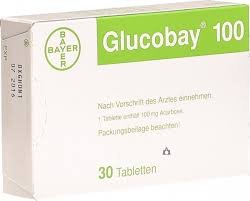
Acarbose (Glucobay), an alpha-glucosidase inhibitor, is used in the treatment of Type 2 Diabetes Mellitus.
It reduces the gastrointestinal absorption of glucose by inhibiting disaccharidases in the intestinal mucosa.
Thus, it prevents glucose absorption and reduces the post-meal spikes in blood glucose.
Acarbose use is associated with weight loss. The "STOP-NIDDM" Trial demonstrated the efficacy of acarbose in delaying the progression from prediabetes to diabetes.
Acarbose use in Prediabetes:
- Prediabetes and Diabetes are risk factors for cardiovascular diseases.
- The key strategies to reduce the incidences of diabetes is by lifestyle modification, diet, and exercise.
- There was a 58% reduction in the incidence of diabetes in the two landmark studies - The US Diabetes Prevention Program (DPP) and the Finnish Diabetes Prevention Study (DPS).
- Lifestyle modification and exercise may not maintain long term glycemic control.
- Drugs that are used to reduce the incidence of diabetes include metformin, acarbose, pioglitazone, SGLT2 inhibitors (dapagliflozin, empagliflozin, and canagliflozin).
- Comparing metformin and acarbose, the incidence of diabetes was reduced by 36% with acarbose and 31% with metformin in the STOP-NIDDM trial (The Study to Prevent Non-Insulin Dependent Diabetes Mellitus).
Can Acarbose cause weight loss?
- Acarbose inhibits the absorption of glucose in the intestines. This results in the loss of calories in the stools.
- A study published in the Journal of Diabetes and its complications concluded that acarbose causes weight loss irrespective of glycemic control in diabetic individuals.
- Other studies have also shown that acarbose causes a modest weight loss in diabetic individuals.
Acarbose use in non-diabetic obese individuals:
- Acarbose has also been studied in non-diabetic obese individuals for its effects on body weight.
- It was found that acarbose significantly reduces weight compared to placebo.
- The weight-losing effects are more marked in communities and individuals with a high carbohydrates intake (such as the Persian diet).
Contraindications to Glucobay:
- Hypersensitivity to acarbose and any component of the formula
- Patients suffering from diabetic ketoacidosis and cirrhosis.
- Patients with inflammatory bowel disease, colonic ulceration, partial or complete intestinal obstruction or patients who are predisposed to intestinal obstruction.
- Patients with chronic intestinal conditions, such as those that cause marked problems in digestion or absorption, or patients with conditions that could deteriorate due to increased gas formation in their intestines.
Starting Dose of Glucobay:
- 25 mg 3 times/day with the first bite of each main meal.
- In some patients, it may be advisable to take acarbose once daily in the start.
Maintenance dose:
- It should be adjusted according to the postprandial blood sugar readings at 4- to 8-week intervals until the maximum tolerated dose is achieved.
Maximum dose of Glucobay:
Patients weighing less than 60 kgs:
- 50 mg 3 times/day
Patients weighing more than 60 kgs:
- 100 mg 3 times/day
Glucobay use in Children:
- Dosage in children up to 17 years of age has not been established.
Glucobay dose in renal disease:
Cl cr ≥25 mL/minute:
- No dosage adjustment necessary.
Cl cr <25 mL/minute or Serum creatinine greater than 2 mg/dL:
- Use not recommended (not adequately studied).
Glucobay dose in liver disease:
- No dosage adjustment has been provided in the manufacturers labeling.
How and when to take Glucobay?
- It should be taken orally along with each meal's first bolus.
Pregnancy Risk Factor: B
- Studies on animal reproduction have not shown any adverse events.
- Acarbose is therefore assigned pregnancy category B. Glucobay was studied to determine if it could be used in the treatment of Gestational Diabetes Mellitus.
- Unfortunately, there is not much information available about the pregnancy outcomes.
- Due to its limited efficacy and data, it should not be used as a first-line diabetes treatment during pregnancy.
Use during lactation
- It's not known if the drug will get into breastmilk.
Acarbose side effects:
- Diarrhea,
- abdominal pain, and
- flatulence
- Liver injury
Rare side effects:
- Edema,
- erythema,
- exanthema,
- hepatitis,
- ileus,
- jaundice,
- liver damage,
- pneumatosis cystoids intestinalis,
- rash,
- thrombocytopenia and
- urticaria.
Acarbose mechanism of action (MOA):
- It competitively inhibits the a-glucosidase and pancreatic amylase present at the intestinal brush border.
- This causes delayed hydrolysis and absorption of complex carbohydrates and disaccharides.
- This causes a dose-dependent decrease in serum insulin levels and peak glucose levels postprandially.
It also inhibits sucrose-to-glucose and fructose metabolism.
Half-life elimination is about 2 hours.
The time to peak action of the active drug is around 1 hour.
International Brand Names of Acarbose:
- Glucobay
- Precose
Acarbose brands in Pakistan:
Acabose (Raazee theraputics PVT LTD)
Tablets:50 mg: 30 tablets pack : Rs.120
Tablets:100 mg: 30 tablets pack: Rs.220
Glucobay(Bayer schering pharma)
Tablets: 50 mg (30 tablets pack): Rs.149.44
Tablets:100 mg (30 tablets pack): Rs.281.29
Diabetes treatment - an overview of the Drugs
Insulin types and principles of insulin therapy
Empagliflozin - Treat Diabetes and heart failure
.png)


