Acetazolamide (Diamox) is used to treat glaucoma, edema due to drugs or heart failure, seizures and prevention and treatment of high altitude sickness.
It is also used as a respiratory stimulant in stable COPD patients who are hypercapnic and in the treatment of metabolic alkalosis.
Acetazolamide use in migraine Aura status:
- Up to 30% of the patients with migraine have associated aura prior to the episode.
- The aura is manifested by visual disturbances, enlarging scotomas, motor or sensory dysphasia, altered sensations, and tinnitus.
- Migraine aura status occurs when the patients have frequent or consecutive auras without headache.
- Migraine status aura is, although not associated with headache, is bothersome.
- Acetazolamide has been observed to be effective in patients with migraine aura status.
- It has also been found in case reports to be effective in patients with CADASIL (Cerebral autosomal dominant arteriopathy with subcortical infarcts and leukoencephalopathy) manifesting as migraine with aura.
- Acetazolamide, however, has not been found to be effective for the prophylaxis of migraine or to abort the attack of migraine like the triptans (Sumatriptan and zolmitriptan)
Acetazolamide for hereditary paroxysmal ataxia:
- Patients of hereditary paroxysmal ataxia presenting with ataxia, dysarthria, and nystagmus were effectively treated with acetazolamide.
Acetazolamide for sleep apnea:
- Since acetazolamide makes the plasma PH acidic, it stimulates the respiratory center.
- Patients with central sleep apnea, chronic obstructive airway disease, and those with obesity hypoventilation syndrome may notice an improvement in the symptoms as a result of respiratory center stimulation.
- One study found a 69% reduction in the episodes of sleep apnea with Diamox therapy.
Acetazolamide in patients with hydrocephalus:
- Studies in animals have found the drug effective for the treatment of hydrocephalus.
- Animal studies have shown that it reduces ventricular pressure by reducing the production of CSF.
- However, its efficacy in humans is doubtful. The therapeutic effect of diamox in children was found to be negligible in one study.
- In adults, acetazolamide has some role in patients with idiopathic intracranial hypertension (pseudotumor cerebri).
Acetazolamide for Altitude sickness:
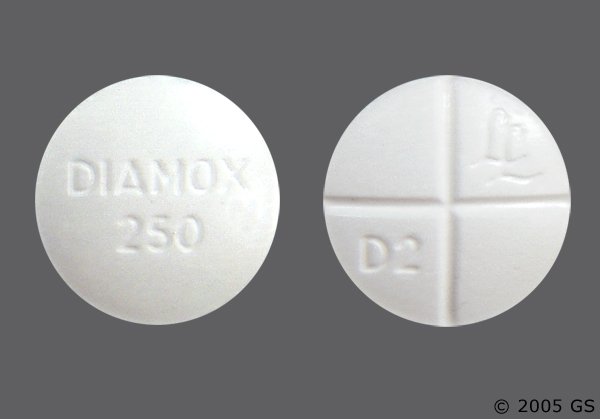
Diamox 250 mg and 500 mg tablets:
- Immediate-release tablets: 500-1000 mg/day in two to three divided doses.
- Extended-release capsules: 500 - 1000 mg/day once daily or in two divided doses.
Acetazolamide for the Prevention of altitude sickness:
Diamox 125 mg tablets:
- 125 mg twelve hourly
- Start taking acetazolamide one day before or at least on the day of ascent.
- Discontinue acetazolamide after staying at the same elevation for 2 to 3 days.
Note:
- In situations of rapid ascent, 1000 mg per day is recommended along with dexamethasone.
- Dexamethasone should also be given to patients who develop cerebral edema.
Acetazolamide dose for the treatment of Edema:
- Oral and intravenous: 250-375 mg once daily
Acetazolamide dose in seizures and epilepsy:
- Oral: 8-30 mg/kg/day in divided doses.
- Maximum dose: 30 mg/kg/day or 1 g/day.
Note:
- Minimal additional benefit with doses >16 mg/kg/day.
- The extended-release capsule is not recommended for the treatment of epilepsy.
Acetazolamide dose in Glaucoma:
-
Chronic simple (open-angle):
- Diamox 250 mg tablets 1-4 times/day or Diamox 500 mg extended-release capsule twice daily
-
Secondary or acute (closed-angle):
-
Initial dose:
- 250-500 mg
-
maintenance dose:
- 125-250 mg every 4 hours (250 mg every 12 hours has been effective in the short-term treatment of some patients)
-
Metabolic alkalosis:
- Diamox 500 mg tablets intravenously as a single dose
Acetazolamide dose as a respiratory stimulant in stable hypercapnic COPD:
- Diamox 250 mg tablets orally twice daily.
Acetazolamide dose in Children:
Diamox dosage for altitude sickness prophylaxis:
2.5 mg/kg/dose every 12 hours.
- Start taking the drug a day before or at least on the day of ascent and continue taking it for 3 days after stating at the same elevation
Diamox altitude sickness pediatric dose (Treatment dose):
2.5 mg/kg/dose every 8-12 hours to a maximum dose of 250 mg/dose.
Pregnancy Risk Factor C
- Teratogenic effects have been shown in animal studies. Therefore, it is not recommended for pregnant women.
- Acetazolamide is found in breast milk. It is not recommended during lactation.
Diamox dose in kidney failure:
- Acetazolamide is contraindicated in marked renal impairment, however, the cutoff creatinine clearance has not been defined.
Cl cr 10-50 mL/minute:
- Administer it every 12 hours.
Cl cr <10 mL/minute:
- Avoid its use.
Hemodialysis:
- Moderately dialyzable (20% to 50%).
Diamox Dose in Liver disease:
- It is contraindicated in patients with cirrhosis or marked liver disease or dysfunction.
Acetazolamide Side effects:
-
Ophthalmologic:
- Anaphylaxis,
- blepharoconjunctivitis,
- burning,
- corneal disorders,
- dry eyes,
- erythema,
- itching,
- ocular stinging,
- pain at the injection site.
-
Neurologic side effects:
- Flushing,
- ataxia,
- confusion,
- convulsions,
- depression,
- dizziness,
- drowsiness,
- excitement,
- fatigue,
- fever,
- headache,
- malaise
-
Dermatologic:
- Allergic skin reactions,
- photosensitivity,
- Stevens-Johnson syndrome,
- toxic epidermal necrolysis,
- urticaria
-
Endocrine & metabolic:
- Electrolyte imbalance,
- growth retardation (children),
- hyperglycemia,
- hypoglycemia,
- hypokalemia,
- hyponatremia,
- metabolic acidosis
-
Gastrointestinal adverse effects:
- Appetite decreased,
- diarrhea,
- melena,
- nausea,
- taste alteration,
- vomiting
-
Genitourinary effects:
- Crystalluria,
- glycosuria,
- hematuria,
- polyuria,
- renal failure
-
Hematologic effects:
- Agranulocytosis,
- aplastic anemia,
- leukopenia,
- thrombocytopenia,
- thrombocytopenic purpura
-
Hepatic adverse effects:
- Cholestatic jaundice,
- fulminant hepatic necrosis,
- hepatic insufficiency,
- Abnormal liver function tests
-
Neuromuscular & skeletal:
- Flaccid paralysis,
- paresthesia
-
Ear problems:
- Hearing disturbance,
- tinnitus
-
Miscellaneous:
- Anaphylaxis
Acetazolamide Contraindications:
It should be avoided in the following patients:
- Severe allergic reactions to acetazolamide and/ or sulfonamides,
- Advanced liver disease
- Advanced kidney disease,
- Severe hyponatremia,
- Hypokalemia,
- Adrenal insufficiency, and
- Long-term use in noncongestive angle-closure glaucoma
Monitor:
- Monitor fluid & electrolytes,
- Liver function tests and
- Renal functions.
How to take Acetazolamide?
- Oral formulations of acetazolamide may be administered with food.
- It may cause an alteration in the taste, especially carbonated beverages.
- To avoid its bitter taste, crush the short-acting tablets and mix it with 10 ml of hot water and 10 ml of honey or chocolate syrup, but do not mix it with fruit juices.
Intramuscular administration is not recommended because of severe pain.
Acetazolamide is compatible when mixed with almost any kind of intravenous fluid solution.
Acetazolamide Mechanism of Action:
- Acetazolamide blocks the enzyme carbonic acide reversibly, resulting in the excretion sodium, potassium and bicarbonate.
- It decreases the production aqueous humor, inhibits carbonic acidase in central nervous system, and retards abnormal and excessive discharges from CNS neuron.
The onset of action:
- 2 hours for oral formulations and 5 to 10 minutes for the intravenous formulation
Time to peak concentration in the plasma:
- Capsule (extended-release): 3-6 hours; Tablet: 1-4 hours
Excretion of acetazolamide:
- Urine (70% to 100% as unchanged drug).
International Brands:
- Acetadiazol
- Acetak
- Albox
- Apo-Acetazolamide
- Azol
- Carbinib
- Cetamid
- Diacarb
- Diamox
- Diamox Sustets
- Diazomid
- Diluran
- Diural
- Diuramid
- Evamox
- Fonurit
- Glaucomed
- Glaumox
- Glaupax
- Glauseta
- Huma-Zolamide
- Ledamox
- Medene
- Oculten
- Odemin
- Renamid
- Stazol
- Synomax
- Uramox
- Zolmide
Acetazolamide brands in Pakistan:
Acemox (Vega pharmaceruticalsLTD)
Tablets: 250mg:
30 tablets pack:Rs.30
AZM (Ethical laboratories (PVT) LTD)
Tablets: 250mg:
30 tablets pack:Rs.34
Diamox (Pfizer laboratories LTD)
Tablets: 250mg:
30 tabletspack:Rs.34.43
Evamox (Don valley pharmaceuticals (PVT) LTD)
Tablets: 250mg:
30 tablets pack:Rs.27
Setacar (Remington pharmaceuticals industries (PVT) LTD)
Tablets: 250mg:
30 tablets pack:Rs.33.48
.png)