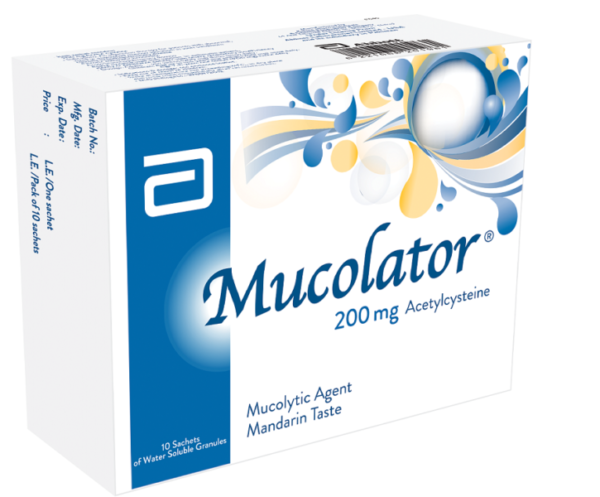
Acetylcysteine is used to treat acute Acetaminophen/ paracetamol overdose. It is used as an antioxidant that reduces hepatic injury. It is also used to thin phlegm and helps in getting rid of it easily.
As a mucolytic, it may be used in patients with the following conditions:
- Chronic bronchitis
- Emphysema
- Chronic asthmatic bronchitis
- Tuberculosis
- Bronchiectasis
- Pneumonia
- Acute bronchitis
- Tracheobronchitis
- Cystic fibrosis
- Tracheostomy care
- Lung collapse due to mucus impaction
- Diagnostic bronchial studies
Acetylcysteine Dose in Adults
Acetylcysteine dose in acute Acetaminophen overdose:
Note: Only the 72-hour oral regimen and the 21-hour intravenous regimens are FDA approved.
- Ideally, treatment should begin as soon as possible and within 8 hours of ingestion of acetaminophen ingestion.
- For patients who present after 8 hours of ingestion, or where acetaminophen levels are not available, and where the exact time of ingestion is not known, treatment should be initiated immediately and the need for acetylcysteine reevaluated.
- Patients' condition, Liver function tests, and acetaminophen levels should be measured prior to initiating therapy and at the end of the treatment.
- The treatment course may be extended beyond the 72-hours oral and the 21-hours intravenous regimen if the patient exhibits signs of liver toxicity.
- Patients with massive ingestion, ingestion of other drugs or chemical substances, persistently elevated acetaminophen levels, persistently abnormal liver functions, elevated INR, and those with preexisting liver disease may be treated beyond the recommended period.
- Typically, a third dose is administered as 100mg/kg up to a maximum of 10 gms infused over 16 hours. Consultation with a clinical toxicologist should be done in such cases.
The 72-hour oral regimen:
- It consists of 18 total doses including the loading dose.
- The loading dose is 140 mg/kg followed by the maintenance dose.
- The maintenance dose is 70 mg/kg every 4 hours.
The 21-hour intravenous regimen:
- It consists of a total of 3 doses including the loading dose
- The loading dose is 150 mg/kg (maximum dose: 15 gms) infused over 1 hour
- The second dose: 50 mg/kg (maximum dose: 5 gms) infused over 4 hours
- The third dose: 100 mg/kg (maximum dose: 10 gms) infused over 16 hours
Note: The fluid volume should be reduced in patients weighing ≤40 kg according to the following table: Acetadote Dosing & Fluid Volume Guidelines for Patients 40 kgs or less.
| Body Weight (kg) | Loading Dose 150 mg/kg over 1 hour | Second Dose 50 mg/kg over 4 hours | Third Dose 100 mg/kg over 16 hours | |||
| Acetadote (mL) | Diluent (mL) | Acetadote (mL) | Diluent (mL) | Acetadote (mL) | Diluent (mL) | |
| 40 | 30 | 100 | 10 | 250 | 20 | 500 |
| 30 | 22.5 | 100 | 7.5 | 250 | 15 | 500 |
| 21 | 15.75 | 100 | 5.25 | 250 | 10.25 | 500 |
| 20 | 15 | 60 | 5 | 140 | 10 | 280 |
| 15 | 11.25 | 45 | 3.5 | 105 | 7.5 | 210 |
| 10 | 7.5 | 30 | 2.5 | 70 | 5 | 140 |
| 5 | 3.75 | 15 | 1.25 | 35 | 2.5 | 70 |
For patients who weigh 100 Kgs or more, the following dosing regimen should be followed:
The 72-hour oral regimen consisting of 18 doses.
- A Loading dose of 15 gms
- Maintenance dose of 7.5 gm every 4 hours
The 21-hour intravenous regimen consists of 3 doses.
- A Loading dose of 15 gms infused over 1 hour
- The Second dose of 5 gms infused over 4 hours
- The Third dose of 10 gms infused over 16 hours
Acetylcysteine dosing in Respiratory conditions:
Note: Patients should be nebulized with a bronchodilator prior to initiating therapy with acetylcysteine. 3 - 5 ml of acetylcysteine 10% and 20% solution is diluted in sodium chloride or sterile water for inhalation given three or four times a day. 1 to 2 ml may be directly instilled into the tracheostomy every one to 4 hours.
Acetylcysteine Dose in Childrens
Acute Acetaminophen overdose: See adult dosing
Acetylcysteine dosing in Respiratory conditions:
Note: Patients should be nebulized with a bronchodilator prior to initiating therapy with acetylcysteine. 3 - 5 ml of acetylcysteine 10% and 20% solution is diluted in sodium chloride or sterile water for inhalation given three or four times a day. 1 to 2 ml may be directly instilled into the tracheostomy every one to 4 hours.
- Infants may be given a lower dose i.e. 1 to 2 mL of 20% solution or 2 to 4 mL 10% solution given 3 to 4 times/day.
- Children and adolescents: Refer to adult dosing.
Pregnancy Risk Factor B
- Acetylcysteine crosses into the placenta, and may protect the fetus from mothers who consume toxic amounts of acetaminophen.
- You should use it with caution due to the risk of teratogenicity. However, animal studies have not shown that there are any adverse fetal outcomes.
Acetylcysteine use during breastfeeding
- It is unknown whether breastmilk contains acetylcysteine.
- Before using acetylcysteine during breastfeeding, it is important to weigh the risks and benefits.
Acetylcysteine Dose in Kidney Disease:
- The manufacturer does not advise any dose adjustment in renal disease.
Acetylcysteine Dose in Liver disease:
- The manufacturer does not advise any dose adjustment in patients with liver disease.
Acetylcysteine common side effects with the intravenous formulation:
- Immunologic:
- Autoimmune disease.
- Miscellaneous:
- Allergic and Anaphylactoid reaction
Less common side effects of N-acetylcysteine (Mucolator):
- Cardiovascular:
- Flushing
- Tachycardia
- Edema.
- Dermatologic:
- Urticaria
- Rash
- Pruritus.
- Gastrointestinal:
- Vomiting and nausea.
- Respiratory:
- Pharyngitis
- Rhinorrhea
- Wheeze
- Throat tightness.
N-acetylcysteine Side effects observed with the oral formulation:
Hypersensitivity reactions, chest tightness, fever, urticaria, rash, nausea, vomiting, bronchitis, and bronchospasm.
Contraindications to N-acetylcysteine (Mucolator):
- Allergic reactions to acetylcysteine and any component of the formulation.
Warnings and Precautions
-
Allergy reactions:
- Anaphylactic reactions can occur after intravenous or oral administrations of acetylcysteine.
- Slower administration of the drug may help reduce the risk of anaphylactic reactions.
- After treatment for allergic symptoms has been completed, it is important to restart the infusion slowly.
- Patients who have high levels of acetaminophen are at lower risk for anaphylactic reactions.
-
Fluid Overload:
- Fluid overload can occur when intravenous administration is done. This could lead to seizures, hyponatremia and even death.
-
Bronchospasm
- Asthma patients are at greater risk for developing hypersensitivity reactions.
-
Gastrointestinal Side effects:
- Nausea and vomiting can be caused by oral administration of Acetylcysteine. It can cause nausea and vomiting in patients.
-
Use with ventilator-dependent patients:
- Inhalation of acetylcysteine should be done after suctioning, postural drainage and bronchodilator treatment. If bronchospasm worsens, therapy should be stopped.
Monitoring Parameters:
- Monitor the patient for anaphylaxis and allergic reactions.
- Monitor AST, ALT, Bilirubin, Prothrombin time, INR, BUN, Serum creatinine, Blood glucose, Blood CP (hemoglobin and hematocrit), and serum electrolytes.
- Assess the patient for nausea, vomiting, and rashes after oral administration.
- Liver function tests should be monitored every 4 - 6 hours.
- Acetaminophen levels should be monitored 4 hours after ingestion.
- Repeat serum acetaminophen levels may be advised in some patients after another 4 - 6 hours especially in patients who have ingested the extended-release formulation and in those with co-ingestion of medicines that delay gastric emptying.
How to administer Acetylcysteine (Mucolator)?
Note: Acetylcysteine should not be administered with tetracyclines, erythromycin, amphotericin B, iodized oil, chymotrypsin, trypsin, and hydrogen peroxide.
- Intermittent aerosol treatments are administered just before bedtime.
- It should be used within 2 hours of preparation as a 5% solution.
- The dose should be repeated if the patient vomits within 1 hour of administration.
- An IV formulation of acetylcysteine may be given if the oral formulation cannot be tolerated.
Intravenous acetylcysteine (Acetadote) in Acetaminophen overdose:
- Administer the loading dose over 1 hour.
- Administer the second dose for over 4 hours.
- Administer the third dose over 16 hours.
Acetylcysteine mechanism of action:
- It acts as a glutathione replacement in the liver and conjugates acetaminohen, enhancing its clearance.
- It also has mucolytic properties (through its free-sulfhydryl groups opening up disulfide bonds within mucoproteins), thereby lowering mucous viscosity.
The onset of action is 5 to 10 minutes when inhaled
The duration of action is 1 hour and more. It undergoes extensive first-pass metabolism to form cysteine and disulfides. Cysteine is further metabolized to form glutathione.
Half-life elimination is 2 to 11 hours
Time to peak plasma concentration is 1 to 2 hours.
Excretion is via urine.
Acetylcysteine Brand Names (International):
- Ac-Lyte
- ACC
- ACC 200
- ACC Long
- Acemuc
- Acemuk
- Acesolv
- Acetadote
- Acetein
- Acetimax
- Acetin
- Acetylcystein NM
- Pharma
- Acetylcystein Tika
- Acetyst
- Actein
- Aflux
- Aires
- Bisolbruis
- Brimodin
- Bromuc
- Bronchocil
- Broncoflem
- Broncolium
- Brunac
- Cilol
- Cirocyst
- Codotussyl
- Cystaline
- Debeneweist
- Dextein
- Drenaflen
- Ecomucyl
- Encore
- Enumine NAC
- Exflem
- Exomuc
- Fabrol
- Flemex AC
- Flemex-AC OD
- Flucee
- Flucil
- Fluidasa
- Fluidine
- Fluimicil
- Fluimiquil
- Fluimucil
- Fluimucil A
- Fluimukan
- Flumil
- Flumixol
- Flutafin
- Genac
- Glotamuc
- Granon
- Icystein
- Ilube
- L-Cimexyl
- Lubrisec
- Lysox
- Madame Pearl's Mucolytic
- Mitux
- Moktin
- Muclear
- Mucobene
- Mucocar
- Mucofillin
- Mucofluid
- Mucolair
- Mucolator
- Mucolitico
- Mucolysin
- Mucolyte
- Mucomist
- Mucomyst
- Mucoserin
- Mucosoft
- Mucosten
- Mucosys
- Mucylin
- Muterin
- Muxatil
- Mysoven
- N-Acc
- NAC
- NAC-ratiopharm
- Parvolex
- Pectocil
- Pectomucil
- Pulmovital
- Reolin
- Respar
- Respicyl
- Rinofluimucil
- Rumicil
- Sebron
- Sensemoc
- Simucil
- Simucin
- Siran 200
- Siran Forte
- Solmucol
- Solvimyst
- Spatam
- Sputopur
- Stecin
- Stenac
- Systalin
- Tancore
- Tirocular
- Toflux
- Touxium Mucolyticum
- Viscotin
- Viskoferm
Acetylcysteine brand Names in Pakistan
Acetylcysteine 100mg/ sachets in Pakistan: |
|
| FLUIMUCIL-A | SCHARPER PHARMACEUTICALS (PVT) LTD. |
Acetylcysteine 200mg/ sachets in Pakistan: |
|
| ACETYL | SHROOQ PHARMACEUTICALS |
| FLUIMUCIL-A | SCHARPER PHARMACEUTICALS (PVT) LTD. |
| MUCOLATOR | ABBOTT LABORATORIES (PAKISTAN) LIMITED. |
.png)


