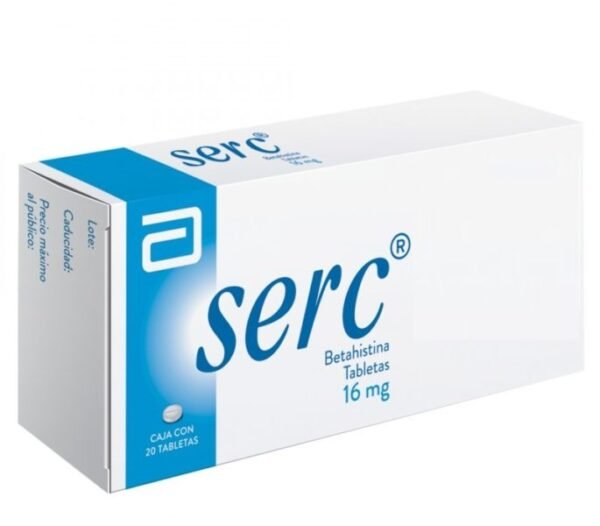
Betahistine increases cochlear blood flow, excite neurons in the cortex and subcortical structures, and suppresses the vestibular sensory input.
It is used to reduce the episodes of vertigo in patients with Ménière disease.
It is also used to treat vertigo associated with benign positional vertigo and vertebrobasilar insufficiency.
Betahistine dose in Adults
Betahistine dose in the treatment of Ménière disease (for vertigo):
- 8 - 16 mg orally three times a day or 24 mg two times a day
- The usual dose is 24 - 48 mg daily in divided doses.
- Titrate the dose in small increments every 3 months up to a maximum dose of 480 mg daily (in severe and resistant cases)
Betahistine dose in Childrens
Safety and efficacy not established.
Pregnancy Risk Factor: C
- However, it has not been tested in pregnant women.
- Animal studies have shown that adverese drugs can be used in some cases.
Betahistine use during breastfeeding:
- It is unknown whether betahistine is excreted into breastmilk.
- Manufacturers advise that you weigh the benefits of drug use in mother and child.
Betahistine dose in Renal Disease:
- It has not been studied in patients with renal disease.
- Adjustment in the dose has not been recommended by the manufacturer, however, it should be used with caution.
Betahistine dose in Liver Disease:
- The manufacturer has not recommended any dose adjustment, however, since it is metabolized in the liver, it should be used with caution in hepatic impairment.
Common Side Effects of Betahistine Include:
- Central nervous system:
- Headache
- Gastrointestinal:
- Nausea
- Dyspepsia
Frequency not defined:
- Central nervous system:
- Confusion
- Convulsions
- Drowsiness
- Hallucination
- Paraesthesia
- Cardiovascular:
- Hypotension
- Tachycardia
- Ventricular premature contractions
- Dermatologic:
- Pruritus
- Skin rash
- Stevens-Johnson syndrome
- Urticaria
- Gastrointestinal:
- Abdominal Distension
- Abdominal Pain
- Bloating
- Peptic Ulcer
- Vomiting
- Hypersensitivity:
- Anaphylaxis
- Angioedema
- Hypersensitivity Reaction
- Respiratory:
- Dyspnea
Contraindication to Betahistine Include:
- Allergy to betahistine, or any component of this formulation
- History of active or peptic ulcer disease
- Pheochromocytoma
Warnings and Precautions
- Asthma
- Asthma patients should be cautious when taking the drug, as they may become clinically intolerant.
- Cardiovascular disease
- It can cause hypotension, ventricular extrasystoles and tachycardia. Patients with a history or cardiovascular disease should not use it.
- Hepatic impairment
- Patients with hepatic impairment should not use it as it is metabolized in the liver.
Betahistine (United States: Not available): Drug Interaction
|
Antihistamines |
May diminish the therapeutic effect of Betahistine. |
|
Beta2-Agonists |
Betahistine may diminish the therapeutic effect of Beta2-Agonists. |
|
Monoamine Oxidase Inhibitors |
May increase the serum concentration of Betahistine. |
How to take Betahistine (Serc)?
- It may be taken with or without meals.
- If gastrointestinal side effects occur, take the drug with meals.
Mechanism of action of Betahistine:
- It partially activates H-1 receptors and strongly antagonizes H-3 receptors.
- It does not have any effect on H-2 receptors.
- It increases cochlear blood flow, activates neurons in the cortex and subcortical structures via its action on H-1 receptors.
- By inactivating H-3 receptors, it decreases the vestibular sensory input and increases the synthesis and releases of histamine from the hypothalamus.
It is rapidly and completely absorbed. Absorption is delayed when taken with meals.
Less than 5% of the drug is protein-bound and is rapidly & completely metabolized by the liver to inactive metabolites.
The half-life elimination is about 3.5 hours and it is primarily excreted in the urine.
Betahistine International brands:
- ACT Betahistine
- Auro-Betahistine
- PMS-Betahistine
- Serc
- TEVA-Betahistine
- Acuver
- Aequamen
- Agihistine
- Agiserc
- Alfinor
- Alvigo
- Avertid
- Be-Stedy
- Beanorm
- Beautipex
- Behistin
- Bertigo
- Besutin
- Betagen
- Betagis
- Betahist
- Betahistine-Eurogenerics
- Betasaerc
- Betaserc
- Betastin
- Betavert
- Betistin
- Betris
- By-Vertin
- Clensan
- Ergo
- Exigo
- Fidium
- Histigo
- Histine
- Kernhistine
- Kurtigo
- Lectil
- Lobione
- Menaril
- Meniace
- Menistin
- Merislon
- Merison
- Meristin
- Mertigo
- Meslon
- Microserc
- Misoserc
- Nisulin
- Novertin
- Nuveat
- Rotaver
- Seniere
- Serc
- Stei
- Suzutolon
- Theohist
- Tiniril
- Urutal
- Vasomotal
- Vasoserc Forte
- Vasotal
- Verdiz
- Vergo
- Vert
- Vertigal
- Vertigon
- Vertihof
- Vertikind
- Vertimed
- Vertin
- Vertinex
- Verum
- Vestibo
- Veszrc
Betahistine Brands in Pakistan:
|
Betahistine (HCL) [Tabs 8 Mg] |
|
| Betaride | Vertex Pharma |
| D-Vert | Remington Pharmaceutical Industries (Pvt) Ltd. |
| Deperin | Focous & Rulz Pharmaceuticals |
| Enier | Sami Pharmaceuticals (Pvt) Ltd. |
| Hibet | Alina Combine Pharmaceuticals (Pvt) Ltd. |
| Hiserk | Nimrall Laboratories |
| Histogen | Genome Pharmaceuticals (Pvt) Ltd |
| Microser | Searle Pakistan (Pvt.) Ltd. |
| Serc | Abbott Laboratories (Pakistan) Limited. |
| Seso | Getz Pharma Pakistan (Pvt) Ltd. |
| Vergo | Genetics Pharmaceuticals |
| Vertin | Remington Pharmaceutical Industries (Pvt) Ltd. |
| Vetinil | Standpharm Pakistan (Pvt) Ltd. |
|
Betahistine (HCL) [Tabs 16 Mg] |
|
| Betaride | Vertex Pharma |
| D-Vert | Remington Pharmaceutical Industries (Pvt) Ltd. |
| Deperin | Focous & Rulz Pharmaceuticals |
| Deperin | Focous & Rulz Pharmaceuticals |
| Enier | Sami Pharmaceuticals (Pvt) Ltd. |
| Hiserk | Nimrall Laboratories |
| Histogen | Genome Pharmaceuticals (Pvt) Ltd |
| Serc | Abbott Laboratories (Pakistan) Limited. |
| Seso | Getz Pharma Pakistan (Pvt) Ltd. |
| Vergo | Genetics Pharmaceuticals |
| Vertin | Remington Pharmaceutical Industries (Pvt) Ltd. |
| Vetinil | Standpharm Pakistan (Pvt) Ltd. |
|
Betahistine (HCL) [Tabs 24 Mg] |
|
| D-Vert | Remington Pharmaceutical Industries (Pvt) Ltd. |
| Serc | Abbott Laboratories (Pakistan) Limited. |
| Vertin | Remington Pharmaceutical Industries (Pvt) Ltd. |
.png)


