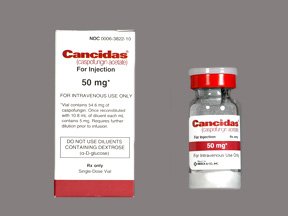
Caspofungin (cancidas) is an antifungal drug that inhibits the synthesis of β(1,3)-D-glucan required for fungal cell wall synthesis. It is used to treat the following conditions:
-
Treatment of invasive Aspergillosis in patients 3 months of age and older who are refractory or intolerant to other therapies like amphotericin B and itraconazole.
-
Treatment of Candidemia and Intra-abdominal abscesses, peritonitis and pleural space infections caused by candida infections. It has not been studied in meningitis, endocarditis, and osteomyelitis caused by candida.
-
Treatment of Esophageal Candidiasis (Not approved for oropharyngeal candidiasis).
-
Empiric therapy for Fungal infections in febrile neutropenic patients.
-
Off-Label Use of Caspofungin in Adults include:
- Prophylaxis in neutropenic cancer patients at substantial risk of Candida infection
- Chronic disseminated candidiasis (e.g. hepatosplenic candidiasis);
- As empiric therapy in non-neutropenic ICU patients with candidiasis
- HIV-infected patients with esophageal candidiasis
- Intravascular infections caused by candidiasis
- Refractory Oropharyngeal Candidiasis
- Osteoarticular Candidiasis
- Prophylaxis against invasive candidiasis in high-risk ICU patients
Caspofungin (cancidas) Dose in Adults
Caspofungin as salvage therapy of invasive Aspergillosis:
- 70 mg Intravenous on day 1 and then 50 mg once a day for a minimum of 6 - 12 weeks.
Use in the treatment of Candidemia and other Candida infections:
- 70 mg Intravenous on day 1 and then 50 mg once a day for a minimum of 14 days after the last positive culture or longer in neutropenic patients.
- Transition to fluconazole after 5 - 7 days in clinically stable non-neutropenic patients with fluconazole susceptible candida has been recommended by the IDSA.
Off label use as prophylaxis in neutropenic cancer patients at substantial risk of Candida infection:
- 50 mg intravenous once daily
Off label use in the treatment of chronic disseminated hepatosplenic candidiasis:
- 70 mg Intravenous on day 1 and then 50 mg once a day for several weeks followed by oral fluconazole therapy.
Off label use as empiric therapy in the treatment of non-neutropenic ICU patients with Candidiasis:
70 mg Intravenous on day 1 and then 50 mg once a day for a minimum of 2 weeks who improve. Discontinue therapy in patients who show no clinical response after 5 - 7 days.
Use in the treatment of esophageal Candidiasis:
- 70 mg Intravenous on day 1 and then 50 mg once a day
- Oral fluconazole may be initiated after the patient is able to tolerate oral therapy.
- Patients who can not tolerate oral therapy may continue caspofungin for 2 - 3 weeks
Off label use as an alternative agent in the treatment of Esophageal Candidiasis in HIV-infected patients:
- 50 mg intravenous once a day for 14 - 21 days.
Off label use in the treatment of Candidiasis and intravascular infections (native or prosthetic valve endocarditis, infection of implantable cardiac devices, and suppurative thrombophlebitis):
- 150 mg intravenous once a day.
- Therapy should continue for at least 6 weeks in native or prosthetic valve endocarditis after valve replacement surgery
- Longer duration of therapy may be given in patients with abscesses or other complications
- Therapy should continue for 4 - 6 weeks after surgery in patients with implantable cardiac devices
- For suppurative thrombophlebitis, continue therapy for at least 2 weeks after candidemia has cleared.
Off label use as an alternative agent in the treatment of Candidiasis and osteoarticular infections like osteomyelitis or septic arthritis:
- 50 - 70 mg intravenous once a day for at least 14 days followed by oral fluconazole.
Off label use as an alternative therapy in the treatment of Candidiasis and prophylaxis against invasive candidiasis in high-risk ICU patients:
- 70 mg intravenous on day 1, then 50 mg once a day.
Off label use as an alternative therapy in the treatment of refractory oropharyngeal Candidiasis:
- 70 mg intravenous on day 1 followed by 50 mg once a day.
Use in the empiric treatment of neutropenic patients with Fungal infections:
- 70 mg intravenous on day 1 followed by 50 mg once a day until at least 7 days after the resolution of neutropenia and for a minimum of 14 days in confirmed infections.
Dosage adjustment with concomitant use of an enzyme inducer:
- Patients receiving rifampin:
- 70 mg caspofungin once a day
- Patients receiving carbamazepine, dexamethasone, efavirenz, nevirapine, or phenytoin (and other enzyme inducers):
- May require 70 mg once a day.
Caspofungin (cancidas) Dose in Childrens
Use in the treatment of invasive Aspergillosis:
Note: Caspofungin should not be used as the first line of therapy. It is recommended as salvage therapy and where other antifungal agents are contraindicated.
- Infants older than 3 months, Children, and Adolescents less than 18 years:
- 70 mg/m² /dose intravenous on day 1, then 50 mg/m² /dose once a day
- The dose may be increased to 70 mg/m²/dose once a day to a maximum of 70 mg/dose if clinical response is inadequate
Use in the empiric treatment of Fungal infections in neutropenic patients:
- Infants older than 3 months, Children, and Adolescents less than 18 years:
- 70 mg/m² /dose intravenous on day 1, then 50 mg/m² /dose once a day
- The dose may be increased to 70 mg/m²/dose once a day to a maximum of 70 mg/dose if clinical response is inadequate.
Use in the treatment of Candida infections:
- HIV negative and non-exposed patients:
- Infants less than 3 months of age:
- 25 mg/m² /dose intravenous once a day.
- Infants older than 3 months, Children, and Adolescents less than 18 years:
- 70 mg/m² /dose intravenous on day 1, then 50 mg/m² /dose once a day
- The dose may be increased to 70 mg/m²/dose once a day to a maximum of 70 mg/dose if clinical response is inadequate
- Treatment should continue for 7 - 14 days after the resolution of symptoms in patients with the esophageal disease and for at least 2 weeks after the last positive blood cultures in patients with candidemia.
- Infants less than 3 months of age:
- HIV-exposed or positive patients:
Treatment should continue for a minimum of 3 weeks and for at least 2 weeks after the resolution of symptoms in patients with the esophageal disease and for at least 2 weeks after the last positive blood cultures in patients with candidemia.
- Infants less than 3 months of age:
- 25 mg/m² /dose intravenous once a day.
- Infants older than 3 months, Children, and Adolescents less than 18 years:
- 70 mg/m² /dose intravenous on day 1, then 50 mg/m² /dose once a day to a maximum dose of 70 mg/dose
- Adolescents older than 18 years:
- 70 mg intravenous on day 1, then 50 mg once a day.
Dosing adjustment for concomitant administration:
- Patients receiving rifampin:
- Infants older than 3 months, Children, and Adolescents:
- 70 mg/m² /dose intravenous once a day to a maximum dose of 70 mg/dose
- Infants older than 3 months, Children, and Adolescents:
- Patients receiving carbamazepine, dexamethasone, phenytoin, nevirapine, or efavirenz (and other enzyme inducers):
- Infants older than 3 months, Children, and Adolescents:
- May require a dose of 70 mg/m² /dose intravenous once a day to a maximum dose of 70 mg/dose
- Infants older than 3 months, Children, and Adolescents:
Pregnancy Risk Factor D
- Caspofungin could cause fetal harm.
- For invasive aspergillosis or candida infections, other preferred agents can be used during pregnancy.
Caspofungin use during breastfeeding:
- It is unknown whether breastmilk contains caspofungin.
- It is important to weigh the benefits and risks of caspofungin therapy for the mother as well as the potential dangers for the neonate.
Dose adjustment in renal disease:
- Dose adjustment in renal disease is not required.
- Supplemental doses in patients on hemodialysis, CVVHD, and peritoneal dialysis are not required.
Dose adjustment in patients with Liver disease:
- Mild hepatic impairment (Child-Pugh class A):
- Dose adjustment is not necessary.
- Moderate hepatic impairment (Child-Pugh class B):
- 50 - 70 mg on day 1 followed by 35 mg once a day
- Severe hepatic impairment (Child-Pugh class C):
- Same doses as in patients with moderate hepatic impairment may be used.
Common Side Effects Of Caspofungin Include:
- Cardiovascular:
- Hypotension
- Peripheral edema
- Tachycardia
- Central nervous system:
- Chills
- Headache
- Dermatologic:
- Skin rash
- Gastrointestinal:
- Diarrhea
- Vomiting
- Nausea
- Hematologic & oncologic:
- Decreased hemoglobin
- Decreased hematocrit
- Decreased white blood cell count
- Anemia
- Hepatic:
- Increased serum alkaline phosphatase
- Increased serum ALT
- Increased serum AST
- Increased serum bilirubin
- Local:
- Localized phlebitis
- Renal:
- Increased serum creatinine
- Respiratory:
- Respiratory failure
- Cough
- Pneumonia
- Miscellaneous:
- Infusion-related reaction
- Fever
- Septic shock
Less Common Side Effects Of Caspofungin Include:
- Cardiovascular:
- Hypertension
- Atrial fibrillation
- Bradycardia
- Cardiac arrhythmia
- Edema
- Flushing
- Myocardial infarction
- Central nervous system:
- Anxiety
- Confusion
- Depression
- Dizziness
- Drowsiness
- Fatigue
- Insomnia
- Seizure
- Dermatologic:
- Erythema
- Pruritus
- Skin lesion
- Urticaria
- Endocrine & metabolic:
-
- Hypomagnesemia
- Hyperglycemia
- Hypokalemia
- Hypercalcemia
- Hypervolemia
-
- Gastrointestinal:
- Abdominal pain
- Mucosal inflammation
- Abdominal distention
- Anorexia
- Constipation
- Decreased appetite
- Dyspepsia
- Upper abdominal pain
- Genitourinary:
- Urinary tract infection
- Nephrotoxicity
- Hematologic & oncologic:
- Blood coagulation disorder
- Febrile neutropenia
- Neutropenia
- Petechia
- Thrombocytopenia
- Hepatic:
- Decreased serum albumin
- Hepatic failure
- Hepatomegaly
- Hepatotoxicity
- Hyperbilirubinemia
- Jaundice
- Infection:
- Sepsis
- Bacteremia
- Local:
- Catheter infection
- Infusion site reaction
- Neuromuscular & skeletal:
- Arthralgia
- Back pain
- Limb pain
- Tremor
- Weakness
- Renal:
- Hematuria
- Increased blood urea nitrogen
- Renal failure
- Respiratory:
- Dyspnea
- Pleural effusion
- Respiratory distress
- Rales
- Epistaxis
- Hypoxia
- Tachypnea
Contraindication to Caspofungin include:
- Allergy reactions to caspofungin and any component of the formulation
Warnings and Precautions
- Hepatic effects
- It is important to monitor liver functions, as there have been reports of increased transaminases and hepatitis.
- Hypersensitivity
- Angioedema and other allergic reactions such as angioedema and facial swelling, bronchospasms, rash and pruritis have been reported.
- There are also cases of Stevens Johnson syndrome and toxic epidermal necrolysis (some fatal).
- Hepatic impairment
- Patients with hepatic impairment should use it with caution. Dosage adjustment may be required.
Caspofungin: Drug Interaction
Note: Drug Interaction Categories:
- Risk Factor C: Monitor When Using Combination
- Risk Factor D: Consider Treatment Modification
- Risk Factor X: Avoid Concomitant Use
Risk Factor D (Consider therapy modifications) |
|
| CycloSPORINE Systemic | Caspofungin may have an adverse or toxic effect. Caspofungin can increase serum CycloSPORINE Systemic concentrations. CycloSPORINE (Systemic) may increase the serum concentration of Caspofungin. Management: Consider the potential benefits and risks of caspofungin versus the possible increased risk of hepatotoxicity. Patients with abnormal liver function should be monitored and treated accordingly. It is possible to experience mild transaminase elevations quite often. |
| Inducers for Drug Clearance | Caspofungin serum concentration may be decreased. Management: Increase caspofungin dosage to 70 mg per day for adults, or 70 mg/m for children, when administered with known drug clearance inducers. |
| RifAMPin | Caspofungin serum concentration may be decreased. Management: Caspofungin prescribing instructions recommend a daily dose of 70mg for adults and 70mg/m for children. Children who also receive rifampin should take 70 mg/day. |
Risk Factor X (Avoid Combination) |
|
| Saccharomyces boulardii | Antifungal Agents (Oral, Systemic) can reduce the therapeutic effects of Saccharomyces boulardii. |
Monitor:
- Liver functions
- Observe for features of anaphylaxis (skin rash, facial swelling, bronchospasm, and pruritis)
How to administer Caspofungin:
It is infused slowly over 1 hour. Administration via an intravenous bolus should be avoided.
Mechanism of action Caspofungin (Cancidas):
- It prevents the synthesis of b(1,3) D-glucan, which is an essential component in the cell wall of susceptible fungal species.
- It is not required by mammalian cells, so its toxic effects on humans are limited. It is very poor CNS penetration
It is 97% bound with proteins. It is widely used.MetabolizedHydrolysis and N-acetylation of amino acids. It has been aEliminating half-life9 - 11 hours. Pediatric patients have a shorter terminal half-life of 40 to 50 hours. It is primarilyexcretedVia urine (41%) or feces (35%).
Caspofungin International brands:
- BDCASPO
- Cancidas
- Mymicyas
Caspofungin (cancidas) Brands in Pakistan:
No brands available in Pakistan
.png)


