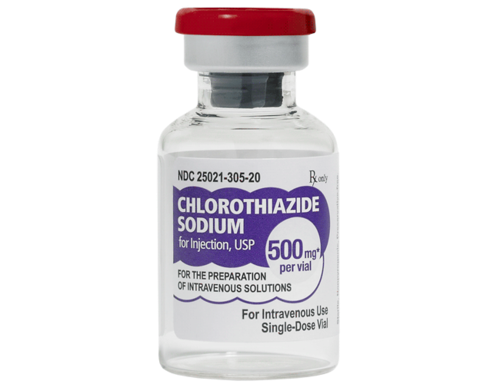
Chlorothiazide inhibits sodium and water reabsorption in the distal tubules resulting in salt and water loss from the body. It is thus used to treat the following conditions:
- Edematous and fluid overloaded states
- It may be used to treat Hypertension as monotherapy (or in combination with other medicines ) in the absence of other comorbid conditions like diabetes, kidney disease, ischemic heart disease, and cerebrovascular disease.
Chlorothiazide Dose in Adults
- Dose in Hypertension:
- 500 to 2,000 mg per day once or twice daily.
- Dose in patients with Edema:
- 250 to 500 mg orally once or twice daily to a maximum daily dose of 1,000 mg.
- 500 to 1,000 mg intravenous once a day in combination with a loop diuretic
Chlorothiazide Dose in Childrens
- For diuresis, heart failure, and hypertension:
- Infants, Children, and Adolescents:
- 10 to 40 mg/kg/day orally once or twice daily to a maximum daily dose of
- 375 mg/day in infants and children less than 2 years of age,
- 1000 mg in children older than 2 years of age, and
- 2000 mg daily in adolescents
- 5 to 10 mg/kg/day intravenous in one or two daily divided doses to a maximum dose of 500 mg/dose.
- 10 to 40 mg/kg/day orally once or twice daily to a maximum daily dose of
- Infants, Children, and Adolescents:
- Dose in central Diabetes insipidus:
- Infants:
- 10 mg/kg/day in two divided doses. The dose may be incrementally increased to a target urine osmolality of 100 to 150 mOsm/L.
- Infants:
Pregnancy Risk Factor C
- The placental barrier is crossed by chlorothiazide and can cause neonatal jaundice or thrombocytopenia.
- Women with hypertension may need thiazide diuretics during pregnancy. It should not be used to treat edema caused by pregnancy
Chlorothiazide use during breastfeeding:
- Breastmilk contains chlorothiazide, which can be excreted in this substance.
- This could lead to serious adverse drug reactions in the child.
- You should stop using it while you are breastfeeding.
- Nursing mothers should avoid diuretics as they can reduce milk production.
Chlorothiazide Dose in Kidney Disease:
- It is usually not effective in patients with a CrCl of less than 30 mL/minute and is, therefore, combined with a loop diuretic.
- Patients with a CrCl of less the 10 mL/minute should avoid the drug.
Chlorothiazide Dose in Liver Disease:
The manufacturer has not recommended any dose adjustment in patients with liver disease, however, it should be used with caution in advanced liver disease.
Side Effects of Chlorothiazide:
- Cardiovascular:
- Hypotension
- Necrotizing angiitis
- Orthostatic hypotension
- Central nervous system:
- Dizziness
- Headache
- Paresthesia
- Restlessness
- Vertigo
- Dermatologic:
- Alopecia
- Erythema multiforme
- Exfoliative dermatitis
- Skin photosensitivity
- Skin rash
- Stevens-Johnson syndrome
- Toxic epidermal necrolysis
- Urticaria
- Endocrine & metabolic:
- Glycosuria
- Hypercalcemia
- Hyperglycemia
- Hyperuricemia
- Hypochloremic alkalosis
- Hypokalemia
- Hypomagnesemia
- Hyponatremia
- Increased serum cholesterol
- Increased serum triglycerides
- Gastrointestinal:
- Abdominal cramps
- Anorexia
- Constipation
- Diarrhea
- Gastric irritation
- Nausea
- Pancreatitis
- Sialadenitis
- Vomiting
- Genitourinary:
- Hematuria
- Impotence
- Hematologic & oncologic:
- Agranulocytosis
- Aplastic anemia
- Hemolytic anemia
- Leukopenia
- Purpura
- Thrombocytopenia
- Hepatic:
- Jaundice
- Hypersensitivity:
- Anaphylaxis
- Neuromuscular & skeletal:
- Muscle spasm
- Systemic lupus erythematosus
- Weakness
- Ophthalmic:
- Blurred vision
- Xanthopsia
- Renal:
- Interstitial nephritis
- Renal failure
- Renal insufficiency
- Respiratory:
- Pneumonitis
- Pulmonary edema
- Respiratory distress
- Miscellaneous:
- Fever
Contraindication to chlorothiazide include:
- Allergy or sensitivity to chlorothiazide, any sulfonamide-derived drug, or any component in the formulation
- Anuria is a urine volume of less than 100ml within the last 24 hours.
Warnings and Precautions
- Electrolyte disturbances:
- It alters blood electrolytes, causing hypercalcemia and hyponatremia as well as hypokalemia, hypochloremic acidosis, hypokalemia, and hypomagnesemia.
- Orthostatic hypotension
- This can lead to postural hypotension, especially when combined with concomitant alcohol.
- Photosensitivity
- Allergy to sulfonamide ("sulfa drug")
- Although, the FDA recommends avoiding chlorothiazide in patients allergic to sulfa drugs, however, studies do not indicate any cross-reactivity.
- Patients with severe reactions should avoid it.
- Insufficiency of the adrenals:
- Patients suffering from primary adrenal insufficiency need to avoid chlorothiazide. It may be necessary to adjust the dose of steroid.
- Diabetes:
- It may impair glucose metabolism and should be used with caution in patients with diabetes mellitus.
- Gout
- It may precipitate gout and should be used with caution in patients with hyperuricemia.
- Hepatic impairment
- Patients with liver disease should not take it. Hypokalemia due to excessive chlorothiazide may lead to hepaticencephalopathy.
- Hypercalcemia:
- Chlorothiazide should not be used in patients with hypercalcemia.
- Hypercholesterolemia:
- This could lead to elevated blood levels, especially of triglyceride.
- Hypokalemia
- Before using hypokalemia, it must be corrected
- Renal impairment
- Patients with impaired renal function should be cautious.
- Systemic lupus, erythematosus
- It could cause SLE due to drug-induced side effects
Chlorothiazide: Drug Interaction
Note: Drug Interaction Categories:
- Risk Factor C: Monitor When Using Combination
- Risk Factor D: Consider Treatment Modification
- Risk Factor X: Avoid Concomitant Use
Risk Factor C (Monitor therapy). |
|
| Ajmaline | Sulfonamides can increase the toxic/adverse effects of Ajmaline. Particularly, there may be an increase in the risk of cholestasis. |
| Alcohol (Ethyl) | May increase the orthostatic hypotensive effects of Thiazide or Thiazide-Like Diauretics. |
| Alfuzosin | Might increase the hypotensive effects of Blood Pressure Lowering Agents. |
| Allopurinol | Thiazide or Thiazide-Like Deuretics can increase the risk of hypersensitivity reactions to Allopurinol. Thiazide and Thiazide -Like Diuretics can increase Allopurinol's serum concentration. Thiazide Diuretics, specifically, may increase Oxypurinol's concentration, which is an active metabolite, of Allopurinol. |
| Aminolevulinic Acid Topical | Photosensitizing agents may increase the photosensitizing effects of Aminolevulinic Acid Topical. |
| Amphetamines | May decrease the antihypertensive effects of Antihypertensive Drugs. |
| Angiotensin-Converting Enzyme Inhibitors | Thiazide and Thiazide-Like Diuretics may enhance the hypotensive effect of Angiotensin-Converting Enzyme Inhibitors. Thiazide and Thiazide-Like Diuretics may enhance the nephrotoxic effect of Angiotensin-Converting Enzyme Inhibitors. |
| Anticholinergic Agents | May increase serum Thiazide or Thiazide-Like Diuretics. |
| Antidiabetic Agents | Antidiabetic Agents may be less effective if Thiazide or Thiazide-Like Diauretics are used. |
| Antidiabetic Agents | Hyperglycemia-Associated Agents may diminish the therapeutic effect of Antidiabetic Agents. |
| Antipsychotic Agents, Second Generation (Atypical) | Blood Pressure Lowering Agents can increase the hypotensive effects of Antipsychotic Agents (Second Gen [Atypical]). |
| Barbiturates | May increase the orthostatic hypotensive effects of Thiazide or Thiazide-Like Diauretics. |
| Barbiturates | Might increase the hypotensive effects of Blood Pressure Lowering Agents. |
| Benperidol | Might increase the hypotensive effects of Blood Pressure Lowering Agents. |
| Beta2-Agonists | May increase the hypokalemic effects of Thiazide or Thiazide-Like Diauretics. |
| Brigatinib | May decrease the antihypertensive effects of Antihypertensive Drugs. Brigatinib could increase the bradycardic effects of Antihypertensive Drugs. |
| Brimonidine (Topical) | Might increase the hypotensive effects of Blood Pressure Lowering Agents. |
| Calcium Salts | Thiazide or Thiazide-Like diuretics can decrease calcium salt excretion. Concomitant use may also lead to metabolic alkalosis. |
| CarBAMazepine | Thiazide or Thiazide-Like Dehydrators may increase the toxic/adverse effects of CarBAMazepine. Hyponatremia may be more common. |
| Cardiac Glycosides | Cardiac Glycosides may be more toxic if they are combined with Thiazide or Thiazide-Like diuretics. The hypokalemic or hypomagnesemic effects of thiazide diuretics may increase cardiac glycoside toxicity. |
| Corticosteroids (Orally inhaled) | May increase the hypokalemic effects of Thiazide or ThiazideLike Diuretics. |
| Corticosteroids (Systemic) | May increase the hypokalemic effects of Thiazide or Thiazide-Like Diauretics. |
| Cyclophosphamide | Thiazide or Thiazide-Like Dehydrators may increase Cyclophosphamide's toxic/adverse effects. In particular, granulocytopenia could be increased. |
| Dexketoprofen | May increase the toxic/adverse effects of Sulfonamides. |
| Dexmethylphenidate | Antihypertensive agents may have a less therapeutic effect. |
| Diacerein | Might increase the therapeutic effects of Diuretics. Particularly, there may be an increase in the risk of hypokalemia or dehydration. |
| Diazoxide | Thiazide or Thiazide-Like Diauretics can increase the toxic/adverse effects of Diazoxide. |
| Diazoxide | Might increase the hypotensive effects of Blood Pressure Lowering Agents. |
| DULoxetine | DULoxetine may increase hypotension by lowering blood pressure. |
| Herbs (Hypertensive Properties) | May decrease the antihypertensive effects of Antihypertensive Drugs. |
| Herbs (Hypotensive properties) | Might increase the hypotensive effects of Blood Pressure Lowering Agents. |
| Hypotension-Associated Agents | Blood Pressure Lowering Agents may enhance the hypotensive effect of Hypotension-Associated Agents. |
| Ipragliflozin | Thiazide-Like Diuretics and Thiazide-Like Thiazide may have an adverse/toxic effect. In particular, there may be an increase in the risk of intravascular volume loss. |
| Ivabradine | Thiazide or Thiazide-Like diuretics can increase the arrhythmogenic effects of Ivabradine. |
| Levodopa-Containing Products | Blood Pressure Lowering Agents can increase the hypotensive effects of Levodopa -Containing Products. |
| Licorice | May increase the hypokalemic effects of Thiazide or Thiazide-Like Diauretics. |
| Lormetazepam | Might increase the hypotensive effects of Blood Pressure Lowering Agents. |
| Methylphenidate | May decrease the antihypertensive effects of Antihypertensive Drugs. |
| Molsidomine | Might increase the hypotensive effects of Blood Pressure Lowering Agents. |
| Multivitamins/Fluoride (with ADE) | May increase the hypercalcemic effects of Thiazide or Thiazide-Like Diauretics. |
| Multivitamins/Minerals (with ADEK, Folate, Iron) | Thiazide and Thiazide-Like Diuretics may enhance the hypercalcemic effect of Multivitamins/Minerals (with ADEK, Folate, Iron). |
| Multivitamins/Minerals (with AE, No Iron) | Thiazide and Thiazide-Like Diuretics may increase the serum concentration of Multivitamins/Minerals (with AE, No Iron). Thiazide diuretics can decrease calcium excretion, and prolonged concomitant use may cause metabolic alkalosis. |
| Naftopidil | Might increase the hypotensive effects of Blood Pressure Lowering Agents. |
| Neuromuscular-Blocking Agents (Nondepolarizing) | Thiazide and Thiazide-Like Diuretics may enhance the neuromuscular-blocking effect of Neuromuscular-Blocking Agents (Nondepolarizing). |
| Nicergoline | Might increase the hypotensive effects of Blood Pressure Lowering Agents. |
| Nicorandil | Might increase the hypotensive effects of Blood Pressure Lowering Agents. |
| Nitroprusside | The hypotensive effects of Nitroprusside may be enhanced by blood pressure lowering agents. |
| Nonsteroidal Anti-Inflammatory Drugs | Thiazide-Like and Thiazide-Like Diauretics can increase the nephrotoxic effects of Nonsteroidal Anti-Inflammatory agents. Nonsteroidal Anti-InflammatoryAgents may diminish the therapeutic effect of Thiazide and Thiazide-Like Diuretics. |
| Opioid Agonists | Could increase the toxic/adverse effects of Diuretics. The therapeutic effects of Diuretics may be diminished by Opioid Agonists. |
| Oxcarbazepine | Thiazide or Thiazide-Like Dehydrators may increase the toxic/adverse effects of OXcarbazepine. Hyponatremia may be more common. |
| Pentoxifylline | Might increase the hypotensive effects of Blood Pressure Lowering Agents. |
| Pholcodine | Pholcodine may increase hypotensive effects by lowering blood pressure. |
| Phosphodiesterase 5 Inhibitors | Might increase the hypotensive effects of Blood Pressure Lowering Agents. |
| Porfimer | Photosensitizing agents may increase the photosensitizing effects of Porfimer. |
| Prostacyclin Analogues | Might increase the hypotensive effects of Blood Pressure Lowering Agents. |
| Quinagolide | Might increase the hypotensive effects of Blood Pressure Lowering Agents. |
| Reboxetine | May increase the hypokalemic effects of Thiazide or Thiazide-Like Diauretics. |
| Selective Serotonin Reuptake inhibitors | May increase the hyponatremic effects of Thiazide or Thiazide-Like Diauretics. |
| Toremifene | Toremifene's hypercalcemic effects may be enhanced by Thiazide or Thiazide-Like Diauretics. |
| Verteporfin | Photosensitizing agents may increase the photosensitizing effects of Verteporfin. |
| Vitamin D Analogs | Thiazide or Thiazide-Like diuretics can increase the hypercalcemic effects of Vitamin D Analogs. |
| Yohimbine | May decrease the antihypertensive effects of Antihypertensive Drugs. |
Risk Factor D (Keep in mind therapy modification) |
|
| Amifostine | Amifostine's hypotensive effects may be enhanced by blood pressure lowering agents. Treatment: Blood pressure lowering drugs should be stopped 24 hours before amifostine administration. Amifostine should be avoided if blood pressure lowering medication cannot be withheld. |
| Bile Acid Sequestrants | This may decrease Thiazide and Thiazide -Like Diuretics absorption. It also decreases the diuretic response. |
| Dofetilide | Thiazide or Thiazide-Like Dehydrators may increase the QTc-prolonging effects of Dofetilide. Thiazide-Like Diuretics and Thiazide Thiazide may increase Dofetilide's serum concentration. Management: Hydrochlorothiazide has been specifically mentioned as a contraindication. However, the risk likely extends all thiazide or thiazide like diuretics. It may also be more dangerous with chlorthalidone and bendroflumethiazide. When possible, consider alternatives. |
| Lithium | Thiazide and Thiazide -Like Diuretics can decrease excretion Lithium. |
| Obinutuzumab | This may increase the hypotensive effects of Blood Pressure Lowering Agents. Management: You may temporarily withhold blood pressure lowering medication beginning 12 hours before obinutuzumab injection and continuing for 1 hour after infusion. |
| Sodium Phosphates | The nephrotoxic effects of Sodium Phosphates may be increased by diuretics. Particularly, acute phosphate-nephropathy (APN) may increase. Management: You can avoid this combination by temporarily stopping treatment with diuretics or looking for alternatives to oral sodium-phosphate bowel preparation. Hydrate well and monitor your renal and fluid status if the combination is not possible. |
| Topiramate | Thiazide or Thiazide-Like Deuretics can increase the hypokalemic effects of Topiramate. Thiazide-Like and Thiazide Diuretics can increase serum Topiramate concentrations. Monitoring: Watch for elevated topiramate levels/adverse reactions (e.g. hypokalemia) when a thiazide-like diuretic is being initiated or increased in dose. Monitor serum potassium levels closely when concomitant therapy is being administered. It may be necessary to reduce the dose of Topiramate. |
Risk Factor X (Avoid Combination) |
|
| Aminolevulinic Acid Systemic | The photosensitizing effects of Aminolevulinic Acid Systemic may be enhanced by the use of photosensitizing agents. |
| Bromperidol | Bromperidol's hypotensive effects may be enhanced by Blood Pressure Lowering agents. Bromperidol could decrease the hypotensive effects of Blood Pressure Lowering agents. |
| Levosulpiride | Thiazide or Thiazide-Like diuretics can increase the toxic/adverse effects of Levosulpiride. |
| Mecamylamine | Sulfonamides can increase the toxic/adverse effects of Mecamylamine. |
| Promazine | Thiazide or Thiazide-Like diuretics can increase the QTc-prolonging effects of Promazine. |
Monitoring Parameters:
- Serum electrolytes,
- renal function,
- blood pressure;
- assess weight,
- intake and output reports daily to determine fluid loss
How to Administer Chlorothiazide?
- Administer the drug as an intravenous infusion.
- It should not be administered via intramuscular or SubQ route.
- Extravasation of the drug must be avoided.
Mechanism of action of Chlorothiazide:
- It acts by blocking the reabsorption sodium and chloride from the distal tubules, resulting in their expulsion along with water.
- It is possible to also lose potassium, hydrogen ions and magnesium.
TheStart of action The oral tablet takes approximately 2 hours, while the intravenous formulation takes about 15 minutes.
For the oral drug to reach its peak, it can take up to 4 hours while for the IV drug, it can take just 15 minutes.
The oral drug's duration of action isIt can take between 6 and 12 hours for intraveneous forms, while it takes about 3 hours.
It is not metabolized and poorly absorbed.
Its bioavailability ranges from 9% to 56%.
Half-life is the time it takes to get rid of the drug.
It is excreted mostly via urine.
International Brands of Chlorothiazide:
- Azide
- Chlorosal
- Chlotride
- Disalunil
- Diurilix
- Diurone
- Diurosulfona
- Hydrochlorothiazidum
- Niagar
- Saluretil
- Saluric
- Salutrid
- Urinex
Chlorothiazide Brands in Pakistan:
No brands available in Pakistan
.png)