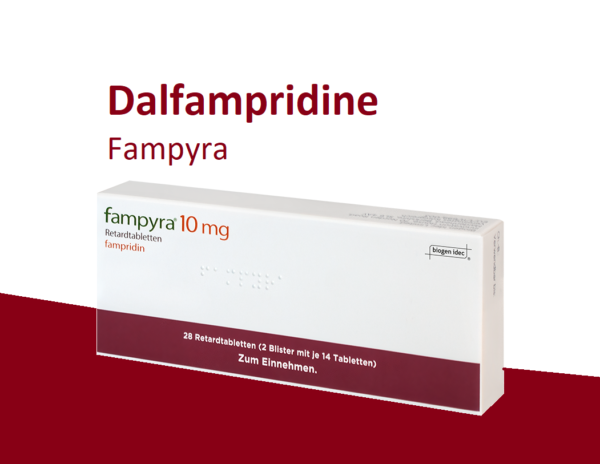
Dalfampridine (Fampyra) is a potassium channel blocker that improves neuronal conduction in demyelinated axons. It is used in patients with multiple sclerosis to improve their walking ability.
Dalfampridine (Fampyra) Uses:
- It is used in patients with multiple sclerosis to improve mobility and walking.
Dalfampridine (Fampyra) Dose in Adults
Dalfampridine (Fampyra) Dose in the treatment of Multiple sclerosis:
- 10 mg orally twice daily.
- The maximum daily dose is 20 mg.
- Exceeding 20 mg may not confer additional benefits.
- Missed doses:
- If a dose is missed, an extra dose or double dose should not be administered.
Use in Children:
Not indicated.
Pregnancy Risk Factor C
- Its use in pregnancy is not well-documented.
Use of Dalfampridine while breastfeeding
- It is unknown if the drug will be excreted into breastmilk.
- Experts recommend that you avoid breastfeeding while you are undergoing treatment, until more information is available.
- Because of possible adverse effects in breastfeeding infants, the manufacturer suggests that you either stop using the drug or breastfeed.
Dalfampridine (Fampyra) Dose in Kidney Disease:
Notice:The Cockcroft-Gault formula calculates creatinine clearance.
-
The US labeling system:
- Mild renal impairment (CrCl 51 - 80 mL/minute).
- Although the manufacturer has not suggested any changes in the dosage, seizures could increase due to the reduced clearance.
- Moderate-to-severe kidney impairment (CrCl = 50 mL/minute).
- Contraindicated
- Mild renal impairment (CrCl 51 - 80 mL/minute).
-
Canadian labeling
- Mild to severe impairment (CrCl ==80 mL/minute).
- Contraindicated
- Mild to severe impairment (CrCl ==80 mL/minute).
Dose in Liver disease:
- Adjustment in the dose is not required in patients with liver disease.
- The drug undergoes minimal metabolism and is primarily excreted in urine as unchanged.
Common Side Effects of Dalfampridine (Fampyra):
-
Genitourinary:
- Urinary tract infection
Less Common Side Effects of Dalfampridine (Fampyra):
-
Central nervous system:
- Insomnia
- Dizziness
- Headache
- Equilibrium disturbance
- Paresthesia
-
Gastrointestinal:
- Nausea
- Constipation
- Dyspepsia
-
Neuromuscular & skeletal:
- Weakness
- Back pain
- Acute exacerbations of multiple sclerosis
-
Respiratory:
- Nasopharyngitis
- Pharyngolaryngeal pain
Contraindications to Dalfampridine (Fampyra):
- Allergy to dalfampridine or 4-aminopyridine or any other component of the formulation
- History of Fits;
- Moderate to severe renal impairment (CrCl >=50 mL/minute).
Additional contraindications to Canadian labeling
- Mild, moderate or severe renal impairment (CrCl >=80 mL/minute);
- Use of other forms or compounded 4-aminopyridines in conjunction with fampridine
- Use with medication that inhibits the organic cationtransporter 2 (e.g. , cimetidine, or quinidine)
Warnings and precautions
-
Anaphylaxis
- This drug can cause severe allergic reactions, including anaphylactic reactions.
- Patients might present with symptoms such as urticaria, oropharyngeal, or laryngeal edema and angioedema (throat, tongue).
- It is important to stop all treatment immediately and start the appropriate treatment such as Epinephrine.
-
Seizures
- Seizures are a common side effect of treatment, especially if you take higher doses.
- Seizures can occur as soon as treatment is initiated or as late as weeks later.
- Patients with a history of seizures are more likely to experience seizures.
- Treatment must be stopped if the patient has seizures.
- Patients who have had seizures in the past should not take this drug.
- Before treatment can be initiated, it is important to assess the risk of developing seizures. Patients with a low risk of developing seizures should be treated cautiously.
-
Infection of the urinary tract:
- Clinical trials showed that the prevalence of urinary tract infections in patients with the placebo was higher than the placebo.
- Patients with symptoms of the lower urinary tract must be evaluated.
-
Renal impairment
- Preexisting kidney disease patients are at greater risk for seizures and adverse drug reactions, especially neurological.
- It is excreted primarily unchanged through the kidneys.
- According to US drug labeling, it is contraindicated for moderate to severe renal impairment and mild, moderate and severe impairment according Canadian labeling.
Dalfampridine (fampridine): Drug Interaction
Note: Drug Interaction Categories:
- Risk Factor C: Monitor When Using Combination
- Risk Factor D: Consider Treatment Modification
- Risk Factor X: Avoid Concomitant Use
Risk Factor C (Monitor therapy). |
|
| Cimetidine | May increase serum levels of Dalfampridine. Management: There are many differences in international recommendations regarding the concomitant administration of dalfampridine (also known as fampridine here in Canada) or cimetidine. Refer to appropriate product labeling. |
| MetFORMIN | May increase serum levels of Dalfampridine. MetFORMIN may be increased by Dalfampridine. |
| QuiNIDine | May increase serum levels of Dalfampridine. Management: There are many differences in international recommendations regarding the concomitant administration of dalfampridine (known as fampridine here in Canada) or quinidine. Refer to the appropriate product labeling. |
Monitoring parameters:
- Renal function should be monitored at baseline and at least annually thereafter
- Monitor EEG
- Monitor for the ability of the patient to walk.
How to administer Dalfampridine (Fampyra)?
- It may be administered with or without food.
- The drug should not be chewed, crushed, dissolved in liquids, or divided.
Mechanism of action of Dalfampridine (Fampyra):
- Motor function is improved by the drug acting as a non-specific potentiochannel blocker.
- The potassium current blocker prolongs the action potential, delays repolarization, and improves nerve conduction in focally demyelinated Axons.
- A decrease in neuronal conduction can improve the neurological motor function through the strengthening of the skeletal muscle fiber twist activity.
Absorption:
- Rapid and complete
Protein binding:
- It is minimally bound to plasma proteins
Metabolism:
- The drug undergoes minimal metabolism.
- In vitro data suggests the drug is metabolized in the liver primarily via CYP2E1 to 3-hydroxy-4aminopyridine. It is then further conjugated to 3-hydroxy-4-aminopyridine sulfate. The metabolites are inactive.
Bioavailability:
- 96%
Half-life elimination:
- 5.2-6.5 hours;
- The half-life of the drug is prolonged in patients with severe renal impairment (about 3 times longer)
Time to peak plasma concentration:
- 3-4 hours
Excretion:
- Urine (96%; 90% of total dose as unchanged drug);
- feces (0.5%)
International Brand Names of Dalfampridine:
- Ampyra
- Fampyra
- Fampyra SR
Dalfampridine Brand Names in Pakistan:
No Brands Available in Pakistan.
.png)


