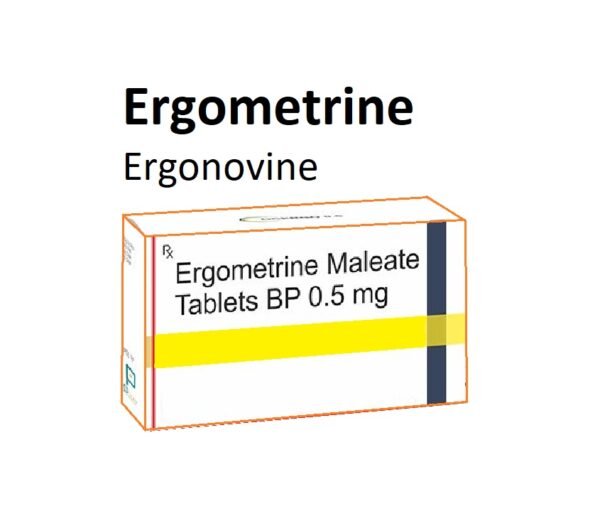
Ergometrine (Ergonovine) causes smooth muscle contractions. It is indicated for the treatment and prevention of postpartum bleeding as it causes uterine muscle contractions. It is administered in the third stage of labor after the delivery of the placenta and excluding the possibility of twin pregnancy.
Ergometrine (Ergonovine) Uses:
Note: It is not approved for use in the US.
-
Postpartum or postabortion hemorrhage:
- For the prevention and treatment of postpartum and postabortion bleeding caused by uterine atony.
-
Off Label Use of Ergonovine in Adults:
- For diagnostic workup of Vasospastic angina.
Ergometrine (Ergonovine) Dose in Adults
Ergometrine (Ergonovine) Dose in the Treatment and prevention of postpartum or postabortion bleeding:
- IM or IV (The intravenous route should be reserved for emergency use only):
- 0.2 mg,
- The dose may be repeated every 2 to 4 hours if needed.
- A maximum of 5 total doses may be administered.
Ergometrine (Ergonovine) Dose in the treatment of Intracoronary provocation testing for vasospastic angina (off-label):
- Intracoronary (offlabel route):
- 20 to 60 mcg.
Dose in Children:
Not indicated.
Ergometrine (Ergonovine) Pregnancy Risk Category: X
- Only the third stage of pregnancy is when the drug can be administered. It is not recommended for use in pregnancy prior to the delivery of placenta.
- The drug can only be administered after the placenta has been delivered and twin pregnancy has been ruled-out.
- It can cause uterine contractions, uterine rupture, amniotic fluid embolism, cervical or perineal lacerations and trauma to the infant if administered prior to the third stage.
Ergonovine use during breastfeeding:
- It can cause ergotism among breastfeeding infants.
- According to the manufacturer's labeling breastfeeding is not arecommended if more than one dose is given to the mother postpartum.
- Breastfeeding may be stopped if only one dose has been given.
Dose in Kidney disease:
No dosage adjustments have been mentioned in the product labeling.
Dose in Liver disease:
No dosage adjustments have been mentioned in the product labeling.
Side effects of Ergometrine (Ergonovine):
-
Cardiovascular:
- Angina Pectoris (Transient)
- Bradycardia
- Hypertension
- Myocardial Infarction
- Palpitations
- Shock
- Thrombophlebitis
-
Central Nervous System:
- Dizziness
- Hallucination
- Headache
- Vertigo
-
Dermatologic:
- Diaphoresis
-
Endocrine & Metabolic:
- Water Intoxication
-
Gastrointestinal:
- Abdominal Pain
- Diarrhea
- Nausea
- Vomiting
-
Genitourinary:
- Hematuria
-
Hypersensitivity:
- Hypersensitivity Reaction
-
Respiratory:
- Dyspnea
-
Miscellaneous:
- Ergot Alkaloids Toxicity
Contraindication to Ergometrine (Ergonovine):
- Allergy reactions to ergonovine or other ergot preparations or any component of this formulation
- Induction of labor
- Threatened spontaneous abortion
- Toxemia during pregnancy
- Hypertension;
- Breastfeeding (if more that one dose is given)
- Concomitant HIV protease inhibitions for women and non-nucleoside retro transcriptase inhibitors for women
Notification
- ergot derivatives are not recommended for patients taking concomitant potent CYP3A4 inhibiters such as azole antifungals or some macrolide antibiotics.
Warnings and precautions
-
Ergotism [Canadian Boxed Warn]
- As a result of the vasoconstrictor effects, prolonged treatment can lead to gangrene or other signs of ergotism.
-
Cardiovascular disease: [Canadian boxed warning]
- Angina may result from coronary vasoconstriction.
- Preexisting heart disease patients should be cautious about taking the drug.
-
Hypocalcemia:
- Hypocalcemia patients may not respond to the drug.
- These patients might be able to restore their uterine responsiveness for ergonovine by receiving intravenous calcium first.
Ergonovine: Drug Interaction
Note: Drug Interaction Categories:
- Risk Factor C: Monitor When Using Combination
- Risk Factor D: Consider Treatment Modification
- Risk Factor X: Avoid Concomitant Use
Risk Factor C (Monitor therapy). |
|
| Antiemetics (5HT3 Antagonists) | This may increase the serotonergic effects of Serotonin Activators. This could lead to serotonin syndrome. |
| Antipsychotic Agents | Antipsychotic Agents may have a greater adverse/toxic effect if they are regulated with serotonin modulators. Serotonin modulators can increase dopamine blockade and, therefore, may increase the risk of developing neuroleptic malignant syndrome. Serotonin modulators may have a serotonergic effect that is enhanced by antipsychotic agents. This could lead to serotonin syndrome. |
| Aprepitant | High risk of Inhibitors causing an increase in serum CYP3A4 Substrates concentrations |
| Chloroprocaine | May increase the hypertensive effects of Ergot Derivatives. |
| Clofazimine | High risk of Inhibitors causing an increase in serum CYP3A4 Substrates concentrations |
| Moderate CYP3A4 inhibitors | Might decrease metabolism of CYP3A4 substrates (High Risk with Inhibitors). |
| Duvelisib | High risk of Inhibitors causing an increase in serum CYP3A4 Substrates concentrations |
| Erdafitinib | High risk of Inhibitors causing an increase in serum CYP3A4 Substrates concentrations |
| Fosaprepitant | High risk of Inhibitors causing an increase in serum CYP3A4 Substrates concentrations |
| Fosnetupitant | High risk of Inhibitors causing an increase in serum CYP3A4 Substrates concentrations |
| Larotrectinib | High risk of Inhibitors causing an increase in serum CYP3A4 Substrates concentrations |
| Metaxalone | This may increase the serotonergic effects of Serotonin Activators. This could lead to serotonin syndrome. |
| Methylphenidate | Can increase the toxic/adverse effects of Serotonin Modulators. In particular, there may be an increase in the risk of serotonin syndrome and serotonin toxicities. |
| Metoclopramide | The adverse/toxic effects of Metoclopramide may be exacerbated by Serotonin Modulators. This could manifest as serotonin syndrome, neuroleptic malignant syndrome, or other symptoms. |
| Netupitant | High risk of Inhibitors causing an increase in serum CYP3A4 Substrates concentrations |
| Opioid Agonists | This may increase the serotonergic effects of Serotonin Activators. This could lead to serotonin syndrome. |
| Palbociclib | High risk of Inhibitors causing an increase in serum CYP3A4 Substrates concentrations |
| Reboxetine | May increase the hypertensive effects of Ergot Derivatives. |
| Serotonin Modulators | This may increase the toxic/adverse effects of other Serotonin Activators. Serotonin syndrome can develop. Exceptions: Nicergoline; Tedizolid. |
| Simeprevir | High risk of Inhibitors causing an increase in serum CYP3A4 Substrates concentrations |
| Tedizolid | This may increase the serotonergic effects of Serotonin Activators. This could lead to serotonin syndrome. |
| TraMADol | The adverse/toxic effects of TraMADol may be exacerbated by Serotonin Modulators. Seizures may increase. TraMADol could increase the serotonergic effects of Serotonin Activators. This could lead to serotonin syndrome. |
Risk Factor D (Regard therapy modification) |
|
| Anti-Parkinson Agents (Monoamine Oxidase Inhibitor) | This may increase the serotonergic effects of Serotonin Activators. This could lead to serotonin syndrome. Selegiline, rasagiline or safinamide can be combined with a serotonin modator to monitor for symptoms and signs of serotonin syndrome. It is not recommended to use transdermal selegiline in combination with serotonin modators. |
| Beta-Blockers | May increase the vasoconstricting effects of Ergot Derivatives. |
| Strong CYP3A4 inhibitors | Might decrease metabolism of CYP3A4 substrates (High Risk with Inhibitors). |
| Linezolid | This may increase the serotonergic effects of Serotonin Activators. This could lead to serotonin syndrome. Management: Serotonin syndrome/serotonin toxicemia can occur if serotonin modulators are stopped 2 weeks before linezolid is administered. Stop using serotonin modators immediately if you need to initiate linezolid immediately. |
| Antibiotics with Macrolide | Could increase serum concentrations of Ergot Derivatives. Cabergoline, Clarithromycin and Fidaxomicin may interact. Refer to the specific monograph for more details. Azithromycin (Systemic); Fidaxomicin, Spiramycin are exceptions. |
| MiFEPRIStone | High risk of Inhibitors causing an increase in serum concentrations of CYP3A4 substrates. Management: Minimize doses of CYP3A4 substrates, and monitor for increased concentrations/toxicity, during and 2 weeks following treatment with mifepristone. Avoid dihydroergotamine and ergotamine. |
| Stiripentol | High risk of Inhibitors causing an increase in serum concentrations of CYP3A4 substrates. Management: Avoid stiripentol use with CYP3A4 Substrates that have a narrow therapeutic Index. This is to avoid adverse effects and toxicities. Monitoring of any CYP3A4 substrate that is used with stiripentol should be closely done. |
Risk Factor X (Avoid Combination) |
|
| Alpha-/Beta Agonists | Alpha-/BetaAgonists' hypertensive effects may be enhanced by Ergot Derivatives. Ergot Derivatives may enhance the vasoconstricting effect of Alpha-/Beta-Agonists. |
| Alpha1-Agonists | Alpha1-Agonists' hypertensive effects may be enhanced by Ergot Derivatives. Alpha1-Agonists' vasoconstricting effects may be enhanced by using Ergot Derivatives. |
| Antihepaciviral Combination Products | May increase serum concentrations of Ergot Derivatives. |
| Conivaptan | High risk of Inhibitors causing an increase in serum CYP3A4 Substrates concentrations |
| Dapoxetine | Can increase the toxic/adverse effects of Serotonin Activators. |
| Fusidic Acid (Systemic). | High risk of Inhibitors causing an increase in serum CYP3A4 Substrates concentrations |
| Idelalisib | High risk of Inhibitors causing an increase in serum CYP3A4 Substrates concentrations |
| Itraconazole | May increase serum Ergonovine concentrations |
| Ketoconazole (Systemic) | May increase serum Ergonovine concentrations |
| Letermovir | May increase serum concentrations of Ergot Derivatives. |
| Lorcaserin | Could increase the toxic/adverse effects of Ergot Derivatives. Particularly, the combination of these drugs may increase your risk of developing valvular disease. Lorcaserin could increase the serotonergic effects of Ergot Derivatives. This could lead to serotonin syndrome. |
| Methylene Blue | This may increase the serotonergic effects of Serotonin Activators. This could lead to serotonin syndrome. |
| Nitroglycerin | Ergot derivatives can decrease the vasodilatory effects of Nitroglycerin. This is especially important for patients with angina. The serum concentrations of Ergot Derivatives may be increased by Nitroglycerin. |
| Posaconazole | May increase serum Ergonovine concentrations |
| Protease inhibitors | May increase serum concentrations of Ergot Derivatives. |
| Reverse Transcriptase inhibitors (Non-Nucleoside). | Could increase serum Ergonovine concentration. This would occur most commonly with delavrdine. Other Non-Nucleoside Reverse Transcriptase Inhibitors might be more likely to lower the concentration of Ergonovine. |
| Roxithromycin | May increase serum concentrations of Ergot Derivatives. |
| Serotonin 5-HT1D Receptor Agonists | The vasoconstricting effects of Serotonin 5-HT1D Receptor Aggonists may be enhanced by Ergot Derivatives. The vasoconstricting effects of Ergot Derivatives could be enhanced by Serotonin 5-HT1D Receptor Aggonists. |
| Voriconazole | May increase serum Ergonovine concentrations |
Monitoring parameters:
- Blood pressure,
- pulse,
- uterine response;
- cramping
How to administer Ergometrine (Ergonovine)?
IV or IM:
- It may be administered by an IM or intravenous injection.
- The intravenous route is preferred in patients with severe uterine bleeding or those with life-threatening emergencies.
- The intravenous injection should be administered slowly over one minute or more.
Intracoronary (off-label use/route):
- It may be used during angiography for coronary provocation testing.
- The drug is mixed in normal saline and injected slowly over 2 - 5 minutes into the left coronary.
- This is followed after one to two minutes by coronary angiography
- If the left coronary provocation test is negative, the right coronary provocation test may be performed similarly over 2 - 5 minutes.
Mechanism of action of Ergometrine (Ergonovine):
- It causes smooth muscles contractions.
- It causes prolonged contractions, which reduces the duration of the third stage of labor.
- It causes less vasoconstriction than ergotamine and has slight adrenergic blocking properties.
The beginning of action
- IM: 2 to 5 minutes;
- IV: Immediate
Duration:
- IM: Uterine effect: ≥3 hours;
- IV: about 45 minutes
International Brand Names of Ergonovine:
- Ergometrina maleato
- Ergometrine
- Ergotab
- Ergoto
- Ergotrate
- Ergovin
- Erinmet
- Evina
- Malergo
- Mergon
- Metrergina
- Mitrotan
- Neometrin
- UL Ergometrine
- Uteronovin
Ergonovine Brand Names in Pakistan:
Ergometrine Maleate Tablets 2 mg in Pakistan |
|
| Migranil | Polyfine Chempharma (Pvt) Ltd. |
.png)


