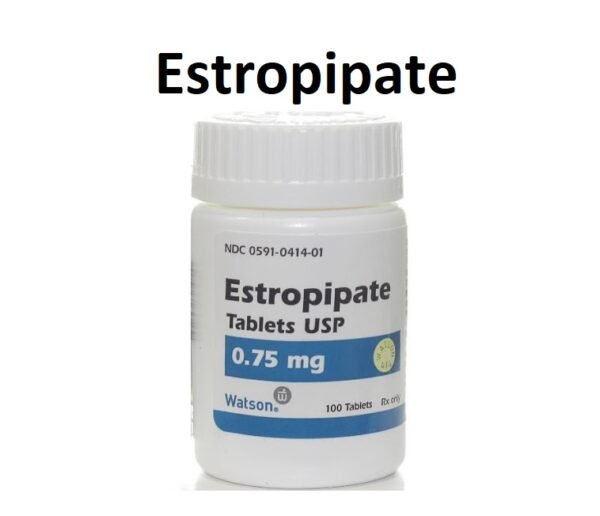
Estropipate is an estrogen that is used as a replacement hormone therapy in post-menopausal women.
Estropipate Uses:
-
Hypoestrogenism, female:
- Used in the treatment of hypoestrogenism due to hypogonadism, castration, or primary ovarian failure.
-
Osteoporosis prevention:
- For the prevention of postmenopausal osteoporosis.
- Limitations of use: Used only in women at significant risk of postmenopausal osteoporosis; consider the use of nonestrogen medications.
-
Vasomotor symptoms associated with menopause:
- Used in the treatment of moderate to severe vasomotor symptoms associated with menopause.
-
Vulval and vaginal atrophy associated with menopause:
- Used in the treatment of moderate to severe symptoms of vulval and vaginal atrophy associated with menopause.
- Limitations of use: When used solely for the treatment of vulvar and vaginal atrophy, topical vaginal products should be considered.
Note:
- The International Society for the Study of Women’s Sexual Health and The North American Menopause Society has endorsed the term genitourinary syndrome of menopause (GSM) as new terminology for vulvovaginal atrophy.
- The term GSM encompasses all genital and urinary signs and symptoms associated with a loss of estrogen due to menopause.
Estropipate Dose in Adults
Female:
- General dosing guidelines:
- When treating symptoms of menopause, hormone therapy should be evaluated routinely for appropriate dose, duration, and route of administration for each individual patient based on treatment goals, risk factors, and overall health.
- Combined estrogen/progestin therapy is indicated for postmenopausal persons with a uterus to decrease the risk of endometrial cancer.
- Individuals who have had a hysterectomy generally do not need a progestin; however, one may be needed if there is a history of endometriosis.
- Adjust dose based on patient response.
Estropipate Dose in the treatment of Hypoestrogenism (female) due to castration or primary ovarian failure:
- Oral: 1.5 to 9 mg each day for the first 3 weeks of a theoretical cycle, followed by a rest period of 8 to 10 days.
- Adjust the dose based upon the patient's response and maintain at the lowest effective dose.
Estropipate Dose in the treatment of Hypoestrogenism (female) due to hypogonadism:
- Oral: 1.5 to 9 mg each day for the first 3 weeks of a theoretical cycle, followed by a rest time period of 8 to 10 days.
- Repeat if bleeding does not occur by the end of the rest period.
- The duration of therapy required to produce the withdrawal bleeding will vary according to the responsiveness of the endometrium.
- If satisfactory withdrawal bleeding does not occur, give an oral progestin in addition to estrogen during the third week of the cycle.
- Adjust the dose based upon the patient's response and maintain at the lowest effective dose.
Estropipate Dose in the prevention of Osteoporosis:
- Oral: 0.75 mg in a day for 25 days of a 31-day cycle
Estropipate Dose in the treatment of Vasomotor symptoms associated with menopause:
- Oral: 0.75 to 6 mg in a day.
- If menstrual bleeding has not occurred for 2 or more months, cyclic administration can be initiated at any time.
- If the patient has menstruated, start cyclic administration on day 5 of bleeding.
Estropipate Dose in the treatment of Vulvar and vaginal atrophy associated with menopause:
- Oral: 0.75 to 6 mg in a day; administer cyclically.
Use in Children:
Not indicated in children.
Estropipate Pregnancy Risk Category: X
- Pregnant women should not use it.
- When used in combination with hormonal contraceptives, estrogen and progestin have not been shown to cause teratogenic side effects.
Estropipate use during breastfeeding:
- Breastmilk contains estrogens, which have been shown to reduce the quality and quantity of human milk.
- Manufacturer recommends caution when administering estropipate breastfeeding women.
Estropipate Dose in Kidney Disease:
The manufacturer's labeling doesn't provide any dosage adjustment (has not been studied).
Estropipate Dose in Liver disease:
Its use is contraindicated with hepatic dysfunction or disease.
Side effects of Estropipate:
-
Cardiovascular:
- Edema
- Venous Thromboembolism
- Hypertension
- Pulmonary Thromboembolism
-
Central Nervous System:
- Chorea
- Migraine
- Depression
- Dizziness
- Headache
-
Dermatologic:
- Erythema Nodosum
- Loss Of Scalp Hair
- Chloasma
- Erythema Multiforme
-
Endocrine & Metabolic:
- Change In Libido
- Exacerbation Of Porphyria
- Hirsutism
- Hypercalcemia
- Weight Gain
- Weight Loss
- Impaired Glucose Tolerance
- Increased HDL Cholesterol
- Decreased LDL Cholesterol
- Increased Serum Triglycerides
- Increased T4
- Increased Thyroxine Binding Globulin
- Menstrual Disease (Alterations In Frequency And Flow Of Menses)
- Phospholipidemia
-
Gastrointestinal:
- Abdominal Cramps
- Gallbladder Disease
- Nausea
- Pancreatitis
- Bloating
- Carbohydrate Intolerance
- Cholecystitis
- Cholelithiasis
- Vomiting
-
Genitourinary:
- Breast Hypertrophy
- Breast Tenderness
- Vulvovaginal Candidiasis
-
Hematologic & Oncologic:
- Change In Platelet Count (Increase)
- Decreased Antifactor Xa
- Decreased Antithrombin III Plasma Level
- Endometrial Carcinoma
- Hemorrhagic Eruption
- Increased Clotting Factor VII
- Increased Clotting Factor VIII
- Increased Clotting Factor IX
- Increased Clotting Factor X
- Increased Platelet Aggregation
- Increased Serum Fibrinogen
- Prolonged Prothrombin Time
- Uterine Fibroids (Increased Size)
-
Hepatic:
- Cholestatic Jaundice
-
Ophthalmic:
- Change In Corneal Curvature (Steepening)
- Contact Lens Intolerance
Contraindications to Estropipate:
- Hypersensitivity to estrogens and any component of the formula
- Undiagnosed abnormal Genital Bleeding;
- DVT or PE (current and/or historical of);
- Active or past history of arterial embombolic disease (eg. stroke, MI)
- Breast cancer (known, suspected or history of);
- Estrogen-dependent tumor (known and suspected);
- Hepatic impairment or disease
- pregnancy.
Warnings and precautions
-
Breast cancer: [US Boxed Warn]
- Data from the Women's Health Initiative (WHI), shows that postmenopausal women who use conjugated estrogens (CE) and medroxyprogesterone (MPA) have a higher risk of developing invasive breast cancer.
- This risk decreases when therapy is stopped, according to observational studies.
- Increased breast density may be caused by hormone therapy. An increase in abnormal mammogram findings that require further evaluation has been reported using estrogen alone or in combination.
- The WHI study found no evidence of an increase in breast cancer risk for women who had a hysterectomy with CE.
- Postmenopausal women receiving hormone therapy could be at greater risk for breast cancer due to their estrogen or progestin doses, length of therapy, route of administration, individual patient characteristics, and the timing of therapy initiation.
- Patients with breast cancer or bone metastases may experience severe hypercalcemia from estrogen use. If this happens, discontinue estrogen.
-
Dementia: [US Boxed Warning]
- To prevent dementia, it is not a good idea to use estrogens without or with progestin.
- The Women's Health Initiative Memory Study, (WHIMS), found that women aged >=65 years were more likely to develop dementia if they took CE either alone or in combination.
- The WHI memory studies were done on women over 65, but it is not known if the findings can be applied to younger women postmenopausal.
- Hormone therapy is not recommended for any age in order to treat or prevent cognitive decline or dementia.
-
Endometrial Cancer: [US Boxed Warn]
- Endometrial cancer is more likely to occur in women who use unopposed estrogen.
- A progestin may be added to estrogen therapy to reduce the risk of endometrial Hyperplasia, which is a precursor of endometrial carcinoma.
- To rule out malignancy in women who have undiagnosed abnormal vaginal blood flow, it is important to perform appropriate diagnostic tests, including endometrial sampling, if necessary.
- Endometrial cancer is a combination of dose and duration. It's most common in patients who have been on therapy for more than five years.
- There is no evidence to suggest that natural estrogens have a different risk profile than synthetic estrogens of equivalent estrogen doses.
- A progestin should not be used if low doses are being administered locally to treat vaginal atrophy. However, there are insufficient long-term data (>1 years) to support this recommendation.
-
Endometriosis:
- Estrogens may exacerbate endometriosis.
- Women with endometrium after hysterectomy should consider adding a progestin.
- Post-hysterectomy with estrogen therapy unopposed has led to malignant transformation of the remaining endometrial implants.
-
Heir to thrombophilia
- Women who have inherited thrombophilias (eg protein C or S deficiencies) might be at greater risk for venous embolism.
-
The Lipid Effects
- Triglycerides may also be increased in women with preexisting hypertriglyceridemia; if pancreatitis occurs than discontinue.
- Estrogen compounds are often associated with lipid effects, such as higher HDL cholesterol and lower LDL cholesterol.
-
Ovarian cancer:.
- An association may exist, but the risk of developing a serious condition is unlikely. The duration of therapy can also influence the likelihood of developing a severe reaction.
- The information available regarding the use of estrogen/progestin therapy or menopausal estrogen and the risk of developing ovarian cancer is not consistent
-
Retinal vascular embolism:
- Estrogens can cause retinal vessel thrombosis. Stop taking them if you have migraines, diplopias, vision loss, proptosis or any other visual disturbances.
- You should discontinue the treatment if you find retinal vascular or papilledema.
-
Asthma
- Patients with asthma should exercise caution as it can worsen the condition.
-
Carbohydrate intolerance:
- Before starting therapy, you should consider the age, cardiovascular, as well as metabolic risk factors of patients with diabetes.
- Patients with diabetes may experience impaired glucose tolerance.
-
Cardiovascular disease: [US-Boxed Warning]
- To prevent heart disease, estrogens should not be combined with or without progestin.
- Data from the Women's Health Initiative studies has shown that CE has an increased risk for stroke and deep vein thrombosis. There has also been a reported increase in DVT, stroke and pulmonary emboli (PE) in postmenopausal females between 50 and 79 years old.
- Additional risk factors include diabetes mellitus, hypertension, hypercholesterolemia, SLE, obesity, tobacco use, and/or history of venous thromboembolism (VTE).
- Transdermal administration is preferred to treat vasomotor symptoms associated with menopause in patients at high risk for developing thrombotic events.
- You should manage your risk factors well. If you suspect that adverse cardiovascular events may occur, stop using the medication immediately.
- Women with an active DVT, PE, or arterial thromboembolic diseases (stroke and MI) are not recommended.
-
Fluid retention can lead to more severe diseases
- Patients with fluid retention-related diseases, such as cardiac or renal dysfunction, should be cautious.
-
Epilepsy:
- Epilepsy can be aggravated if you are careful.
-
Gallbladder disease
- Postmenopausal estrogen use may increase the risk of gallbladder diseases that require surgery.
-
Hepatic dysfunction
- It is not recommended for use in the presence of hepatic impairments or diseases.
- If jaundice occurs or if there are acute or chronic hepatic disorders, discontinue use.
- Patients with hepatic dysfunction are less likely to be able to metabolize estrogens.
- Be cautious if you have a history of cholestatic jaundice due to previous estrogen use or pregnancy
-
Hepatic hemomangiomas
- Patients with hepatic hemomangiomas should be cautious; it may worsen the condition.
-
Hypocalcemia:
- Patients with severe hypocalcemia should be cautious.
-
Migraine
- Migraine can be aggravated by taking care.
-
Porphyria
- Patients with porphyria should be cautious as it can worsen the condition.
-
SLE:
- Patients with SLE should be cautious; it may worsen the condition.
Estropipate: Drug Interaction
Note: Drug Interaction Categories:
- Risk Factor C: Monitor When Using Combination
- Risk Factor D: Consider Treatment Modification
- Risk Factor X: Avoid Concomitant Use
Risk Factor C (Monitor therapy) |
|
| Ajmaline | Estrogen Derivatives may enhance the adverse/toxic effect of Ajmaline. Specifically, the risk for cholestasis may be increased. |
| Anthrax Immune Globulin (Human) | Estrogen Derivatives may enhance the thrombogenic effect of Anthrax Immune Globulin (Human). |
| Antidiabetic Agents | Hyperglycemia-Associated Agents may diminish the therapeutic effect of Antidiabetic Agents. |
| Ascorbic Acid | May increase the serum concentration of Estrogen Derivatives. |
| Bosentan | May decrease the serum concentration of CYP3A4 Substrates (High risk with Inducers). |
| Broccoli | May decrease the serum concentration of CYP1A2 Substrates (High risk with Inducers). |
| C1 inhibitors | Estrogen Derivatives may enhance the thrombogenic effect of C1 inhibitors. |
| Cannabis | May decrease the serum concentration of CYP1A2 Substrates (High risk with Inducers). |
| Chenodiol | Estrogen Derivatives may diminish the therapeutic effect of Chenodiol. Management: Monitor clinical response to chenodiol closely when used together with any estrogen derivative. |
| Corticosteroids (Systemic) | Estrogen Derivatives may increase the serum concentration of Corticosteroids (Systemic). |
| CYP1A2 Inducers (Moderate) | May decrease the serum concentration of CYP1A2 Substrates (High risk with Inducers). |
| CYP3A4 Inducers (Moderate) | May decrease the serum concentration of CYP3A4 Substrates (High risk with Inducers). |
| CYP3A4 Inhibitors (Moderate) | May increase the serum concentration of Estrogen Derivatives. |
| CYP3A4 Inhibitors (Strong) | May increase the serum concentration of Estrogen Derivatives. |
| Cyproterone | May decrease the serum concentration of CYP1A2 Substrates (High risk with Inducers). |
| Dantrolene | Estrogen Derivatives may enhance the hepatotoxic effect of Dantrolene. |
| Deferasirox | May decrease the serum concentration of CYP3A4 Substrates (High risk with Inducers). |
| Erdafitinib | May decrease the serum concentration of CYP3A4 Substrates (High risk with Inducers). |
| Herbs (Estrogenic Properties) | May enhance the adverse/toxic effect of Estrogen Derivatives. |
| Immune Globulin | Estrogen Derivatives may enhance the thrombogenic effect of Immune Globulin. |
| Ivosidenib | May decrease the serum concentration of CYP3A4 Substrates (High risk with Inducers). |
| LamoTRIgine | Estrogen Derivatives may decrease the serum concentration of LamoTRIgine. |
| Lenalidomide | Estrogen Derivatives may enhance the thrombogenic effect of Lenalidomide. |
| Mivacurium | Estrogen Derivatives may increase the serum concentration of Mivacurium. |
| Nonsteroidal Anti-Inflammatory Agents (COX-2 Selective) | May enhance the thrombogenic effect of Estrogen Derivatives. Nonsteroidal Anti-Inflammatory Agents (COX-2 Selective) may increase the serum concentration of Estrogen Derivatives. |
| ROPINIRole | Estrogen Derivatives may increase the serum concentration of ROPINIRole. |
| Sarilumab | May decrease the serum concentration of CYP3A4 Substrates (High risk with Inducers). |
| Siltuximab | May decrease the serum concentration of CYP3A4 Substrates (High risk with Inducers). |
| Succinylcholine | Estrogen Derivatives may increase the serum concentration of Succinylcholine. |
| Teriflunomide | May decrease the serum concentration of CYP1A2 Substrates (High risk with Inducers). |
| Thalidomide | Estrogen Derivatives may enhance the thrombogenic effect of Thalidomide. |
| Theophylline Derivatives | Estrogen Derivatives may increase the serum concentration of Theophylline Derivatives. Exceptions: Dyphylline. |
| Thyroid Products | Estrogen Derivatives may diminish the therapeutic effect of Thyroid Products. |
| Tocilizumab | May decrease the serum concentration of CYP3A4 Substrates (High risk with Inducers). |
| Ursodiol | Estrogen Derivatives may diminish the therapeutic effect of Ursodiol. |
Risk Factor D (Consider therapy modification) |
|
| Anticoagulants | Estrogen Derivatives may diminish the anticoagulant effect of Anticoagulants. More specifically, the potential prothrombotic effects of some estrogens and progestin-estrogen combinations may counteract anticoagulant effects. Management: Carefully weigh the prospective benefits of estrogens against the potential increased risk of procoagulant effects and thromboembolism. Use is considered contraindicated under some circumstances. Refer to related guidelines for specific recommendations. |
| Cosyntropin | Estrogen Derivatives may diminish the diagnostic effect of Cosyntropin. Management: Discontinue estrogen containing drugs 4 to 6 weeks prior to cosyntropin (ACTH) testing. |
| CYP3A4 Inducers (Strong) | May increase the metabolism of CYP3A4 Substrates (High risk with Inducers). Management: Consider an alternative for one of the interacting drugs. Some combinations may be specifically contraindicated. Consult appropriate manufacturer labeling. |
| Dabrafenib | May decrease the serum concentration of CYP3A4 Substrates (High risk with Inducers). Management: Seek alternatives to the CYP3A4 substrate when possible. If concomitant therapy cannot be avoided, monitor clinical effects of the substrate closely (particularly therapeutic effects). |
| Enzalutamide | May decrease the serum concentration of CYP3A4 Substrates (High risk with Inducers). Management: Concurrent use of enzalutamide with CYP3A4 substrates that have a narrow therapeutic index should be avoided. Use of enzalutamide and any other CYP3A4 substrate should be performed with caution and close monitoring. |
| Hyaluronidase | Estrogen Derivatives may diminish the therapeutic effect of Hyaluronidase. Management: Patients receiving estrogens (particularly at larger doses) may not experience the desired clinical response to standard doses of hyaluronidase. Larger doses of hyaluronidase may be required. |
| Lorlatinib | May decrease the serum concentration of CYP3A4 Substrates (High risk with Inducers). Management: Avoid concurrent use of lorlatinib with any CYP3A4 substrates for which a minimal decrease in serum concentrations of the CYP3A4 substrate could lead to therapeutic failure and serious clinical consequences. |
| Mitotane | May decrease the serum concentration of CYP3A4 Substrates (High risk with Inducers). Management: Doses of CYP3A4 substrates may need to be adjusted substantially when used in patients being treated with mitotane. |
| Pitolisant | May decrease the serum concentration of CYP3A4 Substrates (High risk with Inducers). Management: Combined use of pitolisant with a CYP3A4 substrate that has a narrow therapeutic index should be avoided. Other CYP3A4 substrates should be monitored more closely when used with pitolisant. |
| Pomalidomide | May enhance the thrombogenic effect of Estrogen Derivatives. Management: Canadian pomalidomide labeling recommends caution with use of hormone replacement therapy and states that hormonal contraceptives are not recommended. US pomalidomide labeling does not contain these specific recommendations. |
| Somatropin | Estrogen Derivatives may diminish the therapeutic effect of Somatropin. Shown to be a concern with oral hormone replacement therapy in postmenopausal women. Management: Monitor for reduced growth hormone efficacy. A larger somatropin dose may be required to reach treatment goal. This interaction does not appear to apply to non-orally administered estrogens (e.g., transdermal, vaginal ring). |
| St John's Wort | May decrease the serum concentration of CYP3A4 Substrates (High risk with Inducers). Management: Consider an alternative for one of the interacting drugs. Some combinations may be specifically contraindicated. Consult appropriate manufacturer labeling. |
| Tipranavir | Estrogen Derivatives may enhance the dermatologic adverse effect of Tipranavir. The combination of tipranavir/ritonavir and ethinyl estradiol/norethindrone was associated with a high incidence of skin rash. Tipranavir may decrease the serum concentration of Estrogen Derivatives. Management: Women using hormonal contraceptives should consider alternative, non-hormonal forms of contraception. |
Risk Factor X (Avoid combination) |
|
| Anastrozole | Estrogen Derivatives may diminish the therapeutic effect of Anastrozole. |
| Dehydroepiandrosterone | May enhance the adverse/toxic effect of Estrogen Derivatives. |
| Exemestane | Estrogen Derivatives may diminish the therapeutic effect of Exemestane. |
| Hemin | Estrogen Derivatives may diminish the therapeutic effect of Hemin. |
| Indium 111 Capromab Pendetide | Estrogen Derivatives may diminish the diagnostic effect of Indium 111 Capromab Pendetide. |
| Ospemifene | Estrogen Derivatives may enhance the adverse/toxic effect of Ospemifene. Estrogen Derivatives may diminish the therapeutic effect of Ospemifene. |
Monitoring parameters:
- Prior to therapy, baseline risk for breast cancer and CVD.
- During therapy, age-appropriate breast, and pelvic exams;
- blood pressure;
- unscheduled bleeding lasting longer than 6 months for endometrial pathology (sooner in patients who are diabetic, obese, or have a history of endometrial cancer);
- serum triglycerides (2 weeks after starting therapy in patients with baseline level more than 200 mg/dL);
- TSH (6 to 12 weeks after starting oral therapy in patients taking thyroid replacement).
Menopausal symptoms:
- Efficacy beginning 1 to 3 months after starting therapy, then every 6 to 12 months as appropriate.
- The duration of treatment should be evaluated at least annually.
Note:
- Monitoring of FSH and serum estradiol is not useful when managing vasomotor symptoms or GSM.
- Prevention of osteoporosis: Bone density measurement
How to administer?
It may be taken without regard to meals.
Mechanism of action of Estropipate:
- Estropipate can be made from naturally occurring estrone.
- Estrogens play a role in the development and maintenance the female reproductive system as well as secondary sexual characteristics.
- Estradiol, the main intracellular human estrogen, is more potent that estrone or estriol at receptor level.
- It is also the primary estrogen secreted before menopause.
- Estrone and estrone-sulfate are more readily available in males than they are in females after menopause.
- Through a negative feedback mechanism, estrogens regulate the pituitary secretion hormone gonadotropins and luteinizing hormone.
- Estrogen replacement decreases high levels of these hormones.
- The preparation of Estropipate comes from purified crystal estrone, which has been solubilized with the sulfate. It is stabilized using piperazine.
Absorption:
- Absorbed well.
Distribution:
- Widely distributed; high concentrations in the sex hormone target organs.
Protein binding:
- Bound to sex hormone-binding globulin and albumin.
Metabolism:
- Hepatic; partial metabolism via CYP3A4 enzymes;
- estradiol is reversibly converted to estrone and estriol;
- estrogens also undergo enterohepatic recirculation by conjugation in the liver, followed by excretion of sulfate and glucuronide conjugates into the bile, then hydrolysis in the intestine and estrogen reabsorption.
- Sulfate conjugates are the primary form found in postmenopausal women.
Excretion:
- Primarily urine (as estradiol, estrone, estriol and their glucuronide and sulfate conjugates).
International Brand Names of Estropipate:
- Ortho-Est 0.625
- Esgen
- Genoral
- Harmogen
- Ortho-Est 1.25
- Ogen
Estropipate Brand Names in Pakistan:
There is no brand available in Pakistan.
.png)


