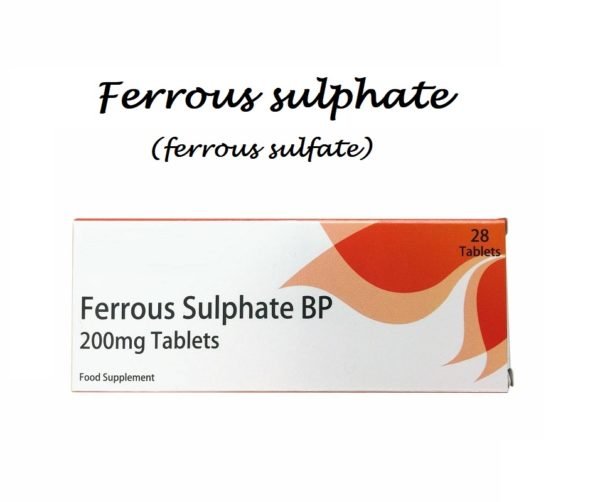
Ferrous sulphate (ferrous sulfate) contains iron that is essential for hemoglobin synthesis. It is also required for the muscles and other enzymes for optimal functioning.
Indications of Ferrous sulphate:
-
Iron-deficiency anemia:
- It is recommended in the prevention and treatment of iron-deficiency anemias.
-
Off Label Use of Ferrous Sulfate in Adults:
- Its use is also helpful in restless legs syndrome.
Ferrous sulphate treatment dosage in adults:
Note:
- This is applicable to both children and adults.
- Ferrous sulfate is present in various oral liquid concentrations.
- Ordering and administering ferrous sulfate requires notice of concentration.
- Inappropriate selection or substitution of one ferrous sulfate liquid for another without proper dosage volume adjustment can lead to fatal over/ underdosing.
- Iron deficiency anemia is preferably treated with immediate-release oral iron products.
- Poor absorption is seen in case of enteric-coated and slow/ sustained-release preparation.
- Doses are expressed in terms of elemental iron
ferrous sulfate contains about 20% elemental iron.
- Dried ferrous sulfate contains about 30% elemental iron.
Ferrous sulphate treatment dosage in the prevention of Iron-deficiency anemia, (in areas where anemia prevalence is ≥40%) (off-label):
-
Women of childbearing age (non-pregnant):
- 30 to 60 mg per oral once a day for 3 consecutive months in a year.
Ferrous sulphate treatment dosage of Iron-deficiency anemia:
- 65 to 200 mg per oral per day.
- It can be given in three divided doses (depending on formulation).
- Note: Greater absorption of iron is seen with alternate-day dosing.
- This dosing is recommended for patients who can maintain adherence.
Ferrous sulphate treatment dosage of Restless legs syndrome (off-label):
- 65 mg per oral (325 mg ferrous sulfate) every 12 hourly concurrently with vitamin C in patients with a ferritin level ≤75 mcg/L.
Ferrous sulphate treatment dosage in children
Ferrous sulphate treatment dosage in children for the prevention of Iron deficiency anemia:
-
Infants ≥4 months (receiving human milk as only nutritional source or >50% as source of nutrition without iron fortified food):
- 1 mg iron/kg per day.
- Note: In full-term infants, added supplementation of iron is not recommended by APP until at least 4-6 months of age if breastfed (full or partial).
-
Infants ≥6 months and Children <2 years in areas where anemia prevalence is >40%:
- 10 to 12.5 mg per oral once a day for 3 consecutive months in a year.
-
Children 2 years to <5 years in areas where anemia prevalence is >40%:
- 30 mg per oral per day for 3 consecutive months in a year.
-
Children ≥5 to 12 years in areas where anemia prevalence is >40%:
- 30 to 60 mg per oral per day for 3 consecutive months in a year.
-
Adolescent menstruating females (nonpregnant females of reproductive potential) in areas where anemia prevalence is >40%:
- 30 to 60 mg per oral per day for 3 consecutive months in a year.
Ferrous sulphate dosage for the treatment of iron deficiency:
-
Infants, Children, and Adolescents:
- 3 to 6 mg/kg/day in three divided doses
- The maximum daily dose is 200 mg per day.
Ferrous sulphate pregnancy Risk Factor: B
- Pregnancy is a time when iron requirements are higher
- Except in extreme cases of anemia, sufficient fetal iron can be maintained regardless of maternal iron status.
- If left untreated, iron deficiency can cause adverse events such as low birth weight, preterm births, or increased perinatal mortality.
- Iron deficiency can be treated in the same way for non-pregnant antenatal females.
- Most studies show iron therapy causes improvement in maternal hematologic parameters. However, data on clinical outcomes for the mother and the neonate are limited.
- If a female is unable to tolerate oral iron, has a history of iron deficiency or has a history of malabsorption, parenteral iron therapy may be indicated.
- Iron sulfate in pregnancy is the best iron supplement.
- Enteric-coated and slow/sustained-release preparations are found to be less effective.
Ferrous sulfate use during breastfeeding:
- Breast milk contains iron.
- Increased iron supplementation is required for breastfeeding women (IOM 2001).
- Iron is still present in breast milk in women with mild to moderate iron deficiencies. However, this is markedly reduced in severe iron deficiency.
- Breast milk with higher iron content is likely to be produced by mothers who have used ferrous sulfate.
- Breastfeeding infants were not exposed to adverse events, even when the mother used ferrous sulfate in supplemental dosages.
- In various trials, ferrous sulfate was evaluated for the treatment of iron deficiency anemia postpartum.
- The compatibility of ferrous salts used to treat anemia with breastfeeding has been shown by the WHO 2002.
- According to WHO guidelines, postpartum women who are at high risk for gestational anemia (whether they are nursing or not) should take oral iron pulse/folic acid 6-12 weeks after giving birth to lower the chance of developing anemia. (WHO 2016c).
Ferrous sulfate dose in Kidney disease:
- No specific dosage adjustment has been mentioned.
- A trial of oral iron replacement is justified and can be continued if the patient is responding (in iron-deficient individuals).
- intravenous iron may be preferred especially in patients who are intolerant or who do not respond to a trial of oral iron replacement.
Ferrous Sulphate Dose in Liver disease:
- Dose adjustment in patients with liver disease has not been mentioned.
- However, it can be administered in liver disease if no contraindications exist.
Ferrous sulfate Side Effects:
-
Gastrointestinal:
- Darkening Of Stools
- Abdominal Pain
- Heartburn
- Nausea
- Constipation
- Flatulence
- Vomiting
- Diarrhea
Contraindication to Ferrous sulfate:
- Hypersensitivity to iron salts and any component of the formula
- hemochromatosis,
- Hemolytic anemia can be a contraindication to iron salts prescribing.
Warnings and precautions
-
Gastrointestinal Disease:
- It is not recommended for patients with peptic ulcers, enteritis, and ulcerative colitis.
Ferrous sulfate: Drug Interaction
Note: Drug Interaction Categories:
- Risk Factor C: Monitor When Using Combination
- Risk Factor D: Consider Treatment Modification
- Risk Factor X: Avoid Concomitant Use
| Risk Factor C (Monitor therapy) | |
| Histamine H2 Receptor Antagonists | May decrease the absorption of Iron Salts. |
| Proton Pump Inhibitors | May decrease the absorption of Iron Salts. |
| Risk Factor D (Consider therapy modification) | |
| Alpha-Lipoic Acid | Iron Salts may decrease the absorption of Alpha-Lipoic Acid. Alpha-Lipoic Acid may decrease the absorption of Iron Salts. |
| Antacids | May decrease the absorption of Iron Salts. |
| Bictegravir | Iron Salts may decrease the serum concentration of Bictegravir. Management: Bictegravir, emtricitabine, and tenofovir alafenamide can be administered with iron salts underfed conditions, but coadministration with or 2 hours after an iron salt is not recommended under fasting conditions. |
| Bisphosphonate Derivatives | Polyvalent Cation Containing Products may decrease the serum concentration of Bisphosphonate Derivatives. Management: Avoid administration of oral medications containing polyvalent cations within: 2 hours before or after tiludronate/clodronate/etidronate; 60 minutes after oral ibandronate; or 30 minutes after alendronate/risedronate. Exceptions: Pamidronate; Zoledronic Acid. |
| Cefdinir | Iron Salts may decrease the serum concentration of Cefdinir. Red-appearing, nonbloody stools may also develop due to the formation of an insoluble iron-cefdinir complex. Management: Avoid concurrent cefdinir and oral iron when possible. Separating doses by several hours may minimize interaction. Iron-containing infant formulas do not appear to interact with cefdinir. |
| Deferiprone | Polyvalent Cation Containing Products may decrease the serum concentration of Deferiprone. Management: Separate administration of deferiprone and oral medications or supplements that contain polyvalent cations by at least 4 hours. |
| Dolutegravir | Iron Salts may decrease the serum concentration of Dolutegravir. Management: Administer dolutegravir at least 2 hours before or 6 hours after oral iron. Administer dolutegravir/rilpivirine at least 4 hours before or 6 hours after oral iron salts. Alternatively, dolutegravir and oral iron can be taken together with food. |
| Eltrombopag | Polyvalent Cation Containing Products may decrease the serum concentration of Eltrombopag. Management: Administer eltrombopag at least 2 hours before or 4 hours after oral administration of any polyvalent cation containing product. |
| Entacapone | Iron Salts may decrease the serum concentration of Entacapone. Management: Consider separating doses of the agents by 2 or more hours to minimize the effects of this interaction. Monitor for decreased therapeutic effects of levodopa during concomitant therapy, particularly if doses cannot be separated. |
| Ferric Hydroxide Polymaltose Complex | May decrease the serum concentration of Iron Salts. Specifically, the absorption of oral iron salts may be reduced. Management: Do not administer intravenous (IV) ferric hydroxide polymaltose complex with other oral iron salts. Therapy with oraliron salts should begin 1 week after the last dose of IV ferric hydroxide polymaltose complex. |
| Iron Isomaltoside | May decrease the serum concentration of Iron Salts. Specifically, absorption of oral iron salts may be reduced. Management: Do not administer intravenous (IV) iron isomaltoside with other oral iron salts. Therapy with oral iron salts should begin 5 days after the last dose of IV iron isomaltoside. |
| Levodopa | Iron Salts may decrease the serum concentration of Levodopa. Only applies to oral iron preparations. Management: Consider separating doses of the agents by 2 or more hours to minimize the effects of this interaction. Monitor for decreased therapeutic effects of levodopa during concomitant therapy, particularly if doses cannot be separated. |
| Levothyroxine | Iron Salts may decrease the serum concentration of Levothyroxine. Management: Separate oral administration of iron salts and levothyroxine by at least 4 hours. Separation of doses is not required with parenterally administered iron salts or levothyroxine. |
| Methyldopa | Iron Salts may decrease the serum concentration of Methyldopa. |
| PenicillAMINE | Polyvalent Cation Containing Products may decrease the serum concentration of PenicillAMINE. Management: Separate the administration of penicillamine and oral polyvalent cation containing products by at least 1 hour. |
| Phosphate Supplements | Iron Salts may decrease the absorption of Phosphate Supplements. Management: Administer oral phosphate supplements as far apart from the administration of an oral iron salt as possible to minimize the significance of this interaction. Exceptions: Sodium Glycerophosphate Pentahydrate. |
| Quinolones | Iron Salts may decrease the serum concentration of Quinolones. Management: Give oral quinolones at least several hours before (4 h for moxi- and sparfloxacin, 2 h for others) or after (8 h for moxi-, 6 h for cipro/dela-, 4 h for lome-, 3 h for gemi-, and 2 h for levo-, nor-, oflox-, pefloxacin, or nalidixic acid) oral iron salts Exceptions: LevoFLOXacin (Oral Inhalation). |
| Tetracyclines | May decrease the absorption of Iron Salts. Iron Salts may decrease the serum concentration of Tetracyclines. Exceptions: Eravacycline. |
| Trientine | Polyvalent Cation Containing Products may decrease the serum concentration of Trientine. Management: Avoid concomitant administration of trientine and oral products that contain polyvalent cations. If oral iron supplements are required, separate the administration by 2 hours. If other oral polyvalent cations are needed, separate administration by 1 hour. |
| Risk Factor X (Avoid combination) | |
| BaloxavirMarboxil | Polyvalent Cation Containing Products may decrease the serum concentration of BaloxavirMarboxil. |
| Dimercaprol | May enhance the nephrotoxic effect of Iron Salts. |
Monitoring parameters:
Iron deficient anemia:
- Hemoglobin and hematocrit/ RBC count/ RBC indices/ serum ferritin/ transferrin saturation, total iron-binding capacity/ serum iron concentration/ erythrocyte protoporphyrin concentration should be monitored.
Cancer and chemotherapy-induced anemia:
- Serum iron/ total iron-binding capacity/ transferrin saturation/ ferritin levels (baseline and periodic) are recommended to check.
Chronic kidney disease associated anemia (patients not on dialysis):
- Hemoglobin/ serum ferritin/ transferrin saturation is required to evaluate response to iron.
How to administer Ferrous sulfate?
- Extended-release oral preparations should not be chewed or crushed.
- The tablet should be taken with water or juice on an empty stomach.
Ferrous sulfate Mechanism of Action:
- Ferrous sulphate is a form of iron that can be replaced by hemoglobin/myoglobin/ enzymes.
- This allows for oxygen transport via hemoglobin.
Start of action
- After oral administration, the hemologic response is approximately 3-10 days.
Peak effect:
- Reticulocytosis can be seen in between 5-10 days. Hemoglobin levels increase within 2-4 weeks
Absorption:
- Iron is absorbed in the upper and duodenum. 10% of the oral dose is absorbed by people who have normal iron stores.
- This is increased to 20%-30% for patients with depleted iron. Food and achlorhydria decrease absorption.
Protein binding:
- To transferrin.
Excretion:
- Urine and sweat. Sloughing of intestinal mucosa. Menses.
Ferrous sulfate Brand Names (International):
- BProtected Pedia Iron
- Fer-In-Sol
- Fer-Iron
- FeroSul
- Ferro-Bob
- FerrouSul
- Iron Supplement Childrens
- Iron Supplement
- Slow Fe
- Slow Iron
- PMS-Ferrous Sulfate
- Aktiferrin
- Brisofer
- Conferon
- Duroferon
- Eribell
- Femas
- Feosol
- Feospan
- Feospan Z
- Fer-In-Sol
- Ferglobin
- Ferlea
- Fero-Gradumet
- Feroba
- Feromin
- Feromin Oral Drops
- Ferro Duretter
- Ferro-grad
- Ferro-Gradumet
- Ferro-Liquid
- Ferrogamma
- Ferrogard
- Ferrograd
- Ferrograd C
- Ferrogradumet
- Ferrolent
- Ferrophor
- Ferroplex ”Era”
- Ferrostatin
- Ferrosterol
- Fersulph
- Haemoprotect
- Hemobion
- Iberol Drops
- Inshel
- Irovit
- Kdiron
- Kidiron
- Liquifer
- Microfer
- Mol-Iron
- Pediafer
- Pharmafer
- Plastufer
- Plexafer
- Retafer
- Slow-Fe
- Sorbifer
- Tardyferon
- Valdefer
Ferrous Sulphate Brand Names in Pakistan:
Ferrous Sulphate Drops 125 mg/ml |
|
| Fer-In-Sol | Progressive Laboratories |
| Iberet | Abbott Laboratories (Pakistan) Limited. |
Ferrous Sulphate Syrup 100 mg/5ml |
|
| F.S | Stanley Pharmaceuticals (Pvt) Ltd. |
| Fer-In-Sol | Progressive Laboratories |
| Ferrosil | Sharex Laboratories (Pvt.) Ltd. |
| Ferrosil | Sharex Laboratories (Pvt.) Ltd. |
| Ferrous Sulphate | Mian Brothers Laboratories (Pvt) Ltd. |
| Vitagro | Albro Pharma |
Ferrous Sulphate 200 mg tablets |
|
| Femorate | Valor Pharmaceuticals |
| Fer-In-Sol | Progressive Laboratories |
| Fer-In-Sol | Progressive Laboratories |
| Ferfate | Alfalah Pharma (Pvt) Ltd. |
| Ferrous Sulphate | P.D.H. Pharmaceuticals (Pvt) Ltd. |
| Ferrous Sulphate | Xenon Pharmaceuticals (Pvt) Ltd. |
| Ferrous Sulphate | Xenon Pharmaceuticals (Pvt) Ltd. |
| Ferrous Sulphate | Albro Pharma |
| Ferrous Sulphate | Geofman Pharmaceuticals |
| Ferrous Sulphate | Albro Pharma |
| Ferrous Sulphate | P.D.H. Pharmaceuticals (Pvt) Ltd. |
| Ferrous Sulphate | Dosaco Laboratories |
| Fersul | Nabiqasim Industries (Pvt) Ltd. |
| Fumolic | Munawar Pharma (Pvt) Ltd. |
| Unifer | Unison Chemical Works |
Ferrous Sulphate 150 mg Capsules |
|
| Fenim | Hizat Pharmaceutical Industries (Pvt) Ltd. |
| Forceful | Universal Pharmaceuticals (Pvt) Ltd |
| Vitafferol | Hizat Pharmaceutical Industries (Pvt) Ltd. |
.png)