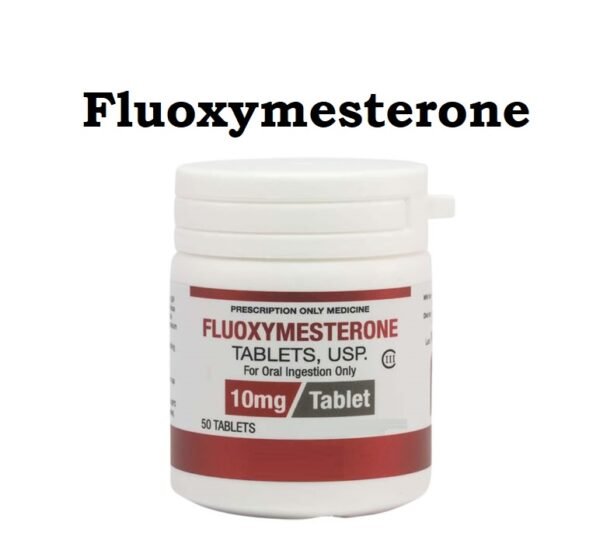
Fluoxymesterone (Androxy) is an anabolic androgenic synthetic steroid. It is five times more potent than natural methyltestosterone.
Fluoxymesterone (Androxy) Uses:
-
Metastatic breast cancer in females:
- It is indicated as a salvage therapy for inoperable metastatic breast cancer in postmenopausal females
-
Delayed puberty in males:
- For the treatment of delayed puberty in males as a replacement therapy.
-
Hypogonadism in males:
- For the treatment of primary or secondary hypogonadism in males.
Fluoxymesterone (Androxy) Dose in Adults
Note: Androxy has been discontinued in the US for more than a year.
Fluoxymesterone (Androxy) Dose in the treatment of metastatic Breast cancer in females:
-
Manufacturer labeling:
- 10 to 40 mg orally once day in divided doses for 3 months or more.
Fluoxymesterone (Androxy) Dose in the treatment of Delayed puberty in males:
- 2.5 to 20 mg orally daily for 4 - 6 months
Fluoxymesterone (Androxy) Dose in the treatment of primary or secondary (hypogonadotropic) Hypogonadism in males:
- 5 to 20 mg orally once a day.
Fluoxymesterone (Androxy) Dose in Childrens
Note: Androxy is no more available in the US (It has been discontinued in the US for more than a year).
Fluoxymesterone (Androxy) Dose in the treatment of Delayed puberty:
-
Adolescent Males:
- Typically avoid its use in individuals younger than 14 years of age.
- Usual range:
- 2.5 mg to 10 mg orally daily.
- The dose may be administered once a day or in divided doses.
- The reported range:
- 2.5 to 20 mg per day.
- A daily dose of 2.5 mg for 6 to 60 months (depending on the clinical response) is recommended by most experts.
- With concomitant testosterone therapy, the response may be evaluated every 3 - 6 months and the dose titrated if required.
Fluoxymesterone (Androxy) Dose in the treatment of Male hypogonadism:
-
Children older than 12 years and Adolescents:
- 2.5 to 20 mg orally daily.
- The dose may be administered once a day or in divided doses for four to six months.
- To prevent rapid over-virilization, initiate the treatment at a lower dose, and titrate the dose gradually upwards.
-
Dosing adjustment for toxicity:
-
Children older than 12 years and Adolescents:
- Edema:
- Reinitiate the treatment at a lower dose, if the drug was stopped because of edema.
- Hypogonadism in adult males:
- Hematocrit (HCT) greater than 50%:
- Avoid its use.
- if HCT greater than 54% during therapy:
- Discontinue treatment until the hematocrit falls to a safe level.
- Assess for hypoxemia and sleep apnea
- Reinitiate at a reduce dose.
- Hematocrit (HCT) greater than 50%:
- Edema:
-
Pregnancy Risk Factor X
- It is not recommended for pregnant women and women who are at risk of becoming pregnant.
- It has been linked to clitoral hypertrophy and labial fusion in pregnancy, as well as vaginal atresia and ambiguous female genitalia.
Fluoxymesterone use during breastfeeding:
- It is unknown if the drug will be excreted into breastmilk.
- Manufacturers recommend that you stop taking the drug and/or breastfeed to evaluate the risks and benefits of therapy.
Fluoxymesterone (Androxy) Dose in Kidney Disease:
- Use with caution.
- The manufacturer has not recommended any adjustments in the dose.
Fluoxymesterone (Androxy) Dose in Liver disease:
-
Hepatic impairment before treatment initiation:
- Use with caution.
- The manufacturer has not recommended any adjustments in the dose.
-
Hepatic impairment during treatment:
- Discontinue the treatment if the patient develops cholestatic hepatitis with jaundice or has abnormal liver functions.
Side effects of Fluoxymesterone (Androxy):
-
Cardiovascular:
- Edema
-
Central Nervous System:
- Anxiety
- Depression
- Headache
- Paresthesia
-
Dermatologic:
- Acne Vulgaris
- Androgenetic Alopecia
-
Endocrine & Metabolic:
- Change In Libido (Decreased Libido Or Increased Libido)
- Electrolyte Disturbance (Calcium
- Chloride
- Inorganic Phosphate
- Potassium
- And Sodium Retention)
- Fluid Retention
- Gynecomastia (Males)
- Hirsutism
- Hypercholesterolemia
- Menstrual Disease (Females; Including Amenorrhea)
-
Gastrointestinal:
- Gastrointestinal Irritation
- Nausea
- Vomiting
-
Genitourinary:
- Benign Prostatic Hypertrophy (Males)
- Oligospermia (Males; At Higher Doses)
- Priapism (Males)
- Testicular Atrophy (Males)
- Virilization (Females; Including Clitoromegaly
- Deepening Of The Voice In Females)
-
Hematologic & Oncologic:
- Clotting Factors Suppression
- Polycythemia
- Prostate Carcinoma (Males)
-
Hepatic:
- Abnormal Hepatic Function Tests
- Cholestatic Jaundice
- Hepatic Insufficiency
-
Hypersensitivity:
- Anaphylactoid Reaction (Non-Immunologic Anaphylaxis)
- Hypersensitivity Reaction
Contraindications to Fluoxymesterone (Androxy):
- Patients with prostate or breast cancer in men
- Females and pregnant women who could become pregnant.
Warnings and precautions
-
Dyslipidemia:
- Anabolic steroids can adversely affect the lipid profile. Patients with ischemic heart disease should not use it.
-
Gynecomastia
- Gynecomastia may develop from prolonged use.
-
Hepatic effects
- High doses of oral estrogens can have serious adverse liver effects. These include jaundice, hepatic tumors and peliosis.
- If the patient experiences cholestatasis, abnormal liver function tests or other symptoms, discontinue treatment.
-
Carbohydrate intolerance:
- Patients with diabetes and prediabetes should use it with caution due to its effects on glucose tolerance.
-
Conditions that are edematous:
- Fluid retention can occur and should be avoided in patients who are at risk of fluid overload, such as those suffering from renal failure or heart failure.
-
Heart failure:
- Patients with hypogonadism or poorly controlled or uncontrolled cardiac failure should avoid it.
-
Hepatic impairment
- Patients with liver disease should use it with caution.
-
Hypercalcemia:
- It can stimulate osteolysis and cause hypercalcemia.
- Patients with breast cancer and women who are immobilized should be cautious about using it because of the risk of hypercalcemia.
- Assess for bony metastasis if hypercalcemia is suspected.
-
Renal impairment
- Patients with impaired renal function should not use it.
- This should not be done in hypogonadism males who have symptoms of lower bladder obstruction and an IPSS score of greater than 19.
-
Sleep Apnea
- It is not recommended to treat hypogonadism among male patients suffering from severe obstructive sleeping apnea.
Fluoxymesterone: Drug Interaction
|
Risk Factor C (Monitor therapy) |
|
|
Ajmaline |
Androgens may enhance the adverse/toxic effect of Ajmaline. Specifically, the risk for cholestasis may be increased. |
|
Blood Glucose Lowering Agents |
Androgens may enhance the hypoglycemic effect of Blood Glucose Lowering Agents. |
|
C1 inhibitors |
Androgens may enhance the thrombogenic effect of C1 inhibitors. |
|
Corticosteroids (Systemic) |
May enhance the fluid-retaining effect of Androgens. |
|
Risk Factor D (Consider therapy modification) |
|
|
CycloSPORINE (Systemic) |
Androgens may enhance the hepatotoxic effect of CycloSPORINE (Systemic). Androgens may increase the serum concentration of CycloSPORINE (Systemic). |
|
Vitamin K Antagonists (eg, warfarin) |
Androgens may enhance the anticoagulant effect of Vitamin K Antagonists. |
Monitoring parameters:
- Liver function tests at baseline and periodically thereafter,
- lipid profile
- Serum glucose levels in diabetic patients
- Hemoglobin and hematocrit at baseline and then periodically during the treatment. In males, Hemoglobin and hematocrit may be monitored at baseline, at 3 - 6 months, and annually thereafter when used as androgen-replacement therapy.
- Monitor urinary and serum calcium and the clinical features of virilization in females who are being treated for breast cancer.
- In prepubertal males, monitor the bone age by examining the x-rays of the wrists and hands every 6 months.
- Monitor the response to treatment and its side effects at 3 to 6 months intervals initially and then annually thereafter in males.
- Monitor for edema, sleep apnea, and signs of heart failure.
How to administer Fluoxymesterone (Androxy)?
- In males, it may be administered as a single dose or in divided doses.
- In females, administer the drug in divided doses.
Mechanism of action of Fluoxymesterone (Androxy):
- It is a synthetic version oftestosteroneThis is responsible for the growth and development of secondary sexual characteristics and male sex organs.
- It suppresses testosterone's endogenous production when taken in large amounts.
Absorption:
- Rapid
Protein binding:
- 98%
Metabolism:
- It is metabolized by the liver the enterohepatic circulation.
Half-life elimination:
- 10 hours (range: 10-100 minutes)
Excretion:
- Urine (90%);
- feces (6%)
International Brands of Fluoxymesterone:
- Androxy
- Afluteston
- Baojen
- Fuloan
- Halotestin
- Oralsterone
- Sidomon
- Vewon
Fluoxymesterone Brand Names in Pakistan:
No Brands Available in Pakistan.
.png)


