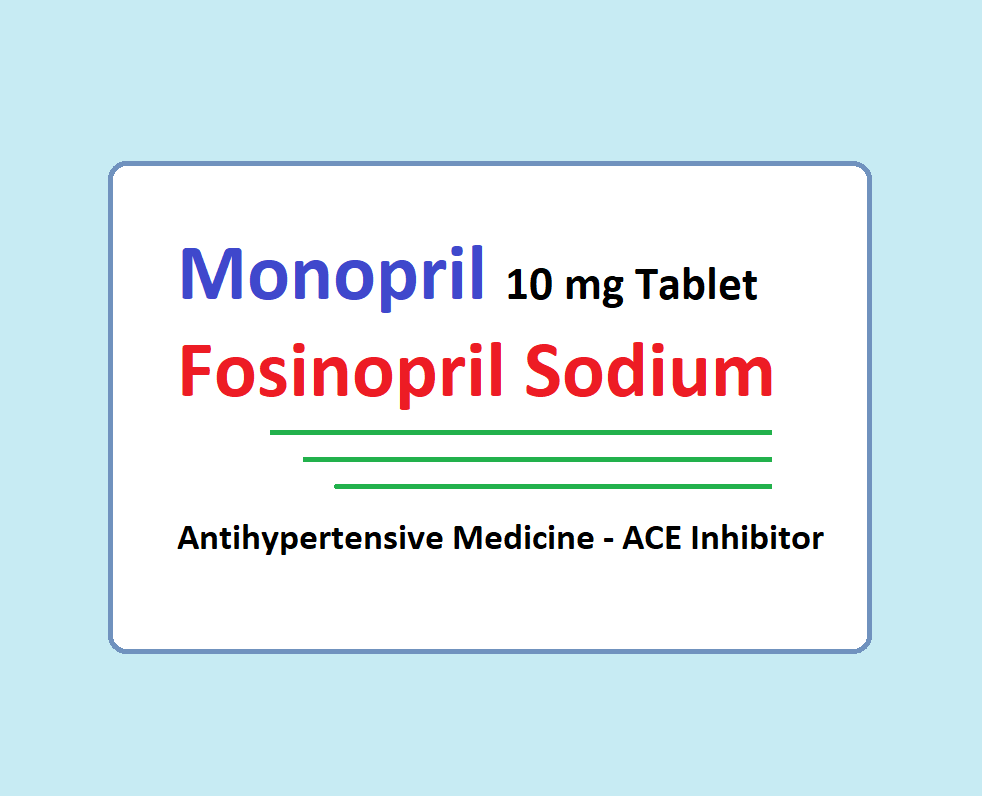
Angiotensin-converting enzyme inhibitors like fosinopril (Monopril) are used to treat heart failure and hypertension in individuals.
Fosinopril Uses:
-
Heart failure:
- Adjunctive treatment of heart failure (HF)
- Guideline recommendations:
- The American College of Cardiology/American Heart Association (ACC/AHA) 2013 Heart Failure Guidelines recommend using ACE inhibitors along with other guideline-directed medical therapies to treat patients with symptomatic heart failure and reduced ejection fraction in order to lower mortality and morbidity or to prevent progression of HF and reduced ejection fraction in asymptomatic patients with or without a history of myocardial infarction (Stage B HF) (Stage C HFrEF).
-
Hypertension:
- Management of hypertension
- Guideline recommendations:
- In the absence of comorbidities (such as cerebrovascular disease, ischemic heart disease, chronic kidney disease, diabetes, heart failure, etc.), the 2017 Guideline for the Prevention and Management of High Blood Pressure in Adults suggests that thiazide-like diuretics or dihydropyridine calcium channel blockers may be preferable options due to improved cardiovascular endpoints (eg, prevention of heart failure and stroke).
- ARBs and ACE inhibitors are also suggested for monotherapy.
- Combination therapy is initially chosen in individuals who are at high risk (stage 2 hypertension or an atherosclerotic cardiovascular disease [ASCVD] risk of 10%) in order to reach blood pressure targets.
-
Off Label Use of Fosinopril in Adults:
- HIV-associated nephropathy
- Stable coronary artery disease
- Non–ST-elevation acute coronary syndrome
- ST-elevation acute coronary syndrome
Fosinopril Dose in Adults
Fosinopril Dose in the treatment of Heart failure:
- Oral: Initial: 10 mg once in a day; increase dose as tolerated over several weeks.
- Usual dosage range:
- 20 to 40 mg once in a day (maximum dose: 40 mg/day).
- Target dose:
- 40 mg once in a day.
- When titrating, if hypotension, orthostasis, or azotemia occur, you might want to think about reducing the dosage of any concurrent diuretics.
Fosinopril Dose in the treatment of Hypertension:
- Oral: Initial dose of 10 mg once daily; dose adjustments dependent on patient response; maximum dose of 80 mg daily.
- The typical dosing range is 10 to 40 mg once daily.
Fosinopril Dose in the treatment of HIV-associated nephropathy (HIVAN) (off-label):
- Oral: 10 mg once in a day.
Fosinopril Dose in Childrens
Fosinopril Dose in the treatment of Hypertension:
-
Children ≥6 years and Adolescents: Oral:
Note: Use the lowest effective dose while titrating the dosage in accordance with the patient's response.
-
- ≤50 kg:
- Initial dose: 0.1 mg per kg once daily; dose may be increased as necessary up to the daily maximum of 0.6 mg per kg, not to exceed 40 mg;
- Some patients might need to start with a lesser dose.
- >50 kg:
- Initial: 5 mg once daily as monotherapy
- Daily dose maximum: 40 mg.
- ≤50 kg:
Pregnancy Risk Factor D
- [US Boxed Warn] Medications that interfere with the renin-angiotensin systems can harm or kill a developing foetus. Stop using the medication as soon as you learn that you are expecting.
- Fosinopril crosses over to the placenta
- Oligohydramnios is associated with drugs that affect the renin–angiotensin systems.
- Oligohydramnios may cause fetal kidney dysfunction and skeletal malformations.
- These drugs can also cause hypotension, kidney failure, anuria and skull hypoplasia in pregnancy.
- Although using an ACE-inhibitor when pregnant has the potential to have teratogenic effects (although this may be confounded with maternal disease).
- Exposure to ACE inhibitors during pregnancy can cause adverse fetal outcomes. This is why it is not recommended.
- Monitor infants who are exposed in utero to an ACE inhibitor for hyperkalemia, hypotension and oliguria.
- After irreversible fetal injuries, oligohydramnios might not be present.
- Although data on the effectiveness of dialysis or exchange transfusions in neonates are limited, it is possible to reverse hypotension and improve renal function with dialysis or transfusions.
- Adverse outcomes for the mother and foetus can also result from chronic maternal hypertension.
- Pregnancy is not the time to take ACE inhibitors to treat simple hypertension.
- Additionally, some recommendations advise that they should not be used to treat chronic heart disease and hypertension.
- Women of reproductive age should also avoid ACE inhibitors.
- Other agents may be required if treatment is required for hypertension and chronic heart failure during pregnancy.
Fosinopril use during breastfeeding:
- Breast milk contains fosinoprilat.
- Manufacturers do not recommend breastfeeding.
Fosinopril Dose in Kidney Disease:
-
Moderate-severe impairment:
- Initial dose reduction to 5 mg once in a day recommended for heart failure patients.
- No other dose adjustments are required; hepatobiliary elimination partially compensates for diminished renal elimination.
-
Hemodialysis:
- Poorly dialyzed;
- Supplemental dose is not necessary.
-
Peritoneal dialysis:
- It is poorly dialyzed;
- Ssupplemental dose is not necessary.
Dose in Liver disease:
The manufacturer’s labeling hasn't provided any dosage adjustments.
Frequency of side effects not defined.
- Data from trials on hypertension and heart failure are included in the frequency ranges.
- Patients with CHF have often been found to experience higher rates of adverse effects.
- However, this cohort also has a higher frequency of placebo-related side effects.
Common Side Effects of Fosinopril:
-
Central nervous system:
- Dizziness
Less Common Side Effects of Fosinopril:
-
Cardiovascular:
- Palpitations
- Orthostatic Hypotension
-
Central Nervous System:
- Fatigue
- Noncardiac Chest Pain
- Headache
-
Endocrine & Metabolic:
- Hyperkalemia
-
Gastrointestinal:
- Nausea And Vomiting
- Diarrhea
-
Hepatic:
- Increased Serum Transaminases
-
Neuromuscular & Skeletal:
- Weakness
- Musculoskeletal Pain
-
Renal:
- Renal Function Decompensation
- Increased Serum Creatinine
-
Respiratory:
- Upper Respiratory Infection
- Cough
Contraindications to Fosinopril:
- Hypersensitivity to aliskiren when used together with fosinopril in patients with diabetes mellitus.
- Hypersensitivity to any component of this formulation.
- Angioedema caused by previous treatment with an ACE inhibit.
Warnings and precautions
-
Angioedema
- Any time during treatment, but especially after the initial dose, angioedema can happen.
- It might affect the colon, head and neck (perhaps with limited breathing), or both (presenting as abdominal pain).
- African-Americans and individuals with genetic or idiopathic angioedema may be more susceptible.
- Concomitant therapy with a mTOR inhibitor (eg everolimus) may increase risk.
- If the tongue, glottis, or larynx are implicated, frequent long-term consideration may be necessary since they can impede the airways.
- Patients who have had previous airway surgery may be at greater risk for obstruction.
- It is crucial to be aggressive early and appropriately managed.
- Patients with angioedema from ACE inhibitor therapy are not recommended.
-
Cholestatic jaundice
- ACE inhibitors can cause hepatobiliary toxicity and cholestatic jaundice. As a result, fulminant hepatic neoplasms could develop.
- Treatment should be halted if there is a significant rise in hepatic transaminases and/or jaundice.
-
Cough:
- A ACE inhibitor cough is a dry, hacking cough that occurs in the first few months after treatment. It should usually resolve within one to four weeks.
- Before discontinuing treatment, it is important to consider other causes of cough (eg, pulmonary congestion in heart failure patients).
-
Hyperkalemia:
- Hyperkalemia can occur when ACE inhibitors are used. Risk factors include kidney dysfunction, diabetes mellitus and concomitant potassium-sparing diuretics or potassium supplements.
- These agents should be used with caution and potassium should be monitored closely.
-
Hypersensitivity reactions
- ACE inhibitors can cause anaphylactic reactions or anaphylactic reactions.
- Hemodialysis, high-flux dialysis membranes, such as AN69, and low density lipoprotein (dextran sulphate cellulosis) with hemodialysis can all cause severe anaphylactic reactions.
- Patients who have received ACE inhibitors and are subject to sensitization with Hymenoptera (bee or wasp) venom have experienced anaphylactic reactions.
-
Syncope and hypotension:
- ACE inhibitors can result in hypotension symptoms, including syncope (usually after the first few doses).
- Hypotensive effects are more likely to occur in patients who have lost volume.
- Prior to beginning treatment, it's critical to ascertain the patient's volume. When starting dosing and increasing doses, it's very important to keep a close eye on the patient.
- The rate of blood pressure reduction must be suitable for the patient's medical condition.
- Even while hypotension might necessitate dose decrease, it is not a reason to stop using ACE inhibitors in the future.
- This is especially true for heart disease patients, for whom a reduction in systolic pressure is preferred.
-
Neutropenia/agranulocytosis:
- Another ACE inhibitor, captopril, has been connected to extremely rare instances of neutropenia or agranulocytosis.
- The chance of developing neutropenia is increased in patients with severe renal impairment.
- Neutropenia is more likely to occur in patients with collagen vascular disease and renal impairment (such as systemic lupus erythematosus).
- These patients should be monitored periodically for CBC and differential.
-
Renal function deterioration:
- In patients with low renal flow (due to kidney artery stenosis or heart failure, for example), whose glomerular filter rate (GFR) depends on efferent arterial vasoconstriction (angiotensin II), this may be accompanied by decreased renal function or an increase in serum creatinine.
- A deterioration can result in oliguria, acute kidney failure, or progressive azotemia.
- After treatment begins, a rise in serum creatinine could occur.
- Patients with significant and progressive impairment of renal function should be considered for discontinuation.
-
Aortic stenosis
- Patients with severe aorticstenosis should be cautious. It may cause reduced coronary perfusion, which can lead to ischemia.
-
Ascites:
- Patients with ascites due cirrhosis, refractory or other causes should not use this product.
- Monitoring blood pressure and kidney function is crucial if individuals with ascites or cirrhosis cannot avoid using ascites in order to avoid a rapid progression to renal failure.
-
Cardiovascular disease
- When starting treatment, patients with ischemic heart disease and cerebrovascular illnesses should be closely watched.
- This is because of the possible consequences of falling blood pressure (e.g. stroke, MI).
- If necessary, fluid replacement may be required to restore blood pressure.
- Therapy may then resume. Patients with hypotension should be stopped from receiving therapy.
-
Collagen vascular disease:
- Patients with collagen vascular disease should exercise caution, especially if they also have concurrent kidney illness because they may be more susceptible to hematologic toxicities.
-
Hypertrophic cardiomyopathy with outflow tract obstruction (HCM)
- Patients with HCM or outflow tract obstruction may experience worsening symptoms.
-
Hepatic impairment
- Fosinopril is sensitive to hepatic, gut wall, and metabolism to its active form, thus use it with caution in liver conditions (fosinoprilat). It can build up in people who have liver disease.
- Patients with biliary or alcoholic cirrhosis had a decreased total body clearance, a slower rate of fosinoprilat production, and an approximately doubled AUC.
-
Renal artery stenosis
- Patients who have unilateral or bilateral renal artery stenosis that is untreated should exercise caution.
- If unstented bilateral renal arterial stenosis exists, it is best to avoid use unless the potential benefits outweigh the risks.
-
Renal impairment
- Patients who have renal impairment already should exercise caution. It could be required to modify the dosage.
- Avoid abrupt dose increases since they may worsen renal impairment.
Fosinopril: Drug Interaction
|
Risk Factor C (Monitor therapy) |
|
|
Alfuzosin |
The hypotensive effects of blood pressure-lowering medications may be strengthened. |
|
Amphetamines |
May lessen the effectiveness of antihypertensive agents. |
|
Angiotensin II |
The therapeutic efficacy of angiotensin II may be enhanced by angiotensin-converting enzyme inhibitors. |
|
Antipsychotic Agents (Second Generation [Atypical]) |
Antipsychotic drugs' hypotensive effects may be enhanced by blood pressure-lowering medications (Second Generation [Atypical]). |
|
Aprotinin |
Angiotensin-Converting Enzyme Inhibitors may intensify their hyperkalemic effects. |
|
AzaTHIOprine |
AzaTHIOprine's myelosuppressive effects may be enhanced by angiotensin-converting enzyme inhibitors. |
|
Barbiturates |
The hypotensive effects of blood pressure-lowering medications may be strengthened. |
|
Benperidol |
The hypotensive effects of blood pressure-lowering medications may be strengthened. |
|
Brigatinib |
ay lessen the effectiveness of antihypertensive agents. Antihypertensive Agents' bradycardic action may be strengthened by brutinib. |
|
Brimonidine (Topical) |
The hypotensive effects of blood pressure-lowering medications may be strengthened. |
|
Dapoxetine |
Angiotensin-Converting Enzyme Inhibitors may intensify their hyperkalemic effects. |
|
Dexmethylphenidate |
Can lessen an antihypertensive drug's therapeutic impact. |
|
Diazoxide |
The hypotensive effects of blood pressure-lowering medications may be strengthened. |
|
Dipeptidyl Peptidase-IV Inhibitors |
May worsen angiotensin-converting enzyme inhibitors' toxic or severe effects. Particularly, there may be a higher incidence of angioedema. |
|
Drospirenone |
Drospirenone's hyperkalemic impact may be enhanced by angiotensin-converting enzyme inhibitors. |
|
DULoxetine |
The hypotensive impact of DULoxetine may be enhanced by blood pressure lowering medications. |
|
Eplerenone |
Angiotensin-Converting Enzyme Inhibitors may intensify their hyperkalemic effects. |
|
Everolimus |
May intensify angiotensin-converting enzyme inhibitors' harmful or hazardous effects. Particularly, there may be a higher incidence of angioedema. |
|
Ferric Gluconate |
Angiotensin-Converting Enzyme Inhibitors might make ferric gluconate more harmful or poisonous. |
|
Ferric Hydroxide Polymaltose Complex |
Ferric Hydroxide Polymaltose Complex may have a more negative or toxic effect when taken with angiotensin-converting enzyme inhibitors. In particular, there may be an elevated risk for angioedema or allergic responses. |
|
Gelatin (Succinylated) |
Gelatin's harmful or toxic effects may be increased by angiotensin-converting enzyme inhibitors (Succinylated). Particularly, there may be a higher chance of a paradoxical hypotensive reaction. |
|
Gold Sodium Thiomalate |
Gold Sodium Thiomalate may have a more negative or toxic effect when used with angiotensin-converting enzyme inhibitors. Nitritoid responses are more likely now, it has been noted. |
|
Heparin |
Angiotensin-Converting Enzyme Inhibitors may intensify their hyperkalemic effects. |
|
Heparins (Low Molecular Weight) |
Angiotensin-Converting Enzyme Inhibitors may intensify their hyperkalemic effects. |
|
Herbs (Hypertensive Properties) |
May lessen the effectiveness of antihypertensive agents. |
|
Herbs (Hypotensive Properties) |
The hypotensive effects of blood pressure-lowering medications may be strengthened. |
|
Hypotension-Associated Agents |
The hypotensive action of hypotension-associated agents may be strengthened by blood pressure lowering medications. |
|
Icatibant |
Angiotensin-Converting Enzyme Inhibitors may intensify their hyperkalemic effects. |
|
Levodopa-Containing Products |
Levodopa-Containing Products' hypotensive effects may be strengthened by blood pressure-lowering medications. |
|
Loop Diuretics |
May strengthen angiotensin-converting enzyme inhibitors' hypotensive effects. Angiotensin-Converting Enzyme Inhibitors' nephrotoxic effects may be increased by loop diuretics. |
|
Lormetazepam |
The hypotensive effects of blood pressure-lowering medications may be strengthened. |
|
Methylphenidate |
May lessen the effectiveness of antihypertensive agents. |
|
Molsidomine |
The hypotensive effects of blood pressure-lowering medications may be strengthened. |
|
Naftopidil |
The hypotensive effects of blood pressure-lowering medications may be strengthened. |
|
Nicergoline |
The hypotensive effects of blood pressure-lowering medications may be strengthened. |
|
Nicorandil |
Angiotensin-Converting Enzyme Inhibitors may intensify their hyperkalemic effects. |
|
Nicorandil |
The hypotensive effects of blood pressure-lowering medications may be strengthened. |
|
Nitroprusside |
Nitroprusside's hypotensive impact may be strengthened by blood pressure-lowering medications. |
|
Nonsteroidal Anti-Inflammatory Agents |
Nonsteroidal Anti-Inflammatory Agents' negative/toxic effects may be increased by angiotensin-converting enzyme inhibitors. In particular, the combination may cause a marked decline in renal function. Angiotensin-Converting Enzyme Inhibitors' antihypertensive effects may be lessened by nonsteroidal anti-inflammatory drugs. |
|
Pentoxifylline |
The hypotensive effects of blood pressure-lowering medications may be strengthened. |
|
Pholcodine |
Pholcodine's hypotensive impact may be strengthened by blood pressure lowering medications. |
|
Phosphodiesterase 5 Inhibitors |
The hypotensive effects of blood pressure-lowering medications may be strengthened. |
|
Potassium Salts |
Angiotensin-Converting Enzyme Inhibitors may intensify their hyperkalemic effects. |
|
Potassium-Sparing Diuretics |
Angiotensin-Converting Enzyme Inhibitors may intensify their hyperkalemic effects. |
|
Pregabalin |
Angiotensin-Converting Enzyme Inhibitors may intensify Pregabalin's negative/toxic effects. Particularly, there may be a higher incidence of angioedema. |
|
Prostacyclin Analogues |
The hypotensive effects of blood pressure-lowering medications may be strengthened. |
|
Quinagolide |
The hypotensive effects of blood pressure-lowering medications may be strengthened. |
|
Racecadotril |
May intensify angiotensin-converting enzyme inhibitors' harmful or hazardous effects. In particular, this combination may make angioedema more likely. |
|
Ranolazine |
Angiotensin-Converting Enzyme Inhibitors may intensify their hyperkalemic effects. |
|
Salicylates |
May intensify angiotensin-converting enzyme inhibitors' nephrotoxic effects. The therapeutic benefit of angiotensin-converting enzyme inhibitors may be reduced by salicylates. |
|
Sirolimus |
Angiotensin-Converting Enzyme Inhibitors may intensify their hyperkalemic effects. |
|
Tacrolimus (Systemic) |
Tacrolimus's effect of making you more hyperkalemic may be enhanced by angiotensin-converting enzyme inhibitors (Systemic). |
|
Temsirolimus |
Angiotensin-Converting Enzyme Inhibitors may intensify their hyperkalemic effects. |
|
Thiazide and Thiazide-Like Diuretics |
May increase the angiotensin-converting enzyme inhibitors' hypotensive effects. Angiotensin-Converting Enzyme Inhibitors' nephrotoxic effects may be increased by thiazide and thiazide-like diuretics. |
|
TiZANidine |
May strengthen angiotensin-converting enzyme inhibitors' hypotensive effects. |
|
Tolvaptan |
Angiotensin-Converting Enzyme Inhibitors may intensify their hyperkalemic effects. |
|
Trimethoprim |
Angiotensin-Converting Enzyme Inhibitors may intensify their hyperkalemic effects. |
|
Yohimbine |
May lessen the effectiveness of antihypertensive agents. |
|
Risk Factor D (Consider therapy modification) |
|
|
Aliskiren |
Angiotensin-Converting Enzyme Inhibitors may intensify their hyperkalemic effects. Angiotensin-Converting Enzyme Inhibitors' hypotensive effects may be strengthened by aliskiren. Angiotensin-Converting Enzyme Inhibitors' nephrotoxic effects may be made worse by aliskiren. Treatment: It is not advised for diabetic patients to take aliskiren along with ACEIs or ARBs. Combination therapy should be avoided in other patients, especially when CrCl is less than 60 mL/min. If combined, keep a close eye on your blood pressure, potassium, and creatinine levels. |
|
Allopurinol |
Angiotensin-Converting Enzyme Inhibitors might make Allopurinol more likely to cause allergic or hypersensitive reactions. |
|
Amifostine |
Amifostine's hypotensive impact may be strengthened by blood pressure lowering medications. Treatment: Blood pressure-lowering drugs need to be avoided for 24 hours before amifostine is administered when used at chemotherapeutic doses. Amifostine should not be given if blood pressure lowering treatment cannot be stopped. |
|
Angiotensin II Receptor Blockers |
May worsen angiotensin-converting enzyme inhibitors' toxic or severe effects. Angiotensin-Converting Enzyme Inhibitors' serum levels may rise in response to angiotensin II receptor blockers. Management: According to US labelling, it is not advisable to take telmisartan and ramipril. It is unclear whether another ACE inhibitor and ARB combo would be any safer. When possible, take into account alternatives to the mix. |
|
Antacids |
May lower the level of fosinopril in the serum. Management: Separating the doses of antacids and fosinopril by two hours is advised on the manufacturer's labelling for the drug in the US and Canada. |
|
Grass Pollen Allergen Extract (5 Grass Extract) |
Grass pollen allergen extract may have a more negative or toxic effect if angiotensin-converting enzyme inhibitors are used (5 Grass Extract). With regard to grass pollen allergen extract, ACE inhibitors may specifically enhance the likelihood of a severe allergic reaction (5 Grass Extract). |
|
Iron Dextran Complex |
Angiotensin-Converting Enzyme Inhibitors might make Iron Dextran Complex more harmful or poisonous. Patients taking an ACE inhibitor may be more susceptible to events of the anaphylactic variety. Management: Adhere strictly to the instructions for iron dextran administration, including the use of a test dose before the initial therapeutic dose and the availability of resuscitation tools and qualified people. |
|
Lanthanum |
May lower angiotensin-converting enzyme inhibitors' serum concentration. Angiotensin-converting enzyme inhibitors should be given at least two hours before or after lanthanum. |
|
Lithium |
The serum concentration of lithium may rise in response to angiotensin-converting enzyme inhibitors. Management: After adding an ACE inhibitor, lithium dosage decreases will probably be required. Following the addition or discontinuation of concurrent ACE inhibitor therapy, carefully monitor the patient's response to lithium. |
|
Obinutuzumab |
The hypotensive effects of blood pressure-lowering medications may be strengthened. Management: Take into account temporarily stopping blood pressure-lowering drugs 12 hours before the start of the obinutuzumab infusion and keeping them off until 1 hour after the infusion is finished. |
|
Sodium Phosphates |
The nephrotoxic impact of sodium phosphates may be enhanced by angiotensin-converting enzyme inhibitors. In particular, there may be an increased risk of acute phosphate nephropathy. Treatment: You might want to temporarily stop taking ACEIs or look into alternatives to the oral sodium phosphate bowel preparation in order to prevent this combo. Maintaining appropriate hydration and properly monitoring renal function should be done if the combination cannot be avoided. |
|
Urapidil |
Angiotensin-Converting Enzyme Inhibitors may interact with them through an unidentified method. Avoid taking urapidil and ACE inhibitors simultaneously as a management strategy. |
|
Risk Factor X (Avoid combination) |
|
|
Bromperidol |
May lessen blood pressure lowering agents' hypotensive effects. The hypotensive impact of bromperidol may be enhanced by blood pressure lowering medications. |
|
Sacubitril |
The negative or hazardous effects of sacubitril may be increased by angiotensin-converting enzyme inhibitors. In particular, this combination may raise the risk of angioedema. |
Monitoring parameters:
- BUN, serum creatinine
- potassium levels
- Blood pressure
- If patient has collagen vascular disease
- CBC with differential
Heart failure:
- Reassess renal function and serum potassium frequently going forward, especially in individuals with preexisting hyponatremia, diabetes mellitus, hypotension, azotemia, or those using potassium supplements.
Hypertension:
- The 2017 Guideline for the Prevention, Detection, Evaluation, and Management of High Blood Pressure in Adults:
- Confirmed hypertension and known CVD or 10-year atherosclerotic cardiovascular disease (ASCVD) risk ≥10 percent:
- Target blood pressure less than 130 per 80 mm Hg is necessary.
- Confirmed hypertension without markers of increased ASCVD risk:
- Target blood pressure less than 130 per 80 mm Hg may be reasonable
Diabetes and hypertension: The American Diabetes Association (ADA) guidelines:
- Patients 18 to 65 years of age, without ASCVD, and 10-year ASCVD risk less than 15 percent:
- Target blood pressure less than 140 per 90 mm Hg is necessary.
- Patients 18 to 65 years of age and known ASCVD or 10-year ASCVD risk more than 15 percent:
- Target blood pressure less than 130 per 80 mm Hg may be appropriate if it can be safely attained.
- Patients more than 65 years of age (healthy or complex/intermediate health):
- Target blood pressure less than 140 per 90 mm Hg is recommended.
- Patients more than 65 years of age (very complex/poor health):
- Target blood pressure less than 150 per 90 mm Hg is necessary.
How to administer Fosinopril?
- It may taken after meals to reduce the gastrointestinal side effects.
- To avoid the first-dose effect, administer it after dinner and ask the patient to remain seated for about half an hour after the first dose.
Mechanism of action of Fosinopril:
- A CNS mechanism may also be involved in the hypotensive effect as angiotensin II increases adrenergic outflow from the CNS
- this lowers levels of angiotensin 2 which leads to an increase in plasma renin activity and a decrease in aldosterone production.
- It is a competitive inhibitor of angiotensin-converting enzyme (ACE) that prevents the conversion of angiotensin I to angiotensin II, a potent va
- ACE inhibitors may slow the conversion of vasoactive kallikreins into active hormones, lowering blood pressure.
Onset of action:
- 1 hour
Duration:
- 24 hours
Absorption:
- 36 percent
Protein binding:
- more than 99 percent
Metabolism:
- Fosinopril is converted to a glucuronide conjugate and a p-hydroxy metabolite of fosinoprilat after being hydrolyzed to its active metabolite
- Fosinoprilat via the intestinal wall and hepatic esterases.
Bioavailability:
- 36 percent
Half-life elimination, serum (fosinoprilat):
- Children and Adolescents 6-16 years: 11-13 hours
- Adults: 12 hours
- Adults with CHF: 14 hours
Time to peak, serum:
- ~3 hours
Excretion:
- Urine and feces (as fosinoprilat and other metabolites in roughly equal proportions)
International Brands of Fosinopril:
- APO-Fosinopril
- CO Fosinopril
- Fosinopril-10
- Fosinopril-20
- JAMP-Fosinopril
- MYLAN-Fosinopril
- PMS-Fosinopril
- RAN-Fosinopril
- RIVA-Fosinopril
- TEVA-Fosinopril
- Acenor-M
- BPNorm
- Dynacil
- Fonosil
- Forsine
- Fosavis
- Fosicard
- Fosinil
- Fosinorm
- Fosipres
- Fosipril
- Fositen
- Fositens
- Fovas
- Fozitec
- Monace
- Monopril
- Newace
- Notionpril
- Sapril
- Sinotic
- Staril
Fosinopril Brand Names in Pakistan:
Fosinopril (Na) Tablets 10 mg in Pakistan |
|
| Aksopril | Akson Pharmaceuticals (Pvt) Ltd. |
| Monopril | Glaxosmithkline |
.png)