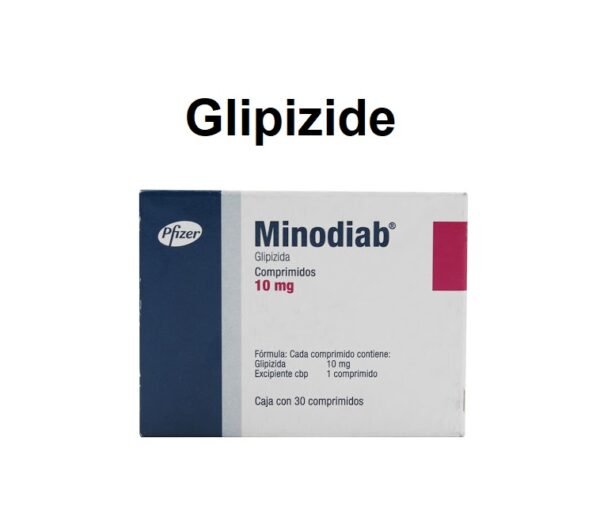
Glipizide (Glucotrol, Diabes, minidiab) is a second-generation sulfonylurea that is used in the treatment of patients with diabetes mellitus type 2.
Glipizide (Minidiab, Diabes) Uses:
-
Treatment for diabetes mellitus type 2:
- Use in individuals with type 2 diabetes mellitus as a supplement to diet and exercise to enhance glycemic control.
Glipizide (Diabes, Minidiab) Dose in Adults
Glipizide (Diabes, Minidiab) Dose in the treatment of type 2 Diabetes mellitus:
Oral:
Note:
- Used as an additive or substitute for monotherapy for patients who do not respond well to metformin or who are unable to take it.
- A patient's approach should be used when choosing a pharmacologic agent to treat type 2 diabetes mellitus, taking into account factors such as hypoglycemia risk, coexisting conditions (such as atherosclerotic cardiovascular disease, heart failure, and renal impairment), impact on weight, efficacy, potential side effects, route of administration, cost, and patient preferences.
- Sulfonylureas are recognised to have a somewhat significant risk of hypoglycemia compared to other non-insulin anti diabetic medications because of their mode of action.
- In general, a shorter-duration sulfonylurea (such glipizide) is favoured whenever a sulfonylurea is selected.
-
Immediate-release glipizide tablets:
- At first, 2.5 mg once daily, 30 minutes before meals (preferably before breakfast)
- Titration:
- Manufacturer's labelling states that if appropriate glucose control is not achieved, the dose may be increased in 2.5 to 5 mg increments no more frequently than every few days; however, titration procedures are frequently more cautious in actual practise.
- Some experts recommend using a titration interval of two to four weeks, and increasing the dose more gradually every one to two weeks.
- Giving the daily dose in two doses, 30 minutes before breakfast and 30 minutes before dinner, if the once-day dose does not offer appropriate glycemic control, may increase effectiveness; doses greater than 15 mg/day should typically be given in two divided doses.
- Maximum effective dose: 20 mg/day.
- Note: Escalating the dose beyond 20 mg/day has not been shown to improve glycemic control, although a higher maximum total daily dose (40mg/day) is listed in the manufacturer's labeling..
-
Extended-release:
- At start, 2.5 to 5 mg were given orally with breakfast or the first meal of the day.
- Titration:
- .Depending on glycemic control, adjust the dosage; one research permitted dosage increases once a week in 5–10 mg increments.
- Maximum dose: 20 mg/day
-
Patients already maintained on glipizide who require hospitalization:
- Temporarily discontinue the noninsulin antidiabetic agents in patients who require hospitalization and initiate and/or continue insulin therapy.
- If there are no contraindications, nutrition is stable, and blood glucose is under good control, the use of non-insulin antidiabetic medications may be taken into consideration in hospitalised patients who are not critically sick
- It is advised to keep a close eye on the dosage and make any necessary modifications.
Recommendations for Glipizide (Diabes) conversion :
-
Extended-release glipizide is changed from immediate-release glipizide.:
-
- It is possible to deliver the total daily dose once daily while switching to the closest equivalent daily dose of the extended-release tablet.
-
-
When switching from insulin to an instant-release form of glipizide:
Note:
- Clinicians should regularly monitor blood glucose levels and take into account the known onset and duration of the insulin product being discontinued when deciding when to switch from insulin to glipizide.
-
- If the required dosage of insulin is 20 units:
- After this, stop administering insulin and start glipizide at the customary dosage.
- If the required amount of insulin is more than 20 units:
- Once glipizide has been started at the regular dose, the insulin dosage can be gradually decreased based on the patient's reaction.
- If the required dosage of insulin is 20 units:
-
Use in Children:
Not indicated.
Glipizide Pregnancy Risk Category: C
- Glipizide crosses the placenta in vitro
- Infants born to mothers who were taking a sulfonylurea during delivery have experienced severe hypoglycemia lasting from 4-10 days.
- Maternal hyperglycemia in women with diabetes can have adverse effects on the fetus and neonate as well as congenital malformations.
- Maternal glucose and HbA1C levels should be kept as close as possible to the target ranges both before and during pregnancy.
- However, this should not cause significant hypoglycemia.
- Pregnant women with diabetes should consider other agents than glipizide.
- Glimizide should not be used during pregnancy. Most manufacturers recommend that it is stopped at least one month prior to the delivery date.
Use of Glipizide while breastfeeding
- Data from two mother-child pairs demonstrate that glipizide is not found in breast milk.
- The manufacturer advises consumers to carefully consider whether to cease breastfeeding or stop taking the medication since hypoglycemia in nursing infants is a risk.
- This decision must be made taking into consideration the mother's needs.
- Women with pregestational diabetics may benefit from a small snack prior to breastfeeding, which can help reduce the chance of hypoglycemia.
- Breastfeeding can be done with any insulin type, and oral agents such as glipizide may also be accepted.
Glipizide (Diabes) Dose in Kidney Disease:
- Release immediately:
- All women, even those with diabetes, are advised to breastfeed, according to current recommendations.
- Patients with an eGFR of 50mL/minute/1.73m2 have been given a starting dose of 2.5 mg daily. Then, patients will be able to receive elective titration (20 mg/day)
- ESRD:
-
Due to inactive metabolites, Glipizide is the preferred sulfonylurea for CKD patients when taken orally. It is advisable to start out with a cautious dose (for example, 2.5 mg once daily).
-
- Extended-release
- Oral: Initial: 2.5mg once daily; be cautious.
Glipizide (Diabes) Dose in Liver disease:
- Release immediately:
- Oral: Initial: 2.5mg once daily
- Maintenance doses should be cautious to prevent hypoglycemia.
- Extended release
- Oral: Initial: 2.5mg once daily
- To avoid hypoglycemia, maintenance doses should be conservative
Glipizide (Diabes) side effects;
-
Cardiovascular:
- Syncope
-
Central Nervous System:
- Dizziness
- Nervousness
- Anxiety
- Depression
- Hypoesthesia
- Insomnia
- Pain
- Paresthesia
- Drowsiness
- Headache
-
Dermatologic:
- Diaphoresis
- Pruritus
- Eczema
- Erythema
- Maculopapular Rash
- Morbilliform Rash
- Skin Rash
- Urticaria
-
Endocrine & Metabolic:
- Hypoglycemia
- Increased Lactate Dehydrogenase
-
Gastrointestinal:
- Diarrhea
- Flatulence
- Dyspepsia
- Vomiting
- Constipation
- Nausea
- Abdominal Pain
-
Hepatic:
- Increased Serum Alkaline Phosphatase
- Increased Serum AST
-
Neuromuscular & Skeletal:
- Tremor
- Arthralgia
- Leg Cramps
- Myalgia
-
Ophthalmic:
- Blurred Vision
-
Renal:
- Increased Blood Urea Nitrogen
- Increased Serum Creatinine
-
Respiratory:
- Rhinitis
Contraindications to Glipizide (Diabes):
- Intolerance to glipizide, sulfonamide derivatives, and any other ingredient in the formulation
- Diabetes mellitus type 1
- Diabetic ketoacidosis (with or without coma)
Notice:
- Although the FDA-approved product labelling for glipizide extended release (XL) specifies that using this medication with other sulfonamide-containing drug classes is contraindicated, its scientific backing has been disputed.
- For more information, see Warnings/Precaution
- There is not much evidence of cross-reactivity between sulfonylureas and allergens.
- Cross-sensitivity is possible due to similarities in chemical structure or pharmacologic effects.
Warnings and Precautions
-
Cardiovascular mortality
- Oral hypoglycemic medications may cause an increase in cardiovascular mortality when compared to diet and insulin alone.
-
The association cannot be supported by sufficient data. Numerous investigations have refuted it, including one sizable prospective study (UKPDS 1998).
- Other agents are recommended for patients suffering from atherosclerotic heart disease (ASCVD)
-
Hypoglycemia
- All sulfonylurea medications can cause severe hypoglycemia.
- After lengthy or intense exercise, when calorie intake has been decreased, when ethanol is ingested, or when more glucose-lowering medications are used, hypoglycemia may become more prevalent.
- Be cautious because it's also more prevalent among the frail and aged, individuals with impaired renal and hepatic function, patients who are malnourished, and people who have adrenal or pituitary dysfunction.
- Patients with advanced age or autonomic neuropathy may experience hypoglycemia from the concurrent use of beta-blockers and other sympatholytic medications.
-
Allergy to sulfonamide ("sulfa")
- Contraindications for patients who have previously experienced an allergic reaction to sulfonamides are listed on the FDA-approved product labels for drugs that contain these chemical groups.
- Cross-reactivity between members of a class is conceivable (eg two antibiotic sulfonamides).
- Concerns about cross-reactivity have been brought up for all substances with the sulfonamide structure.
- According to a fuller understanding of allergic mechanisms, it may not be conceivable for antibiotic or non-antibiotic sulfonamides to interact with one another.
- Nonantibiotic sulfonamides are not likely to cause anaphylaxis (a mechanism of cross-reaction caused by antibody production).
- T-cell-mediated (type IV), reactions (eg maculopapular skin rash) are less understood. It is difficult to exclude this possibility based on current knowledge.
- Some clinicians opt to avoid these classes in cases of severe reactions (Stevens Johnson syndrome/TEN).
-
Glucose-6phosphate dehydrogenase(G6PD) deficiency
- Sulfonylurea-induced hemolyticanemia may occur in patients with G6PD deficiency.
- When under post-marketing surveillance, patients with normal G6PD levels have also been documented to develop cases.
- Patients with G6PD deficiency should be cautious and look for a non-sulfonylurea option.
-
Hepatic impairment
- Patients with hepatic impairment should be cautious as hypoglycemia can be prolonged.
-
Renal impairment
- Patients with impaired renal function should be cautious.
-
Stress-related disorders:
- It is possible to stop insulin therapy and give insulin to patients who are exposed to trauma, fever, infection, or other stressors.
Glipizide: Drug Interaction
|
Risk Factor C (Monitor therapy) |
|
|
Ajmaline |
Sulfonamides might make ajmaline more harmful or poisonous. In particular, there may be an elevated risk for cholestasis. |
|
Alcohol (Ethyl) |
Sulfonylureas may increase Alcohol's harmful or toxic effects (Ethyl). There could be a flushing reaction. |
|
Alpha-Lipoic Acid |
May strengthen an anti-diabetic agent's hypoglycemic impact. |
|
Aminolevulinic Acid (Topical) |
Aminolevulinic Acid's photosensitizing impact may be enhanced by photosensitizing agents (Topical). |
|
Androgens |
Can make blood glucose lowering medications more effective at lowering blood sugar. Danazol is an exception. |
|
Antidiabetic Agents |
Possibly makes hypoglycemia-associated agents more effective. |
|
Beta-Blockers |
Sulfonylureas' hypoglycemic impact might be strengthened. Betablockers that are cardioselective As the initial sign of hypoglycemia, tachycardia seems to be concealed by all beta-blockers.Beta-blockers used intravenously most likely carry a lesser risk than those used systemically. Exceptions: Metipranol; Levobunol. |
|
Carbocisteine |
Sulfonylureas may intensify Carbocisteine's harmful or hazardous effects. Particularly, sulfonylureas may intensify the negative effects of the alcohol contained in liquid formulations of medicines containing carbocisteine. |
|
Chloramphenicol (Systemic) |
Sulfonylureas' metabolism might be slowed down. |
|
Cimetidine |
Sulfonylureas' serum levels might rise. |
|
Clarithromycin |
GlipiZIDE serum concentration can rise. |
|
Cyclic Antidepressants |
Sulfonylureas' hypoglycemic impact might be strengthened. |
|
Dexketoprofen |
Sulfonamides' harmful or poisonous effects could be amplified. |
|
Direct Acting Antiviral Agents (HCV) |
May strengthen an anti-diabetic agent's hypoglycemic impact. |
|
Fibric Acid Derivatives |
Sulfonylureas' hypoglycemic impact might be strengthened. |
|
Guanethidine |
May strengthen an anti-diabetic agent's hypoglycemic impact. |
|
Herbs (Hypoglycemic Properties) |
May intensify the hypoglycemic effects of agents associated with hypoglycemia. |
|
Hyperglycemia-Associated Agents |
May reduce an anti-diabetic agent's therapeutic efficacy. |
|
Hypoglycemia-Associated Agents |
May increase other hypoglycemia-associated agents' hypoglycemic effects. |
|
Hypoglycemia-Associated Agents |
The hypoglycemic effect of hypoglycemia associated agents may be strengthened by antidiabetic agents. |
|
Indobufen |
GlipiZIDE serum concentration can rise. |
|
Lumacaftor |
May lower the serum level of CYP2C9 substrates (High Risk with Inhibitors or Inducers). The serum concentration of CYP2C9 Substrates may rise when taking lumacaftor (High Risk with Inhibitors or Inducers). |
|
Maitake |
Can make blood glucose lowering medications more effective at lowering blood sugar. |
|
Miconazole (Oral) |
.Sulfonylureas' hypoglycemic impact might be strengthened. Miconazole (Oral) may raise Sulfonylurea serum concentrations. |
|
Monoamine Oxidase Inhibitors |
Can make blood glucose lowering medications more effective at lowering blood sugar. |
|
Pegvisomant |
Can make blood glucose lowering medications more effective at lowering blood sugar. |
|
Porfimer |
The photosensitizing effect of Porfimer may be strengthened by photosensitizing agents. |
|
Posaconazole |
May strengthen GlipiZIDE's hypoglycemic effects. Posaconazole may raise GlipiZIDE's serum levels. |
|
Probenecid |
Sulfonylureas may lessen their ability to attach to proteins. Sulfonylurea serum levels may rise in response to probenecid. |
|
Prothionamide |
Can make blood glucose lowering medications more effective at lowering blood sugar. |
|
Quinolones |
Can make blood glucose lowering medications more effective at lowering blood sugar. Blood Glucose Lowering Agents' therapeutic impact may be lessened by quinolones. In particular, the use of quinolones may result in a loss of blood sugar control if an agent is being used to treat diabetes. |
|
RaNITIdine |
Sulfonylureas' serum levels might rise. |
|
Rifapentine |
May lower the serum level of CYP2C9 substrates (High risk with Inducers). |
|
Ritodrine |
May reduce an anti-diabetic agent's therapeutic efficacy. |
|
Salicylates |
Can make blood glucose lowering medications more effective at lowering blood sugar. |
|
Selective Serotonin Reuptake Inhibitors |
Can make blood glucose lowering medications more effective at lowering blood sugar. |
|
Sulfonamide Antibiotics |
Sulfonylureas' hypoglycemic impact might be strengthened. |
|
Thiazide and Thiazide-Like Diuretics |
May reduce an anti-diabetic agent's therapeutic efficacy. |
|
Verteporfin |
Verteporfin's photosensitizing effect may be strengthened by photosensitizing agents. |
|
Vitamin K Antagonists (eg, warfarin) |
The anticoagulant action of Vitamin K antagonists may be increased by sulfonylureas. Sulfonylureas may have a greater hypoglycemia effect when used with vitamin K antagonists. |
|
Voriconazole |
Sulfonylureas' serum levels might rise. |
|
Risk Factor D (Consider therapy modification) |
|
|
Dabrafenib |
May decrease the serum concentration of CYP2C9 Substrates (High risk with Inducers). Management: Seek alternatives to the CYP2C9 substrate when possible. If concomitant therapy cannot be avoided, monitor clinical effects of the substrate closely (particularly therapeutic effects). |
|
Colesevelam |
May decrease the serum concentration of GlipiZIDE. Management: Administer glipizide at least 4 hours prior to colesevelam. |
|
Dipeptidyl Peptidase-IV Inhibitors |
.Sulfonylureas' hypoglycemic impact might be strengthened. When starting treatment with a dipeptidyl peptidase-IV inhibitor, take into account lowering the dose of sulfonylurea and keep an eye out for hypoglycemia in patients. |
|
Enzalutamide |
May lower the serum level of CYP2C9 substrates (High risk with Inducers). Treatment: Enzalutamide should not be used concurrently with CYP2C9 substrates that have a limited therapeutic index. Enzalutamide use, like with the use of any other CYP2C9 substrate, should be done with caution and under close observation. |
|
Fluconazole |
Sulfonylureas' serum levels might rise. Management: When possible, look for alternatives. If fluconazole is started or the dose is increased, keep a cautious eye out for any increased or decreased effects of sulfonylureas if the two medications are being used together. |
|
Glucagon-Like Peptide-1 Agonists |
Sulfonylureas' hypoglycemic impact might be strengthened. Management: When used with glucagonlike peptide-1 agonists, sulfonylurea dose reductions should be taken into account. |
|
Metreleptin |
Sulfonylureas' hypoglycemic impact might be strengthened. Management: To reduce the risk for hypoglycemia when using metreleptin concurrently, sulfonylurea dosage changes (including possibly significant decreases) may be necessary. Observe carefully. |
|
MiFEPRIStone |
May increase the serum concentration of CYP2C9 Substrates (High risk with Inhibitors). Management: Use CYP2C9 substrates at the lowest recommended dose, and monitor closely for adverse effects, during and in the 2 weeks following mifepristone treatment. |
|
RifAMPin |
May decrease the serum concentration of Sulfonylureas. Management: Seek alternatives to these combinations when possible. Monitor closely for diminished therapeutic effects of sulfonylureas if rifampin is initiated/dose increased, or enhanced effects if rifampin is discontinued/dose decreased. |
|
Sodium-Glucose Cotransporter 2 (SLGT2) Inhibitors |
Sulfonylureas' hypoglycemic impact might be strengthened. When starting therapy with a sodium-glucose cotransporter 2 inhibitor, take into account lowering the dose of sulfonylurea and keep an eye out for hypoglycemia in your patients. |
|
Thiazolidinediones |
Sulfonylureas' hypoglycemic impact might be strengthened. Treatment: If a patient is taking thiazolidinediones, consider adjusting their sulfonylurea dosage and keep an eye out for hypoglycemia. |
|
Risk Factor X (Avoid combination) |
|
|
Aminolevulinic Acid (Systemic) |
Aminolevulinic Acid's photosensitizing impact may be enhanced by photosensitizing agents (Systemic). |
|
Mecamylamine |
The harmful or toxic effects of mecamylamine may be increased by sulfonamides. |
|
Mitiglinide |
May intensify the hazardous or harmful effects of sulfonylureas. |
Monitoring parameters:
- The signs of hypoglycemia include weakness, extreme hunger, excessive perspiration, and numbness in the limbs.
- Blood glucose
- In patients with stable glycemic control who are achieving their treatment objectives, haemoglobin A1c should be measured at least twice a year.
- Patients who have undergone therapy changes or who have not met these goals must take it every three months.
- Renal function
- Liver function
- Weight (due potential to cause weight gain
How to administer Glipizide (Diabes)?
- Notification:
- Patients who are NPOs or have a reduced caloric intake might need to be given lower doses in order to prevent hypoglycemia.
- Take it 30 minutes before a meal for the greatest reduction in postprandial hyperglycemia (preferably before breakfast if you are taking once daily).
- Take the morning meal or first meal of each day to administer the prayer.
-
Totally swallow the tablets. Never split, eat, or crush them.
Mechanism of action of Glipizide (Diabes):
- It encourages pancreatic beta cells to produce more insulin.
- It reduces the liver's production of glucose.
- Peripheral target sites have a higher insulin sensitivity.
Duration:
- 12 to 24 hours
Absorption:
- Immediate release: Rapid and complete;
- delayed with food
Protein binding:
- 98% to 99%;
- primarily to albumin
Bioavailability:
- 90% to 100%
Metabolism:
- Hepatic via CYP2C9; forms inactive metabolites
Half-life elimination:
- 2 to 5 hours
Time to peak:
- 1 to 3 hours;
- extended-release tablets: 6 to 12 hours
Excretion:
- Urine (<10% as unchanged drug; 80% as metabolites);
- feces (10%)
International Brand Names of Glipizide:
- glipiZIDE XL
- Glucotrol
- Glucotrol XL
- Actine
- Antidiab
- Apamid
- Brilizid
- Diabes
- Diacon
- Diactin
- Diasef
- Dibizide
- Digrin
- Dipazide
- Flumedil
- Gabaz
- Gipix
- Gipzide
- Glibenese
- Glibenese GITS
- Glibetin
- Glican
- Glidiab
- Glipid
- Glipimed
- Glipizide
- Glipizide BP
- Glipom
- Glix
- Glizide
- Gluco-Rite
- Glucodiab
- Glucolip
- Gluconil
- Glucotrol XL
- Glucozide
- Glupizide
- Gluzide
- Glygen
- Glynase
- Glyzip
- Luditec
- Meibida
- Melizid
- Melizide
- Mindiab
- Minibit
- Minidiab
- Minodiab
- Napizide
- Ozidia
- Pezide
- Singloben
- Sucrazide
- Sunglucon
- Topizide
- Xeltic
Glipizide Brand Names in Pakistan:
Glipizide Tablets 5 mg |
|
| Gleezid | Pulse Pharmaceuticals |
| Glibense | Pfizer Laboratories Ltd. |
| Glipase | Pharmedic (Pvt) Ltd. |
| Minidiab | Pfizer Laboratories Ltd. |
.png)


