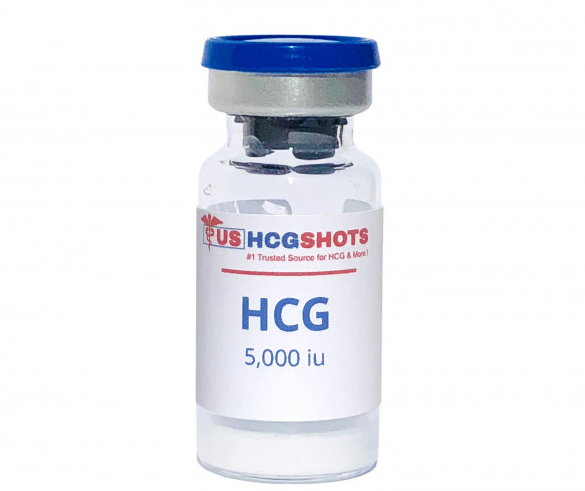
HCG or Human chorionic gonadotropin is a hormone derived from the urine of pregnant females and purified to produce the hormone - luteinizing hormone. It is administered as an intramuscular injection for the treatment of the following conditions:
- Hypogonadotrophic hypogonadism, secondary to a pituitary deficiency in males.
- Induction of ovulation and pregnancy in the anovulatory and infertile woman who have a secondary cause of anovulation (not due to primary ovarian failure). Patients must be appropriately pretreated with human menotropins.
- Treatment of prepubertal undescended testis, not caused by anatomic obstruction.
In adults, HCG is used (off-label) for the induction of spermatogenesis in patients wtith Hypogonadotropic hypogonadism
Chronic Gonadotropin Dose in Adults
HCG For Ovulatuion induction in females:
- 5,000 to 10,000 units 1 day following last dose of menotropins intramuscular.
Hypogonadotropic hypogonadism:
- Various regimens have been used:
- 500 to 1,000 units thrice weekly for 3 weeks, followed by the same dose twice weekly for 3 weeks.
- 4,000 units thrice weekly for 6 to 9 months, then reduce dosage to 2,000 units 3 times a week for an additional 3 months
Off-label use for induction of Spermatogenesis:
-
- 1,000 to 2,000 units twice or thrice weekly till normalization of serum testosterone levels.
- Therapy with HCG may require 2 - 3 months.
- Human menopausal gonadotropin may be added after testosterone levels normalize to induce spermatogenesis
- HCG at the required dose should be continued to maintain serum testosterone levels.
Chronic Gonadotropin Dose in Childrens
Human Chronic Gonadotropin (HCG) Dose in Puberty induction:
- Children more than 12 years of age and Adolescents:
- 500 to 3,000 units administered intramuscularly twice or thrice weekly
- The dose must be adjusted based on serum testosterone levels, every 3 to 6 months.
Prepubertal cryptochidism:
- Children older than 4 years and Adolescents:
- Various regimens between the ages of 4 and 9 years have been used:
- 4,000 units thrice weekly for 3 weeks
- 5,000 units on alternate days for 4 injections
- 500 units thrice weekly for 4 to 6 weeks. Unsuccessful patients may be tried with a repeat course one month later using 1,000 units/dose.
- 15 injections of 500 to 1,000 units administered over 6 weeks
- Various regimens between the ages of 4 and 9 years have been used:
Pregnancy Risk Factor X
- HCG during pregnancy has been linked to intrauterine deaths and severe fetal adverse outcomes, including congenital malformations.
- Use of HCG is associated with increased miscarriages and ectopic pregnancy rates.
- As soon as the pregnancy is confirmed, it is important to stop using therapy.
Chorionic gonadotropin use during breastfeeding
- t is unknown whether breast milk contains human chorionic Gonadotropin.
- Breastfeeding women who are receiving HCG treatment should exercise caution.
Chronic Gonadotropin Dose in Kidney Disease:
The manufacturer has not provided any dose adjustment in patients with renal disease. Use with caution in such patients.
Chronic Gonadotropin Dose in Liver Disease:
The manufacturer has not provided any dose adjustment in patients with renal disease. Use with caution in such patients.
Common Side Effects of HCG:
- Cardiovascular:
- Arterial thrombosis
- edema
- Central nervous system:
- Depression
- fatigue
- headache
- irritability
- restlessness
- Endocrine & metabolic:
- Gynecomastia
- ovarian hyperstimulation syndrome
- Genitourinary:
- Precocious puberty
- Rupture of ovarian cyst
- Local:
- Pain at the injection site
Contraindication to Chorionic gonadotropin include:
- Allergy to chorionic Gonadotropin or any other component of the formulation
- Precocious puberty
- Prostatic carcinoma and other androgen dependent neoplasms
- Prepubertal males who have signs of anatomical obstruction
- Androgen-dependent tumors such as breast, uterine and ovary carcinomas in females and breast cancer males
- Incompatible with pregnancy: Malformations of the reproductive organs
- Fibroid tumors in the uterus are incompatible with pregnancy
Warnings and Precautions
- Thromboembolism, both arterial and venous, may occur especially in patients with a personal or a family history of thrombosis, obesity, and thrombophilia.
- Asthma
- Cardiovascular disease
- Cryptorchidism
- Migraine
- Renal impairment
- Seizure disorders
- Obesity
- Induction of ovulation
OHSS (Ovarian hyperstimulation syndrome):
- Symptoms of mild or moderate ovarian stimulation syndrome (OHSS), may include abdominal distention, diarrhea, nausea, vomiting, and abdominal discomfort.
Symptoms of Severe OHSS symptoms may include:
- Extreme abdominal pain
- anuria/ oliguria,
- ascites,
- severe dyspnea,
- Hypotension, or
- nausea & intractable vomiting.
You may also notice decreased creatinine clearance, hemoconcentration and hypoproteinemia.
Treatment
- It is primarily symptomatic, and includes fluid and electrolyte control, analgesics andPrevention of thromboembolic complications.
- The use of HCG may lead to multiple births. Before starting treatment, patients should be aware of the possibility of multiple births.
Monitoring Parameters:
Monitor the following parameters while on human chorionic gonadotrophin therapy.
- Males:
- Females:
- Ultrasound and estradiol levels to assess follicle development, the number, and size of the follicles
- Assess ovulation by monitoring the basal body temperature, serum progestin level, menstrual record, and sonography.
- Ovarian hyperstimulation syndrome - a life-threatening condition
- Monitoring of hospitalized patients should include the following parameters (on daily basis)
- abdominal circumference
- albumin
- cardiorespiratory status
- fluid balance
- Hemoglobin & hematocrit
- serum creatinine & electrolytes
- urine output & urine specific gravity
- vital signs
- weight
- Liver enzymes should be monitored weekly.
- Monitoring of hospitalized patients should include the following parameters (on daily basis)
How to Administer Chronic Gonadotropin?
Human chorionic gonadotropin is only to be administered as intramuscular injection.
Mechanism of Action of Chronic Gonadotropin:
- The human placenta produces human chorionic gonadotropin. It comes from the urine of pregnant woman. All available preparations contain purified luteinizing hormonal.
- HCG stimulates gonadal steroids hormone production in males. HCG stimulates androgen production in the testis, which influences secondary sexual characteristics.
- HCG is a hormone that stimulates ovulation in females. It acts as a replacement for luteinizinghormone (LH) in the body.
The duration of action after an Intramuscular injection is 36 hours.
It is Distributed mainly into the testes in males and into the ovaries in females
It has a biphasic half-life. The initial and terminal half-lives are 6 to 11 hours & 23 to 37 hours respectively.
The time to peak plasma concentration after intramuscular injection is within 6 hours.
Excretion is mainly via Urine.
International Brands of Chronic Gonadotropin:
- Choragon
- Corion
- Gonacor
- Hucog-5000 HP
- Pregnyl w/diluent
- Primogonyl
- Profasi
- Profasi HP
Chronic Gonadotropin Brands in Pakistan:
|
Chorionic Gonadotrophin [Inj 1500 IU] |
|
| PREGNYL | OBS |
|
Chorionic Gonadotrophin [Inj 5000 IU] |
|
| GONACOR | EXCEL PHARMA |
| PREGNYL | OBS |
| PRESAGE | GENOME PHARMACEUTICALS (PVT) LTD |
| PROFASI | HILTON PHARMA (PVT) LIMITED |
.png)