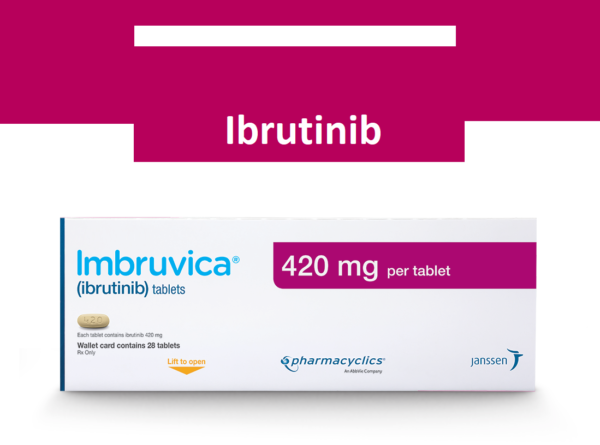
Ibrutinib (Imbruvica) is a small molecule irreversible Bruton's Tyrosine Kinase Inhibitor. It inhibits the proliferation of B-lymphocytes and decreases their survival.
Ibrutinib (Imbruvica) Uses:
-
Chronic graft-versus-host disease (refractory):
- Second-line treatment of chronic graft-versus-host disease.
-
Chronic lymphocytic leukemia/small lymphocytic lymphoma:
- Treatment of chronic lymphocytic leukemia/small lymphocytic lymphoma (CLL/SLL) with 17p deletion.
-
Mantle cell lymphoma, previously treated:
- Second line therapy in the mantle cell lymphoma (MCL)
-
Marginal zone lymphoma, relapsed/refractory:
- Second-line therapy marginal zone lymphoma (MZL)
-
Waldenström macroglobulinemia:
- Treatment of Waldenström macroglobulinemia
Ibrutinib (Imbruvica) Dose in Adults:
Ibrutinib (Imbruvica) Dose in the treatment of refractory chronic graft-versus-host disease:
- Oral: 420 mg OD continue until chronic graft-versus-host disease (cGVHD) resolves, or relapse of underlying malignancy or toxic effects cannot be tolerated.
Ibrutinib (Imbruvica) Dose in the treatment of Chronic lymphocytic leukemia/small lymphocytic lymphoma:
- Oral: 420 mg OD as a single agent or with bendamustine and rituximab or obinutuzumab until tolerated.
Ibrutinib (Imbruvica) Dose in the treatment of Chronic lymphocytic leukemia/small lymphocytic lymphoma (off-label combination):
-
Adults <70 years of age; previously untreated (IGHV-unmutated and without 17p deletion):
- Oral: 420 mg OD (with rituximab [cycles 2 to 7]).
Ibrutinib (Imbruvica) Dose in the treatment of Chronic lymphocytic leukemia/small lymphocytic lymphoma with 17p deletion:
- Oral: 420 mg OD until tolerated.
Ibrutinib (Imbruvica) Dose in the treatment of previously treated Mantle cell lymphoma:
- Oral: 560 mg OD until tolerated.
Ibrutinib (Imbruvica) Dose in the treatment of Ibrutinib in combination with venetoclax (off-label combination):
- Oral: 560 mg once daily combined with venetoclax until tolerated.
- Start venetoclax 1 month after ibrutinib.
Ibrutinib (Imbruvica) Dose in the treatment of relapsed or refractory Marginal zone lymphoma:
- Oral: 560 mg OD until tolerated.
Ibrutinib (Imbruvica) Dose in the treatment of Waldenström macroglobulinemia:
- Oral: 420 mg OD as a single agent or combined with rituximab, until tolerated.
- Missed doses:
- Take when remembered. Do not administer an additional dose to compensate for a missed dose
Ibrutinib (Imbruvica) Dosage adjustment for concomitant therapy:
Note: Restart at previous dose after discontinuing CYP3A inhibitor
-
B-cell malignancies:
- Moderate CYP3A inhibitors:
- Reduce ibrutinib dose to 280 mg OD.
- Dose adjustment may be required according to adverse effects
- Voriconazole 200 mg BD, posaconazole suspension 100 mg OD, 100 mg BD, or 200 mg BD:
- Reduce ibrutinib dose to 140 mg OD.
- Dose adjustment may be required according to adverse effects
- Posaconazole suspension 200 mg TDS, posaconazole 300 mg IV OD, or posaconazole delayed-release tablets 300 mg OD:
- Reduce ibrutinib dose to 70 mg OD. Dose adjustment may be required according to adverse effects
- Other strong CYP3A inhibitors:
- Do not use with ibrutinib. Hold ibrutinib if they must be used
- Moderate CYP3A inhibitors:
-
Chronic graft-versus-host disease:
- Moderate CYP3A inhibitors:
- Administer ibrutinib at 420 mg OD
- Voriconazole 200 mg BD, posaconazole suspension 100 mg OD, 100 mg twice daily, or 200 mg BD:
- decrease ibrutinib dose to 280 mg OD. Dose adjustment may be required according to adverse effects
- Posaconazole suspension 200 mg TDS or 400 mg BD, posaconazole 300 mg IV OD, or posaconazole delayed-release tablets 300 mg OD:
- Decrease ibrutinib dose to 140 mg OD. Dose adjustment may be required according to adverse effects
- Strong CYP3A inhibitors:
- Do not use with ibrutinib.
- Hold ibrutinib if they must be used.
- Moderate CYP3A inhibitors:
Use in Children:
Not indicated.
Ibrutinib Pregnancy Category: X
- Studies on animals have shown that fetuses are at risk
- Before starting treatment, it is important to rule out pregnancy. Prevent pregnancy in female patients, and in male partners, during and after treatment.
Ibrutinib can be used during breastfeeding
- Evaluate mother infant risk to benefit ratio
Ibrutinib (Imbruvica) Dose in Kidney Disease:
- CrCl ≥25 mL/minute:
- No dosage adjustment needed.
- CrCl <25 mL/minute:
- No data available, no dose adjustment mentioned.
- End-stage renal disease (ESRD) requiring dialysis:
- No data available, no dose adjustment mentioned.
Ibrutinib (Imbruvica) Dose in Liver disease:
- Mild impairment (Child-Pugh class A):
- Reduce to 140 mg OD.
- Observe closely hold treatment if needed
- Moderate impairment (Child-Pugh class B):
- Reduce dose to 70 mg OD.
- Observe closely hold treatment if needed
- Severe impairment (Child-Pugh class C):
- Contraindicated in severe renal impairment.
Common Side Effects of Ibrutinib (Imbruvica):
-
Cardiovascular:
- Peripheral Edema
- Hypertension
-
Central Nervous System:
- Fatigue
- Dizziness
- Headache
- Anxiety
- Chills
-
Dermatologic:
- Skin Rash
- Skin Infection
- Pruritus
-
Endocrine & Metabolic:
- Hyperuricemia
- Hypoalbuminemia
- Hypokalemia
- Dehydration
-
Gastrointestinal:
- Diarrhea
- Nausea
- Stomatitis
- Constipation
- Abdominal Pain
- Vomiting
- Decreased Appetite
- Dyspepsia
- Gastroesophageal Reflux Disease
- Upper Abdominal Pain
-
Genitourinary:
- Urinary Tract Infection
-
Hematologic & Oncologic:
- Thrombocytopenia
- Neutropenia
- Bruise
- Hemorrhage
- Decreased Hemoglobin
- Petechia
- Second Primary Malignant Neoplasm
-
Infection:
- Infection
-
Neuromuscular & Skeletal:
- Musculoskeletal Pain
- Muscle Spasm
- Arthralgia
- Asthenia
- Arthropathy
-
Ophthalmic:
- Dry Eye Syndrome
- Increased Lacrimation
- Blurred Vision
- Decreased Visual Acuity
-
Respiratory:
- Upper Respiratory Tract Infection
- Dyspnea
- Cough
- Sinusitis
- Pneumonia
- Epistaxis
- Oropharyngeal Pain
- Bronchitis
-
Miscellaneous:
- Fever
- Falling
Less Common Side Effects of Ibrutinib (Imbruvica):
-
Cardiovascular:
- Atrial Fibrillation
- Atrial Flutter
- Subdural Hematoma
- Ventricular Tachycardia
-
Central Nervous System:
- Intracranial Hemorrhage
-
Gastrointestinal:
- Gastrointestinal Hemorrhage
-
Genitourinary:
- Hematuria
-
Hematologic & Oncologic:
- Skin Carcinoma
- Anemia
- Postprocedural Hemorrhage
-
Infection:
- Sepsis
-
Renal:
- Increased Serum Creatinine
Contraindications to Ibrutinib (Imbruvica):
Known hypersensitivity to ibrutinib and any component of the formulation.
Warnings and precautions
-
Cardiovascular effects
- Cardiac arrhythmias can cause grade 3 atrial fibrillation, atrial Flutter, and ventricular Tachyarrhythmias.
- Other cardiovascular toxic effects include supraventricular arrhythmia and ventricular arrhythmia.
- This is more common in patients with preexisting heart disease, hypertension, or arrhythmias.
- Consider the risk-benefit ratio, especially for recurring episodes that could require stopping treatment or decreasing the dose.
-
CNS effects
- Inform patients about dizziness, fatigue, weakness, impaired mental alertness, and other potential symptoms.
-
Toxicity to the GI:
- The treatment may cause diarrhea.
-
Hematologic effects
- Anemia, thrombocytopenia and neutropenia are all possible in Grades 3 and 4. When treatment began, lymphocytosis (>=50% rise from baseline) was common.
- This usually resolves in 8 to 14 weeks.
- Lympocytosis is a condition in which lymphocytes >400,000/MCL have caused intracranial bleeding, lethargy and headaches.
- Some cases have also been linked to disease progression.
-
Hemorrhage
- Reports of minor hemorhage, such as bruising, to major hemorhage (>=grade 3, serious or any CNS event; eg intracranial hemorhage [including subdural hematoma], GI hemorhage, hematuria and postprocedural hemorhage] have been made.
- Be on the lookout for bleeding symptoms.
- Higher risk for those taking anticoagulant or antiplatelet medication.
- If indicated, you may hold ibrutinib for up to 7 days prior and/or after surgery.
- Hypertension
- Ibrutinib therapy has been shown to be effective in treating new-onset hypertension and worsening blood pressure control.
- This is associated with an increased risk of major adverse cardiovascular events (MACE) in the future.
-
Infections
- There have been reports of serious infections (some fatal) caused by bacterial, viral and fungal infections.
- Monitor for fever and other symptoms. Patients at high risk of opportunistic infection may be prescribed prophylaxis according to the standard.
-
Progressive multifocal Encephalopathy
- Reports of progressive multifocal Encephalopathy have been made.
- Pay attention to neurological symptoms.
-
Second primary malignancy:
- Two primary malignancies have been reported, including cutaneous malignancy, and other types of carcinomas.
- Pay attention to any signs of secondary malignancy.
-
Tumor lysis syndrome
- Rare cases of Tumor Lysis Syndrome have been reported. High-risk patients require close observation. Monitor your uric acid levels.
-
Hepatic impairment
- Avoid use in cases of severe hepatic dysfunction. Mild to moderate dysfunction may require a reduction of the dose. To minimize toxic effects, it is important to monitor the liver function closely.
-
Renal impairment
- It can cause renal failure and is considered nephrotoxic.
- Patients with kidney dysfunction should be cautious.
|
Agents with Antiplatelet Properties (e.g., P2Y12 inhibitors, NSAIDs, SSRIs, etc.) |
Ibrutinib may enhance the adverse/toxic effect of Agents with Antiplatelet Properties. |
|
Anticoagulants |
Ibrutinib may enhance the adverse/toxic effect of Anticoagulants. |
|
Bosentan |
May decrease the serum concentration of CYP3A4 Substrates (High risk with Inducers). |
|
Chloramphenicol (Ophthalmic) |
May enhance the adverse/toxic effect of Myelosuppressive Agents. |
|
Clofazimine |
May increase the serum concentration of CYP3A4 Substrates (High risk with Inhibitors). |
|
CloZAPine |
Myelosuppressive Agents may enhance the adverse/toxic effect of CloZAPine. Specifically, the risk for neutropenia may be increased. |
|
Coccidioides immitis Skin Test |
Immunosuppressants may diminish the diagnostic effect of Coccidioides immitis Skin Test. |
|
CYP3A4 Inducers (Moderate) |
May decrease the serum concentration of Ibrutinib. |
|
Dabigatran Etexilate |
Ibrutinib may enhance the anticoagulant effect of Dabigatran Etexilate. Ibrutinib may increase the serum concentration of Dabigatran Etexilate. |
|
Deferasirox |
May decrease the serum concentration of CYP3A4 Substrates (High risk with Inducers). |
|
Denosumab |
May enhance the adverse/toxic effect of Immunosuppressants. Specifically, the risk for serious infections may be increased. |
|
Digoxin |
Ibrutinib may increase the serum concentration of Digoxin. |
|
Erdafitinib |
May decrease the serum concentration of CYP3A4 Substrates (High risk with Inducers). |
|
Erdafitinib |
May increase the serum concentration of CYP3A4 Substrates (High risk with Inhibitors). |
|
Flaxseed Oil |
May enhance the antiplatelet effect of Ibrutinib. |
|
Fosaprepitant |
May increase the serum concentration of CYP3A4 Substrates (High risk with Inhibitors). |
|
Ivosidenib |
May decrease the serum concentration of CYP3A4 Substrates (High risk with Inducers). |
|
Larotrectinib |
May increase the serum concentration of CYP3A4 Substrates (High risk with Inhibitors). |
|
Mesalamine |
May enhance the myelosuppressive effect of Myelosuppressive Agents. |
|
Methotrexate |
Ibrutinib may increase the serum concentration of Methotrexate. |
|
Ocrelizumab |
May enhance the immunosuppressive effect of Immunosuppressants. |
|
Omega-3 Fatty Acids |
May enhance the antiplatelet effect of Ibrutinib. |
|
Palbociclib |
May increase the serum concentration of CYP3A4 Substrates (High risk with Inhibitors). |
|
Pidotimod |
Immunosuppressants may diminish the therapeutic effect of Pidotimod. |
|
Promazine |
May enhance the myelosuppressive effect of Myelosuppressive Agents. |
|
Sarilumab |
May decrease the serum concentration of CYP3A4 Substrates (High risk with Inducers). |
|
Siltuximab |
May decrease the serum concentration of CYP3A4 Substrates (High risk with Inducers). |
|
Simeprevir |
May increase the serum concentration of CYP3A4 Substrates (High risk with Inhibitors). |
|
Siponimod |
Immunosuppressants may enhance the immunosuppressive effect of Siponimod. |
|
Smallpox and Monkeypox Vaccine (Live) |
Immunosuppressants may diminish the therapeutic effect of Smallpox and Monkeypox Vaccine (Live). |
|
Tertomotide |
Immunosuppressants may diminish the therapeutic effect of Tertomotide. |
|
Tocilizumab |
May decrease the serum concentration of CYP3A4 Substrates (High risk with Inducers). |
|
Trastuzumab |
May enhance the neutropenic effect of Immunosuppressants. |
|
Vitamin E (Systemic) |
May enhance the antiplatelet effect of Ibrutinib. |
|
Risk Factor D (Consider therapy modification) |
|
|
Baricitinib |
Immunosuppressants may enhance the immunosuppressive effect of Baricitinib. Management: Use of baricitinib in combination with potent immunosuppressants such as azathioprine or cyclosporine is not recommended. Concurrent use with antirheumatic doses of methotrexate or nonbiologic disease modifying antirheumatic drugs (DMARDs) is permitted. |
|
CYP3A4 Inhibitors (Moderate) |
|
|
Dabrafenib |
May decrease the serum concentration of CYP3A4 Substrates (High risk with Inducers). Management: Seek alternatives to the CYP3A4 substrate when possible. If concomitant therapy cannot be avoided, monitor clinical effects of the substrate closely (particularly therapeutic effects). |
|
Deferiprone |
Myelosuppressive Agents may enhance the neutropenic effect of Deferiprone. Management: Avoid the concomitant use of deferiprone and myelosuppressive agents whenever possible. If this combination cannot be avoided, monitor the absolute neutrophil count more closely. |
|
Echinacea |
May diminish the therapeutic effect of Immunosuppressants. |
|
Fingolimod |
Immunosuppressants may enhance the immunosuppressive effect of Fingolimod. Management: Avoid the concomitant use of fingolimod and other immunosuppressants when possible. If combined, monitor patients closely for additive immunosuppressant effects (eg, infections). |
|
Leflunomide |
Immunosuppressants may enhance the adverse/toxic effect of Leflunomide. Specifically, the risk for hematologic toxicity such as pancytopenia, agranulocytosis, and/or thrombocytopenia may be increased. Management: Consider not using a leflunomide loading dose in patients receiving other immunosuppressants. Patients receiving both leflunomide and another immunosuppressant should be monitored for bone marrow suppression at least monthly. |
|
Lorlatinib |
May decrease the serum concentration of CYP3A4 Substrates (High risk with Inducers). Management: Avoid concurrent use of lorlatinib with any CYP3A4 substrates for which a minimal decrease in serum concentrations of the CYP3A4 substrate could lead to therapeutic failure and serious clinical consequences. |
|
Nivolumab |
Immunosuppressants may diminish the therapeutic effect of Nivolumab. |
|
Posaconazole |
May increase the serum concentration of Ibrutinib. Management: Ibrutinib dose reductions are required when combined with posaconazole. Dose recommendations depend on the indication for ibrutinib and the posaconazole dose. See full monograph for details. |
|
Roflumilast |
May enhance the immunosuppressive effect of Immunosuppressants. |
|
Sipuleucel-T |
Immunosuppressants may diminish the therapeutic effect of Sipuleucel-T. Management: Evaluate patients to see if it is medically appropriate to reduce or discontinue therapy with immunosuppressants prior to initiating sipuleucel-T therapy. |
|
Stiripentol |
May increase the serum concentration of CYP3A4 Substrates (High risk with Inhibitors). Management: Use of stiripentol with CYP3A4 substrates that are considered to have a narrow therapeutic index should be avoided due to the increased risk for adverse effects and toxicity. Any CYP3A4 substrate used with stiripentol requires closer monitoring. |
|
Tofacitinib |
Immunosuppressants may enhance the immunosuppressive effect of Tofacitinib. Management: Concurrent use with antirheumatic doses of methotrexate or nonbiologic disease modifying antirheumatic drugs (DMARDs) is permitted, and this warning seems particularly focused on more potent immunosuppressants. |
|
Vaccines (Inactivated) |
Immunosuppressants may diminish the therapeutic effect of Vaccines (Inactivated). Management: Vaccine efficacy may be reduced. Complete all age-appropriate vaccinations at least 2 weeks prior to starting an immunosuppressant. If vaccinated during immunosuppressant therapy, revaccinate at least 3 months after immunosuppressant discontinuation. |
|
Voriconazole |
May increase the serum concentration of Ibrutinib. Management: Ibrutinib dose reductions are required when combined with voriconazole. Dose recommendations depend on the indication for ibrutinib and the voriconazole dose. See full monograph for details. |
|
Risk Factor X (Avoid combination) |
|
|
BCG (Intravesical) |
Immunosuppressants may diminish the therapeutic effect of BCG (Intravesical). |
|
BCG (Intravesical) |
Myelosuppressive Agents may diminish the therapeutic effect of BCG (Intravesical). |
|
Bitter Orange |
May increase the serum concentration of Ibrutinib. |
|
Cladribine |
May enhance the immunosuppressive effect of Immunosuppressants. |
|
Cladribine |
May enhance the myelosuppressive effect of Myelosuppressive Agents. |
|
Conivaptan |
May increase the serum concentration of CYP3A4 Substrates (High risk with Inhibitors). |
|
CYP3A4 Inducers (Strong) |
May decrease the serum concentration of Ibrutinib. |
|
CYP3A4 Inhibitors (Strong) |
May increase the serum concentration of Ibrutinib. Management: Avoid concomitant use of ibrutinib and strong CYP3A4 inhibitors. If a strong CYP3A4 inhibitor must be used short-term (eg, anti-infectives for 7 days or less), interrupt ibrutinib therapy until the strong CYP3A4 inhibitor is discontinued. |
|
Dipyrone |
May enhance the adverse/toxic effect of Myelosuppressive Agents. Specifically, the risk for agranulocytosis and pancytopenia may be increased |
|
Fusidic Acid (Systemic) |
May increase the serum concentration of CYP3A4 Substrates (High risk with Inhibitors). |
|
Grapefruit Juice |
May increase the serum concentration of Ibrutinib. |
|
Idelalisib |
May increase the serum concentration of CYP3A4 Substrates (High risk with Inhibitors). |
|
Natalizumab |
Immunosuppressants may enhance the adverse/toxic effect of Natalizumab. Specifically, the risk of concurrent infection may be increased. |
|
Pimecrolimus |
May enhance the adverse/toxic effect of Immunosuppressants. |
|
St John's Wort |
May decrease the serum concentration of Ibrutinib. |
|
Tacrolimus (Topical) |
May enhance the adverse/toxic effect of Immunosuppressants. |
|
Upadacitinib |
Immunosuppressants may enhance the immunosuppressive effect of Upadacitinib. |
|
Vaccines (Live) |
Immunosuppressants may enhance the adverse/toxic effect of Vaccines (Live). Immunosuppressants may diminish the therapeutic effect of Vaccines (Live). Management: Avoid use of live organism vaccines with immunosuppressants; live-attenuated vaccines should not be given for at least 3 months after immunosuppressants. Exceptions: Smallpox and Monkeypox Vaccine (Live). |
Monitoring parameters:
- complete blood picture
- renal and hepatic function
- uric acid
- Rule out pregnancy
- monitorblood pressure
- monitor sign/symptoms of bleeding, infections, progressive multifocal encephalopathy, tumor lysis syndrome, second primary malignancies
- ECG for cardiac arrhythmias
- Compliance
How to administer Ibrutinib (Imbruvica)?
- Take per oral with plenty of water with or without food. Swallow whole do not chew or cut.
- It may be given via nasogastric tube or PEG (percutaneous entero-gastrostomy tube) by breaking open the capsule.
- When given combined with rituximab or obinutuzumab, take ibrutinib first.
Mechanism of action of Ibrutinib (Imbruvica):
- Ibrutinib irreversibly inhibits Bruton’s tyrosine kinase. B cell activation plays a vital role in malignant B-cell proliferation.
- Inhibition of BTK stops B-cell activation, which decreases B-cell malignant cell division and survival.
Bioavailability:
- empty stomach: 2.9%. 2 to 4 times that when taken with food.
Protein binding:
- ~97%
Metabolism:
- Hepatic via CYP3A (major) and CYP2D6 (minor) to active metabolite PCI-45227
Half-life elimination: 4 to 6 hours Time to peak:
- 1 to 2 hours (4 hours under fed conditions.
Excretion:
- Feces (80%; 1% as unchanged drug);
- urine (<10%, as metabolites)
International Brand Names of Ibrutinib:
- Imbruvica
Ibrutinib Brand Names in Pakistan:
No Brands Available in Pakistan.
.png)


