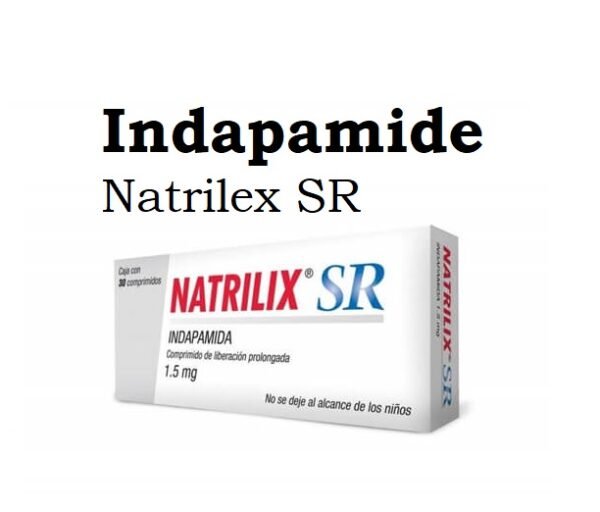
Indapamide is a thiazide diuretic that is used in the treatment of mild to moderate hypertension as monotherapy or in combination with other drugs.
Indapamide Uses:
-
Heart failure:
- Treatment of edema in heart failure
-
Hypertension:
- Management of mild to moderate hypertension
Guideline recommendations:
-
-
- The 2017 Guideline for the Prevention, Detection, Evaluation, and Management of High Blood Pressure in Adults recommends if monotherapy is warranted, in the absence of comorbidities (eg, cerebrovascular disease, chronic kidney disease, diabetes, heart failure, ischemic heart disease, etc), that thiazide-like diuretics or dihydropyridine calcium channel blockers may be preferred options due to improved cardiovascular endpoints (eg, prevention of heart failure and stroke).
- ACE inhibitors and ARBs are also acceptable for monotherapy.
- Combination therapy may be required to achieve blood pressure goals and is initially preferred in patients at high risk (stage 2 hypertension or atherosclerotic cardiovascular disease [ASCVD] risk ≥10%).
-
-
Off Label Use of Indapamide in Adults:
- Calcium nephrolithiasis
Indapamide dose in adults:
Indapamide Dose in the treatment of Calcium nephrolithiasis (off-label):
- Oral: 2.5 mg once daily.
Indapamide Dose in the treatment of Edema:
- Oral: Initial: at 2.5 mg daily;
- if the inadequate response after 1 week, may increase the dose to 5 mg daily.
Note:
- There is little therapeutic benefit to increasing the dose >5 mg daily; there is, however, an increased risk of electrolyte disturbances.
Indapamide dose in the treatment of Hypertension:
- Oral: Initial: at 1.25 mg once daily;
- titrate as needed every 4 weeks up to 5 mg once daily.
- Usual dosage range:
- 1.25 to 2.5 mg once daily.
Pregnancy Risk Factor B
- In animal reproduction studies, adverse events were not seen.
- The placenta is crossed by diuretics and they are found in cord blood. Use by mothers may lead to neonatal or fetal jaundice, thrombocytopenia, or other adverse reactions in adults.
- Normal pregnancies are not a good time to use diuretics.
- Use may be considered if edema is caused by pathologic reasons (as in the patient is not pregnant).
Indapamide use during breastfeeding:
- It is unknown if breast milk contains indapamide.
- The manufacturer suggests that breastfeeding should be stopped if therapy is required.
Indapamide Dose in Kidney Disease:
- There are no dosage adjustments provided in the manufacturer's labeling; however, the following adjustments have been recommended:
-
GFR 10 to 50 mL/minute:
- 1.25 to 2.5 mg once daily.
-
GFR <10 mL/minute:
- 1.25 to 2.5 mg once daily (limited data).
-
Hemodialysis:
- 1.25 to 2.5 mg once daily (limited data);
- not dialyzable.
-
Indapamide Dose in Liver disease:
- There are no dosage adjustments provided in the manufacturer’s labeling; use with caution.
Common Side Effects of Indapamide:
-
Central nervous system:
- Agitation
- Anxiety
- Dizziness
- Fatigue
- Headache
- Irritability
- Lethargy
- Malaise
- Nervousness (dose-dependent)
- Pain
- Paresthesia
- Tension
-
Endocrine & metabolic:
- Hypokalemia
-
Infection:
- Infection
-
Neuromuscular & skeletal:
- Back pain
- Muscle cramps
- Muscle spasm
- Weakness
-
Respiratory:
- Rhinitis
Less Common Side Effects of Indapamide:
-
Cardiovascular:
- Cardiac Arrhythmia
- Chest Pain
- Flushing
- Orthostatic Hypotension
- Palpitations
- Peripheral Edema
- Vasculitis
- Ventricular Premature Contractions
-
Central Nervous System:
- Depression
- Drowsiness
- Hypertonia
- Insomnia
- Vertigo
-
Dermatologic:
- Pruritus
- Skin Rash
- Urticaria
-
Endocrine & Metabolic:
- Decreased Libido
- Glycosuria
- Hyperglycemia
- Hyperuricemia
- Hypochloremia
- Hyponatremia
- Weight Loss
-
Gastrointestinal:
- Abdominal Cramps
- Abdominal Pain
- Anorexia
- Constipation
- Diarrhea
- Dyspepsia
- Gastric Irritation
- Nausea
- Vomiting
- Xerostomia
-
Genitourinary:
- Nocturia
-
Ophthalmic:
- Blurred Vision
- Conjunctivitis
-
Renal:
- Increased Blood Urea Nitrogen
- Increased Serum Creatinine
- Polyuria
-
Respiratory:
- Cough
- Flu-Like Symptoms
- Pharyngitis
- Rhinorrhea
- Sinusitis
Contraindications to Indapamide:
- Hypersensitivity/hyperresponsiveness to indapamide or any component of the formulation or sulfonamide-derived drugs; anuria
Notice:
- Although the FDA-approved product labeling states that this medication is contraindicated with other sulfonamide-containing drug groups, the scientific basis of this statement has been challenged.
Canadian labeling: Additional contraindications not in US labeling
- Severe renal failure (CrCl <30 mL/minute);
- Hepatic Encephalopathy
- Grave hepatic impairment
- Hypokalemia
- Use of antiarrhythmic drugs in conjunction with torsade des pointes
- pregnancy;
- Breast-feeding
- Galactose intolerance is a hereditary problem
- glucose-galactose malabsorption,
- or Lapp lactase deficiency
Warnings and precautions
-
Electrolyte disturbances:
- At recommended doses, severe hyponatremia and hypokalemia have been reported (especially in elderly women).
- Dose-dependent risk means that you should use the lowest dose.
- Hypochloremic alkalosis can also be caused by hypomagnesemia or hypercalcemia.
- During therapy, monitor your electrolytes regularly.
-
Photosensitivity
- Photosensitization can occur.
-
Allergy to sulfonamide ("sulfa")
- FDA-approved product labels for medications that contain a sulfonamide chemical group include a wide contraindication for patients who have had an allergic reaction to sulfonamides in the past.
- Cross-reactivity is possible between members of one class (e.g., two antibiotics sulfonamides).
- Crossreactivity concerns have been raised for all compounds with the sulfonamide structure.
- A deeper understanding of allergic mechanisms suggests that cross-reactivity between nonantibiotic and antibiotic sulfonamides is unlikely.
- Nonantibiotic sulfonamides are not likely to cause anaphylaxis (a mechanism of antibody production causing cross-reaction).
- The T-cell-mediated type IV reactions (eg, maculopapular skin rash) are less understood.
- It is difficult to exclude this possibility based on current knowledge.
- Some clinicians avoid these classes in cases of severe reactions (Stevens-Johnson syndrome/TEN).
-
Insufficiency of the adrenal glands:
- Patients with primary adrenal disease (Addison disease) should not be treated with diuretics to lower blood pressure.
- Adjustment of glucocorticoid/mineralocorticoid therapy and/or the use of other antihypertensive agents is preferred to treat hypertension.
-
Bariatric surgery
- Dehydration
- Do not take diuretics during the first 24 hours after bariatric surgery.
- Electrolyte disturbances or dehydration can occur.
- If necessary, diuretics can be resumed if oral fluid intake goals have been met.
- Dehydration
-
Diabetes:
- Patients with diabetes mellitus or prediabetes should be cautious.
- You may experience a change in their glucose control.
-
Gout
- Gout can occur in certain patients who have a history of gout or are suffering from chronic renal failure.
-
Hepatic impairment
- Patients with severe hepatic dysfunction should be cautious; avoid acid/base and electrolyte imbalances in cirrhosis as they could lead to hepatic neuropathy.
-
Hypercholesterolemia:
- Patients with high or moderate cholesterol levels should be cautious.
- Thiazide diuretics can increase cholesterol concentrations.
- However, Indapamide (a diuretic-like thiazide) has not been shown adversely to affect lipids.
-
Hypokalemia
- Hypokalemia patients should be treated with caution.
-
Renal impairment
- For severe renal disease, use caution.
-
Systemic lupus erythematosus (SLE):
- It can trigger or exacerbate SLE.
|
Ajmaline |
Sulfonamides may enhance the adverse/toxic effect of Ajmaline. Specifically, the risk for cholestasis may be increased. |
|
Alcohol (Ethyl) |
May enhance the orthostatic hypotensive effect of Thiazide and Thiazide-Like Diuretics. |
|
Alfuzosin |
May enhance the hypotensive effect of Blood Pressure Lowering Agents. |
|
Allopurinol |
Thiazide and Thiazide-Like Diuretics may enhance the potential for allergic or hypersensitivity reactions to Allopurinol. Thiazide and Thiazide-Like Diuretics may increase the serum concentration of Allopurinol. Specifically, Thiazide Diuretics may increase the concentration of Oxypurinol, an active metabolite of Allopurinol. |
|
Aminolevulinic Acid (Topical) |
Photosensitizing Agents may enhance the photosensitizing effect of Aminolevulinic Acid (Topical). |
|
Amphetamines |
May diminish the antihypertensive effect of Antihypertensive Agents. |
|
Angiotensin-Converting Enzyme Inhibitors |
Thiazide and Thiazide-Like Diuretics may enhance the hypotensive effect of Angiotensin-Converting Enzyme Inhibitors. Thiazide and Thiazide-Like Diuretics may enhance the nephrotoxic effect of Angiotensin-Converting Enzyme Inhibitors. |
|
Anticholinergic Agents |
May increase the serum concentration of Thiazide and Thiazide-Like Diuretics. |
|
Antidiabetic Agents |
Thiazide and Thiazide-Like Diuretics may diminish the therapeutic effect of Antidiabetic Agents. |
|
Antidiabetic Agents |
Hyperglycemia-Associated Agents may diminish the therapeutic effect of Antidiabetic Agents. |
|
Antipsychotic Agents (Second Generation [Atypical]) |
Blood Pressure Lowering Agents may enhance the hypotensive effect of Antipsychotic Agents (Second Generation [Atypical]). |
|
Barbiturates |
May enhance the hypotensive effect of Blood Pressure Lowering Agents. |
|
Benperidol |
May enhance the hypotensive effect of Blood Pressure Lowering Agents. |
|
Beta2-Agonists |
May enhance the hypokalemic effect of Thiazide and Thiazide-Like Diuretics. |
|
Brigatinib |
May diminish the antihypertensive effect of Antihypertensive Agents. Brigatinib may enhance the bradycardic effect of Antihypertensive Agents. |
|
Brimonidine (Topical) |
May enhance the hypotensive effect of Blood Pressure Lowering Agents. |
|
Calcium Salts |
Thiazide and Thiazide-Like Diuretics may decrease the excretion of Calcium Salts. Continued concomitant use can also result in metabolic alkalosis. |
|
CarBAMazepine |
Thiazide and Thiazide-Like Diuretics may enhance the adverse/toxic effect of CarBAMazepine. Specifically, there may be an increased risk for hyponatremia. |
|
Cardiac Glycosides |
Thiazide and Thiazide-Like Diuretics may enhance the adverse/toxic effect of Cardiac Glycosides. Specifically, cardiac glycoside toxicity may be enhanced by the hypokalemic and hypomagnesemic effects of thiazide diuretics. |
|
Corticosteroids (Orally Inhaled) |
May enhance the hypokalemic effect of Thiazide and ThiazideLike Diuretics. |
|
Corticosteroids (Systemic) |
May enhance the hypokalemic effect of Thiazide and Thiazide-Like Diuretics. |
|
Cyclophosphamide |
Thiazide and Thiazide-Like Diuretics may enhance the adverse/toxic effect of Cyclophosphamide. Specifically, granulocytopenia may be enhanced. |
|
Dexketoprofen |
May enhance the adverse/toxic effect of Sulfonamides. |
|
Dexmethylphenidate |
May diminish the therapeutic effect of Antihypertensive Agents. |
|
Diacerein |
May enhance the therapeutic effect of Diuretics. Specifically, the risk for dehydration or hypokalemia may be increased. |
|
Diazoxide |
Thiazide and Thiazide-Like Diuretics may enhance the adverse/toxic effect of Diazoxide. |
|
Diazoxide |
May enhance the hypotensive effect of Blood Pressure Lowering Agents. |
|
Dichlorphenamide |
Thiazide and Thiazide-Like Diuretics may enhance the hypokalemic effect of Dichlorphenamide. |
|
DULoxetine |
Blood Pressure Lowering Agents may enhance the hypotensive effect of DULoxetine. |
|
Herbs (Hypertensive Properties) |
May diminish the antihypertensive effect of Antihypertensive Agents. |
|
Herbs (Hypotensive Properties) |
May enhance the hypotensive effect of Blood Pressure Lowering Agents. |
|
Hypotension-Associated Agents |
Blood Pressure Lowering Agents may enhance the hypotensive effect of Hypotension-Associated Agents. |
|
Ipragliflozin |
May enhance the adverse/toxic effect of Thiazide and Thiazide-Like Diuretics. Specifically, the risk for intravascular volume depletion may be increased. |
|
Ivabradine |
Thiazide and Thiazide-Like Diuretics may enhance the arrhythmogenic effect of Ivabradine. |
|
Levodopa-Containing Products |
Blood Pressure Lowering Agents may enhance the hypotensive effect of Levodopa-Containing Products. |
|
Licorice |
May enhance the hypokalemic effect of Thiazide and Thiazide-Like Diuretics. |
|
Lormetazepam |
May enhance the hypotensive effect of Blood Pressure Lowering Agents. |
|
Methenamine |
Thiazide and Thiazide-Like Diuretics may diminish the therapeutic effect of Methenamine. |
|
Methylphenidate |
May diminish the antihypertensive effect of Antihypertensive Agents. |
|
Molsidomine |
May enhance the hypotensive effect of Blood Pressure Lowering Agents. |
|
Multivitamins/Fluoride (with ADE) |
May enhance the hypercalcemic effect of Thiazide and Thiazide-Like Diuretics. |
|
Multivitamins/Minerals (with ADEK, Folate, Iron) |
Thiazide and Thiazide-Like Diuretics may enhance the hypercalcemic effect of Multivitamins/Minerals (with ADEK, Folate, Iron). |
|
Multivitamins/Minerals (with AE, No Iron) |
Thiazide and Thiazide-Like Diuretics may increase the serum concentration of Multivitamins/Minerals (with AE, No Iron). Specifically, thiazide diuretics may decrease the excretion of calcium, and continued concomitant use can also result in metabolic alkalosis. |
|
Naftopidil |
May enhance the hypotensive effect of Blood Pressure Lowering Agents. |
|
Neuromuscular-Blocking Agents (Nondepolarizing) |
Thiazide and Thiazide-Like Diuretics may enhance the neuromuscular-blocking effect of Neuromuscular-Blocking Agents (Nondepolarizing). |
|
Nicergoline |
May enhance the hypotensive effect of Blood Pressure Lowering Agents. |
|
Nicorandil |
May enhance the hypotensive effect of Blood Pressure Lowering Agents. |
|
Nitroprusside |
Blood Pressure Lowering Agents may enhance the hypotensive effect of Nitroprusside. |
|
Nonsteroidal Anti-Inflammatory Agents |
Thiazide and Thiazide-Like Diuretics may enhance the nephrotoxic effect of Nonsteroidal Anti-Inflammatory Agents. Nonsteroidal Anti-Inflammatory Agents may diminish the therapeutic effect of Thiazide and Thiazide-Like Diuretics. |
|
Opioid Agonists |
May enhance the adverse/toxic effect of Diuretics. Opioid Agonists may diminish the therapeutic effect of Diuretics. |
|
Oxcarbazepine |
Thiazide and Thiazide-Like Diuretics may enhance the adverse/toxic effect of OXcarbazepine. Specifically, there may be an increased risk for hyponatremia. |
|
Pentoxifylline |
May enhance the hypotensive effect of Blood Pressure Lowering Agents. |
|
Pholcodine |
Blood Pressure Lowering Agents may enhance the hypotensive effect of Pholcodine. |
|
Phosphodiesterase 5 Inhibitors |
May enhance the hypotensive effect of Blood Pressure Lowering Agents. |
|
Porfimer |
Photosensitizing Agents may enhance the photosensitizing effect of Porfimer. |
|
Prostacyclin Analogues |
May enhance the hypotensive effect of Blood Pressure Lowering Agents. |
|
Quinagolide |
May enhance the hypotensive effect of Blood Pressure Lowering Agents. |
|
Reboxetine |
May enhance the hypokalemic effect of Thiazide and Thiazide-Like Diuretics. |
|
Selective Serotonin Reuptake Inhibitors |
May enhance the hyponatremic effect of Thiazide and Thiazide-Like Diuretics. |
|
Toremifene |
Thiazide and Thiazide-Like Diuretics may enhance the hypercalcemic effect of Toremifene. |
|
Verteporfin |
Photosensitizing Agents may enhance the photosensitizing effect of Verteporfin. |
|
Vitamin D Analogs |
Thiazide and Thiazide-Like Diuretics may enhance the hypercalcemic effect of Vitamin D Analogs. |
|
Yohimbine |
May diminish the antihypertensive effect of Antihypertensive Agents. |
|
Risk Factor D (Consider therapy modification) |
|
|
Amifostine |
Blood Pressure Lowering Agents may enhance the hypotensive effect of Amifostine. Management: When amifostine is used at chemotherapy doses, blood pressure lowering medications should be withheld for 24 hours prior to amifostine administration. If blood pressure lowering therapy cannot be withheld, amifostine should not be administered. |
|
Bile Acid Sequestrants |
|
|
Dofetilide |
Thiazide and Thiazide-Like Diuretics may enhance the QTc-prolonging effect of Dofetilide. Thiazide and Thiazide-Like Diuretics may increase the serum concentration of Dofetilide. Management: Although hydrochlorothiazide is specifically cited as a contraindication, the risk likely extends to all thiazide and thiazide-like diuretics and may be even greater with chlorthalidone or bendroflumethiazide. Consider alternatives when possible. |
|
Lithium |
Thiazide and Thiazide-Like Diuretics may decrease the excretion of Lithium. |
|
Obinutuzumab |
May enhance the hypotensive effect of Blood Pressure Lowering Agents. Management: Consider temporarily withholding blood pressure lowering medications beginning 12 hours prior to obinutuzumab infusion and continuing until 1 hour after the end of the infusion. |
|
Sodium Phosphates |
Diuretics may enhance the nephrotoxic effect of Sodium Phosphates. Specifically, the risk of acute phosphate nephropathy may be enhanced. Management: Consider avoiding this combination by temporarily suspending treatment with diuretics, or seeking alternatives to oral sodium phosphate bowel preparation. If the combination cannot be avoided, hydrate adequately and monitor fluid and renal status. |
|
Topiramate |
Thiazide and Thiazide-Like Diuretics may enhance the hypokalemic effect of Topiramate. Thiazide and Thiazide-Like Diuretics may increase the serum concentration of Topiramate. Management: Monitor for increased topiramate levels/adverse effects (e.g., hypokalemia) with initiation/dose increase of a thiazide diuretic. Closely monitor serum potassium concentrations with concomitant therapy. Topiramate dose reductions may be necessary. |
|
Risk Factor X (Avoid combination) |
|
|
Aminolevulinic Acid (Systemic) |
Photosensitizing Agents may enhance the photosensitizing effect of Aminolevulinic Acid (Systemic). |
|
Bromperidol |
Blood Pressure Lowering Agents may enhance the hypotensive effect of Bromperidol. Bromperidol may diminish the hypotensive effect of Blood Pressure Lowering Agents. |
|
Fexinidazole [INT] |
Thiazide and Thiazide-Like Diuretics may enhance the arrhythmogenic effect of Fexinidazole [INT]. |
|
Levosulpiride |
Thiazide and Thiazide-Like Diuretics may enhance the adverse/toxic effect of Levosulpiride. |
|
Mecamylamine |
Sulfonamides may enhance the adverse/toxic effect of Mecamylamine. |
|
Promazine |
Thiazide and Thiazide-Like Diuretics may enhance the QTc-prolonging effect of Promazine. |
Monitoring parameters:
- Blood pressure (both standing and sitting/supine);
- serum electrolytes,
- hepatic function,
- renal function, uric acid;
- assess weight,
- intake and output (I and O) reports daily to determine fluid loss
Hypertension:
- The 2017 Guideline for the Prevention, Detection, Evaluation, and Management of High Blood Pressure in Adults (ACC/AHA [Whelton 2017]):
Confirmed hypertension and known cardiovascular disease or 10-year atherosclerotic cardiovascular disease (ASCVD) risk ≥10%:
- Target blood pressure <130/80 mm Hg is recommended.
Confirmed hypertension without markers of increased ASCVD risk:
- Target blood pressure <130/80 mm Hg may be reasonable.
Diabetes and hypertension:
The American Diabetes Association (ADA) guidelines (ADA 2019):
-
Patients 18 to 65 years of age, without ASCVD, and 10-year ASCVD risk <15%:
- Target blood pressure <140/90 mm Hg is recommended
-
Patients 18 to 65 years of age and known ASCVD or 10-year ASCVD risk >15%:
- Target blood pressure <130/80 mm Hg may be appropriate if it can be safely attained
-
Patients >65 years of age (healthy or complex/intermediate health):
- Target blood pressure <140/90 mm Hg is recommended
-
Patients >65 years of age (very complex/poor health):
- Target blood pressure <150/90 mm Hg is recommended
How to administer Indapamide?
- Oral: May be administered without regard to meals.
- however, administration with food or milk may decrease GI adverse effects.
- Administer early in the day to avoid nocturia.
Mechanism of action of Indapamide:
- The diuretic effect of diuretics is located at the distal tubule's proximal segment.
- Like other diuretics, it does not seem to have any significant effect on renal blood flow or glomerular filter rate.
- It increases sodium, chloride, and water excretion by interfering in the transport of sodium ions across the renal tubular epithelium.
Absorption:
- Rapid and complete
Plasma Protein binding:
- 71% to 79%
Metabolism:
- Extensively hepatic
Bioavailability:
- 93%.
Half-life elimination:
- Biphasic: 14 and 25 hours
Time to peak:
- 2 hours
Excretion:
- Urine (~70%; 7% as unchanged drug within 48 hours); feces (23%)
International Brands of Indapamide:
- APO-Indapamide
- DOM-Indapamide
- Indapamide 1.25
- JAMP-Indapamide
- Lozide
- MYLANIndapamide
- PHL-Indapamide
- PMS-Indapamide
- PRO-Indapamide
- RIVAIndapamide
- TEVA-Indapamide
- TRIA-Indapamide
- Aldapres
- Alvonamid
- Amoron
- Apadex
- Arifon
- Damide
- Dapa
- Dapa-tabs
- Dapalix
- Dapamax
- Depermide
- Dipam
- Diuremid CR
- Diuremid SR
- Diurex
- Dixamid
- Extur
- Fludex
- Fludex SR
- Flux
- Frumeron
- Heimdall Diurex
- Hemidol
- Hidromax SR
- Hydroless
- Hypotense
- Icorvida SR
- Inco SR
- Indalix
- Indamax
- Indanorm
- Indap
- Indapamide-Eurogenerics
- Indapamide-Generics
- Indapen
- Indapress
- Indelix SR
- Indicontin Continus
- Inditor-SR
- Inpamide
- Insig
- Intril SR
- Ipamix
- Lorvas
- Lorvas SR
- Magniton-R
- Millibar
- Napamide
- Natrilex SR
- Natrilix
- Natrilix AP
- Natrilix Retard
- Natrilix SR
- Natrix
- Natrix SR
- Noranat
- Noranat SR
- Pamid
- Pretanix
- Rawel SR
- Rinalix
- Sicco
- Tandix
- Tertensif
- Tertensif SR
- Vazamide SR
- Xelix SR
- Zytrilix
Indapamide Brand Names in Pakistan:
Indapamide 2.5 mg Tablets |
|
| Baplow | Tagma Pharma (Pvt) Ltd. |
| Hypomide | Don Valley Pharmaceuticals (Pvt) Ltd. |
| Indurin | Paramount Pharmaceuticals |
| Natrilix | Servier Research & Pharmaceuticals Pakistan (Pvt) Ltd. |
Indapamide 1.5 mg Tablets |
|
| Hypomide | Don Valley Pharmaceuticals (Pvt) Ltd. |
| Natrilix | Servier Research & Pharmaceuticals Pakistan (Pvt) Ltd. |
.png)


