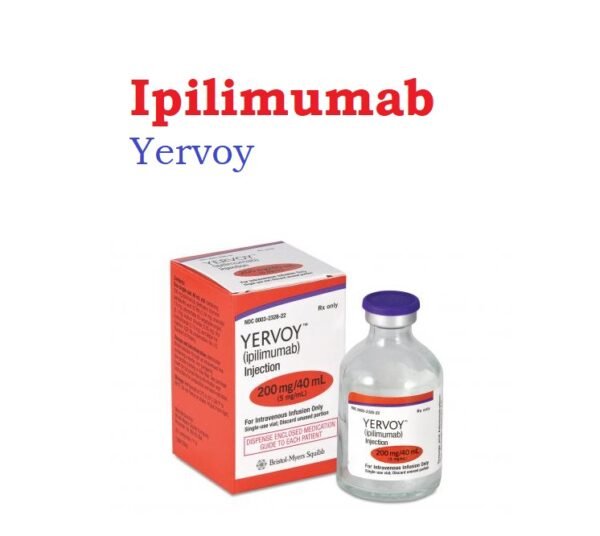
Ipilimumab (Yervoy) is a fully-humanized monoclonal antibody that acts by activating T-lymphocytes via inhibiting cytotoxic T-lymphocyte associated antigen 4 (CTLA-4). CTLA-4 is a down-regulator of T-lymphocytes.
Ipilimumab (Yervoy) Uses:
-
Colorectal cancer, metastatic (microsatellite instability-high or mismatch repair deficient):
- Microsatellite treatment (in combination with nivolumab) instability-high (MSI-H) or mismatch repair deficient (dMMR) metastatic colorectal cancer (CRC) that has progressed following treatment with a fluoropyrimidine, oxaliplatin, and irinotecan in adults and pediatric patients ≥12 years of age
-
Unresectable or metastatic melanoma:
- In adult and pediatric patients ≥12 years of age, treatment of unresectable or metastatic melanoma.
-
Melanoma, adjuvant treatment:
- In patients with pathologic involvement of regional lymph nodes of >1 mm, adjuvant treatment of cutaneous melanoma who have undergone complete resection, including total lymphadenectomy
-
Advanced Renal cell carcinoma:
- Treatment of intermediate or poor risk, previously untreated advanced renal cell carcinoma (in combination with nivolumab)
-
Off Label Use of Ipilimumab in Adults:
- Melanoma, metastatic with brain metastases
- Melanoma, unresectable or metastatic, first-line combination therapy
- Small cell lung cancer (progressive)
Ipilimumab dose in adults:
Ipilimumab (Yervoy) Dose in the treatment of metastatic (microsatellite instability-high or mismatch repair deficient) Colorectal Cancer:
- IV:
- For up to 4 combination doses, 1 mg/kg once every 3 weeks (in combination with nivolumab), followed by nivolumab monotherapy until disease progression or unacceptable toxicity.
- (refer to Nivolumab monograph for nivolumab dosing information).
- Note:
- Nivolumab should also be withheld if ipilimumab therapy is withheld.
Ipilimumab (Yervoy) Dose in the treatment of Melanoma, metastatic with brain metastases (off-label):
- 3 mg/kg once every 3 weeks (in combination with nivolumab), for 4 combination doses followed by nivolumab monotherapy.
- Of nivolumab therapy, the total duration is up to 24 months, or until disease progression or unacceptable toxicity.
Ipilimumab (Yervoy) Dose in the treatment of unresectable or metastatic Melanoma:
- IV:
- 3 mg/kg every 3 weeks for a max of 4 doses.
- Doses may be delayed due to toxicity, but within 16 weeks of the initial dose, all doses must be administered.
Ipilimumab (Yervoy) Dose in the Adjuvant treatment of Melanoma:
- IV:
- For 4 doses, 10 mg/kg every 3 weeks, followed by 10 mg/kg every 12 weeks for up to 3 years unless disease progression or unacceptable toxicity occurs.
- Doses are omitted if toxicity occurs (not delayed).
Ipilimumab (Yervoy) Dose in the treatment of unresectable or metastatic Melanoma, first-line combination therapy (off-label):
- IV:
- 3 mg/kg every 3 weeks for 4 combination doses, (in combination with nivolumab).
- With nivolumab continued until disease progression or unacceptable toxicity).
Ipilimumab (Yervoy) Dose in the treatment of advanced Renal cell cancer, combination therapy:
- IV:
- 1 mg/kg once every 3 weeks for 4 combination doses, (in combination with nivolumab), followed by nivolumab monotherapy (refer to nivolumab monograph for nivolumab dosing information) until disease progression or unacceptable toxicity.
- Note:
- Nivolumab should also be withheld if ipilimumab therapy is withheld.
Ipilimumab (Yervoy) Dose in the treatment of progressive small cell lung cancer (off-label):
- IV:
- 3 mg/kg every 3 weeks (in combination with nivolumab) for 4 combination doses followed by nivolumab monotherapy.
Ipilimumab dose in children:
Ipilimumab (Yervoy) Dose in the treatment of metastatic (microsatellite instability-high (MSI-H) or mismatch repair deficient (dMMR) Colorectal Cancer:
-
Children ≥12 years and Adolescents:
-
IV:
- 1 mg/kg/dose once every 3 weeks (in combination with nivolumab) for up to 4 doses.
-
Note:
- FDA approval through an accelerated process.
- Continued approval is dependent on the verification of clinical benefit in further trials.
-
Ipilimumab (Yervoy) Dose in the treatment of unresectable or metastatic Melanoma:
-
Children ≥12 years and Adolescents:
- IV:
- 3 mg/kg every 3 weeks for a max of 4 doses.
- Doses may be delayed due to toxicity, but within 16 weeks of the initial dose, all doses must be administered.
- IV:
Ipilimumab (Yervoy) Dosing adjustment for toxicity:
Note:
- When nivolumab is withheld, ipilimumab should also be withheld if receiving combination therapy with nivolumab.
- Refer to the Nivolumab monograph for information on nivolumab dosage adjustment for toxicity.
-
Children ≥12 years and Adolescents:
-
Dermatologic toxicity:
- For mild to moderate dermatitis, treat symptomatically (eg, localized rash and pruritus).
- If not resolved within 1 week topical or systemic corticosteroids should be administered.
- Withhold ipilimumab for moderate to severe dermatologic symptoms.
- Permanently discontinue for Stevens-Johnson syndrome, toxic epidermal necrolysis, or rash complicated by dermal ulceration (full thickness) or necrotic, bullous, or hemorrhagic manifestations.
- Also, initiate systemic corticosteroids (prednisone 1 to 2 mg/kg/day or equivalent).
- Taper corticosteroid over at least 1 month when dermatitis is controlled.
-
Encephalitis (new-onset moderate or severe neurologic toxicity):
- Withhold therapy & evaluate (rule out other causes).
- If confirmed, permanently discontinue and administer corticosteroids (prednisone 1 to 2 mg/kg/day or equivalent) followed by a corticosteroid taper.
-
Endocrinopathy:
- For symptomatic endocrinopathy, temporarily withhold ipilimumab.
- Initiate systemic corticosteroids (prednisone at 1 to 2 mg/kg/day or equivalent) and begin appropriate hormone replacement therapy.
- Resume treatment in patients with complete or partial resolution of toxicity(≤ grade 1) & who are receiving prednisone <7.5 mg daily (or equivalent).
- Permanently discontinue ipilimumab for symptomatic endocrinopathy lasting 6 weeks or longer, or if unable to reduce corticosteroid dose to prednisone ≤7.5 mg daily (or equivalent).
-
Gastrointestinal toxicity:
- Moderate enterocolitis/colitis:
- Withhold ipilimumab & administer anti-diarrheal treatment.
- Initiate systemic corticosteroids if moderate enterocolitis persists for >1 week (prednisone at 0.5 mg/kg/day or equivalent).
- May resume treatment in patients with complete or partial resolution of toxicity (≤ grade 1) & who are receiving prednisone <7.5 mg daily (or equivalent).
- Severe enterocolitis/colitis:
- Permanently discontinue.
- Initiate systemic corticosteroids (prednisone 1 to 2 mg/kg/day or equivalent).
- Taper corticosteroids slowly over ≥1 month upon improvement to ≤ grade 1 (rapid tapering may cause recurrence or worsen symptoms).
- For management of immune-mediated enterocolitis unresponsive to 3 to 5 days of systemic corticosteroids, may consider adding anti-tumor necrosis factor (TNF) or other immunosuppressive therapy or recurring after symptomatic improvement.
- Moderate enterocolitis/colitis:
-
Infusion-related reaction:
- Mild or moderate reaction:
- Interrupt or slow the infusion rate.
- Severe or life-threatening reaction:
- Discontinue ipilimumab.
- Mild or moderate reaction:
-
Neuropathy:
-
- Withhold therapy for moderate neuropathy (not interfering with daily activities).
- Permanently discontinue for severe neuropathy which interferes with daily activities, such as Guillain-Barré-like syndromes.
- Consider initiating systemic corticosteroids (prednisone 1 to 2 mg/kg/day or equivalent) for severe neuropathies.
-
-
Ophthalmologic toxicity:
- Administer corticosteroid eye drops for uveitis, iritis, or episcleritis.
- Permanently discontinue for grade 2 through 4 immune-mediated reactions that do not improve to ≤ grade 1 within 2 weeks while receiving topical therapy or which require systemic treatment.
-
Pancreatitis, immune-mediated:
- For grades 3 or 4 amylase or lipase increases, permanent discontinuation is recommended (Weber 2012)
-
Pneumonitis:
- Withhold ipilimumab for moderate (grade 2) or severe (grade 3) pneumonitis.
- Permanently discontinue for life-threatening (Grade 4) immune-mediated pneumonitis.
- Also, administer corticosteroids (prednisone 1 to 2 mg/kg daily or equivalent) for grade 2 or higher pneumonitis followed by a corticosteroid taper.
-
Other toxicity:
- For grade 2 adverse reactions, temporarily withhold ipilimumab.
- May resume treatment in patients (with grade 2 toxicity) with complete or partial resolution of toxicity (≤ grade 1) & who are receiving prednisone <7.5 mg daily (or equivalent).
- For severe immune-mediated adverse reactions, initiate systemic corticosteroids (prednisone 1 to 2 mg/kg/day or equivalent).
- Permanently discontinue for clinically significant or severe immune-mediated adverse reactions, grade 2 reactions lasting 6 weeks or longer, grade 3 or 4 toxicity, or if unable to reduce corticosteroid dose to prednisone ≤7.5 mg daily (or equivalent).
-
-
Pregnancy Risk Category: C
- Based on data from animal reproduction studies and the mechanism of action, ipilimumab can cause fetal harm in utero.
- Ipilimumab (humanized monoclonal antibody) is an IgG.
- The potential placental transfer of human IgG depends on the IgG subclass and the gestational age, which generally increases with each pregnancy.
- The lowest possible exposure is expected during the period of organogenesis.
- Effective contraception should be used by females with reproductive potential during treatment and for the 3 months after the last ipilimumab dosage.
Use of Ipilimumab while breastfeeding
- It is unknown if breast milk contains ipilimumab.
- It is best to stop breastfeeding during treatment, and for three months after the last dose.
Ipilimumab (Yervoy) Dose in Kidney Disease:
-
Renal impairment at baseline:
- No dosage adjustment is necessary.
-
Renal toxicity during treatment (nephritis or renal dysfunction):
-
Grade 2 or grade 3 serum creatinine elevations:
- Withhold treatment.
- Administer corticosteroids (prednisone 0.5 to 1 mg/kg daily or equivalent) followed by a corticosteroid taper
- Increase corticosteroid dose to prednisone 1 to 2 mg/kg daily (or equivalent), if toxicity worsens or does not improve.
-
Grade 4 serum creatinine elevations:
- Permanently discontinue.
- Initiate high-dose systemic corticosteroids followed by a corticosteroid taper(prednisone 1 to 2 mg/kg daily or equivalent).
-
Ipilimumab (Yervoy) Dose in Liver disease:
-
Hepatic impairment at baseline:
-
Mild impairment (total bilirubin >1 to 1.5 x ULN or AST >ULN):
- No dosage adjustment is necessary.
-
Moderate or severe impairment (total bilirubin >1.5 x ULN and any AST):
- In the manufacturer's labeling, there are no dosage adjustments provided (has not been studied).
-
-
Hepatic impairment during treatment:
-
Grade 2:
- Temporarily withhold treatment.
-
Grade 3 or 4:
- Permanently discontinue.
- Also, administer systemic corticosteroids (prednisone 1 to 2 mg/kg/day or equivalent).
- May begin tapering corticosteroid (over 1 month) when LFTs show sustained improvement or return to baseline.
-
Common Side Effects of Ipilimumab (Yervoy):
-
Central Nervous System:
- Fatigue
- Headache
-
Dermatologic:
- Skin Rash
- Pruritus
- Dermatitis
-
Endocrine & Metabolic:
- Weight Loss
-
Gastrointestinal:
- Diarrhea
- Nausea
- Decreased Appetite
- Increased Serum Lipase
- Vomiting
- Constipation
- Increased Serum Amylase
- Colitis
- Enterocolitis
- Abdominal Pain
-
Hematologic & Oncologic:
- Decreased Hemoglobin
- Anemia
-
Hepatic:
- Increased Serum Alanine Aminotransferase
- Increased Serum Aspartate Aminotransferase
- Increased Serum Alkaline Phosphatase
- Increased Serum Bilirubin
- Hepatitis
-
Respiratory:
- Cough
- Dyspnea
-
Miscellaneous:
- Fever
Less Common Side Effects of Ipilimumab (Yervoy):
-
Central Nervous System:
- Insomnia
- Neuropathy
-
Dermatologic:
- Urticaria
- Vitiligo
-
Endocrine & Metabolic:
- Pituitary Insufficiency
- Hypophysitis
- Adrenocortical Insufficiency
- Hypothyroidism
-
Gastrointestinal:
- Intestinal Perforation
- Pancreatitis
-
Hematologic & Oncologic:
- Eosinophilia
-
Hepatic:
- Hepatotoxicity
-
Immunologic:
- Antibody Development
-
Renal:
- Increased Serum Creatinine
- Nephritis
Rare Side effects of Ipilimumab (Yervoy):
-
Dermatologic:
- Bullous dermatitis
- Dermal ulcer
- Skin or other tissue necrosis
- Stevens-Johnson syndrome
- Toxic epidermal necrolysis
Contraindications to Ipilimumab (Yervoy):
- There are no contraindications in the US manufacturer's labeling.
- Canadian labeling
- Hypersensitivity to ipilimumab and any component of the formula
- An active, life-threatening autoimmune condition or organ transplantation graft in which further immune activation could be potentially life-threatening
Warnings and precautions
-
Negative effects that are immune-mediated
-
[US Boxed Warning]
- It is possible to have severe and fatal immune-mediated adverse reactions.
- Commonly, severe side effects include dermatitis, toxic epidermal Necrolysis, endocrinopathy, and enterocolitis.
- Reactions are common during treatment, but some have been reported weeks or months later.
- Stop treatment immediately and start high-dose systemic corticosteroid therapy for severe immune-mediated reactions.
- Assess liver function and adrenocorticotropic hormonal (ACTH) levels at baseline and before each dose.
- At baseline and before each dose, assess for signs and symptoms such as enterocolitis or dermatitis, neuropathy, and endocrinopathy.
- Common immune-mediated adverse reactions include cytopenias and hemolytic anemia.
- Other immune-mediated reactions that are rare include arthritis, autoimmune central neuropathy (encephalitis), blepharitis, and conjunctivitis.
- Systemic corticosteroids (prednisone 1 - 2 mg/kg/day, or an equivalent) should be used for severe reactions.
- Immune-mediated reactions may occur when nivolumab is combined with it. This can happen even after the therapy has ended.
- Myocarditis and rhabdomyolysis are some of the reactions reported.
- If you suspect that immune-mediated adverse reactions are occurring, consider other causes.
- Based on the severity of the reaction, discontinue or withhold ipilimumab//or nivolumab. Instead, administer high-dose corticosteroids and hormone replacement therapy (if necessary).
- After improvement to = Grade 1, begin corticosteroid taper (over a minimum of 1 month).
- You may reconsider reinitiating therapy after the corticosteroid taper has been completed, based on severity.
-
-
Dermatologic toxicities:
- Reports of severe, life-threatening, or fatal immune-mediated dermatitis or rash have been made.
- The median time it took for dermatologic toxicities to develop with single-agent Ipilimumab was between 11-22 days.
- The median time it took for immune-mediated dermatitis to develop when ipilimumab and nivolumab were combined was 1-1 months.
- Monitor for signs and symptoms of dermatitis, including rash or pruritus.
- If the cause of your dermatitis is not obvious, you should consider it immune-mediated.
- Mild to moderate dermatitis (localized redness and pruritus), should be treated immediately.
- Topical or systemic corticosteroids are recommended if the problem persists beyond a week.
- For moderate to severe skin conditions, withhold treatment.
- Stop using ipilimumab permanently and start systemic corticosteroids (prednisone 1 - 2 mg/kg/day, equivalent) for Stevens-Johnson syndrome, toxic epidermal Neolysis or rash complicated with dermal ulceration (full width), necrotic, bullous or hemorrhagic manifestations.
- Reduce the dose of corticosteroid for at least one month if dermatitis is under control.
- Systemic corticosteroid treatment was effective for up to 15 days. It is followed by a taper.
-
Encephalitis
- Immuno-mediated Encephalitis can occur when nivolumab is combined with it. This has been reported after approximately 0.5-4 months of treatment.
- For new-onset neurologic signs/symptoms, from moderate to severe severity, keep it away.
- To rule out any other neurologic causes, or infections, you should evaluate.
- Assess with neurology consultation, brain MRI & lumbar perforation.
- If you suspect that immune-mediated encephalitis is caused by ipilimumab/nivolumab, or if other causes have been ruled out, then corticosteroids (1 to 2 mg/kg/day) should be administered. Followed by a corticosteroid taper.
- Infliximab was added to one case of corticosteroid therapy.
- If immune-mediated encephalitis develops, discontinue use immediately
-
Endocrinopathy
- There have been reports of severe or life-threatening endocrine conditions (hypophysitis and adrenal insufficiency [including adrenal crises], hypothyroidism, hyperthyroidism, and adrenal insufficiency].
- You may need to be admitted.
- There have been reports of mild endocrine disorders, including hypothyroidism (including adrenal insufficiency and hypopituitarism, as well as hypothyroidism & hyperthyroidism), that required hormone replacement therapy.
- The median time to treat melanoma with a single agent was 2.2 to 2.5 months.
- In many cases, long-term hormone replacement therapy is required.
- When combined with Nivolumab, the median time for various endocrinopathies, such as hypophysitis and adrenal insufficiency or thyroid disorders, was 1.1 to 3.7 months.
- Monitor thyroid function, ACTH levels, serum chemistries, and other clinically relevant factors prior to each dose.
- Also, look out for signs such as hypophysitis or adrenal insufficiency and thyroid disorders (eg abdominal pain, fatigue headache, hypotension, mental state changes, unusual bowel habits).
- You should rule out any other possible causes, such as brain metastases or underlying diseases.
- If the condition is not identified, it should be treated as immune-mediated.
- Refer to endocrinology for further evaluation.
- If symptoms persist, discontinue ipilimumab therapy and begin systemic corticosteroids ( prednisone 1 to 2 mg/kg/day) and the appropriate hormone replacement therapy.
-
Gastrointestinal toxicities:
- It is possible to get immune-mediated enterocolitis/colitis, even fatal cases.
- For single-agent ipilimumab, the median time it took to get >= grade 3 enterocolitis/colitis started at 1.1 to1.7 months (range: 1 to 33.1 months).
- When ipilimumab was combined with nivolumab, the median time for immune-mediated colitis was 1.7 to 2.4 months (range: 2 to 19 months).
- Check for signs and symptoms such as abdominal pain, blood in the stool, diarrhea, and fever; with or without fever.
- If enterocolitis/colitis develops, it is important to rule out infectious causes.
- Endoscopy may be an option if you have persistent or severe symptoms.
- You should withhold ipilimumab therapy and give antidiarrheals to moderate enterocolitis/colitis (diarrhea that causes =6 stool over baseline abdominal pain, mucus, or blood in the stool).
- If the symptoms persist for more than a week, you should start systemic corticosteroids (prednisone at 0.25 mg/kg/day or an equivalent).
- If severe enterocolitis/colitis develops (diarrhea >=7 stool above baseline, fever, and ileus signs), discontinue ipilimumab permanently and start systemic corticosteroids ( prednisone 1 - 2 mg/kg/day) or an equivalent.
- Reduce corticosteroids gradually over >=1 Month if the condition is resolved to =grade 1. (rapid tapering could cause recurrences or worsen symptoms).
- The median treatment duration for systemic corticosteroids was between 10 and 4.7 months, with a taper.
- Reports of colitis caused by immune-mediated corticosteroid resistance have been made.
- Patients with corticosteroid-refractory immune system-mediated colitis have been known to develop cytomegalovirus infection/reactivation.
- If corticosteroid-refractory colitis occurs, consider repeat infection testing to rule out other causes.
- Consider replacing corticosteroid therapy with an anti-tumor factor therapy, or adding another immunosuppressive therapy to manage immune-mediated enterocolitis/colitis that is not responsive to systemic corticosteroids for 3-5 days or recurring after symptomatic relief.
-
Graft-versus-host disease:
- Patients who receive ipilimumab either before or after allogeneic stem cell transplantation can develop serious and possibly fatal graft-versus-host disease.
- Pay attention.
-
Hepatotoxicity
- It has been reported that severe, life-threatening, or fatal hepatitis and immune-mediated liver disease have been observed.
- Patients who received single-agent, ipilimumab as adjuvant treatment for melanoma were able to experience grade 3 and 4 immune-mediated liver disease in 2 months.
- When ipilimumab and nivolumab were combined, the median time it took for immune-mediated liver disease to develop was 2 months.
- Before each dose, monitor LFTs for signs of liver damage and assess for any potential hepatotoxicity.
- Hepatotoxicity should be treated immediately if it develops.
- Grade 2 hepatotoxicity: Withhold treatment
- Gradual hepatotoxicity of grade 3 or 4, should be discontinued. Instead, you can start systemic corticosteroids (prednisone 1 to 2 mg/kg/day)
- The median treatment duration for systemic corticosteroid was between 1-4.4 months and a taper, depending on the severity of the condition.
- Consider adding mycophenolate mofetil to your regimen if transaminases don't decrease within 48 hours after steroid initiation.
- When LFTs show sustained improvement, or return to baseline, then corticosteroids may be tapered.
-
Reactions that are related to infusion:
- When used with nivolumab, infusion-related reactions can occur.
- Infusion reactions can be very severe.
- Pay attention.
- If you experience severe or life-threatening reactions, discontinue use.
- You can manage mild or moderate reactions by decreasing or interrupting the infusion rate.
-
Nephrotoxicity
- Renal dysfunction can be caused by a combination of nivolumab and ipilimumab therapy.
- It is possible to develop immune-mediated nephritis, which can be defined as renal dysfunction or >=grade 2 creatinine elevations without any other clear etiology.
- The median time it took to get started was 3 months.
- About three-quarters of patients suffering from immune-mediated nephritis or renal dysfunction were treated with high-dose systemic steroids (>=40mg prednisone) for a median of 17 days.
- Nearly two-thirds of patients experienced complete resolution. Some patients also resumed combination therapy without recurrence.
- Monitor serum creatinine levels at baseline and every other day during treatment.
- Start corticosteroids (prednisone 1 - 2 mg/kg daily, or equivalent) and then taper to corticosteroids for life-threatening (grade 4), serum creatinine elevation. Then discontinue ipilimumab permanently.
- For moderate (grade 2) or severe (grade 3) creatinine elevations, withhold ipilimumab and administer corticosteroids ( prednisone 0.5-2 mg/kg daily or an equivalent), followed by a corticosteroid taper.
- If toxicity persists or worsens, increase prednisone to 1-2 mg/kg daily.
-
Neuropathy
- Some fatalities may be caused by immune-mediated neuropathies.
- Reports of Grade 3 paresthesia/hypoesthesia and severe peripheral motor neuropathy, fatal Guillain Barre syndrome, and grade 3 paresthesia/hypoesthesia have been rare.
- Patients receiving adjuvant treatment for melanoma with ipilimumab were able to develop Grade 2-5 immune-mediated neuropathy within a median of 1.4-27.4 months.
- Look out for signs of motor and sensory neuropathy (unilateral, bilateral weakness, sensory changes, or paresthesia).
- Patients with mild neuropathy should be withheld from daily activities.
- For severe neuropathy, which interferes with daily activities and includes symptoms similar to Guillain Barre syndrome, you should be permanently discontinued.
- Consider starting systemic corticosteroids for severe neuropathies (prednisone 1 to 2-mg/kg/day, or an equivalent)
-
Ocular toxicities:
- It is possible to develop immune-mediated ocular toxicities, which may lead to retinal detachment and permanent vision loss.
- Check for symptoms such as blurred vision or decreased visual acuity in patients.
- Patients with episcleritis, iritis, or uveitis should be administered corticosteroid eye drops.
- Permanently stop using ipilimumab if you are not responsive to topical immunosuppressive treatment for the ophthalmic disease.
- Consider a Vogt Koyanagi Harada-like syndrome if uveitis is present in conjunction with other immune-mediated adverse effects. This has been seen in patients who received ipilimumab. It may be necessary to administer systemic corticosteroids in order to lower the risk of permanent vision impairment.
- Start systemic corticosteroids in severe immune-mediated episcleritis/uveitis ( prednisone 1 - 2 mg/kg/day, or an equivalent).
- Taper for at least one month.
-
Toxicity in the lungs:
- Ipilimumab and nivolumab together may cause immune-mediated pneumonia (severe or interstitial pneumonitis).
- There have been fatal cases.
- The term immune-mediated pneumonitis refers to a condition that has no clear etiology and is treated with corticosteroid injections.
- Patients who received ipilimumab had a median time from onset of symptoms between 1.9 and 2.6 months.
- Monitor for symptoms and signs of pneumonitis (using radiographic imaging).
- You may need to interrupt treatment, discontinue corticosteroid therapy, and/or stop taking them permanently.
- Grades 2, 3 or 4 of pneumonitis can be treated with corticosteroids ( Prednisone 1 - 2 mg/kg daily, or equivalent), followed by a corticosteroid taper.
- The median treatment duration for systemic corticosteroids was 19 days. (The range is from 4 days to 3 months).
- In some cases, infliximab was required to be added to corticosteroid therapy.
- A majority of patients experienced complete relief from pneumonitis.
- For moderate to severe symptoms, you can withhold ipilimumab.
- Stop using ipilimumab permanently for life-threatening (Grade 4), immune-mediated pneumonitis.
Monitoring parameters:
- Before you take each dose, check your liver function to determine if there are any signs of hepatotoxicity.
- Hepatotoxicity should be treated as soon as possible.
- Monitor liver function tests that exceed 8 times the ULN every other day until they begin to fall, and then each week until they return to normal.
- Before each dose, examine serum chemistries and adrenocorticotropic hormonal (ACTH).
- Check your serum creatinine (baseline, periodic).
- You should look out for signs such as hypophysitis and adrenal insufficiency. Also, thyroid disorders (eg abdominal pain, fatigue headache, hypotension, mental state changes, unusual bowel habits) may be present.
- Monitor TSH, cortisol, and free T4 levels at baseline.
- You should be aware of signs and symptoms such as abdominal pain, blood in the stool, diarrhea, or mucus in the stool. Also, monitor for intestinal perforation (peritoneal sign, ileus).
- Check for signs such as rash, pruritus, and other dermatologic toxicity.
- Look out for signs of motor and sensory neuropathy (unilateral, bilateral weakness, sensory changes, or paresthesia).
- At baseline, examine for ocular toxicities. Then, at 4-8 weeks, do further evaluations as indicated by the doctor.
- Watch out for signs/symptoms such as encephalitis, pneumonitis, or infusion-related reactions.
How to administer Ipilimumab (Yervoy)?
-
IV:
- Infuse through a non-pyrogenic, low protein-binding in-line filter.
- Do not administer with other medications.
- Flush with NS or D5W at the end of infusion.
-
Metastatic Colorectal Cancer or advanced renal cell cancer:
- Infuse over 30 mins.
-
Melanoma (unresectable or metastatic or adjuvant treatment):
- Infuse over 90 mins.
-
Combination therapy with nivolumab:
- When administered in combination with nivolumab, infuse nivolumab first followed by ipilimumab on the same day (for treatment of renal cell cancer) or immediately following nivolumab (for treatment of colorectal cancer).
- For each infusion, use separate infusion bags and filters.
- Ipilimumab should also be withheld if nivolumab therapy is withheld.
Mechanism of action of Ipilimumab (Yervoy):
- Ipilimumab, a monoclonal recombinant human IgG1 antibody that binds the cytotoxic T lymphocyte-associated antigen 4 (CTLA-4), is a recombinant IgG1 immunoglobulin monoclonal antibody.
- CTLA-4 is a down regulator of T-cell activation pathways.
- The blocking of CTLA-4 can increase T-cell activation and proliferation.
- Ipilimumab might indirectly mediate T cell immune responses against melanoma tumors.
- Combining ipilimumab, anti-CTLA-4 with nivolumab, anti-PD-1 results in enhanced T-cell function.
- This leads to improved antitumor responses for metastatic melanoma as well as advanced renal cell carcinoma.
Half-life elimination:
- Terminal:
- 15.4 days
International Brands of Ipilimumab:
- Yervoy
Ipilimumab Brand Names in Pakistan:
No Brands Available in Pakistan.
.png)