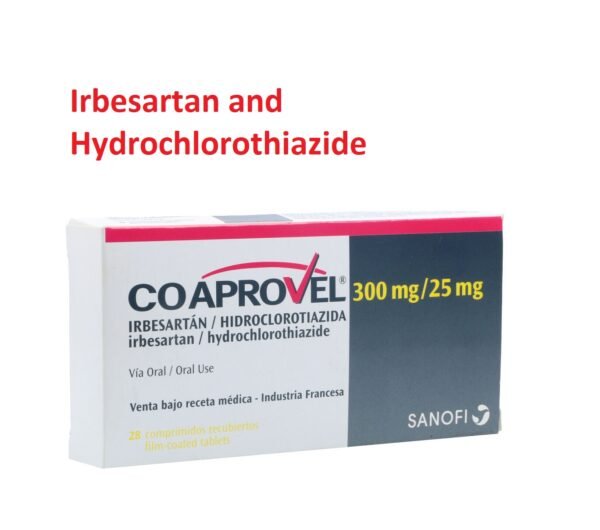
Irbesartan and hydrochlorothiazide (Avalide, Coaprovel) is a combination pill containing angiotensin receptor blocker and a thiazide diuretic. It is used in the treatment of patients with hypertension, heart failure, and nephrotic syndrome.
Irbesartan and hydrochlorothiazide Uses
-
Hypertension:
- It is indicated primarily for the treatment of hypertension.
Irbesartan and hydrochlorothiazide dose in adults:
Irbesartan and hydrochlorothiazide (Avalide, Coaprovel) Dose in the treatment of Hypertension: Oral:
Note:
- The maximum antihypertensive effect of the drug is achieved after 2 - 4 weeks of the treatment, however, dosage titration may be done after one week with careful titration.
- The treatment dose must be individualized.
-
Add-on therapy:
- The combination therapy is indicated in patients with uncontrolled hypertension despite a single agent or in whom edema is concerning.
-
Initial therapy:
- Treatment is initiated at a dose of Irbesartan 150 mg/hydrochlorothiazide 12.5 mg once a day.
- The dose may be titrated after a week or two if the initial response to treatment is inadequate.
- The maximum daily dose is Irbesartan 300 mg/hydrochlorothiazide 25 mg.
Dose in Children:
It is not indicated for use in children.
Pregnancy Risk Factor D
- [US Boxed Warning] Irbesartan can cause severe fetal harm. It can cause the death of the fetus.
- Stop taking the medication as soon as you are certain that your pregnancy has been confirmed.
Use of irbesartan or hydrochlorothiazide during breastfeeding
- It is unknown whether irbesartan is excreted into breast milk. Breastmilk is often contaminated with Thiazide Diuretics.
- The manufacturer suggests discontinuing the drug or breastfeeding, depending on how important the drug therapy is to the mother.
Dose in Kidney Disease:
- CrCl >30 mL/minute:
- Adjustment in the dose is not necessary. Use with caution.
- CrCl ≤30 mL/minute:
- Avoid irbesartan in advanced kidney disease.
- Hydrochlorothiazide is not effective in advanced kidney disease.
Dose in Liver Disease:
Adjustment in the dose is not necessary. Use with caution in patients with advanced liver disease.
Side Effects of Irbesartan and hydrochlorothiazide (Avalide, Coaprovel):
-
Cardiovascular:
- Edema
- Chest Pain
- Decreased Blood Pressure
- Tachycardia
-
Central Nervous System:
- Dizziness
- Fatigue
-
Endocrine:
- Hypokalemia
-
Gastrointestinal:
- Nausea And Vomiting
- Dyspepsia
- Heartburn
- Abdominal Pain
-
Genitourinary:
- Difficulty In Micturition
-
Neuromuscular & Skeletal:
- Musculoskeletal Pain
-
Renal:
- Increased Blood Urea Nitrogen
- Increased Serum Creatinine
-
Miscellaneous:
- Flu-Like Symptoms
Contraindications to Irbesartan and hydrochlorothiazide (Avalide, Coaprovel):
- Allergies to hydrochlorothiazide or sulfonamides-derived drugs (or any component of the formulation)
- Concomitant use of the drug with aliskiren (for the reduction of proteinuria in patients with diabetes mellitus)
- Anuria
Canadian labeling: Additional contraindications not in US labeling
- Concomitant use with aliskiren in patients with a GFR <60 mL/minute/1.73 m2;
- Use ACE inhibitors in conjunction with it (for the treatment of diabetic nephropathy patients who have high levels of proteinuria).
- pregnancy;
- Breastfeeding
- Rare hereditary issues of glucose-galactose malabsorption or galactose intolerance are rare.
Warnings and precautions
-
Angioedema
- Angioedema tends to be more common when angiotensin converting inhibitors (ACE-inhibitors) are used. However, it is rarer when angiotensin II receptor blocking agents are used.
- Angioedema can occur after any treatment, especially after the first dose.
- It can manifest as facial swelling, which may lead to obstruction of the airway or abdominal pain.
- Edema is more common in patients who have a history of idiopathic edema or hereditary edema, and those who have had angioedema caused by ACE inhibitors.
- Patients with these conditions may need to be monitored for a long time.
- Patients who have had a history of neck and head surgery must stop receiving treatment if angioedema develops. This is because the risk of obstruction to the airways in these patients can be high.
- Patients must be aggressively managed and may require urgent airway care or intramuscular administration of epinephrine.
- Patients who have angioedema to ARBs are not recommended for re-administration.
-
Electrolyte disturbances:
- Angiotensin receptor blocking drugs can increase the risk of hyperkalemia.
- Hyperkalemia is a risk for patients who are:
- Patients with kidney dysfunction
- Diabetes mellitus and
- Use potassium-containing salts, potassium-sparing diet diuretics, or potassium supplements
- Patients at high risk of hyperkalemia should not use it. Close monitoring of potassium levels is recommended.
- Hypokalemia, hyponatremia and hypomagnesemia can be caused by Thiazide Diuretics.
-
Gout
- Hydrochlorothiazide can trigger gout in people with kidney dysfunction, who have had gout in the past, and those who are prone to it in their families.
-
Hypersensitivity reactions
- Hydrochlorothiazide may cause allergic reactions in some patients. Patients with a history of bronchial asthma and allergy are at high risk.
-
Hypotension
- Hypotension can occur in patients with low blood volume, such as those who are being treated with high-dose diuretics.
- Before treatment can be initiated, volume depletion must first be rectified.
- A combination pill can be used to treat hypotension, even if it is transient or initial.
-
Ocular effects
- Myopia and acute angle-closure blindness have been linked to hydrochlorothiazide. Ocular symptoms may occur within hours or weeks after treatment is initiated.
- Temporarily discontinuing the drug may be possible for patients who experience severe visual impairment. If the pain continues, additional treatment may be required to reduce ocular pain or ocular pressure.
- Patients with penicillin allergies or a history of allergic reactions to sulfonamides are more likely to experience ocular symptoms.
-
Photosensitivity
- Patients may develop Photosensitivity.
-
Renal function deterioration:
- The use of ARBs may lead to impaired renal function and high creatinine.
- Patients with low renal blood flow, such as those with heart failure or renal artery stenosis, may experience renal dysfunction. These patients have a reduced GFR due to efferent arterial vasoconstriction via angiotensin 2.
- Oliguria, acute renal dysfunction, progressive azotemia, or both may be symptoms.
- Although small deterioration can occur, it is possible to stop treatment if there is clinically significant impairment of renal function.
-
Allergy to sulfonamide ("sulfa")
- FDA-approved product labels for medications that contain a sulfonamide chemical group include a wide contraindication for patients who have had an allergic reaction to sulfonamides in the past.
- Cross-reactivity is possible between members of one class (eg two antibiotic sulfonamides).
- Cross-reactivity concerns have been raised previously for all compounds with the sulfonamide structural (SO NH).
- A better understanding of allergy mechanisms suggests that there are very few cross-reactivity opportunities between antibiotic sulfonamides and nonantibiotics.
- Cross-reactions due to antibody production (anaphylaxis) are less likely with non-antibiotic sulfonamides.
- T-cell-mediated (type IV), reactions (eg maculopapular skin rash) are less understood. It is difficult to exclude this possibility based on current knowledge.
- For severe reactions such as Stevens-Johnson syndrome and toxic epidermal necrolysis, these drugs should not be used.
-
Mitral and aortic stenosis:
- Patients with severe mitral or aortic valve obstruction should not use it.
-
Bariatric surgery
- Dehydration
- In the immediate aftermath of bariatric surgery, hydrochlorothiazide must be avoided as it can cause electrolyte disturbances or dehydration.
- Once the patient has started drinking enough fluid, Thiazide or other diuretics can be resumed.
- Dehydration
-
Diabetes:
- Patients with diabetes and prediabetes should not use hydrochlorothiazide as it can cause impaired glucose metabolism.
-
Hepatic impairment
- Patients suffering from severe hepatic impairment must be advised to avoid the drug.
- It can lead to electrolyte imbalances and precipitate hepatic Encephalopathy.
- Patients with advanced liver disease may be at risk from hepatorenal syndrome due to ARBs.
-
Hypercalcemia:
- Thiazide diuretics cause hypercalcemia. Patients suffering from hypercalcemia should be cautious when taking thiazide diuretics.
-
Hypercholesterolemia:
- Thiazide diuretics can cause an increase in cholesterol and triglyceride levels. Patients with high or moderate cholesterol should not use it.
-
Parathyroid disease
- Hypercalcemia can be caused by Thiazide diuretics, which reduce renal calcium excretion.
- Long-term use of the drug can cause pathologic changes to the parathyroid gland.
- Patients who are being tested for the parathyroid disease should also stop taking it.
-
Renal artery stenosis
- Patients with bilateral renal artery stenosis need to be advised of ARBs with caution. Due to the increased risk of renal function impairment, ARBs should be avoided in patients with unstented bilateral renal arteriosis.
-
Renal impairment
- ARBs should be used with caution in patients with preexisting renal disease. Preexisting azotemia may be worsened by hydrochlorothiazide.
-
Systemic lupus erythematosus (SLE):
- Hydrochlorothiazide can activate or exacerebate SLE.
Irbesartan and hydrochlorothiazide: Drug Interaction
|
Ajmaline |
Sulfonamides may enhance the adverse/toxic effect of Ajmaline. Specifically, the risk for cholestasis may be increased. |
|
Alcohol (Ethyl) |
May enhance the orthostatic hypotensive effect of Thiazide and Thiazide-Like Diuretics. |
|
Alfuzosin |
May enhance the hypotensive effect of Blood Pressure Lowering Agents. |
|
Allopurinol |
Thiazide and Thiazide-Like Diuretics may enhance the potential for allergic or hypersensitivity reactions to Allopurinol. Thiazide and Thiazide-Like Diuretics may increase the serum concentration of Allopurinol. Specifically, Thiazide Diuretics may increase the concentration of Oxypurinol, an active metabolite of Allopurinol. |
|
Aminolevulinic Acid (Topical) |
Photosensitizing Agents may enhance the photosensitizing effect of Aminolevulinic Acid (Topical). |
|
Amphetamines |
May diminish the antihypertensive effect of Antihypertensive Agents. |
|
Angiotensin II |
Receptor Blockers may diminish the therapeutic effect of Angiotensin II. |
|
Anticholinergic Agents |
May increase the serum concentration of Thiazide and Thiazide-Like Diuretics. |
|
Antidiabetic Agents |
Thiazide and Thiazide-Like Diuretics may diminish the therapeutic effect of Antidiabetic Agents. |
|
Antidiabetic Agents |
Hyperglycemia-Associated Agents may diminish the therapeutic effect of Antidiabetic Agents. |
|
Antipsychotic Agents (Second Generation [Atypical]) |
Blood Pressure Lowering Agents may enhance the hypotensive effect of Antipsychotic Agents (Second Generation [Atypical]). |
|
Barbiturates |
May enhance the hypotensive effect of Blood Pressure Lowering Agents. |
|
Benperidol |
May enhance the hypotensive effect of Blood Pressure Lowering Agents. |
|
Beta2-Agonists |
May enhance the hypokalemic effect of Thiazide and Thiazide-Like Diuretics. |
|
Brigatinib |
May diminish the antihypertensive effect of Antihypertensive Agents. Brigatinib may enhance the bradycardic effect of Antihypertensive Agents. |
|
Brimonidine (Topical) |
May enhance the hypotensive effect of Blood Pressure Lowering Agents. |
|
Calcium Salts |
Thiazide and Thiazide-Like Diuretics may decrease the excretion of Calcium Salts. Continued concomitant use can also result in metabolic alkalosis. |
|
CarBAMazepine |
Thiazide and Thiazide-Like Diuretics may enhance the adverse/toxic effect of CarBAMazepine. Specifically, there may be an increased risk for hyponatremia. |
|
Cardiac Glycosides |
Thiazide and Thiazide-Like Diuretics may enhance the adverse/toxic effect of Cardiac Glycosides. Specifically, cardiac glycoside toxicity may be enhanced by the hypokalemic and hypomagnesemic effect of thiazide diuretics. |
|
Corticosteroids (Orally Inhaled) |
May enhance the hypokalemic effect of Thiazide and ThiazideLike Diuretics. |
|
Corticosteroids (Systemic) |
May enhance the hypokalemic effect of Thiazide and Thiazide-Like Diuretics. |
|
Cyclophosphamide |
Thiazide and Thiazide-Like Diuretics may enhance the adverse/toxic effect of Cyclophosphamide. Specifically, granulocytopenia may be enhanced. |
|
CycloSPORINE (Systemic) |
Angiotensin II Receptor Blockers may enhance the hyperkalemic effect of CycloSPORINE (Systemic). |
|
Dapoxetine |
May enhance the orthostatic hypotensive effect of Angiotensin II Receptor Blockers. |
|
Dexketoprofen |
May enhance the adverse/toxic effect of Sulfonamides. |
|
Dexmethylphenidate |
May diminish the therapeutic effect of Antihypertensive Agents. |
|
Diacerein |
May enhance the therapeutic effect of Diuretics. Specifically, the risk for dehydration or hypokalemia may be increased. |
|
Diazoxide |
Thiazide and Thiazide-Like Diuretics may enhance the adverse/toxic effect of Diazoxide. |
|
Diazoxide |
May enhance the hypotensive effect of Blood Pressure Lowering Agents. |
|
Dichlorphenamide |
Thiazide and Thiazide-Like Diuretics may enhance the hypokalemic effect of Dichlorphenamide. |
|
Drospirenone |
Angiotensin II Receptor Blockers may enhance the hyperkalemic effect of Drospirenone. |
|
DULoxetine |
Blood Pressure Lowering Agents may enhance the hypotensive effect of DULoxetine. |
|
Eplerenone |
May enhance the hyperkalemic effect of Angiotensin II Receptor Blockers. |
|
Heparin |
May enhance the hyperkalemic effect of Angiotensin II Receptor Blockers. |
|
Heparins (Low Molecular Weight) |
May enhance the hyperkalemic effect of Angiotensin II Receptor Blockers. |
|
Herbs (Hypertensive Properties) |
May diminish the antihypertensive effect of Antihypertensive Agents. |
|
Herbs (Hypotensive Properties) |
May enhance the hypotensive effect of Blood Pressure Lowering Agents. |
|
Hypotension-Associated Agents |
Blood Pressure Lowering Agents may enhance the hypotensive effect of Hypotension-Associated Agents. |
|
Ipragliflozin |
May enhance the adverse/toxic effect of Thiazide and Thiazide-Like Diuretics. Specifically, the risk for intravascular volume depletion may be increased. |
|
Ivabradine |
Thiazide and Thiazide-Like Diuretics may enhance the arrhythmogenic effect of Ivabradine. |
|
Levodopa-Containing Products |
Blood Pressure Lowering Agents may enhance the hypotensive effect of Levodopa-Containing Products. |
|
Licorice |
May enhance the hypokalemic effect of Thiazide and Thiazide-Like Diuretics. |
|
Lormetazepam |
May enhance the hypotensive effect of Blood Pressure Lowering Agents. |
|
Methenamine |
Thiazide and Thiazide-Like Diuretics may diminish the therapeutic effect of Methenamine. |
|
Methylphenidate |
May diminish the antihypertensive effect of Antihypertensive Agents. |
|
Molsidomine |
May enhance the hypotensive effect of Blood Pressure Lowering Agents. |
|
Multivitamins/Fluoride (with ADE) |
May enhance the hypercalcemic effect of Thiazide and Thiazide-Like Diuretics. |
|
Multivitamins/Minerals (with ADEK, Folate, Iron) |
Thiazide and Thiazide-Like Diuretics may enhance the hypercalcemic effect of Multivitamins/Minerals (with ADEK, Folate, Iron). |
|
Multivitamins/Minerals (with AE, No Iron) |
Thiazide and Thiazide-Like Diuretics may increase the serum concentration of Multivitamins/Minerals (with AE, No Iron). Specifically, thiazide diuretics may decrease the excretion of calcium, and continued concomitant use can also result in metabolic alkalosis. |
|
Naftopidil |
May enhance the hypotensive effect of Blood Pressure Lowering Agents. |
|
Neuromuscular-Blocking Agents (Nondepolarizing) |
Thiazide and Thiazide-Like Diuretics may enhance the neuromuscular-blocking effect of Neuromuscular-Blocking Agents (Nondepolarizing). |
|
Nicergoline |
May enhance the hypotensive effect of Blood Pressure Lowering Agents. |
|
Nicorandil |
May enhance the hyperkalemic effect of Angiotensin II Receptor Blockers. |
|
Nicorandil |
May enhance the hypotensive effect of Blood Pressure Lowering Agents. |
|
Nitroprusside |
Blood Pressure Lowering Agents may enhance the hypotensive effect of Nitroprusside. |
|
Nonsteroidal Anti-Inflammatory Agents |
Thiazide and Thiazide-Like Diuretics may enhance the nephrotoxic effect of Nonsteroidal Anti-Inflammatory Agents. Nonsteroidal Anti-Inflammatory Agents may diminish the therapeutic effect of Thiazide and Thiazide-Like Diuretics. |
|
Nonsteroidal Anti-Inflammatory Agents |
Angiotensin II Receptor Blockers may enhance the adverse/toxic effect of Nonsteroidal Anti-Inflammatory Agents. Specifically, the combination may result in a significant decrease in renal function. Nonsteroidal Anti-Inflammatory Agents may diminish the therapeutic effect of Angiotensin II Receptor Blockers. The combination of these two agents may also significantly decrease glomerular filtration and renal function. |
|
Opioid Agonists |
May enhance the adverse/toxic effect of Diuretics. Opioid Agonists may diminish the therapeutic effect of Diuretics. |
|
OXcarbazepine |
Thiazide and Thiazide-Like Diuretics may enhance the adverse/toxic effect of OXcarbazepine. Specifically, there may be an increased risk for hyponatremia. |
|
Pentoxifylline |
May enhance the hypotensive effect of Blood Pressure Lowering Agents. |
|
Pholcodine |
Blood Pressure Lowering Agents may enhance the hypotensive effect of Pholcodine. |
|
Phosphodiesterase 5 Inhibitors |
May enhance the hypotensive effect of Blood Pressure Lowering Agents. |
|
Porfimer |
Photosensitizing Agents may enhance the photosensitizing effect of Porfimer. |
|
Potassium Salts |
May enhance the hyperkalemic effect of Angiotensin II Receptor Blockers. |
|
Potassium-Sparing Diuretics |
Angiotensin II Receptor Blockers may enhance the hyperkalemic effect of Potassium-Sparing Diuretics. |
|
Prostacyclin Analogues |
May enhance the hypotensive effect of Blood Pressure Lowering Agents. |
|
Quinagolide |
May enhance the hypotensive effect of Blood Pressure Lowering Agents. |
|
Ranolazine |
May enhance the adverse/toxic effect of Angiotensin II Receptor Blockers. |
|
Reboxetine |
May enhance the hypokalemic effect of Thiazide and Thiazide-Like Diuretics. |
|
Selective Serotonin Reuptake Inhibitors |
May enhance the hyponatremic effect of Thiazide and Thiazide-Like Diuretics. |
|
Tacrolimus (Systemic) |
Angiotensin II Receptor Blockers may enhance the hyperkalemic effect of Tacrolimus (Systemic). |
|
Tolvaptan |
May enhance the hyperkalemic effect of Angiotensin II Receptor Blockers. |
|
Toremifene |
Thiazide and Thiazide-Like Diuretics may enhance the hypercalcemic effect of Toremifene. |
|
Trimethoprim |
May enhance the hyperkalemic effect of Angiotensin II Receptor Blockers. |
|
Valsartan |
HydroCHLOROthiazide may enhance the hypotensive effect of Valsartan. Valsartan may increase the serum concentration of HydroCHLOROthiazide. |
|
Verteporfin |
Photosensitizing Agents may enhance the photosensitizing effect of Verteporfin. |
|
Vitamin D Analogs |
Thiazide and Thiazide-Like Diuretics may enhance the hypercalcemic effect of Vitamin D Analogs. |
|
Yohimbine |
May diminish the antihypertensive effect of Antihypertensive Agents. |
|
Risk Factor D (Consider therapy modification) |
|
|
Aliskiren |
May enhance the hyperkalemic effect of Angiotensin II Receptor Blockers. Aliskiren may enhance the hypotensive effect of Angiotensin II Receptor Blockers. Aliskiren may enhance the nephrotoxic effect of Angiotensin II Receptor Blockers. Management: Aliskiren use with ACEIs or ARBs in patients with diabetes is contraindicated. Combined use in other patients should be avoided, particularly when CrCl is less than 60 mL/min. If combined, monitor potassium, creatinine, and blood pressure closely. |
|
Amifostine |
Blood Pressure Lowering Agents may enhance the hypotensive effect of Amifostine. Management: When amifostine is used at chemotherapy doses, blood pressure lowering medications should be withheld for 24 hours prior to amifostine administration. If blood pressure lowering therapy cannot be withheld, amifostine should not be administered. |
|
Angiotensin-Converting Enzyme Inhibitors |
|
|
Bile Acid Sequestrants |
May decrease the absorption of Thiazide and Thiazide-Like Diuretics. The diuretic response is likewise decreased. |
|
Lithium |
Thiazide and Thiazide-Like Diuretics may decrease the excretion of Lithium. |
|
Lithium |
Angiotensin II Receptor Blockers may increase the serum concentration of Lithium. Management: Lithium dosage reductions will likely be needed following the addition of an angiotensin II receptor antagonist. |
|
Obinutuzumab |
May enhance the hypotensive effect of Blood Pressure Lowering Agents. Management: Consider temporarily withholding blood pressure lowering medications beginning 12 hours prior to obinutuzumab infusion and continuing until 1 hour after the end of the infusion. |
|
Sodium Phosphates |
Angiotensin II Receptor Blockers may enhance the nephrotoxic effect of Sodium Phosphates. Specifically, the risk of acute phosphate nephropathy may be enhanced. Management: Consider avoiding this combination by temporarily suspending treatment with ARBs, or seeking alternatives to oral sodium phosphate bowel preparation. If the combination cannot be avoided, maintain adequate hydration and monitor renal function closely. |
|
Sodium Phosphates |
Diuretics may enhance the nephrotoxic effect of Sodium Phosphates. Specifically, the risk of acute phosphate nephropathy may be enhanced. Management: Consider avoiding this combination by temporarily suspending treatment with diuretics, or seeking alternatives to oral sodium phosphate bowel preparation. If the combination cannot be avoided, hydrate adequately and monitor fluid and renal status. |
|
Topiramate |
Thiazide and Thiazide-Like Diuretics may enhance the hypokalemic effect of Topiramate. Thiazide and Thiazide-Like Diuretics may increase the serum concentration of Topiramate. Management: Monitor for increased topiramate levels/adverse effects (e.g., hypokalemia) with initiation/dose increase of a thiazide diuretic. Closely monitor serum potassium concentrations with concomitant therapy. Topiramate dose reductions may be necessary. |
|
Risk Factor X (Avoid combination) |
|
|
Aminolevulinic Acid (Systemic) |
Photosensitizing Agents may enhance the photosensitizing effect of Aminolevulinic Acid (Systemic). |
|
Bromperidol |
Blood Pressure Lowering Agents may enhance the hypotensive effect of Bromperidol. Bromperidol may diminish the hypotensive effect of Blood Pressure Lowering Agents. |
|
Dofetilide |
HydroCHLOROthiazide may enhance the QTc-prolonging effect of Dofetilide. HydroCHLOROthiazide may increase the serum concentration of Dofetilide. |
|
Fexinidazole [INT] |
Thiazide and Thiazide-Like Diuretics may enhance the arrhythmogenic effect of Fexinidazole [INT]. |
|
Levosulpiride |
Thiazide and Thiazide-Like Diuretics may enhance the adverse/toxic effect of Levosulpiride. |
|
Mecamylamine |
Sulfonamides may enhance the adverse/toxic effect of Mecamylamine. |
|
Promazine |
Thiazide and Thiazide-Like Diuretics may enhance the QTc-prolonging effect of Promazine. |
Monitoring Parameters:
- Monitor Blood pressure;
- serum electrolytes,
- BUN and creatinine
How to administer Irbesartan and hydrochlorothiazide (Avalide, Coaprovel)?
It is administered orally with or without food.
Mechanism of action of Irbesartan and hydrochlorothiazide (Avalide, Coaprovel):
Irbesartan:
- It acts as an antagonist to angiotensin II receptors and causes the release of aldosterone.
- Aldosterone releases sodium and water into the kidneys, resulting in high blood pressure.
- Irbesartan binds with the AT1 angiotensin I receptors, preventing an angiotensin I from binding to its receptors.
- It inhibits vasoconstriction and causes water and sodium depletion through its aldosterone inhibiting effects.
Hydrochlorothiazide:
-
- It is located in the distal renal tubules and inhibits the reabsorption sodium, water, potassium, or hydrogen ions.
See: Irbesartan and Hydrochlorothiazide
International Brand Names of Irbesartan and hydrochlorothiazide:
- Avalide
- ACT Irbesartan/HCT
- Apo-Irbesartan/HCTZ
- Avalide
- Irbesartan-HCT
- Irbesartan-HCTZ
- JAMPIrbesartan and Hydrochlorothiazide
- Mint-Irbesartan/HCTZ
- PMS-Irbesartan HCTZ
- Ran-Irbesartan HCTZ
- ratio-Irbesartan HCTZ
- Sandoz-Irbesartan HCT
- Teva-Irbesartan HCTZ
- Andaran HTC
- Aprozide
- Arbitan PLUS
- Avalide
- Avapro HCT
- CoAprovel
- Co-Besartin
- Co-Irvebal
- Co-Ivyzar
- CoApprovel
- Coaprovel
- CoAprovel
- Corycardon
- Ibef
- Ifirmacombi
- Ihybes-G
- Irbemed PLus
- Irbeprex H
- Irbezyd-H
- Irbis-HT
- Irovel-H
- Irtan Plus
- Karvezide
- KoIrbesso
Irbesartan and hydrochlorothiazide Brand Names In Pakistan:
Irbesartan and hydrochlorothiazide 150 mg Tablets in Pakistan |
|
| Arbi-D | Pharmevo (Pvt) Ltd. |
| Co-Aprovel | Sanofi Aventis (Pakistan) Ltd. |
| Co-Arbista | Sante (Pvt) Limited |
| Hyponorm-H. | Werrick Pharmaceuticals |
| Irecon-H | Barrett Hodgson Pakistan (Pvt) Ltd. |
| Zepose Plus | Wilshire Laboratories (Pvt) Ltd. |
Irbesartan and hydrochlorothiazide 300 mg Tablets in Pakistan |
|
| Arbi-D | Pharmevo (Pvt) Ltd. |
| Co-Aprovel | Sanofi Aventis (Pakistan) Ltd. |
| Co-Arbista Forte | Sante (Pvt) Limited |
| Hyponorm-H. | Werrick Pharmaceuticals |
| Irecon-H | Barrett Hodgson Pakistan (Pvt) Ltd. |
| Zepose Plus | Wilshire Laboratories (Pvt) Ltd. |
.png)


