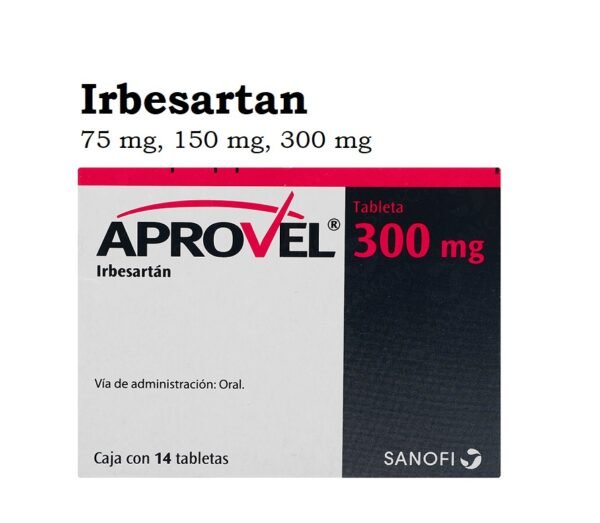
Irbesartan (Aprovel, Avapro) is an angiotensin receptor blocker that is available as oral 75 mg, 150 mg, and 300 mg tablets for the treatment of hypertension.
Irbesartan Uses:
-
Diabetic nephropathy:
- Treatment of diabetic nephropathy with elevated serum creatinine and proteinuria (>300 mg/day) in patients with type 2 diabetes and hypertension.
-
Hypertension:
- Management of hypertension
-
Guideline recommendations:
- The 2017 Guideline for the Prevention, Detection, Evaluation, and Management of High Blood Pressure in Adults recommends that if monotherapy is warranted, in the absence of comorbidities (eg, cerebrovascular disease, chronic kidney disease, diabetes, heart failure, ischemic heart disease, etc.), that thiazide-like diuretics or dihydropyridine calcium channel blockers may be preferred options due to improved cardiovascular endpoints (eg, prevention of heart failure and stroke). ACE inhibitors and ARBs are also good for monotherapy.
- Combination therapy may be required to achieve blood pressure goals and is initially preferred in patients at high risk (stage 2 hypertension or atherosclerotic cardiovascular disease [ASCVD] risk ≥10%).
-
Off Label Use of Irbesartan in Adults:
- Acute coronary syndrome (for secondary prevention of cardiovascular events)
- Stable coronary artery disease
Irbesartan dose in adults:
Irbesartan dosage in the treatment of Hypertension:
- Oral:
- 150 mg once daily;
- titrate as needed based on patient response up to 300 mg once a day.
- maximum dose: 300 mg/day.
- Note: Starting dose in volume-depleted patients should be 75 mg.
Irbesartan dosage in diabetic nephropathy:
- Oral: 300 mg once a day
Dose in Children:
Irbesartan dose in the treatment of Hypertension:
Note: Use a lower starting dose of about 50% of the recommended initial dose in volume- and salt-depleted patients.
-
Children ≥6 years:
- Oral: Initial: at 75 mg once a day;
- The dose may be titrated to a maximum dose of 150 mg once daily
-
Adolescents:
- Oral: Initial: at 150 mg once daily;
- The dose may be titrated to a maximum dose of 300 mg once daily
Irbesartan dose in reducing proteinuria in children with chronic kidney disease:
-
Children ≥4 years and Adolescents:
- Oral:
- Studies showed the use of a fixed dosage based on weight categories (see the following);
- initial doses were approximately 2 mg/kg once a day;
- doses were raised after 3 to 5 weeks and again after 8 to 12 weeks as needed, according to specific blood pressure criteria;
- the median final dose in the largest study (n=44; median age: 10 years): at 4 mg/kg once daily (Franscini 2002; Gartenmann 2003; von Vigier 2000)
-
10 to 20 kg:
- Initial: 37.5 mg once a daily
-
21 to 40 kg:
- Initial: 75 mg once a daily
-
>40 kg:
- Initial: 150 mg once a daily
- Oral:
Pregnancy Risk Factor D
- [US Boxed Warning]: Drugs that affect the renin/angiotensin system may cause injury or death for the fetus. Stop using the drug as soon as you become pregnant.
- A high risk of developing oligohydramnios is associated with drugs that affect the renin-angiotensin systems.
- Oligohydramnios may cause fetal kidney dysfunction and skeletal malformations.
- Oligohydramnios will not be present unless an irreversible, fatal injury has occurred.
- Also, use during pregnancy can cause anuria and hypotension, kidney failure, hypoplasia skull, and death in the fetus/neonate.
- Monitoring/observation of the exposed fetus for fetal growth and amniotic fluid volume should be done. Monitor infants who are exposed in utero for hyperkalemia, hypotension, and oliguria. Exchange transfusions or dialysis may also be required.
- These adverse events are usually associated with maternal use during the second and third trimesters.
- Chronic maternal hypertension can also have adverse effects on the infant/fetus.
- Chronic hypertension during pregnancy may increase the risk of having a baby with a birth defect, low birth weight, stillbirth, or neonatal death.
- The severity and duration of maternal high blood pressure may pose real risks.
- Angiotensin II receptor blocking agents are generally not recommended for chronic hypertension treatment in pregnant women. They should be avoided by women who plan to have a baby.
Irbesartan use during breastfeeding:
- It is unknown if breast milk contains irbesartan.
- The manufacturer suggests that the mother decide whether to stop breastfeeding or discontinue using the drug. This is because of the possibility of serious adverse reactions in breastfeeding infants.
Irbesartan Dose in Kidney Disease:
-
Mild to severe impairment:
- No dosage adjustment is necessary unless the patient is also volume depleted.
-
Hemodialysis:
- Not removed by hemodialysis.
Irbesartan Dose in Liver disease:
- No dosage adjustment is necessary.
Common Side Effects of Irbesartan (Aprovel):
-
Endocrine & metabolic:
- Hyperkalemia
Less Common Side Effects of Irbesartan (Aprovel):
-
Cardiovascular:
- Orthostatic dizziness
- Orthostatic hypotension
-
Central nervous system:
- Dizziness
- Fatigue
-
Gastrointestinal:
- Diarrhea
- Dyspepsia
- Heartburn
Contraindications to Irbesartan (Aprovel):
- Hypersensitivity/hyperresponsiveness to irbesartan or any component of the formulation;
- concomitant use with aliskiren in diabetes mellitus
- There is limited documentation of allergenic cross-reactivity with angiotensin receptor blocking agents.
- Cross-sensitivity is possible due to the similarity of a chemical structure and/or pharmaceutical actions.
Canadian labeling: Additional contraindications that are not listed in the US labeling
- Concomitant use with aliskiren in moderate to severe renal impairment (GFR <60 mL/minute/1.73 m2);
- Concomitant use of:
- ACE inhibitors for diabetic nephropathy patients
- Galactose intolerance in hereditary form
- Lapp lactase deficiency, or
- glucose-galactose malabsorption;
- pregnancy;
- Breastfeeding
Warnings and precautions
-
Angioedema
- Some angiotensin II receptor inhibitors (ARBs), have only occasionally reported angioedema. This can occur anytime during treatment, especially after the first dose.
- It could involve the head, neck, or intestines (possibly compromising the airway).
- Patients who have angioedema idiopathic, hereditary, or other conditions may be at increased risk.
- Extended monitoring may be necessary, particularly if the tongue, glottis, or larynx is involved. This is because they can cause obstruction to the airways.
- Patients who have had previous airway surgery may be at greater risk for obstruction.
- If angioedema develops, stop taking the medication immediately.
- It is important to be aggressive early. It may be necessary to administer epinephrine intramuscularly (IM).
- Patients who have angioedema caused by ARBs should not be re-administered.
-
Hyperkalemia:
- hyperkalemia may occur;
- Hyperkalemia can be caused by renal dysfunction, diabetes mellitus, and concomitant potassium-sparing diuretics, sodium supplements, or potassium-containing salts.
- These agents should be used with caution and potassium should be monitored closely.
-
Hypotension
- Hypotension symptoms may develop in patients who have been treated with high-dose diuretics or are low in salt. Before administering the medication, ensure that there is no volume loss.
- This temporary hypotensive response does not mean that you should be unable to receive further treatment with Irbesartan.
-
Renal function deterioration:
- This may be linked to deterioration in renal function and/or an increase in serum creatinine in patients with low renal flow (eg, kidney artery stenosis or chronic kidney disease, severe renal failure, volume loss) whose glomerular filter rate (GFR), is dependent upon efferent arterial vasoconstriction (angiotensin 2);
- Deterioration can lead to oliguria, acute kidney failure, or progressive azotemia.
- Patients with significant and progressive deterioration of renal function may experience small increases in serum creatinine after initiation.
-
Aortic/mitral stenosis:
- Patients with severe aortic/mitral stenosis should be cautious.
-
Ascites:
- Patients with ascites due to cirrhosis, refractory, or other causes should not use this product.
- If patients suffering from ascites or cirrhosis cannot avoid it, you should monitor blood pressure and kidney function closely to prevent the rapid development of renal failure.
-
Renal artery stenosis
- Patients with unstented unilateral/bilateral kidney artery stenosis should be supervised.
- If unstented bilateral renal artery stenosis exists, it is best to avoid use unless the potential benefits outweigh the risks.
-
Renal impairment
- Preexisting renal impairments should be avoided.
Irbesartan: Drug Interactions
|
Alfuzosin |
May enhance the hypotensive effect of Blood Pressure Lowering Agents. |
|
Amphetamines |
May diminish the antihypertensive effect of Antihypertensive Agents. |
|
Angiotensin II |
Receptor Blockers may diminish the therapeutic effect of Angiotensin II. |
|
Antipsychotic Agents (Second Generation [Atypical]) |
Blood Pressure Lowering Agents may enhance the hypotensive effect of Antipsychotic Agents (Second Generation [Atypical]). |
|
Barbiturates |
May enhance the hypotensive effect of Blood Pressure Lowering Agents. |
|
Benperidol |
May enhance the hypotensive effect of Blood Pressure Lowering Agents. |
|
Brigatinib |
May diminish the antihypertensive effect of Antihypertensive Agents. Brigatinib may enhance the bradycardic effect of Antihypertensive Agents. |
|
Brimonidine (Topical) |
May enhance the hypotensive effect of Blood Pressure Lowering Agents. |
|
CycloSPORINE (Systemic) |
Angiotensin II Receptor Blockers may enhance the hyperkalemic effect of CycloSPORINE (Systemic). |
|
Dapoxetine |
May enhance the orthostatic hypotensive effect of Angiotensin II Receptor Blockers. |
|
Dexmethylphenidate |
May diminish the therapeutic effect of Antihypertensive Agents. |
|
Diazoxide |
May enhance the hypotensive effect of Blood Pressure Lowering Agents. |
|
Drospirenone |
Angiotensin II Receptor Blockers may enhance the hyperkalemic effect of Drospirenone. |
|
DULoxetine |
Blood Pressure Lowering Agents may enhance the hypotensive effect of DULoxetine. |
|
Eplerenone |
May enhance the hyperkalemic effect of Angiotensin II Receptor Blockers. |
|
Heparin |
May enhance the hyperkalemic effect of Angiotensin II Receptor Blockers. |
|
Heparins (Low Molecular Weight) |
May enhance the hyperkalemic effect of Angiotensin II Receptor Blockers. |
|
Herbs (Hypertensive Properties) |
May diminish the antihypertensive effect of Antihypertensive Agents. |
|
Herbs (Hypotensive Properties) |
May enhance the hypotensive effect of Blood Pressure Lowering Agents. |
|
Hypotension-Associated Agents |
Blood Pressure Lowering Agents may enhance the hypotensive effect of Hypotension-Associated Agents. |
|
Levodopa-Containing Products |
Blood Pressure Lowering Agents may enhance the hypotensive effect of Levodopa-Containing Products. |
|
Lormetazepam |
May enhance the hypotensive effect of Blood Pressure Lowering Agents. |
|
Methylphenidate |
May diminish the antihypertensive effect of Antihypertensive Agents. |
|
Molsidomine |
May enhance the hypotensive effect of Blood Pressure Lowering Agents. |
|
Naftopidil |
May enhance the hypotensive effect of Blood Pressure Lowering Agents. |
|
Nicergoline |
May enhance the hypotensive effect of Blood Pressure Lowering Agents. |
|
Nicorandil |
May enhance the hyperkalemic effect of Angiotensin II Receptor Blockers. |
|
Nicorandil |
May enhance the hypotensive effect of Blood Pressure Lowering Agents. |
|
Nitroprusside |
Blood Pressure Lowering Agents may enhance the hypotensive effect of Nitroprusside. |
|
Nonsteroidal Anti-Inflammatory Agents |
Angiotensin II Receptor Blockers may enhance the adverse/toxic effect of Nonsteroidal Anti-Inflammatory Agents. Specifically, the combination may result in a significant decrease in renal function. Nonsteroidal Anti-Inflammatory Agents may diminish the therapeutic effect of Angiotensin II Receptor Blockers. The combination of these two agents may also significantly decrease glomerular filtration and renal function. |
|
Pentoxifylline |
May enhance the hypotensive effect of Blood Pressure Lowering Agents. |
|
Pholcodine |
Blood Pressure Lowering Agents may enhance the hypotensive effect of Pholcodine. |
|
Phosphodiesterase 5 Inhibitors |
May enhance the hypotensive effect of Blood Pressure Lowering Agents. |
|
Potassium Salts |
May enhance the hyperkalemic effect of Angiotensin II Receptor Blockers. |
|
Potassium-Sparing Diuretics |
Angiotensin II Receptor Blockers may enhance the hyperkalemic effect of Potassium-Sparing Diuretics. |
|
Prostacyclin Analogues |
May enhance the hypotensive effect of Blood Pressure Lowering Agents. |
|
Quinagolide |
May enhance the hypotensive effect of Blood Pressure Lowering Agents. |
|
Ranolazine |
May enhance the adverse/toxic effect of Angiotensin II Receptor Blockers. |
|
Tacrolimus (Systemic) |
Angiotensin II Receptor Blockers may enhance the hyperkalemic effect of Tacrolimus (Systemic). |
|
Tolvaptan |
May enhance the hyperkalemic effect of Angiotensin II Receptor Blockers. |
|
Trimethoprim |
May enhance the hyperkalemic effect of Angiotensin II Receptor Blockers. |
|
Yohimbine |
May diminish the antihypertensive effect of Antihypertensive Agents. |
|
Risk Factor D (Consider therapy modification) |
|
|
Aliskiren |
May enhance the hyperkalemic effect of Angiotensin II Receptor Blockers. Aliskiren may enhance the hypotensive effect of Angiotensin II Receptor Blockers. Aliskiren may enhance the nephrotoxic effect of Angiotensin II Receptor Blockers. Management: Aliskiren use with ACEIs or ARBs in patients with diabetes is contraindicated. Combined use in other patients should be avoided, particularly when CrCl is less than 60 mL/min. If combined, monitor potassium, creatinine, and blood pressure closely. |
|
Amifostine |
Blood Pressure Lowering Agents may enhance the hypotensive effect of Amifostine. Management: When amifostine is used at chemotherapy doses, blood pressure lowering medications should be withheld for 24 hours prior to amifostine administration. If blood pressure lowering therapy cannot be withheld, amifostine should not be administered. |
|
Angiotensin-Converting Enzyme Inhibitors |
Angiotensin II Receptor Blockers may enhance the adverse/toxic effect of Angiotensin-Converting Enzyme Inhibitors. Angiotensin II Receptor Blockers may increase the serum concentration of Angiotensin-Converting Enzyme Inhibitors. Management: In US labeling, use of telmisartan and ramipril is not recommended. It is not clear if any other combination of an ACE inhibitor and an ARB would be any safer. Consider alternatives to the combination when possible. |
|
Lithium |
|
|
Obinutuzumab |
May enhance the hypotensive effect of Blood Pressure Lowering Agents. Management: Consider temporarily withholding blood pressure lowering medications beginning 12 hours prior to obinutuzumab infusion and continuing until 1 hour after the end of the infusion. |
|
Sodium Phosphates |
Angiotensin II Receptor Blockers may enhance the nephrotoxic effect of Sodium Phosphates. Specifically, the risk of acute phosphate nephropathy may be enhanced. Management: Consider avoiding this combination by temporarily suspending treatment with ARBs, or seeking alternatives to oral sodium phosphate bowel preparation. If the combination cannot be avoided, maintain adequate hydration and monitor renal function closely. |
|
Risk Factor X (Avoid combination) |
|
|
Bromperidol |
Blood Pressure Lowering Agents may enhance the hypotensive effect of Bromperidol. Bromperidol may diminish the hypotensive effect of Blood Pressure Lowering Agents. |
Monitoring parameters:
- Blood pressure;
- electrolytes,
- serum creatinine, BUN,
- urinalysis
Hypertension:
- The 2017 Guideline for the Prevention, Detection, Evaluation, and Management of High Blood Pressure in Adults:
Confirmed hypertension and known CVD or 10-year atherosclerotic cardiovascular disease (ASCVD) risk ≥10%:
- Target blood pressure <130/80 mm Hg is recommended
Confirmed hypertension without markers of increased ASCVD risk:
- Target blood pressure <130/80 mm Hg may be reasonable
Diabetes and hypertension:
- The American Diabetes Association (ADA) guidelines (ADA 2019):
-
Patients 18 to 65 years of age, without ASCVD, and 10-year ASCVD risk <15%:
- Target blood pressure <140/90 mm Hg is recommended
-
Patients 18 to 65 years of age and known ASCVD or 10-year ASCVD risk >15%:
- Target blood pressure <130/80 mm Hg may be appropriate if it can be safely attained
-
Patients >65 years of age (healthy or complex/intermediate health):
- Target blood pressure <140/90 mm Hg is recommended
-
Patients >65 years of age (very complex/poor health):
- Target blood pressure <150/90 mm Hg is recommended
-
How to administer Irbesartan?
- Oral: Administer with or without food.
Mechanism of action of Irbesartan:
- Irbesartan, an antagonist of the angiotensin receptor, is a drug.
- Angiotensin II acts like a vasoconstrictor.
- Angiotensin II causes vasoconstriction and stimulates aldosterone release.
- After aldosterone has been released, both sodium and water are absorbed.
- This causes an increase in blood pressure.
- Irbesartan binds with the AT1 angiotensin 2 receptor.
- This binding stops angiotensin I from binding to the receptor, thereby blocking the vasoconstriction as well as the aldosterone-secreting effects of angiotensin 2.
The onset of action:
- Peak effect: 1 to 2 hours
Maximum effect:
- 3-6 hours postdose; with chronic dosing maximum effect: ~2 weeks
Duration:
- >24 hours
Absorption:
- Rapid and complete.
Protein binding,
- plasma: 90%, primarily to albumin and alpha-1 acid glycoprotein
Metabolism:
- Hepatic, via glucuronide conjugation and oxidation; oxidation occurs primarily by cytochrome P450 isoenzyme CYP2C9
Bioavailability:
- 60% to 80%
Half-life elimination:
- Terminal: 11 to 15 hours
Time to peak serum concentrations:
- 1.5 to 2 hours
Excretion:
- Feces (80%); urine (20%)
International Brands of Irbesartan:
- Avapro
- ACT Irbesartan
- AG-Irbesartan
- APO-Irbesartan
- Auro-Irbesartan
- Avapro
- BIO-Irbesartan
- DOM-Irbesartan
- JAMP-Irbesartan
- MINT-Irbesartan
- MYLAN-Irbesartan
- PMS Irbesartan
- Priva-Irbesartan
- RAN-Irbesartan
- RIVA-Irbesartan
- SANDOZ Irbesartan
- TEVAIrbesartan
- VAN-Irbesartan
- Agepin
- Andaran
- Angioblock MONO
- Aplorar
- Approvel
- Aprocare
- Aprovel
- Aprtan
- Arbit
- Arbitan
- Artibesan
- Atokken
- Avapro
- Besanta
- Besartin
- Bestar
- Bewel 300
- Bezart
- Converium
- Coravel
- Dynacard
- Elzar
- Fritens
- Gemot
- Gizlan
- Hypergold
- Ibefro
- Ibera
- Ibesaa
- Ibetan
- Ifirmasta
- Iprestan
- Irbador
- Irbartan
- Irbec
- Irbedrin
- Irbee
- Irbegen
- Irbemed
- Irbenox
- Irbesan
- Irbesel
- Irbesof
- Irbetan
- Irbeten
- Irbett
- Irbevell
- Irbevex
- Irbezyd
- Irbis
- Ircovas
- Irebeprex
- Iretensa
- Irovel
- Irprestan
- Irstran
- Irtan
- Irvebal
- Irvell
- Isart
- Izatan
- Karvea
- Nortens
- Optima
- Presolin
- Rycardon
- Tensiber
- Virbez
- Zatrivir
- Zatrivit
- Ziorel
Irbesartan Brand Names in Pakistan:
Irbesartan 75 mg Tablets |
|
| Gooday | Wilsons Pharmaceuticals |
| Irecon | Barrett Hodgson Pakistan (Pvt) Ltd. |
| Sartan | Platinum Pharmaceuticals (Pvt.) Ltd. |
| Sartan | Platinum Pharmaceuticals (Pvt.) Ltd. |
| Zepose | Wilshire Laboratories (Pvt) Ltd. |
Irbesartan Tablets 150 mg |
|
| Aprovel | Sanofi Aventis (Pakistan) Ltd. |
| Arbinen | Nenza Pharmaceuticals (Pvt) Limited |
| Co-Arbinen | Nenza Pharmaceuticals (Pvt) Limited |
| Gooday | Wilsons Pharmaceuticals |
| Irecon | Barrett Hodgson Pakistan (Pvt) Ltd. |
| Vepro | S.J. & G. Fazul Ellahie (Pvt) Ltd. |
| Zepose | Wilshire Laboratories (Pvt) Ltd. |
Irbesartan 300 mg Tablets |
|
| Arbinen | Nenza Pharmaceuticals (Pvt) Limited |
| Gooday | Wilsons Pharmaceuticals |
| Irecon | Barrett Hodgson Pakistan (Pvt) Ltd. |
| Sartan | Platinum Pharmaceuticals (Pvt.) Ltd. |
| Vepro | S.J. & G. Fazul Ellahie (Pvt) Ltd. |
| Zepose | Wilshire Laboratories (Pvt) Ltd. |
.png)


