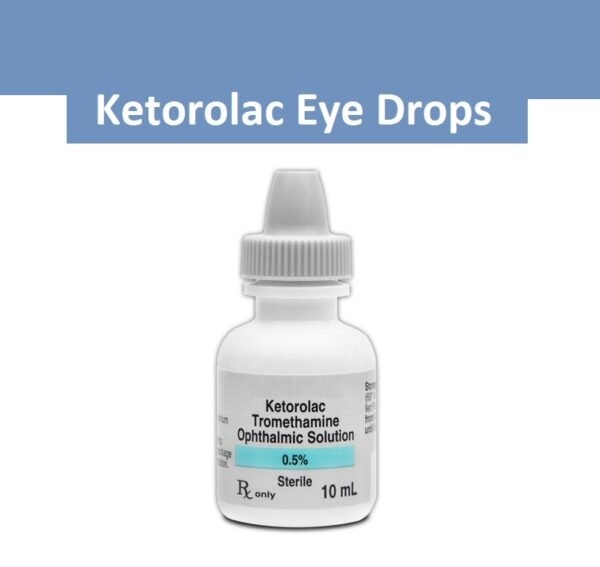
Ketorolac Eye Drops is a non-selective non-steroidal anti-inflammatory medicine that is used to reduce pain and inflammation following ocular surgery (cataract surgery or refractive surgery). It is also used in the treatment of allergic conjunctivitis as an adjunct to other therapies.
Ketorolac Ophthalmic Uses:
-
Postoperative ocular inflammation following cataract extraction (0.5% solution):
- Treatment of postoperative inflammation post-cataract extraction.
-
Postoperative ocular pain following corneal refractive surgery (0.4% solution):
- Relief of ocular pain and burning/stinging after corneal refractive surgery.
-
Postoperative ocular pain/inflammation following cataract surgery (0.45% solution):
- For relief of pain and inflammation post-cataract surgery.
-
Seasonal allergic conjunctivitis (ocular itching) (0.5% solution):
- Temporary relief of ocular itching due to seasonal allergic conjunctivitis.
Ketorolac Eye Drops Dose in Adults:
Ketorolac Eye Drops Dose in the Postoperative ocular inflammation following cataract extraction (0.5% solution):
- Ophthalmic: 1 drop into the affected eye(s) 4 times daily from 1 day prior to surgery up to 2 weeks post-surgery
Ketorolac Eye Drops Dose in the Postoperative ocular pain following corneal refractive surgery (0.4% solution):
- Ophthalmic: Instill 1 drop into the affected eye(s) 4 times daily as required for up to 4 days post-surgery.
Ketorolac Eye Drops Dose in the Postoperative ocular pain/inflammation following cataract surgery (0.45% solution):
- Ophthalmic: 1 drop into the affected eye(s) twice daily from 1 day prior to surgery to up to 2 weeks after surgery.
Ketorolac Eye Drops Dose in the treatment of Seasonal allergic conjunctivitis (ocular itching) (0.5% solution):
- Ophthalmic: 1 drop into the affected eye(s) 4 times daily.
Ketorolac Eye Drops Dose in Childrens:
Ketorolac Eye Drops Dose in the Postoperative inflammation following cataract extraction (0.5% solution):
-
Children ≥2 years and Adolescents:
- Ophthalmic: 1 drop into the affected eye(s) 4 times daily 1-day post-cataract surgery and up to 14 days.
Dose in the Postoperative pain, burning, and stinging following corneal refractive surgery (0.4% solution):
-
Children ≥3 years and Adolescents:
- Ophthalmic: 1 drop into affected eye 4 times daily as required for up to 4 days post corneal refractive surgery
Dose in the treatment of Seasonal allergic conjunctivitis ( 0.5% solution):
-
Children ≥2 years and Adolescents:
- Ophthalmic: 1 drop into the affected eye(s) 4 times a day.
Pregnancy Risk Factor C
- To minimize exposure to the foetus, use the lowest possible dose and punctal occlusion.
- It can cause prenatal constriction in the ductus arteriosus, which is something to avoid during the latter stages of pregnancy.
Use during breastfeeding:
- Use breast milk carefully
Dose in Kidney Disease:
No dose adjustment is needed.
Dose in Liver Disease:
No dose adjustment is needed.
Side Effects of Ketorolac Eye Drops:
-
Ophthalmic:
- Burning sensation of eyes
Less Common Side Effects of Ketorolac Eye Drops:
-
Central nervous system:
- Headache
-
Hypersensitivity:
- Hypersensitivity reaction
-
Ophthalmic:
- Blurred Vision
- Conjunctival Hyperemia
- Corneal Edema
- Eye Pain
- Increased Intraocular Pressure
- Lacrimation
- Corneal Infiltrates
- Ocular Edema
- Eye Irritation
- Iritis
- Ophthalmic Inflammation
- Superficial Keratitis
- Superficial Eye Infection
Contraindications to Ketorolac Eye Drops:
- Hypersensitivity to ketorolac and any component of the formula
Warnings and precautions
-
Sensitivity to Aspirin/ NSAIDs:
- Use cautiously in patients with previous sensitivity to acetylsalicylic acid, phenylacetic acid derivatives, and other NSAIDs including patients who experience bronchospasm, asthma, rhinitis, or urticaria after NSAID or aspirin use.
-
Corneal effects
- It may cause keratitis. Continued use could cause severe adverse effects such as corneal thinning or erosion, perforation or ulceration. There is also the possibility of losing your vision.
- In the event of corneal epithelial injury, stop.
-
Delayed healing
- The healing process may be slowed if you use topical steroids concurrently.
-
Bleeding disorders:
- High bleeding tendencies and anticoagulant medication should be avoided.
- Post-surgery, there have been reports of increased intraocular hemorhage (including Hyphema).
-
Diabetes:
- Patients with diabetes mellitus should be cautious.
-
Ocular disease:
- Potential vision loss due to corneal side effects. Patients who have had multiple ocular surgeries or need to repeat them (within a short period of time) should be cautious.
-
Rheumatoid arthritis:
- Patients with RA are at greater risk for corneal toxicity. Be cautious
Monitoring Parameters:
- Monitor for signs of infection and persistent inflammation.
- If no improvement in the symptoms or the condition worsens, seek the attention of your physician.
How to administer Ketorolac Eye Drops?
For topical ophthalmic use :
- Do not bring dropper tip in contact with skin/ cornea.
- For optimum infection control post-surgery, use separate bottles for each eye.
- Remove contact lenses before instilling drops wait 10 minutes before reinsertion.
- 5 minutes interval is required before instilling any other eye drops.
Mechanism of action of Ketorolac Eye Drops:
It inhibits cyclooxygenase 1 and 2 leading to reduced production of prostaglandin precursors.
Absorption:
- ~4% to 8% of the minimum concentration after oral doses of 10 mg four times a day.
International Brand Names of Ketorolac Eye Drops:
- Acular
- Acular LS
- Acuvail
- Acular
- Acular LS
- Acularc
- Aculare
- Acuvail
- Errkes
- Fam
- Kenalgesic
- Ocudol
- Oftalgesic
- Oradol
- Perilac
- Poenkerat
- Winop
- Xidolac
Ketorolac Eye Drops Brand Names in Pakistan:
Ketorolac (Tromethamine) ophthalmic 5 Mg in Pakistan |
|
| Torolac | Schazoo Zaka |
Ketorolac (Tromethamine) Eye Drops 0.5 %W/V in Pakistan |
|
| Dylac | Azron Pharmaceuticals (Pvt) Ltd |
| Ketrosan | Sante (Pvt) Limited |
.png)


