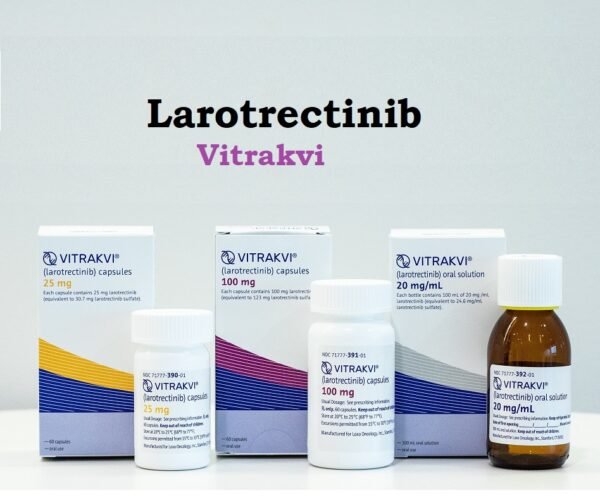
Larotrectinib (Vitrakvi) inhibits tropomyosin kinase receptors TrkA, TrkB, and TrkC. It is indicated for the treatment of solid tumors that possess the NTRK (neurotrophic receptor tyrosine kinase) gene fusion.
Larotrectinib (Vitrakvi) Uses:
-
Solid tumors [Ref]:
- It is indicated in children and adult patients for the treatment of solid tumors that have an NTRK (neurotrophic receptor tyrosine kinase) gene fusion without a known acquired resistance mutation.
- Eligible patients include metastatic disease or where surgical resection is not possible and may result in morbidity, patients win whom a satisfactory alternative treatment is not available, or in patients with disease progression with the treatment.
Larotrectinib (Vitrakvi) Dose in Adults:
Larotrectinib (Vitrakvi) Dose in the treatment of Solid tumors (with neurotrophic receptor tyrosine kinase [NTRK] gene fusion):
- 100 mg orally twice daily.
- Continue the treatment until either the disease progresses or unacceptable toxicity occurs.
-
Dosage adjustment for CYP3A inhibitors/inducers:
- Strong CYP3A4 inhibitors:
- With strong CYP3A4 inhibitors, avoid using larotrectinib.
- In patients with whom the drug can not be avoided, the dose of larotrectinib should be reduced by 50%.
- After strong CYP3A4 inhibitors are discontinued, the dose of larotrectinib may be increased to the prior dose (after 3 to 5 elimination half-lives of the strong CYP3A4 inhibitor have elapsed).
- Strong CYP3A4 inducers:
- Avoid the use of concomitant larotrectinib with strong CYP3A4 inducers.
- The dose of larotrectinib may be doubled if concomitant use with strong CYP3A4 inducers cannot be avoided.
- The dose of larotrectinib may be reduced to the prior dose (after 3 to 5 elimination half-lives of the strong CYP3A4 inducer) when the strong CYP3A4 inducers are stopped.
-
Missed doses:
- Do not make up for the missed dose it the next dose is scheduled within 6 hours.
- Patients who vomit after the intake of the drug, the dose should not be repeated and taken at the scheduled time.
- Strong CYP3A4 inhibitors:
Larotrectinib (Vitrakvi) Dose in Childrens:
Note: Capsule and oral solution may be used interchangeably.
Larotrectinib (Vitrakvi) Dose in the treatment of unresectable or metastatic solid tumors with the presence of neurotrophic receptor tyrosine kinase (NTRK) gene fusion:
-
Infants, Children, and Adolescents: Oral:
- BSA <1 m² :
- 100 mg/m²/dose two times a day.
- Continue until the disease progresses or unacceptable toxicity
- BSA ≥1 m²:
- 100 mg two times a day.
- Continue until the disease progresses or unacceptable toxicity
- BSA <1 m² :
-
Dosing adjustment for toxicity:
- Grade 3 or 4 adverse reactions:
- The treatment should be withheld until the adverse drug reactions improve and return to baseline or grade 1.
- The dose may be modified when re-initiating the treatment if the adverse reactions resolve within four weeks.
- If the adverse drug reactions take more than four weeks to resolve or return to grade 1, or if the patient is unable to tolerate after three-dose modifications, discontinue the treatment immediately.
- Grade 3 or 4 adverse reactions:
-
Dose modification:
-
First modification:
- BSA <1 m²:
- 75 mg/m²/dose two times a day
- BSA ≥1 m²:
- 75 mg two times a day
- BSA <1 m²:
-
Second modification:
- BSA <1 m²:
- 50 mg/m²/dose two times a day
- BSA ≥1 m²:
- 50 mg two times a day.
- BSA <1 m²:
-
Third modification:
- BSA <1 m²:
- 25 mg/m²/dose two times a day.
- BSA ≥1 m²:
- 100 mg once a day.
- BSA <1 m²:
-
-
Dosing adjustment for concomitant therapy:
- Coadministration with strong CYP3A4 inhibitors:
- With strong CYP3A4 inhibitors, avoid using larotrectinib.
- In patients with whom the drug can not be avoided, the dose of larotrectinib should be reduced by 50%.
- After strong CYP3A4 inhibitors are discontinued, the dose of larotrectinib may be increased to the prior dose (after 3 to 5 elimination half-lives of the strong CYP3A4 inhibitor have elapsed).
- Strong CYP3A4 inducers:
- Avoid the use of concomitant larotrectinib with strong CYP3A4 inducers.
- The dose of larotrectinib may be doubled if concomitant use with strong CYP3A4 inducers cannot be avoided.
- The dose of larotrectinib may be reduced to the prior dose (after 3 to 5 elimination half-lives of the strong CYP3A4 inducer) when the strong CYP3A4 inducers are stopped.
- Coadministration with strong CYP3A4 inhibitors:
Pregnancy Risk Category: N (not assigned)
- Based on its mechanism of action, Larotrectinib could potentially cause harm to the foetus.
- TRK signaling disruption can lead to obesity, anhidrosis and developmental delays, cognitive impairment, cognitive impairment, insensitivity to pain, and cognitive impairment.
- All female patients with reproductive potential must have a pregnancy test performed before initiating treatment.
- Females should be advised of effective contraception during treatment and for one week following the last dose.
- Patients with female partners should be informed that effective contraception is available during and for the first week following the last dose.
Use of Larotrectinib while breastfeeding
- It is unknown if the drug will be excreted into breastmilk.
- Manufacturers recommend that you stop breastfeeding during treatment and for at least one week following the last dose.
Larotrectinib (Vitrakvi) Dose in Kidney Disease:
Adjustment in the dose is not necessary in patients with kidney disease.
Larotrectinib (Vitrakvi) Dose in Liver disease:
-
Hepatic impairment prior to treatment initiation:
- Mild hepatic impairment (Child-Pugh class A):
- Adjustment in the dose is not necessary.
- Moderate to severe hepatic impairment (Child-Pugh classes B and C):
- Reduce the initial dose by 50%.
- Mild hepatic impairment (Child-Pugh class A):
-
Hepatotoxicity during treatment:
- Grade 3 or 4 hepatic adverse reactions:
- Withhold the treatment until the liver enzymes return to baseline or to grade 1.
- Patients who develop hepatotoxicity within the first month may be started on reduced doses when the treatment is resumed.
- Treatment may be permanently discontinued if the patient is unable to tolerate the drug after three dose reductions or if the liver enzymes do not return to baseline within four weeks of treatment discontinuation.
- Grade 3 or 4 hepatic adverse reactions:
Common Side Effects of Larotrectinib (Vitrakvi):
-
Cardiovascular:
- Peripheral Edema
- Hypertension
-
Central nervous system:
- Neurotoxicity
- Fatigue
- Dizziness
- Headache
- Myasthenia
-
Endocrine & metabolic:
- Hypoalbuminemia
- Weight gain
-
Gastrointestinal:
- Nausea
- Vomiting
- Constipation
- Diarrhea
- Abdominal pain
- Decreased appetite
-
Hematologic & oncologic:
- Anemia
- Neutropenia
-
Hepatic:
- Increased serum alanine aminotransferase
- Increased serum aspartate aminotransferase
- Increased serum alkaline phosphatase
-
Neuromuscular & skeletal:
- Arthralgia
- Myalgia
- Back pain
- Limb pain
-
Respiratory:
- Cough
- Dyspnea
-
Miscellaneous:
- Fever
Less Common Side Effects of Larotrectinib (Vitrakvi):
-
Central nervous system:
- Falling
- Delirium
- Abnormal gait
- Dysarthria
- Paresthesia
-
Respiratory:
- Nasal congestion
Rare side effects of Larotrectinib (Vitrakvi):
-
Cardiovascular:
- Pericardial effusion
- Syncope
-
Central nervous system:
- Cerebral edema
- Memory impairment
-
Dermatologic:
- Cellulitis
- Enterocutaneous fistula
-
Endocrine & metabolic:
- Dehydration
- Hyponatremia
- Increased amylase
- Increased serum lipase
-
Gastrointestinal:
- Intestinal obstruction (small intestine)
- Intestinal perforation
-
Hematologic & oncologic:
- Acute myelocytic leukemia
-
Hepatic:
- Jaundice
-
Infection:
- Sepsis
-
Neuromuscular & skeletal:
- Asthenia
- Tremor
-
Respiratory:
- Pleural effusion
Contraindications to Larotrectinib (Vitrakvi):
- The manufacturer did not mention any contraindications.
Warnings and precautions
-
Suppression of bone marrow
- Treatment may be required to treat bone marrow suppression, which can manifest as anemia or neutropenia.
-
Gastrointestinal toxicities:
- Treatment may be necessary to prevent gastrointestinal toxicities. You may experience nausea, vomiting and constipation.
-
Hepatotoxicity
- Hepatotoxicity, manifesting in elevated liver enzymes, has been reported frequently. Although mild elevations of liver enzymes are not uncommon, they can be severe.
- Hepatotoxicity can occur as soon as one month after treatment began or as late at 2.6 years.
- It is possible to modify the dose or discontinue the drug permanently.
- Patients should have their liver function tested every two weeks for the first month, then monthly thereafter. Then, as indicated by their doctor, they should be tested once a month.
- Patients with severe or pre-existing hepatic impairments may be able to start on lower doses at first.
-
Neurotoxicity:
- Larotrectinib can cause neurologic toxicities, which may vary in severity.
- Most patients experience neurotoxicity within the first three months of treatment.
- Grade 3 neurologic adverse reactions include delirium and dizziness, dysarthrias, ataxia, paresthesia, and dysarthria. Grade 4 reactions are uncommon and include encephalopathy.
- Grade 3 adverse reactions or higher may require dose modifications, including ataxia and delirium, dizziness, tremor, delirium and amnesia.
- Patients and their families should be aware of possible neurotoxic effects.
- Neurotoxic patients should be advised to refrain from driving and operating heavy machinery, which requires mental alertness.
- Patients may require dose adjustment, temporary treatment interruption or discontinuation depending on how severe their neurotoxic symptoms are.
Larotrectinib: Drug Interaction
|
Aprepitant |
May increase the serum concentration of CYP3A4 Substrates (High risk with Inhibitors). |
|
ARIPiprazole |
CYP3A4 Inhibitors (Weak) may increase the serum concentration of ARIPiprazole. Management: Monitor for increased aripiprazole pharmacologic effects. Aripiprazole dose adjustments may or may not be required based on concomitant therapy and/or indication. Consult full interaction monograph for specific recommendations. |
|
Bosentan |
May decrease the serum concentration of CYP3A4 Substrates (High risk with Inducers). |
|
Clofazimine |
May increase the serum concentration of CYP3A4 Substrates (High risk with Inhibitors). |
|
CYP3A4 Inducers (Moderate) |
May decrease the serum concentration of CYP3A4 Substrates (High risk with Inducers). |
|
CYP3A4 Inhibitors (Moderate) |
May decrease the metabolism of CYP3A4 Substrates (High risk with Inhibitors). |
|
CYP3A4 Substrates (High risk with Inhibitors) |
Larotrectinib may increase the serum concentration of CYP3A4 Substrates (High risk with Inhibitors). |
|
Deferasirox |
May decrease the serum concentration of CYP3A4 Substrates (High risk with Inducers). |
|
Dofetilide |
CYP3A4 Inhibitors (Weak) may increase the serum concentration of Dofetilide. |
|
Duvelisib |
May increase the serum concentration of CYP3A4 Substrates (High risk with Inhibitors). |
|
Erdafitinib |
May decrease the serum concentration of CYP3A4 Substrates (High risk with Inducers). |
|
Erdafitinib |
May increase the serum concentration of CYP3A4 Substrates (High risk with Inhibitors). |
|
Erdafitinib |
May increase the serum concentration of P-glycoprotein/ABCB1 Substrates. |
|
Flibanserin |
CYP3A4 Inhibitors (Weak) may increase the serum concentration of Flibanserin. |
|
Fosaprepitant |
May increase the serum concentration of CYP3A4 Substrates (High risk with Inhibitors). |
|
Fosnetupitant |
May increase the serum concentration of CYP3A4 Substrates (High risk with Inhibitors). |
|
Ivosidenib |
May decrease the serum concentration of CYP3A4 Substrates (High risk with Inducers). |
|
Netupitant |
May increase the serum concentration of CYP3A4 Substrates (High risk with Inhibitors). |
|
NiMODipine |
CYP3A4 Inhibitors (Weak) may increase the serum concentration of NiMODipine. |
|
Palbociclib |
May increase the serum concentration of CYP3A4 Substrates (High risk with Inhibitors). |
|
P-glycoprotein/ABCB1 Inducers |
May decrease the serum concentration of Pglycoprotein/ABCB1 Substrates. P-glycoprotein inducers may also further limit the distribution of p-glycoprotein substrates to specific cells/tissues/organs where p-glycoprotein is present in large amounts (e.g., brain, T-lymphocytes, testes, etc.). |
|
P-glycoprotein/ABCB1 Inhibitors |
May increase the serum concentration of Larotrectinib. |
|
Ranolazine |
May increase the serum concentration of P-glycoprotein/ABCB1 Substrates. |
|
Sarilumab |
May decrease the serum concentration of CYP3A4 Substrates (High risk with Inducers). |
|
Siltuximab |
May decrease the serum concentration of CYP3A4 Substrates (High risk with Inducers). |
|
Simeprevir |
May increase the serum concentration of CYP3A4 Substrates (High risk with Inhibitors). |
|
Tocilizumab |
May decrease the serum concentration of CYP3A4 Substrates (High risk with Inducers). |
|
Risk Factor D (Consider therapy modification) |
|
|
CYP3A4 Inducers (Strong) |
May decrease the serum concentration of Larotrectinib. Management: Avoid use of strong CYP3A4 inducers with larotrectinib. If this combination cannot be avoided, double the larotrectinib dose. Reduced to previous dose after stopping the inducer after a period of 3 to 5 times the inducer half-life. |
|
CYP3A4 Inhibitors (Strong) |
May increase the serum concentration of Larotrectinib. Management: Avoid use of strong CYP3A4 inhibitors with larotrectinib. If this combination cannot be avoided, reduce the larotrectinib dose by 50%. Increase to previous dose after stopping the inhibitor after a period of 3 to 5 times the inhibitor half-life. |
|
Dabrafenib |
|
|
Enzalutamide |
May decrease the serum concentration of CYP3A4 Substrates (High risk with Inducers). Management: Concurrent use of enzalutamide with CYP3A4 substrates that have a narrow therapeutic index should be avoided. Use of enzalutamide and any other CYP3A4 substrate should be performed with caution and close monitoring. |
|
Grapefruit Juice |
May increase the serum concentration of Larotrectinib. Management: Avoid use of grapefruit juice with larotrectinib. If this combination cannot be avoided, reduce the larotrectinib dose by 50%. Following discontinuation of grapefruit juice, resume the previous dose of larotrectinib. |
|
Lemborexant |
CYP3A4 Inhibitors (Weak) may increase the serum concentration of Lemborexant. Management: The maximum recommended dosage of lemborexant is 5 mg, no more than once per night, when coadministered with weak CYP3A4 inhibitors. |
|
Lomitapide |
CYP3A4 Inhibitors (Weak) may increase the serum concentration of Lomitapide. Management: Patients on lomitapide 5 mg/day may continue that dose. Patients taking lomitapide 10 mg/day or more should decrease the lomitapide dose by half. The lomitapide dose may then be titrated up to a max adult dose of 30 mg/day. |
|
Lorlatinib |
May decrease the serum concentration of CYP3A4 Substrates (High risk with Inducers). Management: Avoid concurrent use of lorlatinib with any CYP3A4 substrates for which a minimal decrease in serum concentrations of the CYP3A4 substrate could lead to therapeutic failure and serious clinical consequences. |
|
MiFEPRIStone |
May increase the serum concentration of CYP3A4 Substrates (High risk with Inhibitors). Management: Minimize doses of CYP3A4 substrates, and monitor for increased concentrations/toxicity, during and 2 weeks following treatment with mifepristone. Avoid cyclosporine, dihydroergotamine, ergotamine, fentanyl, pimozide, quinidine, sirolimus, and tacrolimus. |
|
Mitotane |
May decrease the serum concentration of CYP3A4 Substrates (High risk with Inducers). Management: Doses of CYP3A4 substrates may need to be adjusted substantially when used in patients being treated with mitotane. |
|
Stiripentol |
May increase the serum concentration of CYP3A4 Substrates (High risk with Inhibitors). Management: Use of stiripentol with CYP3A4 substrates that are considered to have a narrow therapeutic index should be avoided due to the increased risk for adverse effects and toxicity. Any CYP3A4 substrate used with stiripentol requires closer monitoring. |
|
Triazolam |
CYP3A4 Inhibitors (Weak) may increase the serum concentration of Triazolam. Management: Consider triazolam dose reduction in patients receiving concomitant weak CYP3A4 inhibitors. |
|
Ubrogepant |
CYP3A4 Inhibitors (Weak) may increase the serum concentration of Ubrogepant. Management: In patients taking weak CYP3A4 inhibitors, the initial and second dose (if needed) of ubrogepant should be limited to 50 mg. |
|
Risk Factor X (Avoid combination) |
|
|
Conivaptan |
May increase the serum concentration of CYP3A4 Substrates (High risk with Inhibitors). |
|
Fusidic Acid (Systemic) |
May increase the serum concentration of CYP3A4 Substrates (High risk with Inhibitors). |
|
Idelalisib |
May increase the serum concentration of CYP3A4 Substrates (High risk with Inhibitors). |
|
Lasmiditan |
May increase the serum concentration of P-glycoprotein/ABCB1 Substrates. |
|
Pimozide |
CYP3A4 Inhibitors (Weak) may increase the serum concentration of Pimozide. |
Monitoring parameters:
- Before initiating treatment, assess NTRK (neurotrophic receiver tyrosinekinase).
- Every two weeks, monitor liver function tests (ALT/AST) during the first month after treatment initiation.
- Then, every other month thereafter and as clinically indicated.
- Before initiating treatment, it is important to perform a pregnancy test on females with reproductive potential.
- Pay attention to signs and symptoms that could indicate neurotoxicity.
- Monitor compliance to treatment.
- [/bg_collapse]
How to administer Larotrectinib (Vitrakvi)?
- It should be administered orally with or without meals.
- The capsules should be swallowed whole with water. It should not be chewed or crushed.
- The oral solution should be properly measured with an oral syringe to ensure accurate dose adjustment.
- The capsule and oral solution can be used interchangeably.
Mechanism of action of Larotrectinib (Vitrakvi):
- Larotrectinib, a small-molecule inhibitor that is highly selective and potent against the three tropomyosin receptor (TRK) proteins TRKA, TRKB and TRKC, is highly selective.
- These proteins, i.e. TRKA, TRKB and TRKC are encoded in the neurotrophic receptor Tyrosine Kinase (NTRK), genes NTRK1, NTRK2, NTRK3, and NTRK4.
- The chimeric TRK-fusion proteins are sequentially activated by chromosomal alterations, including rearrangements or fusions of NTRK gene genes.
- These proteins act as oncogenic drivers and promote cell proliferation and survival. Larotrectinib's anti-tumor activity is activated in cells that have constitutive activation TRK proteins.
- This can be caused by gene fusions, deletions of regulatory domains or cells with TRK overexpression.
Protein binding:
- 70% is bound to plasma proteins
Metabolism:
- It is metabolized in the liver primarily via CYP3A4 and forms an O-linked glucuronide metabolite
Bioavailability:
- Capsules: 34% (range: 32 to 37%)
Half-life elimination:
- 2.9 hours
Time to peak:
- ~1 hour
Excretion:
- Feces (58%; 5% unchanged);
- Urine (39%; 20% unchanged)
International Brands of Larotrectinib:
- Vitrakvi
Larotrectinib Brand Names in Pakistan:
No Brands Available in Pakistan.
.png)