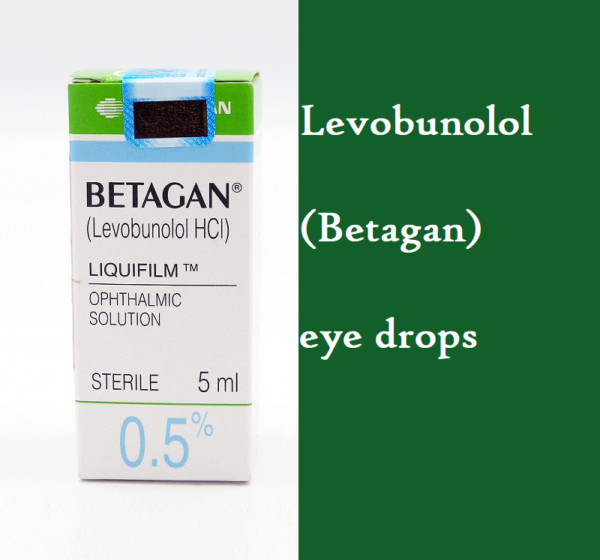
Levobunolol (Betagan) is used to reduce intraocular pressure by increasing the outflow of aqueous humor and decreases its production.
Levobunolol Uses:
-
Elevated intraocular pressure:
- Used for treatment of elevated intraocular pressure in patients having ocular hypertension or chronic open-angle glaucoma
Levobunolol (Betagan) Dose in Adults:
Levobunolol (Betagan) Dose in the treatment of Elevated intraocular pressure:
- Ophthalmic:
- Instill 1 to 2 drops into the affected eye(s) once a day; dosage may be increased to 1 drop twice a day in patients with severe or uncontrolled glaucoma.
- Doses more than 1 drop twice a day are generally not more effective.
Use in Children:
Not indicated.
Pregnancy Risk Category: C
- Similar adverse effects to those experienced with systemic beta-blockers can be seen in the ophthalmic administration of levobunolol.
- To reduce the potential exposure of the foetus to glaucoma medication, the maximum effective dosage should be used in conjunction with punctal Occlusion.
Use during breastfeeding:
- It is not known if breast milk contains levobunolol.
- Breast milk is not able to absorb systemic beta-blockers or topical timolol.
- To reduce exposure to breastfeeding infants, use the lowest effective dose combined with punctal obstruction.
- Manufacturer suggests being cautious when giving levobunolol breastfeeding women.
Dose in Kidney Disease:
- No dosage adjustments have been provided in the manufacturer's labeling.
Dose in Liver disease:
- No dosage adjustments have been provided in the manufacturer's labeling.
Common Side Effects of Levobunolol (Betagan):
-
Ophthalmic:
- Burning sensation of eyes
- Stinging of eyes
Less Common Side Effects of Levobunolol (Betagan):
-
Ophthalmic:
- Blepharoconjunctivitis
- Blepharoptosis
- Decreased Corneal Sensitivity
- Diplopia
- Iridocyclitis
- Keratitis
- Ocular Allergy
- Visual Disturbance
-
Cardiovascular:
- Bradycardia
- Cardiac Arrhythmia
- Cardiac Failure
- Cerebral Ischemia
- Cerebrovascular Accident
- Chest Pain
- Heart Block
- Hypotension
- Palpitations
- Syncope
-
Central Nervous System:
- Ataxia (Transient)
- Confusion
- Depression
- Dizziness
- Exacerbation Of Myasthenia Gravis
- Foreign Body Sensation Of Eye
- Headache
- Lethargy
- Paresthesia
-
Dermatologic:
- Alopecia
- Pruritus
- Skin Rash
- Stevens-Johnson Syndrome
- Urticaria
-
Endocrine & Metabolic:
- Hypoglycemia (Masked)
-
Gastrointestinal:
- Diarrhea
- Nausea
-
Genitourinary:
- Impotence
-
Hypersensitivity:
- Hypersensitivity Reaction
-
Neuromuscular & Skeletal:
- Weakness
-
Respiratory:
- Bronchospasm
- Dyspnea
- Nasal Congestion
- Respiratory Failure
Contraindications to Levobunolol (Betagan):
- Hypersensitivity
- Asthma
- Severe COPD
- Sinus bradycardia
- 2nd or 3rd degree AV block
- Overt heart failure
- Cardiogenic shock
Warnings and Precautions
-
Anaphylactic reactions
- Patients with a history of severe allergic reactions to allergens should be treated cautiously. Beta-blockers can make patients more sensitive to repeated challenges.
- In patients taking beta-blockers, the treatment of anaphylaxis (eg, epinephrine) may be ineffective or promote undesirable effects.
-
Choroidal detachment:
- Following filtration, choroidal detachment has been seen with the use of beta-blockaders and/or other aqueous suppressive therapies.
-
Cerebrovascular disease
- Be cautious if you have cerebrovascular impairment.
- Patients with reduced cerebral blood flow should consider alternative therapies.
-
Diabetes:
- Patients with diabetes mellitus, especially labile diabetics, should exercise caution when using this medication. It may cause hypoglycemia or mask symptoms.
-
Heart failure:
- Patients with compensated cardiac failure should be treated cautiously and monitored for signs of deterioration.
- Patients who have not had heart disease in the past should stop using it immediately.
- It is contraindicated in the presence of severe heart failure.
- The American heart association has stated that levobunolol may be an agent that can exacerbate underlying myocardial dysfunction.
-
Myasthenia gravis:
- Be careful
- This could lead to a worsening or other myasthenic symptoms such as diplopia, ptosis and generalized weakness.
-
Raynaud and peripheral vascular disease:
- Patients with Raynaud disease or peripheral vascular disease can experience aggravation or precipitation of symptoms associated with arterial insufficiency.
- Be careful and avoid aggravating arterial obstruction.
-
Respiratory disease
- Patients with bronchospastic diseases should not take beta-blockers.
- You should exercise caution and keep an eye on your surroundings if you use it.
- Patients with asthma can experience severe respiratory reactions, including death due to bronchospasm.
- It is not recommended for patients with severe COPD or bronchial symptoms.
-
Thyroid disease:
- Tachycardia, a sign of hyperthyroidism, may be hidden.
- You should be cautious if you suspect thyrotoxicosis.
- Hyperthyroidism can be worsened, or a thyroid storm may develop with sudden withdrawal.
Levobunolol: Drug Interaction
|
Bradycardia-Causing Agents |
May enhance the bradycardic effect of other Bradycardia-Causing Agents. |
|
Bupivacaine |
Beta-Blockers may increase the serum concentration of Bupivacaine. |
|
Cholinergic Agonists |
Beta-Blockers may enhance the adverse/toxic effect of Cholinergic Agonists. Of particular concern are the potential for cardiac conduction abnormalities and bronchoconstriction. |
|
EPINEPHrine (Nasal) |
Beta-Blockers (Nonselective) may enhance the hypertensive effect of EPINEPHrine (Nasal). |
|
EPINEPHrine (Oral Inhalation) |
Beta-Blockers (Nonselective) may enhance the hypertensive effect of EPINEPHrine (Oral Inhalation). |
|
Epinephrine (Racemic) |
Beta-Blockers (Nonselective) may enhance the hypertensive effect of Epinephrine (Racemic). |
|
EPINEPHrine (Systemic) |
Beta-Blockers (Nonselective) may enhance the hypertensive effect of EPINEPHrine (Systemic). |
|
Ivabradine |
Bradycardia-Causing Agents may enhance the bradycardic effect of Ivabradine. |
|
Lacosamide |
Bradycardia-Causing Agents may enhance the AV-blocking effect of Lacosamide. |
|
Lidocaine (Systemic) |
Beta-Blockers may increase the serum concentration of Lidocaine (Systemic). |
|
Lidocaine (Topical) |
Beta-Blockers may increase the serum concentration of Lidocaine (Topical). |
|
Mepivacaine |
Beta-Blockers may increase the serum concentration of Mepivacaine. |
|
Methacholine |
Beta-Blockers may enhance the adverse/toxic effect of Methacholine. |
|
Methoxyflurane |
May enhance the hypotensive effect of Beta-Blockers. |
|
Midodrine |
May enhance the bradycardic effect of Bradycardia-Causing Agents. |
|
NIFEdipine |
May enhance the hypotensive effect of Beta-Blockers. NIFEdipine may enhance the negative inotropic effect of Beta-Blockers. |
|
Opioids (Anilidopiperidine |
May enhance the bradycardic effect of Beta-Blockers. Opioids (Anilidopiperidine) may enhance the hypotensive effect of Beta-Blockers. |
|
Regorafenib |
May enhance the bradycardic effect of Beta-Blockers. |
|
Reserpine |
May enhance the hypotensive effect of Beta-Blockers. |
|
Ruxolitinib |
May enhance the bradycardic effect of Bradycardia-Causing Agents. Management: Ruxolitinib Canadian product labeling recommends avoiding use with bradycardia-causing agents to the extent possible. |
|
Terlipressin |
May enhance the bradycardic effect of Bradycardia-Causing Agents. |
|
Theophylline Derivatives |
Beta-Blockers (Nonselective) may diminish the bronchodilatory effect of Theophylline Derivatives. |
|
Tofacitinib |
May enhance the bradycardic effect of Bradycardia-Causing Agents. |
|
Ceritinib |
Bradycardia-Causing Agents may enhance the bradycardic effect of Ceritinib. Management: If this combination cannot be avoided, monitor patients for evidence of symptomatic bradycardia, and closely monitor blood pressure and heart rate during therapy. Exceptions are discussed in separate monographs. |
|
Dronedarone |
May enhance the bradycardic effect of Beta-Blockers. Dronedarone may increase the serum concentration of Beta-Blockers. This likely applies only to those agents that are metabolized by CYP2D6. Management: Use lower initial beta-blocker doses; adequate tolerance of the combination, based on ECG findings, should be confirmed prior to any increase in betablocker dose. |
|
Ergot Derivatives |
Beta-Blockers may enhance the vasoconstricting effect of Ergot Derivatives. Exceptions: Nicergoline. |
|
Fingolimod |
Beta-Blockers may enhance the bradycardic effect of Fingolimod. Management: Avoid the concomitant use of fingolimod and beta-blockers if possible. If coadministration is necessary, patients should have overnight continuous ECG monitoring conducted after the first dose of fingolimod. Monitor patients for bradycardia. |
|
Grass Pollen Allergen Extract (5 Grass Extract) |
Beta-Blockers may enhance the adverse/toxic effect of Grass Pollen Allergen Extract (5 Grass Extract). More specifically, Beta-Blockers may inhibit the ability to effectively treat severe allergic reactions to Grass Pollen Allergen Extract (5 Grass Extract) with epinephrine. Some other effects of epinephrine may be unaffected or even enhanced (e.g., vasoconstriction) during treatment with Beta-Blockers. |
|
Siponimod |
Bradycardia-Causing Agents may enhance the bradycardic effect of Siponimod. Management: Avoid coadministration of siponimod with drugs that may cause bradycardia. |
|
Beta2-Agonists |
Beta-Blockers (Nonselective) may diminish the bronchodilatory effect of Beta2Agonists. |
|
Fexinidazole [INT] |
Bradycardia-Causing Agents may enhance the arrhythmogenic effect of Fexinidazole [INT]. |
|
Floctafenine |
May enhance the adverse/toxic effect of Beta-Blockers. |
|
Rivastigmine |
May enhance the bradycardic effect of Beta-Blockers. |
Monitoring parameters:
Monitor the following parameters during its use;
- Intraocular pressure
- Heart rate
- Funduscopic exam
- Visual field testing
How to administer Levobunolol (Betagan)?
- For ophthalmic topical use only.
- Before and after use hands should be washed.
- Benzalkonium chloride may be present in some solutions; contact lenses should be removed prior to administration.
- Wait 15 mins before reinserting.
- The tip of the applicator should not be touched to the eye or other surfaces.
- 2 or more ophthalmic beta-adrenergic blocking agents should not be administered simultaneously.
Mechanism of action of Levobunolol (Betagan):
- Blockage of beta-1 and beta-2 adrenergic nerves. Causes intraocular pressure to drop by decreasing the production or increasing the flow of aqueous humor.
The beginning of action:
- The onset of action is within one hour.
Peak effect:
- It takes 2 to 6 hours for peak effect
Duration:
- Duration of action is up to 24 hours.
International Brand Names of Levobunolol:
- Betagan
- APO-Levobunolol HCl
- PMS-Levobunolol
- RATIO-Levobunolol
- SANDOZ Levobunolol
- B-Tablock
- Betagan
- Betagen
- Bunolgan
- Evobun
- Glubanol
- Levosan
- Levunolol
- Mascglucom
- Ocupress
- Orbunol
- Vistagan
Levobunolol Brand Names in Pakistan:
Levobunolol HCl Eye Drops 0.5 %w/v in Pakistan |
|
| Betagan | Barrett Hodgson Pakistan (Pvt) Ltd. |
| Levolol | Global Pharmaceuticals |
| Levoptic | Vega Pharmaceuticals Ltd. |
| Levosan | Sante (Pvt) Limited |
| Ocugan | Farmigea Pak (Pvt) Ltd. |
| Ophth-Levo | Ophth-Pharma (Pvt) Ltd. |
| Orbunol | Zafa Pharmaceutical Laboratories (Pvt) Ltd. |
| Vistagan | P.D.H. Pharmaceuticals (Pvt) Ltd. |
| Voben | Kobec Pharmacals |
.png)


