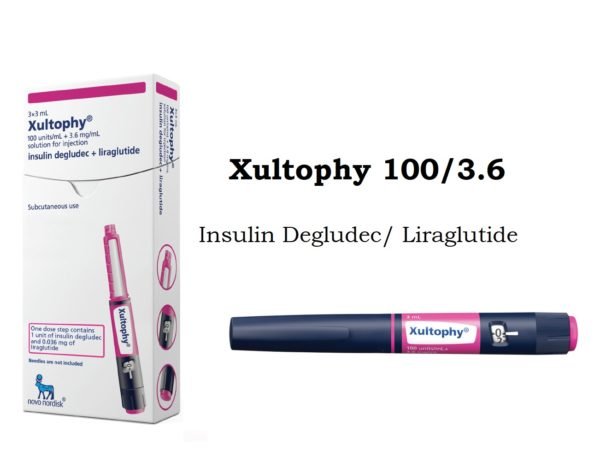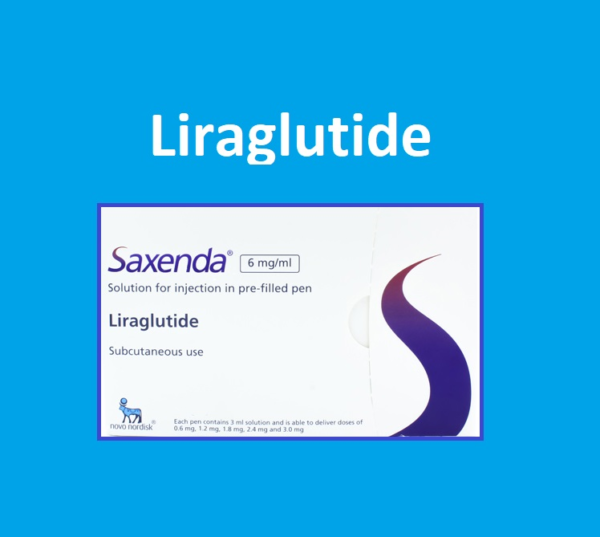
Liraglutide (Saxenda, Victoza) is a GLP-1 (Glucagon-like Peptide) receptor agonist that is also called an incretin mimetic, is used to treat diabetes mellitus type 2 as an adjunct to diet and exercise. It may be used as monotherapy or with metformin/ other diabetes medications. It is also available in combination with insulin degludec (ultra-long-acting insulin) by the brand name of Xultophy. It stimulates glucose-dependent insulin-release and inhibits glucagon secretion. It also delays gastric emptying and inhibits the replication of beta cells of the pancreas.
Liraglutide (Saxenda, Victoza) Uses:
-
Chronic weight management (Saxenda):
- It is used as an adjunct therapy to a reduced-calorie diet and increased physical activity for chronic weight management in adult patients with a BMI of more than 30 kg/m (obese) or more than 27 kg/m² (overweight) in the presence of at least one weight-related comorbid condition (eg, hypertension, type 2 diabetes mellitus, dyslipidemia).
-
Diabetes mellitus, type 2 (Victoza):
- It can be used as an adjunct to diet and exercise to improve glycemic control in children of more than 10 years of age, adolescents, and adults with type 2 diabetes mellitus.
- The risk reduction of major cardiovascular events like cardiovascular death, nonfatal myocardial infarction, and non-fatal stroke, in adults with type 2 diabetes mellitus and established cardiovascular disease.
Liraglutide (Saxenda, Victoza) Dose in Adults:
It is notable that due to the lack of additive glycemic benefit, its use in combination with a dipeptidyl peptidase-4 (DPP4) inhibitor like sitagliptin should be discouraged.
Liraglutide (Saxenda, Victoza) Dose in the treatment of type 2 Diabetes mellitus:
It might be used as an adjunctive agent or alternative monotherapy for select patients, including those who fail initial therapy with lifestyle interventions and metformin or who cannot take metformin.
Liraglutide may be preferred as an additional antidiabetic agent or alternative first-line agent in patients with atherosclerotic cardiovascular disease or in patients with an HbA1c relatively far away from goal (i.e HbA1c >9% and type 1 diabetes is not likely).
- SubQ: Initially administered as 0.6 mg once daily for 1 week, then increase to 1.2 mg once daily.
- If the optimal glycemic response is not achieved after an additional week of treatment, it can be increased further to 1.8 mg once a day.
- It is noteworthy that the lower initial dose (0.6 mg daily) is intended to reduce GI symptoms. But it does not provide effective glycemic control.
-
Concomitant use with insulin and/or insulin secretagogues (eg, sulfonylurea):
- Insulin and other secretagogues' dose reduction is required if used concomitantly.
Liraglutide (Saxenda, Victoza) Dose in the treatment of Obesity and select overweight patients:
For use as an adjunct to diet and exercise in obese patients or overweight patients with more than 1 weight-associated comorbidity (eg, hypertension, dyslipidemia).
First, consider a preferred pharmacologic weight-loss option in obese and overweight patients with type 2 diabetes mellitus, particularly in patients with atherosclerotic cardiovascular disease.
- SubQ: Initially given as 0.6 mg once a day for 1 week and can be increased by 0.6 mg daily at weekly intervals to a target dose of 3 mg once a day.
- If the patient cannot tolerate an increased dose during dose escalation, consider delaying dose titration for 1 additional week.
- According to the manufacturer, efficacy has not yet been established at doses of more than 3 mg/day.
- However, few clinicians will continue a patient on the maximum tolerated dose (even if <3 mg/day) if goal weight loss is achieved on that dose.
Note: Change in body weight should be evaluated after 12 weeks at the maximum tolerated dose or 16 weeks after initiation of therapy. Stop the drug if at least 4% to 5% of baseline body weight loss has not been achieved.
-
Missed doses:
- In the event of a missed dose, the once-daily regimen can be re-initiated with the next scheduled dose.
- An extra dose or an increase in the next dose should not be attempted. If more than 3 days have passed since the last liraglutide dose, then restart the therapy at 0.6 mg/day to avoid GI symptoms and titrate according to clinical judgment considering previous GI tolerability.
Liraglutide (Saxenda, Victoza) Dose in Childrens:
Liraglutide Dose in the treatment of Diabetes mellitus, type 2; adjunct to diet and exercise:
-
Children ≥10 years and Adolescents: Victoza:
- SubQ: Initially it is given as 0.6 mg once a day for at least 1 week.
- It can be increased by 0.6 mg/day increments at weekly intervals to achieve glycemic control (week 2: increase to 1.2 mg once daily; week 3: increase to 1.8 mg once daily).
- The maximum daily dose is 1.8 mg/day.
- Missed doses:
- If more than 3 days of therapy are missed, therapy should be reinitiated at the initial dose (0.6 mg/day) and re-titrated to avoid GI symptoms.
Liraglutide (Saxenda, Victoza) Dose in the treatment of Obesity; adjunct to strict lifestyle interventions:
-
Children ≥12 years and Adolescents ≤17 years:
- SubQ: Initially as 0.6 mg once a day.
- Then increase by 0.6 mg/day increments at weekly intervals up to the target dose of 3 mg once a day.
-
Adolescents ≥18 years: Saxenda:
- SubQ:
- Initially, it is given as 0.6 mg once a day for 1 week and increase by 0.6 mg/day increments at weekly intervals to a target dose of 3 mg once a day.
- If the patient cannot tolerate an increased dose during dose escalation, consider delaying dose up-titration for one additional week.
- If the 3 mg daily dose is not tolerated, Withhold the drug as its use efficacy has not been established at lower doses.
- After 16 weeks of therapy, assess body weight. If the patient has not lost more than 4% of baseline body weight, stop therapy since the patient is unlikely to achieve meaningful and sustainable results with liraglutide.
- Missed doses:
- If more than 3 days of therapy are missed, therapy should be reinitiated at the initial dose (0.6 mg/day) and up-titrated to avoid GI symptoms.
- SubQ:
Liraglutide (Saxenda, Victoza) Pregnancy Category: C
- Pregnant women should not use liraglutide to manage chronic weight because of the potential harm to their fetus and the lack of benefit.
- Obesity is associated with a higher risk of adverse maternal or fetal outcomes.
- Pregnancy and conception are not the best times to take weight loss medication.
- Poor glycemic control in pregnancy can lead to adverse maternal and fetal outcomes including preeclampsia and preterm birth, preterm delivery, complications and major birth defects.
- Preventing adverse outcomes by keeping maternal blood glucose and HbA1c as close to the target levels as possible before conception and throughout pregnancy.
- However, it is important to avoid significant hypoglycemia.
- Agents other than liraglutide in pregnant women are preferred.
Use of Liraglutide during breastfeeding
- It is not yet known if breast milk contains it.
- When prescribing liraglutide, a doctor should weigh the clinical benefits against the risk to lactating mothers.
Dose in Kidney Disease:
No dosage adjustment is required in kidney disease but caution is advised with sevre renal impairment.
Dose in Liver disease:
it should be prescribed cautiously in patients with liver disease as study dat is not sufficient.
Obesity:
Common Side Effects of Liraglutide (Saxenda, Victoza):
-
Cardiovascular:
- Increased heart rate
-
Central nervous system:
- Headache
-
Endocrine & metabolic:
- Hypoglycemia
-
Gastrointestinal:
- Nausea
- Diarrhea
- Constipation
- Vomiting
-
Local:
- Injection site reaction
Less Common Side Effects of Liraglutide (Saxenda, Victoza):
-
Cardiovascular:
- Tachycardia
-
Central nervous system:
- Fatigue
- Dizziness
-
Dermatologic:
- Injection site pruritus
- Rash at injection site
-
Endocrine & metabolic:
- Altered hormone level
-
Gastrointestinal:
- Decreased appetite
- Dyspepsia
- Abdominal distension
- Abdominal pain
- Eructation
- Gastroenteritis
- Gastroesophageal reflux disease
- Upper abdominal pain
- Increased serum lipase
- Flatulence
- Viral gastroenteritis
- Cholelithiasis
- Xerostomia
-
Genitourinary:
- Urinary tract infection
-
Immunologic:
- Antibody development
-
Local:
- Erythema at injection site
-
Neuromuscular & skeletal:
- Asthenia
Type 2 diabetes mellitus: Incidence reported with adult patients in monotherapy trials unless otherwise specified.
Common Side Effects of Liraglutide (Saxenda, Victoza):
-
Central nervous system:
- Headache
-
Endocrine & metabolic:
- Hypoglycemia
-
Gastrointestinal:
- Gastrointestinal disease
- Nausea
- Diarrhea
-
Infection:
- Infection
-
Respiratory:
- Upper respiratory tract infection
Less Common Side Effects of Liraglutide (Saxenda, Victoza):
-
Dermatologic:
- Rash at injection site
-
Gastrointestinal:
- Decreased appetite
- Dyspepsia
- Vomiting
- Increased serum lipase
- Constipation
- Cholelithiasis
- Cholecystitis
- Increased amylase
-
Hepatic:
- Hyperbilirubinemia
-
Immunologic:
- Antibody development
-
Local:
- Injection site reaction
- Erythema at injection site
-
Neuromuscular & skeletal:
- Back pain
-
Respiratory:
- Nasopharyngitis
Contraindications to Liraglutide (Saxenda, Victoza):
- An absolute contraindication is any prior serious hypersensitivity to liraglutide, or any component of its formulation.
- MTC family history or history
- Multiple endocrine disorders neoplasia patients 2 (MEN2)
- Pregnancy (Saxenda).
Canadian labeling includes additional contraindications that aren't present in US labeling
- Pregnancy (Saxenda and Victoza).
- Breastfeeding
Warnings and precautions
-
Formation of antibodies:
- Its use could be linked to the creation of anti-liraglutide antibody.
- However, antibody formation was not associated to a decrease in efficacy.
- Patients with high titers anti-liraglutide antibody levels had the greatest HbA1c reductions.
-
Cardiovascular effects
- Monitoring is necessary periodically to ensure that the resting heart rate does not increase.
- Patients who experience an increase in their resting heart rate should be withheld.
-
Gallbladder disease
- GLP-1 agonists can increase the risk of gallbladder or bile duct diseases.
- Patients treated with liraglutide have had cholecystitis and cholelithiasis, with most patients needing hospitalization or cholecystectomy.
-
GI symptoms
- The GI system is the most common cause of reactions.
- These symptoms can be dose-related. They may decrease in severity and frequency with continued use and gradual titration.
- If volume depletion occurs (eg, because of nausea, vomiting, diarrhea), you should stop using it
-
Hypersensitivity reactions
- It has been associated with serious hypersensitivity reactions such as anaphylactic reactions or angioedema. In the event of hypersensitivity reactions, discontinue use.
- Patients with an allergy or history of angioedema to GLP-1 receptor agonists should be cautious.
- Cross-sensitivity is possible but not guaranteed.
-
Pancreatitis
- Trials have shown cases of acute and chronic pancreatitis, including fatal and non-fatal hemorhagic and necrotizing pancreatitis.
- You should be aware of signs and symptoms such as persistent abdominal pain that radiates to the back or is accompanied by vomiting.
- If you suspect pancreatitis, stop taking the drug.
- If you are not sure, do not restart the pancreas unless another cause is identified.
- There is no evidence to suggest that patients who have had pancreatitis before may be at increased risk of developing it.
-
Psychiatric effects
- Patients treated for obesity have reported suicidal behavior and one attempt at suicide.
- Monitor for depression and suicidal thoughts, behavior or unusual mood changes.
- If suicidal thoughts, or behavior occur, stop using it.
- Patients with active suicidal thoughts or a history of suicide attempts should not be given this medication.
-
Effects on the renal system:
- There have been reports of acute renal failure and chronic kidney failure exacerbation, as well as severe cases that required hemodialysis.
- Patients with no preexisting renal disease have not been affected by many cases.
- Patients with nausea, vomiting or diarrhea were most likely to have reported these cases.
- With the right treatment, renal dysfunction can be reversed.
- Patients who are taking concomitant medications that affect renal function or hydration can have an increased risk.
-
Thyroid tumors: [US Boxed Warning]
- In animal studies, thyroid C cell tumors that are dose-dependent or treatment duration-dependent have been identified in thyroid C cells.
- However, it is not known if liraglutide can cause thyroid C-cell cancers in humans. The human relevance of rodent thyroid C–cell tumors has not yet been established.
- Patients should be informed about the possible risk of MTC when taking liraglutide.
- Patients with a history of MTC or multiple endocrine neoplasia types 2 (MEN2) are not recommended to use this medication.
- Patients treated with liraglutide have had very few cases of MTC in their patients.
- Patients with elevated calcitonin levels or thyroid nodules that were detected on scans or during physical exams should consult a specialist.
- Patients treated with liraglutide should not be monitored routinely or use thyroid ultrasound monitoring to detect early signs of MTC.
-
Bariatric surgery
-
Dehydration
- Before starting treatment with liraglutide, it is important to properly assess and hydrate the patient. An exacerbation of acute or chronic kidney disease may occur.
- Most cases were experienced by patients suffering from nausea, vomiting, diarrhea, or dehydration. Patients with nausea are common. Fluid intake may be more difficult following gastric bypass, gastric band, or sleeve-gastrectomy.
-
Excessive glucagon -like peptide-1:
- If therapy is started after surgery, closely monitor the effectiveness of the treatment and look out for signs and symptoms such as pancreatitis.
- Endogenous postprandial glucagonlike peptide-1 (GLP-1) concentrations are significantly increased by gastric bypass and sleeve-gastrectomy (but excluding the gastric band).
- Exogenous GLP-1 agonists can be used in lieu of surgery.
-
-
Gastroparesis
- It slows down gastric motility.
-
Hepatic impairment
- Patients with hepatic impairment should exercise caution.
-
Renal impairment
- RFTs should always be evaluated during dose titration and initiation.
Liraglutide: Drug Interaction
|
Alpha-Lipoic Acid |
May enhance the hypoglycemic effect of Antidiabetic Agents. |
|
Androgens |
May enhance the hypoglycemic effect of Blood Glucose Lowering Agents. Exceptions: Danazol. |
|
Direct Acting Antiviral Agents (HCV |
May enhance the hypoglycemic effect of Antidiabetic Agents. |
|
Guanethidine |
May enhance the hypoglycemic effect of Antidiabetic Agents. |
|
Hyperglycemia-Associated Agents |
May diminish the therapeutic effect of Antidiabetic Agents. |
|
Hypoglycemia-Associated Agents |
Antidiabetic Agents may enhance the hypoglycemic effect of Hypoglycemia-Associated Agents. |
|
Maitake |
May enhance the hypoglycemic effect of Blood Glucose Lowering Agents. |
|
Monoamine Oxidase Inhibitors |
May enhance the hypoglycemic effect of Blood Glucose Lowering Agents. |
|
Pegvisomant |
May enhance the hypoglycemic effect of Blood Glucose Lowering Agents. |
|
Prothionamide |
May enhance the hypoglycemic effect of Blood Glucose Lowering Agents. |
|
Quinolones |
May enhance the hypoglycemic effect of Blood Glucose Lowering Agents. Quinolones may diminish the therapeutic effect of Blood Glucose Lowering Agents. Specifically, if an agent is being used to treat diabetes, loss of blood sugar control may occur with quinolone use. |
|
Ritodrine |
May diminish the therapeutic effect of Antidiabetic Agents. |
|
Salicylates |
May enhance the hypoglycemic effect of Blood Glucose Lowering Agents. |
|
Selective Serotonin Reuptake Inhibitors |
May enhance the hypoglycemic effect of Blood Glucose Lowering Agents. |
|
Thiazide and Thiazide-Like Diuretics |
May diminish the therapeutic effect of Antidiabetic Agents. |
|
Insulins |
Liraglutide may enhance the hypoglycemic effect of Insulins. Management: If liraglutide is used for the treatment of diabetes (Victoza), consider insulin dose reductions. The combination of liraglutide and insulin should be avoided if liraglutide is used exclusively for weight loss (Saxenda). |
|
Sincalide |
Drugs that Affect Gallbladder Function may diminish the therapeutic effect of Sincalide. Management: Consider discontinuing drugs that may affect gallbladder motility prior to the use of sincalide to stimulate gallbladder contraction. |
|
Sulfonylureas |
Glucagon-Like Peptide-1 Agonists may enhance the hypoglycemic effect of Sulfonylureas. Management: Consider sulfonylurea dose reductions when used in combination with glucagon-like peptide-1 agonists. |
Monitoring parameters:
- Patients who are stable in glycemic control, and meeting their treatment goals, should have plasma glucose and HbA1c checked at least twice per year.
- Patients who are not meeting their treatment goals or have therapy changes should have it done quarterly.
- Renal functions
- Signs and symptoms of pancreatitis.
- Triglycerides.
- Gallbladder disease symptoms and signs
- The appearance of depression or suicidal thoughts, behavior or behavior changes.
- Heart rate
- If you are using chronic weight management, your bodyweight is at week 16.
How to administer Liraglutide (Saxenda, Victoza)?
SubQ:
- Inject subcutaneously under the arm, thigh or abdomen.
- You should not inject intramuscularly or intravenously.
- Do not eat or use any other time during the day.
- Each administration, change the needle.
- Only use clear, uncolored, and non-particulate matter pens.
- Even if you change the needle, do not share pens among patients.
- Use insulin concomitantly. Do not mix.
- You can inject it in the same area as insulin but not together.
Mechanism of action of Liraglutide (Saxenda, Victoza):
- Liraglutide, a long-acting analog to human glucagonlike peptide-1, (GLP-1), is an incretinhormone that increases glucose-dependent insulin, decreases inappropriate, glucagon, increases B-cell proliferation, slows down gastric emptying, and reduces food intake.
- The hemoglobin A1c level drops by about 1% when Liraglutide is administered.
Notification: The pharmacokinetic data for type 2 diabetes mellitus children (ages 10-17 years) are similar to that of adult patients.
Protein binding:
- More than 98%
Metabolism:
- Endogenously metabolized with dipeptidyl Peptase IV, (DPP-IV), and endogenous endopeptidases.
- The metabolism is slower than native GLP-1
Bioavailability:
- SubQ: 55%
Elimination, half-life:
- 13 hours
Plasma peak time:
- SubQ: 8-12 hours
Excretion:
- Urine (6% as metabolites).
- Via feces (5% as metabolites).
International Brand Names of Liraglutide:
- Saxenda
- Victoza
Liraglutide Brand Names in Pakistan:
Victoza 1.2 mg, 1.8 mg: NovoNordisk
.png)