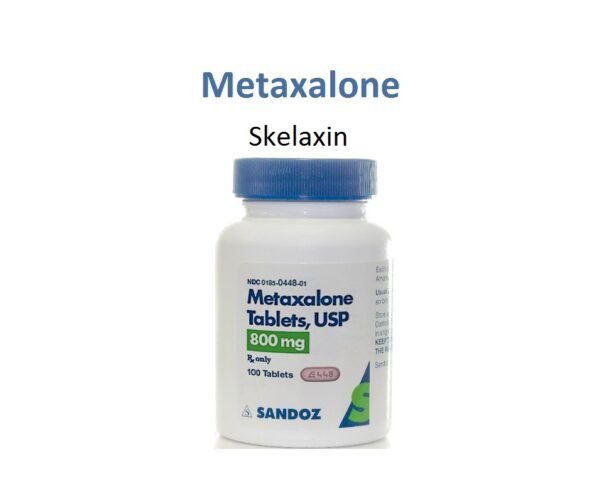
Metaxalone (Skelaxin) is used as a muscle relaxant. The exact mechanism of action of the drug is not known, however, it causes central nervous system depression.
Metaxalone (Skelaxin) Uses:
-
Musculoskeletal conditions:
- It is used to relieve the symptoms of acute musculoskeletal conditions such as pain and muscle spasm.
Other drugs used to treat muscle spasms include:
- Tizanidine ( Ternaline)
- Baclofen ( Baclin)
- Chlorzoxazone
Metaxalone (Skelaxin) Dose in Adults:
Metaxalone (Skelaxin) Dose in the Musculoskeletal conditions:
- 800 mg orally three or four times a day.
Use in Children:
Refer to adults dosing.
Metaxalone (Skelaxin) Pregnancy Risk Category: C
- Negative fetal outcomes have not been observed in animal reproductiin research.
- You should only use the drug if you feel the benefits are greater than the risks, especially in the first trimester.
Use of metaxalone while breastfeeding
- It is unknown if the drug will be excreted into breastmilk.
- It is best to avoid it while breastfeeding, according to the manufacturer.
Dose in Kidney Disease:
In cases of severe renal impairment, it is not advised. The manufacturer's labelling makes no dosage recommendations for those with mild to moderate kidney dysfunction. It should be handled carefully.
Dose in Liver disease:
In cases of severe liver illness, it is not advised. The manufacturer's labelling makes no dose recommendations for patients with mild to moderate hepatic impairment.
Side effects of Metaxalone (Skelaxin).
-
Central nervous system:
- Drowsiness
- Irritability
- Headache
- Nervousness
- Dizziness
-
Dermatologic:
- Skin rash (with or without pruritus)
-
Gastrointestinal:
- Gastrointestinal distress
- Vomiting
- Nausea
-
Hematologic & oncologic:
- Leukopenia
- Hemolytic anemia
-
Hepatic:
- Jaundice
-
Hypersensitivity:
- Hypersensitivity reaction
- Anaphylaxis
- Anaphylactoid reaction (rare)
Contraindications to Metaxalone (Skelaxin):
- Allergy reactions to any component of the drug or the drug itself
- Grave renal and hepatic dysfunction.
- Patients with a tendency for drug-induced hemolyticanemia or other anemias.
Warnings and precautions
-
Depression in the CNS:
- CNS depression can be caused by the drug. This may lead to drowsiness, impaired physical and mental abilities.
- People who are required to be alert for mental or physical tasks should be warned, especially those who operate or drive heavy machinery.
-
Serotonin syndrome
- When taken with other serotonergic drugs such as SSRIs or SNRIs and TCAs (MAO inhibitors), triptans, 5-HT3 receptor antagonists, or SSRIs, the drug could cause serotonin syndrome.
- Serotonin syndrome can be fatal and may develop during dose titration or initiation.
- Serotonin syndrome symptoms should be closely monitored by patients.
- Changes in mental state, including anxiety, sleepiness, and hallucinations, can happen.
- Autonomic instability can manifest as hyperthermia, fluctuating blood pressure and tachycardia.
- Neuromuscular changes, such as hyperreflexia and myoclonus and incoordination, can occur.
- Gastrointestinal symptoms such as nausea, vomiting, or diarrhea.
- Serotonin syndrome symptoms can develop in as little as 24 hours.
- If symptoms appear, it is important to stop all treatment immediately.
-
Hepatic impairment
- Liver function tests should always be carried out while receiving therapy.
- A serious hepatic impairment should prevent a patient from taking the medication.
-
Renal impairment
- Patients with impaired renal function should not take the drug.
- Patients with severe renal impairment should not take it.
Metaxalone: Drug Interaction
|
Alcohol (Ethyl) |
Alcohol's CNS depressing effect may be amplified by CNS depressants (Ethyl). |
|
Alizapride |
CNS depressants may have an enhanced CNS depressant impact. |
|
Botulinum Toxin-Containing Products |
Centrally acting muscle relaxants may intensify the harmful/toxic effects of products containing botulinum toxin. In particular, there may be a greater likelihood of developing muscle weakness. |
|
Brexanolone |
Brexanolone's CNS depressing effects may be amplified by other CNS depressants. |
|
Brimonidine (Topical) |
CNS depressants may have an enhanced CNS depressant impact. |
|
Bromopride |
CNS depressants may have an enhanced CNS depressant impact. |
|
Cannabidiol |
CNS depressants may have an enhanced CNS depressant impact. |
|
Cannabis |
CNS depressants may have an enhanced CNS depressant impact. |
|
Chlorphenesin Carbamate |
CNS depressants may have an enhanced CNS depressant impact. |
|
CNS Depressants |
CNS depressants may have an enhanced CNS depressant impact. |
|
Dimethindene (Topical) |
CNS depressants may have an enhanced CNS depressant impact. |
|
Doxylamine |
CNS depressants may have an enhanced CNS depressant impact. Management: The producer of the pregnancy-safe drug Diclegis (doxylamine/pyridoxine) particularly advises against combining it with other CNS depressants. |
|
Dronabinol |
CNS depressants may have an enhanced CNS depressant impact. |
|
Esketamine |
CNS depressants may have an enhanced CNS depressant impact. |
|
HydrOXYzine |
CNS depressants may have an enhanced CNS depressant impact. |
|
Kava Kava |
CNS depressants may have an enhanced CNS depressant impact. |
|
Lofexidine |
May enhance the CNS depressant effect of CNS Depressants. Management: Drugs listed as exceptions to this monograph are discussed in further detail in separate drug interaction monographs. |
|
Magnesium Sulfate |
May enhance the CNS depressant effect of CNS Depressants. |
|
MetyroSINE |
CNS Depressants may enhance the sedative effect of MetyroSINE. |
|
Minocycline (Systemic) |
May enhance the CNS depressant effect of CNS Depressants. |
|
Nabilone |
May enhance the CNS depressant effect of CNS Depressants. |
|
Piribedil |
Piribedil's CNS depressing effects may be enhanced by other CNS depressants. |
|
Pramipexole |
The sedative effects of pramipexole might be enhanced by CNS depressants. |
|
ROPINIRole |
The sedative effects of CNS depressants may increase those of ROPINIRole. |
|
Rotigotine |
Rotigotine's sedative effects may be boosted by CNS depressants. |
|
Rufinamide |
CNS depressants' harmful or toxic effects could be increased. Particularly, drowsiness and lightheadedness could be worsened. |
|
Serotonergic Agents (High Risk) |
Serotonergic agents' serotonergic effects may be enhanced by methylxalone (High Risk). Serotonin syndrome might occur from this. When these medications are taken together, it is important to watch out for any signs and symptoms of serotonin syndrome or serotonin poisoning, such as hyperreflexia, clonus, hyperthermia, diaphoresis, tremor, autonomic instability, and changes in mental status. |
|
Tetrahydrocannabinol |
CNS depressants may have an enhanced CNS depressant impact. |
|
Tetrahydrocannabinol and Cannabidiol |
CNS depressants may have an enhanced CNS depressant impact. |
|
Trimeprazine |
CNS depressants may have an enhanced CNS depressant impact. |
|
Risk Factor D (Consider therapy modification) |
|
|
Blonanserin |
Blonanserin's CNS depressing effects may be enhanced by other CNS depressants. |
|
Buprenorphine |
The CNS depressing impact of buprenorphine may be enhanced by CNS depressants. Treatment: If a patient has a high risk of abusing or injecting themselves with buprenorphine, consider reducing the doses of other CNS depressants and avoiding such medications. Buprenorphine should be started at lower doses in individuals who are currently taking CNS depressants. |
|
Chlormethiazole |
CNS depressants may have an enhanced CNS depressant impact. Management: Keep a close eye out for signs of severe CNS depression. If such a combination is required, it should be taken at a dose that has been suitably lowered, according to the instructions for chlormethiazole. |
|
Droperidol |
May enhance the CNS depressant effect of CNS Depressants. Management: Consider dose reductions of droperidol or of other CNS agents (eg, opioids, barbiturates) with concomitant use. Exceptions to this monograph are discussed in further detail in separate drug interaction monographs. Risk |
|
Flunitrazepam |
Flunitrazepam's CNS depressing effects may be enhanced by other CNS depressants. |
|
HYDROcodone |
The CNS depressive action of HYDROcodone may be enhanced by CNS depressants. Management: Whenever feasible, refrain from using hydrocodone and benzodiazepines or other CNS depressants concurrently. Only in the event that other treatment choices are insufficient should these medications be combined. Limit the duration and dosage of each medicine when used together. |
|
Lemborexant |
CNS depressants may have an enhanced CNS depressant impact. Management: Due to the possibility of additive CNS depressant effects when lemborexant and concurrent CNS depressants are administered concurrently, dosage modifications may be required. Effects of CNS depressants must be closely monitored. |
|
Methotrimeprazine |
The CNS depressing action of methotrimeprazine may be enhanced by CNS depressants. The CNS depressant action of CNS Depressants may be strengthened by methotrimeprazine. Management: Start concurrent methotrimeprazine therapy while reducing the adult dose of CNS depressants by 50%. Only once a clinically effective dose of methotrimeprazine has been established should additional CNS depressant dosage modifications be made. |
|
Opioid Agonists |
Opioid agonists' CNS depressing effects may be amplified by CNS depressants. Management: When at all possible, refrain from using benzodiazepines or other CNS depressants concurrently with opioid agonists. Only in the event that other treatment choices are insufficient should these medications be combined. Limit the duration and dosage of each medicine when used together. |
|
OxyCODONE |
The CNS depressing effects of OxyCODONE may be enhanced by CNS depressants. Management: Whenever feasible, refrain from using oxycodone and benzodiazepines or other CNS depressants concurrently. Only in the event that other treatment choices are insufficient should these medications be combined. Limit the duration and dosage of each medicine when used together. |
|
Perampanel |
CNS depressants may have an enhanced CNS depressant impact. Treatment: Until they have experience using the combination, patients taking perampanel along with any other medication that has CNS depressive effects should avoid complex and high-risk activities, especially those like driving that call for awareness and coordination. |
|
Sodium Oxybate |
CNS depressants may have an enhanced CNS depressant impact. Management: Take into account substitutes for combined use. Reduce the doses of one or more medications when simultaneous use is necessary. It is not advised to use sodium oxybate with alcoholic beverages or hypnotic sedatives. |
|
Suvorexant |
Suvorexant's CNS depressing effects may be amplified by other CNS depressants. Treatment: Suvorexant and/or any other CNS depressant dosage reduction may be required. Suvorexant shouldn't be taken with alcohol, and it shouldn't be taken for sleeplessness with any other medication either. |
|
Tapentadol |
CNS depressants may have an enhanced CNS depressant impact. Treatment: When feasible, refrain from using tapentadol and benzodiazepines or other CNS depressants simultaneously. Only in the event that other treatment choices are insufficient should these medications be combined. Limit the duration and dosage of each medicine when used together. |
|
Tolperisone |
May intensify the negative or harmful effects of muscle relaxants (Centrally Acting). Management: If tolperisone is used with other centrally acting muscle relaxants, watch for signs of increased sedation or CNS effects. If these medications are taken together, think about lowering the tolperisone dosage. |
|
Zolpidem |
CNS Depressants may enhance the CNS depressant effect of Zolpidem. Management: Reduce the Intermezzo brand sublingual zolpidem adult dose to 1.75 mg for men who are also receiving other CNS depressants. No such dose change is recommended for women. Avoid use with other CNS depressants at bedtime; avoid use with alcohol. Risk |
|
Risk Factor X (Avoid combination) |
|
|
Azelastine (Nasal) |
Azelastine's CNS depressing impact may be amplified by CNS depressants (Nasal). |
|
Bromperidol |
CNS depressants may have an enhanced CNS depressant impact. |
|
Orphenadrine |
The CNS depressing action of orphenadrine may be enhanced by CNS depressants. |
|
Oxomemazine |
CNS depressants may have an enhanced CNS depressant impact. |
|
Paraldehyde |
The CNS depressing effects of paraldehyde may be enhanced by CNS depressants. |
|
Thalidomide |
The CNS depressing effect of thalidomide may be enhanced by CNS depressants. |
Monitoring Parameters:
None mentioned in the manufacturer's labeling.
- Liver and renal functions should be monitored periodically.
How to administer Metaxalone (Skelaxin)?
- You can take the medication with or without food.
- Food improves the drug's bioavailability, which leads to higher serum levels and intensifies the drug's depressive effects on the central nervous system.
- It is unknown how eating habits affect a drug's clinical effectiveness.
Mechanism of action of Metaxalone (Skelaxin):
- What the drug's precise mechanism of action is is uncertain.
- It's probable that the effects of the medication are brought on by central nervous system depression.
- The motor end plates, nerve fibres, or striated muscles, however, are unaffected by the medication.
Metabolism:
- It is metabolized in the liver via
- CYP1A2,
- CYP2D6,
- CYP2E1,
- CYP3A4 and
- to lesser extent via
- CYP2C8,
- CPY2C9, and
- CYP2C19
Bioavailability:
- Food may increase its bioavailability.
Half-life elimination:
- 9 ± 4.8 hours
Time to peak:
- ~3 hours
Excretion:
- Urine (as metabolites)
International Brands of Metaxalone:
- Metaxall
- Skelaxin
- Flexura
- Sabaxolone
- Sketarest
- Striolaxone
Metaxalone Brand Names in Pakistan:
No Brands Available in Pakistan.
.png)


