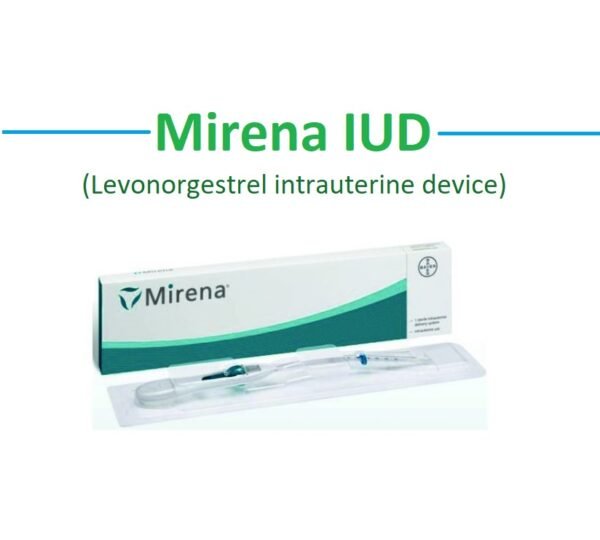
Mirena IUD (Levonorgestrel intrauterine device) is a progestin-only-containing hormonal contraceptive device. It does not contain estrogen. It is used to prevent pregnancy for 3 to 6 years depending on the brand and dose of the intrauterine device.
Levonorgestrel Intrauterine Device Uses:
-
Contraception:
- Levonorgestrel is a hormonal medication used to prevent pregnancy (up to 3 years [Skyla], up to 5 years [Kyleena, Mirena], or up to 6 years [Liletta]).
-
Heavy menstrual bleeding (Mirena only):
- It is also used to treat heavy menstrual bleeding in women who also choose IUD for contraception.
-
Off Label Use of Levonorgestrel intrauterine device in Adults:
- It is also used in the treatment of endometrial hyperplasia.
Levonorgestrel Intrauterine Dose in Adults:
Levonorgestrel Intrauterine Device Dose in the treatment of Contraception:
- Females: It is used only in females as an intrauterine device (IUD) to insert into the uterine cavity.
- Kyleena:
- It initially releases levonorgestrel up to 17.5 mcg/day approximately, then the rate subsequently decreases with time with the average release rate of approximately 9mcg/day over 5 years.
- It should not be placed for more than 5 years.
- Liletta:
- It initially releases levonorgestrel up to 20 mcg/day approximately then rate subsequently decreases with time with the average release rate of approximately 14.3mcg over 6 years.
- It should not be placed for more than 6 years.
- Mirena:
- The initial release rate is 20 mcg/day, then the rate subsequently decreases to half i.e 10mcg/day after 5 years.
- It should not be placed for more than 5 years.
- Skyla, Jaydess (Canadian product):
- The initial release rate is approximately 14 mcg/day after 24 days, then the rate subsequently decreases with time with a mean release rate of approximately 6mcg/day over 3 years.
- It should not be in place for more than 3 years.
- Initiation of therapy:
- It can be inserted at any day of the menstrual cycle if pregnancy has been ruled out or it can be inserted immediately postpartum or immediately after first or second-trimester abortion (whether spontaneous or induced).
- There is no need for back-up contraception within 7 days of onset of menstruation but if insertion occurs after 7 days of starting of menstrual bleeding then an additional form of contraception must be used for 7 days unless the woman abstains from sexual intercourse for 7 days.
- There is no need for additional contraception if an Intrauterine device is placed at the time of surgical abortion.
- Do not insert immediately after a septic abortion.
- Note:
- The manufacturer's labeling recommends the insertion of the device should not be done for at least 4 weeks or until involution of the uterus is complete in these situations, despite the aforementioned recommendations do support insertion of IUD immediately postpartum or immediately after a second-trimester abortion or miscarriage (refer to the manufacturer's labeling for product specific information).
- Health care providers should determine the appropriate timing of device insertion.
- Continuation of contraception:
- An intrauterine device can be removed and replaced with a new device immediately and can be done at any time during the menstrual cycle provided the woman is not pregnant.
-
Additional contraceptive dosing considerations:
- Switching from a different contraceptive to levonorgestrel IUD:
- The IUD may be inserted immediately provided the woman is not pregnant.
- There is no need for back-up contraception within 7 days of onset of menstruation but if insertion occurs after 7 days of starting of menstrual bleeding then an additional form of contraception must be used for 7 days unless the woman abstains from sexual intercourse for 7 days.
- When there is a need for an additional method of contraception, continue the woman's previous method for 7 days after insertion.
- Switching from a copper IUD:
- Emergency contraception must be administered if sexual intercourse has occurred after the start of the current cycle, and it has been more than 5 days since the start of bleeding.
- Switching to Kyleena, Liletta, Mirena, or Skyla from an injectable progestin contraceptive:
- May be inserted at any time of the menstrual cycle.
- A barrier method of contraception should be used for 7 days if inserted after 13 weeks after the last injection
- Switching to Kyleena, Liletta, Mirena, or Skyla from a contraceptive implant or another intrauterine system:
- May insert at any time of the menstrual cycle but on the same day, the implant or device is removed.
- Switching to Kyleena, Liletta, Mirena, or Skyla from a hormonal contraceptive (oral, transdermal, vaginal):
- May insert any time of the menstrual cycle including a hormone-free interval of the previous method.
- The previous method should be continued for 7 days after insertion or until the end of the current treatment cycle if inserted during active use of the previous method.
- Switching from levonorgestrel IUD to a different contraceptive:
- If the patient wishes to switch from levonorgestrel IUD to another method, initiate the new contraceptive and remove the device during the first 7 days of the menstrual cycle.
- If the device is not removed during the first 7 days of menstruation or the patient has irregular menstrual cycles or amenorrhea and wants to switch to a different method of birth control, a new method should be initiated at least 7 days prior to the removal of the device, otherwise, a back-up barrier contraceptive method should be used for 7 days after the device removal unless the woman abstains from vaginal intercourse.
- Switching from a different contraceptive to levonorgestrel IUD:
- Kyleena:
Mirena IUD (Levonorgestrel intrauterine device) Dose in the treatment of Endometrial hyperplasia (off-label):
- Intrauterine device (Mirena):
- For endometrial hyperplasia, the dose is 20 mcg/day.
- Mirena contains 52mg of levonorgestrel in a reservoir which releases approximately 20 mcg/day over 5 years and should be kept in place for more than 5 years and has to be replaced after 5 years; however, the optimal duration of treatment is not known.
Mirena IUD (Levonorgestrel intrauterine device) Dose in the treatment of heavy menstrual bleeding:
-
- Intrauterine device (Mirena): Refer to dosing for contraception as mentioned above.
Levonorgestrel Intrauterine Dose in Childrens:
Mirena IUD (Levonorgestrel intrauterine device) Use for Contraception in adolescents:
-
Females:
- Refer to adult dosing. It should not be used prior to menarche.
Mirena IUD (Levonorgestrel intrauterine device) Pregnancy Risk Category: X
- It is not recommended for use during pregnancy, or suspected pregnancy.
- Before a pregnancy is inserted, always rule out the possibility of it.
- Women who are pregnant while an IUD is in place can be at risk of septic abortion. This could lead to septicemia or septic shock and even death.
- When IUD is in place and pregnancy occurs, the probability of ectopic birth is higher. If pregnancy is continued, there is an increased chance of miscarriage and sepsis.
- You can insert the device immediately following a spontaneous or induced abortion in the first trimester.
- The manufacturer suggests that the device not be inserted for more than 6 weeks, or until involution of uterus is complete following pregnancy or a first trimester-induced abortion.
- However, the above recommendations support the insertion of IUD right after delivery or immediately after miscarriage or second-trimester abortion.
- Evidence-based guidelines recommend that insertion be done postpartum (immediate or interval insertion within the 6-week period following placental delivery) and after an abortion.
- This is despite the higher risk of expulsion immediately following abortion.
- It may also be offered to women who are breastfeeding, regardless of their breastfeed status, in order to prevent unintended pregnancies and rapid repeats.
- Around 71% to 88% percent of women who want to conceive are able to do so within 12 months of the device's removal.
Levonorgestrel intrauterine device use during breastfeeding:
- Breast milk contains levonorgestrel.
- After IUD insertion, breast milk was found to contain levonorgestrel in women who had given birth between 4 and 6 weeks ago.
- One study found no correlation between maternal serum and milk concentrations. However, the authors determined that infants were given a relative dose of 1.2%.
- Both studies showed that the milk/plasma ratio increased in both the 12- and 4-week periods.
- Levonorgestrel could also be detected in breastfeeding infant serum.
- Actual milk concentrations will vary depending on how much and whereabouts they were administered.
- Additionally, maternal plasma levels of levonorgestrel depend on SHBG capacity. This is affected by estrogen concomitantly administered or mother's postpartum status.
- There have been no adverse effects observed on the development or growth of infants in general.
- There have been isolated cases of reduced milk production.
- Lactating women are at greater risk of IUD perforation.
- According to the manufacturer of the product, when deciding whether to continue or stop breastfeeding during therapy, it should consider the risks to infant exposure, the benefits to the infant and the benefits to the mother.
- The manufacturer suggests that the device not be inserted during pregnancy until six weeks after delivery or until the involution has occurred.
- The guidelines state that the levonorgestrel IV may be used immediately after birth in breastfeeding women. This includes women who have had a cesarean section.
- Although the risk of infection is not higher, expulsion risks may be greater.
- This should be considered in conjunction with the need to provide effective contraception and patient access for placement.
Dose in Kidney Disease:
There are no dosage adjustments provided in the manufacturer's labeling (it has not been studied).
Dose in Liver disease:
There are no dosage adjustments provided in the manufacturer's labeling (has not been studied); Use of the intrauterine device is contraindicated with active hepatic disease or hepatic tumor.
Common Side Effects of Mirena IUD (Levonorgestrel intrauterine device):
-
Central Nervous System:
- Headache
- Migraine
-
Dermatologic:
- Acne Vulgaris
- Seborrhea
-
Endocrine & Metabolic:
- Heavy Menstrual Bleeding
- Amenorrhea
- Intermenstrual Bleeding
- Ovarian Cyst
-
Gastrointestinal:
- Abdominal Pain
-
Genitourinary:
- Abnormal Uterine Bleeding
- Irregular Menses
- Vulvovaginitis
- Pelvic Pain
- Vaginal Infection
- Vulvovaginal Infection
- Vaginal Discharge
Less Common Side Effects Of Mirena IUD (Levonorgestrel intrauterine device):
-
Central Nervous System:
- Anxiety
- Depression
- Mood Changes
-
Dermatologic:
- Pruritus
- Skin Rash
- Urticaria
- Alopecia
-
Endocrine & Metabolic:
- Infrequent Uterine Bleeding
- Weight Gain
- Decreased Libido
- Hirsutism
-
Gastrointestinal:
- Abdominal Distress
- Nausea
- Vomiting
-
Genitourinary:
- Breast Tenderness
- Dysmenorrhea
- Uterine Spasm
- Mastalgia
- Dyspareunia
- Endometritis
- Genitourinary Infection
-
Neuromuscular & Skeletal:
- Back Pain
Side effects of Mirena IUD (Levonorgestrel intrauterine device) Frequency Not Defined:
-
Central Nervous System:
- Bipolar Mood Disorder
- Exacerbation Of Depression
- Suicidal Tendencies
Contraindications to Mirena IUD (Levonorgestrel intrauterine device):
- Hypersensitivity to levonorgestrel and any component of the formulation
- Pregnancy or suspected pregnancy
- postcoital contraception;
- Congenital or acquired uterine abnormalities, including fibroids, that distort uterine cavities and are incompatible with proper IUD placement.
- Acute pelvic inflammation disease or history (except if there was a subsequent intrauterine birth);
- Infected abortions or postpartum endometritis within the past three months
- There is a possibility of uterine or cervical cancer.
- Untreated acute cervicitis/vaginitis (including bacterial vaginitis, known as chlamydial cervical infection or gonococcal infection) and other lower genital tract infections should be treated until the infection is under control.
- Conditions that increase the susceptibility to pelvic infection;
- Unremoved IUD
- Unknown uterine bleeding;
- Acute hepatic disease (benign and malignant) or hepatic tumors
- Current or past history of breast cancer, or any other hormone-sensitive type of cancer,
Canadian labeling: Additional contraindications not in US labeling
- Bacterial endocarditis;
- Recent trophoblastic diseases are accompanied by elevated levels of human chorionic Gonadotropin (hCG), hormones
- Cervical dysplasia
- known immunodeficiency (Mirena), or hematologic malignancy
Warnings and precautions
-
Bleeding irregularities:
- The intrauterine device (IUD), which can alter menstrual bleeding patterns, may cause spotting, irregular bleeding and amenorrhea.
- It is possible to get pregnant if the menstrual cycle does not begin within six weeks.
- If you experience persistent bleeding, it is worth performing diagnostic tests to rule out cancerous endometrial disease (polyps)
- A rise in menstrual bleeding could indicate partial or complete removal of the IUD (see dosage forms specific issues).
- It is important to evaluate unexplained vaginal bleeding before insertion.
-
Bradycardia/syncope
- Patients with predisposed conditions to syncope or Bradycardia may experience syncope or syncope during the insertion or removal.
-
Breast cancer
- Breast cancer is a hormone sensitive tumor.
- Women with breast cancer history or who have had it are advised to not use this product.
- Reports of breast cancer have been reported with levonorgestrel-releasing IUDs.
-
Ectopic pregnancy
- Patients with a history of ectopic pregnancy should be cautious.
- Clinical trials were not conducted for women who have had ectopic pregnancies in the past.
- Women with a history ectopic pregnancies, tubal surgery or pelvic infections may be at higher risk of developing ectopic pregnancies.
- Patients with lower abdominal pain should be aware that ectopic pregnancy is possible, particularly if they have missed periods or are experiencing new-onset vaginal bleeding.
- An ectopic pregnancy can lead to a loss in fertility.
-
Ocular effects
- If you experience ophthalmic discomfort or problems, such as contact lens issues or ocular pain, your IUD might need to be removed temporarily or permanently.
-
Ovarian cysts
- It can occur while using an IUD. Most cases are asymptomatic, and resolve spontaneously in 2 to 3 months.
- If you are persistent, it is time to evaluate.
-
Pelvic inflammatory Disease:
- Use of actinomycosis has been associated with an increase in group A streptococcal and pelvic inflammatory diseases (PID), or endometritis.
- To minimize the chance of serious infections, it is important to use an aseptic technique for insertion.
- PID is more common in the first year than it is in the second, and the most frequent time that PID occurs within the first month following insertion.
- The risk of developing PID with multiple partners increases.
- Women who have had a history with endometritis or PID are at greater risk.
- PID should be treated according to the current guidelines. Reassess within 48 to 72 hours.
- Continue antibiotics if there is no improvement in clinical symptoms. If the situation continues, consider removing the device.
- The device should be removed from women suffering from symptomatic actinomycosis and treated with the appropriate antibiotics.
- Recurrent endometritis, PID or severe acute pelvic infections that do not respond to treatment may require the removal of IUD.
-
Seizure:
- Seizures can be caused by insertion or removal, particularly in those who are predisposed to them.
-
Endometrial or cervical cancer:
- An IUD should not be used for pregnancy prevention if a woman has been diagnosed with endometrial or cervical cancer.
- The IUD can be removed by women who have been diagnosed with a pregnancy after the insertion.
- Women with progestin-sensitive breast cancer should not use this medication.
-
Depression
- Patients with depression should be cautious; they may be more vulnerable to recurrences of depressive episodes.
- Consider removing the IUD if you experience serious recurrence.
- The IUD can be used by anyone, regardless of their mood.
-
Gestational trophoblastic Disease:
- Women suffering from gestational trophoblastic disorder are more at risk for adverse events when pregnancy occurs.
- In certain situations, the use of the levonorgestrel IVUD may be an option to prevent pregnancy.
- Women with high beta-hCG levels or a malignant condition with evidence or suspicion that they may have intrauterine diseases should not be treated with a levonorgestrel IVD.
- There are risks of infection, hemorhage or perforation.
- You should weigh the advantages of effective contraception against the risks of continuation/removal for women with a levonorgestrel-IUD.
-
Sepsis:
- Women with postpartum sepsis and women who have had septic abortions should not use the levonorgestrel-IUD.
-
Sexually transmitted disease
- Women with chlamydial, purulent cervicitis, or gonococcal infections should not use the levonorgestrel-IUD.
- If the IUD is in place and a diagnosis is made, it does not have to be removed.
- As long as appropriate antibiotics are used and personal risk factors are considered and patients' preferences are taken into account.
-
Tuberculosis
- Women with non-pelvic tuberculosis may have the levonorgestrel IUD inserted. If pelvic infections occur, do not start treatment.
Levonorgestrel intrauterine device: Drug Interaction
|
Antidiabetic Agents |
Hyperglycemia-Associated Agents may diminish the therapeutic effect of Antidiabetic Agents. |
|
C1 inhibitors |
Progestins may enhance the thrombogenic effect of C1 inhibitors. |
|
Elexacaftor |
Hormonal Contraceptives may enhance the adverse/toxic effect of Elexacaftor. Specifically, the risk for rash may be increased. |
|
Flibanserin |
Progestins (Contraceptive) may increase the serum concentration of Flibanserin. |
|
Herbs (Progestogenic Properties) (eg, Bloodroot, Yucca) |
May enhance the adverse/toxic effect of Progestins. |
|
LamoTRIgine |
May decrease the serum concentration of Progestins (Contraceptive). |
|
Metreleptin |
May decrease the serum concentration of Progestins (Contraceptive). Metreleptin may increase the serum concentration of Progestins (Contraceptive). |
|
Selegiline |
Progestins (Contraceptive) may increase the serum concentration of Selegiline. |
|
Thalidomide |
Progestins (Contraceptive) may enhance the thrombogenic effect of Thalidomide. |
|
Triazolam |
Hormonal Contraceptives may increase the serum concentration of Triazolam. |
|
Voriconazole |
May increase the serum concentration of Progestins (Contraceptive). Progestins (Contraceptive) may increase the serum concentration of Voriconazole. |
|
Risk Factor D (Consider therapy modification) |
|
|
Acitretin |
May diminish the therapeutic effect of Progestins (Contraceptive). Contraceptive failure is possible. Management: Given the potential for progestin-only preparations to fail to prevent pregnancy during acitretin therapy, such products should not be relied upon. Alternative, nonhormonal forms of contraception must be employed during acitretin therapy. |
|
Anticoagulants |
Progestins may diminish the therapeutic effect of Anticoagulants. More specifically, the potential prothrombotic effects of some progestins and progestin-estrogen combinations may counteract anticoagulant effects. Management: Carefully weigh the prospective benefits of progestins against the potential increased risk of procoagulant effects and thromboembolism. Use is considered contraindicated under some circumstances. Refer to related guidelines for specific recommendations. |
|
Aprepitant |
May decrease the serum concentration of Progestins (Contraceptive). Management: Alternative or additional methods of contraception should be used both during treatment with aprepitant or fosaprepitant and for at least one month following the last aprepitant/fosaprepitant dose. |
|
Artemether |
May decrease the serum concentration of Progestins (Contraceptive). Management: Consider the use of an alternative (i.e., non-hormonal) means of contraception in all women of childbearing potential who are using artemether. |
|
Atazanavir |
May increase the serum concentration of Progestins (Contraceptive). However, atazanavir may lead to decreased ethinyl estradiol concentrations and decreased effectiveness of oral contraceptive products. Management: Consider an alternative or additional method of contraception, particularly with combined estrogen/progestin products. Depot medroxyprogesterone acetate may be used without a need for additional contraception. |
|
Barbiturates |
May diminish the therapeutic effect of Progestins (Contraceptive). Contraceptive failure is possible. Management: Use of alternative, nonhormonal contraceptives is recommended. |
|
Bexarotene (Systemic) |
May decrease the serum concentration of Progestins (Contraceptive). Management: Women of childbearing potential receiving bexarotene should use two reliable forms of contraception (including at least one nonhormonal form). |
|
Bile Acid Sequestrants |
May decrease the serum concentration of Progestins (Contraceptive). Management: Administer oral progestin-containing contraceptives at least 1 to 4 hours prior to or 4 to 6 hours after administration of a bile acid sequestrant. |
|
Bosentan |
May decrease the serum concentration of Progestins (Contraceptive). Management: Use an alternative (i.e., non-hormonal) means of contraception for all women of childbearing potential who are using bosentan, and do not rely on hormonal contraceptives alone. |
|
Brigatinib |
May decrease the serum concentration of Progestins (Contraceptive). Management: Females of childbearing potential should use an alternative, non-hormonal contraceptive during brigatinib therapy and for at least 4 months after the final brigatinib dose. |
|
CarBAMazepine |
May diminish the therapeutic effect of Progestins (Contraceptive). Contraceptive failure is possible. Management: Use of alternative, nonhormonal contraceptives is recommended. |
|
Carfilzomib |
May enhance the thrombogenic effect of Progestins (Contraceptive). Management: Consider alternative, non-hormonal methods of contraception in patients requiring therapy with carfilzomib. |
|
Cenobamate |
May decrease the serum concentration of Hormonal Contraceptives. Management: Women should use additional or alternative non-hormonal birth control while taking cenobamate. |
|
Cladribine |
May diminish the therapeutic effect of Hormonal Contraceptives. Management: Women using systemically acting hormonal contraceptives should add a barrier method during cladribine dosing and for at least 4 weeks after the last dose in each treatment course. |
|
CloBAZam |
May decrease the serum concentration of Progestins (Contraceptive). |
|
Cobicistat |
May increase the serum concentration of Progestins (Contraceptive). Management: Consider an alternative, nonhormone-based contraceptive in patients receiving cobicistatcontaining products. Drospirenone is specifically contraindicated with atazanavir and cobicistat. |
|
Dabrafenib |
May decrease the serum concentration of Progestins (Contraceptive). Management: Females of reproductive potential should use an alternative, highly effective, non-hormonal means of contraception during and at least 2 weeks (dabrafenib alone) or 4 months (dabrafenib + trametinib) after discontinuation of dabrafenib treatment. |
|
Darunavir |
May decrease the serum concentration of Progestins (Contraceptive). Management: Consider using an alternative or additional means of contraception. Injected depot medroxyprogesterone acetate may be used without a need for additional contraception. |
|
Efavirenz |
May decrease the serum concentration of Progestins (Contraceptive). Management: Use an alternative or additional method of contraception due to possibly decreased contraceptive effectiveness. Injected depot medroxyprogesterone acetate does not appear to participate in this interaction. |
|
Eslicarbazepine |
|
|
Felbamate |
May decrease the serum concentration of Progestins (Contraceptive). Management: Contraceptive failure is possible. Use of an alternative, nonhormonal method of contraception is recommended. |
|
Fosamprenavir |
Progestins (Contraceptive) may decrease serum concentrations of the active metabolite(s) of Fosamprenavir. Fosamprenavir may decrease the serum concentration of Progestins (Contraceptive). Management: Consider using an alternative or additional means of contraception. Injected depot medroxyprogesterone acetate may be used without a need for additional contraception. |
|
Fosaprepitant |
May decrease the serum concentration of Progestins (Contraceptive). The active metabolite aprepitant is likely responsible for this effect. Management: Alternative or additional methods of contraception should be used both during treatment with aprepitant or fosaprepitant and for at least one month following the last aprepitant/fosaprepitant dose. |
|
Fosphenytoin |
May diminish the therapeutic effect of Progestins (Contraceptive). Contraceptive failure is possible. Management: Contraceptive failure is possible. Use of an alternative, nonhormonal contraceptive is recommended. |
|
Ivosidenib |
May decrease the serum concentration of Progestins (Contraceptive). Management: Consider alternative methods of contraception (ie, non-hormonal) in patients receiving ivosidenib. |
|
Lesinurad |
May decrease the serum concentration of Progestins (Contraceptive). Management: Use of an additional, nonhormonal contraceptive is recommended in patients being treated with lesinurad who desire effective contraception. |
|
Lixisenatide |
May decrease the serum concentration of Progestins (Contraceptive). Management: Administer oral contraceptives 1 hour before or at least 11 hours after administration of lixisenatide. |
|
Lopinavir |
May decrease the serum concentration of Progestins (Contraceptive). Lopinavir may increase the serum concentration of Progestins (Contraceptive). Management: Consider using an alternative or additional means of contraception. Injected depot medroxyprogesterone acetate and etonogestrel implants may be used without a need for additional contraception. |
|
Lumacaftor |
May decrease the serum concentration of Progestins (Contraceptive). Management: Do not rely on hormone-based contraceptives with concurrent use of lumacaftor/ivacaftor; an alternative, non-hormonal, method of contraception should be used if this combination is required. |
|
MiFEPRIStone |
May diminish the therapeutic effect of Progestins (Contraceptive). MiFEPRIStone may increase the serum concentration of Progestins (Contraceptive). Management: Women of childbearing potential should use an effective, nonhormonal means of contraception during and 4 weeks following mifepristone treatment. |
|
Mycophenolate |
May decrease the serum concentration of Progestins (Contraceptive). Management: Use of an additional or alternative (nonhormonal) method of contraception should be considered. |
|
Nelfinavir |
May decrease the serum concentration of Progestins (Contraceptive). Management: Use an alternative or additional method of contraception due to possibly decreased contraceptive effectiveness. Injected depot medroxyprogesterone acetate does not appear to participate in this interaction. |
|
Oxcarbazepine |
May decrease the serum concentration of Progestins (Contraceptive). Management: Contraceptive failure is possible. Use of an additional or alternative, nonhormonal method of contraception is recommended. |
|
Perampanel |
May decrease the serum concentration of Progestins (Contraceptive). Management: Patients should use an alternative, nonhormonal-based form of contraception both during the concurrent use of perampanel and for 1 month after discontinuing perampanel. |
|
Phenytoin |
May diminish the therapeutic effect of Progestins (Contraceptive). Contraceptive failure is possible. Management: Contraceptive failure is possible. Use of an alternative, nonhormonal contraceptive is recommended. |
|
Pitolisant |
May decrease the serum concentration of Hormonal Contraceptives. Management: Patients using hormonal contraception should be advised to use an alternative non-hormonal contraceptive method during treatment with pitolisant and for at least 21 days after discontinuation of pitolisant treatment. |
|
Pomalidomide |
Progestins may enhance the thrombogenic effect of Pomalidomide. Management: Canadian pomalidomide labeling recommends caution with use of hormone replacement therapy and states that hormonal contraceptives are not recommended. US pomalidomide labeling does not contain these specific recommendations. |
|
Primidone |
May diminish the therapeutic effect of Progestins (Contraceptive). Contraceptive failure is possible. Management: Use of alternative, nonhormonal contraceptives is recommended. |
|
Retinoic Acid Derivatives |
May diminish the therapeutic effect of Progestins (Contraceptive). Retinoic Acid Derivatives may decrease the serum concentration of Progestins (Contraceptive). Management: Two forms of effective contraception should be used in patients receiving retinoic acid derivatives. Microdosed progesterone-only preparations (ie, minipills that do not contain estrogen) are considered an inadequate method of contraception. Exceptions: Adapalene; Alitretinoin (Topical); Bexarotene (Topical); Tretinoin (Topical). |
|
Rifamycin Derivatives |
May decrease the serum concentration of Progestins (Contraceptive). Contraceptive failure is possible. Management: Contraceptive failure is possible. Use of an alternative, nonhormonal contraceptive is recommended. |
|
Saquinavir |
May decrease the serum concentration of Progestins (Contraceptive). Management: Use an alternative or additional method of contraception due to possibly decreased contraceptive effectiveness. Injected depot medroxyprogesterone acetate does not appear to participate in this interaction. |
|
St John's Wort |
May diminish the therapeutic effect of Progestins (Contraceptive). Contraceptive failure is possible. Management: Consider using a product other than St John's wort. Contraceptive failure is possible. Use of an alternative, nonhormonal contraceptive is recommended. |
|
Sugammadex |
May decrease the serum concentration of Progestins (Contraceptive). Management: Patients receiving any hormonal contraceptive (oral or non-oral) should use an additional, nonhormonal contraceptive method during and for 7 days following sugammadex treatment. |
|
Tetrahydrocannabinol and Cannabidiol |
May decrease the serum concentration of Hormonal Contraceptives. Management: Women using hormonal contraceptives should consider adding a barrier contraceptive due to the potential for tetrahydrocannabinol and cannabidiol to decrease concentrations and effectiveness of hormonal contraceptives. |
|
Tipranavir |
May increase the serum concentration of Progestins (Contraceptive). Management: Use an alternative or additional method of contraception due to possibly decreased contraceptive effectiveness. Injected depot medroxyprogesterone acetate does not appear to participate in this interaction. |
|
Topiramate |
May decrease the serum concentration of Progestins (Contraceptive). Management: Caution patients that this combination may be associated with reduced contraceptive effectiveness. Consider adding an additional (non-hormonal) contraceptive method. |
|
Vitamin K Antagonists (eg, warfarin) |
Progestins (Contraceptive) may diminish the anticoagulant effect of Vitamin K Antagonists. In contrast, enhanced anticoagulant effects have also been noted with some products. Management: When possible, concomitant hormonal contraceptives and coumarin derivatives should be avoided in order to eliminate the risk of thromboembolic disorders. Consider using an alternative, nonhormonal contraceptive. |
|
Risk Factor X (Avoid combination) |
|
|
Encorafenib |
May decrease the serum concentration of Progestins (Contraceptive). |
|
Griseofulvin |
May diminish the therapeutic effect of Progestins (Contraceptive). Contraceptive failure is possible. |
|
Ixazomib |
May decrease the serum concentration of Progestins (Contraceptive). More specifically, use of ixazomib with dexamethasone may decrease the serum concentrations of contraceptive progestins. Management: Patients of childbearing potential should use a nonhormonal barrier contraceptive during and 90 days following ixazomib treatment. |
|
Tranexamic Acid |
Progestins (Contraceptive) may enhance the thrombogenic effect of Tranexamic Acid. |
|
Ulipristal |
Progestins may diminish the therapeutic effect of Ulipristal. Ulipristal may diminish the therapeutic effect of Progestins. Management: Ulipristal for uterine fibroids (Canadian indication): avoid progestins within 12 days of stopping ulipristal; as emergency contraceptive (U.S. indication): avoid progestins within 5 days of stopping ulipristal. |
Monitoring parameters:
Prior to insertion:
- Assessment of pregnancy status;
- bimanual examination and cervical inspection;
- weight (optional;
- BMI at baseline may be helpful to monitor changes during therapy);
- STD screen (unless already screened according to CDC STD Treatment guidelines).
- Complete medical and social history which may determine conditions influencing an IUD use for contraception.
Following insertion:
- Transvaginal ultrasound may be used to check placement.
- Changes in health status (including medications) should be assessed at routine follow-up visits.
- Reexamine following insertion (4 to 6 weeks Kyleena, Liletta, Mirena, Skyla; 4 to 12 weeks Jaydess [Canadian product]) and then yearly or more frequently if necessary.
- Threads should be visible; if the length of the thread has changed device may have become displaced, broken, perforated the uterus, or expelled.
- Monitor for significant changes in menstrual bleeding during prolonged use, Pap smear, blood pressure, serum glucose in patients with diabetes.
- Patients presenting with lower abdominal pain should be evaluated for ovarian cysts and ectopic pregnancy.
- Signs of infection.
- Monitor for signs/symptoms of thromboembolism in women who require surgery with prolonged immobilization.
Endometrial hyperplasia, treatment (off-label use):
- Endometrial sampling every 3 to 6 months, although the most appropriate frequency has not been determined.
How to administer Mirena IUD (Levonorgestrel intrauterine device)?
Intrauterine device:
- Consider administering analgesics or cervical anesthetic prior to insertion.
- Insert into the uterine cavity to the recommended depth with the provided insertion device; should not be forced into the uterus.
- If necessary, dilate the cervical canal and consider using a paracervical block.
- Transvaginal ultrasound may be used to check proper placement.
- Remove if not positioned properly and insert a new IUD; do not reinsert the removed IUD.
- Exclude uterine perforation if exceptional pain or bleeding occurs after insertion.
- Ensure the device is intact after removal.
Mechanism of action of Mirena IUD (Levonorgestrel intrauterine device):
- Levonorgestrel can prevent pregnancy by several mechanisms
- Thickening cervical mucus can cause sperm death and blockage of sperm passage through the body.
- Inhibition of ovulation is caused by a negative feedback mechanism at the hypothalamus.
- This results in reduced secretion and activity of luteinizing hormones (LH) as well as follicle-stimulating hormonal (FSH).
- Modifying the endometrium can affect implantation.
- Once the implantation process is complete, Levonorgestrel will no longer be effective.
Duration:
- Liletta: Up to 6 years;
- Kyleena, Mirena: Up to 5 years;
- Skyla, Jaydess [Canadian product]: Up to 3 years.
Protein binding:
- Highly bound to albumin (~50%) and sex hormone-binding globulin (~47%).
Metabolism:
- Hepatic via CYP3A4; forms inactive metabolites.
Excretion:
- Urine (~45%); feces (~32%).
International Brand Names of Levonorgestrel intrauterine device:
- Kyleena
- Liletta (52 MG)
- Mirena (52 MG)
- Skyla
- Jaydess
- Contraplan II
- Fleree
- Janess
- Levosert
- Lovosert
- Mirena
Levonorgestrel IUD Brand Names in Pakistan:
Brands in Pakistan will be updated later.
.png)