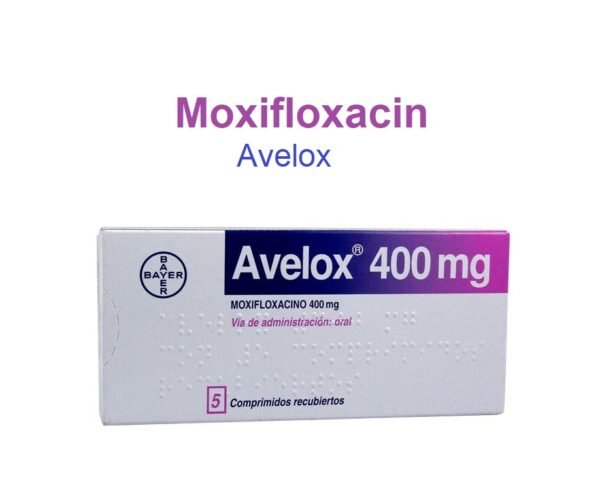
A newer generation of respiratory quinolone known as moxifloxacin (Avelox) is used to treat a number of bacterial infections of the respiratory tract, pelvis, and abdomen.
Indications of Moxifloxacin (Avelox):
- It is meant for the therapy of:
- Mild to moderate community-acquired pneumonia, such as that caused by the drug-resistant strain of Streptococcus pneumonia (MDRSP)
- Acute bacterial bronchitis that has worsened
- Yersinia pestis plague, including pneumonic and septicemic plague, prevention and therapy.
- Acute bacterial rhinosinusitis. Complicated and simple skin and skin structure infections.
Limitations of use:
- Due to potentially fatal adverse effects such as tendinitis and tendon rupture, peripheral neuropathy, and CNS effects, moxifloxacin should only be administered to individuals who have no other alternatives for treating acute exacerbations of chronic bronchitis or acute sinusitis.
-
Off Label Use of Moxifloxacin in Adults:
- Diabetic foot infections
- Anthrax
- Bite wounds (animal and human)
- Meningitis, bacterial
- Pelvic inflammatory disease
- Mycoplasma genitalium
- Nocardiosis
- Surgical prophylaxis
- Tuberculosis (second-line therapy)
Moxifloxacin (Avelox) dose in adults:
Moxifloxacin (Avelox) dose in the treatment of Anthrax (off-label):
-
Inhalational (post-exposure prophylaxis):
- 400 milligrams orally every 24hrs for 60 days.
-
Cutaneous anthrax without systemic involvement:
- For spontaneously acquired infections, use 400 mg orally once every 24 hours for 7 to 10 days.
- For situations connected to bioterrorism, the course of therapy may be extended for up to 60 days.
-
Treatment of systemic anthrax including meningitis:
- It should be used with protein synthesis inhibitors such as clindamycin and linezolid, 400 mg IV every 24 hours.
- Use in conjunction with another bactericidal antibiotic (such as a beta-lactam) and a protein synthesis inhibitor if meningitis is suspected or cannot be ruled out (eg, clindamycin and linezolid).
- When meningitis has been ruled out, therapy should be administered for 14 days or until the patient reaches clinical stability; for probable or confirmed meningitis, treatment should last 2 to 3 weeks.
- Patients who have been exposed to spores in the aerosol form need prophylaxis to finish a 60-day course of antibiotics before developing symptoms.
Moxifloxacin (Avelox) dose in the treatment of Bite wounds (animal or human) (off-label):
Note:
- It can be used as an alternative treatment in individuals who are hypersensitive to beta-lactams at a dose of 400 mg once a day either oral or IV.
Moxifloxacin (Avelox) dose in the treatment of acute bacterial exacerbation of chronic bronchitis:
-
- Every 24 hours for five days, 400 mg via oral or intravenous means.
Moxifloxacin (Avelox) dose in the treatment of Community-acquired pneumonia (CAP) (including MDRSP):
- For five days, take 400 mg orally or intravenously every 24 hours as directed by the manufacturer.
Moxifloxacin (Avelox) dose in the treatment of diabetic foot infection (off-label):
- 400 milligrams orally or IV once daily.
Moxifloxacin dose in the treatment of complicated Intra-abdominal infections:
- Every 24 hours for 5 to 14 days, 400 mg oral or IV (initiate with IV).
- Note: According to IDSA recommendations, treatment for mild to severe intraabdominal infections should last 4 to 7 days (assuming the cause is under control).
Moxifloxacin dose as an alternative agent in the treatment of Bacterial Meningitis (off-label):
- 400 milligrammes intravenously every day.
- Some medical professionals prescribe in conjunction with third-generation cephalosporins or vancomycin.
Moxifloxacin (Avelox) dose in the therapy of Mycoplasma genitalium (off-label):
- For 7, 10, or 14 days, take 400 mg orally every 24 hours.
Moxifloxacin (Avelox) dose in the therapy of Nocardiosis (off-label):
- It may be combined with other antimicrobials and administered once a day in doses of 400 mg orally or intravenously.
- To more clearly describe moxifloxacin's function in this scenario, more information could be required.
Moxifloxacin dose in the treatment of pelvic inflammatory disease (in patients allergic to cephalosporins) (off-label):
- 400 mg orally every 24 hours for 14 days.
Note:
- Only when normal parenteral cephalosporin medication is not practicable and population incidence of quinolone-resistant gonococcal organisms is low, is the CDC advises usage as an alternate therapy.
- It's important to confirm cultural sensitivity.
Moxifloxacin (Avelox) dose in the therapy of Plague:
- 400 mg orally or IV every 24 hours for 10 to 14 days.
Moxifloxacin (Avelox) Dose as an alternative agent in the treatment of acute bacterial rhinosinusitis:
- For first therapy, use 400 mg orally once every 24 hours for 5–7 days; for patients who haven't responded to initial therapy, take it for 7–10 days.
- Note: For most individuals with uncomplicated acute bacterial rhinosinusitis, early monitoring and symptom treatment are sufficient without the use of antibiotics.
- Fluoroquinolones should only be used in the treatment of acute sinusitis when no other choices are available due to substantial side effects.
- Manufacturer’s labeling:
- Current clinical practise might not be reflected in the dosing in the prescribed instructions.
- 400 mg intravenously every day
Moxifloxacin dose in the treatment of Skin and skin structure infections:
-
Complicated:
- Every day for 7 to 21 days, 400 mg by IV or oral means.
-
Uncomplicated:
- Every day for 7 days, 400 mg by IV or oral means.
Moxifloxacin (Avelox) dose in perioperative surgical prophylaxis:
- 120 minutes before the surgical incision, 400 mg IV.
Moxifloxacin (Avelox) dose in the therapy of drug-resistant tuberculosis or patients intolerant to first-line agents (off-label):
- 400 mg orally every 24 hours.
Moxifloxacin (Avelox) dose in children:
Note:
- When there is no safe and effective alternative (such as in the case of multidrug resistance) or when the only other treatment option is parenteral therapy and moxifloxacin provides an oral therapy option, fluoroquinolones—which are not typically first-line therapy—can be justified as a reasonable alternative.
Moxifloxacin (Avelox) dose in the therapy of Systemic Anthrax (including meningitis):
Note:
- It is administered as a component of triple treatment, with a length of two to three weeks or more until the clinical criteria for stability are reached. Prophylaxis is needed to finish an antimicrobial course that can last up to 60 days from the time of illness.
-
Infants less than 3 months and Children less than 2 years:
- every 12 hours, an intravenous dosage of 6 mg/kg.
- 200 mg/dose is the maximum dosage.
-
Children 2 to 5 years:
- every 12 hours, an intravenous dosage of 5 mg/kg.
- 200 mg/dose is the maximum dosage.
-
Children 6 to 11 years:
- IV dosing of 4 mg/kg every 12 hours.
- 200 mg/dose is the maximum dosage.
-
Children and Adolescents 12-17 years:
- Bodyweight <45 kg:
- every 12 hours, an IV dosage of 4 mg/kg.
- 200 mg is the maximum dosage per dose.
- Bodyweight ≥45 kg:
- 400 mg IV every 24 hours.
- Bodyweight <45 kg:
Moxifloxacin (Avelox) dose in the therapy of mild community-acquired Pneumonia or as a step-down therapy:
(CAP caused by M. pneumoniae, C. pneumoniae, and C. trachomatis)
-
Adolescents with skeletal maturity:
- 400 mg orally once daily.
Moxifloxacin dose in the perioperative surgical prophylaxis:
-
Children and Adolescents:
- 120 minutes before making the surgical incision, provide 10 mg/kg intravenously.
- 400 mg/dose is the maximum dosage.
Note:
- Although fluoroquinolones have been linked to a higher incidence of tendinitis and tendon rupture across the board, their use for single-dose prophylaxis is usually considered safe. Fluoroquinolones are not recommended for use in young patients, however.
Moxifloxacin (Avelox) dose in the therapy of multidrug-resistant tuberculosis:
Note:
- The regimen and duration vary depending on the susceptibility profile/patterns; for further details, consult the most recent TB recommendations. It is administered simultaneously with at least 2 to 3 other anti-TB medicines.
- According to current pharmacokinetic research, higher dosages are needed in babies and children to obtain blood concentrations equivalent to adult conventional dosing.
-
Infants, Children, and Adolescents less than 15 years:
- 10 mg/kg/dose administered intravenously or orally every day.
- 400 mg/dose is the maximum dosage.
-
Adolescents less than 15 years:
- 400 mg intravenously or orally every day.
Moxifloxacin (Avelox) Pregnancy Risk Category: C
- The placenta can be crossed by roxifloxacin.
- During pregnancy, several pharmacokinetic parameters may be impacted by physiological changes.
Moxifloxacin use during breastfeeding:
- If moxifloxacin is secreted in breast milk, it is unknown.
- The decision to continue or discontinue nursing during therapy will be influenced by the danger of baby exposure, the advantages to the newborn, and the mother's health.
- Alternative medications should be avoided in favour of fluoroquinolone antibiotics.
Moxifloxacin (Avelox) Dose adjustment in renal disease:
No dosage adjustment is required.
- It has poor dialyzation
- No additional dose or dosage change is required, even for individuals receiving continuous renal replacement therapy, peritoneal dialysis, or intermittent hemodialysis.
Moxifloxacin (Avelox) Dose adjustment in liver disease:
No dose change is required. Due to the possibility of QT prolongation, caution should be used while treating individuals with hepatic derangement.
Side Effects of Moxifloxacin (Avelox):
-
Endocrine & Metabolic:
- Hyperchloremia
- Increased Serum Albumin
- Decreased Serum Glucose
- Hypokalemia
-
Central Nervous System:
- DizzinessHeadache
- Insomnia
-
Hepatic:
- Decreased Serum Bilirubin
- Increased Serum Bilirubin
- Increased Serum Alanine Aminotransferase
-
Gastrointestinal:
- Abdominal Pain
- Dyspepsia
- Nausea
- Constipation
- Diarrhea
- Decreased Amylase
- Vomiting
-
Renal:
- Increased Ionized Serum Calcium
-
Respiratory:
- Hypoxia
-
Hematologic & Oncologic:
- Leukocytosis
- Prolonged Prothrombin Time
- Eosinopenia
- Decreased Basophils
- Decreased Red Blood Cells
- Increased MCH
- Increased Neutrophils
- Anemia
-
Immunologic:
- Increased Serum Globulins
-
Miscellaneous:
- Fever
Contraindications to Moxifloxacin (Avelox):
hypersensitivity to any ingredient in the formulation, including quinolone antibiotics like moxifloxacin.
Warnings and precautions
-
Modified cardiac conduction
- The QTc interval can be lengthened by flouroquinolones.
- Patients who have an acute MI, severe bradycardia, untreated hypokalemia, hypomagnesemia, known QTc prolongation, torsades de pointes, or who are receiving combination therapy with medications that are known to prolong the QT interval (such as Class Ia and Class III antiarrhythmics, cisapride, erythromycin, antipsychotics, and tricyclic antidepressants) are at an increased risk.
-
Aneurysm of the aorta and dissection
- An aneurysm dissection or rupture might happen within two months.
- This risk rises with age, hypertension, peripheral atherosclerotic vascular illnesses, and blood vessel-related genetic abnormalities (eg, Marfan, Ehlers Danlos syndrome).
- As a result, different medications should be used to treat these people.
- Extended treatment lasting more than 14 days might raise the risk.
-
Regulation of Glucose
- Fluoroquinolones have the potential to cause both hyper- and hypoglycemia. Hypoglycemia can result in death or a coma, which is deadly.
- Patients who are elderly or who concurrently use insulin or oral hypoglycemic medications are more vulnerable.
- Diabetes patients should be continuously watched for any indications of abnormal glucose control.
- An urgent treatment should be given for hypoglycemic responses.
-
Hepatotoxicity:
- Therapy has the potential to produce fulminant liver disease.
- Jaundice, stomach ache, dark urine, and pale stools may result from this. Additionally, a liver failure that is deadly might develop.
- The discontinuation of treatment should be prompted by these symptoms and indicators.
-
Hypersensitivity reactions
- Quinolones may trigger allergic responses. Anaphylaxis is included in this.
- After one dosage, mild allergic responses (such as urticaria and itching) are possible.
- Additionally, there may be more serious disorders including Stevens-Johnson syndrome, toxic epidermal necrolysis, vasculitis, or pneumonitis.
- If you get skin rash or any other side effects, you must stop taking the medication right once.
-
Photosensitivity
- Mild to severe photosensitivity responses are possible. Consequently, too much sun exposure should be avoided.
- Treatment for photosensitivity is not necessary.
-
Warning: Serious adverse reactions
- It is possible to see some severe and permanent symptoms, including tendinitis, tendon rupture, peripheral neuropathy, and CNS consequences.
- Patients who have gone through any of these serious side events ought to stop taking quinolones and end their treatment.
- Any age group, with or without risk factors, can have these responses during therapy at any moment.
-
CNS effects
- It is possible to experience CNS symptoms including tremor, lightheadedness, and dizziness.
- Patients who exhibit these responses should not be treated and fluoroquinolones should be stopped promptly.
- Patients should exercise caution if they have a CNS condition or other risk factors that might reduce their seizure threshold or make them more susceptible to seizures.
-
Psychiatric reactions
- Numerous psychological effects, such as jitters, anxiety, delirium, and concentration problems, as well as agitation, delirium, delirium, irritability, delirium, mania, panic attacks, nightmares, memory problems, disorientation, melancholy, and toxic psychosis, can happen.
- Treatment for these reactions should stop right away, and they shouldn't be treated.
- Patients who have a history of depression or risk factors should exercise caution.
-
Peripheral neuropathy:
- Fluoroquinolones can result in severe and permanent neuropathy even after the first dosage.
- If a patient exhibits signs of sensory or motor neuropathy, therapy should be discontinued.
- It is not advisable to utilise patients who have already had peripheral neuropathy.
-
Tendinitis or tendon rupture
- Achilles tendon rupture is the most frequent occurrence. However, other tendon locations, including the biceps or rotator cuff, might also be affected.
- After therapy begins, it may occur immediately or after a few days, and it may last for several months.
- People of all ages can develop tendonitis or have a tendon rupture due to fluoroquinolones.
- The risk is higher in people over 60, those taking corticosteroids concurrently, and those who have had solid organ transplants.
- Physically demanding activities, renal insufficiency, and prior tendon diseases are independent risk factors.
- If there is even the slightest indication of tendon discomfort, swelling, inflammation, or rupture, the therapy should be halted right once.
- Patients with tendinitis, tendon rupture, or a history of tendon problems should not use quinolones.
-
Rheumatoid arthritis:
- Tendon rupture is more likely in rheumatoid arthritis patients.
-
Hepatic impairment
- The deranged liver function might worsen QT interval prolongation. Patients who have liver cancer or mild, moderate, or severe liver damage should exercise caution.
-
Cardiovascular disease
- Patients who have an acute myocardial infarction and significant bradycardia should exercise caution.
-
Superinfection
- Chronic treatment can result in fungal or bacterial superinfection, including CDAD (C.difficile-associated diarrhoea) and pseudomembranous colitis.
- Several months after receiving antibiotics, CDAD was monitored.
-
Myasthenia gravis: [US Boxed Warning]:
- Patients with myasthenia gravis shouldn't use quinolones. They may exacerbate the condition.
- A severe exacerbation may result in mortality or the need for ventilator support.
-
Diabetes:
- Patients with diabetes could have abnormal glucose regulation. It is crucial to use caution.
-
Renal impairment
- Patients with renal failure are more likely to experience tendon rupture. Patients need to be cautious.
Moxifloxacin (systemic): Drug Interaction
|
Aminolevulinic Acid (Topical) |
Aminolevulinic Acid's photosensitizing impact may be enhanced by photosensitizing agents (Topical). |
|
Amphetamines |
Quinolones' cardiotoxic effects could be amplified. |
|
BCG Vaccine (Immunization) |
Antibiotics may reduce the BCG vaccine's therapeutic efficacy (Immunization). |
|
Blood Glucose Lowering Agents |
Blood Glucose Lowering Agents' hypoglycemic effects may be strengthened by quinolones. Blood Glucose Lowering Agents' therapeutic impact may be lessened by quinolones. In particular, the use of quinolones may result in a loss of blood sugar control if an agent is being used to treat diabetes. |
|
Corticosteroids (Systemic |
Quinolones' harmful or poisonous effects might be increased. Particularly, there may be an increased risk of tendonitis and tendon rupture. |
|
Haloperidol |
may increase the action of quinolone antibiotics that prolong QTc (Moderate Risk). When using these medications together, watch out for cardiac arrhythmias and a prolonged QTc interval. Patients may be considerably more at risk for QTc prolongation if they have additional risk factors. |
|
Heroin |
Quinolones may intensify Heroin's harmful or toxic effects. |
|
Lactobacillus and Estriol |
The therapeutic effects of Lactobacillus and Estriol may be reduced by antibiotics. |
|
Methylphenidate |
Quinolones' cardiotoxic effects could be amplified. |
|
Mycophenolate |
Quinolones may lower the level of mycophenolate in the blood. Quinolones in particular may lower levels of mycophenolate's active metabolite. |
|
Nonsteroidal Anti-Inflammatory Agents |
Quinolones' neuroexcitatory and/or seizure-potentiating effects could be enhanced. Quinolones' serum concentration may rise in response to non-steroidal anti-inflammatory drugs. |
|
Ondansetron |
may increase the action of quinolone antibiotics that prolong QTc (Moderate Risk). When using these medications together, watch out for cardiac arrhythmias and a prolonged QTc interval. Patients may be considerably more at risk for QTc prolongation if they have additional risk factors. |
|
Pentamidine (Systemic) |
may increase the action of quinolone antibiotics that prolong QTc (Moderate Risk). When using these medications together, watch out for cardiac arrhythmias and a prolonged QTc interval. Patients may be considerably more at risk for QTc prolongation if they have additional risk factors. |
|
Porfimer |
The photosensitizing action of Porfimer may be enhanced by photosensitizing agents. |
|
QT-prolonging Antidepressants (Moderate Risk) |
The QTc-prolonging action of QT-prolonging antidepressants may be enhanced by QT-prolonging Quinolone Antibiotics (Moderate Risk) (Moderate Risk). When using these medications together, watch out for cardiac arrhythmias and a prolonged QTc interval. Patients may be considerably more at risk for QTc prolongation if they have additional risk factors. |
|
QT-prolonging Antipsychotics (Moderate Risk) |
The QTc-prolonging impact of QT-prolonging antipsychotics may be enhanced by QT-prolonging Quinolone Antibiotics (Moderate Risk) (Moderate Risk). When using these medications together, watch out for cardiac arrhythmias and a prolonged QTc interval. Patients may be considerably more at risk for QTc prolongation if they have additional risk factors. Examples include pimozide. |
|
QT-prolonging Class IC Antiarrhythmics (Moderate Risk) |
The QTc-prolonging impact of QT-prolonging Class IC Antiarrhythmics may be enhanced by QT-prolonging Quinolone Antibiotics (Moderate Risk) (Moderate Risk). When using these medications together, watch out for cardiac arrhythmias and a prolonged QTc interval. Patients may be considerably more at risk for QTc prolongation if they have additional risk factors. |
|
QT-prolonging Kinase Inhibitors (Moderate Risk) |
The QTc-prolonging impact of QT-prolonging Kinase Inhibitors may be enhanced by QT-prolonging Quinolone Antibiotics (Moderate Risk) (Moderate Risk). When using these medications together, watch out for cardiac arrhythmias and a prolonged QTc interval. Patients may be considerably more at risk for QTc prolongation if they have additional risk factors. |
|
QT-prolonging Miscellaneous Agents (Moderate Risk) |
May increase the action of quinolone antibiotics that prolong QTc (Moderate Risk). When using these medications together, watch out for cardiac arrhythmias and a prolonged QTc interval. Patients may be considerably more at risk for QTc prolongation if they have additional risk factors. Exceptions: Domperidone. |
|
QT-prolonging Moderate CYP3A4 Inhibitors (Moderate Risk) |
Quinolone antibiotics with a moderate risk of QT prolongation may increase the QTc-prolonging effects of moderate CYP3A4 inhibitors (Moderate Risk). When using these medications together, watch out for cardiac arrhythmias and a prolonged QTc interval. Patients may be considerably more at risk for QTc prolongation if they have additional risk factors. |
|
QT-prolonging Quinolone Antibiotics (Moderate Risk) |
May increase the action of other quinolone antibiotics that prolong QTc (Moderate Risk). When using these medications together, watch out for cardiac arrhythmias and a prolonged QTc interval. Patients may be considerably more at risk for QTc prolongation if they have additional risk factors. |
|
QT-prolonging Strong CYP3A4 Inhibitors (Moderate Risk) |
Strong CYP3A4 Inhibitors with a QT-prolonging action may be enhanced by QT-prolonging Quinolone Antibiotics (Moderate Risk) (Moderate Risk). When using these medications together, watch out for cardiac arrhythmias and a prolonged QTc interval. Patients may be considerably more at risk for QTc prolongation if they have additional risk factors. |
|
Varenicline |
Varenicline's serum levels may rise in response to quinolones. Management: Keep an eye out for any increased varenicline side effects while levofloxacin or other quinolone antibiotics are also being used, especially in patients who have severe renal impairment. Different international standards exist for product labelling. Look up the relevant labels. |
|
Verteporfin |
Verteporfin's photosensitizing action may be strengthened by photosensitizing agents. |
|
Vitamin K Antagonists (eg, warfarin) |
Quinolones could make Vitamin K antagonists' anticoagulant effects even more potent. |
|
Risk Factor D (Consider therapy modification) |
|
|
Antacids |
Quinolones' absorption could be decreased. a problem only when quinolones are used orally. To lessen the effects of this combination, avoid giving quinolones and antacids at the same time. Optimal dosage separation recommendations differ depending on the particular quinolone. Exceptions: Bicarbonate of sodium |
|
Delamanid |
Delamanid's ability to prolong QTc may be enhanced by QT-prolonging quinolone antibiotics (moderate risk). Delamanid may increase the action of Quinolone antibiotics that prolong QTc (Moderate Risk). Management: If at all feasible, avoid using delamanid and quinolone antibiotics concurrently. Electrocardiograms should be frequently checked during the whole delamanid treatment period if coadministration is thought to be inevitable. |
|
Didanosine |
Didanosine's serum levels may be reduced by quinolones. Didanosine may lower the level of quinolones in the serum. Treatment: Give oral quinolones at least two hours prior to or six hours following didanosine. Check for diminished quinolone therapeutic effects, especially if dosages cannot be separated as advised. Didanosine with an unbuffered enteric coating is exempt from this rule. |
|
Domperidone |
The QTc-prolonging action of Domperidone may be strengthened by QT-prolonging Agents (Moderate Risk). Management: Take into account different pharmacological combinations. If combined, keep an eye out for cardiac arrhythmias and a prolonged QTc interval. Patients may be considerably more at risk for QTc prolongation if they have additional risk factors. |
|
Iron Preparations |
Quinolones' serum concentration can drop. Treatment: Oral quinolones should be used at least a few hours before or after oral iron (8 hours for moxi, 6 hours for cipro/dela, 4 hours for lome, 3 hours for gemi, and 2 hours for levo, nor, oflox, pefloxacin, or nalidixic acid). Iron Carboxymaltose, Iron Gluconate, Iron Hydroxide Polymaltose Complex, Iron Pyrophosphate Citrate, Ferumoxytol, Iron Dextran Complex, Iron Isomaltoside, and Iron Sucrose are exceptions. |
|
Lanthanum |
Quinolones' serum concentration can drop. Treatment: Give oral quinolone antibiotics at least an hour before or after lanthanum, whichever comes first. |
|
Magnesium Salts |
Quinolones' serum concentration can drop. Treatment: Give oral quinolones before or after oral magnesium salts, depending on the drug (8 h for moxi, 6 h for cipro/dela, 4 h for lome/pe, 3 h for gemi, and 2 h for levo, nor, or ofloxacin or nalidixic acid). |
|
Multivitamins/Minerals (with ADEK, Folate, Iron) |
Quinolones' serum concentration can drop. Particularly, oral quinolone antibiotics may be less effectively absorbed when used with polyvalent cations found in multivitamin supplements. Treatment: By taking the oral quinolone at least two hours before or six hours after taking the dose of a multivitamin containing polyvalent cations, interactions can be reduced (i.e., calcium, iron, magnesium, selenium, zinc). |
|
Multivitamins/Minerals (with AE, No Iron) |
Quinolones' serum concentration can drop. Particularly, elements in the multivitamin/mineral supplement may hinder quinolone medicines' absorption. Treatment: By taking the oral quinolone at least two hours before or six hours after taking the dose of a multivitamin containing polyvalent cations, interactions can be reduced (i.e., calcium, iron, magnesium, selenium, zinc). |
|
Quinapril |
Quinolones' serum concentration can drop. Treatment: To lessen the possibility of an interaction, provide oral quinolones and quinapril at least two hours apart. If both of these medicines are administered at the same time, keep an eye out for any quinolone effectiveness reduction. |
|
Sevelamer |
Quinolones' absorption could be decreased. Treatment: Oral quinolones should be taken at least two hours before or six hours after sevelamer. |
|
Sodium Picosulfate |
Antibiotics may reduce Sodium Picosulfate's therapeutic impact. Management: If a patient previously used or is currently using an antibiotic, think about utilising an alternate product for bowel cleaning prior to a colonoscopy. |
|
Sucralfate |
Quinolones' serum concentration can drop. To lessen the effects of this combination, avoid administering quinolones and sucralfate at the same time. Optimal dosage separation recommendations differ depending on the particular quinolone. |
|
Typhoid Vaccine |
The Typhoid Vaccine's therapeutic benefits may be reduced by antibiotics. The only strain impacted is the live attenuated Ty21a strain. Treatment: Patients receiving systemic antibacterial drugs should refrain from receiving the live attenuated typhoid vaccination (Ty21a). It is recommended to wait at least 3 days following the last dose of antibacterial medication before administering this vaccination. |
|
Zinc Salts |
Quinolones' serum concentration can drop. Treatment: Oral quinolones should be administered at least a few hours before or after oral zinc salts (8 h for moxi, 6 h for cipro/dela, 4 h for lome, 3 h for gemi, and 2 h for levo, nor, pe, or ofloxacin or nalidixic acid). Exceptions: chloride of zinc. |
|
Risk Factor X (Avoid combination) |
|
|
Aminolevulinic Acid (Systemic) |
Aminolevulinic Acid's photosensitizing impact may be enhanced by photosensitizing agents (Systemic). |
|
BCG (Intravesical) |
Antibiotics may lessen BCG's therapeutic effects (Intravesical). |
|
Cholera Vaccine |
The therapeutic benefit of the cholera vaccine may be reduced by antibiotic use. Management: Cholera vaccine should not be administered to individuals on systemic antibiotics or within 14 days after taking oral or parenteral antibiotics. |
|
Fexinidazole [INT] |
might make QT-prolonging agents' impact on QTc longer (Moderate Risk). |
|
Mequitazine |
Mequitazine's ability to induce arrhythmias may be enhanced by moxifloxacin (Systemic). |
|
Nadifloxacin |
Quinolones' harmful or poisonous effects might be increased |
|
Pimozide |
might make QT-prolonging agents' impact on QTc longer (Moderate Risk) |
|
QT-prolonging Agents (Highest Risk) |
May increase Moxifloxacin's ability to extend QTc (Systemic). Delamanian is an exception. |
|
Strontium Ranelate |
Quinolones' serum concentration can drop. Management: It is advised that strontium ranelate medication be stopped during quinolone therapy in order to reduce any potential effects of strontium ranelate on quinolone antibiotic concentrations. |
Monitoring parameters:
- WBC
- Signs of infection
- Signs and symptoms of disordered glucose regulation
- ECG in patients with liver cirrhosis
How to administer Moxifloxacin?
Tablets:
- Without any regard to food, it must be taken orally.
- Antacids, sucralfate, multivitamins, didanosine, and other products containing magnesium, aluminium, iron, or zinc should be administered at least 4 hours before or 8 hours after taking moxifloxacin (buffered tablets for oral suspension or the paediatric powder for oral solution).
Intravenous:
- Rapid or bolus IV infusions should be avoided and IV infusions should be delivered over 60 minutes.
Mechanism of action of Moxifloxacin (Avelox):
There is also moxifloxacin, a DNA gyrase inhibitor and topoisomerase II inhibitors. Topoisomerase II, sometimes referred to as DNA gyrase, is a crucial bacterial enzyme in charge of preserving the superhelical structure of DNA. DNA replication, transcription, repair, and transposition are carried out by DNA gyrase. Bactericidal inhibition is used.
Absorption:
- The medication absorbs easily.
- High-fat meals or yoghurt don't have an impact on absorption.
Excretion:
- Urine (as unchanged drug [20%] and glucoronide conjugates).
- feces (as unchanged drug [25%] and sulfate conjugates).
Distribution:
- In respiratory tissues, alveolar macrophages, stomach tissues/fluids, uterine tissue (endometrium, myometrium), and sinus tissues, the tissue concentrations frequently surpass plasma concentrations.
Bioavailability:
- About 90%.
Protein binding:
- ~30% to 50%.
Half-life elimination after a single dose:
- Oral: 12-16 hours.
- IV: 8-15 hours.
Metabolism:
- It is metabolized in the liver (~52% of the dose) via glucuronide (~14%) and sulfate (~38%) conjugation.
International Brands of Moxifloxacin:
- Avelox
- Avelox ABC Pack
- AG-Moxifloxacin
- APO-Moxifloxacin
- Auro-Moxifloxacin
- Avelox
- BIO-Moxifloxacin
- JAMPMoxifloxacin
- M-Moxifloxacin
- Mar-Moxifloxacin
- Priva-Moxifloxacin
- RIVA-Moxifloxacin
- SANDOZ Moxifloxacin
- TEVA-Moxifloxacin
- Avalox
- Avelon
- Avelox
- Axa-Moxin
- Bacterol
- Bancifar
- Cubimox
- Eftimoxin
- Emef
- Evaflox
- Floxsafe
- Garena
- Getmoxy
- Glomoxif
- Idelox
- Innolon
- Izilox
- MFlox
- Maxicin
- Megaxin
- Mofacin
- Moflodal
- Molcin
- Molox
- Moloxcin
- Moloxin
- Mortapp
- Moxaval
- Moxi
- Moxicip
- Moxif
- Moxiflax
- Moxiflo
- Moxiflox
- Moximac
- Moxivig
- MXN
- Oxifled 400
- Pixiriv
- Praxinstad
- Proflox
- Rivomoxi
- Zigat
Moxifloxacin Brand Names in Pakistan:
Moxifloxacin Infusion 400 mg/100ml |
|
| Barimox | Barrett Hodgson Pakistan (Pvt) Ltd. |
| Goldspec | Nimrall Laboratories |
| Moxan | Hygeia Pharmaceuticals |
Moxifloxacin Infusion 400 mg/100ml |
|
| Barimox | Barrett Hodgson Pakistan (Pvt) Ltd. |
| Goldspec | Nimrall Laboratories |
| Moxan | Hygeia Pharmaceuticals |
Moxifloxacin Drops 0.5 % |
|
| Moxilox Drops | Panacea Pharmaceuticals |
Moxifloxacin Drops 5 % W/V |
|
| Inmox | Innvotek Pharmaceuticals |
Moxifloxacin Eye Drops 5 Mg |
|
| Moxbay | Jaens Pharma |
| Moxirin | Polyfine Chempharma (Pvt) Ltd. |
Moxifloxacin Eye Drops 1 % W/V |
|||
| Moxicin | The Schazoo Laboratories Ltd. | ||
Moxifloxacin Eye Drops 5 mg/ml |
|
| Moxtel | Festel Lab |
| Moxtel | Festel Lab |
| Opmox | Ophth-Pharma (Pvt) Ltd. |
Moxifloxacin Eye Drops 0.5 % W/V |
|
| A-Mox | Atco Laboratories Limited |
| Eyemox | Vega Pharmaceuticals Ltd. |
| Fotiflox | Helix Pharma (Private) Limited |
| Inmox | Innvotek Pharmaceuticals |
| Mexoflox | Azron Pharmaceuticals (Pvt) Ltd |
| Mionex | Shaigan Pharmaceuticals (Pvt) Ltd |
| Moxigan | Barrett Hodgson Pakistan (Pvt) Ltd. |
| Moxiral | Ethical Laboratories (Pvt) Ltd. |
| Ocumox | Remington Pharmaceutical Industries (Pvt) Ltd. |
| Omox | Ocu Care |
| Oxcin | Atco Laboratories Limited |
| Vigamox | Novartis Pharma (Pak) Ltd |
Moxifloxacin Eye Drops 5.5 mg//ml |
|
| Astron | Epharm Laboratories |
Moxifloxacin Ear Drops 0.5 % W/V |
|
| Moxotic | Hygeia Pharmaceuticals |
Moxifloxacin Eye Ointment 0.5 % W/W |
|
| Ocumox | Remington Pharmaceutical Industries (Pvt) Ltd. |
Moxifloxacin Tablets 200 mg |
|
| Em-Flox | High - Q International |
| Moxygen | Rogen Pharmaceuticals |
Moxifloxacin Tablets 400 mg |
|
| Abomox | Abbott Laboratories (Pakistan) Limited. |
| Acflox | W.Woodward Pakistan (Pvt) Ltd. |
| Aurum | Fozan Pharmaceuticals Industriers (Pvt) Ltd |
| Avelon | Eg Pharmaceuticals |
| Avelox | Bayer Health Care |
| Avemox | Ferroza International Pharmaceuticals (Pvt) Ltd. |
| Averox | Linear Pharma |
| Axilent | Envoy Pharma |
| B-Quin | Akson Pharmaceuticals (Pvt) Ltd. |
| Bactimox | Valor Pharmaceuticals |
| Barimox | Barrett Hodgson Pakistan (Pvt) Ltd. |
| Bemox | Dyson Research Laboratories |
| Biofloxacin | Medisure Laboratories Pakistan (Pvt.) Ltd. |
| Biomox | Bio Labs (Pvt) Ltd. |
| Cinmox | Nexus Pharma (Pvt) Ltd |
| Devimoh | Don Valley Pharmaceuticals (Pvt) Ltd. |
| Duramox | Opal Laboratories (Pvt) Ltd. |
| Em-Flox | High - Q International |
| Engmox | English Pharmaceuticals Industries |
| Ezemox | Eastwest Pharma |
| Fan-C | Caraway Pharmaceuticals |
| Fimox | Adamjee Pharmaceuticals (Pvt) Ltd. |
| Floxamox | Lowitt Pharmaceuticals (Pvt) Ltd |
| Fluxaquin | Bryon Pharmaceuticals (Pvt) Ltd. |
| Fosty | Tagma Pharma (Pvt) Ltd. |
| Fotiflox | Helix Pharma (Private) Limited |
| G-Mox | Reliance Pharma |
| Genamox | Genera Pharmaceuticals |
| Glimox | Gillman Pharmaceuticals |
| Goldspec | Nimrall Laboratories |
| Imox | Vega Pharmaceuticals Ltd. |
| Izilon | Bosch Pharmaceuticals (Pvt) Ltd. |
| Karte | Dr. Raza Pharma (Private) Limited |
| Lixom Tablet | Raazee Theraputics (Pvt) Ltd. |
| Locgin | Himont Chemical (Pvt) Ltd. |
| Loximox | Farmaceutics International |
| Mactic | Welmark Pharmaceuticals |
| Maxlox | Searle Pakistan (Pvt.) Ltd. |
| Maxove | Polyfine Chempharma (Pvt) Ltd. |
| Meflox | Nabiqasim Industries (Pvt) Ltd. |
| Metoxim | Genome Pharmaceuticals (Pvt) Ltd |
| Mflox | Zephyr Pharmatec (Pvt) Ltd. |
| Mionex | Shaigan Pharmaceuticals (Pvt) Ltd |
| Mixil | Pharmacare Laboratories (Pvt) Ltd. |
| Mob | Indus Pharma (Pvt) Ltd. |
| Mobik | Mass Pharma (Private) Limited |
| Mocin | Leads Pharma (Pvt) Ltd |
| Mofest | Sami Pharmaceuticals (Pvt) Ltd. |
| Mofilox | Macter International (Pvt) Ltd. |
| Moflex | Wns Field Pharmaceuticals |
| Moftab | Akhai Pharmaceuticals. |
| Moksecure | Martin Dow Pharmaceuticals (Pak) Ltd. |
| Moksi | Abbott Laboratories (Pakistan) Limited. |
| Molinza | Zafa Pharmaceutical Laboratories (Pvt) Ltd. |
| Molox | Consolidated Chemical Laboratories (Pvt) Ltd. |
| Mong | Unimark Pharmaceuticals |
| Mosic | Everest Pharmaceuticals |
| Mosic | Everest Pharmaceuticals |
| Mosic | Winilton Pharmaceuticals (Pvt) Ltd |
| Mox | Maple Pharmaceuticals (Pvt) Ltd |
| Mox-Q | Hisun Pharmaceuticals |
| Moxacin | Rakaposhi Pharmaceutical (Pvt) Ltd. |
| Moxasia | Medera Pharmaceuticals (Pvt) Ltd. |
| Moxave | Kinsa Pharmaceuticals |
| Moxi | Aries Pharmaceuticals (Pvt) Ltd |
| Moxibact | Continental Chemical Company (Pvt) Ltd. |
| Moxibroad | Usawa Pharmaceuticals |
| Moxicam | Chas. A. Mendoza |
| Moxicure | Medifine Laboratories |
| Moxidix | Neo Medix |
| Moxidon | Saydon Pharmaceutical Industries (Pvt) Ltd. |
| Moxifas | Fassgen Pharmaceuticals |
| Moxiflox | Ottoman Pharma |
| Moxifo | Tabros Pharma |
| Moxigene | Genesis Pharmaceuticals (Pvt) Ltd. |
| Moxiget | Getz Pharma Pakistan (Pvt) Ltd. |
| Moxigreen | Evergreen Pharmaceuticals Pvt Limited |
| Moxileck | Medimarkers Pharmaceuticals |
| Moxilox Table | Spencer Pharma |
| Moximag | Wise Pharmaceuticals (Pvt) Ltd |
| Moxina | Amarant Pharmaceuticals (Pvt) |
| Moxinat | Regent Laboratories Ltd. |
| Moxione | Max Pharmaceuticals |
| Moxipulse | Pulse Pharmaceuticals |
| Moxiqu | Miracle Pharmaceuticals(Pvt) Ltd |
| Moxirex | Goodman International, |
| Moxirown | Crown Pharmaceuticals |
| Moxisave | Medisave Pharmaceuticals |
| Moxivid | Munawar Pharma (Pvt) Ltd. |
| Moxiwin | Medicraft Pharmaceuticals (Pvt) Ltd. |
| Moxizak | Schazoo Zaka |
| Moxlor | Crest Pharmaceuticals |
| Moxycare | Csh Pharmaceuticals-North (Pvt) Ltd |
| Moxygen | Rogen Pharmaceuticals |
| Moziflox | Weather Folds Pharmaceuticals |
| Mxil | Pharmacare Laboratories (Pvt) Ltd. |
| Navelox | Navegal Laboratories |
| Neumox | Neutro Pharma (Pvt) Ltd. |
| Occunet | Shrooq Pharmaceuticals |
| Odequin | Paramount Pharmaceuticals |
| Osimox | Florence Farmaceuticals (Pvt) Ltd |
| Otramat | Bloom Pharmaceuticals (Pvt) Ltd. |
| Oxaquin | Highnoon Laboratories Ltd. |
| Oxiloc | Noa Hemis Pharmaceuticals |
| Palzic | Wilshire Laboratories (Pvt) Ltd. |
| Q-Mox | Hansel Pharmacueutical Pvt (Ltd) |
| Rapilox | Neophar Health-Care |
| Romax | Roryan Pharmaceutical Industries (Pvt) Ltd |
| Romox | Roryan Pharmaceutical Industries (Pvt) Ltd |
| Rotamox | Rotex Medica Pakistan (Pvt) Ltd |
| Roximox | Rock Pharmaceuticals |
| Santomox | Sante (Pvt) Limited |
| Sapox | Sapient Pharma |
| Scimox | Scilife Pharma (Private) Ltd |
| Shalox | Shaheen Pharmaceuticals |
| Staxin | Standpharm Pakistan (Pvt) Ltd. |
| Swismox | Swiss Pharmaceuticals (Pvt) Ltd. |
| Ucit | Unison Chemical Works |
| Veloxin | Pacific Pharmaceuticals Ltd. |
| X-Gen | Genix Pharma (Pvt) Ltd |
| Xefacta | Hilton Pharma (Pvt) Limited |
| Xemox | K.H. Hoe Farmasiutika, Malaysia |
| Xenia | Epoch Pharmaceutical |
.png)


