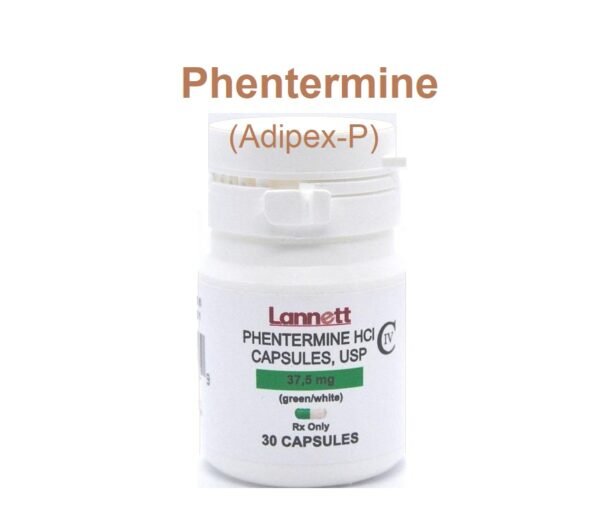
Phentermine (Ionamin, Adipex) is a stimulant drug that is used in the short-term treatment for weight loss adjunct to diet, exercise, and behavioral therapy.
Phentermine (Adipex-P) Uses:
- Obesity (short-term adjunct):
- It is indicated for the short-term treatment of weight loss as an adjunct to diet, exercise, and behavioral therapy in patients with an initial body mass index (BMI) ≥30 kg/m² or ≥27 kg/m² and comorbid conditions such as diabetes, dyslipidemia, and controlled hypertension.
Phentermine is recommended in combination with topiramate for weight loss. It is available by the brand name of Qsymia. The other five weight loss pills recommended by the AACE and ACE are:
- Orlistat (Xenical)
- Liraglutide (Victoza)
- Lorcaserin (Belviq) - Recently withdrawn because of carcinogenic effects
- Naltrexone ER/ Bupropion ER (Contrave)
- Phentermine/ Topiramate (Qsymia)
Phentermine (Adipex-P) Dose in Adults
Note:
- Suprenza has been discontinued in the US for more than a year.
- Dosing is presented in terms of the salt, phentermine hydrochloride (not as phentermine base).
Phentermine (Adipex-P) Dose in the short-term treatment of Obesity as an adjunct to diet and behavioral therapy:
- Capsule, tablet (excluding Lomaira):
- 15 to 37.5 mg/day in one or two divided doses.
- The lowest effective dose should be used to achieve adequate response and minimal side effects.
- Tablet (Lomaira only):
- 8 mg thrice daily.
- The lowest effective dose should be used to achieve adequate response and minimal side effects.
- Orally disintegrating tablet (ODT):
- One tablet 15 to 37.5 mg once a day in the morning.
- The lowest effective dose should be used to achieve adequate response and minimal side effects.
Use in children:
Refer to adult dosing.
Pregnancy Risk Factor X
- It is not recommended for pregnant women.
- Obesity has been linked to adverse fetal outcomes. Weight loss medication should be avoided during pregnancy.
Use of phentermine while breastfeeding
- It is not recommended for lactating mothers.
- It is unknown if the drug is excreted into breastmilk. Other amphetamines were detected in breastmilk.
Phentermine (Adipex-P) Dose in Kidney Disease:
Capsule, tablet (excluding Lomaira):
- eGFR ≥30 mL/minute/1.73 m²:
- It should be used with caution as the systemic exposure of the drug is increased. However, the manufacturer has not provided any adjustments in the dose.
- eGFR 15 to 29 mL/minute/1.73 m²:
- The maximum dose of 15 mg/day should not be exceeded.
- eGFR <15 mL/minute/1.73 m²:
- It has not been studied in severe kidney disease and should be avoided.
- End-stage renal disease (ESRD) requiring dialysis:
- It has not been studied in patients with ESRD and should be avoided.
Tablet (Lomaira only):
- It should be used with caution as the systemic exposure of the drug is increased.
- However, the manufacturer has not provided any adjustments in the dose as it has not been studied in patients with kidney disease.
Phentermine (Adipex-P) Dose in Liver disease:
- It has not been studied in patients with liver disease.
- Adjustments in the dose have not been provided by the manufacturer.
Side effects of Phentermine (Adipex-P):
- Cardiovascular:
- Hypertension
- Ischemia
- Palpitations
- Tachycardia
- Central Nervous System:
- Dizziness
- Dysphoria
- Euphoria
- Headache
- Insomnia
- Overstimulation
- Psychosis
- Restlessness
- Dermatologic:
- Urticaria
- Endocrine & Metabolic:
- Change In Libido
- Gastrointestinal:
- Constipation
- Diarrhea
- Gastrointestinal Distress
- Unpleasant Taste
- Xerostomia
- Genitourinary:
- Impotence
- Neuromuscular & Skeletal:
- Tremor
Contraindications to Phentermine (Adipex-P):
- Allergic reactions or idiosyncrasy to phentermine, other sympathomimetic amines or any component of the formulation;
- a history of cardiovascular diseases such as arrhythmias, coronary artery disease, heart failure, stroke, and uncontrolled hypertension;
- hyperthyroidism;
- glaucoma;
- agitated states;
- Past history of drug abuse;
- Concomitant use or use within 14 days of an MAO inhibitor;
- pregnancy;
- breast-feeding
Warnings and Precautions
- CNS effects
- It can lead to depression in the central nervous system, which may affect the ability of the patient's brain to do tasks that require mental alertness like driving or operating heavy machinery.
- Heart Failure:
- It has been classified by the AHA as an agent that could cause myocardial damage (magnitude major) (AHA [Page 2016,]).
- Primary pulmonary hypertension (PPH).
- Rarely, phentermine has been linked to serious, sometimes fatal, pulmonary hypertension.
- Combining fenfluramine and dexfenfluramine can increase the risk of developing pulmonary hypertension.
- Stop treating patients who experience new-onset dyspnea or chest pain, syncope, and pedal edema.
- Heart disease of the valvular kind:
- Combining phentermine with dexfenfluramine and fenfluramine can lead to serious regurgitant heart disease.
- This affects primarily the mitral, Aortic, and Tricupid valves.
- Rarely, phentermine is the only drug that has caused new-onset valvular heart disease.
- Cardiovascular disease
- Stimulant drugs can increase blood pressure and heart rate, which could lead to an exacerbation or worsening of existing heart disease and hypertension.
- Patients with advanced cardiac conditions such as cardiomyopathy and rhythm abnormalities should avoid it.
- Diabetes:
- Hypoglycemia is more common in diabetic patients who have made dietary changes and used anorexiant medications.
- Diabetic patients should be cautious when using the drug, and must adjust their anti-diabetic medication, especially insulin and/or sulfonylurea, to avoid hypoglycemia.
- Renal impairment
- Patients with kidney impairment are more likely to be exposed to drugs. This should be taken with caution.
- It should not be used in severe renal impairment, such as patients with eGFR less than 15 minutes or those who have an end-stage kidney disease that requires hemodialysis.
- Seizure disorders
- Patients with a history or seizures should avoid it.
- Tourette syndrome
- Stimulant drugs can mask tics. Patients with Tourette syndrome should be cautious when using stimulants.
Phentermine: Drug Interaction
Note: Drug Interaction Categories:
- Risk Factor C: Monitor When Using Combination
- Risk Factor D: Consider Treatment Modification
- Risk Factor X: Avoid Concomitant Use
Risk Factor C (Monitor therapy) |
|
|
Alcohol (Ethyl) |
May enhance the adverse/toxic effect of Phentermine. |
|
Amifampridine |
Agents With Seizure Threshold Lowering Potential may enhance the neuroexcitatory and/or seizure-potentiating effect of Amifampridine. |
|
May decrease the serum concentration of Amphetamines. This effect is likely due to an enhanced excretion of amphetamines in the urine. |
|
|
Antacids |
May decrease the excretion of Amphetamines. |
|
Antihistamines |
Amphetamines may diminish the sedative effect of Antihistamines. |
|
Antihypertensive Agents |
Amphetamines may diminish the antihypertensive effect of Antihypertensive Agents. |
|
Antipsychotic Agents |
May diminish the stimulatory effect of Amphetamines. |
|
Ascorbic Acid |
May decrease the serum concentration of Amphetamines. |
|
May enhance the hypertensive effect of Sympathomimetics. AtoMOXetine may enhance the tachycardic effect of Sympathomimetics. |
|
|
BuPROPion |
May enhance the neuroexcitatory and/or seizure-potentiating effect of Agents With Seizure Threshold Lowering Potential. |
|
Cannabinoid-Containing Products |
May enhance the tachycardic effect of Sympathomimetics. Exceptions: Cannabidiol. |
|
Carbonic Anhydrase Inhibitors |
May decrease the excretion of Amphetamines. Exceptions: Brinzolamide; Dorzolamide. |
|
CYP2D6 Inhibitors (Moderate) |
May increase the serum concentration of Amphetamines. |
|
CYP2D6 Inhibitors (Strong) |
May increase the serum concentration of Amphetamines. |
|
Doxofylline |
Sympathomimetics may enhance the adverse/toxic effect of Doxofylline. |
|
May enhance the hypertensive effect of CNS Stimulants. |
|
|
Amphetamines may diminish the therapeutic effect of Ethosuximide. Amphetamines may decrease the serum concentration of Ethosuximide. |
|
|
Gastrointestinal Acidifying Agents |
May decrease the serum concentration of Amphetamines. |
|
Guanethidine |
May enhance the arrhythmogenic effect of Sympathomimetics. Guanethidine may enhance the hypertensive effect of Sympathomimetics. |
|
Ioflupane I 123 |
Amphetamines may diminish the diagnostic effect of Ioflupane I 123. |
|
Lithium |
May diminish the stimulatory effect of Amphetamines. |
|
Methenamine |
May decrease the serum concentration of Amphetamines. This effect is likely due to an enhanced excretion of amphetamines in the urine. |
|
Multivitamins/Fluoride (with ADE) |
May decrease the serum concentration of Amphetamines. More specifically, the ascorbic acid (vitamin C) in many multivitamins may decrease amphetamine concentrations. |
|
Multivitamins/Minerals (with ADEK, Folate, Iron) |
May decrease the serum concentration of Amphetamines. |
|
Multivitamins/Minerals (with AE, No Iron) |
May decrease the serum concentration of Amphetamines. Specifically, vitamin C may impair absorption of amphetamines. |
|
Opioid Agonists |
Amphetamines may enhance the analgesic effect of Opioid Agonists. |
|
Amphetamines may decrease the serum concentration of PHENobarbital. |
|
|
Amphetamines may decrease the serum concentration of Phenytoin. |
|
|
Solriamfetol |
Sympathomimetics may enhance the hypertensive effect of Solriamfetol. |
|
Solriamfetol |
CNS Stimulants may enhance the hypertensive effect of Solriamfetol. |
|
Sympathomimetics |
May enhance the adverse/toxic effect of other Sympathomimetics. |
|
May enhance the hypertensive effect of Sympathomimetics. Tedizolid may enhance the tachycardic effect of Sympathomimetics. |
|
|
Tricyclic Antidepressants |
May enhance the stimulatory effect of Amphetamines. Tricyclic Antidepressants may also potentiate the cardiovascular effects of Amphetamines. |
|
Urinary Acidifying Agents |
May decrease the serum concentration of Amphetamines. |
Risk Factor D (Consider therapy modification) |
|
|
Alkalinizing Agents |
May decrease the excretion of Amphetamines. Management: Consider alternatives to using amphetamines and alkalinizing agents in combination. If these agents must be used together, patients should be monitored closely for excessive amphetamine effects. |
|
Cocaine (Topical) |
May enhance the hypertensive effect of Sympathomimetics. Management: Consider alternatives to use of this combination when possible. Monitor closely for substantially increased blood pressure or heart rate and for any evidence of myocardial ischemia with concurrent use. |
|
Agents With Seizure Threshold Lowering Potential may enhance the adverse/toxic effect of Iohexol. Specifically, the risk for seizures may be increased. Management: Discontinue agents that may lower the seizure threshold 48 hours prior to intrathecal use of iohexol. Wait at least 24 hours after the procedure to resume such agents. In nonelective procedures, consider use of prophylactic anticonvulsants. |
|
|
Iomeprol |
Agents With Seizure Threshold Lowering Potential may enhance the adverse/toxic effect of Iomeprol. Specifically, the risk for seizures may be increased. Management: Discontinue agents that may lower the seizure threshold 48 hours prior to intrathecal use of iomeprol. Wait at least 24 hours after the procedure to resume such agents. In nonelective procedures, consider use of prophylactic anticonvulsants. |
|
Iopamidol |
Agents With Seizure Threshold Lowering Potential may enhance the adverse/toxic effect of Iopamidol. Specifically, the risk for seizures may be increased. Management: Discontinue agents that may lower the seizure threshold 48 hours prior to intrathecal use of iopamidol. Wait at least 24 hours after the procedure to resume such agents. In nonelective procedures, consider use of prophylactic anticonvulsants. |
|
Linezolid |
May enhance the hypertensive effect of Sympathomimetics. Management: Reduce initial doses of sympathomimetic agents, and closely monitor for enhanced pressor response, in patients receiving linezolid. Specific dose adjustment recommendations are not presently available. |
Risk Factor X (Avoid combination) |
|
|
Acebrophylline |
May enhance the stimulatory effect of CNS Stimulants. |
|
Iobenguane Radiopharmaceutical Products |
Amphetamines may diminish the therapeutic effect of Iobenguane Radiopharmaceutical Products. Management: Discontinue all drugs that may inhibit or interfere with catecholamine transport or uptake for at least 5 biological half-lives before iobenguane administration. Do not administer these drugs until at least 7 days after each iobenguane dose. |
|
Iobenguane Radiopharmaceutical Products |
CNS Stimulants may diminish the therapeutic effect of Iobenguane Radiopharmaceutical Products. Management: Discontinue all drugs that may inhibit or interfere with catecholamine transport or uptake for at least 5 biological half-lives before iobenguane administration. Do not administer these drugs until at least 7 days after each iobenguane dose. |
|
Monoamine Oxidase Inhibitors |
May enhance the hypertensive effect of Amphetamines. While linezolid and tedizolid may interact via this mechanism, management recommendations differ from other monoamine oxidase inhibitors. Refer to monographs specific to those agents for details. Exceptions: Linezolid; Tedizolid. |
|
Sibutramine |
May enhance the adverse/toxic effect of Centrally Acting Weight Loss Agents. |
Monitoring parameters:
- Monitor weight and waist circumference once a month for the first three months and then every three months.
- Monitor blood pressure.
How to administer Phentermine?
- You should take it in the morning. Combining the drug with behavioral therapies and a low-calorie diet can result in significant weight loss.
Capsules and tablets (exclusion Lomaira)
- Capsules and tablets should not be taken on an empty stomach before breakfast, or within 1 to 2 hours of breakfast.
- You can divide the tablets into two equal halves, and give two doses.
Tablet (Lomaira only):
- It should be administered 30 minutes before meals.
- The tablets are scored and can be divided into two halves.
Orally disintegrating tablets (ODT):
- The tablets should be kept on the tongue with dry hands and allowed to dissolve.
- It may then be swallowed with or without water.
- The tablets may be administered with or without food.
Mechanism of action of Phentermine (Adipex-P):
- It is similar to amphetamines in pharmacological properties and acts as a sympathomimetic drug.It acts on the central nervous system to reduce appetite.
- It stimulates the hypothalamus, and releases norepinephrine.
Absorption:
- It is easy to absorb.
- The absorption of the supplement is affected if it is taken with meals and, especially, with high-fat meals.
- Fasting conditions are not conducive to disintegrating tablets orally.
Protein binding:
- 17.5%
Metabolism:
- It is metabolized in the liver via p-hydroxylation (aromatic ring) and N-oxidation (alipthatic side chain).
- It is not extensively metabolized, however, the main enzyme responsible for its metabolism is CYP3A4.
Half-life elimination:
- About 20 hours
Time to peak:
- 3 - 4.4 hours
Excretion:
- It is excreted primarily in urine (62%-85% as unchanged drug)
International Brand Names of Phentermine:
- Adipex-P
- Lomaira
- Suprenza
- RHO-Phentermine
- Acxion
- Acxion AP
- Adipex
- Adipex Retard
- Duromine
- Furimin
- Ionamin
- Ionamine
- Metermine
- Mirapront
- Mirubal
- Normaform
- Panbesy
- Panbesy DCR
- Pender
- Phenkin
- Razin
- Redusa
- Redusa Forte
- Sinpet
- Supremin
- Terfamex
- Vitupen
- Weltmine
Phentermine Brand Names in Pakistan:
Phentermine Tablets 30 mg |
|
|
Azura |
Wilshire Laboratories (Pvt) Ltd. |
Phentermine 30 mg Capsules |
|
|
Azura |
Wilshire Laboratories (Pvt) Ltd. |
.png)


