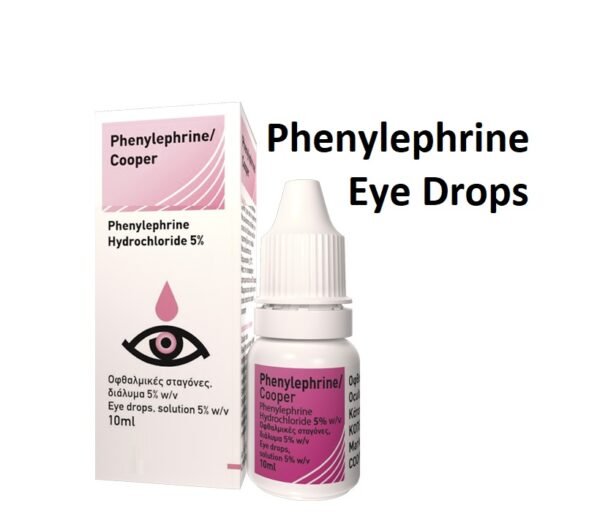
Phenylephrine Eye Drops are used as a topical ophthalmic solution to dilate the pupils as in certain local procedures and for the examination of the retina. It may be used as an OTC medicine for bloodshot eyes (allergic conjunctivitis).
Phenylephrine Eye Drops Uses:
- Mydriasis:
- It is used to dilate the pupils for examination and local procedures.
- It may be used as an OTC medicine for the symptomatic treatment of patients with red eyes (allergic conjunctivitis).
Phenylephrine Eye Drops Dose in Adults
Phenylephrine Eye Drops Dose in the treatment of Mydriasis:
- Ophthalmic: 2.5% or 10% solution:
- Instill one drop every 3 to 5 minutes as needed.
- The maximum dose: 3 drops per eye.
- If necessary, the dose may be repeated.
Phenylephrine Eye Drops Dose in Childrens
Phenylephrine Eye Drops Dose in the treatment of Mydriasis: Ophthalmic:
- 5% Solution:
- Infants, Children, and Adolescents:
- Instill one drop 15 to 30 minutes before a procedure;
- Administer every 3 to 5 minutes;
- The maximum total dose is 3 drops per eye.
- Infants, Children, and Adolescents:
- 10% Solution:
- Children and Adolescents:
- Instill one drop 15 to 30 minutes before a procedure;
- Administer every 3 to 5 minutes as required;
- The maximum total dose: 3 drops per eye.
- Children and Adolescents:
Pregnancy Risk Factor C
- It has not been tested in animal reproduction studies and is therefore classified as pregnancy category C by the manufacturer.
- It is possible for intravenous medication to cross the placental barriers and should not be used during pregnancy. See Phenylephrine Injection.
- The systemic absorption after ophthalmic administration can be minimal and only for short periods.
Use during breastfeeding:
- It is unknown how phenylephrine can be excreted into breast milk. It is recommended that breastfeeding mothers avoid using it.
Dose in Kidney Disease:
There are no dosage adjustments provided in the manufacturer’s labeling.
Dose in Liver disease:
There are no dosage adjustments provided in the manufacturer’s labeling.
Side effects of Phenylephrine Eye Drops:
Systemic effects are rare at normal dosages.
- Ophthalmic:
- Burning Sensation Of Eyes
- Eye Irritation
- Miosis (Rebound)
- Visual Disturbance
- Vitreous Opacity (Transient)
Contraindications to Phenylephrine Eye Drops:
Solution: 2.5%
- The manufacturer's labeling does not list any contraindications.
Solution 10%
- Hypertension;
- thyrotoxicosis;
- Infants under 1 year old
There may be cross-sensitivity with other formulations.
Warnings and precautions
- Cardiovascular events
- Although rare, myocardial injury and cardiac arrhythmias have been reported using 10% ophthalmic solution.
- Preexisting heart conditions, such as those with cardiac medication or elderly patients, may make you more susceptible to adverse effects from the drug.
- The smallest concentration of the drug (2.5%) should always be used.
- Hypertension:
- Due to its vasoconstricting effects, significant blood pressure elevations may occur.
- Patients younger than five years old, those with hyperthyroidism and patients with pre-existing heart disease should be advised to take the drug with caution.
- Patients with high blood pressure or angina symptoms, as well as those suffering from endocrine disorders such hyperthyroidism, should have their blood pressure checked after treatment.
- Rebound miosis
- One day after treatment, rebound miosis can occur. Mydriatic effects may be lessened by re-instillation.
Phenylephrine (ophthalmic): Drug Interaction
|
Alpha1-Blockers |
May diminish the vasoconstricting effect of Alpha1-Agonists. Similarly, Alpha1Agonists may antagonize Alpha1-Blocker vasodilation. |
|
AtoMOXetine |
May enhance the hypertensive effect of Sympathomimetics. AtoMOXetine may enhance the tachycardic effect of Sympathomimetics. |
|
Cannabinoid-Containing Products |
May enhance the tachycardic effect of Sympathomimetics. Exceptions: Cannabidiol. |
|
Doxofylline |
Sympathomimetics may enhance the adverse/toxic effect of Doxofylline. |
|
Guanethidine |
May enhance the arrhythmogenic effect of Sympathomimetics. Guanethidine may enhance the hypertensive effect of Sympathomimetics. |
|
Solriamfetol |
Sympathomimetics may enhance the hypertensive effect of Solriamfetol. |
|
Sympathomimetics |
May enhance the adverse/toxic effect of other Sympathomimetics. |
|
Tedizolid |
May enhance the hypertensive effect of Sympathomimetics. Tedizolid may enhance the tachycardic effect of Sympathomimetics. |
|
Tricyclic Antidepressants |
May enhance the therapeutic effect of Alpha1-Agonists. Tricyclic Antidepressants may diminish the therapeutic effect of Alpha1-Agonists. |
|
Cocaine (Topical) |
May enhance the hypertensive effect of Sympathomimetics. Management: Consider alternatives to use of this combination when possible. Monitor closely for substantially increased blood pressure or heart rate and for any evidence of myocardial ischemia with concurrent use. |
|
Linezolid |
May enhance the hypertensive effect of Sympathomimetics. Management: Reduce initial doses of sympathomimetic agents, and closely monitor for enhanced pressor response, in patients receiving linezolid. Specific dose adjustment recommendations are not presently available. |
|
Ergot Derivatives |
May enhance the hypertensive effect of Alpha1-Agonists. Ergot Derivatives may enhance the vasoconstricting effect of Alpha1-Agonists. Exceptions: Ergoloid Mesylates; Nicergoline. |
|
Iobenguane Radiopharmaceutical Products |
Alpha1-Agonists may diminish the therapeutic effect of Iobenguane Radiopharmaceutical Products. Management: Discontinue all drugs that may inhibit or interfere with catecholamine transport or uptake for at least 5 biological half-lives before iobenguane administration. Do not administer these drugs until at least 7 days after each iobenguane dose. |
|
Monoamine Oxidase Inhibitors |
May enhance the hypertensive effect of Alpha1-Agonists. While linezolid is expected to interact via this mechanism, management recommendations differ from other monoamine oxidase inhibitors. Refer to linezolid specific monographs for details. Exceptions: Linezolid; Tedizolid. |
Monitoring Parameters:
Monitor the response to therapy.
How to administer Phenylephrine Eye Drops?
Ophthalmic:
- Wash hands before and after instilling the eye drops.
- It is only indicated for topical ophthalmic use. Avoid contamination. Do not touch the tip of the dropper to other surfaces or the eyelids while placing the drops.
- Instill the eye drops into the conjunctival fornix unless otherwise directed.
- Protect eyes from bright light whne the pupils are dilated.
Mechanism of action of Phenylephrine Eye Drops:
- It is a potent alpha-adrenergic antagonist with little to no beta-adrenergic activity.
- It can be applied topically to cause local vasoconstriction.
The beginning of action:
- Mydriasis: 15 minutes;
- maximal mydriasis: 20 to 90 minutes;
- Time to recover: 3-8 hours
Absorption:
- Minimal systemic absorption.
Time to peak, plasma:
- ≤20 minutes.
International Brand Names of Phenylephrine Eye Drops:
- Altafrin
- Minims Phenylephrine HCl
Phenylephrine Eye Drops Brand Names in Pakistan:
Phenylephrine (HCl) Eye Drops 10 %w/v in Pakistan |
|
|
Ethifrin |
Ethical Laboratories (Pvt) Ltd. |
|
Isonefrine |
Lahore Chemical & Pharmaceutical Works (Pvt) Ltd |
|
Mediphrine |
Medipak Limited |
.png)


