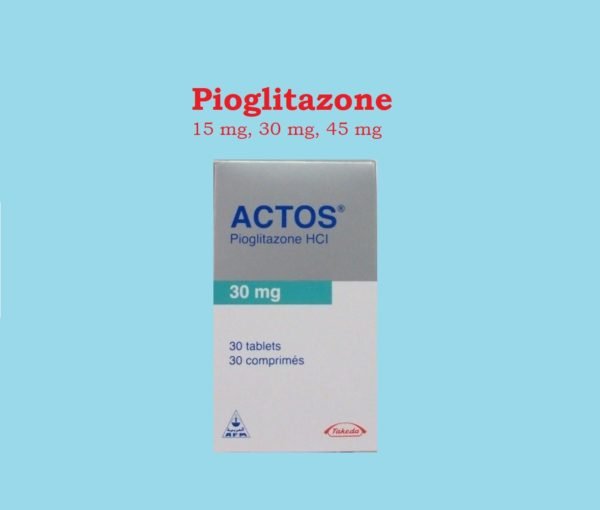
Pioglitazone (Actos) is a drug used to treat patients with Diabetes Mellitus Type 2 as monotherapy or with other diabetes medications. It is also available in combination with other medicines such as glimepiride and metformin. Rosiglitazone belongs to the same class of medicine, however, because of its association with heart failure, it is no more available in the markets. Pioglitazone also causes fluid retention, weight gain, and eye problems and is, therefore, less favored nowadays.
Indications of Pioglitazone:
-
Type II Diabetes mellitus:
- It is used to improve glycemic control in adults with type 2 diabetes mellitus in addition to diet and exercise.
- It is also used as off-lable medicine in the treatment of fatty liver diseases.
Pioglitazone (Actos) Dose in Adults
Pioglitazone (Actos) use in the Treatment of Type 2 Diabetes mellitus:
Pioglitazone (Actos) usual initial dose:
- 15 to 30 mg per oral once daily.
-
Dose in patients with asymptomatic NYHA class I or II heart failure:
- Initiate cautiously with 15 mg per oral once daily.
- Note: Not recommended in patients with symptomatic heart failure and contraindicated with stage III or IV heart failure.
-
Dosage titration:
- Based on HbA1C, the dosage may be increased in 15 mg increments with careful monitoring of adverse effects (eg, weight gain, edema, signs/symptoms of heart failure) up to a maximum of 45 mg once daily;
- Consider limiting dose to ≤30 mg/day in case of heart failure.
-
Dosage adjustment for hypoglycemia with combination therapy:
- The dose should be decreased if using with sulphonylureas.
- Dose reduction by 10% to 25% with insulin.
-
Dosage adjustment with strong CYP2C8 inhibitors (eg, gemfibrozil):
- Maximum recommended dose: 15 mg once daily.
-
Use in Children with Diabetes:
The safety and efficacy of the drug in children has not been established.
Pregnancy Risk Category: C
- The information regarding pregnancy and pioglitazone is not available.
- For glucose control, you should also use other agents during pregnancy
- Thiazolidinediones may increase your risk of getting pregnant. It can induce ovulation in premenopausal women who are ovulatory.
- Thiazolidinediones should not be used in females under the age of 18.
Pioglitazone use during breastfeeding
- It is not known if the drug is secreted in breast milk.
- According to the manufacturer breastfeeding during therapy is a decision that should be made after considering the risks and benefits to the infant as well as the benefits to the mother.
Pioglitazone (Actos) Dose adjustment in renal disease:
No dosage adjustment is necessary.
Pioglitazone Dose adjustment in liver disease:
-
Hepatic impairment before initiation
- There is no dosage adjustment; be cautious if your baseline liver tests are abnormal.
-
Treatment for hepatic impairment: If you suspect liver injury:
- It is important to withhold treatment and have serum liver tests done. This will allow you to investigate possible causes.
- Hold therapy if an alternative cause is not found and ALT >3x the upper normal limit
- Therapy should only be used if an alternative etiology has been identified.
Common Side Effects of Pioglitazone (Actos):
-
Cardiovascular:
- Edema
-
Endocrine and metabolic:
- Hypoglycemia
-
Respiratory:
- Upper respiratory tract infection
Rare Side Effects of Pioglitazone:
-
Cardiovascular:
- Cardiac failure
-
Central nervous system:
- Headache
-
Neuromuscular & skeletal:
- Bone fracture
- Myalgia
-
Respiratory:
- Sinusitis
- Pharyngitis
Frequency of side effects Not Defined:
-
Endocrine & Metabolic:
- Decreased Serum Triglycerides
- Increased HDL-Cholesterol
- Weight Gain
- Weight Loss
-
Hematologic & Oncologic:
- Decreased Hematocrit
- Decreased Hemoglobin
Contraindications to Pioglitazone:
- Hypersensitivity to pioglitazone and any component of the formulation
- NYHA Class III/IV Heart Failure
- Pregnancy
- Any stage of heart disease (eg NYHA Class I II, III, IV).
- Liver impairment severe
- Hematuria macroscopica
- A history of bladder carcinoma or active bladder malignancy
Warnings and precautions
-
Bladder cancer
- Pioglitazone can increase the risk of bladder malignancy. Patients with active bladder cancer should avoid it.
-
Edema
- Pre-existing edema may be exacerbated or new onset.
-
Fractures
- Females who have been treated with pioglitazone, especially the lower limbs and distal uppers, are at greater risk of breaking bones.
-
Heart Failure/cardiac Effects: [US Boxed Warn]
- Pioglitazone and thiazolidinediones can cause or exacerbate heart disease. This may lead to rapid weight gain, dyspnea and edema.
- It is necessary to reduce the dose and avoid its use in patients with symptomatic heart disease.
-
Hematologic effects
- Anemia can result from a decreased Hb/hematocrit, probably because of an increase in plasma volume.
-
Hepatic effects
- Severe hepatic dysfunction can be observed.
- During therapy, it is important to monitor for any signs or symptoms of liver injury.
-
Hypoglycemia
- Pioglitazone should not be taken with insulin or any other diabetes medications. A dosage reduction is necessary to reduce the risk of hypoglycemia.
-
Macular edema
- Pioglitazone can cause macular edema, which is characterized by blurred vision and decreased visual acuity.Patients should undergo regular eye examinations while receiving therapy.
-
Weight loss
- Weight gain due to dose-related factors such as fluid retention and fat deposition can occur.
-
Bariatric surgery
- Absorption altered:
- Absorption can be affected by changes during gastrectomy/sleeve operation.
- Weight loss
- Gastric bypass results in weight gain. Other agents should also be considered.
- Absorption altered:
-
Type 1 Diabetes
- It is not recommended for type 1 diabetes and diabetic ketoacidosis patients. Insulin is required to activate the mechanism.
-
Hepatic impairment
- To rule out liver impairment, it is important to perform liver function tests before and after the treatment.
- Therapy should be monitored for any signs or symptoms of liver injury (e.g., fatigue, anorexia and jaundice, dark urine or right upper abdominal discomfort).
- If these symptoms occur, therapy should be stopped.
- Therapy should be stopped if serum ALT exceeds 3x ULN with no known cause.
- Patients with serum ALT 3x ULN or serum total bilirubin 2x ULN are at high risk of severe drug-induced liver injury.
Pioglitazone: Drug Interaction
|
Abiraterone Acetate |
May increase the serum concentration of CYP2C8 Substrates (High risk with Inhibitors). |
|
Alpha-Lipoic Acid |
May enhance the hypoglycemic effect of Antidiabetic Agents. |
|
Androgens |
May enhance the hypoglycemic effect of Blood Glucose Lowering Agents. Exceptions: Danazol. |
|
Clopidogrel |
May increase the serum concentration of Pioglitazone. |
|
CYP2C8 Inhibitors (Moderate) |
May decrease the metabolism of CYP2C8 Substrates (High risk with Inhibitors). |
|
Deferasirox |
May increase the serum concentration of CYP2C8 Substrates (High risk with Inhibitors). |
|
Direct Acting Antiviral Agents (HCV) |
May enhance the hypoglycemic effect of Antidiabetic Agents. |
|
Guanethidine |
May enhance the hypoglycemic effect of Antidiabetic Agents. |
|
Hyperglycemia-Associated Agents |
May diminish the therapeutic effect of Antidiabetic Agents. |
|
Hypoglycemia-Associated Agents |
Antidiabetic Agents may enhance the hypoglycemic effect of Hypoglycemia-Associated Agents. |
|
Lumacaftor |
May increase the serum concentration of CYP2C8 Substrates (High Risk with Inhibitors or Inducers). Lumacaftor may decrease the serum concentration of CYP2C8 Substrates (High Risk with Inhibitors or Inducers). |
|
Maitake |
May enhance the hypoglycemic effect of Blood Glucose Lowering Agents. |
|
Monoamine Oxidase Inhibitors |
May enhance the hypoglycemic effect of Blood Glucose Lowering Agents. |
|
Pegvisomant |
May enhance the hypoglycemic effect of Blood Glucose Lowering Agents. |
|
Pregabalin |
May enhance the fluid-retaining effect of Thiazolidinediones. |
|
Prothionamide |
May enhance the hypoglycemic effect of Blood Glucose Lowering Agents. |
|
Quinolones |
May enhance the hypoglycemic effect of Blood Glucose Lowering Agents. Quinolones may diminish the therapeutic effect of Blood Glucose Lowering Agents. Specifically, if an agent is being used to treat diabetes, loss of blood sugar control may occur with quinolone use. |
|
Ritodrine |
May diminish the therapeutic effect of Antidiabetic Agents. |
|
Salicylates |
May enhance the hypoglycemic effect of Blood Glucose Lowering Agents. |
|
Selective Serotonin Reuptake Inhibitors |
May enhance the hypoglycemic effect of Blood Glucose Lowering Agents. |
|
Thiazide and Thiazide-Like Diuretics |
May diminish the therapeutic effect of Antidiabetic Agents. |
|
Topiramate |
May decrease the serum concentration of Pioglitazone. |
|
Trimethoprim |
May decrease the metabolism of Thiazolidinediones. |
|
CYP2C8 Inhibitors (Strong) |
May increase the serum concentration of Pioglitazone. Management: Limit pioglitazone adult maximum dose to 15 mg/day when used in combination with any strong CYP2C8 inhibitor. |
|
Dabrafenib |
May decrease the serum concentration of CYP2C8 Substrates (High risk with Inducers). Management: Seek alternatives to the CYP2C8 substrate when possible. If concomitant therapy cannot be avoided, monitor clinical effects of the substrate closely (particularly therapeutic effects). |
|
Gemfibrozil |
May decrease the metabolism of Thiazolidinediones. Management: Limit pioglitazone maximum adult dose to 15 mg/day, and consider dose reduction of rosiglitazone, when used in combination with gemfibrozil. |
|
Insulins |
Pioglitazone may enhance the adverse/toxic effect of Insulins. Specifically, the risk for hypoglycemia, fluid retention, and heart failure may be increased with this combination. Management: If insulin is combined with pioglitazone, dose reductions should be considered to reduce the risk of hypoglycemia. Monitor patients for fluid retention and signs/symptoms of heart failure. |
|
MiFEPRIStone |
May increase the serum concentration of CYP2C8 Substrates (High risk with Inhibitors). Management: Use CYP2C8 substrates at the lowest recommended dose, and monitor closely for adverse effects (including myopathy), during and in the 2 weeks following mifepristone treatment. |
|
RifAMPin |
May increase the metabolism of Thiazolidinediones. Management: Consider alternatives to the concomitant use of rifampin with thiazolidinedione antidiabetic agents. Monitor patients receiving these combinations for decreased effects of the thiazolidinedione derivative. |
|
Sulfonylureas |
Thiazolidinediones may enhance the hypoglycemic effect of Sulfonylureas. Management: Consider sulfonylurea dose adjustments in patients taking thiazolidinediones and monitor for hypoglycemia. |
Monitoring parameters:
- Blood glucose levels
- Hemoglobin A (at minimum twice per year)
- Before and after therapy, liver enzymes (ALT and AST, alkaline phosphatase and total bilirubin).
- Weight gain
- Ophthalmic examination
- Heart failure symptoms and signs
- Signs and symptoms of bladder cancer include dysuria (macroscopic hematuria), dysuria, and urinary urgency.
How to administer Pioglitazone (Actos)?
- It can be given orally without regard to food.
Mechanism of action of Pioglitazone (Actos):
- Pioglitazone, a thiazolidinedione anti-hyperglycemic agent, is also known as Pioglitazone.
- It improves insulin response in target cells, which results in a decrease of blood glucose and an increase in pancreatic insulin secretion.
- It needs insulin to work. Pioglitazone (PPARgamma) is a powerful and selective agonist of peroxisome proliferator activated receptor-gamma.
- The activation of the PPARgamma-receptors can influence the production of many gene products that are involved in glucose or lipid metabolism.
- PPAR gamma can be found in greater amounts in cells of the renal collecting tubules.
- Thiazolidinedione stimulation increases sodium reabsorption, which leads to fluid retention.
The beginning of action: Delayed Peak effectGlucose control can be done for several weeks. Protein bindingPioglitazone >99%, active metabolites>98%; primarily to Albumin Metabolism: Hepatic (99%), via CYP2C8 or 3A4 to active metabolites. M-III, MIV are the major circulating active metabolites Eliminating half-life Parent drug: 3-7 hours M-III and M–IV metabolites: 16-24 hours Time to reach peak: 2 hours; delayed when you eat Excretion: Found in urine (25-30%) and feces as metabolites
International Brands of Pioglitazone:
- Actos
- ACCEL Pioglitazone
- ACH-Pioglitazone
- ACT Pioglitazone
- Actos
- APO-Pioglitazone
- AuroPioglitazone
- DOM-Pioglitazone
- JAMP-Pioglitazone
- MINT-Pioglitazone
- MYLANPioglitazone
- PHL-Pioglitazone
- PMS-Pioglitazone
- PRO-Pioglitazone
- RANPioglitazone
- RATIO-Pioglitazone
- SANDOZ Pioglitazone
- TEVA-Pioglitazone
- VANPioglitazone
- Accotaz
- Acpio
- Acstin
- Actos
- Actozon
- Actozone
- Anxotos
- Apogar
- Cereluc
- Chronoreg
- Deculin
- Diabetin
- Diabetone
- Diaglit
- DMZone
- Gitazone
- Glacera
- Glezone
- Gliabetes
- Glidipion
- Gliozac
- Glita
- Glitaz
- Glitis
- Glito
- Glitter
- Glizone
- Glubosil
- Glucemin
- Gluconon
- Glustin
- Glutason
- Insulact
- Insulact Forte
- Kai Bao Wei Yuan
- Lispecip
- Newpio
- Nilgar
- Ogli
- Paglitaz
- Pidus
- Pio
- Pioglit
- Pioglite
- Piolidone
- Piomed
- Piomin
- Pionix
- Piosafe 15
- Piosugar
- Piota
- Piouno
- Piozer
- Piozon
- Piozone
- Pizaccord
- Politone
- Ppar
- Prabetic
- Prialta
- Protaz
- Relexil
- Senzulin
- Uniglit
- Utmos
- Vexazone
- Zactos
- Zacts
- Zolid
Pioglitazone Brands in Pakistan:
Pioglitazone 15 mg Tablets |
|
| Diactal | Reko Pharmacal (Pvt) Ltd. |
| Diacto | Consolidated Chemical Laboratories (Pvt) Ltd. |
| Diglyta | Zafa Pharmaceutical Laboratories (Pvt) Ltd. |
| Digolitazone | Tg Pharma |
| Dizone | Nabiqasim Industries (Pvt) Ltd. |
| Dowglit | Martin Dow Pharmaceuticals (Pak) Ltd. |
| Dowgut | Martin Dow Pharmaceuticals (Pak) Ltd. |
| Fantasia | Wilshire Laboratories (Pvt) Ltd. |
| Glapio | Afta Pharma |
| Gliden | Helix Pharma (Private) Limited |
| Glitascot | Scotmann Pharmaceuticals |
| Gliter | Mass Pharma (Private) Limited |
| Glitlite | Medi Plus Pharma |
| Glitos | Searle Pakistan (Pvt.) Ltd. |
| Glitzer | Tabros Pharma |
| Glyrol | Medisure Laboratories Pakistan (Pvt.) Ltd. |
| Ligazo | Pfizer Laboratories Ltd. |
| Lotophage Plus | Lotus Pharmaceuticals (Pvt) Ltd |
| Piobetic | Genix Pharma (Pvt) Ltd |
| Piocan | Candid Pharmaceuticals |
| Pioget | Platinum Pharmaceuticals (Pvt.) Ltd. |
| Pioglotin | Leads Pharma (Pvt) Ltd |
| Pioglotin | Leads Pharma (Pvt) Ltd |
| Pion T | Ferroza International Pharmaceuticals (Pvt) Ltd. |
| Piotec | Panacea Pharmaceuticals |
| Piotone | Atco Laboratories Limited |
| Piozer | Hilton Pharma (Pvt) Limited |
| Piozon | Rehmat Pharma |
| Piozone | Pulse Pharmaceuticals |
| Pitaz | Macter International (Pvt) Ltd. |
| Poze | Agp (Private) Ltd. |
| Pyctos | Highnoon Laboratories Ltd. |
| Rangon | V Care International |
| Tagozer | Bryon Pharmaceuticals (Pvt) Ltd. |
| Tazoger-G | Bryon Pharmaceuticals (Pvt) Ltd. |
| Zeal | Maple Pharmaceuticals (Pvt) Ltd |
| Zolid | Getz Pharma Pakistan (Pvt) Ltd. |
Pioglitazone 30 mg Tablets |
|
| Diactal | Reko Pharmacal (Pvt) Ltd. |
| Diacto | Consolidated Chemical Laboratories (Pvt) Ltd. |
| Diglyta | Zafa Pharmaceutical Laboratories (Pvt) Ltd. |
| Dizone | Nabiqasim Industries (Pvt) Ltd. |
| Dowglit | Martin Dow Pharmaceuticals (Pak) Ltd. |
| Dowgut | Martin Dow Pharmaceuticals (Pak) Ltd. |
| Fantasia | Wilshire Laboratories (Pvt) Ltd. |
| Glapio | Afta Pharma |
| Gliden | Helix Pharma (Private) Limited |
| Glitascot | Scotmann Pharmaceuticals |
| Gliter | Mass Pharma (Private) Limited |
| Glitlite | Medi Plus Pharma |
| Glitos | Searle Pakistan (Pvt.) Ltd. |
| Glitzer | Tabros Pharma |
| Glyrol | Medisure Laboratories Pakistan (Pvt.) Ltd. |
| Ligazo | Pfizer Laboratories Ltd. |
| Pagzan | Medizan Labs (Pvt) Ltd |
| Piobetic | Genix Pharma (Pvt) Ltd |
| Piofit | Schazoo Zaka |
| Pioget | Platinum Pharmaceuticals (Pvt.) Ltd. |
| Piokure | Kurative Pak (Pvt) Ltd |
| Piokure | Kurative Pak (Pvt) Ltd |
| Pion T | Ferroza International Pharmaceuticals (Pvt) Ltd. |
| Piotec | Panacea Pharmaceuticals |
| Piotone | Atco Laboratories Limited |
| Piozer | Hilton Pharma (Pvt) Limited |
| Piozon | Rehmat Pharma |
| Piozone | Pulse Pharmaceuticals |
| Pitaz | Macter International (Pvt) Ltd. |
| Poze | Agp (Private) Ltd. |
| Pyctos | Highnoon Laboratories Ltd. |
| Rangon | V Care International |
| Tagozer | Bryon Pharmaceuticals (Pvt) Ltd. |
| Zeal | Maple Pharmaceuticals (Pvt) Ltd |
| Zolid | Getz Pharma Pakistan (Pvt) Ltd. |
Pioglitazone 45 mg Tablets |
|
| Diactal | Reko Pharmacal (Pvt) Ltd. |
| Diacto | Consolidated Chemical Laboratories (Pvt) Ltd. |
| Dizone | Nabiqasim Industries (Pvt) Ltd. |
| Dowglit | Martin Dow Pharmaceuticals (Pak) Ltd. |
| Dowgut | Martin Dow Pharmaceuticals (Pak) Ltd. |
| Fantasia | Wilshire Laboratories (Pvt) Ltd. |
| Glapio | Afta Pharma |
| Gliden | Helix Pharma (Private) Limited |
| Glitascot | Scotmann Pharmaceuticals |
| Gliter | Mass Pharma (Private) Limited |
| Glitlite | Medi Plus Pharma |
| Glitos | Searle Pakistan (Pvt.) Ltd. |
| Glitzer | Tabros Pharma |
| Glyrol | Medisure Laboratories Pakistan (Pvt.) Ltd. |
| Ligazo | Pfizer Laboratories Ltd. |
| Piobetic | Genix Pharma (Pvt) Ltd |
| Piofit | Schazoo Zaka |
| Pioget | Platinum Pharmaceuticals (Pvt.) Ltd. |
| Piokure | Kurative Pak (Pvt) Ltd |
| Piotec | Panacea Pharmaceuticals |
| Piotone | Atco Laboratories Limited |
| Piozer | Hilton Pharma (Pvt) Limited |
| Piozone | Pulse Pharmaceuticals |
| Pitaz | Macter International (Pvt) Ltd. |
| Poze | Agp (Private) Ltd. |
| Pyctos | Highnoon Laboratories Ltd. |
| Rangon | V Care International |
| Tagozer | Bryon Pharmaceuticals (Pvt) Ltd. |
| Zeal | Maple Pharmaceuticals (Pvt) Ltd |
| Zolid | Getz Pharma Pakistan (Pvt) Ltd. |
.png)


