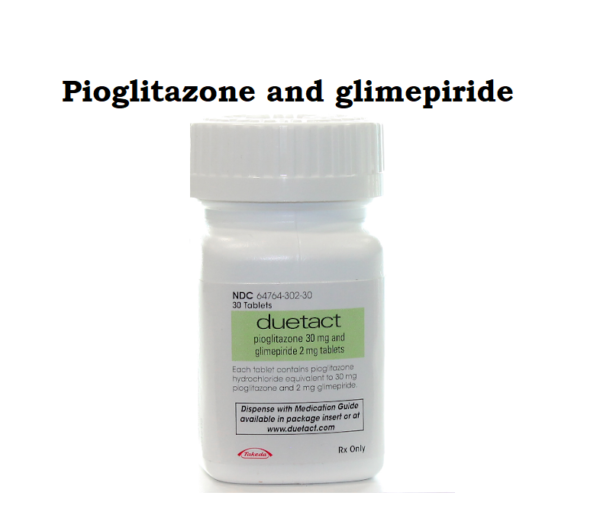
Pioglitazone and glimepiride (Duetact, Piozer-G) is a combination of two anti-diabetic drugs: Pioglitazone and Glimipiride. Pioglitazone is a thiozolidenedione while glimipiride is a sulfonylurea.
Indications of pioglitazone and glimepiride:
-
Type II diabetes mellitus:
- It is used for management of type 2 diabetes mellitus already treated with a thiazolidinedione and a sulfonylurea or who have inadequate control on either agent alone
Pioglitazone and glimepiride (Duetact, Piozer-G) dose in adults:
The treatment dose of type 2 Diabetes mellitus:
Initial dose should be based on current dose of pioglitazone and/or sulfonylurea.
-
Patients inadequately controlled on glimepiride alone:
- Initial dose: Pioglitazone 30 mg/glimepiride 2 mg or pioglitazone 30 mg/glimepiride 4 mg per oral once daily.
-
Patients inadequately controlled on pioglitazone alone:
- Initial dose: Pioglitazone 30 mg/glimepiride 2 mg per oral once daily.
-
Patients currently on sulfonylurea monotherapy (other than glimepiride) or switching from combination therapy of pioglitazone plus a sulfonylurea (other than glimepiride):
- Initial: Pioglitazone 30 mg/glimepiride 2 mg per oral once daily. When converting patients from other sulfonylureas with longer half-lives (eg, chlorpropamide) to glimepiride, observe patient carefully for 1 to 2 weeks due to overlapping hypoglycemic effects.
-
Patients with systolic dysfunction (eg, NYHA Class I and II):
- Initiate only after the patient has been safely titrated to 30 mg of pioglitazone. Initial dose: Pioglitazone 30 mg/glimepiride 2 mg per oral once daily.
-
Dosage adjustment:
- Dosage may be increased up to a maximum dose of pioglitazone 45 mg/glimepiride 8 mg per oral once daily based on effectiveness and tolerability.
- Careful dosage adjustments and monitoring for symptoms of worsening heart failure is necessary.
-
Dosage adjustment for hypoglycemia with combination therapy:
- With an insulin secretagogue: Decrease the insulin secretagogue dose.
- With insulin: 10-25% dose reduction of insulin.
Use in Children:
It is not recommended in children
Pregnancy & lactation
- You can contact individual agents.
Use of pioglitazone or glimepiride during breastfeeding
- It is not known if pioglitazone or glimepiride are excreted in breast milk.
- The manufacturer states that the risk/benefits of breastfeeding to an infant and the benefits to the mother will determine whether or not to continue breastfeeding. Refer to individual agents.
Dose adjustment in renal disease:
There are no specific dosage adjustments provided in the manufacturer’s labeling. Dose adjustment should be done conservatively.
Dose adjustment in liver disease:
-
Hepatic impairment before initiation
- The manufacturer's labeling does not include any dosage adjustments.
-
Therapy for hepatic impairment
- In cases of liver injury, therapy should be stopped. Serum liver tests should also be performed to determine if there are other causes.
- Do not restart therapy if ALT is greater than 3x the upper limit of normal without any known cause.
- If ALT is elevated (but less than 3x ULN) without any known cause, or total bilirubin elevation (but less than 2x ULN),: You may need to reinitiate caution.
- In cases of liver injury, therapy should be stopped. Serum liver tests should also be performed to determine if there are other causes.
Common Side Effects of Pioglitazone and glimepiride (Duetact, Piozer-G):
-
Cardiovascular:
- Peripheral Edema
-
Endocrine & Metabolic:
- Hypoglycemia
- Weight Gain
-
Respiratory:
- Upper Respiratory Tract Infection
Rare Side Effects Of Pioglitazone and glimepiride (Duetact, Piozer-G):
-
Central Nervous System:
- Headache
-
Gastrointestinal:
- Diarrhea
- Nausea
-
Genitourinary:
- Urinary Tract Infection
-
Hematologic & Oncologic:
- Anemia
-
Neuromuscular & Skeletal:
- Limb Pain
Contraindications to Pioglitazone and glimepiride (Duetact, Piozer-G):
- Hypersensitivity to glimepiride, pioglitazone, or any component of the formulation
- Class III or IV heart failure
- history of an allergic reaction to sulfonamide derivatives
Note:
Although the FDA approved product labeling states this medication is contraindicated with other sulfonamide-containing drug classes, the scientific basis of this statement has been challenged.
Warnings and Precautions
-
Bladder cancer
- Patients with bladder carcinoma should not be given pioglitazone.
- Manufacturer recommends that patients with active bladder cancer avoid the product and weigh the risks against the benefits before initiating treatment in patients who have had bladder cancer in the past.
-
Cardiovascular mortality
- The product labeling clearly states that oral antidiabetics, taken alone, can increase the risk of developing cardiovascular events.
- Patients with atherosclerotic cardiovascular disease should be prescribed alternate agents.
-
Edema
- Pioglitazone can cause new-onset or worsening of existing edema.
- Keep an eye out for symptoms and signs of heart failure.
-
Fractures
- Pioglitazone may increase fracture risk, particularly in the lower limbs and distal upper extremities.
-
Heart Failure/cardiac Effects: [US Boxed Warn]
- You should look out for signs and symptoms such as weight gain, rapid dyspnoea, and edema. Dose reductions or discontinuations should be made.
- Patients with NYHA class III, IV or symptomatic heart disease should not use it..
- Patients with NYHA class II or I heart failure should receive the lowest possible dose.
-
Hematologic effects
- Pioglitazone may cause anemia from increased plasma volume.
-
Hepatic effects
- It could lead to life-threatening liver failure.
- If you notice signs or symptoms of liver injury, it is important to stop treating.
-
Hypersensitivity reactions
- Hypersensitivity reactions can occur when oral antidiabetics are taken.
- Supportive management should be initiated immediately and the drug must be stopped immediately.
-
Hypoglycemia
- All sulfonylurea medications can cause severe hypoglycemia.
- Hypoglycemia can be caused by several factors, including old age, malnourishment and hepatic function, prolonged exercise, alcohol intake, and multi-drug treatment for diabetes.
-
Macular edema
- Macular edema can cause blurred vision and decreased visual acuity.
- Regular ophthalmic exams should be performed.
-
Allergy to sulfonamide ("sulfa")
- FDA-approved product labels for medications that contain sulfonamide chemical groups include a wide contraindication for patients who have had an allergic reaction to sulfonamides in the past.
- A better understanding of allergic mechanisms suggests that cross-reactivity between non-antibiotic sulfonamides or antibiotic sulfonamides might not be possible.
- Also, this drug class is known to cause T cell-mediated (type IV), reactions such as maculopapular eruptions.
- This drug class should not be used if you have severe reactions, such as Stevens Johnson syndrome/toxic epidermal necrolysis.
-
Weight loss
- Pioglitazone causes fat deposition and fluid retention, which results in weight gain.
-
Bariatric surgery
- Absorption altered:
- To minimize the possible effects of bypassing the stomach or proximal bowel with gastric bypass, or faster gastric emptying, and proximal bowel transit with Sleeve gastrectomy, immediate-release formulations should always be used. On the other side, extended-release formulations can affect the release and absorption patterns following gastric bypass, sleeve-gastrectomy (but no gastric-band).
- Hypoglycemia
- Anti-diabetics can cause hypoglycemia in the stomach.
- These procedures may result in a partial or complete restoration of insulin secretion and sensitivity.
- The recovery process for peripheral insulin sensitivity can take between 3-12 months.
- Weight loss
- After gastric bypass, gastric banding, or sleeve-gastrectomy, alternate agents should be used. This can lead to weight gain.
- Absorption altered:
-
Glucose-6phosphate dehydrogenase(G6PD) deficiency
- Patients with G6PD deficiencies are at greater risk for hemolytic anemia. Therefore, patients should receive a non-sulfonylurea.
-
Hepatic impairment
- Before and during treatment, it is important to monitor liver function.
- Pioglitazone should not be used if there are any signs or symptoms of liver injury, such as fatigue, anorexia and jaundice.
- Hypoglycemia is more common in patients with hepatic impairment who are also receiving glimepiride.
- Therapy should be stopped if serum ALT exceeds 3 times the ULN. Patients at greater risk for liver injury are those with serum ALT above 3 times the ULN or serum total bilirubin below 2 times the ULN.
-
Impairment of renal function:
- Patients with impaired renal function may experience hypoglycemia.
-
Stress-related disorders:
- Withholding treatment and insulin should be used to manage stress from fever, trauma, infected, or surgery.
Pioglitazone and glimepiride: Drug Interaction
|
Abiraterone Acetate |
May increase the serum concentration of CYP2C8 Substrates (High risk with Inhibitors). |
|
Ajmaline |
Sulfonamides may enhance the adverse/toxic effect of Ajmaline. Specifically, the risk for cholestasis may be increased. |
|
Alcohol (Ethyl) |
Sulfonylureas may enhance the adverse/toxic effect of Alcohol (Ethyl). A flushing reaction may occur. |
|
Alpelisib |
May decrease the serum concentration of CYP2C9 Substrates (High risk with Inducers). |
|
Alpha-Lipoic Acid |
May enhance the hypoglycemic effect of Antidiabetic Agents. |
|
Aminolevulinic Acid (Topical) |
Photosensitizing Agents may enhance the photosensitizing effect of Aminolevulinic Acid (Topical). |
|
Androgens |
May enhance the hypoglycemic effect of Blood Glucose Lowering Agents. Exceptions: Danazol. |
|
Antidiabetic Agents |
May enhance the hypoglycemic effect of Hypoglycemia-Associated Agents. |
|
Beta-Blockers |
May enhance the hypoglycemic effect of Sulfonylureas. Cardioselective betablockers (eg, acebutolol, atenolol, metoprolol, and penbutolol) may be safer than nonselective beta-blockers. All beta-blockers appear to mask tachycardia as an initial symptom of hypoglycemia. Ophthalmic beta-blockers are probably associated with lower risk than systemic agents. Exceptions: Levobunolol; Metipranolol. |
|
Carbocisteine |
Sulfonylureas may enhance the adverse/toxic effect of Carbocisteine. Specifically, sulfonylureas may enhance adverse effects of alcohol that is present in liquid formulations of carbocisteine-containing products. |
|
Chloramphenicol (Systemic |
May decrease the metabolism of Sulfonylureas. |
|
Cimetidine |
May increase the serum concentration of Sulfonylureas. |
|
Clopidogrel |
May increase the serum concentration of Pioglitazone. |
|
Cyclic Antidepressants |
|
|
CYP2C8 Inhibitors (Moderate) |
May decrease the metabolism of CYP2C8 Substrates (High risk with Inhibitors). |
|
CYP2C9 Inhibitors (Moderate) |
May decrease the metabolism of CYP2C9 Substrates (High risk with Inhibitors). |
|
Deferasirox |
May increase the serum concentration of CYP2C8 Substrates (High risk with Inhibitors). |
|
Dexketoprofen |
May enhance the adverse/toxic effect of Sulfonamides. |
|
Direct Acting Antiviral Agents (HCV) |
May enhance the hypoglycemic effect of Antidiabetic Agents. |
|
Fibric Acid Derivatives |
May enhance the hypoglycemic effect of Sulfonylureas. |
|
Guanethidine |
May enhance the hypoglycemic effect of Antidiabetic Agents. |
|
Herbs (Hypoglycemic Properties |
May enhance the hypoglycemic effect of HypoglycemiaAssociated Agents. |
|
Hyperglycemia-Associated Agents |
May diminish the therapeutic effect of Antidiabetic Agents. |
|
Hypoglycemia-Associated Agents |
May enhance the hypoglycemic effect of other HypoglycemiaAssociated Agents. |
|
Hypoglycemia-Associated Agents |
Antidiabetic Agents may enhance the hypoglycemic effect of Hypoglycemia-Associated Agents. |
|
Lumacaftor |
May decrease the serum concentration of CYP2C9 Substrates (High Risk with Inhibitors or Inducers). Lumacaftor may increase the serum concentration of CYP2C9 Substrates (High Risk with Inhibitors or Inducers). |
|
Lumacaftor |
May increase the serum concentration of CYP2C8 Substrates (High Risk with Inhibitors or Inducers). Lumacaftor may decrease the serum concentration of CYP2C8 Substrates (High Risk with Inhibitors or Inducers). |
|
Maitake |
May enhance the hypoglycemic effect of Blood Glucose Lowering Agents. |
|
Miconazole (Oral |
May enhance the hypoglycemic effect of Sulfonylureas. Miconazole (Oral) may increase the serum concentration of Sulfonylureas. |
|
Monoamine Oxidase Inhibitors |
May enhance the hypoglycemic effect of Blood Glucose Lowering Agents. |
|
Pegvisomant |
May enhance the hypoglycemic effect of Blood Glucose Lowering Agents. |
|
Porfimer |
Photosensitizing Agents may enhance the photosensitizing effect of Porfimer. |
|
Pregabalin |
May enhance the fluid-retaining effect of Thiazolidinediones. |
|
Probenecid |
May decrease the protein binding of Sulfonylureas. Probenecid may increase the serum concentration of Sulfonylureas. |
|
Prothionamide |
May enhance the hypoglycemic effect of Blood Glucose Lowering Agents. |
|
Quinolones |
May enhance the hypoglycemic effect of Blood Glucose Lowering Agents. Quinolones may diminish the therapeutic effect of Blood Glucose Lowering Agents. Specifically, if an agent is being used to treat diabetes, loss of blood sugar control may occur with quinolone use. |
|
RaNITIdine |
May increase the serum concentration of Sulfonylureas. |
|
Rifapentine |
May decrease the serum concentration of CYP2C9 Substrates (High risk with Inducers). |
|
Ritodrine |
May diminish the therapeutic effect of Antidiabetic Agents. |
|
Salicylates |
May enhance the hypoglycemic effect of Blood Glucose Lowering Agents. |
|
Selective Serotonin Reuptake Inhibitors |
May enhance the hypoglycemic effect of Blood Glucose Lowering Agents. |
|
Sulfonamide Antibiotics |
May enhance the hypoglycemic effect of Sulfonylureas. |
|
Thiazide and Thiazide-Like Diuretics |
May diminish the therapeutic effect of Antidiabetic Agents. |
|
Topiramate |
May decrease the serum concentration of Pioglitazone. |
|
Trimethoprim |
May decrease the metabolism of Thiazolidinediones. |
|
Verteporfin |
Photosensitizing Agents may enhance the photosensitizing effect of Verteporfin. |
|
Vitamin K Antagonists (eg, warfarin) |
Sulfonylureas may enhance the anticoagulant effect of Vitamin K Antagonists. Vitamin K Antagonists may enhance the hypoglycemic effect of Sulfonylureas. |
|
Voriconazole |
May increase the serum concentration of Sulfonylureas. |
|
Risk Factor D (Consider therapy modification) |
|
|
Colesevelam |
May decrease the serum concentration of Glimepiride. Management: Administer glimepiride at least 4 hours prior to colesevelam. |
|
CYP2C8 Inhibitors (Strong) |
|
|
Dabrafenib |
May decrease the serum concentration of CYP2C8 Substrates (High risk with Inducers). Management: Seek alternatives to the CYP2C8 substrate when possible. If concomitant therapy cannot be avoided, monitor clinical effects of the substrate closely (particularly therapeutic effects). |
|
Dabrafenib |
May decrease the serum concentration of CYP2C9 Substrates (High risk with Inducers). Management: Seek alternatives to the CYP2C9 substrate when possible. If concomitant therapy cannot be avoided, monitor clinical effects of the substrate closely (particularly therapeutic effects). |
|
Dipeptidyl Peptidase-IV Inhibitors |
May enhance the hypoglycemic effect of Sulfonylureas. Management: Consider a decrease in sulfonylurea dose when initiating therapy with a dipeptidyl peptidase-IV inhibitor and monitor patients for hypoglycemia. |
|
Enzalutamide |
May decrease the serum concentration of CYP2C9 Substrates (High risk with Inducers). Management: Concurrent use of enzalutamide with CYP2C9 substrates that have a narrow therapeutic index should be avoided. Use of enzalutamide and any other CYP2C9 substrate should be performed with caution and close monitoring. |
|
Fluconazole |
May increase the serum concentration of Sulfonylureas. Management: Seek alternatives when possible. If used together, monitor closely for increased effects of sulfonylureas if fluconazole is initiated/dose increased, or decreased effects if fluconazole is discontinued/dose decreased. |
|
Gemfibrozil |
May decrease the metabolism of Thiazolidinediones. Management: Limit pioglitazone maximum adult dose to 15 mg/day, and consider dose reduction of rosiglitazone, when used in combination with gemfibrozil. |
|
Glucagon-Like Peptide-1 Agonists |
May enhance the hypoglycemic effect of Sulfonylureas. Management: Consider sulfonylurea dose reductions when used in combination with glucagonlike peptide-1 agonists. |
|
Insulins |
Pioglitazone may enhance the adverse/toxic effect of Insulins. Specifically, the risk for hypoglycemia, fluid retention, and heart failure may be increased with this combination. Management: If insulin is combined with pioglitazone, dose reductions should be considered to reduce the risk of hypoglycemia. Monitor patients for fluid retention and signs/symptoms of heart failure. |
|
Metreleptin |
May enhance the hypoglycemic effect of Sulfonylureas. Management: Sulfonylurea dosage adjustments (including potentially large decreases) may be required to minimize the risk for hypoglycemia with concurrent use of metreleptin. Monitor closely. |
|
MiFEPRIStone |
May increase the serum concentration of CYP2C8 Substrates (High risk with Inhibitors). Management: Use CYP2C8 substrates at the lowest recommended dose, and monitor closely for adverse effects (including myopathy), during and in the 2 weeks following mifepristone treatment. |
|
MiFEPRIStone |
May increase the serum concentration of CYP2C9 Substrates (High risk with Inhibitors). Management: Use CYP2C9 substrates at the lowest recommended dose, and monitor closely for adverse effects, during and in the 2 weeks following mifepristone treatment. |
|
RifAMPin |
May decrease the serum concentration of Sulfonylureas. Management: Seek alternatives to these combinations when possible. Monitor closely for diminished therapeutic effects of sulfonylureas if rifampin is initiated/dose increased, or enhanced effects if rifampin is discontinued/dose decreased. |
|
RifAMPin |
May increase the metabolism of Thiazolidinediones. Management: Consider alternatives to the concomitant use of rifampin with thiazolidinedione antidiabetic agents. Monitor patients receiving these combinations for decreased effects of the thiazolidinedione derivative. |
|
Sodium-Glucose Cotransporter 2 (SGLT2) Inhibitors |
May enhance the hypoglycemic effect of Sulfonylureas. Management: Consider a decrease in sulfonylurea dose when initiating therapy with a sodium-glucose cotransporter 2 inhibitor and monitor patients for hypoglycemia. |
|
Sulfonylureas |
Thiazolidinediones may enhance the hypoglycemic effect of Sulfonylureas. Management: Consider sulfonylurea dose adjustments in patients taking thiazolidinediones and monitor for hypoglycemia. |
|
Thiazolidinediones |
May enhance the hypoglycemic effect of Sulfonylureas. Management: Consider sulfonylurea dose adjustments in patients taking thiazolidinediones and monitor for hypoglycemia. |
|
Risk Factor X (Avoid combination) |
|
|
Aminolevulinic Acid (Systemic) |
Photosensitizing Agents may enhance the photosensitizing effect of Aminolevulinic Acid (Systemic). |
|
Mecamylamine |
Sulfonamides may enhance the adverse/toxic effect of Mecamylamine. |
|
Mitiglinide |
May enhance the adverse/toxic effect of Sulfonylureas. |
Monitoring parameters:
- Hemoglobin A (at least twice yearly in patients who have stable glycemic control
- serum glucose.
- Liver function tests (before or during therapy)
- Ophthalmic exam
- Weight gain
- Signs and symptoms of heart failure
- signs/symptoms of bladder cancer including dysuria, macroscopic hematuria, dysuria, urinary urgency.
How to administer Pioglitazone and glimepiride (Duetact, Piozer-G)?
It should be taken orally daily with your first main meal of each day. Patients who do not have oral intake may be required to keep the dose.
Mechanism of action of Pioglitazone and glimepiride (Duetact, Piozer-G):
Pioglitazone
- For it to be active, it must have insulin. Thiazolidinedione improves insulin response in target cells, which results in lower blood glucose levels and decreased insulin secretion.
Glimepiride
- A sulfonylurea stimulates insulin release from pancreatic beta cells, and reduces glucose output from liver. This increases insulin sensitivity at peripheral targets.
See individual agents: Pioglitazone, and Glimipiride
International Brands of Pioglitazone and glimepiride:
- Duetact
- Actoril
- Actosryl
- Adride P
- Asenza Plus
- Diatag Plus
- Glitaglim
- Pioglit G
- Sonias
- Tandemact
- Tosirin
- Zanoglide
- Zoliget
- Zorep-1
- Zorep-2
Pioglitazone and Glimipiride Brands in Pakistan:
Pioglitazone 15 mg/ Glimipiride 1 mg, 2 mg |
|
| Glio-P | Macter International (Pvt) Ltd. |
Pioglitazone 15 mg/ Glimepride 1 mg, 2 mg |
|
| Fantasmic | Wilshire Laboratories (Pvt) Ltd. |
| Glet | Brookes Pharmaceutical Laboratories (Pak.) Ltd. |
| Glibetic | ICI Pakistan Ltd. |
| Glimulin | Baxter Karachi |
| Glitamap | Maple Pharmaceuticals (Pvt) Ltd |
| Glitamap Forte | Maple Pharmaceuticals (Pvt) Ltd |
| Glitos Plus | Searle Pakistan (Pvt.) Ltd. |
| Piobetic-G | Genix Pharma (Pvt) Ltd |
| Pioryl G | Bosch Pharmaceuticals (Pvt) Ltd. |
| Piozer G | Hilton Pharma (Pvt) Limited |
| Piozer G | Hilton Pharma (Pvt) Limited |
| Piozer G | Hilton Pharma (Pvt) Limited |
| Tagozer-G | Bryon Pharmaceuticals (Pvt) Ltd. |
Pioglitazone 30 mg/ Glimipiride 1 mg, 2 mg |
|
| Fantasmic Plus | Wilshire Laboratories (Pvt) Ltd. |
| Glibetic | Ici Pakistan Ltd. |
| Glibetic Forte | Maple Pharmaceuticals (Pvt) Ltd |
| Gligo-P | Saffron Pharmaceutical Company |
| Glimulin | Baxter Karachi |
| Glitamap Plus | Maple Pharmaceuticals (Pvt) Ltd |
| Piobetic-G | Genix Pharma (Pvt) Ltd |
| Pioryl G | Bosch Pharmaceuticals (Pvt) Ltd. |
| Piotone Gem | Atco Laboratories Limited |
| Piozer G | Hilton Pharma (Pvt) Limited |
| Poze-G | Agp (Private) Ltd. |
.png)


