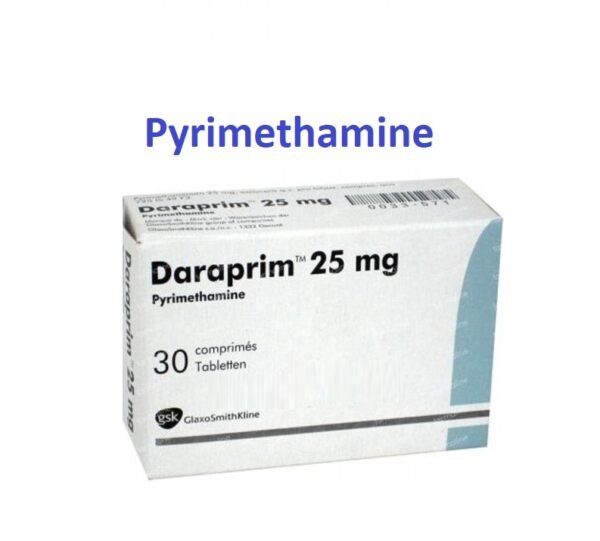
Pyrimethamine (Daraprim) is a folate inhibitor and primarily used as an antiparasitic drug. It is used to treat patients with toxoplasmosis and other parasitic infections.
Pyrimethamine Uses:
- Toxoplasmosis:
- It is indicated in the treatment of toxoplasmosis (in combination with a sulfonamide).
- Off Label Use of Pyrimethamine in Adults:
- It is used in HIV infected persons in the following conditions
- Isospora belli infection (isosporiasis) in HIV-infected patients
- Pneumocystis pneumonia (PCP) in HIV infected patients
- Toxoplasma gondii encephalitis (For treatment/primary prophylaxis/chronic maintenance therapy) in HIV-infected patients
Pyrimethamine (Daraprim) Dose in Adults
Pyrimethamine (Daraprim) Dose in the treatment of Isosporiasis ( Isospora belli infection) in HIV-infected patients (alternative agent) (off-label): Oral:
- Treatment:
- 50 - 75 mg once a day with leucovorin calcium
- Chronic maintenance (secondary prophylaxis):
- 25 mg once a day with leucovorin calcium
Pyrimethamine (Daraprim) Dose in the treatment of Pneumocystis pneumonia (PCP) in HIV-infected patients (alternative agent): Oral:
- Primary prophylaxis:
- 50 - 75 mg once a week with dapsone and leucovorin calcium or
- 25 mg once a day with atovaquone and leucovorin calcium
- Chronic maintenance (secondary prophylaxis):
- 50 - 75 mg once a week with dapsone and leucovorin calcium or
- 25 mg once a day combined atovaquone and leucovorin calcium
Pyrimethamine (Daraprim) Dose in the treatment of Toxoplasmosis:
- Oral: 50 - 75 mg per day for 1 - 3 weeks then the dose can be reduced by 50% and continue for 4 - 5 weeks
- In combination with sulfonamide and leucovorin calcium.
Pyrimethamine (Daraprim) Dose in the treatment of Toxoplasmosis in HIV-infected patients (off-label): Oral:
- Primary prophylaxis (alternative agent):
- 50 or 75 mg once a week with dapsone and leucovorin calcium or
- 25 mg once a day with atovaquone and leucovorin calcium
- Chronic maintenance therapy (secondary prophylaxis):
- 25 - 50 mg once a day with sulfadiazine and leucovorin calcium or
- 25 - 50 mg once a day with clindamycin and leucovorin calcium or
- 25 mg once a day with atovaquone and leucovorin calcium (alternative regimen)
Pyrimethamine (Daraprim) Dose in the treatment of Toxoplasma gondii encephalitis:
- 200 mg as a single dose, followed by Weight based dose of 50 mg (<60 kg) or 75 mg (≥60 kg) daily, with sulfadiazine and leucovorin calcium for at least 6 weeks or
- 200 mg as a single dose, followed by a weight-based dose of 50 mg (<60 kg) or 75 mg (≥60 kg) daily, with leucovorin calcium plus clindamycin or atovaquone or azithromycin (alternative regimens).
Note:
- No longer available in retail pharmacies in the US and is only available through a special pharmacy program.
- According to the HHS Guidelines for the prevention and treatment of opportunistic infections in the HIV-infected adults, if pyrimethamine is not available readily and there is a delay in procuring for suspected or documented toxoplasmosis who have no history of sulfa allergy, trimethoprim-sulfamethoxazole should be used in place of pyrimethamine-containing regimens until pyrimethamine is available.
Pyrimethamine (Daraprim) Dose in Childrens
Pyrimethamine (Daraprim) Dose in the treatment of Isosporiasis (Isospora belli), HIV-exposed/-positive:
- Treatment:
- Infants and Children: Oral: 1 mg/kg once a day with leucovorin for 14 days; (maximum daily dose: 75 mg/day)
- Adolescents: Oral: 50 - 75 mg once a day with leucovorin
- Chronic maintenance:
- Infants and Children: Oral: 1 mg/kg once a day with leucovorin (maximum daily dose: 25 mg/day)
- Adolescents: Oral: 25 mg once a day with leucovorin
Pyrimethamine (Daraprim) Dose in the treatment of Toxoplasmosis:
- Treatment:
- Congenital toxoplasmosis (independent of HIV status): Oral:
- Infants:
- Initial: 2 mg/kg/dose once a day for 2 days followed by
- 1 mg/kg/day once a day with sulfadiazine for 2 - 6 months then
- 1 mg/kg/day 3 times/week (eg, MWF) with sulfadiazine
- To reduce chances of hematological toxicity oral leucovorin should be given throughout the course (total treatment duration: 12 months)
- Infants:
- Acquired infection:
- HIV-exposed/-positive:
- Infants and Children: Oral
- 2 mg/kg (maximum dose: 50 mg/dose) once a day for 3 days followed by 1 mg/kg (maximum dose: 25 mg) once a day
- combined with sulfadiazine or clindamycin and leucovorin
- continue for at least 6 weeks; if clinically or radiologically extensive disease or response is not adequate, longer duration should be given
- Adolescents: Oral
- Encephalitis: 200 mg once as a single dose followed by daily doses as follows
- Daily weight-based doses: For weight <60 kg: 50 mg or for weight ≥60 kg: 75 mg once a day
- Typically used in combination with sulfadiazine and leucovorin; other combination regimens include clindamycin, atovaquone, or azithromycin and leucovorin
- Continue for at least 6 weeks; If clinically or radiologically extensive disease or response is not adequate, longer duration should be given
- Infants and Children: Oral
- Non-HIV-exposed/-positive:
- HIV-exposed/-positive:
- Congenital toxoplasmosis (independent of HIV status): Oral:
Note: Use in combination with sulfadiazine or clindamycin and leucovorin. Leucovorin should be used to prevent hematologic toxicity. Continue until 1 - 2 weeks after the symptoms resolved.
- Children: Oral: 2 mg/kg (maximum dose: 50 mg/dose) once a day for 2 days , followed by 1 mg/kg/day (maximum dose: 25 mg/dose) once a day for 3 - 6 weeks
- Adolescents: Oral: 200 mg once as a single dose; then 50 - 75 mg once a day for 3 - 6 weeks
- Prophylaxis:
- The first episode of Toxoplasma gondii:
- HIV-exposed/-positive:
- Infants and Children: Oral:
- 1 mg/kg/day once a day with dapsone plus oral leucovorin (Maximum dose: 25mg/dose)
- Infants and Children 4 - 24 months: 1 mg/kg or 15 mg/m once a day with atovaquone plus oral leucovorin (Maximum dose: 25 mg/dose)
- Adolescents: Oral:
- 50 mg or 75 mg once a week with leucovorin and dapsone
- 25 mg once a day with leucovorin and atovaquone
- Infants and Children: Oral:
- HIV-exposed/-positive:
- Hematopoietic cell transplantation recipients:
- Infants and Children:
- Oral: 1 mg/kg/day of pyrimethamine once a day with clindamycin and leucovorin
- Start after engraftment and continue as long as the patient is on immunosuppressive therapy.
- Adolescents:
- Oral: 25 - 75 mg once a day with clindamycin and leucovorin
- Start after engraftment and continue as long as the patient is on immunosuppressive therapy.
- Infants and Children:
- Recurrence of Toxoplasma gondii (secondary prophylaxis; suppressive therapy):
- HIV exposed/-positive:
- Infants and Children:
- Oral: 1 mg/kg or 15 mg/m² once a day with oral leucovorin and sulfadiazine, clindamycin, or atovaquone
- Maximum dose: 25 mg
- Adolescents: Oral:
- 25 - 50 mg once a day with leucovorin, sulfadiazine, or clindamycin
- 25 mg once a day with leucovorin and atovaquone
- Infants and Children:
- HIV exposed/-positive:
- The first episode of Toxoplasma gondii:
Pyrimethamine (Daraprim) Dose in the treatment of Malaria:
Note: There is a prevalence of Pyrimethamine resistance worldwide. And CDC does not recommend malaria prophylaxis or treatment. However, the World Health Organization (WHO) guidelines still include pyrimethamine in prophylaxis and treatment of malaria.
- Chemoprophylaxis: Begin prophylaxis before entering the endemic area:
- Infants and Children <4 years: Oral: 6.25 mg once a week
- Children 4 to 10 years: Oral: 12.5 mg once a week
- Children >10 years and Adolescents: Oral: 25 mg once a week
- Treatment (non-falciparum malaria; use in conjunction with a sulfonamide [eg, sulfadoxine]):
- Children 4 to 10 years: Oral: 25 mg a day for 2 days
- Administer once a week chemoprophylaxis regimen (after clinical cure) for ≥10 weeks
- Children >10 years and Adolescents:
- Oral: 25 mg a day for 2 days
- Administer once a week chemoprophylaxis regimen (following clinical cure) for ≥10 weeks
- Note: Do not use Pyrimethamine monotherapy; If it needs to be given as monotherapy, give 50 mg a day for 2 days; then (following clinical cure) give once a week chemoprophylaxis regimen for ≥10 weeks.
- Children 4 to 10 years: Oral: 25 mg a day for 2 days
Pyrimethamine (Daraprim) Dose in the Pneumocystis jirovecii pneumonia (PCP) (HIV-exposed/-positive);
Primary prophylaxis or chronic maintenance (secondary prophylaxis):
- Adolescents: Oral:
- 50 - 75 mg once a week with dapsone and leucovorin
- 25 mg once a day with atovaquone and leucovorin
Pregnancy Risk Factor C
- Studies on animal reproduction have shown adverse effects.
- Folate supplementation is highly recommended if pyrimethamine is required to be administered during pregnancy.
- Avoid pregnancy while on therapy.
Use of pyrimetamine while breastfeeding
- Breast milk contains pyrimethamine, which can cause significant (or even greater) levels of pyrimethamine to be secreted by infants who are breastfed.
- It is worth considering the combination of sulfonamide (or dapsone) and pyrimethamine (a combination that is often used).
Dose in Kidney disease:
No dose adjustments listed in the manufacturer’s labeling. Use with caution.
Dose in Liver disease:
No dose adjustments listed in the manufacturer’s labeling. Use with caution.
Pyrimethamine (Daraprim) Side effects:
- Cardiovascular:
- Cardiac Arrhythmia (Large Doses)
- Dermatologic:
- Erythema Multiforme
- Skin Rash
- Stevens-Johnson Syndrome
- Toxic Epidermal Necrolysis
- Gastrointestinal:
- Anorexia
- Glossitis (Atrophic)
- Vomiting
- Hematologic & Oncologic:
- Leukopenia
- Megaloblastic Anemia
- Pancytopenia
- Thrombocytopenia
- Genitourinary:
- Hematuria
- Hypersensitivity:
- Anaphylaxis
- Respiratory:
- Eosinophilic Pneumonitis
Contraindications to Pyrimethamine (Daraprim):
- Hypersensitivity
- Megaloblastic anemia due to folate deficiency
Warnings and precautions
- Hematologic:
- Pancytopenia, anemia (megaloblastic), thrombocytopenia and leukopenia have all been reported. Usually, these were with high doses.
- Patients receiving high-dose therapy should be monitored twice weekly by the CBC
- Folate deficiency:
- Use caution if the patient has a folate deficiency such as malabsorption syndrome, pregnancy or alcoholism.
- G6PD deficiency:
- Patients with G6PD deficiency should be cautious when using this product.
- Hepatic impairment
- It is best to avoid it if you have a hepatic impairment.
- Renal impairment
- It is best to avoid it if you have renal impairment.
- Seizure disorders:
- Patients with seizure disorders history should be cautious.
Pyrimethamine: Drug Interaction
Note: Drug Interaction Categories:
- Risk Factor C: Monitor When Using Combination
- Risk Factor D: Consider Treatment Modification
- Risk Factor X: Avoid Concomitant Use
Risk Factor C (Monitor therapy) |
|
|
Antipsychotic Agents (Phenothiazines) |
Antimalarial Agents may increase the serum concentration of Antipsychotic Agents (Phenothiazines). |
|
May enhance the hepatotoxic effect of Pyrimethamine. |
|
|
Pyrimethamine may enhance the adverse/toxic effect of Methotrexate. |
|
|
May diminish the therapeutic effect of Pyrimethamine. |
|
|
Pyrimethamine may enhance the adverse/toxic effect of PEMEtrexed. |
|
|
Pyrimethamine may enhance the adverse/toxic effect of PRALAtrexate. |
|
|
Proguanil |
Pyrimethamine may enhance the adverse/toxic effect of Proguanil. |
|
Pyrimethamine may enhance the adverse/toxic effect of Raltitrexed. |
|
|
Sulfonamide Antibiotics |
Pyrimethamine may enhance the adverse/toxic effect of Sulfonamide Antibiotics. |
|
Pyrimethamine may enhance the adverse/toxic effect of Trimethoprim. |
|
Risk Factor D (Consider therapy modification) |
|
|
Dapsone (Systemic) |
Antimalarial Agents may enhance the adverse/toxic effect of Dapsone (Systemic). Specifically, concomitant use of antimalarial agents with dapsone may increase the risk of hemolytic reactions. Dapsone (Systemic) may enhance the adverse/toxic effect of Antimalarial Agents. Specifically, concomitant use of dapsone with antimalarial agents may increase the risk for hemolytic reactions. Management: Closely monitor patients for signs/symptoms of hemolytic reactions with concomitant use of dapsone and antimalarial agents, particularly in patients deficient in glucose-6-phosphate dehydrogenase (G6PD), methemoglobin reductase, or with hemoglobin M. |
|
Dapsone (Topical) |
Antimalarial Agents may enhance the adverse/toxic effect of Dapsone (Topical). Specifically, the risk of hemolytic reactions may be increased. Management: Closely monitor for signs/symptoms of hemolytic reactions with concomitant use of topical dapsone and antimalarial agents. Patients with glucose-6-phosphate dehydrogenase deficiency may be at particularly high risk for adverse hematologic effects. |
|
Folic Acid |
May diminish the therapeutic effect of Pyrimethamine. Management: Folic acid doses greater than 2.5 mg per day should be avoided due to the potential for sulfadoxine/pyrimethamine treatment failure. Consider limiting folic acid use to no more than 0.4 mg per day for women of child-bearing age. |
Risk Factor X (Avoid combination) |
|
|
Artemether |
May enhance the adverse/toxic effect of Antimalarial Agents. Management: Artemether/Lumefantrine (combination product) should not be used with other antimalarials unless there is no other treatment option. |
|
Lumefantrine |
Antimalarial Agents may enhance the adverse/toxic effect of Lumefantrine. Management: Artemether/Lumefantrine (combination product) should not be used with other antimalarials unless there is no other treatment option. |
Monitoring parameters:
- CBC, twice weekly with high-dose therapy
- Hepatic function
- Renal function
How to administer Pyrimethamine (Daraprim)?
Oral: Administer with meals (to minimize gastrointestinal discomfort)
Mechanism of action of Pyrimethamine (Daraprim):
- Pyrimethamine inhibits dihydrofolate reductase enzyme in parasites, resulting in inhibition of vital tetrahydrofolic acid synthesis.
- It inhibits the dihydrofolate reductase enzyme found in parasites.
- This results in inhibition of vital Tetrahydrofolic Acid synthesis.
Absorption:
- Well absorbed
Distribution:
- Distribution to organs like the kidneys, liver, lung, and spleen
Protein binding:
- 87%
Half-life elimination
- 80-95 hours
Time to reach peak
- Serum: 2-6 hours
Excretion:
- Urine (16%-32%)
International Brand Names of Pyrimethamine (Daraprim):
- Daraprim
- Daraprin
- Malocide
- Malomin
- Meta
- Primet
- Pyrison
- Tindurin
- Toxopirin
Pyrimethamine Brand Names in Pakistan:
Pyrimethamine Drops 10 mg/ml in Pakistan |
|
|
Metakelfin |
Pfizer Laboratories Ltd. |
Pyrimethamine Tablets 25 mg in Pakistan |
|
|
Metakelfin |
Pfizer Laboratories Ltd. |
.png)


