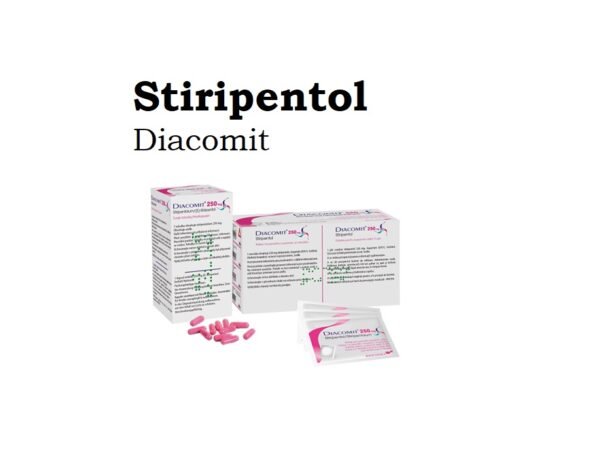
Stiripentol (Diacomit) is an anticonvulsant drug that belongs to a different class of medicines called aromatic allylic alcohols. It is used to treat seizures in patients with Dravet syndrome.
Stiripentol Uses:
-
Dravet syndrome:
- Adjunctive treatment of refractory generalized tonic-clonic seizures in combination with clobazam and valproic acid (off-label) in patients of age ≥2 years with Dravet syndrome (previously known as severe myoclonic epilepsy in infancy) (Chiron 2000; Wirrell 2016).
Stiripentol (Diacomit) Dose in Adults
Note:
- Not appropriate for monotherapy.
- The dosage of concomitant clobazam and valproate may need adjustment.
- Systemic exposure is slightly higher with the suspension powder than that observed with capsules;
- patient monitoring is strictly recommended when changes between dosage forms are required (Canadian labeling).
Stiripentol (Diacomit) Dose in the treatment of Dravet syndrome as adjunctive therapy) :
- Oral: Usual: 50 mg/kg/day given in 2 or 3 divided doses per day.
- Maximum dose: 3 g/day (manufacturer’s labeling).
- Some experts recommend initiating with 10 to 15 mg/kg/day and increasing to a target dose of 50 mg/kg/day over 2 to 4 weeks.
Stiripentol (Diacomit) Dose in Childrens
Note:
- FDA approved in combination with clobazam;
- international labeling (European Medicines Agency, Health Canada) suggested combination with clobazam and valproic acid.
- Other concomitant antiepileptic agents have been studied as well (eg, topiramate) and efficacy data are changing continuously; although, experts recommend avoiding sodium channel blockers (eg, carbamazepine) which may exacerbate seizures.
- The concomitant dosage of clobazam and/or valproate may need adjustment with initiation of stiripentol.
- Systemic exposure is slightly higher with the powder for suspension than that observed with capsules; patient monitoring is recommended when switching between dosage forms.
- Two strengths of powder packets are available (250 mg and 500 mg);
- may combine the two strengths to achieve the appropriate dosage; ensure appropriate product selection.
Stiripentol (Diacomit) Dose in the treatment of Dravet syndrome as adjunctive therapy:
-
Children and Adolescents: Limited data available in children <2 years of age:
- Oral: 50 mg/kg/day in 2 or 3 divided doses; round dose to nearest available dosage form;
- The maximum daily dose: 3,000 mg/day.
- Some experts recommend initiating at a lower dosage of 10 to 15 mg/kg/day in divided doses and titrating to initial target dose of 50 mg/kg/day over a 2- to 4-week period.
- Pharmacokinetic modeling studies indicate adolescents may require lower doses of 20 to 30 mg/kg/day.
Pregnancy Risk Category: Not assigned
- Animal reproduction studies have shown that adverse events were reported. We have not found any information regarding the use of stiripentol in pregnancy.
- Stiripentol can be used with clobazam and valproic acids (off-label); see individual monographs to get more information.
- Monitoring of pregnancy and infant adverse reactions to stiripentol exposure is ongoing.
Use of stiripentol while breastfeeding
- It is unknown if stiripentol can be found in breast milk.
- Stiripentol can be used with clobazam and valproic acids (off-label); see individual monographs to get more information.
- According to the drugmaker the decision to discontinue or continue breastfeeding during therapy must be made taking into consideration the risks of infant exposure as well as the benefits to the infant and the mother from treatment.
Stiripentol (Diacomit) Dose in Kidney Disease:
- The drug manufacturer's labeling does not include any dosage adjustments (has not yet been studied).
- Take care with mild impairment. Use caution.
- Patients with severe or moderate renal impairment should not use this product.
Stiripentol (Diacomit) Dose in Liver disease:
- The drug manufacturer's labeling does not contain any dosage adjustments (has not been tested).
- Take care with mild impairment; titrate the dose to control seizures and tolerability. The metabolism is primarily liver-based.
- Patients with severe or moderate hepatic impairment should not use this product.
Note:
- Adverse reactions reported with combination (clobazam) therapy.
Common Side Effects of Stiripentol (Diacomit):
-
Central Nervous System:
- Drowsiness
- Agitation
- Ataxia
- Hypotonia
- Dysarthria
- Insomnia
-
Endocrine & Metabolic:
- Weight Loss
-
Gastrointestinal:
- Decreased Appetite
- Nausea
-
Hematologic & Oncologic:
- Decreased Platelet Count
- Neutropenia
-
Neuromuscular & Skeletal:
- Tremor
Less Common Side Effects of Stiripentol (Diacomit):
-
Central Nervous System:
- Aggressive Behavior
- Fatigue
-
Endocrine & Metabolic:
- Weight Gain
-
Gastrointestinal:
- Vomiting
- Sialorrhea
-
Respiratory:
- Bronchitis
- Nasopharyngitis
-
Miscellaneous:
- Fever
Contraindications to Stiripentol (Diacomit):
- Hypersensitivity to stiripentol and any other component of the formulation
Warnings and precautions
-
Weight loss/appetite
- Clinical trials have shown that weight loss and appetite reduction were observed in 46% of patients and 27% of those who had participated (mean age 9.2 years).
- Monitor the growth rate for pediatric patients.
- A 30% reduction in the dose of valproate may be helpful for weight loss and appetite control.
-
Blood dyscrasias
- In clinical trials, thrombocytopenia and neutropenia were observed. Monitor CBC during therapy.
-
Depression in the CNS:
- CNS depression can occur (eg, sleepiness, drowsiness), and may cause impairment of physical or mental abilities.
- Patients should be warned about driving or operating machinery that requires mental alertness.
- Consider adjusting the dosage of Clobazam or other antiseizure medications if you experience CNS depression while taking clobazam.
-
Suicidal thoughts:
- A pooled analysis of antiepileptic trials, regardless of their indication, showed an increase in suicidal thoughts and behavior (incidence rate of 0.43% treated patients versus 0.24% placebo); this risk was evident as soon as one week after the initiation of the drug and continued for most of the trial's duration (most trials were less than 24 weeks).
- Watch out for any changes in behavior or thoughts that could indicate depression or suicidal thoughts. Notify your health care provider immediately if you notice these symptoms.
-
Hepatic impairment
- Patients with mild impairment should be cautious; the liver metabolism is the primary focus.
- Patients with severe or moderate hepatic impairment should not use this product.
-
Renal impairment
- Patients with mild impairment should be cautious; elimination of metabolites occurs primarily through the kidneys.
- Patients with severe or moderate renal impairment should not use this product.
Stiripentol: Drug Interaction
|
Abiraterone Acetate |
May increase the serum concentration of CYP1A2 Substrates (High risk with Inhibitors). |
|
Agomelatine |
CYP1A2 Inhibitors (Moderate) may increase the serum concentration of Agomelatine. |
|
Alizapride |
May enhance the CNS depressant effect of CNS Depressants. |
|
Bosentan |
May decrease the serum concentration of CYP3A4 Substrates (High risk with Inducers). |
|
Brexanolone |
CNS Depressants may enhance the CNS depressant effect of Brexanolone. |
|
Brimonidine (Topical) |
May enhance the CNS depressant effect of CNS Depressants. |
|
Broccoli |
May decrease the serum concentration of CYP1A2 Substrates (High risk with Inducers). |
|
Bromopride |
May enhance the CNS depressant effect of CNS Depressants. |
|
Cannabidiol |
May enhance the CNS depressant effect of CNS Depressants. |
|
Cannabidiol |
CYP2C19 Inhibitors (Moderate) may increase the serum concentration of Cannabidiol. |
|
Cannabis |
May decrease the serum concentration of CYP1A2 Substrates (High risk with Inducers). |
|
Cannabis |
May enhance the CNS depressant effect of CNS Depressants. |
|
Chlorphenesin Carbamate |
May enhance the adverse/toxic effect of CNS Depressants. |
|
CloBAZam |
May increase the serum concentration of Stiripentol. Stiripentol may increase the serum concentration of CloBAZam. |
|
Clofazimine |
May increase the serum concentration of CYP3A4 Substrates (High risk with Inhibitors). |
|
CloZAPine |
CYP1A2 Inhibitors (Moderate) may increase the serum concentration of CloZAPine. |
|
CNS Depressants |
May enhance the adverse/toxic effect of other CNS Depressants. |
|
CYP1A2 Inducers (Moderate) |
May decrease the serum concentration of CYP1A2 Substrates (High risk with Inducers). |
|
CYP1A2 Inhibitors (Moderate) |
May decrease the metabolism of CYP1A2 Substrates (High risk with Inhibitors). |
|
CYP1A2 Substrates (High risk with Inhibitors) |
CYP1A2 Inhibitors (Moderate) may decrease the metabolism of CYP1A2 Substrates (High risk with Inhibitors). |
|
CYP2C19 Inducers (Moderate) |
May decrease the serum concentration of CYP2C19 Substrates (High risk with Inducers). |
|
CYP2C19 Inhibitors (Moderate) |
May decrease the metabolism of CYP2C19 Substrates (High risk with Inhibitors). |
|
CYP2C19 Substrates (High risk with Inhibitors) |
CYP2C19 Inhibitors (Moderate) may decrease the metabolism of CYP2C19 Substrates (High risk with Inhibitors). |
|
CYP3A4 Inducers (Moderate) |
May decrease the serum concentration of CYP3A4 Substrates (High risk with Inducers). |
|
CYP3A4 Inhibitors (Moderate) |
May decrease the metabolism of CYP3A4 Substrates (High risk with Inhibitors). |
|
Deferasirox |
May decrease the serum concentration of CYP3A4 Substrates (High risk with Inducers). |
|
Deferasirox |
May increase the serum concentration of CYP1A2 Substrates (High risk with Inhibitors). |
|
Dimethindene (Topical) |
May enhance the CNS depressant effect of CNS Depressants. |
|
Doxylamine |
May enhance the CNS depressant effect of CNS Depressants. Management: The manufacturer of Diclegis (doxylamine/pyridoxine), intended for use in pregnancy, specifically states that use with other CNS depressants is not recommended. |
|
Dronabinol |
May enhance the CNS depressant effect of CNS Depressants. |
|
Esketamine |
May enhance the CNS depressant effect of CNS Depressants. |
|
Fosnetupitant |
May increase the serum concentration of CYP3A4 Substrates (High risk with Inhibitors). |
|
HydrOXYzine |
May enhance the CNS depressant effect of CNS Depressants. |
|
Kava Kava |
May enhance the adverse/toxic effect of CNS Depressants. |
|
Lofexidine |
May enhance the CNS depressant effect of CNS Depressants. Management: Drugs listed as exceptions to this monograph are discussed in further detail in separate drug interaction monographs. |
|
Magnesium Sulfate |
May enhance the CNS depressant effect of CNS Depressants. |
|
MetyroSINE |
CNS Depressants may enhance the sedative effect of MetyroSINE. |
|
Mianserin |
May diminish the therapeutic effect of Anticonvulsants. |
|
Minocycline |
May enhance the CNS depressant effect of CNS Depressants. |
|
Nabilone |
May enhance the CNS depressant effect of CNS Depressants. |
|
Netupitant |
May increase the serum concentration of CYP3A4 Substrates (High risk with Inhibitors). |
|
Obeticholic Acid |
May increase the serum concentration of CYP1A2 Substrates (High risk with Inhibitors). |
|
Orlistat |
May decrease the serum concentration of Anticonvulsants. |
|
Peginterferon Alfa-2b |
May increase the serum concentration of CYP1A2 Substrates (High risk with Inhibitors). |
|
Piribedil |
CNS Depressants may enhance the CNS depressant effect of Piribedil. |
|
Pramipexole |
CNS Depressants may enhance the sedative effect of Pramipexole. |
|
ROPINIRole |
CNS Depressants may enhance the sedative effect of ROPINIRole. |
|
Rotigotine |
CNS Depressants may enhance the sedative effect of Rotigotine. |
|
Rufinamide |
May enhance the adverse/toxic effect of CNS Depressants. Specifically, sleepiness and dizziness may be enhanced. |
|
Sarilumab |
May decrease the serum concentration of CYP3A4 Substrates (High risk with Inducers). |
|
Selective Serotonin Reuptake Inhibitors |
CNS Depressants may enhance the adverse/toxic effect of Selective Serotonin Reuptake Inhibitors. Specifically, the risk of psychomotor impairment may be enhanced. |
|
Siltuximab |
May decrease the serum concentration of CYP3A4 Substrates (High risk with Inducers). |
|
Teriflunomide |
May decrease the serum concentration of CYP1A2 Substrates (High risk with Inducers). |
|
Tetrahydrocannabinol |
May enhance the CNS depressant effect of CNS Depressants. |
|
Tetrahydrocannabinol and Cannabidiol |
May enhance the CNS depressant effect of CNS Depressants. |
|
Tocilizumab |
May decrease the serum concentration of CYP3A4 Substrates (High risk with Inducers). |
|
Trimeprazine |
May enhance the CNS depressant effect of CNS Depressants. |
|
Risk Factor D (Consider therapy modification) |
|
|
Blonanserin |
CNS Depressants may enhance the CNS depressant effect of Blonanserin. |
|
Buprenorphine |
|
|
Chlormethiazole |
May enhance the CNS depressant effect of CNS Depressants. Management: Monitor closely for evidence of excessive CNS depression. The chlormethiazole labeling states that an appropriately reduced dose should be used if such a combination must be used. |
|
Cilostazol |
CYP2C19 Inhibitors may increase the serum concentration of Cilostazol. Management: Consider reducing the cilostazol dose to 50 mg twice daily in patients who are also receiving inhibitors of CYP2C19. |
|
Citalopram |
CYP2C19 Inhibitors (Moderate) may increase the serum concentration of Citalopram. Management: Limit citalopram dose to a maximum of 20 mg/day if used with a moderate CYP2C19 inhibitor. Patients using this combination should be monitored closely for evidence of citalopram toxicity (e.g., serotonin syndrome, QT prolongation, etc.). |
|
Clopidogrel |
CYP2C19 Inhibitors (Moderate) may decrease serum concentrations of the active metabolite(s) of Clopidogrel. Management: Due to a risk for impaired clopidogrel effectiveness with such a combination, carefully consider the need for a moderate CYP2C19 inhibitor in patients receiving clopidogrel. Monitor patients closely for evidence of a diminished response to clopidogrel. |
|
CYP1A2 Inhibitors (Strong) |
May decrease the metabolism of CYP1A2 Substrates (High risk with Inhibitors). |
|
CYP2C19 Inducers (Strong) |
May increase the metabolism of CYP2C19 Substrates (High risk with Inducers). Management: Consider an alternative for one of the interacting drugs. Some combinations may be specifically contraindicated. Consult appropriate manufacturer labeling. |
|
CYP2C19 Inhibitors (Strong |
May decrease the metabolism of CYP2C19 Substrates (High risk with Inhibitors). |
|
CYP3A4 Inducers (Strong) |
May increase the metabolism of CYP3A4 Substrates (High risk with Inducers). Management: Consider an alternative for one of the interacting drugs. Some combinations may be specifically contraindicated. Consult appropriate manufacturer labeling. |
|
CYP3A4 Inhibitors (Strong) |
May decrease the metabolism of CYP3A4 Substrates (High risk with Inhibitors). |
|
CYP3A4 Substrates (High risk with Inhibitors) |
Stiripentol may increase the serum concentration of CYP3A4 Substrates (High risk with Inhibitors). Management: Use of stiripentol with CYP3A4 substrates that are considered to have a narrow therapeutic index should be avoided due to the increased risk for adverse effects and toxicity. Any CYP3A4 substrate used with stiripentol requires closer monitoring. |
|
Dabrafenib |
May decrease the serum concentration of CYP3A4 Substrates (High risk with Inducers). Management: Seek alternatives to the CYP3A4 substrate when possible. If concomitant therapy cannot be avoided, monitor clinical effects of the substrate closely (particularly therapeutic effects). |
|
Dabrafenib |
May decrease the serum concentration of CYP2C19 Substrates (High risk with Inducers). Management: Seek alternatives to the CYP2C19 substrate when possible. If concomitant therapy cannot be avoided, monitor clinical effects of the substrate closely (particularly therapeutic effects). |
|
Droperidol |
May enhance the CNS depressant effect of CNS Depressants. Management: Consider dose reductions of droperidol or of other CNS agents (eg, opioids, barbiturates) with concomitant use. Exceptions to this monograph are discussed in further detail in separate drug interaction monographs. |
|
Enzalutamide |
May decrease the serum concentration of CYP3A4 Substrates (High risk with Inducers). Management: Concurrent use of enzalutamide with CYP3A4 substrates that have a narrow therapeutic index should be avoided. Use of enzalutamide and any other CYP3A4 substrate should be performed with caution and close monitoring. |
|
Enzalutamide |
May decrease the serum concentration of CYP2C19 Substrates (High risk with Inducers). Conversely, concentrations of active metabolites may be increased for those drugs activated by CYP2C19. Management: Concurrent use of enzalutamide with CYP2C19 substrates that have a narrow therapeutic index should be avoided. Use of enzalutamide and any other CYP2C19 substrate should be performed with caution and close monitoring. |
|
Flunitrazepam |
CNS Depressants may enhance the CNS depressant effect of Flunitrazepam. |
|
HYDROcodone |
CNS Depressants may enhance the CNS depressant effect of HYDROcodone. Management: Avoid concomitant use of hydrocodone and benzodiazepines or other CNS depressants when possible. These agents should only be combined if alternative treatment options are inadequate. If combined, limit the dosages and duration of each drug. |
|
Lorlatinib |
May decrease the serum concentration of CYP3A4 Substrates (High risk with Inducers). Management: Avoid concurrent use of lorlatinib with any CYP3A4 substrates for which a minimal decrease in serum concentrations of the CYP3A4 substrate could lead to therapeutic failure and serious clinical consequences. |
|
Mefloquine |
May diminish the therapeutic effect of Anticonvulsants. Mefloquine may decrease the serum concentration of Anticonvulsants. Management: Mefloquine is contraindicated for malaria prophylaxis in persons with a history of convulsions. Monitor anticonvulsant concentrations and treatment response closely with concurrent use. |
|
Methotrimeprazine |
CNS Depressants may enhance the CNS depressant effect of Methotrimeprazine. Methotrimeprazine may enhance the CNS depressant effect of CNS Depressants. Management: Reduce adult dose of CNS depressant agents by 50% with initiation of concomitant methotrimeprazine therapy. Further CNS depressant dosage adjustments should be initiated only after clinically effective methotrimeprazine dose is established. |
|
MiFEPRIStone |
May increase the serum concentration of CYP3A4 Substrates (High risk with Inhibitors). Management: Minimize doses of CYP3A4 substrates, and monitor for increased concentrations/toxicity, during and 2 weeks following treatment with mifepristone. Avoid cyclosporine, dihydroergotamine, ergotamine, fentanyl, pimozide, quinidine, sirolimus, and tacrolimus. |
|
Mitotane |
May decrease the serum concentration of CYP3A4 Substrates (High risk with Inducers). Management: Doses of CYP3A4 substrates may need to be adjusted substantially when used in patients being treated with mitotane. |
|
Opioid Agonists |
CNS Depressants may enhance the CNS depressant effect of Opioid Agonists. Management: Avoid concomitant use of opioid agonists and benzodiazepines or other CNS depressants when possible. These agents should only be combined if alternative treatment options are inadequate. If combined, limit the dosages and duration of each drug. |
|
OxyCODONE |
CNS Depressants may enhance the CNS depressant effect of OxyCODONE. Management: Avoid concomitant use of oxycodone and benzodiazepines or other CNS depressants when possible. These agents should only be combined if alternative treatment options are inadequate. If combined, limit the dosages and duration of each drug. |
|
Perampanel |
May enhance the CNS depressant effect of CNS Depressants. Management: Patients taking perampanel with any other drug that has CNS depressant activities should avoid complex and high-risk activities, particularly those such as driving that require alertness and coordination, until they have experience using the combination. |
|
Pirfenidone |
CYP1A2 Inhibitors (Moderate) may increase the serum concentration of Pirfenidone. Management: Use any such combination with caution and close monitoring for pirfenidone toxicity. Avoid the use of pirfenidone with moderate CYP1A2 inhibitors whenever CYP2C9, 2C19, 2C6, or 2E1 is also inhibited (either by the CYP1A2 inhibitor or by a third drug). |
|
Rasagiline |
CYP1A2 Inhibitors (Moderate) may increase the serum concentration of Rasagiline. Management: Limit rasagiline dose to 0.5 mg once daily in patients taking moderate CYP1A2 inhibitors. |
|
Sodium Oxybate |
May enhance the CNS depressant effect of CNS Depressants. Management: Consider alternatives to combined use. When combined use is needed, consider minimizing doses of one or more drugs. Use of sodium oxybate with alcohol or sedative hypnotics is contraindicated. |
|
St John's Wort |
May decrease the serum concentration of CYP3A4 Substrates (High risk with Inducers). Management: Consider an alternative for one of the interacting drugs. Some combinations may be specifically contraindicated. Consult appropriate manufacturer labeling. |
|
Suvorexant |
CNS Depressants may enhance the CNS depressant effect of Suvorexant. Management: Dose reduction of suvorexant and/or any other CNS depressant may be necessary. Use of suvorexant with alcohol is not recommended, and the use of suvorexant with any other drug to treat insomnia is not recommended. |
|
Tapentadol |
May enhance the CNS depressant effect of CNS Depressants. Management: Avoid concomitant use of tapentadol and benzodiazepines or other CNS depressants when possible. These agents should only be combined if alternative treatment options are inadequate. If combined, limit the dosages and duration of each drug. |
|
TiZANidine |
CYP1A2 Inhibitors (Moderate) may increase the serum concentration of TiZANidine. Management: If combined use cannot be avoided, initiate tizanidine in adults at 2 mg and increase in 2 to 4 mg increments based on patient response. Monitor for increased effects of tizanidine, including adverse reactions. |
|
Vemurafenib |
May increase the serum concentration of CYP1A2 Substrates (High risk with Inhibitors). Management: Consider alternatives to such combinations whenever possible, particularly if the CYP1A2 substrate has a relatively narrow therapeutic index. Drugs listed as exceptions to this monograph are discussed in separate drug interaction monographs. |
|
Zolpidem |
CNS Depressants may enhance the CNS depressant effect of Zolpidem. Management: Reduce the Intermezzo brand sublingual zolpidem adult dose to 1.75 mg for men who are also receiving other CNS depressants. No such dose change is recommended for women. Avoid use with other CNS depressants at bedtime; avoid use with alcohol. |
|
Risk Factor X (Avoid combination) |
|
|
Alcohol (Ethyl) |
Stiripentol may enhance the sedative effect of Alcohol (Ethyl). |
|
Alosetron |
CYP1A2 Inhibitors (Moderate) may increase the serum concentration of Alosetron. |
|
Azelastine (Nasal) |
CNS Depressants may enhance the CNS depressant effect of Azelastine (Nasal). |
|
Bromperidol |
May enhance the CNS depressant effect of CNS Depressants. |
|
Caffeine and Caffeine Containing Products |
Stiripentol may increase the serum concentration of Caffeine and Caffeine Containing Products. |
|
CarBAMazepine |
Stiripentol may increase the serum concentration of CarBAMazepine. |
|
Conivaptan |
May increase the serum concentration of CYP3A4 Substrates (High risk with Inhibitors). |
|
Fusidic Acid (Systemic) |
May increase the serum concentration of CYP3A4 Substrates (High risk with Inhibitors). |
|
Idelalisib |
May increase the serum concentration of CYP3A4 Substrates (High risk with Inhibitors). |
|
Orphenadrine |
CNS Depressants may enhance the CNS depressant effect of Orphenadrine. |
|
Oxomemazine |
May enhance the CNS depressant effect of CNS Depressants. |
|
Paraldehyde |
CNS Depressants may enhance the CNS depressant effect of Paraldehyde. |
|
PHENobarbital |
May decrease the serum concentration of Stiripentol. |
|
Phenytoin |
Stiripentol may decrease the serum concentration of Phenytoin. |
|
Thalidomide |
CNS Depressants may enhance the CNS depressant effect of Thalidomide. |
|
Theophylline |
Stiripentol may increase the serum concentration of Theophylline. |
Monitoring parameters:
- CBC (prior to initiation and every 6 months or as clinically indicated thereafter);
- weight;
- growth rate in children.
How to administer Stiripentol (Diacomit)?
- Oral: Take 2 to 3 divided doses each day with a meal.
- Capsules should be swallowed whole, with a glass water.
- Do not crush, chew or open capsules.
- Mix powder for suspension with one glass of water immediately.
- To ensure that there are no leftover medication, you can add a small amount (eg 25 mL) of water to the dosing cups.
Mechanism of action of Stiripentol (Diacomit):
- It is not known what mechanism causes anticonvulsant effects.
- GABAergic inhibitory neurotransmission may be enhanced by weak partial agonism, and/or positive allosteric stimulation of the gammaaminobutyric acids (GABA-A) receptors (Fisher 2009).
- It also inhibits multiple cytochrome P450 enzymes involved in the metabolism other anticonvulsants. Concurrent use could increase their systemic exposure or efficacy. Pharmacodynamics and Pharmacokinetics
Absorption:
- Well absorbed; high first-pass metabolism (Walker 1995).
- The maximum concentration achieved with suspension powder is slightly lower than the one reported with capsules (Diacomit prescribing info [Canada 2012]).
Protein binding:
- Plasma proteins 99%
Metabolism:
- Hepatic through demethylation, primarily via CYP1A2, 3A4, and glucuronidation. (Moreland 1986).
Bioavailability:
- 30% (Walker 1995)
Half-life elimination:
- Adults: 4.5 to 13 hours (dose-dependent)
Time to peak:
- Median: 2 to 3 hours
Excretion:
- Urine (73%, primarily metabolites); feces (18% as unchanged drug) (Moreland 1986)
International Brands of Stiripentol:
- Diacomit
Stiripentol Brand Names in Pakistan:
No Brands Available in Pakistan.
.png)


