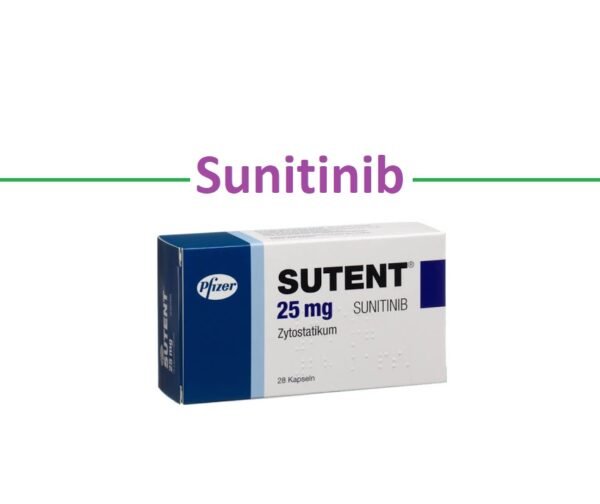
Sunitinib (Sutent) is an oral, small-molecule, multi-targeted receptor tyrosine kinase (RTK) inhibitor that is used to treat patients with renal cell carcinoma (RCC), advanced pancreatic neuroendocrine tumors, and imatinib-resistant gastrointestinal stromal tumor (GIST).
Sunitinib (Sutent) Uses:
-
Gastrointestinal stromal tumor:
- Treatment of gastrointestinal stromal tumor (GIST) after disease progression or intolerance to imatinib.
-
Advanced pancreatic neuroendocrine tumors:
- Treatment of progressive, well-differentiated pancreatic neuroendocrine tumors in patients with non-resectable locally advanced or metastatic disease.
-
Renal cell carcinoma:
- Adjuvant treatment of adult patients at high risk of recurrent renal cell carcinoma (RCC) after nephrectomy;
- Treatment of advanced RCC.
-
Off Label Use of Sunitinib in Adult
- Thyroid cancer;
- Soft tissue sarcoma (non-GIST)
Sunitinib (Sutent) Dose inSunitinib (Sutent) Dose in Adults
Sunitinib (Sutent) Dose in the treatment of gastrointestinal stromal tumor (GIST):
- Oral: 50 mg once daily for 4 weeks of a 6-week treatment cycle (4 weeks on, 2 weeks off)
-
GIST off-label dosing:
- Oral: 37.5 mg once daily, continuous daily dosing.
Sunitinib (Sutent) Dose in the treatment of advanced pancreatic neuroendocrine tumors, (PNET):
- Oral: 37.5 mg once daily, continuous daily dosing.
- The maximum daily dose used in clinical trials was 50 mg
Sunitinib (Sutent) Dose in the treatment of the adjuvant treatment of Renal cell cancer:
- Oral: 50 mg once daily for 4 weeks of the 6-week treatment cycle (4 weeks on, 2 weeks off) for total of 9 cycles.
- The minimum daily dose used in clinical trials was 37.5 mg.
Sunitinib (Sutent) Dose in the treatment of advanced Renal cell cancer:
- Oral: 50 mg once daily for 4 weeks of a 6-week treatment cycle (4 weeks on, 2 weeks off).
Sunitinib (Sutent) Dose in the treatment of Soft tissue sarcoma, non-GIST (off-label):
- Oral: 37.5 mg once daily, continuous daily dosing.
Sunitinib (Sutent) Dose in the treatment of Thyroid cancer, refractory (off-label):
- Oral: 50 mg once daily for 4 weeks of a 6-week treatment cycle (4 weeks on, 2 weeks off).
-
Dosage adjustment with concurrent strong CYP3A4 inhibitor:
- Avoid concurrent use with strong CYP3A4 inhibitors (eg, ketoconazole);
- If, cannot be avoided, reduce the dose to a minimum of 37.5 mg/day (GIST, RCC) or 25 mg/day (PNET).
-
Dosage adjustment with concurrent CYP3A4 inducer:
- Avoid concurrent use with CYP3A4 inducers (eg, rifampin);
- If unavoidable, increase the dose (with careful monitoring for toxicity) to a maximum of 87.5 mg/day (GIST, RCC) or 62.5 mg/day (PNET).
Use in Children:
Not indicated.
Sunitinib (Sutent) Pregnancy Risk Category: D
- Based on animal reproduction studies and the mechanism of action, sunitinib could cause fetal harm if it is used during pregnancy.
- Sunitinib inhibits Angiogenesis. Expect adverse effects on the fetal development during pregnancy
- Prevent pregnancy in women with reproductive potential. Use effective contraception during treatment.
- Effective contraception should be used by male patients who have female partners with reproductive potential during treatment and for seven weeks after the last sunitinib dosage.
- This may affect both male and female fertility.
Sunitinib can be used during breastfeeding
- Sunitinib may be present in human milk, but it is not known.
- Breastfeeding is not recommended by the manufacturer because of the risk of serious adverse reactions in breastfed infants.
- It should be continued for at least four weeks after the last sunitinib treatment.
Sunitinib (Sutent) Dose in Kidney Disease:
- CrCl ≥30 mL/minute:
- No initial adjustment needed; further adjustments may be required based on safety and tolerance.
- CrCl <30 mL/minute (not on hemodialysis):
- No initial adjustment needed; further adjustments may be required according to safety and tolerance.
- ESRD on hemodialysis:
- No initial adjustment needed; further dosage increases (up to twofold) may be needed because of reduced (47%) exposure
Sunitinib (Sutent) Dose in Liver disease:
- Pre-existing hepatic impairment:
- No adjustment needed with mild-to-moderate (Child-Pugh class A or B) hepatic impairment; no studies in patients with severe (Child-Pugh class C) hepatic impairment.
- Studies excluded patients with ALT or AST >2.5 x ULN, or if due to liver metastases, ALT or AST >5 x ULN.
- Hepatotoxicity during treatment:
- Hepatic adverse events ≥ grade 3 or 4:
- Withhold treatment; discontinue if hepatotoxicity does not improve. Do not restart in patients with severe changes in liver function tests or other signs/symptoms of liver failure.
- Hepatic adverse events ≥ grade 3 or 4:
Common Side Effects of Sunitinib (Sutent):
-
Cardiovascular:
- Increased Serum Creatine Kinase
- Hypertension
- Peripheral Edema
- Decreased Left Ventricular Ejection Fraction
- Chest Pain
-
Central Nervous System:
- Fatigue
- Headache
- Insomnia
- Chills
- Mouth Pain
- Depression
- Dizziness
-
Dermatologic:
- Palmar-Plantar Erythrodysesthesia
- Skin Discoloration
- Skin Rash
- Hair Discoloration
- Xeroderma
- Alopecia
- Erythema Of Skin
- Pruritus
-
Endocrine & Metabolic:
- Increased Uric Acid
- Decreased Serum Calcium
- Decreased Serum Albumin
- Decreased Serum Phosphate
- Hypothyroidism
- Increased Thyroid Stimulating Hormone Level
- Decreased Serum Potassium
- Decreased Serum Sodium
- Decreased Serum Magnesium
- Weight Loss
- Increased Serum Calcium
- Increased Serum Sodium
-
Gastrointestinal:
- Diarrhea
- Stomatitis
- Nausea
- Increased Serum Lipase
- Anorexia
- Dysgeusia
- Abdominal Pain
- Vomiting
- Increased Serum Amylase
- Dyspepsia
- Constipation
- Decreased Appetite
- Flatulence
- Xerostomia
- Gastroesophageal Reflux Disease
- Glossalgia
-
Hematologic & Oncologic:
- Decreased Hemoglobin
- Lymphocytopenia
- Hemorrhage
- Neutropenia
-
Hepatic:
- Increased Serum Aspartate Aminotransferase
- Increased Serum Alanine Aminotransferase
- Increased Serum Alkaline Phosphatase
- Increased Serum Bilirubin
- Increased Indirect Serum Bilirubin
-
Local:
- Localized Edema
-
Neuromuscular & Skeletal:
- Asthenia
- Limb Pain
- Arthralgia
- Back Pain
- Myalgia
-
Renal:
- Increased Serum Creatinine
-
Respiratory:
- Cough
- Dyspnea
- Epistaxis
- Nasopharyngitis
- Oropharyngeal Pain
- Upper Respiratory Tract Infection
-
Miscellaneous:
- Fever
Less Common Side Effects Of Sunitinib (Sutent):
-
Cardiovascular:
- Edema
- Venous Thromboembolism
- Cardiac Failure
-
Endocrine & Metabolic:
- Hypoglycemia
- Hyperglycemia
- Hyperkalemia
-
Gastrointestinal:
- Hemorrhoids
- Pancreatitis
-
Hematologic & Oncologic:
- Thrombocytopenia
- Leukopenia
-
Respiratory:
- Flu-Like Symptoms
Side effects of Sunitinib (Sutent) Frequency Not Defined:
-
Gastrointestinal:
- Aphthous Stomatitis
- Dry Mucous Membranes
- Gingival Pain
- Gingivitis
- Glossitis
- Hematemesis
- Hematochezia
- Melena
- Oral Discomfort
- Oral Mucosal Ulcer
- Tongue Ulcer
-
Genitourinary:
- Abnormal Uterine Bleeding
-
Hematologic & Oncologic:
- Hematoma
-
Respiratory:
- Hemoptysis
Contraindications to Sunitinib (Sutent):
- Based on animal reproduction studies and the mechanism of action, sunitinib could cause fetal harm if it is used during pregnancy.
- Sunitinib inhibits Angiogenesis. Expect adverse effects on the fetal development during pregnancy
- Prevent pregnancy in women with reproductive potential. Use effective contraception during treatment.
- Effective contraception should be used by male patients who have female partners with reproductive potential during treatment and for seven weeks after the last sunitinib dosage.
- This may affect both male and female fertility.
There are no contraindications on the US manufacturer's labeling. Canadian labeling: Hypersensitivity or any component of sunitinib; pregnancy
Warnings and precautions
-
Cardiovascular events
- There have been reports of cardiovascular events (some fatal), such as heart failure (HF), myocardial infarction, myocardial ischemia (MI), and cardiomyopathy (cardiomyopathy).
- Before treatment, consider baseline left ventricular ejection factor (LVEF) assessment in patients with no cardiac risk factors. Also, be sure to watch for signs/symptoms that may indicate heart failure. Consider periodic LVEF assessments.
- If you experience symptoms or signs of heart disease, discontinue treatment.
- Patients without clinical signs/symptoms may be treated with withhold therapy or decreased dose of LVEF (50%, >20% from baseline, or below the lower limit normal if there is no baseline ejection fraction).
- Some patients may experience a slight improvement in HF.
- Patients who had suffered from cardiac events in the past 12 months (including severe/unstable heart attacks, bypass grafts, symptomatic high blood pressure, cerebrovascular accident and transient ischemic attack) were excluded from clinical trials. Additionally, patients who have used anthracycline or received cardiac radiation before were excluded from clinical trials. It is not known if patients with these conditions are at greater risk of left ventricular dysfunction.
-
Dermatologic toxicities
- Severe cutaneous reactions including Stevens-Johnson syndrome, erythema multiforme, and toxic epidermal necrolysis have been reported (some fatal). If you notice signs/symptoms such as EM, SJS or TEN (progressive rash often with blisters, mucosal lesions, or EM), stop sunitinib.
- If SJS or TEN are suspected, do not restart treatment.
- Necrotizing fasciitis has been seen (with fatalities), including perineum necrotizing faciitis and fasciitis secondary fistula formation.
- Patients with necrotizing fasciitis should be discontinued on sunitinib
- Sunitinib can cause skin or hair discoloration and/or depigmentation.
-
Complications of the gastrointestinal tract:
- Patients with intra-abdominal cancers have had serious and fatal GI complications including GI perforation.
- RCC patients have been known to suffer from pancreatitis.
-
Reaction to skin on the hand-foot:
- Hand-foot skin reaction (HFSR), is a side effect of tyrosine-kinase inhibitors. TKIs include sunitinib. It is distinct from the hand-foot syndrome (palmar erythrodysesthesia), which is associated with conventional chemotherapy agents. HFSR caused by TKIs is localized and may present with defined hyperkeratotic lesion.
- These treatments can be used in conjunction with the recommended dosage adjustments.
- A pedicure before starting treatment is recommended. This will remove any hyperkeratotic calluses or areas that could be predisposing to HFSR. Avoid vigorous exercise/activities which may stress the hands and feet.
- Patients should avoid excessive skin friction and reduce their exposure to hot water during therapy.
- Patients can also wear thick cotton socks or gloves and should wear shoes that have padded insoles.
- Grade 1 HFSR can be treated with moisturizing creams and cotton gloves (at night), and/or keratolytic crèmes like urea (20%-40%) or salicylic Acid (6%).
- To control pain, apply a topical steroid (eg clobetasol cream ointment), twice daily to the erythematous zones of grade 2 HFSR.
- Keratotic areas may develop from acute erythema. These can be treated with keratolytic drugs.
-
Hemorrhage
- Post-marketing surveillance has been used to monitor hemorhagic (some fatal) events.
- Grades 3 and 4 toxicity include GI, respiratory and tumor hemorhages, as well as brain hemorhages.
- Epistaxis was the most frequently observed hemorhagic event. GI hemorhage was the most frequent >= grade 3 event.
- A tumor-related hemorhage can be observed, and it may happen suddenly.
- Patients with pulmonary tumors may experience severe hemoptysis, sometimes fatal, and pulmonary hemorhage.
- As soon as possible, monitor for bleeding signs and symptoms. Get complete blood counts if clinically necessary.
-
Hepatotoxicity: [US Boxed Warning]
- In clinical trials, and post-marketing surveillance, hepatotoxicity has been seen. It can be fatal and/or severe.
- Monitor your liver function and adjust, reduce or stop the dose as necessary.
- Jaundice, high transaminases and/or hyperbilirubinemia are all signs of liver disease. This can be combined with encephalopathy and coagulopathy and/or renal failure.
- Perform liver function testing at baseline and during each treatment cycle, if indicated by the physician.
- Refrain from receiving treatment for grade 3 and 4 hepatotoxicities. If the hepatotoxicity persists, stop taking treatment.
- Patients with severe liver dysfunction or other symptoms of liver disease should not be restarted.
- Sunitinib was not studied in patients who had ALT or AST >2.5x ULN (or >5x ULN if they have liver metastases).
-
Hypertension
- Sunitinib can cause hypertension. For severe hypertension, stop taking Sunitinib until the hypertension is under control.
- Monitor your blood pressure regularly while sunitinib is being administered. If necessary, you can start antihypertensive therapy to lower the chance of cardiotoxicity (Armenian 2017).
-
Hypoglycemia
- Sunitinib has been linked to hypoglycemia symptoms. This can lead to loss of consciousness and hospitalization.
- Patients with renal cell carcinoma and gastrointestinal tumors (GIST) experienced hypoglycemia less frequently. However, it is more common (10%) for patients with pancreatic neuroendocrine tumours (PNET). Preexisting glucose homeostasis abnormalities weren't always present in hypoglycemic PNET patients.
- Patients with diabetes may experience a greater drop in blood glucose.
- During and after treatment, monitor blood glucose levels.
- To reduce hypoglycemia, it may be necessary to modify the dosage of anti-diabetic medication.
-
Osteonecrosis in the jaw:
- Sunitinib has been used to treat osteonecrosis in the jaw (ONJ), also known as medication-related osteonecrosis.
- The risk of ONJ may be increased by concurrent bisphosphonate or dental treatment.
- A position paper from the American Association of Maxillofacial Surgeons states that MRONJ was associated with bisphosphonates, other antiresorptive drugs (denosumab), as well as antiangiogenic agents such sunitinib and bevacizumab used to treat osteoporosis and malignancy.
- Combining antiresorptive and antiangiogenic agents can increase the risk of ONJ.
- MRONJ also includes dentoalveolar and preexisting inflammatory conditions, concurrent corticosteroid usage, and dental implant surgery.
- Before starting sunitinib, have a dentist examine your mouth and perform preventive dentistry. If possible, avoid any invasive procedures for patients who are currently or previously taking bisphosphonate (especially IV bisphosphonate) medication.
- According to the AAOMS, if it is medically possible, you should delay starting antiangiogenic drugs for cancer therapy until your dental health is optimal. If extractions are necessary, anti-angiogenesis treatment should be postponed until either the extraction site has healed or the mucosa has healed.
- After antiangiogenic treatment for oncologic diseases has been initiated, it is important to avoid procedures that directly inflict the osseous and place dental implants.
- An oral surgeon should be consulted for patients who develop ONJ from therapy.
-
Nephrotic Syndrome/proteinuria:
- It has been reported that proteinuria and nephrotic symptoms have been seen; some cases even lead to renal failure or death.
- If clinically indicated, monitor for any new-onset or worsening of proteinuria by performing baseline and periodic urinalysis. Follow up with 24-hour urine protein testing if necessary.
- Reduce the dose if urine protein levels are greater than 3 g/24 hours
- Patients with persistent urine protein >=3g/24 hours or nephrotic Syndrome should be stopped from receiving treatment.
- It has not been proven safe to continue sunitinib treatment in patients suffering from moderate or severe proteinuria.
-
Extension of QTc:
- QTc prolongation has been observed and torsade des pointes have also been observed (dose dependent); patients with a history QTc prolongation or with medications known for increasing sunitinib levels, prolonging the QT interval, preexisting cardiac disease, bradycardia or electrolyte imbalance should be cautious.
- Take into account baseline and periodic 12-lead ECGs. Correct electrolyte abnormalities before treatment. Monitor and correct potassium, magnesium, and calcium levels during therapy.
-
Reversible posterior Leukoencephalopathy Syndrome:
- Rarely, but some fatal, has been reported the Reversible Poster Leukoencephalopathy Syndrome (RPLS).
- Symptoms include confusion, headaches, hypertension, lethargy and/or blindness.
-
Thyroid disorders
- Thyroid dysfunction, such as hypothyroidism or hyperthyroidism and thyroiditis, may be present.
- It has been reported that hyperthyroidism can sometimes be followed by hypothyroidism.
- Monitor your thyroid function at baseline, and watch for signs/symptoms that indicate thyroid dysfunction during treatment.
- Patients who are not on thyroid hormone replacement therapy should be monitored (TSH), every 4 weeks for 4 month, and then every 2 to 3-months; patients who were already taking levothyroxine should have their TSH checked every 4 week until levothyroxine levels stabilize. Then, every 2 months.
-
Thrombotic microangiopathy
- Sunitinib has been used as both a single therapy or in combination with bevacizumab to treat thrombotic microangiopathy, which can sometimes lead to kidney failure and even death.
- If thrombotic microangiopathy develops, discontinue sunitinib. It may be reversed.
-
Tumor lysis syndrome
- Patients with RCC and GIST have been known to experience tumor lysis syndrome (TLS), which can lead to fatalities.
- Patients with a high tumor burden before treatment are at greater risk of TLS. Be sure to monitor closely.
- Before beginning treatment, correct clinically significant dehydration.
-
Wound healing complications
- Sunitinib temporarily suspends treatment of patients who are undergoing major surgery to prevent impaired wound healing.
- It is not known when the best time to start treatment again after a procedure. The decision to resume sunitinib therapy after major surgery should be made based on your recovery.
-
Insufficiency of the renal system:
- Patients with renal impairment (CrCl =60mL/minute) who were treated with sunitinib to treat renal cell carcinoma experienced an increase in fatigue, thyroid dysfunction and treatment-induced hypertension.
Sunitinib: Drug Interaction
|
Androgens |
May enhance the hypoglycemic effect of Blood Glucose Lowering Agents. Exceptions: Danazol. |
|
Antidiabetic Agents |
May enhance the hypoglycemic effect of Hypoglycemia-Associated Agents. |
|
Aprepitant |
May increase the serum concentration of CYP3A4 Substrates (High risk with Inhibitors). |
|
Bisphosphonate Derivatives |
|
|
Bosentan |
May decrease the serum concentration of CYP3A4 Substrates (High risk with Inducers). |
|
Clofazimine |
May increase the serum concentration of CYP3A4 Substrates (High risk with Inhibitors). |
|
Coccidioides immitis Skin Test |
Immunosuppressants may diminish the diagnostic effect of Coccidioides immitis Skin Test. |
|
CYP3A4 Inducers (Moderate) |
May decrease the serum concentration of CYP3A4 Substrates (High risk with Inducers). |
|
CYP3A4 Inhibitors (Moderate) |
May decrease the metabolism of CYP3A4 Substrates (High risk with Inhibitors). |
|
Deferasirox |
May decrease the serum concentration of CYP3A4 Substrates (High risk with Inducers). |
|
Denosumab |
May enhance the adverse/toxic effect of Immunosuppressants. Specifically, the risk for serious infections may be increased. |
|
Duvelisib |
May increase the serum concentration of CYP3A4 Substrates (High risk with Inhibitors). |
|
Erdafitinib |
May decrease the serum concentration of CYP3A4 Substrates (High risk with Inducers). |
|
Erdafitinib |
May increase the serum concentration of CYP3A4 Substrates (High risk with Inhibitors). |
|
Fosaprepitant |
May increase the serum concentration of CYP3A4 Substrates (High risk with Inhibitors). |
|
Fosnetupitant |
May increase the serum concentration of CYP3A4 Substrates (High risk with Inhibitors). |
|
Haloperidol |
QT-prolonging Agents (Indeterminate Risk - Caution) may enhance the QTcprolonging effect of Haloperidol. |
|
Herbs (Hypoglycemic Properties) |
May enhance the hypoglycemic effect of HypoglycemiaAssociated Agents. |
|
Hypoglycemia-Associated Agents |
May enhance the hypoglycemic effect of other HypoglycemiaAssociated Agents. |
|
Ivosidenib |
May decrease the serum concentration of CYP3A4 Substrates (High risk with Inducers). |
|
Larotrectinib |
May increase the serum concentration of CYP3A4 Substrates (High risk with Inhibitors). |
|
Maitake |
May enhance the hypoglycemic effect of Blood Glucose Lowering Agents. |
|
Monoamine Oxidase Inhibitors |
May enhance the hypoglycemic effect of Blood Glucose Lowering Agents. |
|
Netupitant |
May increase the serum concentration of CYP3A4 Substrates (High risk with Inhibitors). |
|
NiCARdipine |
May increase the serum concentration of SUNItinib. |
|
Ocrelizumab |
May enhance the immunosuppressive effect of Immunosuppressants. |
|
Palbociclib |
May increase the serum concentration of CYP3A4 Substrates (High risk with Inhibitors). |
|
Pegvisomant |
May enhance the hypoglycemic effect of Blood Glucose Lowering Agents. |
|
Pidotimod |
Immunosuppressants may diminish the therapeutic effect of Pidotimod. |
|
Prothionamide |
May enhance the hypoglycemic effect of Blood Glucose Lowering Agents. |
|
QT-prolonging Agents (Highest Risk) |
QT-prolonging Agents (Indeterminate Risk - Caution) may enhance the QTc-prolonging effect of QT-prolonging Agents (Highest Risk). Management: Monitor for QTc interval prolongation and ventricular arrhythmias when these agents are combined. Patients with additional risk factors for QTc prolongation may be at even higher risk. |
|
Quinolones |
May enhance the hypoglycemic effect of Blood Glucose Lowering Agents. Quinolones may diminish the therapeutic effect of Blood Glucose Lowering Agents. Specifically, if an agent is being used to treat diabetes, loss of blood sugar control may occur with quinolone use. |
|
Salicylates |
May enhance the hypoglycemic effect of Blood Glucose Lowering Agents. |
|
Sarilumab |
May decrease the serum concentration of CYP3A4 Substrates (High risk with Inducers). |
|
Selective Serotonin Reuptake Inhibitors |
May enhance the hypoglycemic effect of Blood Glucose Lowering Agents. |
|
Siltuximab |
May decrease the serum concentration of CYP3A4 Substrates (High risk with Inducers). |
|
Simeprevir |
May increase the serum concentration of CYP3A4 Substrates (High risk with Inhibitors). |
|
Siponimod |
Immunosuppressants may enhance the immunosuppressive effect of Siponimod. |
|
Tertomotide |
Immunosuppressants may diminish the therapeutic effect of Tertomotide. |
|
Tocilizumab |
May decrease the serum concentration of CYP3A4 Substrates (High risk with Inducers). |
|
Trastuzumab |
May enhance the neutropenic effect of Immunosuppressants. |
|
Risk Factor D (Consider therapy modification) |
|
|
Baricitinib |
Immunosuppressants may enhance the immunosuppressive effect of Baricitinib. Management: Use of baricitinib in combination with potent immunosuppressants such as azathioprine or cyclosporine is not recommended. Concurrent use with antirheumatic doses of methotrexate or nonbiologic disease modifying antirheumatic drugs (DMARDs) is permitted. |
|
CYP3A4 Inducers (Strong) |
|
|
CYP3A4 Inhibitors (Strong) |
May increase the serum concentration of SUNItinib. Management: Avoid when possible. If such a combination cannot be avoided, sunitinib dose decreases are recommended, and vary by indication. See full monograph for details. |
|
Dabrafenib |
May decrease the serum concentration of CYP3A4 Substrates (High risk with Inducers). Management: Seek alternatives to the CYP3A4 substrate when possible. If concomitant therapy cannot be avoided, monitor clinical effects of the substrate closely (particularly therapeutic effects). |
|
Echinacea |
May diminish the therapeutic effect of Immunosuppressants. |
|
Enzalutamide |
May decrease the serum concentration of CYP3A4 Substrates (High risk with Inducers). Management: Concurrent use of enzalutamide with CYP3A4 substrates that have a narrow therapeutic index should be avoided. Use of enzalutamide and any other CYP3A4 substrate should be performed with caution and close monitoring. |
|
Fingolimod |
Immunosuppressants may enhance the immunosuppressive effect of Fingolimod. Management: Avoid the concomitant use of fingolimod and other immunosuppressants when possible. If combined, monitor patients closely for additive immunosuppressant effects (eg, infections). |
|
Grapefruit Juice |
May increase the serum concentration of SUNItinib. Management: Advise patients to avoid consuming grapefruit and grapefruit juice during sunitinib treatment. |
|
Itraconazole |
May increase the serum concentration of SUNItinib. Management: Avoid when possible. If such a combination cannot be avoided, sunitinib dose decreases are recommended, and vary by indication. See full monograph for details. |
|
Leflunomide |
Immunosuppressants may enhance the adverse/toxic effect of Leflunomide. Specifically, the risk for hematologic toxicity such as pancytopenia, agranulocytosis, and/or thrombocytopenia may be increased. Management: Consider not using a leflunomide loading dose in patients receiving other immunosuppressants. Patients receiving both leflunomide and another immunosuppressant should be monitored for bone marrow suppression at least monthly. |
|
Lorlatinib |
May decrease the serum concentration of CYP3A4 Substrates (High risk with Inducers). Management: Avoid concurrent use of lorlatinib with any CYP3A4 substrates for which a minimal decrease in serum concentrations of the CYP3A4 substrate could lead to therapeutic failure and serious clinical consequences. |
|
MiFEPRIStone |
May increase the serum concentration of CYP3A4 Substrates (High risk with Inhibitors). Management: Minimize doses of CYP3A4 substrates, and monitor for increased concentrations/toxicity, during and 2 weeks following treatment with mifepristone. Avoid cyclosporine, dihydroergotamine, ergotamine, fentanyl, pimozide, quinidine, sirolimus, and tacrolimus. |
|
Mitotane |
May decrease the serum concentration of CYP3A4 Substrates (High risk with Inducers). Management: Doses of CYP3A4 substrates may need to be adjusted substantially when used in patients being treated with mitotane. |
|
Nivolumab |
Immunosuppressants may diminish the therapeutic effect of Nivolumab. |
|
Roflumilast |
May enhance the immunosuppressive effect of Immunosuppressants. |
|
Sipuleucel-T |
Immunosuppressants may diminish the therapeutic effect of Sipuleucel-T. Management: Evaluate patients to see if it is medically appropriate to reduce or discontinue therapy with immunosuppressants prior to initiating sipuleucel-T therapy. |
|
Stiripentol |
May increase the serum concentration of CYP3A4 Substrates (High risk with Inhibitors). Management: Use of stiripentol with CYP3A4 substrates that are considered to have a narrow therapeutic index should be avoided due to the increased risk for adverse effects and toxicity. Any CYP3A4 substrate used with stiripentol requires closer monitoring. |
|
Tofacitinib |
Immunosuppressants may enhance the immunosuppressive effect of Tofacitinib. Management: Concurrent use with antirheumatic doses of methotrexate or nonbiologic disease modifying antirheumatic drugs (DMARDs) is permitted, and this warning seems particularly focused on more potent immunosuppressants. |
|
Vaccines (Inactivated) |
Immunosuppressants may diminish the therapeutic effect of Vaccines (Inactivated). Management: Vaccine efficacy may be reduced. Complete all age-appropriate vaccinations at least 2 weeks prior to starting an immunosuppressant. If vaccinated during immunosuppressant therapy, revaccinate at least 3 months after immunosuppressant discontinuation. |
|
Risk Factor X (Avoid combination) |
|
|
BCG (Intravesical) |
Immunosuppressants may diminish the therapeutic effect of BCG (Intravesical). |
|
Bevacizumab |
SUNItinib may enhance the adverse/toxic effect of Bevacizumab. Specifically, the risk for a specific form of anemia, microangiopathic hemolytic anemia (MAHA), may be increased. Bevacizumab may enhance the hypertensive effect of SUNItinib. |
|
Cladribine |
May enhance the immunosuppressive effect of Immunosuppressants. |
|
Conivaptan |
May increase the serum concentration of CYP3A4 Substrates (High risk with Inhibitors). |
|
Fusidic Acid (Systemic) |
May increase the serum concentration of CYP3A4 Substrates (High risk with Inhibitors). |
|
Idelalisib |
May increase the serum concentration of CYP3A4 Substrates (High risk with Inhibitors). |
|
Natalizumab |
Immunosuppressants may enhance the adverse/toxic effect of Natalizumab. Specifically, the risk of concurrent infection may be increased. |
|
Pimecrolimus |
May enhance the adverse/toxic effect of Immunosuppressants. |
|
Saquinavir |
May increase the serum concentration of SUNItinib. |
|
St John's Wort |
May decrease the serum concentration of SUNItinib. |
|
Tacrolimus (Topical) |
May enhance the adverse/toxic effect of Immunosuppressants. |
|
Temsirolimus |
May enhance the adverse/toxic effect of SUNItinib. |
|
Vaccines (Live) |
Immunosuppressants may enhance the adverse/toxic effect of Vaccines (Live). Immunosuppressants may diminish the therapeutic effect of Vaccines (Live). Management: Avoid use of live organism vaccines with immunosuppressants; live-attenuated vaccines should not be given for at least 3 months after immunosuppressants. |
Monitoring parameters:
- CBC with differential, platelets and CBC (before and if indicated)
- Liver function tests (baseline, with every cycle and if clinically necessary).
- Before each treatment cycle, serum chemistries include magnesium, phosphate and calcium as well as potassium.
- Blood glucose levels, both during and after treatment.
- Urinalysis (for proteinuria worsening or development).
- Pregnancy test (before treatment for females with reproductive potential).
- LVEF at baseline and periodic with cardiac risk factors, consider ECG (12-lead; baseline; periodic); monitor blood pressure routinely; look out for signs/symptoms that could indicate heart failure during treatment; think about periodic LVEF assessments.
- Before you start treatment, make sure to have a dental exam.
- Monitor for signs of hypothyroidism or hyperthyroidism.
- Signs/symptoms of bleeding/hemorrhage and hypoglycemia.
- You must ensure that you adhere to the rules.
Thyroid function testing
- Pre-existing levothyroxine therapy
- Monitor baseline levels of TSH, then monitor every four weeks until levels and doses are stable. Then monitor 2 times monthly.
- Without preexisting thyroid hormone replacement
- TSH at baseline, then every four weeks for 4 to 6 months, and then every 2-3 months
How to administer Sunitinib (Sutent)?
May be administered with or without food.
Mechanism of action of Sunitinib (Sutent):
- Sunitinib is anti-angiogenic and anti-tumor. It inhibits several receptor tyrosine-kinases including platelet-derived growth factor (PDGFRa) and PDGFRb (VEGFR1, VEGFR2, VEGFR3).
- FMS-like Tyrosine Kinase-3 (FLT3) and colony-stimulating factors type 1 (CSF-1R).
Protein binding:
- Sunitinib: 95%;
- SU12662: 90%
Metabolism:
- Hepatic; primarily metabolized by CYP3A4 to the N-desethyl metabolite SU12662 (active)
Half-life elimination: Terminal:
- Sunitinib: 40 to 60 hours;
- SU12662: 80 to 110 hours
Time to peak, plasma:
- 6 to 12 hours
Excretion:
- Feces (61%);
- urine (16%)
International Brand Names of Sunitinib:
- Sutent
- Sunitix
- Sutene
Sunitinib Brand Names in Pakistan:
Sunitinib Capsules 25 mg in Pakistan |
|
| Sutent | Pfizer Laboratories Ltd. |
Sunitinib Capsules 50 mg in Pakistan |
|
| Sutent | Pfizer Laboratories Ltd. |
Sunitinib Caps 12.5 mg in Pakistan |
|
| Sutent | Pfizer Laboratories Ltd. |
.png)


