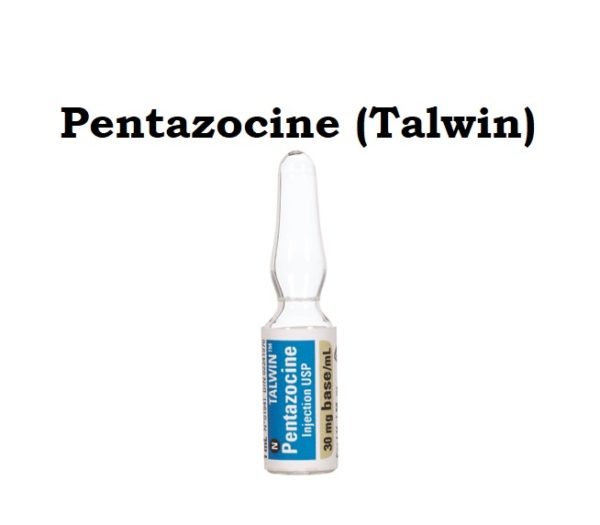
Pentazocine (Talwin) is an opioid pain medicine that is used to treat patients with moderate to severe pain.
Indications of Pentazocine:
-
Injection:
-
Anesthesia:
- It is used for sedation prior to surgery; supplement to surgical anesthesia.
-
Pain management:
- It is effective for controlling severe pain requiring an opioid analgesic and for which alternative treatments are inadequate.
-
-
Oral [Canadian product]:
-
Pain management:
- It is prescribed for chronic or acute pain of moderate to severe degree.
-
Limitations of use:
- Reserve pentazocine for use in patients for whom alternative treatment options (eg, nonopioid analgesics, opioid combination products) are ineffective, not tolerated, or would be otherwise inadequate to provide sufficient management of pain.
-
Pentazocine (Talwin) dose in adults:
Note: Pentazocine injection has been discontinued in the United States for more than 1 year.
Pentazocine (Talwin) Injection:
-
Dose in the Anesthesia for pain management:
- IM, SubQ:
- 30 mg every 3 to 4 hours, do not exceed 60 mg/dose
- maximum: 360 mg/day.
- IV:
- 30 mg every 3 to 4 hours,do not exceed 30 mg/dose
- maximum: 360 mg/day.
- IM, SubQ:
-
Dose in the Labor pain:
- IM:
- 30 mg once
- IV:
- 20 mg every 2 to 3 hours as needed
- maximum total dose: 60 mg
- IM:
Pentazocin Oral:
Dose in the management of Pain:
-
Not receiving opioids at the time of initiation:
- Initial: 50 mg every 4 hours;
- Titrate the dose per response and tolerability to 50 to 100 mg every 3 to 4 hours.
- Maximum dose: 600 mg/day.
-
Receiving opioids at the time of initiation:
- Refer to the manufacturer's labeling for detailed dosing conversion.
-
Discontinuation of therapy:
- The dose is gradually tapered when discontinuing chronic opioid therapy.
- An optimal universal tapering schedule for all patients has not been established.
- Proposed schedules range from slow (eg, 10% reductions per week) to rapid (eg, 25% to 50% reduction every few days).
- Tapering schedules should be individualized to minimize opioid withdrawal while considering patient-specific goals and concerns as well as the pharmacokinetics of the opioid being tapered.
- Slow tapering is required in patients receiving opioids for years, whereas more rapid tapers may be appropriate in patients experiencing severe adverse effects.
- Signs/symptoms of withdrawal should be carefully monitored.
- Slow tapering should be done in patients displaying withdrawal symptoms, alterations may include increasing the interval between dose reductions, decreasing amount of daily dose reduction, pausing the taper and restarting when the patient is ready, and/or coadministration of an alpha-2 agonist (eg, clonidine) to blunt withdrawal symptoms.
- Nonopioid analgesics should be given for pain management during the taper; consider nonopioid adjunctive treatments for withdrawal symptoms (eg, GI complaints, muscle spasm) as required.
Pentazocine (Talwin) dose in children:
Talwin dose in the treatment of perioperative Analgesia:
-
Children 5 to 9 years:
- Initial: 0.5 mg/kg intravenous administered with induction medication;
- small incremental doses may be repeated every 30 to 45 minutes as needed if the procedure is prolonged.
- maximum total dose: 1.5 mg/kg/procedure.
- Dosing based on a study of pediatric patients (n=50) undergoing surgery.
Pentazocine dose in the treatment of postoperative Analgesia:
-
Children 5 to 8 years:
- 15 mg as a single IM dose
-
Children ≥9 years and Adolescents <15 years:
- 30 mg as a single IM dose
Pentazocine dose in the treatment of preoperative Sedation:
-
Children and Adolescents ≤16 years:
- 0.5 mg/kg intramuscular as a single dose; clinical trials suggest higher doses (0.8 to 1.9 mg/kg/dose) may provide a smoother induction.
- Note: Usual adult dose: 30 mg/dose.
Pentazocine pregnancy Risk Category: C
- Studies on animal reproduction showed that there were adverse events.
- Pentazocine can be used to relieve pain during labor. However, opioids can temporarily alter the heart rate of the foetus.
- [US Boxed Warning]
- If long-term opioid use is continued during pregnancy, neonatal withdrawal syndrome may occur. This can be potentially life-threatening. It is important to monitor the neonate closely.
- The prescribing physician should only prescribe the lowest possible dosage of opioids if necessary.
- Neonatal withdrawal syndrome is characterized by fever, temperature instability and vomiting, diarrhea, vomiting or poor nutrition/weight gain, high pitched crying, increased muscle tone, irritability and seizure.
- Long-term therapy can help with secondary hypogonadism, which is a condition that causes sexual dysfunction.
Pentazocine use during breastfeeding:
- It is not known if pentazocine is excreted in breast milk.
- Opioids given during labor can disrupt a newborn's natural instinct to breastfeed.
- Pentazocine therapy for breast-feeding mothers should be monitored for psychotomimetic reactions.
- Monitoring is important because large doses of opioids can cause sedation and apnea.
- According to the manufacturer's instructions, breast-feeding is a decision that depends on the risks and benefits to the infant and the benefits to the mother.
Pentazocine Dose adjustment in renal disease:
- There are no dosage adjustments provided in the manufacturer’s labeling.
- Use with caution.
- The following recommendations have been used by some clinicians.
-
GFR ≥50 mL/minute:
- No dosage adjustment is necessary.
-
GFR 10 to 50 mL/minute:
- Administer 75% of the normal dose.
-
GFR <10 mL/minute:
- Administer 50% of normal dose.
-
Pentazocine Dose adjustment in liver disease:
There are no dosage adjustments provided in the manufacturer’s labeling. However decreased metabolism and predisposition to adverse effect might need dose reduction.
Side effects of Pentazocine (Talwin):
-
Cardiovascular:
- Circulatory Depression
- Facial Edema
- Flushing
- Hypertension
- Hypotension
- Increased Peripheral Vascular Resistance
- Shock
- Syncope
- Tachycardia
-
Central Nervous System:
- Central Nervous System Depression
- Chills
- Confusion
- Disorientation
- Dizziness
- Drowsiness
- Drug Dependence (Physical And Psychological)
- Euphoria
- Excitement
- Hallucination
- Headache
- Insomnia
- Irritability
- Malaise
- Nightmares
- Paresthesia
- Sedation
-
Dermatologic:
- Dermatitis
- Diaphoresis
- Erythema Multiforme
- Pruritus
- Skin Rash
- Stevens-Johnson Syndrome
- Toxic Epidermal Necrolysis
- Urticaria
-
Gastrointestinal:
- Abdominal Distress
- Anorexia
- Constipation
- Diarrhea
- Dysgeusia
- Nausea
- Vomiting
- Xerostomia
-
Genitourinary:
- Urinary Retention
-
Hematologic & Oncologic:
- Agranulocytosis (Rare)
- Decreased White Blood Cell Count
- Eosinophilia
-
Hypersensitivity:
- Anaphylaxis
-
Local:
- Injection Site Reaction (Tissue Damage And Irritation)
-
Neuromuscular & Skeletal:
- Tremor
- Weakness
-
Ophthalmic:
- Blurred Vision
- Diplopia
- Miosis
- Nystagmus
-
Otic:
- Tinnitus
-
Respiratory:
- Dyspnea
- Respiratory Depression (Rare)
Contraindication to Pentazocine (Talwin):
- Hypersensitivity to pentazocine and any component of the formulation (eg, anaphylaxis).
- GI obstruction/ paralytic ileus
- In a setting that does not have resuscitative equipment, severe bronchial asthma
- Grave respiratory depression
Canadian labeling: Additional contraindications not in US labeling
- Hypersensitivity to other opioids
- Alcoholism
- Delirium tremens
- Acute appendicitis/pancreatitis
- Hypercapnia and COPD are symptoms of status asthmaticus.
- Convulsive disorders, severe CNS depression, head injury, and increased ICP
- Breastfeeding/pregnancy
- Combine within 14 days of monoamine-oxidase inhibitors.
Warnings and precautions
-
Cardiovascular effects
- It is important to avoid it in MI because of its potential for increasing systemic and pulmonary arterial pressures and systemic resistance.
-
CNS depression:
- CNS depression can cause impairments in mental or physical abilities. Patients should be cautious about driving or operating machinery.
-
Hypotension
- Patients with hypovolemia, heart disease, or medications that can exaggerate hypotensive effects (e.g. phenothiazines and general anesthetics), should not take pentazocine.
- It may cause severe hypotension. Avoid it if you have circulatory shock.
-
Injection-site reactions:
- Subcutaneous injections can cause severe sclerosis in the skin, subcutaneous tissues and underlying muscles.
-
Respiratory depression [US Boxed Warning]
- Respiratory depression should be closely monitored as carbon dioxide retention may exacerbate the sedating effects associated with opioids.
-
Conditions abdominales:
- Patients with acute abdominal conditions may not be diagnosed or treated appropriately.
-
Adrenocortical Insufficiency
- Patients with adrenal insufficiency (Addison disease) should be cautious.
- Long-term therapy can lead to mood disorder, osteoporosis and sexual dysfunction caused by secondary hypogonadism.
-
Insufficiency of the biliary tract:
- Patients with acute pancreatitis or biliary dysfunction should be cautious. Opioids may cause constriction in the sphincter.
-
CNS depression/coma:
- Patients who are unconscious or comatose are more susceptible to the intracranial effects CO retention. It should therefore not be used.
-
Delirium tremens:
- Patients with delirium-tremens should be taken with caution
-
Head trauma
- If intracranial pressure is increased due to head injury or intracranial lesions, intracranial pressure can rise.
-
Hepatic impairment
- Patients with hepatic impairment should be cautious.
-
Obesity:
- Patients who are severely obese should be taken with caution
-
Prostatic hyperplasia/Urinary stricture:
- Patients with prostatic hyperplasia or urinary stricture should be cautious.
-
Psychosis:
- Patients with toxic psychosis should be treated with caution.
-
Renal impairment
- Patients with impaired renal function should be cautious.
-
Respiratory disease
- It should not be used in COPD, cor pulmonale hypercapnia or preexisting respiratory depression. It is recommended to use alternative non-opioid pain relievers.
-
Seizures:
- Preexisting seizures may be exacerbated or caused by it. Use caution.
-
Thyroid dysfunction:
- Patients with thyroid dysfunction should be cautious.
Pentazocine: Drug Interaction
|
Alizapride |
May enhance the CNS depressant effect of CNS Depressants. |
|
Amphetamines |
May enhance the analgesic effect of Opioid Agonists. |
|
Anticholinergic Agents |
May enhance the adverse/toxic effect of Opioid Agonists. Specifically, the risk for constipation and urinary retention may be increased with this combination. |
|
Brimonidine (Topical) |
|
|
Bromopride |
May enhance the CNS depressant effect of CNS Depressants. |
|
Cannabidiol |
May enhance the CNS depressant effect of CNS Depressants. |
|
Cannabis |
May enhance the CNS depressant effect of CNS Depressants. |
|
Chlorphenesin Carbamate |
May enhance the adverse/toxic effect of CNS Depressants. |
|
Desmopressin |
Opioid Agonists may enhance the adverse/toxic effect of Desmopressin. |
|
Dimethindene (Topical) |
May enhance the CNS depressant effect of CNS Depressants. |
|
Diuretics |
Opioid Agonists may enhance the adverse/toxic effect of Diuretics. Opioid Agonists may diminish the therapeutic effect of Diuretics. |
|
Dronabinol |
May enhance the CNS depressant effect of CNS Depressants. |
|
Gastrointestinal Agents (Prokinetic) |
Opioid Agonists may diminish the therapeutic effect of Gastrointestinal Agents (Prokinetic). |
|
Kava Kava |
May enhance the adverse/toxic effect of CNS Depressants. |
|
Lofexidine |
May enhance the CNS depressant effect of CNS Depressants. Management: Drugs listed as exceptions to this monograph are discussed in further detail in separate drug interaction monographs. |
|
Magnesium Sulfate |
May enhance the CNS depressant effect of CNS Depressants. |
|
MetyroSINE |
CNS Depressants may enhance the sedative effect of MetyroSINE. |
|
Minocycline |
May enhance the CNS depressant effect of CNS Depressants. |
|
Nabilone |
May enhance the CNS depressant effect of CNS Depressants. |
|
Pegvisomant |
Opioid Agonists may diminish the therapeutic effect of Pegvisomant. |
|
Piribedil |
CNS Depressants may enhance the CNS depressant effect of Piribedil. |
|
Pramipexole |
CNS Depressants may enhance the sedative effect of Pramipexole. |
|
Ramosetron |
Opioid Agonists may enhance the constipating effect of Ramosetron. |
|
ROPINIRole |
CNS Depressants may enhance the sedative effect of ROPINIRole. |
|
Rotigotine |
CNS Depressants may enhance the sedative effect of Rotigotine. |
|
Rufinamide |
May enhance the adverse/toxic effect of CNS Depressants. Specifically, sleepiness and dizziness may be enhanced. |
|
Selective Serotonin Reuptake Inhibitors |
CNS Depressants may enhance the adverse/toxic effect of Selective Serotonin Reuptake Inhibitors. Specifically, the risk of psychomotor impairment may be enhanced. |
|
Serotonin Modulators |
Opioid Agonists may enhance the serotonergic effect of Serotonin Modulators. This could result in serotonin syndrome. Exceptions: Nicergoline. |
|
Succinylcholine |
May enhance the bradycardic effect of Opioid Agonists. |
|
Tetrahydrocannabinol |
May enhance the CNS depressant effect of CNS Depressants. |
|
Tetrahydrocannabinol and Cannabidiol |
May enhance the CNS depressant effect of CNS Depressants. |
|
Tobacco (Smoked) |
May decrease the serum concentration of Pentazocine. |
|
Risk Factor D (Consider therapy modification) |
|
|
Alvimopan |
Opioid Agonists may enhance the adverse/toxic effect of Alvimopan. This is most notable for patients receiving long-term (i.e., more than 7 days) opiates prior to alvimopan initiation. Management: Alvimopan is contraindicated in patients receiving therapeutic doses of opioids for more than 7 consecutive days immediately prior to alvimopan initiation. |
|
Blonanserin |
CNS Depressants may enhance the CNS depressant effect of Blonanserin. |
|
Chlormethiazole |
May enhance the CNS depressant effect of CNS Depressants. Management: Monitor closely for evidence of excessive CNS depression. The chlormethiazole labeling states that an appropriately reduced dose should be used if such a combination must be used. |
|
CNS Depressants |
May enhance the CNS depressant effect of Opioid Agonists. Management: Avoid concomitant use of opioid agonists and benzodiazepines or other CNS depressants when possible. These agents should only be combined if alternative treatment options are inadequate. If combined, limit the dosages and duration of each drug. |
|
Droperidol |
May enhance the CNS depressant effect of CNS Depressants. Management: Consider dose reductions of droperidol or of other CNS agents (eg, opioids, barbiturates) with concomitant use. Exceptions to this monograph are discussed in further detail in separate drug interaction monographs. |
|
Flunitrazepam |
CNS Depressants may enhance the CNS depressant effect of Flunitrazepam. |
|
Methotrimeprazine |
CNS Depressants may enhance the CNS depressant effect of Methotrimeprazine. Methotrimeprazine may enhance the CNS depressant effect of CNS Depressants. Management: Reduce adult dose of CNS depressant agents by 50% with initiation of concomitant methotrimeprazine therapy. Further CNS depressant dosage adjustments should be initiated only after clinically effective methotrimeprazine dose is established. |
|
Nalmefene |
May diminish the therapeutic effect of Opioid Agonists. Management: Avoid the concomitant use of nalmefene and opioid agonists. Discontinue nalmefene 1 week prior to any anticipated use of opioid agonistss. If combined, larger doses of opioid agonists will likely be required. |
|
Naltrexone |
May diminish the therapeutic effect of Opioid Agonists. Management: Seek therapeutic alternatives to opioids. See full drug interaction monograph for detailed recommendations. |
|
Perampanel |
May enhance the CNS depressant effect of CNS Depressants. Management: Patients taking perampanel with any other drug that has CNS depressant activities should avoid complex and high-risk activities, particularly those such as driving that require alertness and coordination, until they have experience using the combination. |
|
Sincalide |
Drugs that Affect Gallbladder Function may diminish the therapeutic effect of Sincalide. Management: Consider discontinuing drugs that may affect gallbladder motility prior to the use of sincalide to stimulate gallbladder contraction. |
|
Sodium Oxybate |
May enhance the CNS depressant effect of CNS Depressants. Management: Consider alternatives to combined use. When combined use is needed, consider minimizing doses of one or more drugs. Use of sodium oxybate with alcohol or sedative hypnotics is contraindicated. |
|
Suvorexant |
CNS Depressants may enhance the CNS depressant effect of Suvorexant. Management: Dose reduction of suvorexant and/or any other CNS depressant may be necessary. Use of suvorexant with alcohol is not recommended, and the use of suvorexant with any other drug to treat insomnia is not recommended. |
|
Zolpidem |
CNS Depressants may enhance the CNS depressant effect of Zolpidem. Management: Reduce the Intermezzo brand sublingual zolpidem adult dose to 1.75 mg for men who are also receiving other CNS depressants. No such dose change is recommended for women. Avoid use with other CNS depressants at bedtime; avoid use with alcohol. |
|
Risk Factor X (Avoid combination) |
|
|
Azelastine (Nasal) |
CNS Depressants may enhance the CNS depressant effect of Azelastine (Nasal). |
|
Bromperidol |
May enhance the CNS depressant effect of CNS Depressants. |
|
Buprenorphine |
Opioids (Mixed Agonist / Antagonist) may diminish the therapeutic effect of Buprenorphine. This combination may also induce opioid withdrawal. |
|
Eluxadoline |
Opioid Agonists may enhance the constipating effect of Eluxadoline. |
|
Opioid Agonists |
Opioids (Mixed Agonist / Antagonist) may diminish the analgesic effect of Opioid Agonists. Management: Seek alternatives to mixed agonist/antagonist opioids in patients receiving pure opioid agonists, and monitor for symptoms of therapeutic failure/high dose requirements (or withdrawal in opioid-dependent patients) if patients receive these combinations. Exceptions: Buprenorphine; Butorphanol; Meptazinol; Nalbuphine; Pentazocine. |
|
Orphenadrine |
CNS Depressants may enhance the CNS depressant effect of Orphenadrine. |
|
Oxomemazine |
May enhance the CNS depressant effect of CNS Depressants. |
|
Paraldehyde |
CNS Depressants may enhance the CNS depressant effect of Paraldehyde. |
|
Thalidomide |
CNS Depressants may enhance the CNS depressant effect of Thalidomide. |
Monitoring parameters:
- BP
- Respiratory and mental status,
- bowel function
- Pain relief
- signs/symptoms of misuse, abuse, and addiction
- signs or symptoms of hypogonadism or hypoadrenalism.
How to administer Pentazocine (Talwin)?
Injection:
- For IM, IV, or SubQ use. Rotate injection sites for IM administration (eg, the upper outer quadrants of the buttocks, mid-lateral aspects of the thighs, and the deltoid areas).
- The intraarterial injection should be avoided Subcutaneous injection should be only used unless absolutely necessary (may cause tissue damage).
Oral: Tablet [Canadian product]:
- For oral use only. Administer after meals as a whole without crushing, chewing, dissolving or breaking.
Mechanism of action of Pentazocine (Talwin):
- Pentazocine acts as an agonist for kappa opiate and partial agonists for mu opiate in the CNS.
- It alters the perception and response of pain and inhibits the ascending pain pathways.
- This produces analgesia and respiratory depression, and sedation similar in effect to opioids.
Absorption:
- Oral: [Canadian Product]: Well absorbed; low bioavailability due to the extensive first-pass effect
The onset of action:
- IM, SubQ: 15 to 20 minutes.
- IV: 2 to 3 minutes
- Oral [Canadian product]: 15 to 30 minutes
Duration:
- Injection: 2 to 3 hours
- Oral [Canadian product]: ≥3 hours
Protein binding:
- 60%
Time to peak (serum):
- Oral [Canadian product]: 1 to 3 hours
Metabolism: Hepatic via oxidative and glucuronide conjugation pathways; extensive first-pass effect
Half-life elimination: Prolonged with hepatic impairment
- Neonates: 8 to 12 hours
- Children 4 to 8 years (mean ± SD): 3 ± 1.5 hours
- Adults: 2 to 5 hours
Excretion:
- Urine (small amounts as unchanged drug)
International Brands of Pentazocin (Talwin):
- Talwin
- Dolapent
- Fortal
- Fortalgesic[inj.]
- Fortalgesic[Suppos.]
- Fortalgesic[Tab.]
- Fortral
- Fortralin
- Fortralin[inj./rect.]
- Fortralin[inj.]
- Fortwin
- Ospronim
- Pellpenta
- Peltazon
- Pentagin
- Pentajin
- Pental
- Pentawin
- Pentazocinum
- Sosegon
- Sosegon[inj./rect.]
- Stopain
- Talwin
- Talwin Lactate
Pentazocine Brands in Pakistan:
Pentazocine Injection 30 mg/ml |
|
| Entapin | Brookes Pharmaceutical Laboratories (Pak.) Ltd. |
| Pentacin | Medicaids Pakistan (Pvt) Ltd. |
| Pentazowan | Swan Pharmaceuticals (Pvt) Ltd |
Pentazocine Injection 30 mg/ml |
|
| Elcigon | Elko Organization (Pvt) Ltd. |
| Iscigon | Isis Pharmaceutical |
| Mentazocine | Medicraft Pharmaceuticals (Pvt) Ltd. |
| Omsis | Sami Pharmaceuticals (Pvt) Ltd. |
| P-Zoc | Fynk Pharmaceuticals |
| Paingon | Mediceena Pharma (Pvt) Ltd. |
| Pantonil | Tabros Pharma |
| Pentafen | Tread Pharmaceuticals Pvt Ltd |
| Pentagesic | Lahore Chemical & Pharmaceutical Works (Pvt) Ltd |
| Pentagon | The Schazoo Laboratories Ltd. |
| Pentazogon | Indus Pharma (Pvt) Ltd. |
| Pentazogon | Indus Pharma (Pvt) Ltd. |
| Penzocine | Amson Vaccines & Pharma (Pvt) Ltd. |
| Shasogon | Shifa Laboratories.(Pvt) Ltd. |
| Sosegon | Sanofi Aventis (Pakistan) Ltd. |
| Soseno | Dosaco Laboratories |
| Vesegon | Venus Pharma |
Pentazocine 25 mg Tablets |
|
| Eroflex | Eros Pharmaceuticals |
| Gosegon | Gray`S Pharmaceuticals |
| Mentazocine | Medicraft Pharmaceuticals (Pvt) Ltd. |
| Opidan | Danas Pharmaceuticals (Pvt) Ltd |
| Panatik | Panacea Pharmaceuticals |
| Pantonil | Tabros Pharma |
| Pentacin | Medicaids Pakistan (Pvt) Ltd. |
| Pentanor | Global Pharmaceuticals |
| Pentaz | Universal Pharmaceuticals (Pvt) Ltd |
| Pocin | Rakaposhi Pharmaceutical (Pvt) Ltd. |
| Segon | Saydon Pharmaceutical Industries (Pvt) Ltd. |
| Sosegon | Sanofi Aventis (Pakistan) Ltd. |
| Zocin | Valor Pharmaceuticals |
| Zocinitt | Lowitt Pharmaceuticals (Pvt) Ltd |
| Zomiten | Pliva Pakistan (Pvt) Limited |
.png)


