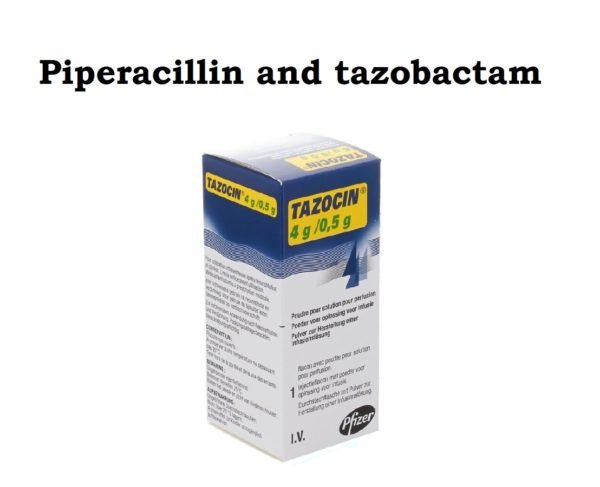
Tazocin is a combination of two antibiotics - piperacillin and tazobactam. It is a broad-spectrum antibiotic used to treat many gram-positive and gram-negative bacteria including beta-lactam-producing organisms and pseudomonas aeruginosa.
Indications of Tazocin (Piperacillin and tazobactam):
- Intraabdominal infections:
- It is used for the treatment of appendicitis complicated by rupture or abscess and peritonitis caused by beta-lactamase-producing strains of Escherichia coli, Bacteroides fragilis, Bacteroides ovatus, Bacteroides thetaiotaomicron, or Bacteroides vulgatus.
- Pelvic infections:
- It is indicated for the treatment of postpartum endometriosis or pelvic inflammatory disease caused by beta-lactamase-producing strains of E. coli.
- Community-acquired Pneumonia:
- It is used for the treatment of moderate severity community-acquired pneumonia caused by beta-lactamase-producing strains of Haemophilus influenzae.
- Infectious Diseases Society of America guidelines only recommends piperacillin/tazobactam for community-acquired pneumonia caused by Pseudomonas aeruginosa or due to aspiration.
- Nosocomial Pneumonia (hospital-acquired):
- It is prescribed for moderate to severe hospital-acquired pneumonia caused by beta-lactamase-producing strains of Staphylococcus aureus and by piperacillin/tazobactam-susceptible Acinetobacter baumannii, H. influenzae, Klebsiella pneumoniae, and P. aeruginosa.
- Skin and skin structure infections:
- It is useful in treating skin and skin structure infections, including cellulitis, cutaneous abscesses, and ischemic/diabetic foot infections caused by beta-lactamase-producing strains of S. aureus.
- Tazocin off-label uses in adults:
- Treatment of Bite wound infection (animal or human bite)
- Bloodstream infection caused by gram-negative bacteremia
- Severe acute pulmonary exacerbation of Cystic fibrosis,
- Malignant (necrotizing) otitis externa.
- Empiric therapy in patients with Neutropenic fever (high-risk cancer patients)
- Sepsis and septic shock
- Skin and soft tissue necrotizing infection,
- Surgical site infections
- Complicated Urinary tract infection including pyelonephritis
Tazocin (Piperacillin and tazobactam) dose in adults:
Note: Adult doses are expressed as the combined amount of piperacillin and tazobactam.
Infusion method: It is infused over half an hour unless otherwise specified as the extended infusion method over 4 hours.
Tazocin (Piperacillin and Tazobactam) Usual dosage range:
- Traditional infusion method (over 30 minutes):
- Mild to moderate infections:
- 3.375 g intravenous every 6 hours,
- Severe infections:
- 4.5 g every 6 to 8 hours.
- For coverage of Pseudomonas aeruginosa:
- 4.5 g every 6 hours.
- Usual maximum dose:
- 18 g/day.
- Mild to moderate infections:
- Extended-infusion method (off-label method):
- 3.375 or 4.5 g intravenous every 8 hours infused over 4 hours.
- Note:
- A loading dose of 3.375 to 4.5 g over half an hour especially when rapid attainment of therapeutic drug concentrations is necessary (eg, sepsis).
Tazocin (Piperacillin and Tazobactam) Indication-specific dosing :
Tazocin (Piperacillin and Tazobactam) dose in the treatment of Bite wound infection (animal or human bite):
- 3.375 g intravenous every 6 to 8 hours.
- The duration of treatment for established infection is typically 5 to 14 days and varies based on patient-specific factors, including the clinical response.
- Additional coverage for methicillin-resistant Staphylococcus aureus (MRSA) may be needed for empiric treatment.
Tazocin (Piperacillin and Tazobactam) dose in the treatment of Bloodstream infection caused by gram-negative bacteremia:
Note:
- Piperacillin and tazobactam concurrently with a second gram agent negative active as empirical treatment for suspected gram-negative (including P. aeruginosa) bloodstream infection in patients with neutropenia, severe burns, sepsis, or septic shock.
- Some experts also prefer the extended-infusion method in critical illness or to optimize exposure if treating a susceptible organism with an elevated minimum inhibitory concentration.
Tazocin (Piperacillin and Tazobactam) dose in the treatment of Community-acquired infection in the immunocompetent host:
- 3.375 g intravenous every 6 hours.
Tazocin (Piperacillin and Tazobactam) dose in the treatment of health-care-associated infection:
(These include catheter-related infections, infection in the immunosuppressed host, and for coverage of P. aeruginosa)
- 4.5 g intravenous every 6 hours.
- Duration of therapy:
- In the case of uncomplicated Enterobacteriaceae infection who respond appropriately to antibiotic therapy, a course of one week is recommended.
- Note:
- If neutropenic, extend treatment until afebrile for 2 days and neutrophil recovery (ANC ≥500 cells/mm³ and increasing).
- Treatment is prescribed for 2 weeks for P. aeruginosa bacteremia in neutropenic patients.
Tazocin (Piperacillin and Tazobactam) dose in the treatment dose of severe acute pulmonary exacerbation of Cystic fibrosis, failure of oral therapy, or for the coverage of P. aeruginosa:
- 4.5 g intravenous every 6 hours.
Note:
It is used as a combination regimen including an additional antipseudomonal agent. The duration depends on clinical response, the duration is usually 10 days to 3 weeks or longer.
Tazocin (Piperacillin and Tazobactam) dose in the treatment of moderate to severe Diabetic foot infection:
- 3.375 g intravenous every 6 hours or
- 4.5 g every 8 hours.
- For the treatment of P. aeruginosa infection:
- 4.5 g every 6 hours.
- Note:
- Empiric Pseudomonas coverage with this dose is usually not indicated unless the patient is at risk (eg, significant water exposure, warm climate).
- Duration is usually 2 to 4 weeks in the absence of osteomyelitis but varies based on patient-specific factors, including the clinical response.
Tazocin (Piperacillin and Tazobactam) dose in the treatment of Intra-abdominal infection:
- Acute Cholecystitis:
- 3.375 or 4.5 g intravenous every 6 hours;
- continue for 1 day after gallbladder removal or until clinical resolution in patients managed non operatively.
- Other intra-abdominal infection such as cholangitis, perforated appendix, diverticulitis, and intraabdominal abscess:
- 3.375 g or 4.5 g intravenous every 6 hours.
- The total duration of therapy is 4 to 7 days following adequate source control, for infections managed without surgical or percutaneous intervention, a longer duration may be necessary.
- Note: For patients who are critically ill or at risk for infection with drug-resistant pathogens, some experts favor the extended infusion method.
Note:
Reserve 4.5 g dose for health-care-associated infection, severe community-acquired infection, or patients with community-acquired infection at high risk of adverse outcome and/or resistance.
Tazocin (Piperacillin and Tazobactam) dose in the treatment of Malignant (necrotizing) otitis externa in hospitalized patients (off-label):
- 4.5 g intravenous every 6 hours.
- The total duration of therapy, including oral step-down, is 6 to 8 weeks.
Tazocin (Piperacillin and Tazobactam) dose in the treatment of Neutropenic fever in high-risk cancer patients (empiric therapy) (off-label):
Note:
Highrisk patients are those expected to have an ANC ≤100 cells/mm³ for >7 days or an ANC ≤100 cells/mm³ for any expected duration if there are ongoing comorbidities (eg, sepsis, mucositis, significant hepatic or renal dysfunction), some experts use an ANC cutoff <500 cells/mm³ to define high-risk patients.
- 4.5g intravenous every 6 to 8 hours until afebrile for ≥48 hours and resolution of neutropenia (ANC ≥500 cells/mm³ and increasing) or standard duration for the specific infection identified, if longer than the duration for neutropenia.
- If there is a significant concern for Pseudomonas infection, 4.5 g every 6 hours should be given.
- Additional agents may be needed depending on the clinical condition.
Tazocin (Piperacillin and Tazobactam) dose in the treatment of Pneumonia:
Community-acquired pneumonia or as a component of empiric therapy for inpatients at risk for infection with a multidrug-resistant gram-negative pathogen, including P. aeruginosa:
-
- 4.5 g intravenous every 6 hours as part of an appropriate combination regimen.
- The total duration is for a minimum of 5 days and depends on disease severity and response to therapy;
- A longer course may be required for severe or complicated infection or P. aeruginosa infection.
- Patients should be afebrile for ≥48 hours and clinically stable before discontinuation.
Hospital-acquired or ventilator-associated pneumonia, or as a component of empiric therapy or pathogen-specific therapy of gram-negative bacteria resistant to other agents (eg, P. aeruginosa):
-
- 4.5 g intravenous every 6 hours, as part of an appropriate combination regimen.
- Treatment is typically given for one week but a longer course may be required for severe or complicated infection or P. aeruginosa infection.
- Note: Some experts prefer the extended-infusion method, particularly in those who are critically ill.
Treatment of Sepsis and septic shock (broad-spectrum empiric therapy, including P.aeruginosa):
- 4.5 g intravenous every 6 hours in combination with other appropriate agents.
- The treatment should be started within 1 hour of recognition of sepsis or septic shock and continued 7 to 10 days or longer, depending upon clinical response. Consider discontinuation if a noninfectious etiology is identified.
Skin and soft tissue infection caused by P. aeruginosa:
- 4.5 g intravenous every 6 hours.
- The usual duration of treatment is 10 to 14 days depending on the response to therapy.
Necrotizing Skin and soft tissue infections:
(For a broad-spectrum coverage of gram-positive [not including methicillin-resistant Staphylococcus aureus], gram-negative, and anaerobic pathogens):
- 3.375 g intravenous every 6 to 8 hours as part of an appropriate combination regimen.
- Continue until further debridement is not necessary, the patient has improved clinically and is afebrile for 48 to 72 hours.
Surgical site infections, warranting expanded coverage of gram-negative and anaerobic pathogens:
- 3.375 g intravenous every 6 hours or 4.5 g every 8 hours.
- For the treatment of P. aeruginosa infection:
- 4.5 g every 6 hours.
- The duration is dependent upon the severity, need for debridement, and clinical response.
Treatment of complicated Urinary tract infections (including pyelonephritis):
- 3.375 g intravenous every 6 hours or, if Pseudomonas is a concern, 4.5 g every 6 hours.
Note:
The duration of therapy depends on the antimicrobial chosen to complete the regimen and ranges from 5 to 14 days. If piperacillin and tazobactam is continued for the entire treatment course, the duration of therapy is 10 to 14 days.
Piperacillin and tazobactam dose in children:
Note:
- Zosyn (piperacillin/tazobactam) is a combination product;
- each 3.375 g vial contains 3 g piperacillin sodium and 0.375 g tazobactam sodium in an 8:1 ratio.
- Dosage recommendations are based on the piperacillin component.
- Some centers divide doses every 6 hours for an enhanced pharmacodynamic profile.
- Dosing is presented in mg/kg/dose and mg/kg/day;
- use precaution.
Tazocin (Piperacillin and tazobactam) General dosing for severe infections caused by susceptible infections:
- Traditional dosing:
- Infants <2 months:
- 240 to 300 mg intravenous piperacillin/kg/day divided in 3 to 4 doses
- maximum daily dose: 16 g/day, some experts have recommended 80 mg piperacillin/kg/dose every 4 hours based on a pharmacokinetic study.
- Infants ≥2 months, Children, and Adolescents:
- 240 to 300 mg piperacillin/kg intravenous divided in 3 to 4 doses
- maximum daily dose: 16 g/day
- Infants <2 months:
- Extended infusion dosing: Limited data available:
- Children and Adolescents:
- 100 mg piperacillin/kg/dose intravenous infused over 4 hours every 6 to 8 hours.
- Children and Adolescents:
Tazocin (Piperacillin and tazobactam) dose for the treatment of Appendicitis and/or peritonitis:
- Infants 2 to 9 months:
- 80 mg of piperacillin/kg intravenous every 8 hours.
- Infants >9 months and Children weighing ≤40 kg:
- 100 mg piperacillin/kg intravenous every 8 hours
- maximum dose: 3,000 mg piperacillin/dose.
- Children weighing >40 kg and Adolescents:
- 3,000 mg piperacillin intravenous every 6 hours
- maximum daily dose: 16 g piperacillin/day.
Tazocin (Piperacillin and tazobactam) dose in the treatment of pseudomonal lung infection in patients with Cystic fibrosis:
- Infants, Children, and Adolescents:
Note:
Multiple dosing approaches have been evaluated; optimal dose depends on disease severity, susceptibility patterns or tolerance:
-
- Standard dosing range:
- 240 to 400 mg piperacillin/kg intravenous divided every 8 hours, others have used 350 to 400 mg/kg intravenous divided every 4 hours in early piperacillin.
- High dose: Limited data available:
- 450 mg piperacillin/kg intravenous divided every 4 to 6 hours or 600 mg piperacillin/kg/day divided every 4 hours has been described from early studies of piperacillin alone
- The usual maximum daily dose:
- 18 to 24 g piperacillin/day.
- Standard dosing range:
Note:
- Piperacillin doses >600 mg/kg/day or an extended duration of therapy (>14 days) can cause adverse effects such as serum sickness, immune-mediated hemolytic anemia, and bone marrow suppression.
Tazocin (Piperacillin and tazobactam) dose for the treatment of Endocarditis:
- Children and Adolescents:
- 240 mg piperacillin/kg intravenous divided every 8 hours in combination with an aminoglycoside for at least 6 weeks
- maximum daily dose: 18 g piperacillin/day
- A higher total daily dose given more frequently (300 mg piperacillin/kg/day divided every 6 hours) has been suggested, an extended infusion would be needed if using every 8-hour dosing.
Piperacillin and tazobactam (Tazocin) dose for the treatment of complicated Intra-abdominal infection:
- Infants, Children, and Adolescents:
- 200 to 300 mg piperacillin/kg intravenous divided every 6 to 8 hours
- maximum daily dose: 12 g piperacillin/day.
Piperacillin and tazobactam (Tazocin) dose for the treatment of Skin and soft tissue necrotizing infections:
- Infants, Children, and Adolescents:
- 60 to 75 mg piperacillin/kg intravenous every 6 hours concurrently with vancomycin for empiric therapy, continue until further debridement is not necessary, the patient has clinically improved, and is afebrile for 48 to 72 hours.
Piperacillin and tazobactam dose in the treatment of Surgical antimicrobial prophylaxis:
- Infants 2 to 9 months:
- 80 mg piperacillin/kg intravenously within one hour before surgery may repeat in 2 hours for a prolonged procedure or excessive blood loss (eg, >1,500 mL in adults).
- Infants >9 months, Children, and Adolescents weighing ≤40 kg:
- 100 mg piperacillin/kg intravenous within one hour before surgery, may repeat in 2 hours for a prolonged procedure or excessive blood loss (eg, >1,500 mL in adults). Maximum dose: 3,000 mg piperacillin/dose.
- Adolescents weighing >40 kg:
- 3,000 mg piperacillin intravenous within one hour before surgery, may repeat in 2 hours for a prolonged procedure or excessive blood loss (eg, >1,500 mL in adults).
Pregnancy Risk Category: B
- Piperacillin or tazobactam may cross the placenta.
- Postpartum gynecologic infections, including endometritis or pelvic inflammatory disease caused by susceptible organisms, can be treated with piperacillin/tazobactam.
Use of piperacillin or tazobactam during breastfeeding
- Piperacillin can be excreted from breast milk, but there is limited information about tazobactam.
- According to the manufacturer, the decision to breastfeed during therapy depends on risks/benefits of breastfeeding to the infant, and benefits of treatment to the mother; however, beta-lactam antibioticsare generally considered compatible with breastfeeding when used in usual recommended doses; piperacillin/tazobactam was not specifically included within this report.
- Breast milk antibiotics can cause non-dose-related changes in bowel flora. Therefore, infants should be monitored for GI disturbances.
Piperacillin and tazobactam (Tazocin) Dose adjustment in renal disease:
- Traditional infusion method (ie, IV infusion over 30 minutes): Manufacturer’s labeling:
- Creatinine clearance >40 mL/minute:
- No dosage adjustment necessary.
- Creatinine clearance 20 to 40 mL/minute:
- Administer 2.25 g every 6 hours (3.375 g every 6 hours for hospital-acquired or ventilator-associated pneumonia)
- Creatinine clearance <20 mL/minute:
- Administer 2.25 g every 8 hours (2.25 g every 6 hours for hospital-acquired or ventilator-associated pneumonia)
- Creatinine clearance >40 mL/minute:
Note: Some clinicians suggest adjusting the dose at Creatinine clearance ≤20 mL/minute in patients receiving either traditional or extended infusion methods, particularly if treating serious gram-negative infections (empirically or definitively).
- Extended infusion method (off-label dosing):
- Creatinine clearance ≤20 mL/minute:
- 375 g intravenous over 4 hours every 12 hours.
- End-stage renal disease (ESRD):
- Intermittent hemodialysis (IHD):
- 2.5 g intravenous every 12 hours (2.25 g every 8 hours for hospital-acquired or ventilator-associated pneumonia);
- hemodialysis removes 30% to 40% of a piperacillin/tazobactam dose.
- Note:
- Dosing dependent on the assumption of 3 times/week, complete IHD sessions.
- Administer scheduled doses after hemodialysis on dialysis days;
- if the next regularly scheduled dose is not due right after the dialysis session, administer an additional dose of 0.75 g after the dialysis session.
- Peritoneal dialysis (PD):
- 2.5 g intravenous every 12 hours (2.25 g every 8 hours for hospital-acquired or ventilator-associated pneumonia);
- peritoneal dialysis removes 6% of piperacillin and 21% of tazobactam.
- Intermittent hemodialysis (IHD):
- Continuous renal replacement therapy:
- Drug clearance is highly dependent on flow rate, filter type, the method of renal replacement.
- Monitoring of pharmacologic response, adverse reactions due to drug accumulation, as well as drug concentrations in relation to target trough is required for appropriate dosing.
- The following are general recommendations only (based on dialysate flow/ultrafiltration rates of 1 to 2 L/hour and minimal residual renal function) and should not supersede clinical judgment:
-
- CVVH: 2.5 to 3.375 g every 6 to 8 hours
- CVVHD: 2.5 to 3.375 g every 6 hours
- CVVHDF: 3.75 g every 6 hours
-
- Creatinine clearance ≤20 mL/minute:
Note:
- A higher dose of 3.375 g should be considered when treating resistant pathogens (especially Pseudomonas spp); Alternative recommendations suggest a dose of 4.5 g every 8 hours.
- Some clinicians advocate dosing with PIP to alternate with PIP/TAZ, particularly in CVVH-dependent patients, to lessen this concern.
Tazocin Dose adjustment in liver disease:
No dosage adjustment necessary.
Common Side Effects of Piperacillin and tazobactam (Tazocin):
- Gastrointestinal:
- Diarrhea
Rare Side Effects of Piperacillin and tazobactam (Tazocin):
- Cardiovascular:
- Phlebitis
- Flushing
- Hypotension
- Thrombophlebitis
- Central Nervous System:
- Headache
- Insomnia
- Rigors
- Dermatologic:
- Skin Rash
- Pruritus
- Purpuric Disease
- Endocrine & Metabolic:
- Hypoglycemia
- Gastrointestinal:
- Constipation
- Nausea
- Dyspepsia
- Vomiting
- Abdominal Pain
- Clostridium Difficile Colitis
- Hypersensitivity:
- Anaphylaxis
- Infection:
- Candidiasis
- Local:
- Injection Site Reaction
- Neuromuscular & Skeletal:
- Arthralgia
- Myalgia
- Respiratory:
- Epistaxis
- Miscellaneous:
- Fever
Frequency of side effects not known:
- Endocrine & Metabolic:
- Decreased Serum Albumin
- Decreased Serum Glucose
- Decreased Serum Total Protein
- Electrolyte Disorder
- Hyperglycemia
- Hypokalemia
- Increased Gamma-Glutamyl Transferase
- Hematologic & Oncologic:
- Decreased Hematocrit
- Decreased Hemoglobin
- Eosinophilia
- Leukopenia
- Neutropenia
- Positive Direct Coombs Test
- Prolonged Bleeding Time
- Prolonged Partial Thromboplastin Time
- Prolonged Prothrombin Time
- Thrombocythemia
- Thrombocytopenia
- Hepatic:
- Increased Serum Alkaline Phosphatase
- Increased Serum Alanine Aminotransferase
- Increased Serum Aspartate Aminotransferase
- Increased Serum Bilirubin
- Renal:
- Increased Blood Urea Nitrogen
- Increased Serum Creatinine
- Renal Failure Syndrom
Contraindication to Piperacillin and tazobactam (Tazocin):
Hypersensitivity to penicillins, cephalosporins, beta-lactamase inhibitors, or any component of the formulation
Warnings and Precautions
- Anaphylactoid/ Hypersensitivity reactions
- Piperacillin and Tazobactam can cause severe and sometimes fatal hypersensitivity reactions.
- It is important to stop all treatment immediately and provide support management.
- Dermatologic effects
- There are life-threatening conditions like Steven Jhonson Syndrome, toxic epidermal Necrolysis, acute exanthematous pustulosis, and drug reaction with Eosinophilia (DRESS), which can lead to the need for therapy to be stopped.
- An abnormality in the electrolyte:
- Piperacillin may cause an increase in sodium.
- Low potassium levels, particularly for those who are on diuretics or cytotoxic therapy, should be evaluated.
- Hematologic effects
- Reversible neutropenia can be caused by long-term therapy.
- It also causes hematological toxicities such as prolonged prothrombin times and clotting times or platelet aggregation.
- This should be stopped in the event of bleeding or thrombocytopenia.
- Nephrotoxicity:
- Combination therapy can increase the risk for nephrotoxicity by using vancomycin and vancomycin.
- Superinfection
- Post-treatment can lead to bacterial or fungal superinfections, such as Clostridium difficile, pseudomembranous colitis, and Clostridium difficile.
- Cystic Fibrosis:
- Cystic Fibrosis patients can experience fever and rash after receiving piperacillin.
- Renal impairment
- Patients with kidney impairment or patients on hemodialysis will need to adjust their doses.
- Seizure disorders:
- Pre-existing renal impairment can make seizures worse.
Piperacillin and tazobactam: Drug Interaction
|
Acemetacin |
May increase the serum concentration of Penicillins. |
|
BCG Vaccine (Immunization) |
Antibiotics may diminish the therapeutic effect of BCG Vaccine (Immunization). |
|
Flucloxacillin |
Piperacillin may increase the serum concentration of Flucloxacillin. |
|
Lactobacillus and Estriol |
Antibiotics may diminish the therapeutic effect of Lactobacillus and Estriol. |
|
Methotrexate |
Penicillins may increase the serum concentration of Methotrexate. |
|
Mycophenolate |
Penicillins may decrease serum concentrations of the active metabolite(s) of Mycophenolate. This effect appears to be the result of impaired enterohepatic recirculation. |
|
Vancomycin |
Piperacillin may enhance the nephrotoxic effect of Vancomycin. |
|
Vecuronium |
Piperacillin may enhance the neuromuscular-blocking effect of Vecuronium. |
|
Vitamin K Antagonists (eg, warfarin) |
Penicillins may enhance the anticoagulant effect of Vitamin K Antagonists. |
|
Risk Factor D (Consider therapy modification) |
|
|
Aminoglycosides |
Penicillins may decrease the serum concentration of Aminoglycosides. Primarily associated with extended spectrum penicillins, and patients with renal dysfunction. |
|
Probenecid |
|
|
Sodium Picosulfate |
Antibiotics may diminish the therapeutic effect of Sodium Picosulfate. Management: Consider using an alternative product for bowel cleansing prior to a colonoscopy in patients who have recently used or are concurrently using an antibiotic. |
|
Tetracyclines |
May diminish the therapeutic effect of Penicillins. |
|
Typhoid Vaccine |
Antibiotics may diminish the therapeutic effect of Typhoid Vaccine. Only the live attenuated Ty21a strain is affected. Management: Vaccination with live attenuated typhoid vaccine (Ty21a) should be avoided in patients being treated with systemic antibacterial agents. Use of this vaccine should be postponed until at least 3 days after cessation of antibacterial agents. |
|
Risk Factor X (Avoid combination) |
|
|
BCG (Intravesical) |
Antibiotics may diminish the therapeutic effect of BCG (Intravesical). |
|
Cholera Vaccine |
Antibiotics may diminish the therapeutic effect of Cholera Vaccine. Management: Avoid cholera vaccine in patients receiving systemic antibiotics, and within 14 days following the use of oral or parenteral antibiotics. |
Monitoring parameters:
- CBC
- Clotting profile
- Serum electrolytes
- Renal function tests/BUN
- Liver function tests
- Urinalysis
- signs of bleeding
- Signs of anaphylaxis during first dose
How to administer Piperacillin and tazobactam (Tazocin)?
- It is given via an intravenous infusion for over half an hour and over 4 hours for extended infusion. Some penicillins (eg, carbenicillin, ticarcillin, and piperacillin) have been shown to inactivate aminoglycosides in vitro.
- Combination therapy with aminoglycosides such as tobramycin and gentamycin reduces the antibacterial efficacy in vivo due to the inactivation of aminoglycosides by penicillins, especially with renal impairment.
- Routine monitoring of aminoglycoside levels, CBC, separation of dose, and clinical response is required with penicillin/aminoglycoside therapy in case of renal dysfunction.
Note:
- Reformulated Zosyn containing EDTA is compatible in vitro for Y-site infusion with amikacin and gentamicin diluted in normal saline or dextrose water (consult manufacturer’s labeling).
- Reformulated Zosyn containing EDTA is not compatible with tobramycin.
Mechanism of action of Piperacillin and tazobactam (Tazocin):
- Piperacillin is a penicillin-binding protein that binds to one or more penicillin-binding proteins.
- This inhibits the final transpeptidation step in peptidoglycan synthesis in bacterial cell walls.
- Bacterial lysis is caused by cell wall autolytic enzymes (autolysins or murein hydrolases), activity.
- Cell wall assembly is, however, stopped. Piperacillin is capable of time-dependent killing.
- Piperacillin inhibits many beta-lactamases including Richmond-Sykes types 2 and 3, and staphylococcal penicillinase type 4.
- It also inhibits Richmond-Sykes types 4, and 5.
- However, it is not effective against other beta-lactamases than those of class 1C.
Notice: Dose-proportional AUC and peak concentrations can be found.
Distribution:
- Well into the lungs, intestinal mucosa, and uterus.
Protein binding:
- Piperacillin: 26% to 33%
- Tazobactam: 31% to 32%
Metabolism:
- Piperacillin: 6% to 9% to desethyl metabolite (weak activity)
- Tazobactam: 22% to inactive metabolite
Bioavailability: IM:
- Piperacillin: 71%
- Tazobactam: 84%
Half-life elimination: Piperacillin:
- Neonates and Infants <2 months: Median: 3.5 hours; range: 1.7 to 8.9 hours
- Infants 2 to 5 months: 1.4 ± 0.5 hours
- Infants and Children 6 to 23 months: 0.9 ± 0.3 hours
- Children 2 to 5 years: 0.7 ± 0.1 hours
- Children 6 to 12 years: 0.7 ± 0.2 hours
- Adults: 0.7 to 1.2 hours
- Metabolite: 1 to 1.5 hours
Tazobactam:
- Infants 2 to 5 months: 1.6 ± 0.5 hours
- Infants and Children 6 to 23 months: 1 ± 0.4 hours
- Children 2 to 5 years: 0.8 ± 0.2 hours
- Children 6 to 12 years: 0.9 ± 0.4 hours
- Adults: 0.7 to 0.9 hour
Time to peak, plasma:
- Immediately following completion of a 30-minute infusion
Excretion: depends on renal function
- Piperacillin: Urine (68% as unchanged drug); feces (10% to 20%)
- Tazobactam: Urine (80% as unchanged drug; remainder as inactive metabolite)
International Brands of Piperacillin and tazobactam:
- Zosyn
- Advoctam
- Albactam
- Ampito
- Astaz-P
- Aurotaz
- Aurotaz-P
- Betamycin
- Co-Tazo
- Curitaz 4.5
- Jeita
- Peratam
- Pipercin
- Pipertaz
- Piprataz
- Piptabac
- Piptaz
- Pisa
- Plepra-T 4.5
- Pletzolyn
- Prizma
- Pybactam
- Sixacin
- Tabaxin
- Tapicin
- Tasovak
- Tazar
- Tazepen
- Tazin
- Tazobac
- Tazobact
- Tazobak
- Tazocillin
- Tazocilline
- Tazocin
- Tazocin 4 EF
- Tazocin EF
- Tazomax
- Tazonam
- Tazopen
- Tazoperan
- Tazopip
- Tazopril
- Tazorex
- Tazosyn
- Tazpen
- Tebranic
- Victalis
- Vigocid
- Yanoven
- Zobaction
- Zopercin
- Zopertsyn
Piperacillin/tazobactam injection Brand Names (alternative Brands) in Pakistan:
|
Piperacillin/tazobactam Injection 2.25 gms in Pakistan |
|
|
Pip-Tazo |
Regent Laboratories Ltd. |
|
Tazop |
Global Pharmaceuticals |
|
Piperacillin/tazobactam Injection 4.5 gms in Pakistan |
|
|
Mepnam |
Kanel Pharmaceuticals |
|
Pipetazo |
Rotex Medica Pakistan (Pvt) Ltd |
|
Tazocin |
Pfizer Laboratories Ltd. |
|
Tazomax |
Shaf Pharma |
|
Tazop |
Global Pharmaceuticals |
|
Tazopip |
Scitech |
|
Piperacillin/tazobactam Injection 4.5 gms in Pakistan |
|
|
Pip-Tazo |
Regent Laboratories Ltd. |
.png)