|
Risk Factor C (Monitor therapy)
|
|
Acetylcholinesterase Inhibitors
|
May diminish the therapeutic effect of Anticholinergic Agents. Anticholinergic Agents may diminish the therapeutic effect of Acetylcholinesterase Inhibitors.
|
|
Alfuzosin
|
May enhance the hypotensive effect of Blood Pressure Lowering Agents.
|
|
Altretamine
|
May enhance the orthostatic hypotensive effect of Monoamine Oxidase Inhibitors.
|
|
Amantadine
|
May enhance the anticholinergic effect of Anticholinergic Agents.
|
|
Amifampridine
|
Agents With Seizure Threshold Lowering Potential may enhance the neuroexcitatory and/or seizure-potentiating effect of Amifampridine.
|
|
Anticholinergic Agents
|
May enhance the adverse/toxic effect of other Anticholinergic Agents.
|
|
Antiemetics (5HT3 Antagonists)
|
May enhance the serotonergic effect of Serotonin Modulators. This could result in serotonin syndrome.
|
|
Antipsychotic Agents
|
Serotonin Modulators may enhance the adverse/toxic effect of Antipsychotic Agents. Specifically, serotonin modulators may enhance dopamine blockade, possibly increasing the risk for neuroleptic malignant syndrome. Antipsychotic Agents may enhance the serotonergic effect of Serotonin Modulators. This could result in serotonin syndrome.
|
|
Antipsychotic Agents (Second Generation [Atypical])
|
Blood Pressure Lowering Agents may enhance the hypotensive effect of Antipsychotic Agents (Second Generation [Atypical]).
|
|
Barbiturates
|
May enhance the hypotensive effect of Blood Pressure Lowering Agents.
|
|
Benperidol
|
May enhance the hypotensive effect of Blood Pressure Lowering Agents.
|
|
Beta2-Agonists
|
Monoamine Oxidase Inhibitors may enhance the adverse/toxic effect of Beta2Agonists.
|
|
Betahistine
|
Monoamine Oxidase Inhibitors may increase the serum concentration of Betahistine.
|
|
Blood Glucose Lowering Agents
|
Monoamine Oxidase Inhibitors may enhance the hypoglycemic effect of Blood Glucose Lowering Agents.
|
|
Blood Pressure Lowering Agents
|
May enhance the hypotensive effect of HypotensionAssociated Agents.
|
|
Botulinum Toxin-Containing Products
|
May enhance the anticholinergic effect of Anticholinergic Agents.
|
|
Brexanolone
|
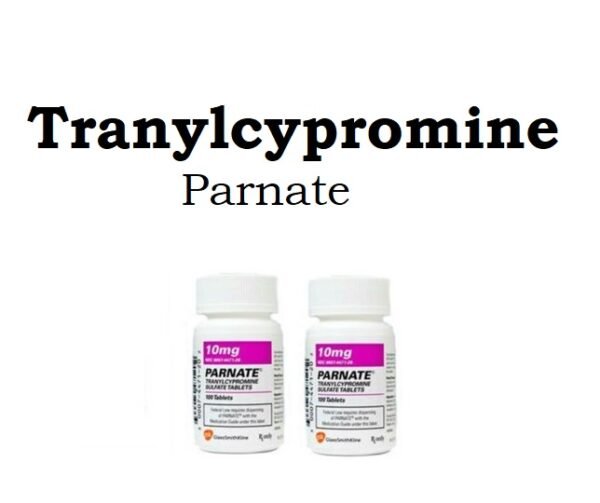
Tranylcypromine may enhance the CNS depressant effect of Brexanolone.
|
|
Brimonidine (Ophthalmic)
|
Monoamine Oxidase Inhibitors may enhance the adverse/toxic effect of Brimonidine (Ophthalmic). Monoamine Oxidase Inhibitors may increase the serum concentration of Brimonidine (Ophthalmic).
|
|
Brimonidine (Topical)
|
Monoamine Oxidase Inhibitors may enhance the adverse/toxic effect of Brimonidine (Topical). Monoamine Oxidase Inhibitors may increase the serum concentration of Brimonidine (Topical).
|
|
Brimonidine (Topical)
|
May enhance the hypotensive effect of Blood Pressure Lowering Agents.
|
|
Cannabinoid-Containing Products
|
Anticholinergic Agents may enhance the tachycardic effect of Cannabinoid-Containing Products. Exceptions: Cannabidiol.
|
|
Cerebrolysin
|
May enhance the adverse/toxic effect of Monoamine Oxidase Inhibitors.
|
|
Chloral Betaine
|
May enhance the adverse/toxic effect of Anticholinergic Agents.
|
|
Chlorphenesin Carbamate
|
May enhance the adverse/toxic effect of Monoamine Oxidase Inhibitors.
|
|
Clemastine
|
Monoamine Oxidase Inhibitors may enhance the anticholinergic effect of Clemastine.
|
|
Codeine
|
Monoamine Oxidase Inhibitors may enhance the adverse/toxic effect of Codeine.
|
|
Diazoxide
|
May enhance the hypotensive effect of Blood Pressure Lowering Agents.
|
|
Dihydrocodeine
|
May enhance the serotonergic effect of Monoamine Oxidase Inhibitors. This could result in serotonin syndrome.
|
|
Domperidone
|
Monoamine Oxidase Inhibitors may enhance the adverse/toxic effect of Domperidone. Monoamine Oxidase Inhibitors may diminish the therapeutic effect of Domperidone. Domperidone may diminish the therapeutic effect of Monoamine Oxidase Inhibitors.
|
|
Doxapram
|
Monoamine Oxidase Inhibitors may enhance the hypertensive effect of Doxapram.
|
|
Doxylamine
|
Monoamine Oxidase Inhibitors may enhance the anticholinergic effect of Doxylamine. Management: The US manufacturer of Diclegis (doxylamine/pyridoxine) and the manufacturers of Canadian doxylamine products specifically lists use with monoamine oxidase inhibitors as contraindicated.
|
|
EPINEPHrine (Nasal)
|
Monoamine Oxidase Inhibitors may enhance the hypertensive effect of EPINEPHrine (Nasal).
|
|
Epinephrine (Racemic)
|
Monoamine Oxidase Inhibitors may enhance the hypertensive effect of Epinephrine (Racemic).
|
|
EPINEPHrine (Systemic)
|
Monoamine Oxidase Inhibitors may enhance the hypertensive effect of EPINEPHrine (Systemic).
|
|
Esketamine
|
May enhance the hypertensive effect of Monoamine Oxidase Inhibitors.
|
|
Gastrointestinal Agents (Prokinetic)
|
Anticholinergic Agents may diminish the therapeutic effect of Gastrointestinal Agents (Prokinetic).
|
|
Glucagon
|
Anticholinergic Agents may enhance the adverse/toxic effect of Glucagon. Specifically, the risk of gastrointestinal adverse effects may be increased.
|
|
Herbs (Hypotensive Properties)
|
May enhance the hypotensive effect of Blood Pressure Lowering Agents.
|
|
Hypotension-Associated Agents
|
Blood Pressure Lowering Agents may enhance the hypotensive effect of Hypotension-Associated Agents.
|
|
Itopride
|
Anticholinergic Agents may diminish the therapeutic effect of Itopride.
|
|
Lormetazepam
|
May enhance the hypotensive effect of Blood Pressure Lowering Agents.
|
|
Metaraminol
|
Monoamine Oxidase Inhibitors may enhance the hypertensive effect of Metaraminol.
|
|
Metaxalone
|
May enhance the serotonergic effect of Serotonin Modulators. This could result in serotonin syndrome.
|
|
Methadone
|
May enhance the serotonergic effect of Monoamine Oxidase Inhibitors. This could result in serotonin syndrome.
|
|
Metoclopramide
|
Serotonin Modulators may enhance the adverse/toxic effect of Metoclopramide. This may be manifest as symptoms consistent with serotonin syndrome or neuroleptic malignant syndrome.
|
|
Mirabegron
|
Anticholinergic Agents may enhance the adverse/toxic effect of Mirabegron.
|
|
Molsidomine
|
May enhance the hypotensive effect of Blood Pressure Lowering Agents.
|
|
Naftopidil
|
May enhance the hypotensive effect of Blood Pressure Lowering Agents.
|
|
Nicergoline
|
May enhance the hypotensive effect of Blood Pressure Lowering Agents.
|
|
Nicorandil
|
May enhance the hypotensive effect of Blood Pressure Lowering Agents.
|
|
Nitroglycerin
|
Anticholinergic Agents may decrease the absorption of Nitroglycerin. Specifically, anticholinergic agents may decrease the dissolution of sublingual nitroglycerin tablets, possibly impairing or slowing nitroglycerin absorption.
|
|
Nitroprusside
|
Blood Pressure Lowering Agents may enhance the hypotensive effect of Nitroprusside.
|
|
Norepinephrine
|
Monoamine Oxidase Inhibitors may enhance the hypertensive effect of Norepinephrine.
|
|
Opioid Agonists
|
Anticholinergic Agents may enhance the adverse/toxic effect of Opioid Agonists. Specifically, the risk for constipation and urinary retention may be increased with this combination.
|
|
Opioid Agonists
|
May enhance the serotonergic effect of Serotonin Modulators. This could result in serotonin syndrome.
|
|
Pentoxifylline
|
May enhance the hypotensive effect of Blood Pressure Lowering Agents.
|
|
Phosphodiesterase 5 Inhibitors
|
May enhance the hypotensive effect of Blood Pressure Lowering Agents.
|
|
Prostacyclin Analogues
|
May enhance the hypotensive effect of Blood Pressure Lowering Agents.
|
|
Quinagolide
|
May enhance the hypotensive effect of Blood Pressure Lowering Agents.
|
|
Ramosetron
|
Anticholinergic Agents may enhance the constipating effect of Ramosetron.
|
|
Serotonin Modulators
|
May enhance the adverse/toxic effect of other Serotonin Modulators. The development of serotonin syndrome may occur. Exceptions: Nicergoline; Tedizolid.
|
|
Thiazide and Thiazide-Like Diuretics
|
Anticholinergic Agents may increase the serum concentration of Thiazide and Thiazide-Like Diuretics.
|
|
Topiramate
|
Anticholinergic Agents may enhance the adverse/toxic effect of Topiramate.
|
|
TraMADol
|
Serotonin Modulators may enhance the adverse/toxic effect of TraMADol. The risk of seizures may be increased. TraMADol may enhance the serotonergic effect of Serotonin Modulators. This could result in serotonin syndrome.
|
|
Risk Factor D (Consider therapy modification)
|
|
Amifostine
|
Blood Pressure Lowering Agents may enhance the hypotensive effect of Amifostine. Management: When amifostine is used at chemotherapy doses, blood pressure lowering medications should be withheld for 24 hours prior to amifostine administration. If blood pressure lowering therapy cannot be withheld, amifostine should not be administered.
|
|
Benzhydrocodone
|
May enhance the serotonergic effect of Monoamine Oxidase Inhibitors. This could result in serotonin syndrome. Management: The use of benzhydrocodone is not recommended for patients taking monoamine oxidase inhibitors (MAOIs) or within 14 days of MAOI discontinuation.
|
|
COMT Inhibitors
|
May enhance the adverse/toxic effect of Monoamine Oxidase Inhibitors.
|
|
DOPamine
|
Monoamine Oxidase Inhibitors may enhance the hypertensive effect of DOPamine. Management: Initiate dopamine at no greater than one-tenth (1/10) of the usual dose in patients who are taking (or have taken within the last 2 to 3 weeks) monoamine oxidase inhibitors. Monitor for an exaggerated hypertensive response to dopamine.
|
|
HYDROcodone
|
Monoamine Oxidase Inhibitors may enhance the adverse/toxic effect of HYDROcodone. Management: Consider alternatives to this combination when possible.
|
|
Iohexol
|
Agents With Seizure Threshold Lowering Potential may enhance the adverse/toxic effect of Iohexol. Specifically, the risk for seizures may be increased. Management: Discontinue agents that may lower the seizure threshold 48 hours prior to intrathecal use of iohexol. Wait at least 24 hours after the procedure to resume such agents. In nonelective procedures, consider use of prophylactic anticonvulsants.
|
|
Iomeprol
|
Agents With Seizure Threshold Lowering Potential may enhance the adverse/toxic effect of Iomeprol. Specifically, the risk for seizures may be increased. Management: Discontinue agents that may lower the seizure threshold 48 hours prior to intrathecal use of iomeprol. Wait at least 24 hours after the procedure to resume such agents. In nonelective procedures, consider use of prophylactic anticonvulsants.
|
|
Iopamidol
|
Agents With Seizure Threshold Lowering Potential may enhance the adverse/toxic effect of Iopamidol. Specifically, the risk for seizures may be increased. Management: Discontinue agents that may lower the seizure threshold 48 hours prior to intrathecal use of iopamidol. Wait at least 24 hours after the procedure to resume such agents. In nonelective procedures, consider use of prophylactic anticonvulsants.
|
|
Levodopa-Containing Products
|
May enhance the adverse/toxic effect of Monoamine Oxidase Inhibitors. Of particular concern is the development of hypertensive reactions when levodopa is used with nonselective MAOI. Management: The concomitant use of nonselective monoamine oxidase inhibitors (MAOIs) and levodopa is contraindicated. Discontinue the nonselective MAOI at least two weeks prior to initiating levodopa. Monitor patients taking a selective MAOIs and levodopa.
|
|
Lithium
|
Monoamine Oxidase Inhibitors may enhance the adverse/toxic effect of Lithium. Management: This combination should be undertaken with great caution. When combined treatment is clinically indicated, monitor closely for signs of serotonin toxicity/serotonin syndrome.
|
|
Obinutuzumab
|
May enhance the hypotensive effect of Blood Pressure Lowering Agents. Management: Consider temporarily withholding blood pressure lowering medications beginning 12 hours prior to obinutuzumab infusion and continuing until 1 hour after the end of the infusion.
|
|
OxyCODONE
|
May enhance the serotonergic effect of Monoamine Oxidase Inhibitors. This could result in serotonin syndrome. Management: Seek alternatives when possible. Avoid use of oxycodone/naltrexone during and within 14 days after monoamine oxidase inhibitor treatment. Non-US labeling for some oxycodone products states that such use is contraindicated.
|
|
Pindolol
|
Monoamine Oxidase Inhibitors may enhance the hypotensive effect of Pindolol. Management: Canadian labeling for pindolol states that concurrent use with a monoamine oxidase inhibitor is not recommended.
|
|
Pramlintide
|
May enhance the anticholinergic effect of Anticholinergic Agents. These effects are specific to the GI tract.
|
|
Reserpine
|
Monoamine Oxidase Inhibitors may enhance the adverse/toxic effect of Reserpine. Existing MAOI therapy can result in paradoxical effects of added reserpine (e.g., excitation, hypertension). Management: Monoamine oxidase inhibitors (MAOIs) should be avoided or used with great caution in patients who are also receiving reserpine.
|
|
Secretin
|
Anticholinergic Agents may diminish the therapeutic effect of Secretin. Management: Avoid concomitant use of anticholinergic agents and secretin. Discontinue anticholinergic agents at least 5 half-lives prior to administration of secretin.
|
|
Risk Factor X (Avoid combination)
|
|
Aclidinium
|
May enhance the anticholinergic effect of Anticholinergic Agents.
|
|
Alcohol (Ethyl)
|
May enhance the adverse/toxic effect of Monoamine Oxidase Inhibitors.
|
|
Alpha-/Beta-Agonists (Indirect-Acting)
|
Monoamine Oxidase Inhibitors may enhance the hypertensive effect of Alpha-/Beta-Agonists (Indirect-Acting). While linezolid is expected to interact via this mechanism, management recommendations differ from other monoamine oxidase inhibitors. Refer to linezolid specific monographs for details.
|
|
Alpha1-Agonists
|
Monoamine Oxidase Inhibitors may enhance the hypertensive effect of Alpha1Agonists. While linezolid is expected to interact via this mechanism, management recommendations differ from other monoamine oxidase inhibitors. Refer to linezolid specific monographs for details.
|
|
Amphetamines
|
Monoamine Oxidase Inhibitors may enhance the hypertensive effect of Amphetamines. While linezolid and tedizolid may interact via this mechanism, management recommendations differ from other monoamine oxidase inhibitors. Refer to monographs specific to those agents for details.
|
|
Apraclonidine
|
Monoamine Oxidase Inhibitors may enhance the adverse/toxic effect of Apraclonidine. Monoamine Oxidase Inhibitors may increase the serum concentration of Apraclonidine.
|
|
AtoMOXetine
|
Monoamine Oxidase Inhibitors may enhance the neurotoxic (central) effect of AtoMOXetine.
|
|
Atropine (Ophthalmic)
|
Monoamine Oxidase Inhibitors may enhance the hypertensive effect of Atropine (Ophthalmic).
|
|
Bezafibrate
|
Monoamine Oxidase Inhibitors may enhance the adverse/toxic effect of Bezafibrate.
|
|
Bromperidol
|
Blood Pressure Lowering Agents may enhance the hypotensive effect of Bromperidol. Bromperidol may diminish the hypotensive effect of Blood Pressure Lowering Agents.
|
|
Buprenorphine
|
May enhance the adverse/toxic effect of Monoamine Oxidase Inhibitors.
|
|
BuPROPion
|
Monoamine Oxidase Inhibitors may enhance the hypertensive effect of BuPROPion.
|
|
BusPIRone
|
May enhance the adverse/toxic effect of Monoamine Oxidase Inhibitors. Specifically, blood pressure elevations been reported.
|
|
CarBAMazepine
|
May enhance the adverse/toxic effect of Monoamine Oxidase Inhibitors. Management: Avoid concurrent use of carbamazepine during, or within 14 days of discontinuing, treatment with a monoamine oxidase inhibitor.
|
|
Cimetropium
|
Anticholinergic Agents may enhance the anticholinergic effect of Cimetropium.
|
|
Cyclobenzaprine
|
May enhance the serotonergic effect of Monoamine Oxidase Inhibitors. This could result in serotonin syndrome.
|
|
Cyproheptadine
|
Monoamine Oxidase Inhibitors may enhance the anticholinergic effect of Cyproheptadine. Cyproheptadine may diminish the serotonergic effect of Monoamine Oxidase Inhibitors.
|
|
Dapoxetine
|
May enhance the adverse/toxic effect of Serotonin Modulators.
|
|
Deutetrabenazine
|
Monoamine Oxidase Inhibitors may enhance the adverse/toxic effect of Deutetrabenazine.
|
|
Dexmethylphenidate
|
Monoamine Oxidase Inhibitors may enhance the hypertensive effect of Dexmethylphenidate.
|
|
Dextromethorphan
|
Monoamine Oxidase Inhibitors may enhance the serotonergic effect of Dextromethorphan. This may cause serotonin syndrome.
|
|
Diethylpropion
|
Monoamine Oxidase Inhibitors may enhance the hypertensive effect of Diethylpropion.
|
|
Diphenoxylate
|
May enhance the hypertensive effect of Monoamine Oxidase Inhibitors.
|
|
Droxidopa
|
Monoamine Oxidase Inhibitors may enhance the hypertensive effect of Droxidopa.
|
|
Eluxadoline
|
Anticholinergic Agents may enhance the constipating effect of Eluxadoline.
|
|
EPINEPHrine (Oral Inhalation)
|
Monoamine Oxidase Inhibitors may enhance the hypertensive effect of EPINEPHrine (Oral Inhalation).
|
|
FentaNYL
|
May enhance the serotonergic effect of Monoamine Oxidase Inhibitors. This could result in serotonin syndrome.
|
|
Glycopyrrolate (Oral Inhalation)
|
Anticholinergic Agents may enhance the anticholinergic effect of Glycopyrrolate (Oral Inhalation).
|
|
Glycopyrronium (Topical)
|
May enhance the anticholinergic effect of Anticholinergic Agents.
|
|
Guanethidine
|
May enhance the adverse/toxic effect of Monoamine Oxidase Inhibitors.
|
|
Heroin
|
Monoamine Oxidase Inhibitors may enhance the adverse/toxic effect of Heroin.
|
|
HYDROmorphone
|
Monoamine Oxidase Inhibitors may enhance the adverse/toxic effect of HYDROmorphone.
|
|
Indoramin
|
Monoamine Oxidase Inhibitors may enhance the hypotensive effect of Indoramin.
|
|
Iobenguane Radiopharmaceutical Products
|
Monoamine Oxidase Inhibitors may diminish the therapeutic effect of Iobenguane Radiopharmaceutical Products. Management: Discontinue all drugs that may inhibit or interfere with catecholamine transport or uptake for at least 5 biological half-lives before iobenguane administration. Do not administer these drugs until at least 7 days after each iobenguane dose.
|
|
Ipratropium (Oral Inhalation)
|
May enhance the anticholinergic effect of Anticholinergic Agents.
|
|
Isometheptene
|
Monoamine Oxidase Inhibitors may enhance the adverse/toxic effect of Isometheptene.
|
|
Levomethadone
|
May enhance the adverse/toxic effect of Monoamine Oxidase Inhibitors.
|
|
Levonordefrin
|
Monoamine Oxidase Inhibitors may enhance the hypertensive effect of Levonordefrin.
|
|
Levosulpiride
|
Anticholinergic Agents may diminish the therapeutic effect of Levosulpiride.
|
|
Linezolid
|
Monoamine Oxidase Inhibitors may enhance the adverse/toxic effect of Linezolid.
|
|
Maprotiline
|
May enhance the adverse/toxic effect of Monoamine Oxidase Inhibitors.
|
|
Meperidine
|
Monoamine Oxidase Inhibitors may enhance the serotonergic effect of Meperidine. This may cause serotonin syndrome.
|
|
Meptazinol
|
Monoamine Oxidase Inhibitors may enhance the adverse/toxic effect of Meptazinol.
|
|
Mequitazine
|
Monoamine Oxidase Inhibitors may enhance the anticholinergic effect of Mequitazine.
|
|
Methyldopa
|
Monoamine Oxidase Inhibitors may enhance the adverse/toxic effect of Methyldopa.
|
|
Methylene Blue
|
Monoamine Oxidase Inhibitors may enhance the serotonergic effect of Methylene Blue. This could result in serotonin syndrome.
|
|
Methylene Blue
|
May enhance the serotonergic effect of Serotonin Modulators. This could result in serotonin syndrome.
|
|
Methylphenidate
|
Monoamine Oxidase Inhibitors may enhance the hypertensive effect of Methylphenidate.
|
|
Mianserin
|
Monoamine Oxidase Inhibitors may enhance the neurotoxic effect of Mianserin.
|
|
Mirtazapine
|
Monoamine Oxidase Inhibitors may enhance the neurotoxic (central) effect of Mirtazapine. While methylene blue and linezolid are expected to interact, specific recommendations for their use differ from other monoamine oxidase inhibitors. Refer to monographs specific to those agents for details.
|
|
Moclobemide
|
Monoamine Oxidase Inhibitors may enhance the adverse/toxic effect of Moclobemide.
|
|
Monoamine Oxidase Inhibitors
|
May enhance the hypertensive effect of other Monoamine Oxidase Inhibitors. Monoamine Oxidase Inhibitors may enhance the serotonergic effect of other Monoamine Oxidase Inhibitors. This could result in serotonin syndrome.
|
|
Morphine (Systemic)
|
Monoamine Oxidase Inhibitors may enhance the adverse/toxic effect of Morphine (Systemic).
|
|
Nefopam
|
Monoamine Oxidase Inhibitors may enhance the adverse/toxic effect of Nefopam.
|
|
Opium
|
Monoamine Oxidase Inhibitors may enhance the adverse/toxic effect of Opium.
|
|
Oxatomide
|
May enhance the anticholinergic effect of Anticholinergic Agents.
|
|
OxyMORphone
|
May enhance the adverse/toxic effect of Monoamine Oxidase Inhibitors.
|
|
Pheniramine
|
May enhance the anticholinergic effect of Monoamine Oxidase Inhibitors.
|
|
Pholcodine
|
May enhance the serotonergic effect of Monoamine Oxidase Inhibitors. This could result in serotonin syndrome.
|
|
Pizotifen
|
Monoamine Oxidase Inhibitors may enhance the anticholinergic effect of Pizotifen.
|
|
Potassium Chloride
|
Anticholinergic Agents may enhance the ulcerogenic effect of Potassium Chloride. Management: Patients on drugs with substantial anticholinergic effects should avoid using any solid oral dosage form of potassium chloride.
|
|
Potassium Citrate
|
Anticholinergic Agents may enhance the ulcerogenic effect of Potassium Citrate.
|
|
Reboxetine
|
Monoamine Oxidase Inhibitors may enhance the adverse/toxic effect of Reboxetine.
|
|
Revefenacin
|
Anticholinergic Agents may enhance the anticholinergic effect of Revefenacin.
|
|
Selective Serotonin Reuptake Inhibitors
|
Monoamine Oxidase Inhibitors may enhance the serotonergic effect of Selective Serotonin Reuptake Inhibitors. This may cause serotonin syndrome. While methylene blue and linezolid are expected to interact via this mechanism, management recommendations differ from other monoamine oxidase inhibitors. Refer to monographs specific to those agents for details.
|
|
Serotonin 5-HT1D Receptor Agonists
|
Monoamine Oxidase Inhibitors may decrease the metabolism of Serotonin 5-HT1D Receptor Agonists. Management: If MAO inhibitor therapy is required, naratriptan, eletriptan or frovatriptan may be a suitable 5-HT1D agonist to employ. Exceptions: Eletriptan; Frovatriptan; Naratriptan.
|
|
Serotonin Reuptake Inhibitor/Antagonists
|
Monoamine Oxidase Inhibitors may enhance the adverse/toxic effect of Serotonin Reuptake Inhibitor/Antagonists. While methylene blue and linezolid are expected to interact, specific recommendations for their use differ from other monoamine oxidase inhibitors. Refer to monographs specific to those agents for details.
|
|
Serotonin/Norepinephrine Reuptake Inhibitors
|
Monoamine Oxidase Inhibitors may enhance the serotonergic effect of Serotonin/Norepinephrine Reuptake Inhibitors. This may cause serotonin syndrome. While methylene blue and linezolid are expected to interact via this mechanism, management recommendations differ from other monoamine oxidase inhibitors. Refer to monographs specific to those agents for details.
|
|
Solriamfetol
|
Monoamine Oxidase Inhibitors may enhance the hypertensive effect of Solriamfetol.
|
|
SUFentanil
|
May enhance the adverse/toxic effect of Monoamine Oxidase Inhibitors. Specifically, the risk for serotonin syndrome or opioid toxicities (eg, respiratory depression, coma) may be increased. Management: Sufentanil should not be used with monoamine oxidase (MAO) inhibitors (or within 14 days of stopping an MAO inhibitor) due to the potential for serotonin syndrome and/or excessive CNS depression.
|
|
Tapentadol
|
May enhance the adverse/toxic effect of Monoamine Oxidase Inhibitors. Specifically, the additive effects of norepinephrine may lead to adverse cardiovascular effects. Tapentadol may enhance the serotonergic effect of Monoamine Oxidase Inhibitors. This could result in serotonin syndrome.
|
|
Tetrabenazine
|
May enhance the adverse/toxic effect of Monoamine Oxidase Inhibitors.
|
|
Tetrahydrozoline (Nasal)
|
Monoamine Oxidase Inhibitors may enhance the hypertensive effect of Tetrahydrozoline (Nasal).
|
|
Tianeptine
|
May enhance the adverse/toxic effect of Monoamine Oxidase Inhibitors.
|
|
Tiotropium
|
Anticholinergic Agents may enhance the anticholinergic effect of Tiotropium.
|
|
Tricyclic Antidepressants
|
Monoamine Oxidase Inhibitors may enhance the serotonergic effect of Tricyclic Antidepressants. This may cause serotonin syndrome. While methylene blue and linezolid are expected to interact via this mechanism, management recommendations differ from other monoamine oxidase inhibitors. Refer to monographs specific to those agents for details.
|
|
Tryptophan
|
May enhance the adverse/toxic effect of Monoamine Oxidase Inhibitors.
|
|
Umeclidinium
|
May enhance the anticholinergic effect of Anticholinergic Agents.
|
|
Valbenazine
|
May enhance the adverse/toxic effect of Monoamine Oxidase Inhibitors.
|
.png)