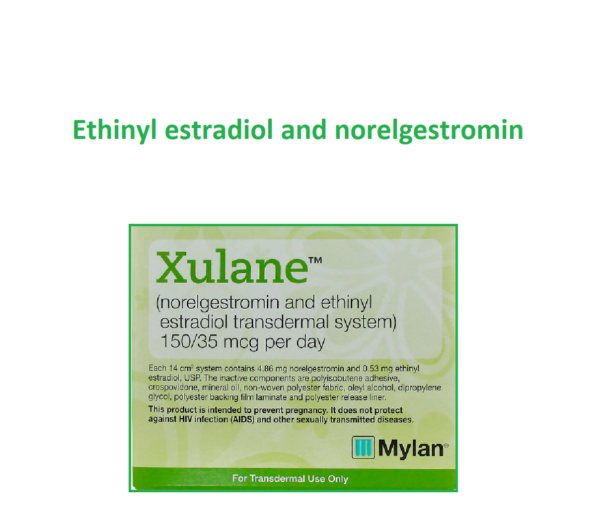
Xulane (Ethinyl estradiol and norelgestromin) is available as a medicated patch used to prevent pregnancy.
Xulane (Ethinyl estradiol and norelgestromin) Uses:
-
Contraception:
- Used for the prevention of pregnancy
- Limitations of use: The topical patch may be less effective in patients weighing 90 kg or more than 90 kg.
-
Off Label Use of Ethinyl estradiol and norelgestromin in Adults:
- Polycystic ovary syndrome (PCOS) in women with menstrual irregularities and hirsutism/acne
Xulane (Ethinyl estradiol and norelgestromin) Dose in Adults
Xulane (Ethinyl estradiol and norelgestromin) use in females for contraception:
Topical:
- Apply one patch each week for 3 weeks (21 total days); followed by one week that is patch-free.
- Each patch should be applied on the same day each week (“patch change day”) and only one patch should be worn at a time.
- No more than a weak should pass during the patch-free interval.
-
Schedule 1 (Sunday starter):
- Dose begins on the first Sunday after the onset of menstruation; if the menstrual period starts on Sunday, apply one patch that very same day.
- With a Sunday start, an additional method of contraception (nonhormonal) must be used until after the first weak of consecutive administration unless the menstrual period starts on Sunday.
- Each patch change will then occur on Sunday.
-
Schedule 2 (Day 1 starter):
- Dose starts on the first day of the menstrual cycle, applying one patch during the first 24 hours of the menstrual cycle.
- Each patch change will then occur on that same day of the week.
-
Additional Xulane dosing considerations:
- Switching from oral contraceptives or vaginal ring:
- Complete the current cycle and apply the first patch on the day the next pill cycle would be started or ring would be inserted.
- If there is no menstrual bleeding within the weak of taking the last active tablet or removing the last vaginal ring, the patient can initiate the first patch application; however, assess pregnancy status.
- If the patch is applied later than 7 days after the last active pill or removal of the vaginal ring, an additional method of contraception (nonhormonal) should be used until after the first weak of consecutive administration
- Xulane Use after childbirth:
- Therapy should not be started less than 4 weeks after childbirth.
- Pregnancy should be ruled out prior to treatment if menstrual periods have not restarted.
- An additional method of contraception (nonhormonal) should be used until after the first weak of consecutive administration.
- Xulane Use after abortion or miscarriage:
- Therapy may be started immediately if abortion/miscarriage occurs within the first trimester.
- If therapy is not started within 5 days, follow instructions for first-time use; an additional method of contraception (nonhormonal) should be used until after the first weak of consecutive administration.
- If abortion or a miscarriage occurs during the second trimester, therapy should not be started for at least 4 weeks.
- Follow directions for use after childbirth.
- Switching from oral contraceptives or vaginal ring:
Xulane use in Adolescents:
Refer to adult dosing.
Xulane (Ethinyl estradiol and norelgestromin) Pregnancy Risk Category: X
- It is contraindicated in pregnant women.
- To prevent pregnancy, combination hormonal contraceptives can be used. If pregnancy does occur, treatment should be stopped.
- Combination hormonal contraceptives used inadvertently early in pregnancy have not been shown to cause adverse effects for either the fetus or mother.
- According to the manufacturer, combination hormonal contraceptives should be stopped 4 weeks after birth in women who have chosen not to breastfeed.
- It should also not be used more than 4 weeks after an abortion or miscarriage.
- Combination hormonal contraceptives should be stopped for less than 21 days after delivery due to increased risk of venous embolism (VTE).
- Postpartum day 42 sees a decrease in the risk to baseline.
- Combination hormonal contraceptives should be used in women 21 to 42 days after delivery.
- Women must consider their risk factors for VTE such as age, gender, pregnancies, birth complications, and smoking.
Use of Xulane (Ethinyl estradiol, norelgestromin), during breastfeeding
- Breast milk may contain contraceptive steroids.
- The manufacturer suggests that contraceptives containing estrogen be used until the child is weaned. This will reduce milk production.
- Breastfeeding mothers who use combination hormonal contraceptives have not reported any adverse health effects or persistent effects on infant growth and illness.
- Breastfeeding women should not start combination hormonal contraceptives less than 21 days after delivery due to an increased risk of venous embolism (VTE).
- Postpartum day 42 sees a decrease in the risk to baseline.
- Combination hormonal contraceptives should be used in women 21 to 42 days after delivery.
- Women must consider their risk factors for VTE (eg., age 35 or more than 35, previous VTEs, thrombophilia and transfusion at delivery, cesarean birth, immobility, preeclampsia and peripartum cardiomyopathy), BMI >=30kg/m2, postpartum bleeding, smoking, and other health issues.
- When starting treatment for breastfeeding women, it is important to consider the risks and benefits of combination hormonal contraception.
Xulane (Ethinyl estradiol and norelgestromin) Dose in Kidney Disease:
Manufacturers labeling doesn't provide any dosage adjustments (has not been studied); use with caution and monitor blood pressure closely.
Xulane (Ethinyl estradiol and norelgestromin) Dose in Liver disease:
It is contraindicated in patients with hepatic impairment.
The following reactions have been reported with the contraceptive patch. Adverse reactions associated with oral combination hormonal contraceptive agents are also likely to appear with the topical contraceptive patch (frequency difficult to anticipate).
Common Side Effects of Xulane (Ethinyl estradiol and norelgestromin):
-
Central Nervous System:
- Headache
-
Endocrine & Metabolic:
- Breast Changes Including
- Discomfort
- Mastalgia
- Breast Engorgement
- Breast Changes Including
-
Gastrointestinal:
- Nausea
-
Local:
- Application Site Reaction
Less Common Side Effects Of Xulane (Ethinyl estradiol and norelgestromin):
-
Cardiovascular:
- Increased Blood Pressure
- Pulmonary Embolism
-
Central Nervous System:
- Anxiety
- Mood Disorder
- Malaise
- Dizziness
- Fatigue
- Migraine
- Insomnia
-
Dermatologic:
- Acne Vulgaris
- Chloasma
- Contact Dermatitis
- Erythema
- Skin Irritation
- Pruritus
-
Endocrine & Metabolic:
- Menstrual Disease
- Weight Gain
- Premenstrual Syndrome
- Change In Libido
- Dyslipidemia
- Fluid Retention
- Galactorrhea
-
Gastrointestinal:
- Abdominal Pain
- Diarrhea
- Abdominal Distention
- Cholecystitis
- Vomiting
-
Genitourinary:
- Dysmenorrhea
- Vulvar Dryness
- Vaginal Hemorrhage
- Vulvovaginal Candidiasis
- Genital Discharge
- Uterine Spasm
- Vaginal Dryness
-
Neuromuscular & Skeletal:
- Muscle Spasm
Contraindications to Xulane (Ethinyl estradiol and norelgestromin):
- Breast cancer and other estrogen-, progestin-dependent Neoplasms (currently or in the past).
- Hepatic tumors (benign and malignant) or hepatic diseases.
- pregnancy,
- Undiagnosed abnormal uterine bleeding
- use of hepatitis C drug combinations containing ombitasvir/paritaprevir /ritonavir with or without dasabuvir.
Women at high risk for arterial or vein thrombotic disease, such as women with:
- Cerebrovascular Disease
- Coronary artery disease
- Diabetes mellitus and vascular disease
- DVT or PE (current and/or historical of),
- Hypercoagulopathies (inherited and acquired)
- hypertension (uncontrolled),
- Headaches with focal neurological symptoms
- Migraine headaches with aura and migraine headaches in those over 35 years
- Thrombogenic valvular and rhythm diseases of heart (eg subacute bacteria endocarditis or atrial fibrillation)
- Women who smoke are older than 35 years old.
Canadian-labeling: Additional contraindications not in US labeling
- Hypersensitivity to Ethinylestradiol or norelgestromin or any other component of the formulation
- Myocardial Infarction (current and/or history of);
- Steroid-dependent jaundice
- Known as cholestatic jaundice or history of jaundice during pregnancy
- Any ocular lesions caused by ophthalmic vessels disease, including partial or total loss of vision and defects in the visual fields.
- Persistent blood pressure >=160mm Hg systolic, or >=100mm Hg diastolic
- severe dyslipoproteinemia;
- women with a hereditary or acquired predisposition for venous or arterial thrombosis (eg, Factor V Leiden mutation and activated protein C [APC-] resistance, antithrombin-III-deficiency, protein C deficiency, protein S deficiency, hyperhomocysteinemia [eg, due to MTHFR C677T, A1298 mutations], prothrombin mutation G20210A, and antiphospholipid-antibodies [anticardiolipin antibodies, lupus anticoagulant]);
- Major surgery is associated with a higher risk of post-operative bleeding.
- Long-term immobilization
- coadministration with paritaprevir, ritonavir, ombitasvir (with or without dasabuvir).
Warnings and precautions
-
Breast cancer
- Combination hormonal contraceptives have not been proven to reduce breast cancer risk in women who are at high risk due to their family history or susceptibility genes (BRCA2, BRCA1).
- Women with breast cancer history or who have had it are advised to not use this product.
- Breast cancer is a hormone sensitive tumor. Women with a history of breast cancer or a recent diagnosis may have a worse prognosis if they use combination hormonal contraceptives.
-
Cervical cancer:
- Theoretically, it may influence the prognosis for an existing disease.
- Combination hormonal contraceptives may be used by women who are awaiting treatment for cervical carcinoma.
- Combination hormonal contraceptives have been linked to a slight increase in cervical cancer risk. However, the evidence is inconsistent and could be due to other risk factors.
-
Chloasma
- Treatment should be avoided for women who are susceptible to chloasma and other risk factors.
- Combination hormonal contraceptives as well as sun exposure, pregnancy and sun exposure are all triggers for chloasma.
-
Cholestasis:
- Cholesteasis risk may increase if there has been a history of cholestasis in pregnancy, or with prior oral contraceptive use.
-
The Lipid Effects
- Combination hormonal contraceptives can increase the risk of pancreatitis in women with hypertriglyceridemia and a family history.
- Combination hormonal contraceptives can adversely affect lipid levels, especially serum triglycerides.
- Women with uncontrolled dyslipidemia should consider alternative contraception.
-
Retinal vascular embolism:
- If you experience an undiagnosed loss of vision, papilledema or proptosis, discontinue use immediately and have your retinal veins examined for thrombosis.
-
Thromboembolic conditions: [US Boxed Warn]
- The patch has a different pharmacokinetic profile than oral contraceptives.
- Stable-state concentrations are approximately 60% higher after using the patch than oral tablets containing 35 mg ethinylestradiol.
- Peak concentrations are lower in the patch.
- Due to the increased estrogen exposure, the risk of venous embolism (VTE), may be increased by the contraceptive pill.
- Increased estrogen exposure can increase the likelihood of adverse events such as venous embolism.
- If you experience an arterial or vein thrombotic event, discontinue using combination hormonal contraceptives.
- Women who have inherited thrombophilias, such as protein C or S deficiency and factor V Leiden mutation, antithrombin deficiencies, or prothrombin mutation, may be at greater risk for venous thromboembolism.
- The risk of venous embolism may be increased by oral contraceptives (risk is highest in the first year and lowest during pregnancy). Some studies have suggested that the risk may be greater for preparations containing third- or fourth-generation progestins, and/or high doses of ethinylestradiol.
- Women who use combination hormonal contraceptives for longer periods of time, such as those over 35, are more likely to experience thrombotic events than those who smoke or have hypertension.
- Combination hormonal contraceptives can also increase the risk for arterial thrombosis (eg MI, stroke). Women with a history or ischemic heart disease should not use them.
- Combination hormonal contraceptives are not recommended for women at high risk of venous or arterial thrombotic diseases.
-
Vaginal bleeding
- In the initial 3 months of therapy, it is possible to experience intra-cyclic bleeding or breakthrough.
- Combination hormonal contraceptives may cause amenorrhea and oligomenorrhea, particularly if the condition was not present previously.
- There may be occasional missed periods.
- Unresolved vaginal bleeding is a sign of malignancy and pregnancy.
-
Cardiovascular disease
- Patients with high risk factors for cardiovascular disease such as hypertension, high blood pressure, diabetes, older age, smoking, and low HDL/high LDL levels should be cautious. Combination hormonal contraceptives can increase your risk of developing the disease.
- Women at high risk for arterial or vein thrombotic disease are not advised to use this medication.
-
Depression
- Patients with a history or depression should be cautious; discontinue use if severe depression recurs.
-
Diabetes:
- Combination oral contraceptives have a limited effect on insulin requirements and are not effective for long-term diabetes control in women who do not have nonvascular diseases.
- This may impair glucose tolerance. Women with diabetes and prediabetes should be cautious.
- Contraceptive use should not be used in women who have concomitant neuropathy, nephropathy, retinopathy or other vascular conditions.
- Women with diabetes mellitus or vascular disease should not use this medication.
-
Endometrial and ovarian cancers:
- Combination hormonal contraceptives may be used by women awaiting treatment for ovarian or endometrial cancer.
- Women who use combination oral contraceptives have a lower risk of developing ovarian or endometrial cancer. It is not known if using the contraceptive patch can also reduce this risk.
-
Gallbladder disease
- Combining hormonal contraceptives can increase the risk of gallbladder diseases or worsen existing gallbladder diseases.
-
Hepatic adenomas and carcinomas
- A higher risk of developing hepatocellular carcinoma in the long term (rare).
- Combination hormonal contraceptives can cause hepatic tumors (rare); rupture could lead to fatal intra-abdominal bleeding.
- Preexisting hepatic cancers are not recommended.
-
Hepatic impairment
- If jaundice occurs during treatment or if the liver function is abnormal, discontinue use.
- Women with hepatic diseases should not use this product.
- Women with impaired liver function may not be able to process hormonal contraceptives in combination.
- Combination hormonal contraceptives can be used for women with mild (compensated), but not severe (decompensated), cirrhosis.
-
Hepatitis
- Women with chronic hepatitis have not been shown to experience an increase in the severity or rate of cirrhotic fibrisis.
- It has been proven that continued use of a drug by women who are carriers does not cause liver disease or severe hepatic dysfunction.
- Combination hormonal contraceptives are not recommended for women suffering from acute viral hepatitis, flares, or other severe conditions.
-
Hereditary angioedema:
- Women with hereditary angioedema may be affected by estrogens.
-
Hypertension:
- Hypertension risk may increase with age, dosage, and length of use.
- Women with mild hypertension (140-159 mmHg systolic, 90-99 mmHg diastolic) and women with moderate hypertension (140-159 mmHg systolic; or hypertension controlled to an acceptable level) may not be at risk.
- Women with hypertension or vascular disease or persistent blood pressure levels >=160mm Hg Systolic or >=100mm Hg Diastolic should not use combination hormonal contraceptives.
- The manufacturer warns against use in women with uncontrolled hypertension. They recommend monitoring women with well-controlled hypertension. Stop taking the medication if your blood pressure increases significantly.
- When prescribing contraceptives, it is important to consider other risk factors such as older age, smoking, and diabetes.
-
Migraine
- Women with migraines without aura, including menstrual migraines, may consider using combination hormonal contraceptives.
- Assess new, persistent, severe or recurring headaches.
- If you are over 35 years old, it is not recommended to be used in women suffering from migraine headaches or focal neurological symptoms.
-
Transplantation of solid-organs:
- Although limited data are available, serious medical complications have been reported in patients with complex organ transplants.
-
Systemic lupus erythematosus (SLE):
- Women with SLE should not use combination hormonal contraceptives if they have antiphospholipid antibodies. This is because there is a greater risk of arterial or venous embolism.
- SLE women are more at risk for heart disease, stroke and VTE.
Ethinyl estradiol and norelgestromin: Drug Interaction
|
Risk Factor C (Monitor therapy) |
|
|
Ajmaline |
Estrogen Derivatives may enhance the adverse/toxic effect of Ajmaline. Specifically, the risk for cholestasis may be increased. |
|
Anthrax Immune Globulin (Human) |
Estrogen Derivatives may enhance the thrombogenic effect of Anthrax Immune Globulin (Human). |
|
Antidiabetic Agents |
Hyperglycemia-Associated Agents may diminish the therapeutic effect of Antidiabetic Agents. |
|
Ascorbic Acid |
May increase the serum concentration of Estrogen Derivatives. |
|
C1 inhibitors |
Estrogen Derivatives may enhance the thrombogenic effect of C1 inhibitors. |
|
C1 inhibitors |
Progestins may enhance the thrombogenic effect of C1 inhibitors. |
|
Chenodiol |
Estrogen Derivatives may diminish the therapeutic effect of Chenodiol. Management: Monitor clinical response to chenodiol closely when used together with any estrogen derivative. |
|
CloZAPine |
CYP1A2 Inhibitors (Weak) may increase the serum concentration of CloZAPine. Management: Drugs listed as exceptions to this monograph are discussed in further detail in separate drug interaction monographs. |
|
Corticosteroids (Systemic) |
Estrogen Derivatives may increase the serum concentration of Corticosteroids (Systemic). |
|
CYP3A4 Inducers (Moderate) |
May decrease the serum concentration of CYP3A4 Substrates (High risk with Inducers). |
|
CYP3A4 Inhibitors (Moderate) |
May increase the serum concentration of Estrogen Derivatives. |
|
CYP3A4 Inhibitors (Strong) |
May increase the serum concentration of Estrogen Derivatives. |
|
Dantrolene |
Estrogen Derivatives may enhance the hepatotoxic effect of Dantrolene. |
|
Deferasirox |
May decrease the serum concentration of CYP3A4 Substrates (High risk with Inducers). |
|
Erdafitinib |
May decrease the serum concentration of CYP3A4 Substrates (High risk with Inducers). |
|
Flibanserin |
Estrogen Derivatives (Contraceptive) may increase the serum concentration of Flibanserin. |
|
Flibanserin |
Progestins (Contraceptive) may increase the serum concentration of Flibanserin. |
|
Guanethidine |
Estrogen Derivatives (Contraceptive) may diminish the therapeutic effect of Guanethidine. |
|
Herbs (Estrogenic Properties) |
May enhance the adverse/toxic effect of Estrogen Derivatives. |
|
Herbs (Progestogenic Properties) (eg, Bloodroot, Yucca) |
May enhance the adverse/toxic effect of Progestins. |
|
Immune Globulin |
Estrogen Derivatives may enhance the thrombogenic effect of Immune Globulin. |
|
Lenalidomide |
Estrogen Derivatives may enhance the thrombogenic effect of Lenalidomide. |
|
Metreleptin |
May decrease the serum concentration of Estrogen Derivatives (Contraceptive). Metreleptin may increase the serum concentration of Estrogen Derivatives (Contraceptive). |
|
Metreleptin |
May decrease the serum concentration of Progestins (Contraceptive). Metreleptin may increase the serum concentration of Progestins (Contraceptive). |
|
Mivacurium |
Estrogen Derivatives may increase the serum concentration of Mivacurium. |
|
Nonsteroidal Anti-Inflammatory Agents (COX-2 Selective) |
May enhance the thrombogenic effect of Estrogen Derivatives. Nonsteroidal Anti-Inflammatory Agents (COX-2 Selective) may increase the serum concentration of Estrogen Derivatives. |
|
Proguanil |
Ethinyl Estradiol may diminish the therapeutic effect of Proguanil. |
|
ROPINIRole |
Estrogen Derivatives may increase the serum concentration of ROPINIRole. |
|
Sarilumab |
May decrease the serum concentration of CYP3A4 Substrates (High risk with Inducers). |
|
Selegiline |
Estrogen Derivatives (Contraceptive) may increase the serum concentration of Selegiline. |
|
Selegiline |
Progestins (Contraceptive) may increase the serum concentration of Selegiline. |
|
Siltuximab |
May decrease the serum concentration of CYP3A4 Substrates (High risk with Inducers). |
|
Succinylcholine |
Estrogen Derivatives may increase the serum concentration of Succinylcholine. |
|
Thalidomide |
Estrogen Derivatives (Contraceptive) may enhance the thrombogenic effect of Thalidomide. |
|
Thalidomide |
Progestins (Contraceptive) may enhance the thrombogenic effect of Thalidomide. |
|
Thalidomide |
Estrogen Derivatives may enhance the thrombogenic effect of Thalidomide. |
|
Theophylline Derivatives |
Estrogen Derivatives may increase the serum concentration of Theophylline Derivatives. Exceptions: Dyphylline. |
|
Thyroid Products |
Estrogen Derivatives may diminish the therapeutic effect of Thyroid Products. |
|
Tocilizumab |
May decrease the serum concentration of CYP3A4 Substrates (High risk with Inducers). |
|
Ursodiol |
Estrogen Derivatives may diminish the therapeutic effect of Ursodiol. |
|
Valproate Products |
Estrogen Derivatives (Contraceptive) may decrease the serum concentration of Valproate Products. |
|
Voriconazole |
May decrease the metabolism of Estrogen Derivatives (Contraceptive). Estrogen Derivatives (Contraceptive) may increase the serum concentration of Voriconazole. |
|
Voriconazole |
May increase the serum concentration of Progestins (Contraceptive). Progestins (Contraceptive) may increase the serum concentration of Voriconazole. |
|
Risk Factor D (Consider therapy modification) |
|
|
Acitretin |
May diminish the therapeutic effect of Progestins (Contraceptive). Contraceptive failure is possible. Management: Given the potential for progestin-only preparations to fail to prevent pregnancy during acitretin therapy, such products should not be relied upon. Alternative, nonhormonal forms of contraception must be employed during acitretin therapy. |
|
Anticoagulants |
Estrogen Derivatives may diminish the anticoagulant effect of Anticoagulants. More specifically, the potential prothrombotic effects of some estrogens and progestin-estrogen combinations may counteract anticoagulant effects. Management: Carefully weigh the prospective benefits of estrogens against the potential increased risk of procoagulant effects and thromboembolism. Use is considered contraindicated under some circumstances. Refer to related guidelines for specific recommendations. |
|
Anticoagulants |
Progestins may diminish the therapeutic effect of Anticoagulants. More specifically, the potential prothrombotic effects of some progestins and progestin-estrogen combinations may counteract anticoagulant effects. Management: Carefully weigh the prospective benefits of progestins against the potential increased risk of procoagulant effects and thromboembolism. Use is considered contraindicated under some circumstances. Refer to related guidelines for specific recommendations. |
|
Aprepitant |
May decrease the serum concentration of Estrogen Derivatives (Contraceptive). Management: Use of a non-hormone-based contraceptive is recommended. |
|
Aprepitant |
May decrease the serum concentration of Progestins (Contraceptive). Management: Alternative or additional methods of contraception should be used both during treatment with aprepitant or fosaprepitant and for at least one month following the last aprepitant/fosaprepitant dose. |
|
Armodafinil |
May decrease the serum concentration of Estrogen Derivatives (Contraceptive). Management: The manufacturer recommends that patients use nonhormonal contraceptives, in addition to or in place of hormonal contraceptives, during and for one month following treatment with armodafinil. |
|
Artemether |
May decrease the serum concentration of Estrogen Derivatives (Contraceptive). Management: Consider the use of an alternative (i.e., non-hormonal) means of contraception in all women of childbearing potential who are using artemether. |
|
Artemether |
May decrease the serum concentration of Progestins (Contraceptive). Management: Consider the use of an alternative (i.e., non-hormonal) means of contraception in all women of childbearing potential who are using artemether. |
|
Asunaprevir |
May decrease the serum concentration of Ethinyl Estradiol. Management: For patients using hormone-based contraception, a high-dose oral contraceptive containing at least 30 mcg of ethinyl estradiol combined with norethindrone acetate/norethindrone is recommended during treatment with asunaprevir. |
|
Asunaprevir |
May decrease the serum concentration of Norelgestromin. Management: For patients using hormone-based contraception, a high-dose oral contraceptive containing at least 30 mcg of ethinyl estradiol combined with norethindrone acetate/norethindrone is recommended during treatment with asunaprevir. |
|
Atazanavir |
May increase the serum concentration of Progestins (Contraceptive). However, atazanavir may lead to decreased ethinyl estradiol concentrations and decreased effectiveness of oral contraceptive products. Management: Consider an alternative or additional method of contraception, particularly with combined estrogen/progestin products. Depot medroxyprogesterone acetate may be used without a need for additional contraception. |
|
Barbiturates: |
May diminish the therapeutic effect of Estrogen Derivatives (Contraceptive). Contraceptive failure is possible. Management: Use of a non-hormonal contraceptive is recommended. |
|
Barbiturates |
May diminish the therapeutic effect of Progestins (Contraceptive). Contraceptive failure is possible. Management: Use of alternative, nonhormonal contraceptives is recommended. |
|
Bexarotene (Systemic) |
May decrease the serum concentration of Estrogen Derivatives (Contraceptive). Management: Women of childbearing potential receiving bexarotene should use two reliable forms of contraception (including at least one nonhormonal form). |
|
Bexarotene (Systemic) |
May decrease the serum concentration of Progestins (Contraceptive). Management: Women of childbearing potential receiving bexarotene should use two reliable forms of contraception (including at least one nonhormonal form). |
|
Bile Acid Sequestrants |
May decrease the serum concentration of Estrogen Derivatives (Contraceptive). Management: Administer estrogen-based oral contraceptives at least 1 to 4 hours prior to or 4 to 6 hours after administration of a bile acid sequestrant. |
|
Bile Acid Sequestrants |
May decrease the serum concentration of Progestins (Contraceptive). Management: Administer oral progestin-containing contraceptives at least 1 to 4 hours prior to or 4 to 6 hours after administration of a bile acid sequestrant. |
|
Bosentan |
May decrease the serum concentration of Estrogen Derivatives (Contraceptive). Management: Use an alternative (i.e., non-hormonal) means of contraception for all women of childbearing potential who are using bosentan, and do not rely on hormonal contraceptives alone. |
|
Bosentan |
May decrease the serum concentration of Progestins (Contraceptive). Management: Use an alternative (i.e., non-hormonal) means of contraception for all women of childbearing potential who are using bosentan, and do not rely on hormonal contraceptives alone. |
|
Brigatinib |
May decrease the serum concentration of Estrogen Derivatives (Contraceptive). Management: Females of childbearing potential should use an alternative, non-hormonal contraceptive during brigatinib therapy and for at least 4 months after the final brigatinib dose. |
|
Brigatinib |
May decrease the serum concentration of Progestins (Contraceptive). Management: Females of childbearing potential should use an alternative, non-hormonal contraceptive during brigatinib therapy and for at least 4 months after the final brigatinib dose. |
|
CarBAMazepine |
May diminish the therapeutic effect of Estrogen Derivatives (Contraceptive). Contraceptive failure is possible. Management: Use of a nonhormonal contraceptive is recommended. |
|
CarBAMazepine |
May diminish the therapeutic effect of Progestins (Contraceptive). Contraceptive failure is possible. Management: Use of alternative, nonhormonal contraceptives is recommended. |
|
Carfilzomib |
May enhance the thrombogenic effect of Estrogen Derivatives (Contraceptive). Management: Consider alternative, non-hormonal methods of contraception in patients requiring therapy with carfilzomib. |
|
Carfilzomib |
May enhance the thrombogenic effect of Progestins (Contraceptive). Management: Consider alternative, non-hormonal methods of contraception in patients requiring therapy with carfilzomib. |
|
Cladribine |
May diminish the therapeutic effect of Hormonal Contraceptives. Management: Women using systemically acting hormonal contraceptives should add a barrier method during cladribine dosing and for at least 4 weeks after the last dose in each treatment course. |
|
CloBAZam |
May decrease the serum concentration of Estrogen Derivatives (Contraceptive). |
|
CloBAZam |
May decrease the serum concentration of Progestins (Contraceptive). |
|
Cobicistat |
May decrease the serum concentration of Estrogen Derivatives (Contraceptive). Management: Consider an alternative, nonhormone-based contraceptive in patients receiving cobicistat-containing products. |
|
Cobicistat |
May increase the serum concentration of Progestins (Contraceptive). Management: Consider an alternative, nonhormone-based contraceptive in patients receiving cobicistatcontaining products. Drospirenone is specifically contraindicated with atazanavir and cobicistat. |
|
Colesevelam |
May decrease the serum concentration of Ethinyl Estradiol. Management: Oral contraceptives containing ethinyl estradiol and norethindrone should be administered at least 4 hours before colesevelam. |
|
Cosyntropin |
Estrogen Derivatives may diminish the diagnostic effect of Cosyntropin. Management: Discontinue estrogen containing drugs 4 to 6 weeks prior to cosyntropin (ACTH) testing. |
|
CYP3A4 Inducers (Strong) |
May increase the metabolism of CYP3A4 Substrates (High risk with Inducers). Management: Consider an alternative for one of the interacting drugs. Some combinations may be specifically contraindicated. Consult appropriate manufacturer labeling. |
|
Dabrafenib |
May decrease the serum concentration of CYP3A4 Substrates (High risk with Inducers). Management: Seek alternatives to the CYP3A4 substrate when possible. If concomitant therapy cannot be avoided, monitor clinical effects of the substrate closely (particularly therapeutic effects). |
|
Dabrafenib |
May decrease the serum concentration of Estrogen Derivatives (Contraceptive). Management: Females of reproductive potential should use an alternative, highly effective, nonhormonal means of contraception during and at least 2 weeks (dabrafenib alone) or 4 months (dabrafenib + trametinib) after discontinuation of dabrafenib treatment. |
|
Dabrafenib |
May decrease the serum concentration of Progestins (Contraceptive). Management: Females of reproductive potential should use an alternative, highly effective, non-hormonal means of contraception during and at least 2 weeks (dabrafenib alone) or 4 months (dabrafenib + trametinib) after discontinuation of dabrafenib treatment. |
|
Darunavir |
May decrease the serum concentration of Progestins (Contraceptive). Management: Consider using an alternative or additional means of contraception. Injected depot medroxyprogesterone acetate may be used without a need for additional contraception. |
|
Efavirenz |
May decrease the serum concentration of Progestins (Contraceptive). Management: Use an alternative or additional method of contraception due to possibly decreased contraceptive effectiveness. Injected depot medroxyprogesterone acetate does not appear to participate in this interaction. |
|
Elagolix |
Estrogen Derivatives (Contraceptive) may diminish the therapeutic effect of Elagolix. Management: Use an alternative, non-hormonal contraceptive during treatment with elagolix and for at least 1 week following discontinuation of elagolix treatment. |
|
Elvitegravir |
May decrease the serum concentration of Estrogen Derivatives (Contraceptive). Management: Consider the use of an alternative, non-hormone-based contraceptive, in patients who are being treated with elvitegravir-containing products. |
|
Enzalutamide |
May decrease the serum concentration of CYP3A4 Substrates (High risk with Inducers). Management: Concurrent use of enzalutamide with CYP3A4 substrates that have a narrow therapeutic index should be avoided. Use of enzalutamide and any other CYP3A4 substrate should be performed with caution and close monitoring. |
|
Eslicarbazepine |
May decrease the serum concentration of Estrogen Derivatives (Contraceptive). Management: Alternative non-hormonal means of birth control should be considered for women of child-bearing potential. |
|
Eslicarbazepine |
May decrease the serum concentration of Progestins (Contraceptive). Management: Alternative, non-hormonal means of birth control should be considered for women of child-bearing potential. |
|
Exenatide |
May decrease the serum concentration of Estrogen Derivatives (Contraceptive). Management: Administer oral contraceptives at least one hour prior to exenatide. |
|
Felbamate |
May decrease the serum concentration of Estrogen Derivatives (Contraceptive). Contraceptive failure is possible. Management: Use of a nonhormonal contraceptive is recommended. |
|
Felbamate |
May decrease the serum concentration of Progestins (Contraceptive). Management: Contraceptive failure is possible. Use of an alternative, nonhormonal method of contraception is recommended. |
|
Fosamprenavir |
Progestins (Contraceptive) may decrease serum concentrations of the active metabolite(s) of Fosamprenavir. Fosamprenavir may decrease the serum concentration of Progestins (Contraceptive). Management: Consider using an alternative or additional means of contraception. Injected depot medroxyprogesterone acetate may be used without a need for additional contraception. |
|
Fosaprepitant |
May decrease the serum concentration of Estrogen Derivatives (Contraceptive). The active metabolite aprepitant is likely responsible for this effect. Management: Alternative or additional methods of contraception should be used both during treatment with fosaprepitant or aprepitant and for at least one month following the last fosaprepitant/aprepitant dose. |
|
Fosaprepitant |
May decrease the serum concentration of Progestins (Contraceptive). The active metabolite aprepitant is likely responsible for this effect. Management: Alternative or additional methods of contraception should be used both during treatment with aprepitant or fosaprepitant and for at least one month following the last aprepitant/fosaprepitant dose. |
|
Fosphenytoin |
May diminish the therapeutic effect of Estrogen Derivatives (Contraceptive). Contraceptive failure is possible. Management: Use of an alternative, nonhormonal means of contraception is recommended. |
|
Fosphenytoin |
May diminish the therapeutic effect of Progestins (Contraceptive). Contraceptive failure is possible. Management: Contraceptive failure is possible. Use of an alternative, nonhormonal contraceptive is recommended. |
|
Hyaluronidase |
Estrogen Derivatives may diminish the therapeutic effect of Hyaluronidase. Management: Patients receiving estrogens (particularly at larger doses) may not experience the desired clinical response to standard doses of hyaluronidase. Larger doses of hyaluronidase may be required. |
|
Ivosidenib |
May decrease the serum concentration of Estrogen Derivatives (Contraceptive). Management: Consider alternative methods of contraception (ie, non-hormonal) in patients receiving ivosidenib. |
|
Ivosidenib |
May decrease the serum concentration of Progestins (Contraceptive). Management: Consider alternative methods of contraception (ie, non-hormonal) in patients receiving ivosidenib. |
|
LamoTRIgine |
Estrogen Derivatives (Contraceptive) may decrease the serum concentration of LamoTRIgine. Management: Monitor for increased serum concentrations/effects of lamotrigine in patients in whom a hormonal contraceptive is discontinued/dose decreased (this includes during a pill-free week). A reduced dosage of lamotrigine may be needed. |
|
Lesinurad |
May decrease the serum concentration of Estrogen Derivatives (Contraceptive). Management: Use of an additional, nonhormonal contraceptive is recommended in patients being treated with lesinurad who desire effective contraception. |
|
Lesinurad |
May decrease the serum concentration of Progestins (Contraceptive). Management: Use of an additional, nonhormonal contraceptive is recommended in patients being treated with lesinurad who desire effective contraception. |
|
Lixisenatide |
May decrease the serum concentration of Estrogen Derivatives (Contraceptive). Management: Administer oral contraceptives 1 hour before or at least 11 hours after administration of lixisenatide. |
|
Lixisenatide |
May decrease the serum concentration of Progestins (Contraceptive). Management: Administer oral contraceptives 1 hour before or at least 11 hours after administration of lixisenatide. |
|
Lomitapide |
Ethinyl Estradiol may increase the serum concentration of Lomitapide. Management: Patients on lomitapide 5 mg/day may continue that dose. Patients taking lomitapide 10 mg/day or more should decrease the lomitapide dose by half. The lomitapide dose may then be titrated up to a max adult dose of 40 mg/day. |
|
Lopinavir |
May decrease the serum concentration of Progestins (Contraceptive). Lopinavir may increase the serum concentration of Progestins (Contraceptive). Management: Consider using an alternative or additional means of contraception. Injected depot medroxyprogesterone acetate and etonogestrel implants may be used without a need for additional contraception. |
|
Lorlatinib |
May decrease the serum concentration of CYP3A4 Substrates (High risk with Inducers). Management: Avoid concurrent use of lorlatinib with any CYP3A4 substrates for which a minimal decrease in serum concentrations of the CYP3A4 substrate could lead to therapeutic failure and serious clinical consequences. |
|
Lumacaftor |
May decrease the serum concentration of Estrogen Derivatives (Contraceptive). Management: Do not rely on hormone-based contraceptives with concurrent use of lumacaftor/ivacaftor; an alternative, non-hormonal, method of contraception should be used if this combination is required. |
|
Lumacaftor |
May decrease the serum concentration of Progestins (Contraceptive). Management: Do not rely on hormone-based contraceptives with concurrent use of lumacaftor/ivacaftor; an alternative, non-hormonal, method of contraception should be used if this combination is required. |
|
MiFEPRIStone |
May diminish the therapeutic effect of Progestins (Contraceptive). MiFEPRIStone may increase the serum concentration of Progestins (Contraceptive). Management: Women of childbearing potential should use an effective, nonhormonal means of contraception during and 4 weeks following mifepristone treatment. |
|
MiFEPRIStone |
May diminish the therapeutic effect of Estrogen Derivatives (Contraceptive). MiFEPRIStone may increase the serum concentration of Estrogen Derivatives (Contraceptive). Management: Women of childbearing potential should use an effective, nonhormonal means of contraception during and 4 weeks following mifepristone treatment. |
|
Mitotane |
May decrease the serum concentration of CYP3A4 Substrates (High risk with Inducers). Management: Doses of CYP3A4 substrates may need to be adjusted substantially when used in patients being treated with mitotane. |
|
Modafinil |
May decrease the serum concentration of Estrogen Derivatives (Contraceptive). Management: The manufacturer recommends that patients use nonhormonal contraceptives, in addition to or in place of hormonal contraceptives, during and for one month following treatment with modafinil. |
|
Mycophenolate |
May decrease the serum concentration of Estrogen Derivatives (Contraceptive). Average AUC values were unchanged, but there was evidence of substantial patient-to-patient variability in response to this combination. Management: Women of childbearing potential who are receiving mycophenolate mofetil should consider using an alternative and/or additional form of contraception. |
|
Mycophenolate |
May decrease the serum concentration of Progestins (Contraceptive). Management: Use of an additional or alternative (nonhormonal) method of contraception should be considered. |
|
Nafcillin |
May increase the metabolism of Estrogen Derivatives (Contraceptive). Management: Use of an alternative, nonhormonal form of contraception during nafcillin therapy is recommended. |
|
Nelfinavir: |
May decrease the serum concentration of Progestins (Contraceptive). Management: Use an alternative or additional method of contraception due to possibly decreased contraceptive effectiveness. Injected depot medroxyprogesterone acetate does not appear to participate in this interaction. |
|
Nevirapine |
May decrease the serum concentration of Estrogen Derivatives (Contraceptive). |
|
Nevirapine |
May decrease the serum concentration of Progestins (Contraceptive). Management: Instruct patients receiving nevirapine to use an alternative or additional nonhormonal contraceptive. Nevirapine product labeling however suggests that depo-medroxyprogesterone acetate may be used as a sole method of contraception. |
|
OXcarbazepine |
May decrease the serum concentration of Estrogen Derivatives (Contraceptive). Contraceptive failure is possible. Management: Use of an alternative, nonhormonal contraceptive is recommended. |
|
OXcarbazepine |
May decrease the serum concentration of Progestins (Contraceptive). Management: Contraceptive failure is possible. Use of an additional or alternative, nonhormonal method of contraception is recommended. |
|
Perampanel |
May decrease the serum concentration of Progestins (Contraceptive). Management: Patients should use an alternative, nonhormonal-based form of contraception both during the concurrent use of perampanel and for 1 month after discontinuing perampanel. |
|
Phenytoin |
May diminish the therapeutic effect of Estrogen Derivatives (Contraceptive). Contraceptive failure is possible. Management: Use of an alternative, nonhormonal means of contraception is recommended. |
|
Phenytoin |
May diminish the therapeutic effect of Progestins (Contraceptive). Contraceptive failure is possible. Management: Contraceptive failure is possible. Use of an alternative, nonhormonal contraceptive is recommended. |
|
Pitolisant |
May diminish the therapeutic effect of Estrogen Derivatives (Contraceptive). Management: The combination of hormonal contraceptives with pitolisant should be avoided, and an alternate means of contraception should be used. |
|
Pitolisant |
May diminish the therapeutic effect of Progestins (Contraceptive). Management: The combination of hormonal contraceptives with pitolisant should be avoided, and an alternate means of contraception should be used. |
|
Pitolisant |
May decrease the serum concentration of CYP3A4 Substrates (High risk with Inducers). Management: Combined use of pitolisant with a CYP3A4 substrate that has a narrow therapeutic index should be avoided. Other CYP3A4 substrates should be monitored more closely when used with pitolisant. |
|
Pomalidomide |
May enhance the thrombogenic effect of Estrogen Derivatives. Management: Canadian pomalidomide labeling recommends caution with use of hormone replacement therapy and states that hormonal contraceptives are not recommended. US pomalidomide labeling does not contain these specific recommendations. |
|
Pomalidomide |
Progestins may enhance the thrombogenic effect of Pomalidomide. Management: Canadian pomalidomide labeling recommends caution with use of hormone replacement therapy and states that hormonal contraceptives are not recommended. US pomalidomide labeling does not contain these specific recommendations. |
|
Primidone |
May diminish the therapeutic effect of Progestins (Contraceptive). Contraceptive failure is possible. Management: Use of alternative, nonhormonal contraceptives is recommended. |
|
Protease Inhibitors |
May decrease the serum concentration of Estrogen Derivatives (Contraceptive). Management: Use oral contraceptives containing at least 35mcg ethinyl estradiol with atazanavir/ritonavir, or no more than 30mcg in patients receiving atazanavir alone. Use of an alternative, non-hormonal contraceptive is recommended with other protease inhibitors. Exceptions: Indinavir. |
|
Retinoic Acid Derivatives |
May diminish the therapeutic effect of Progestins (Contraceptive). Retinoic Acid Derivatives may decrease the serum concentration of Progestins (Contraceptive). Management: Two forms of effective contraception should be used in patients receiving retinoic acid derivatives. Particularly, microdosed progesterone-only preparations may be inadequately effective. Exceptions: Adapalene; Bexarotene (Topical); Tretinoin (Topical). |
|
Rifamycin Derivatives |
May decrease the serum concentration of Estrogen Derivatives (Contraceptive). Contraceptive failure is possible. Management: Use of an alternative, nonhormonal contraceptive is recommended. |
|
Rifamycin Derivatives |
May decrease the serum concentration of Progestins (Contraceptive). Contraceptive failure is possible. Management: Contraceptive failure is possible. Use of an alternative, nonhormonal contraceptive is recommended. |
|
Rufinamide |
May decrease the serum concentration of Ethinyl Estradiol. |
|
Saquinavir |
May decrease the serum concentration of Progestins (Contraceptive). Management: Use an alternative or additional method of contraception due to possibly decreased contraceptive effectiveness. Injected depot medroxyprogesterone acetate does not appear to participate in this interaction. |
|
St John's Wort |
May diminish the therapeutic effect of Estrogen Derivatives (Contraceptive). Contraceptive failure is possible. Management: Consider an alternative to St John's wort if possible. If this combination is used, an alternative, nonhormonal contraceptive is recommended. |
|
St John's Wort |
May diminish the therapeutic effect of Progestins (Contraceptive). Contraceptive failure is possible. Management: Consider using a product other than St John's wort. Contraceptive failure is possible. Use of an alternative, nonhormonal contraceptive is recommended. |
|
St John's Wort |
May decrease the serum concentration of CYP3A4 Substrates (High risk with Inducers). Management: Consider an alternative for one of the interacting drugs. Some combinations may be specifically contraindicated. Consult appropriate manufacturer labeling. |
|
Sugammadex |
May decrease the serum concentration of Progestins (Contraceptive). Management: Patients receiving any hormonal contraceptive (oral or non-oral) should use an additional, nonhormonal contraceptive method during and for 7 days following sugammadex treatment. |
|
Sugammadex |
May decrease the serum concentration of Estrogen Derivatives (Contraceptive). Management: Patients receiving any hormonal contraceptive (oral or non-oral) should use an additional, nonhormonal contraceptive method during and for 7 days following sugammadex treatment. |
|
Tipranavir |
Estrogen Derivatives may enhance the dermatologic adverse effect of Tipranavir. The combination of tipranavir/ritonavir and ethinyl estradiol/norethindrone was associated with a high incidence of skin rash. Tipranavir may decrease the serum concentration of Estrogen Derivatives. Management: Women using hormonal contraceptives should consider alternative, non-hormonal forms of contraception. |
|
Tipranavir |
May increase the serum concentration of Progestins (Contraceptive). Management: Use an alternative or additional method of contraception due to possibly decreased contraceptive effectiveness. Injected depot medroxyprogesterone acetate does not appear to participate in this interaction. |
|
TiZANidine |
CYP1A2 Inhibitors (Weak) may increase the serum concentration of TiZANidine. Management: Avoid these combinations when possible. If combined use is necessary, initiate tizanidine at an adult dose of 2 mg and increase in 2 to 4 mg increments based on patient response. Monitor for increased effects of tizanidine, including adverse reactions. |
|
Tobacco (Smoked) |
May enhance the adverse/toxic effect of Estrogen Derivatives (Contraceptive). Specifically, the risk of serious cardiovascular events (eg, stroke, venous thromboembolism, myocardial infarction) may be increased. Management: Avoid cigarette smoking in patients who use estrogen containing contraceptives whenever possible. If combined, monitor for signs and symptoms of serious cardiovascular events (eg, stroke, venous thromboembolism, myocardial infarction). |
|
Topiramate |
May decrease the serum concentration of Estrogen Derivatives (Contraceptive). Contraceptive failure is possible. Management: Risk appears greatest for higher topiramate doses (200 mg/day or greater). Some have recommended using at least 50 mcg/day of ethinyl estradiol, but the effectiveness of this is unclear. Consider a nonhormonal form of contraception. |
|
Topiramate |
May decrease the serum concentration of Progestins (Contraceptive). Management: Caution patients that this combination may be associated with reduced contraceptive effectiveness. Consider adding an additional (non-hormonal) contraceptive method. |
|
Vitamin K Antagonists (eg, warfarin) |
Estrogen Derivatives (Contraceptive) may diminish the anticoagulant effect of Vitamin K Antagonists. In contrast, enhanced anticoagulant effects have also been noted with some products. |
|
Vitamin K Antagonists (eg, warfarin) |
Progestins (Contraceptive) may diminish the anticoagulant effect of Vitamin K Antagonists. In contrast, enhanced anticoagulant effects have also been noted with some products. Management: When possible, concomitant hormonal contraceptives and coumarin derivatives should be avoided in order to eliminate the risk of thromboembolic disorders. Consider using an alternative, nonhormonal contraceptive. |
|
Risk Factor X (Avoid combination) |
|
|
Anastrozole |
Estrogen Derivatives may diminish the therapeutic effect of Anastrozole. |
|
Antihepaciviral Combination Products |
Ethinyl Estradiol may enhance the hepatotoxic effect of Antihepaciviral Combination Products. Management: Use of ethinyl estradiol must be discontinued prior to use of this combination; ethinyl estradiol can be restarted 2 weeks after cessation of the antihepaciviral combination product. |
|
Dasabuvir |
Ethinyl Estradiol may enhance the hepatotoxic effect of Dasabuvir. |
|
Dehydroepiandrosterone |
May enhance the adverse/toxic effect of Estrogen Derivatives. |
|
Encorafenib |
May decrease the serum concentration of Estrogen Derivatives (Contraceptive). |
|
Encorafenib |
May decrease the serum concentration of Progestins (Contraceptive). |
|
Exemestane |
Estrogen Derivatives may diminish the therapeutic effect of Exemestane. |
|
Glecaprevir and Pibrentasvir |
Ethinyl Estradiol may enhance the adverse/toxic effect of Glecaprevir and Pibrentasvir. Specifically, the risk for ALT elevation may be increased with this combination. |
|
Griseofulvin |
May diminish the therapeutic effect of Progestins (Contraceptive). Contraceptive failure is possible. |
|
Hemin |
Estrogen Derivatives may diminish the therapeutic effect of Hemin. |
|
Indium 111 Capromab Pendetide |
Estrogen Derivatives may diminish the diagnostic effect of Indium 111 Capromab Pendetide. |
|
Ixazomib |
May decrease the serum concentration of Progestins (Contraceptive). More specifically, use of ixazomib with dexamethasone may decrease the serum concentrations of contraceptive progestins. Management: Patients of childbearing potential should use a nonhormonal barrier contraceptive during and 90 days following ixazomib treatment. |
|
Ospemifene |
Estrogen Derivatives may enhance the adverse/toxic effect of Ospemifene. Estrogen Derivatives may diminish the therapeutic effect of Ospemifene. |
|
Tranexamic Acid |
Progestins (Contraceptive) may enhance the thrombogenic effect of Tranexamic Acid. |
|
Tranexamic Acid |
Estrogen Derivatives (Contraceptive) may enhance the thrombogenic effect of Tranexamic Acid. |
|
Ulipristal |
May diminish the therapeutic effect of Progestins. Progestins may diminish the therapeutic effect of Ulipristal. Management: Ulipristal for uterine fibroids (Canadian indication): avoid progestins within 12 days of stopping ulipristal; as emergency contraceptive (U.S. indication): avoid progestins within 5 days of stopping ulipristal. |
Monitoring parameters when using Xulane:
- Assessment of pregnancy status (prior to therapy);
- blood presssure (prior to therapy and yearly);
- weight (optional;
- BMI at baseline may be helpfull to monitor changes during therapy);
- assess potential health status changes at routine visits.
- If all patches have been applied on schedule and 1 menstrual period is missed, the possibility of pregnancy should be considered.
- However, if no withdrawal bleeding occurs for 2 consecutive cycles (2 consecutive menstrual periods are missed), pregnancy status should be assessed.
- If the patch has not been applied as directed, and 1 menstrual period is missed, pregnancy status should be assessed prior to continuing treatment.
Monitor patient for:
- vision changes; blood pressure;
- signs and symptoms of thromboembolic disorders;
- signs or symptoms of depression;
- glycemic control in patients with diabetes;
- lipid profiles in patients being treated for hyperlipidemias.
- Adequate diagnostic measures should be performed to rule out malignancy in all cases of undiagnosed abnormal vaginal bleeding.
How to administer Xulane (Ethinyl estradiol and norelgestromin)?
- New patches should be applied on the same day each week.
- Apply to clean, dry, intact, healthy skin on the buttock, abdomen, upper outer arm, or back.
- Avoid areas that will be rubbed by tight clothing.
- Do not apply to the breasts or to skin that is red, irritated, or cut.
- Alternate application sites; do not apply to the same place as the previous patch.
- Do not apply make-up, creams, lotions, powders, or other topical products to the skin where the patch will be placed.
- Remove the patch and the plastic liner from the foil pouch, being careful not to remove the clear liner when removing the patch.
- Apply patch by first peeling back half of the clear protective liner.
- Avoid touching the surface of the patch.
- Apply the patch to the skin and remove the rest of the liner.
- Press the patch down firmly onto the skin using the palm of the hand; apply pressure for 10 seconds.
- Run fingers over the entire surface area to smooth out any wrinkles in the patch.
- The patch should be checked daily to ensure all edges are sticking.
- When changing the patch each week, the new patch may be applied in the same anatomic area but should be applied to a new spot in that area.
- Do not use supplemental adhesives or wraps to hold the patch into place.
- Do not cut, damage, or alter the size of the patch; contraceptive efficacy may be impaired.
If a patch becomes partially or completely detached for less than 24 hours:
- Try to reapply to the same place or replace it with a new patch immediately.
- Do not reapply if the patch is no longer sticky, if it is sticking to itself or another surface, or if it has material sticking to it.
If a patch becomes partially or completely detached for >24 hours (or time period is unknown):
- Apply a new patch and use this day of the week as the new “patch change day” from this point on.
- An additional method of contraception (nonhormonal) must be used until after the first weak of consecutive administration.
Forgetting to apply the patch at the start of the cycle (week 1/day 1):
- Apply the first patch as soon as remembering, using this day of the week as the new “patch change day” from this point on.
- An additional method of contraception (nonhormonal) must be used until after the first weak of consecutive administration.
Forgetting to change patch in the middle of the cycle (week 2/day 8 or week 3/day 15):
- If less than 48 hours from normal “patch change day,” apply a new patch immediately.
- No back-up contraception is needed.
- If longer than 48 hours from normal “patch change day,” apply a new patch and use this day of the week as the new “patch change day” from this point on.
- An additional method of contraception (nonhormonal) must be used until after the first weak of consecutive administration.
Forgetting to remove the patch at end of cycle (week 4/day 22):
- Take off as soon as remembered, start a new cycle on the usual “patch change day.”
Changing the “patch change day”:
- The “patch change day” can be changed to an earlier day in the week by first completing the current cycle.
- Then, during the “patch-free interval”, select an earlier day to start the new cycle.
- Shortening the patch-free interval may increase the incidence of spotting or breakthrough bleeding.
- Do not allow >7 consecutive patch-free days.
Skin irritation:
- If the patch is in an uncomfortable location, it can be removed and a new patch applied to a different location until the next “patch change day.”
To dispose of the patch, fold the sticky sides together and dispose in the trash within a child-resistant container. Do not flush down the toilet.
Mechanism of action of Xulane (Ethinyl estradiol and norelgestromin):
- Combination hormonal contraceptives can inhibit ovulation through a negative feedback mechanism on hypothalamus.
- This alters the normal pattern gonadotropin production of a follicle stimulating hormone (FSH), and luteinizing hormone from the anterior pituitary.
- Inhibition of the follicular phase FSH, and a mid-cycle surge in gonadotropins is possible.
- Combination hormonal contraceptives can also cause alterations in the genital system, including cervical mucus changes, which makes it difficult for sperm penetration, even if there is ovulation.
- Alterations in the endometrium can also cause unfavorable conditions for nidation.
- Combinations of hormonal contraceptives drugs could alter tubal transport of the eggs through the fallopian tubes.
- The fertility of sperm may also be affected by progestational drugs.
AbsorptionTopical:
- Equivalent when applied to abdomen, buttocks, upper outer arm, and upper trunk
- Ethinyl estradiol, and norelgestromin
- Rapid; plateau reached in 48 hours.
- Heat exposure such as sauna, whirlpool or treadmill may increase the absorption of ethinylestradiol.
After the use of the patch, the AUC plasm concentrations of ethinylestradiol are 60% lower than those obtained after an oral 35 mg tablet. The patch has a 25% lower peak plasma concentration of ethinylestradiol than the tablet.
Protein binding:
- Ethinylestradiol: Albumin
- Norelgestromin and norgestrel: more than 97 percent ; norelgestromin to albumin and norgestrel to sexhormone-binding globulin
Metabolism:
- Topical: The first-pass effect is avoided
- Ethinyl estradiol: Forms metabolites
- Norelgestromin: Hepatic to norgestrel and others
Bioavailability:
- Ethinyl estradiol: ~60% greater using the topical patch when compared to oral tablets.
Half-life elimination: Topical:
- Ethinyl estradiol: ~17 hours
- Norelgestromin: ~28 hours
Excretion:
- Metabolites of ethinylestradiol and norelgestromin: Urine and feces
International Brands of Ethinyl estradiol and norelgestromin:
- Xulane
- Evra
- Ortho Evra
Ethinyl estradiol and norelgestromin Brand Names in Pakistan:
There is no brand available in Pakistan.
.png)