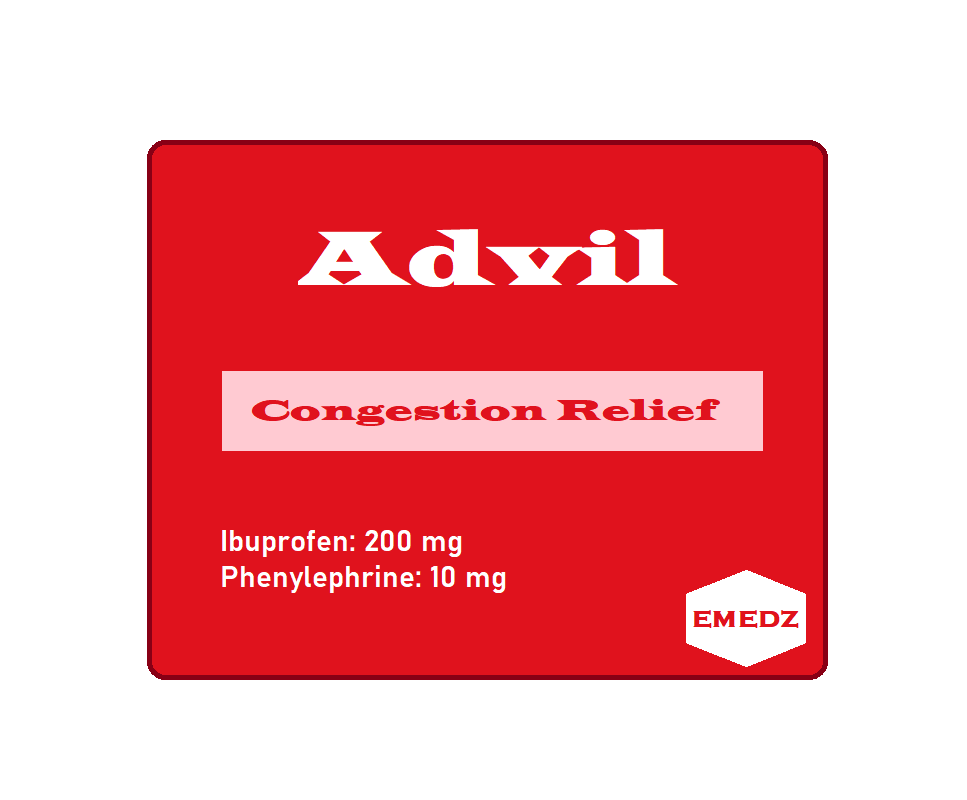
Advil Congestion Relief contains Ibuprofen and Phenylephrine. Ibuprofen is a non-selective NSAID that is used to relieve pain, inflammation, and fever. Phenylephrine is a vasoconstrictor medicine that is used to relieve congestion.
Ibuprofen and phenylephrine Uses:
-
Common cold and flu:
- It is indicated for the temporary relief of nasal congestion, rhinorrhea, sinus pain and pressure associated with the common cold.
Ibuprofen and phenylephrine Dose in Adults:
Advil Congestion Relief Dose in the treatment of Common cold/flu:
- Ibuprofen 200 mg/phenylephrine 10 mg can be administered every four hours to a maximum dose of ibuprofen 1,200 mg/phenylephrine 60 mg per day.
Advil Congestion Relief Dose in Children:
- In children, the maximum dose of ibuprofen should not exceed 10 mg/kg/dose (or 400 mg per dose) or 40 mg/kg/day.
Pregnancy Risk Category: C/D
- Refer to individual agents (Ibuprofen & Phenylephrine) for details regarding its use in pregnancy and breastfeeding.
Dose in Kidney Disease:
There are no dosage adjustments provided in the manufacturer’s labeling. Use it with caution in patients with kidney disease.
- KDIGO 2012 guidelines provide the following recommendations for NSAIDs:
- eGFR 30 to <60 mL/minute/1.73 m²:
- The drug should be avoided if the patient has concomitant medical illnesses that increase the risk of renal injury or the patient is on concomitant medications that increase the risk of renal injury.
- eGFR less than 30 mL/minute/1.73 m²:
- Avoid using it in patients with a CrCl of less than 30 ml/minute.
- eGFR 30 to <60 mL/minute/1.73 m²:
Dose in Liver disease:
There are no dosage adjustments provided in the manufacturer’s labeling. Use it with caution in patients with liver disease.
Side effects of Advil Congestion Relief:
-
Hematologic & Oncologic:
- Upper gastrointestinal hemorrhage
-
Hypersensitivity:
- Hypersensitivity reaction
See Ibuprofen and Phenylephrine for detailed side effects.
Contraindications to Advil Congestion Relief:
- If you have a hypersensitivity to pain medication, avoid the drug.
- Children under 12 years old;
- Avoid cardiac surgery before or after.
- Use monoamine oxidase inhibitors (MAOI) within 14 days.
Warnings and precautions
-
Cardiovascular events
- Negative cardiovascular events have been linked to NSAIDs, including stroke, myocardial injury, and heart failure.
- Patients with underlying or preexisting cardiac disease are at greater risk for developing adverse cardiac events.
- Before treatment can be initiated, patients must be assessed for any underlying heart disease, especially elderly patients.
- Patients with heart disease should avoid NSAIDs as they can cause fluid retention.
- Aspirin can be affected by NSAIDs administered in combination with it. Therefore, they should not be taken for longer than necessary.
- If necessary, patients may be prescribed alternative pain medication.
-
Gastrointestinal events:
- NSAIDs, including ibuprofen, can increase the risk of gastrointestinal bleeding.
- Patients over 60 years old or with a history of peptic or gastrointestinal bleeding should not use the drug.
- Patients taking anticoagulants such as warfarin, aspirin, and corticosteroids with their medications are at greater risk for gastrointestinal bleeding.
- People who consume ethanol (three or more alcoholic drinks per week) could also experience gastrointestinal bleeding.
- To reduce the risk of GI hemorhage, it is important to use the lowest effective dose and for the shortest time.
- If patients develop symptoms such as stomach pain, hematemesis, melena or hypotension, they should stop receiving treatment immediately.
-
Hypersensitivity
- Patients allergic to aspirin may experience severe hypersensitivity reactions, such as bronchial asthma, aspirin intolerance, and even rhinitis, also known as the "aspirin trifecta".
- If patients experience allergic reactions or hypersensitivity, they must stop receiving the treatment immediately.
-
Asthma
- Asthma patients should be cautious when using NSAIDs. Patients with asthma who are sensitive to aspirin may experience worsening symptoms.
-
Bariatric surgery
- Gastric ulceration
- Patients undergoing bariatric surgery should avoid non-selective NSAIDs peri-operatively due to the possibility of developing perforations or anastomotic lesions.
- For short periods of time, patients may be prescribed intravenous ketorolac or celecoxib (etoricoxib), to manage pain.
- Gastric ulceration
-
Cardiovascular disease
- Patients with hypertension and patients with ischemic heart diseases should not use the drug.
-
Diabetes:
- Patients with diabetes should be aware that the drug is not recommended for them.
-
Gastrointestinal Disease:
- Patients suffering from active peptic ulcer disease, or a history gastrointestinal disease such as gastrointestinal bleeding, ulcers or gastroesophageal regurgitation disease, should be cautious when taking NSAIDs.
-
Hepatic impairment
- Patients suffering from liver disease or hepatic impairment need to be cautious when taking the drug.
-
Prostatic hyperplasia, urinary obstruction
- Patients suffering from prostatic hyperplasia and genitourinary block should be cautious when taking the drug. It may make the condition worse.
-
Renal impairment
- It should be avoided by patients with kidney impairment. Patients with a CrCl lower than 30 ml/minute should not take Ibuprofen.
-
Thyroid dysfunction:
- Patients suffering from thyroid dysfunction should be cautious when using phenylephrine.
- It can cause uncontrolled hypertension, worsen hyperthyroidism symptoms, and increase the risk of developing hyperthyroidism.
Ibuprofen and phenylephrine: Drug Interaction
|
5-Aminosalicylic Acid Derivatives |
Nonsteroidal Anti-Inflammatory Agents may enhance the nephrotoxic effect of 5-Aminosalicylic Acid Derivatives. |
|
Acalabrutinib |
May enhance the antiplatelet effect of Agents with Antiplatelet Properties. |
|
Acetaminophen |
May increase the serum concentration of Phenylephrine (Systemic). |
|
Agents with Antiplatelet Properties (e.g., P2Y12 inhibitors, NSAIDs, SSRIs, etc.) |
May enhance the antiplatelet effect of other Agents with Antiplatelet Properties. |
|
Alcohol (Ethyl) |
May enhance the adverse/toxic effect of Nonsteroidal Anti-Inflammatory Agents. Specifically, the risk of GI bleeding may be increased with this combination. |
|
Aliskiren |
Nonsteroidal Anti-Inflammatory Agents may diminish the antihypertensive effect of Aliskiren. Nonsteroidal Anti-Inflammatory Agents may enhance the nephrotoxic effect of Aliskiren. Management: Monitor renal function periodically in patients receiving aliskiren and any nonsteroidal anti-inflammatory agent. Patients at elevated risk of renal dysfunction include those who are elderly, are volume depleted, or have pre-existing renal dysfunction. |
|
Alpha1-Blockers |
May diminish the vasoconstricting effect of Alpha1-Agonists. Similarly, Alpha1Agonists may antagonize Alpha1-Blocker vasodilation. |
|
Aminoglycosides |
Nonsteroidal Anti-Inflammatory Agents may decrease the excretion of Aminoglycosides. Data only in premature infants. |
|
Aminolevulinic Acid (Topical) |
Photosensitizing Agents may enhance the photosensitizing effect of Aminolevulinic Acid (Topical). |
|
Angiotensin II Receptor Blockers |
May enhance the adverse/toxic effect of Nonsteroidal AntiInflammatory Agents. Specifically, the combination may result in a significant decrease in renal function. Nonsteroidal Anti-Inflammatory Agents may diminish the therapeutic effect of Angiotensin II Receptor Blockers. The combination of these two agents may also significantly decrease glomerular filtration and renal function. |
|
Angiotensin-Converting Enzyme Inhibitors |
May enhance the adverse/toxic effect of Nonsteroidal Anti-Inflammatory Agents. Specifically, the combination may result in a significant decrease in renal function. Nonsteroidal Anti-Inflammatory Agents may diminish the antihypertensive effect of Angiotensin-Converting Enzyme Inhibitors. |
|
Anticoagulants |
Agents with Antiplatelet Properties may enhance the anticoagulant effect of Anticoagulants. Exceptions: Bemiparin; Enoxaparin; Heparin. |
|
AtoMOXetine |
|
|
Beta-Blockers |
Nonsteroidal Anti-Inflammatory Agents may diminish the antihypertensive effect of Beta-Blockers. Exceptions: Levobunolol; Metipranolol. |
|
Bisphosphonate Derivatives |
Nonsteroidal Anti-Inflammatory Agents may enhance the adverse/toxic effect of Bisphosphonate Derivatives. Both an increased risk of gastrointestinal ulceration and an increased risk of nephrotoxicity are of concern. |
|
Cannabinoid-Containing Products |
May enhance the tachycardic effect of Sympathomimetics. Exceptions: Cannabidiol. |
|
Cephalothin |
Agents with Antiplatelet Properties may enhance the adverse/toxic effect of Cephalothin. Specifically, the risk for bleeding may be increased. |
|
Chloroprocaine |
May enhance the hypertensive effect of Phenylephrine (Systemic). |
|
CloZAPine |
May diminish the therapeutic effect of Phenylephrine (Systemic). |
|
Collagenase (Systemic) |
Agents with Antiplatelet Properties may enhance the adverse/toxic effect of Collagenase (Systemic). Specifically, the risk of injection site bruising and/or bleeding may be increased. |
|
Corticosteroids (Systemic) |
May enhance the adverse/toxic effect of Nonsteroidal AntiInflammatory Agents (Nonselective). |
|
Dasatinib |
May enhance the anticoagulant effect of Agents with Antiplatelet Properties. Management: Drugs listed as exceptions to this monograph are discussed in further detail in separate drug interaction monographs. |
|
Deferasirox |
Nonsteroidal Anti-Inflammatory Agents may enhance the adverse/toxic effect of Deferasirox. Specifically, the risk for GI ulceration/irritation or GI bleeding may be increased. |
|
Deoxycholic Acid |
Agents with Antiplatelet Properties may enhance the adverse/toxic effect of Deoxycholic Acid. Specifically, the risk for bleeding or bruising in the treatment area may be increased. |
|
Desmopressin |
Nonsteroidal Anti-Inflammatory Agents may enhance the adverse/toxic effect of Desmopressin. |
|
Dichlorphenamide |
OAT1/3 Inhibitors may increase the serum concentration of Dichlorphenamide. |
|
Digoxin |
Nonsteroidal Anti-Inflammatory Agents may increase the serum concentration of Digoxin. |
|
Doxofylline |
Sympathomimetics may enhance the adverse/toxic effect of Doxofylline. |
|
Drospirenone |
Nonsteroidal Anti-Inflammatory Agents may enhance the hyperkalemic effect of Drospirenone. |
|
Eplerenone |
Nonsteroidal Anti-Inflammatory Agents may diminish the antihypertensive effect of Eplerenone. Nonsteroidal Anti-Inflammatory Agents may enhance the hyperkalemic effect of Eplerenone. |
|
Fat Emulsion (Fish Oil Based) |
May enhance the adverse/toxic effect of Agents with Antiplatelet Properties. |
|
Felbinac |
May enhance the adverse/toxic effect of Nonsteroidal Anti-Inflammatory Agents. |
|
FentaNYL |
Alpha1-Agonists may decrease the serum concentration of FentaNYL. Specifically, fentanyl nasal spray serum concentrations may decrease and onset of effect may be delayed. |
|
Glucosamine |
May enhance the antiplatelet effect of Agents with Antiplatelet Properties. |
|
Guanethidine |
May enhance the arrhythmogenic effect of Sympathomimetics. Guanethidine may enhance the hypertensive effect of Sympathomimetics. |
|
Haloperidol |
Nonsteroidal Anti-Inflammatory Agents may enhance the adverse/toxic effect of Haloperidol. Specifically including drowsiness and confusion. |
|
HydrALAZINE |
Nonsteroidal Anti-Inflammatory Agents may diminish the antihypertensive effect of HydrALAZINE. |
|
Ibritumomab Tiuxetan |
Agents with Antiplatelet Properties may enhance the adverse/toxic effect of Ibritumomab Tiuxetan. Both agents may contribute to impaired platelet function and an increased risk of bleeding. |
|
Ibrutinib |
May enhance the adverse/toxic effect of Agents with Antiplatelet Properties. |
|
Inotersen |
May enhance the antiplatelet effect of Agents with Antiplatelet Properties. |
|
Ioflupane I 123 |
Phenylephrine (Systemic) may diminish the diagnostic effect of Ioflupane I 123. |
|
Limaprost |
May enhance the antiplatelet effect of Agents with Antiplatelet Properties. |
|
Lumacaftor |
May decrease the serum concentration of Ibuprofen. |
|
MetFORMIN |
Nonsteroidal Anti-Inflammatory Agents may enhance the adverse/toxic effect of MetFORMIN. |
|
Multivitamins/Fluoride (with ADE) |
May enhance the antiplatelet effect of Agents with Antiplatelet Properties. |
|
Multivitamins/Minerals (with ADEK, Folate, Iron) |
May enhance the antiplatelet effect of Agents with Antiplatelet Properties. |
|
Multivitamins/Minerals (with AE, No Iron) |
May enhance the antiplatelet effect of Agents with Antiplatelet Properties. |
|
Naftazone |
May enhance the antiplatelet effect of Nonsteroidal Anti-Inflammatory Agents. |
|
Obinutuzumab |
Agents with Antiplatelet Properties may enhance the adverse/toxic effect of Obinutuzumab. Specifically, the risk of serious bleeding-related events may be increased. |
|
Omega-3 Fatty Acids |
May enhance the antiplatelet effect of Agents with Antiplatelet Properties. |
|
Pentosan Polysulfate Sodium |
May enhance the adverse/toxic effect of Agents with Antiplatelet Properties. Specifically, the risk of bleeding may be increased by concurrent use of these agents. |
|
Pentoxifylline |
May enhance the antiplatelet effect of Agents with Antiplatelet Properties. |
|
Porfimer |
Photosensitizing Agents may enhance the photosensitizing effect of Porfimer. |
|
Potassium-Sparing Diuretics |
Nonsteroidal Anti-Inflammatory Agents may diminish the antihypertensive effect of Potassium-Sparing Diuretics. Nonsteroidal Anti-Inflammatory Agents may enhance the hyperkalemic effect of Potassium-Sparing Diuretics. |
|
PRALAtrexate |
Nonsteroidal Anti-Inflammatory Agents may increase the serum concentration of PRALAtrexate. More specifically, NSAIDS may decrease the renal excretion of pralatrexate. Management: Closely monitor for increased pralatrexate serum levels and/or toxicity if used concomitantly with an NSAID. Monitor for decreased pralatrexate serum levels with NSAID discontinuation. |
|
Probenecid |
May increase the serum concentration of Nonsteroidal Anti-Inflammatory Agents. |
|
Propacetamol |
May increase the serum concentration of Phenylephrine (Systemic). Management: Monitor patients closely for increased side effects of phenylephrine if propacetamol is used concomitantly. Patients with underlying blood pressure issues or arrhythmias may need closer monitoring and may warrant consideration of alternative therapies. |
|
Prostacyclin Analogues |
May enhance the antiplatelet effect of Agents with Antiplatelet Properties. |
|
Prostaglandins (Ophthalmic) |
Nonsteroidal Anti-Inflammatory Agents may diminish the therapeutic effect of Prostaglandins (Ophthalmic). Nonsteroidal Anti-Inflammatory Agents may also enhance the therapeutic effects of Prostaglandins (Ophthalmic). |
|
Quinolones |
Nonsteroidal Anti-Inflammatory Agents may enhance the neuroexcitatory and/or seizure-potentiating effect of Quinolones. Nonsteroidal Anti-Inflammatory Agents may increase the serum concentration of Quinolones. |
|
Salicylates |
Agents with Antiplatelet Properties may enhance the adverse/toxic effect of Salicylates. Increased risk of bleeding may result. |
|
Serotonin/Norepinephrine Reuptake Inhibitors |
May enhance the antiplatelet effect of Nonsteroidal Anti-Inflammatory Agents (Nonselective). |
|
Solriamfetol |
Sympathomimetics may enhance the hypertensive effect of Solriamfetol. |
|
Sympathomimetics |
May enhance the adverse/toxic effect of other Sympathomimetics. |
|
Tacrolimus (Systemic) |
Nonsteroidal Anti-Inflammatory Agents may enhance the nephrotoxic effect of Tacrolimus (Systemic). |
|
Tedizolid |
May enhance the hypertensive effect of Sympathomimetics. Tedizolid may enhance the tachycardic effect of Sympathomimetics. |
|
Thiazide and Thiazide-Like Diuretics |
May enhance the nephrotoxic effect of Nonsteroidal AntiInflammatory Agents. Nonsteroidal Anti-Inflammatory Agents may diminish the therapeutic effect of Thiazide and Thiazide-Like Diuretics. |
|
Thrombolytic Agents |
Agents with Antiplatelet Properties may enhance the anticoagulant effect of Thrombolytic Agents. |
|
Tipranavir |
May enhance the antiplatelet effect of Agents with Antiplatelet Properties. |
|
Tolperisone |
Nonsteroidal Anti-Inflammatory Agents may enhance the adverse/toxic effect of Tolperisone. Specifically, the risk of hypersensitivity reactions may be increased. Tolperisone may enhance the therapeutic effect of Nonsteroidal Anti-Inflammatory Agents. |
|
Tricyclic Antidepressants |
May enhance the therapeutic effect of Alpha1-Agonists. Tricyclic Antidepressants may diminish the therapeutic effect of Alpha1-Agonists. |
|
Tricyclic Antidepressants (Tertiary Amine) |
May enhance the antiplatelet effect of Nonsteroidal Anti-Inflammatory Agents (Nonselective). |
|
Vancomycin |
Nonsteroidal Anti-Inflammatory Agents may increase the serum concentration of Vancomycin. |
|
Verteporfin |
Photosensitizing Agents may enhance the photosensitizing effect of Verteporfin. |
|
Vitamin E (Systemic) |
May enhance the antiplatelet effect of Agents with Antiplatelet Properties. |
|
Voriconazole |
May increase the serum concentration of Ibuprofen. Specifically, concentrations of the S-(+)-ibuprofen enantiomer may be increased. |
|
Zanubrutinib |
May enhance the antiplatelet effect of Agents with Antiplatelet Properties. |
|
Risk Factor D (Consider therapy modification) |
|
|
Apixaban |
Nonsteroidal Anti-Inflammatory Agents (Nonselective) may enhance the adverse/toxic effect of Apixaban. Specifically, the risk of bleeding may be increased. Management: A comprehensive risk to benefit assessment should be done for all patients before any concurrent use of apixaban and nonsteroidal anti-inflammatory drugs (NSAIDs). If combined, monitor patients extra closely for signs and symptoms of bleeding. |
|
Bemiparin |
|
|
Bemiparin |
Agents with Antiplatelet Properties may enhance the anticoagulant effect of Bemiparin. Management: Avoid concomitant use of bemiparin with antiplatelet agents. If concomitant use is unavoidable, monitor closely for signs and symptoms of bleeding. |
|
Benzylpenicilloyl Polylysine |
Alpha1-Agonists may diminish the diagnostic effect of Benzylpenicilloyl Polylysine. Management: Consider use of a histamine skin test as a positive control to assess a patient's ability to mount a wheal and flare response. |
|
Bile Acid Sequestrants |
May decrease the absorption of Nonsteroidal Anti-Inflammatory Agents. |
|
Cocaine (Topical) |
May enhance the hypertensive effect of Sympathomimetics. Management: Consider alternatives to use of this combination when possible. Monitor closely for substantially increased blood pressure or heart rate and for any evidence of myocardial ischemia with concurrent use. |
|
CycloSPORINE (Systemic) |
Nonsteroidal Anti-Inflammatory Agents may enhance the nephrotoxic effect of CycloSPORINE (Systemic). Nonsteroidal Anti-Inflammatory Agents may increase the serum concentration of CycloSPORINE (Systemic). CycloSPORINE (Systemic) may increase the serum concentration of Nonsteroidal Anti-Inflammatory Agents. Management: Consider alternatives to nonsteroidal anti-inflammatory agents (NSAIDs). Monitor for evidence of nephrotoxicity, as well as increased serum cyclosporine concentrations and systemic effects (eg, hypertension) during concomitant therapy with NSAIDs. |
|
Dabigatran Etexilate |
Nonsteroidal Anti-Inflammatory Agents (Nonselective) may enhance the adverse/toxic effect of Dabigatran Etexilate. Specifically, the risk of bleeding may be increased. Management: A comprehensive risk to benefit assessment should be done for all patients before any concurrent use of dabigatran and nonsteroidal anti-inflammatory drugs (NSAIDs). If combined, monitor patients extra closely for signs and symptoms of bleeding. |
|
Diclofenac (Systemic) |
May enhance the adverse/toxic effect of Nonsteroidal Anti-Inflammatory Agents. Management: Seek alternatives to the combined use of diclofenac with other nonsteroidal anti-inflammatory agents (NSAIDs). Avoid the use of diclofenac/misoprostol with other NSAIDs. |
|
Edoxaban |
Nonsteroidal Anti-Inflammatory Agents (Nonselective) may enhance the adverse/toxic effect of Edoxaban. Specifically, the risk of bleeding may be increased. Management: A comprehensive risk to benefit assessment should be done for all patients before any concurrent use of edoxaban and nonsteroidal anti-inflammatory drugs (NSAIDs). If combined, monitor patients extra closely for signs and symptoms of bleeding. |
|
Enoxaparin |
Nonsteroidal Anti-Inflammatory Agents may enhance the anticoagulant effect of Enoxaparin. Management: Discontinue nonsteroidal anti-inflammatory agents (NSAIDs) prior to initiating enoxaparin whenever possible. If concomitant administration is unavoidable, monitor closely for signs and symptoms of bleeding. |
|
Enoxaparin |
Agents with Antiplatelet Properties may enhance the anticoagulant effect of Enoxaparin. Management: Discontinue antiplatelet agents prior to initiating enoxaparin whenever possible. If concomitant administration is unavoidable, monitor closely for signs and symptoms of bleeding. |
|
Heparin |
Nonsteroidal Anti-Inflammatory Agents may enhance the anticoagulant effect of Heparin. Management: Decrease the dose of heparin or nonsteroidal anti-inflammatory agents (NSAIDs) if coadministration is required. |
|
Heparin |
Agents with Antiplatelet Properties may enhance the anticoagulant effect of Heparin. Management: Decrease the dose of heparin or agents with antiplatelet properties if coadministration is required. |
|
Herbs (Anticoagulant/Antiplatelet Properties) (eg, Alfalfa, Anise, Bilberry) |
May enhance the adverse/toxic effect of Agents with Antiplatelet Properties. Bleeding may occur. Management: Avoid combination when possible. If used, monitor more closely for evidence of bleeding. Discontinue herbal products with anticoagulant or antiplatelet actions 2 weeks prior to surgical, dental, or invasive procedures. |
|
Herbs (Anticoagulant/Antiplatelet Properties) (eg, Alfalfa, Anise, Bilberry) |
May enhance the adverse/toxic effect of Nonsteroidal Anti-Inflammatory Agents. Bleeding may occur. Management: Concomitant treatment with these agents should generally be avoided. If used concomitantly, increased diligence in monitoring for adverse effects (eg, bleeding, bruising, altered mental status due to CNS bleeds) must be employed. |
|
Imatinib |
Ibuprofen may decrease the serum concentration of Imatinib. Specifically, ibuprofen may decrease intracellular concentrations of imatinib, leading to decreased clinical response. Management: Consider using an alternative to ibuprofen in patients who are being treated with imatinib. Available evidence suggests other NSAIDs do not interact in a similar manner. |
|
Linezolid |
May enhance the hypertensive effect of Sympathomimetics. Management: Reduce initial doses of sympathomimetic agents, and closely monitor for enhanced pressor response, in patients receiving linezolid. Specific dose adjustment recommendations are not presently available. |
|
Lithium |
Nonsteroidal Anti-Inflammatory Agents may increase the serum concentration of Lithium. |
|
Loop Diuretics |
Nonsteroidal Anti-Inflammatory Agents may diminish the diuretic effect of Loop Diuretics. Loop Diuretics may enhance the nephrotoxic effect of Nonsteroidal Anti-Inflammatory Agents. Management: Monitor for evidence of kidney injury or decreased therapeutic effects of loop diuretics with concurrent use of an NSAID. Consider avoiding concurrent use in CHF or cirrhosis. Concomitant use of bumetanide with indomethacin is not recommended. |
|
Methotrexate |
Nonsteroidal Anti-Inflammatory Agents may increase the serum concentration of Methotrexate. Management: Alternative anti-inflammatory therapy should be considered whenever possible, especially if the patient is receiving higher, antineoplastic doses of methotrexate. |
|
PEMEtrexed |
Ibuprofen may increase the serum concentration of PEMEtrexed. Management: In patients with an estimated creatinine clearance of 45 to 79 mL/min, avoid ibuprofen for 2 days before, the day of, and 2 days following the administration of pemetrexed. Monitor for increased pemetrexed toxicities if combined. |
|
Rivaroxaban |
Nonsteroidal Anti-Inflammatory Agents (Nonselective) may enhance the adverse/toxic effect of Rivaroxaban. Specifically, the risk of bleeding may be increased. Management: A comprehensive risk to benefit assessment should be done for all patients before any concurrent use of rivaroxaban and nonsteroidal anti-inflammatory drugs (NSAIDs). If combined, monitor patients extra closely for signs and symptoms of bleeding. |
|
Salicylates |
Nonsteroidal Anti-Inflammatory Agents (Nonselective) may enhance the adverse/toxic effect of Salicylates. An increased risk of bleeding may be associated with use of this combination. Nonsteroidal Anti-Inflammatory Agents (Nonselective) may diminish the cardioprotective effect of Salicylates. Salicylates may decrease the serum concentration of Nonsteroidal Anti-Inflammatory Agents (Nonselective). Exceptions: Choline Magnesium Trisalicylate. |
|
Selective Serotonin Reuptake Inhibitors |
May enhance the antiplatelet effect of Nonsteroidal AntiInflammatory Agents (Nonselective). Nonsteroidal Anti-Inflammatory Agents (Nonselective) may diminish the therapeutic effect of Selective Serotonin Reuptake Inhibitors. Management: Consider alternatives to NSAIDs. Monitor for evidence of bleeding and diminished antidepressant effects. It is unclear whether COX-2-selective NSAIDs reduce risk. |
|
Sincalide |
Drugs that Affect Gallbladder Function may diminish the therapeutic effect of Sincalide. Management: Consider discontinuing drugs that may affect gallbladder motility prior to the use of sincalide to stimulate gallbladder contraction. |
|
Sodium Phosphates |
May enhance the nephrotoxic effect of Nonsteroidal Anti-Inflammatory Agents. Specifically, the risk of acute phosphate nephropathy may be enhanced. Management: Consider avoiding this combination by temporarily suspending treatment with NSAIDs, or seeking alternatives to oral sodium phosphate bowel preparation. If the combination cannot be avoided, maintain adequate hydration and monitor renal function closely. |
|
Tenofovir Products |
Nonsteroidal Anti-Inflammatory Agents may enhance the nephrotoxic effect of Tenofovir Products. Management: Seek alternatives to these combinations whenever possible. Avoid use of tenofovir with multiple NSAIDs or any NSAID given at a high dose. |
|
Vitamin K Antagonists (eg, warfarin) |
Nonsteroidal Anti-Inflammatory Agents (Nonselective) may enhance the anticoagulant effect of Vitamin K Antagonists. Management: Consider alternatives to this combination when possible. If the combination must be used, monitor coagulation status closely and advise patients to promptly report any evidence of bleeding or bruising. |
|
Risk Factor X (Avoid combination) |
|
|
Acemetacin |
May enhance the adverse/toxic effect of Nonsteroidal Anti-Inflammatory Agents. |
|
Aminolevulinic Acid (Systemic) |
Photosensitizing Agents may enhance the photosensitizing effect of Aminolevulinic Acid (Systemic). |
|
Dexibuprofen |
Nonsteroidal Anti-Inflammatory Agents may enhance the adverse/toxic effect of Dexibuprofen. |
|
Dexketoprofen |
May enhance the adverse/toxic effect of Nonsteroidal Anti-Inflammatory Agents. |
|
Ergot Derivatives |
May enhance the hypertensive effect of Alpha1-Agonists. Ergot Derivatives may enhance the vasoconstricting effect of Alpha1-Agonists. Exceptions: Ergoloid Mesylates; Nicergoline. |
|
Floctafenine |
May enhance the adverse/toxic effect of Nonsteroidal Anti-Inflammatory Agents. |
|
Hyaluronidase |
May enhance the vasoconstricting effect of Phenylephrine (Systemic). Management: Avoid the use of hyaluronidase to enhance dispersion or absorption of phenylephrine. Use of hyaluronidase for other purposes in patients receiving phenylephrine may be considered as clinically indicated. |
|
Iobenguane Radiopharmaceutical Products |
Alpha1-Agonists may diminish the therapeutic effect of Iobenguane Radiopharmaceutical Products. Management: Discontinue all drugs that may inhibit or interfere with catecholamine transport or uptake for at least 5 biological half-lives before iobenguane administration. Do not administer these drugs until at least 7 days after each iobenguane dose. |
|
Ketorolac (Nasal) |
May enhance the adverse/toxic effect of Nonsteroidal Anti-Inflammatory Agents. |
|
Ketorolac (Systemic) |
May enhance the adverse/toxic effect of Nonsteroidal Anti-Inflammatory Agents. |
|
Macimorelin |
Nonsteroidal Anti-Inflammatory Agents may diminish the diagnostic effect of Macimorelin. |
|
Mifamurtide |
Nonsteroidal Anti-Inflammatory Agents may diminish the therapeutic effect of Mifamurtide. |
|
Monoamine Oxidase Inhibitors |
May enhance the hypertensive effect of Alpha1-Agonists. While linezolid is expected to interact via this mechanism, management recommendations differ from other monoamine oxidase inhibitors. Refer to linezolid specific monographs for details. Exceptions: Linezolid. |
|
Morniflumate |
May enhance the adverse/toxic effect of Nonsteroidal Anti-Inflammatory Agents. |
|
Nonsteroidal Anti-Inflammatory Agents (COX-2 Selective) |
Nonsteroidal Anti-Inflammatory Agents may enhance the adverse/toxic effect of Nonsteroidal Anti-Inflammatory Agents (COX-2 Selective). |
|
Omacetaxine |
Nonsteroidal Anti-Inflammatory Agents may enhance the adverse/toxic effect of Omacetaxine. Specifically, the risk for bleeding-related events may be increased. Management: Avoid concurrent use of nonsteroidal antiinflammatory drugs (NSAIDs) with omacetaxine in patients with a platelet count of less than 50,000/uL. |
|
Pelubiprofen |
May enhance the adverse/toxic effect of Nonsteroidal Anti-Inflammatory Agents. |
|
Phenylbutazone |
May enhance the adverse/toxic effect of Nonsteroidal Anti-Inflammatory Agents. |
|
Talniflumate |
May enhance the adverse/toxic effect of Nonsteroidal Anti-Inflammatory Agents. |
|
Tenoxicam |
May enhance the adverse/toxic effect of Nonsteroidal Anti-Inflammatory Agents. |
|
Urokinase |
Agents with Antiplatelet Properties may enhance the anticoagulant effect of Urokinase. |
|
Zaltoprofen |
May enhance the adverse/toxic effect of Nonsteroidal Anti-Inflammatory Agents. |
Monitoring parameters:
- Monitor the patient for clinical improvement.
- Observe for the signs and symptoms related to gastrointestinal side effects such as abdominal pain, black colored stools, and heartburn.
- Monitor for any drug-related allergic reactions such as a rash, urticaria, wheezing, shortness of breath, facial, and laryngeal edema.
How to administer Advil Congestion Relief?
It is administered orally with food or milk to avoid gastrointestinal-related side effects.
Mechanism of action of Ibuprofen and phenylephrine:
- Ibuprofen blocks the enzyme cyclooxygenase-1 (COX-1) reversibly.
- This inhibits the formation of prostaglandin precursors.
- It reduces inflammation, fever, pain, and swelling.
- The nasal mucosa's arterioles are affected by phenylephrine, resulting in nasal congestion.
- You can also consult individual agents (ibuprofen or phenylephrine).
International Brand Names of Ibuprofen and phenylephrine:
- Advil Congestion Relief
- Advil Sinus Congestion & Pain
- Congestion Relief
- Sudafed PE Head Congestion
- Ibalgin Grip
- Lemsip Max All Day Cold & Flu
- Lemsip Max All Day Flu Relief
- Lemsip Max All Night Cold & Flu
- Lemsip Max All Night Flu Relief
- Nurofen Sinus Pain Relief
Ibuprofen and phenylephrine Brand Names in Pakistan:
No Brands Available in Pakistan.
.png)


