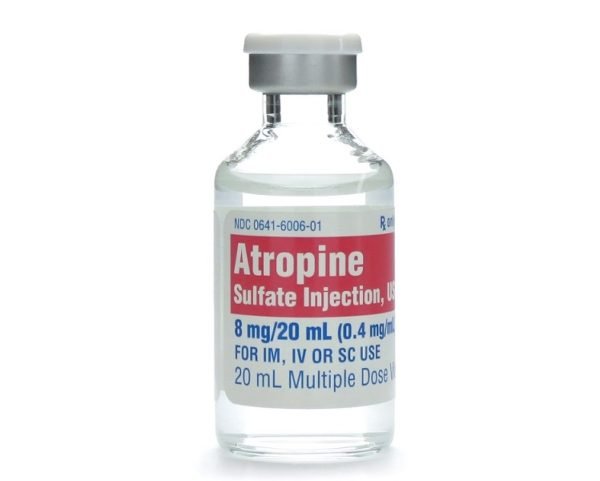
Atropine blocks the action of acetylcholine at parasympathetic sites in smooth muscle, secretory glands, and the central nervous system.
It is used in the treatment of the following conditions:
-
Atropine use as Antidote:
- It is mostly used as an antidote for anticholinesterase poisoning (carbamate insecticides, nerve agents, organophosphate insecticides)
- It can be used as an antidote for muscarine-containing mushroom poisoning.
- It is also used along with anticholinesterases (eg, edrophonium, neostigmine) to lessen their adverse effects during the reversal of neuromuscular blockade.
-
Atropine use in Cardiovascular conditions:
- It is used in the treatment of symptomatic sinus bradycardia, atrioventricular (AV) nodal block.
- It might not be effective for type II second-degree or third-degree AV block.
- Its use is no longer recommended in the management of asystole or pulseless electrical activity.
-
Atropine use in Respiratory tract medicine:
- It is mostly used preoperative/ preanesthetic medication to stop salivation and secretions.
-
Off Label Usage of Atropine In Adults:
- Premedication in rapid sequence intubation.
- It is also used as adjunct chronotropic agent in stress echocardiography.
Atropine Dose in Adults
Atropine Dosage for excessive salivation and secretions (preanesthesia):
Intramuscular, Intravenous, SubQ:
- It is given initially 0.4 to 1 mg 30 to 60 minutes preoperatively
- Then repeated every 4 to 6 hours as needed to a maximum total dose of 3 mg.
Atropine Dose in the treatment of Bradycardia:
Intravenous, Intramuscular:
- 0.5 mg given every 3 to 5 minutes
- maximum total dose is 3 mg
-
Endotracheal:
-
- 1 to 2 mg given every 3 to 5 minutes
- Atropine might not work in heart transplant patients due to a lack of vagal innervation.
Off label atropine Dose in the treatment of Muscarine-containing mushroom poisoning :
- 1 to 2 mg given Intravenous
- Titrate and repeat as needed
Atropine Dose in the treatment of Neuromuscular blockade reversal:
- 15 to 30 mcg/kg given Intravenous administered with neostigmine
or
- 7 to 10 mcg/kg given with edrophonium
Atropine Dose in the treatment of Organophosphate or carbamate insecticide or nerve agent poisoning:
- The dose of atropine required differs considerably with the severity of poisoning.
- The total amount of atropine used for carbamate poisoning is usually lower than with organophosphate insecticide or nerve agent poisoning.
- Severely poisoned patients may exhibit significant tolerance to atropine; sometimes higher doses may be needed.
- Titrate to pulmonary status (decreased bronchial secretions)
- Also, consider administration of atropine via continuous IV infusion in patients requiring large doses of atropine.
- Once the patient is stable, the dose/dosing frequency can be decreased.
Intravenous, Intramuscular, endotracheal:
- Initially, 1 to 6 mg is given
- Then repeat every 3 to 5 minutes as needed,
- Double the dose if the previous dose did not induce a response.
- Give repeat doses as needed for ≥2 to 12 hours based on the recurrence of symptoms
-
Mild symptoms (≥2 mild symptoms):
- Give 2 mg as soon as exposure is known or is strongly suspected.
- If severe symptoms develop after the 1st dose then 2 additional doses should be repeated in rapid succession 10 minutes after the 1st dose
- Do not give more than 3 doses.
- If intense anticholinergic effects are seen in the absence of excessive bronchial secretions, then further doses of atropine should be withheld.
-
Severe symptoms (≥1 severe symptom):
- Immediately give three 2 mg doses in rapid succession.
-
Symptoms of insecticide or nerve agent poisoning :
-
Mild symptoms:
- Blurred Vision
- Bradycardia
- Breathing Difficulties
- Chest Tightness
- Coughing
- Drooling
- Miosis
- Muscular Twitching
- Nausea
- Runny Nose
- Salivation Increased
- Stomach Cramps
- Tachycardia
- Teary Eyes
- Tremor
- Vomiting
- Wheezing
-
- Severe symptoms:
- Breathing Difficulties (Severe)
- Confused/Strange Behavior
- Defecation (Involuntary)
- Muscular Twitching/Generalized Weakness (Severe)
- Respiratory Secretions (Severe)
- Seizure
- Unconsciousness
- Urination (Involuntary)
- Intravenous Infusion:
- Start 10% to 20% of the total loading dose required to induce the desired response as a continuous Intravenous infusion per hour
- Then adjust as required to maintain adequate response without atropine toxicity
Off label atropine Dose in the Rapid sequence intubation (premedication):
- 0.01 to 0.02 mg/kg Intravenous is given
- The minimum dose is 0.1 mg
- a maximum single dose is 0.5 mg
Off label atropine Dose in the treatment of Stress echocardiography (adjunct chronotropic agent):
- 0.25 to 0.5 mg Intravenous given up to a total dose of 1 to 2 mg
- Target is 85% of the target heart rate achieved.
Atropine Dose in Childrens
Atropine Dose in the treatment of Bradycardia:
-
Infants, Children, and Adolescents:
-
Intravenous, Intraosseous:
- 0.02 mg/kg/dose is given
- The minimum dose is 0.1 mg/dose
- Maximum dose is 0.5 mg/dose
- Can repeat once in 5 minutes
- use should be reserved for those patients unresponsive to improved oxygenation and epinephrine.
-
Endotracheal:
- 0.04 to 0.06 mg/kg/dose is given
- Can repeat once if needed
-
Atropine Dosage in the treatment to Inhibit salivation and secretions (preoperative/ intraoperative):
-
Infants and Children aged less than 12 years:
-
Intramuscular, Intravenous, SubQ:
- Dose is 0.02 mg/kg
- Maximum dose is 0.5 mg/dose
- Administer first dose 30 to 60 minutes before operating and then repeat every 4 to 6 hours as needed
- The maximum total dose is 1 mg/procedure.
-
-
Children aged more than 12 years and Adolescents:
-
Intramuscular, Intravenous, SubQ:
- 0.02 mg/kg/dose is given
- The maximum dose is 1 mg/dose
- Give the first dose 30 to 60 minutes preoperatively and then repeat every 4 to 6 hours as needed
- The maximum total dose is 2 mg/procedure.
-
Atropine Premedication Dose in the emergency Intubation:
- It is not used routinely for pre-intubation in infants and children
- atropine can be considered in situations with a high-risk of bradycardia (eg, succinylcholine use)
-
Infants and Children:
- 0.02 mg/kg/dose given Intravenous
- Maximum dose is 0.5 mg/dose
- It is usually not recommended for pre-intubation in infants and children due to the risk of bradycardia.
Atropine Dose in the treatment of Muscarine-containing mushroom poisoning:
-
Infants, Children, and Adolescents:
- 0.02 mg/kg/dose given Intravenous
- The minimum dose of 0.1 mg.
- Titrate and repeat as required
Atropine Dose in the treatment of Organophosphate or carbamate insecticide or nerve agent poisoning:
- If exposure is known or suspected then antidotal therapy should be given as soon as symptoms appear; do not wait for confirmation.
- The dose of atropine required differs from the severity of poisoning.
- The total amount of atropine used for the treatment of carbamate poisoning is usually less than with organophosphate insecticide or nerve agent poisoning.
- Severely poisoned patients may exhibit significant tolerance to atropine& require ≥2 times the suggested doses.
- Titrate to pulmonary status (decreased bronchial secretions)
- Consider giving atropine via continuous Intravenous infusion in patients requiring higher doses of atropine.
-
Infants and Children:
-
Intravenous, Intramuscular, Intraosseous:
- Initially, a dose of 0.05 to 0.1 mg/kg is given
- Then repeat every 5 to 10 minutes as needed
- Double the dose if the previous dose does not induce atropinization.
- Maintain atropinization by giving repeat doses as needed for ≥2 to 12 hours based on the recurrence of symptoms
-
Adolescents:
-
Intravenous, Intramuscular, Intraosseous:
- Initially, 1 to 3 mg/dose is given
- Then repeat every 3 to 5 minutes as needed
- Double the dose if the previous dose does not induce atropinization.
- Maintain atropinization by administering repeat doses as needed for ≥2 to 12 hours based on the recurrence of symptoms.
-
-
-
Infants, Children, and Adolescents:
-
Continuous Intravenous infusion:
- Following atropinization, give 10% to 20% of the total loading dose used to induce atropinization as a continuous IV infusion per hour
- Adjust to maintain adequate atropinization without atropine toxicity.
-
-
Infants, Children, and Adolescents:
- Intramuscular (AtroPen): Number of doses differs with symptom severity:
-
Weight-directed dosing:
-
<7 kg (<15 lb):
- 0.25 mg/dose is given (yellow pen)
-
7 to 18 kg (15 to 40 lb):
- 0.5 mg/dose is given (blue pen)
-
>18 to 41 kg (>40 to 90 lb):
- 1 mg/dose is given (dark red pen)
-
>41 kg (>90 lb):
- 2 mg/dose is given (green pen)
-
-
Mild symptoms (≥2 mild symptoms):
- Give the weight-directed dose described above as soon as exposure is known or strongly suspected.
- If severe symptoms develop after the 1st dose then 2 additional doses should be repeated in rapid succession 10 minutes after the first dose
- Do not give more than 3 doses.
- If significant anticholinergic effects occur in the absence of excessive bronchial secretions further doses of atropine should be withheld.
- Mild symptoms of insecticide or nerve agent poisoning, include:
- Blurred Vision
- Bradycardia
- Breathing Difficulties
- Chest tightness
- Coughing
- Drooling
- Miosis
- Muscular Twitching
- Nausea
- Runny nose
- Salivation increased
- Stomach cramps
- Tachycardia
- Teary eyes
- Tremor
- Vomiting
- Wheezing.
-
Severe symptoms (≥1 severe symptom):
- Immediately give three weight-directed doses in rapid succession.
- Severe symptoms of insecticide or nerve agent poisoning, include:
- Breathing difficulties (severe)
- Confused/strange behavior
- Defecation (involuntary)
- Muscular twitching/generalized weakness (severe
- Respiratory Secretions (severe)
- Seizure
- Unconsciousness
- Urination (involuntary)
- Infants may become drowsy or unconscious with muscle floppiness as opposed to muscle twitching.
Endotracheal:
- The dose should be by 2 to 3 times the usual Intravenous dose.
- Mix with 3 - 5 ml of normal saline and then administer.
- Flush with 3 - 5 ml of normal saline and follow with 5 assisted manual ventilation.
Atropine Pregnancy Risk Factor B/C
- In animal reproduction studies, adverse events were not observed
- Atropine passes the human placental barrier.
- Pregnant women should only receive antidotes if they have been given a clear indication. They should not be withheld due to fears of teratogenicity.
- The same medications are used to treat cardiac arrest during pregnancy as for women who are not pregnant.
- The Advanced Cardiovascular Life Support Guidelines should guide you in your treatment decisions.
- Because of concerns about fetal teratogenicity, it is important to not withhold appropriate medications.
Atropine use during breastfeeding:
- Breast milk contains very little atropine.
- Atropine can cause lactation problems or decreases in infants who are breastfeed.
- The manufacturer suggests that breastfeeding mothers be cautious when using atropine.
Atropine dose in kidney disease:
- There are no dosage adjustments given in the manufacturer’s labeling.
Atropine dose in liver disease:
- There are no dosage adjustments given in the manufacturer’s labeling.
Side effects of atropine:
-
Cardiovascular:
- Asystole
- Atrial Arrhythmia
- Atrial Fibrillation
- Atrioventricular Dissociation (Transient)
- Bigeminy
- Bradycardia
- Chest Pain
- Decreased Blood Pressure
- ECG Changes (Prolonged P Wave
- Shortened PR Segment
- R On T Phenomenon
- Shortened RT Duration
- Prolonged QT Interval
- Widening Of QRS Complex
- Flattened T Wave
- Repolarization Abnormalities
- ST Segment Elevation
- Retrograde Conduction)
- Ectopic Beats (Atrial)
- Extrasystoles (Nodal
- Ventricular
- Supraventricular)
- Flushing
- Increased Blood Pressure
- Left Heart Failure
- Myocardial Infarction
- Nodal Arrhythmia (No P Wave On ECG)
- Palpitations
- Sinus Tachycardia
- Supraventricular Tachycardia (Including Junctional Tachycardia)
- Tachycardia
- Trigeminy
- Ventricular Arrhythmia (Including Flutter)
- Ventricular Fibrillation
- Ventricular Flutter
- Ventricular Premature Contractions
- Ventricular Tachycardia
- Weak Pulse (Or Impalpable Peripheral Pulses)
-
Central Nervous System:
- Abnormal Electroencephalogram (Runs Of Alpha Waves
- Increase In Photic Stimulation
- And Signs Of Drowsiness)
- Agitation (Children)
- Amnesia
- Anxiety
- Ataxia
- Behavioral Changes
- Coma
- Confusion
- Decreased Deep Tendon Reflex
- Delirium
- Dizziness
- Drowsiness
- Dysarthria
- Dysmetria
- Emotional Disturbance
- Excitement
- Feeling Hot
- Hallucination (Visual Or Aural)
- Headache
- Hyperpyrexia
- Hyperreflexia
- Hypertonia
- Insomnia
- Intoxicated Feeling
- Irritability (Children)
- Lack Of Concentration
- Lethargy (Children)
- Mania
- Myoclonus
- Neurologic Abnormality
- Nocturnal Enuresis
- Opisthotonus
- Paranoia
- Positive Babinski Sign
- Restlessness
- Seizure (Generally Tonic-Clonic)
- Stupor
- Vertigo
-
Dermatologic:
- Anhidrosis
- Cold Skin
- Dermatitis
- Dry And Hot Skin
- Erythematous Rash
- Hyperhidrosis
- Macular Eruption
- Maculopapular Rash
- Papular Rash
- Scarlatiniform Rash
- Skin Rash
-
Endocrine & Metabolic:
- Dehydration
- Hyperglycemia
- Hypoglycemia
- Hypokalemia
- Hyponatremia
- Increased Thirst
- Loss Of Libido
-
Gastrointestinal:
- Abdominal And Bladder Distension
- Abdominal Pain
- Constipation
- Delayed Gastric Emptying
- Diminished Bowel Sounds
- Dry Mucous Membranes
- Dysphagia
- Malabsorption
- Nausea
- Oral Lesion
- Paralytic Ileus
- Salivation
- Vomiting
- Xerostomia
-
Genitourinary:
- Difficulty In Micturition
- Impotence
- Urinary Hesitancy
- Urinary Retention
- Urinary Urgency
-
Hematologic & Oncologic:
- Abnormal Erythrocytes (Increased)
- Decreased Hemoglobin
- Increased Hemoglobin
- Leukocytosis
- Petechiae
-
Hypersensitivity:
- Hypersensitivity Reaction
-
Local:
- Injection Site Reaction
-
Neuromuscular & Skeletal:
- Laryngospasm
- Muscle Twitching
- Weakness
-
Ophthalmic:
- Abnormal Eye Movements (Cyclophoria And Heterophoria)
- Angle-Closure Glaucoma (Acute)
- Blepharitis
- Blindness
- Blurred Vision
- Conjunctivitis
- Crusted Of Eyelid
- Cycloplegia
- Decreased Accommodation
- Decreased Visual Acuity
- Dry Eye Syndrome
- Eye Irritation
- Keratoconjunctivitis Sicca
- Lacrimation
- Mydriasis
- Photophobia
- Strabismus
-
Renal:
- Increased Blood Urea Nitrogen
-
Respiratory:
- Bradypnea
- Changes In Respiration (Labored Respiration)
- Cyanosis
- Dyspnea
- Laryngitis
- Pulmonary Edema
- Respiratory Failure
- Stridor (Inspiratory)
- Tachypnea
-
Miscellaneous:
- Failure To Thrive
- Fever (Secondary To Decreased Sweat Gland Activity)
- Swelling (Children)
Contraindications to Atropine:
- The manufacturer's labeling does not contain any contraindications.
Warnings and precaution
-
Anaphylaxis
- Can occur.
-
Hyperthermia
- Hyperthermia can be caused by high ambient temperatures.
-
Psychosis:
- Psychosis can occur in sensitive people or after excessive use.
-
Arrhythmias:
- For type II second-degree and third-degree AV blocks (with or without a wide QRS complex), avoid relying upon atropine.
- In asystole and bradycardic PEA, routine use is not recommended.
-
Autonomic neuropathy:
- Patients with autonomic neuropathy should be cautious.
-
Cardiovascular disease
- Patients with heart failure, myocardial ischemia, heart disease, tachyarrhythmias (including sin tachycardia) and hypertension should be cautious.
- Tachycardia can cause blood pressure to rise, which could lead to ischemia, MI, or an increase in arrhythmogenic potential.
-
Gastrointestinal Disease:
- It could cause partial organic pyloric obstruction.
- Patients with severe ulcerative colitis, paralytic ileus, or intestinal atony for the elderly or disabled should not use this product.
-
Glaucoma:
- It could lead to acute glaucoma.
-
Hepatic impairment
- Patients with hepatic impairment should be cautious
- Atropine's effects are more severe in those with severe hepatic impairment.
-
Hiatal hernia
- Patients with hiatal hernia and reflux esophagitis should be cautious.
-
Hyperthyroidism:
- Patients with hyperthyroidism should be cautious.
-
Myasthenia gravis:
- Avoid using acetylcholinesterase inhibition side effects.
-
Renal impairment
- Patients with impaired renal function should be cautious.
- In severe renal impairment, the effects of atropine can be extended.
-
Respiratory impairment
- Patients with chronic lung disease may experience thickening of the bronchial secretions or viscid plugging.
-
Urinary retention
- Patients with prostatic hypertrophy may experience complete urinary retention.
- Patients with obstructive or other conditions that cause urinary retention should avoid using it if at all possible
Monitor:
- Heart rate, blood pressure, pulse
- mental status
- intravenous administration usually requires a cardiac monitor
Organophosphate or carbamate insecticide or nerve agent poisoning:
- Heart rate, blood pressure, respiratory status, oxygenation secretions.
- Maintain atropinization with repeated dosing according to clinical status.
- Crackles in lung bases, or continuation of cholinergic signs, are signs of inadequate dosing.
- Pulmonary improvement is not parallel to other signs of atropinization.
- Look for signs and symptoms of atropine toxicity (eg, fever, muscle fasciculations, delirium)
- If toxicity occurs, discontinue atropine and monitor closely.
How to administer Atropine?
Intramuscular: AtroPen:
- Administer it in the outer thigh.
- Firmly grasp the autoinjector with the green tip (0.5 mg, 1 mg, and 2 mg autoinjector) or black tip (0.25 mg autoinjector) pointed downwards
- remove the yellow safety release (0.5 mg, 1 mg, and 2 mg autoinjector) or gray safety release (0.25 autoinjector).
- Jab the green tip against the outer thigh at a 90° angle
- It may be administered through clothing as long as pockets at the injection site are empty.
- In thin patients, bunch up the thigh before injection.
- Hold the autoinjector in place for 10 seconds after the injection
- remove the autoinjector and massage the injection site.
- After administration, the needle will be visible
- if the needle is not visible, then repeat the above steps.
- After use, bend the needle against a hard surface (needle does not retract) to avoid accidental injury.
Intravenous:
- Administer undiluted by rapid Intravenous injection.
- A slow injection may result in paradoxical bradycardia.
- Atropine administration should not delay treatment with external pacing in patients with bradycardia.
Intraosseous (IO):
- It may be administered intraosseous if needed.
Endotracheal:
- Dilute in ≤10 mL NS or sterile water.
- Absorption might be greater with sterile water.
- Stop compressions & spray the drug quickly down the tube during CPR.
- Follow immediately with several quick insufflations and continue chest compressions.
SubQ
- May administer subcutaneous if needed.
Mechanism of action of Atropine:
- It prevents acetylcholine from acting at parasympathetic locations in smooth muscle, secretory and CNS.
- It increases cardiac output and dries secretions.
- Atropine acts as a competitive antagonist to acetylcholinesterase inhibitor activities and inhibits cholinergic poisoning's muscarinic effects.
- Cholinergic poisonings are primarily designed to reverse bronchorrhea or bronchoconstriction.
- It does not affect the nicotinic nerves that are responsible for paralysis, muscle weakness, fasciculations and paralysis.
The onset of action:
Inhibition of salivation: Intramuscular:
- Within 30 minutes
- The maximum effect is seen 30 to 60 minutes
Increased heart rate: Intramuscular:
- Within 15 to 30 minutes
- The maximum effect is seen after 45 to 60 minutes
Intravenous: Immediate;
- The maximum effect is seen in 0.7 to 4 minutes
Duration:
- Inhibition of salivation: IM: less than 4 hours.
Absorption:
- Rapid and well absorbed from all dosage forms
Distribution:
- Widely throughout the body; can cross the blood-brain barrier
Protein binding:
- 14% - 44%
Metabolism:
- Hepatic route via enzymatic hydrolysis
Half-life elimination:
- Children <2 years: 6.9 hours
- Children >2 years: 2.5 hours
- Adults: 3 hours
- Elderly 65 - 75 years of age: 10 hours
Time to peak: Intramuscular: 30 minutes Intramuscular auto-injector: 3 minutes
Excretion:
- Via Urine (13% to 50% as unchanged drug and metabolites)
International Brands of Atropine:
- Nespin
- Atren
- Atro
- Atropa
- Atropan
- Atropin
- Atropin Biotika
- Atrosol
- Bellafit
- Bellafit N
- Cholspas Atropin
- Ciratro
- Dysurgal
- Endotropina
- Estropin
- Santropina
- Stellatropine
- Tropyn
Atropine brand names in Pakistan:
|
Atropine (Sulphate) Injection 1 Mg/Ml |
|
| Atropine | P.D.H. Pharmaceuticals (Pvt) Ltd. |
| Atropine Sulphate | Shifa Laboratories.(Pvt) Ltd. |
| Elitopine | Elite Pharma |
|
Atropine (Sulphate) Eye Drops 1 %W/V |
|
| Atropine | Lahore Chemical & Pharmaceutical Works (Pvt) Ltd |
| Atropine | Harmann Pharmaceutical Laboratories (Pvt) Ltd. |
| Atropine Sulphate | Shifa Laboratories.(Pvt) Ltd. |
| Atropisole | Lahore Chemical & Pharmaceutical Works (Pvt) Ltd |
| Ethiatropine | Ethical Laboratories (Pvt) Ltd. |
| Eytropine | Orient Laboratories |
| Ophth-Atropine | Ophth-Pharma (Pvt) Ltd. |
| Opta Atropine | Remington Pharmaceutical Industries (Pvt) Ltd. |
| Optapine | Harmann Pharmaceutical Laboratories (Pvt) Ltd. |
| Orbatropin | Zafa Pharmaceutical Laboratories (Pvt) Ltd. |
|
Atropine (Sulphate) Eye Oint 1 %W/W |
|
| Atropine | Lahore Chemical & Pharmaceutical Works (Pvt) Ltd |
| Litropina | Neo Medix |
| Ophth-Atropine | Ophth-Pharma (Pvt) Ltd. |
|
Atropine (Sulphate) Tabs 0.02 Mg |
|
| Fymotil | Fynk Pharmaceuticals |
.png)