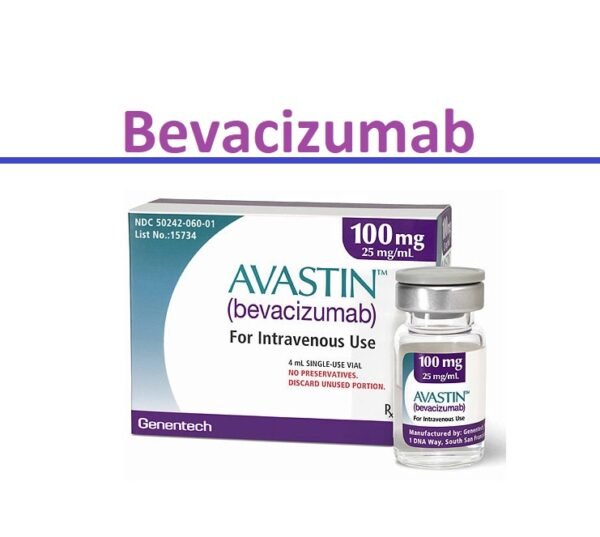
Avastin (Bevacizumab) is a monoclonal antibody that inhibits angiogenesis by binding to vascular endothelial growth factor (VEGF). It is used in the treatment of various cancers including colorectal, cervical, and ovarian cancers.
Bevacizumab (Avastin) Uses:
-
Cervical cancer, persistent/ recurrent/ metastatic (Avastin [bevacizumab], Mvasi [bevacizumabawwb; biosimilar]):
- It is used in the treatment of persistent, recurrent, and metastatic cervical cancer, in combination with paclitaxel and either cisplatin or topotecan.
-
Colorectal cancer, metastatic (Avastin, Mvasi):
- It is also used as first- or second-line treatment of metastatic colorectal cancer (CRC) in combination with fluorouracil-based chemotherapy.
- It is also a second-line treatment of metastatic CRC in combination with fluoropyrimidine-irinotecan- or fluoropyrimidine-oxaliplatin-based chemotherapy, after disease progression on a first-line treatment containing bevacizumab.
- Limitations of use: however, it is not indicated for the adjuvant treatment of colon cancer.
-
Glioblastoma, recurrent (Avastin):
- It can be used in the management of recurrent glioblastoma
-
Glioblastoma, progressive (Mvasi):
- It is used in the treatment of glioblastoma as a single agent in patients with advanced disease.
-
Non-small cell lung cancer, nonsquamous (Avastin, Mvasi):
- Bevacizumab is the first-line treatment of surgically non-resectable, locally advanced, recurrent or metastatic nonsquamous non-small cell lung cancer (NSCLC) in combination with carboplatin and paclitaxel.
-
Ovarian (epithelial), fallopian tube, or primary peritoneal cancer (Avastin):
-
Stage III or Intravenous disease, following initial surgical resection:
- It is used in treatment of stage III or Intravenous epithelial ovarian, fallopian tube, or primary peritoneal cancer following initial surgical resection in combination with carboplatin and paclitaxel, followed by single-agent bevacizumab.
-
Platinum-resistant recurrent:
- It is used in the treatment of platinum-resistant recurrent epithelial ovarian, fallopian tube, or primary peritoneal cancer in combination with paclitaxel, doxorubicin [liposomal], or topotecan in patients who have received chemotherapy no more than 2 prior regimens.
-
Platinum-sensitive recurrent:
- It is used in the treatment of platinum-sensitive recurrent epithelial ovarian, fallopian tube, or primary peritoneal cancer in combination with carboplatin and paclitaxel or with carboplatin and gemcitabine and then followed by single-agent bevacizumab.
-
-
Renal cell carcinoma, metastatic (Avastin, Mvasi):
-
- It is used in management of metastatic renal cell carcinoma (RCC) in combination with interferon alfa.
-
-
Off label Use of Bevacizumab in Adults:
-
- Age-related macular degeneration.
- Breast cancer, metastatic.
- Diabetic macular edema.
- Endometrial cancer, recurrent or persistent.
- Hereditary hemorrhagic telangiectasia.
- Non-resectable malignant pleural mesothelioma.
- Soft tissue sarcoma and angiosarcoma.
- Soft tissue sarcoma and hemangiopericytoma.
-
Bevacizumab (Avastin) Dose in Adults
It is not administered in bevacizumab products until at least 28 days after surgery and the wound is fully healed.
Use in the treatment of Cervical cancer, persistent/ recurrent/ metastatic (Avastin [bevacizumab], Mvasi [bevacizumabawwb; biosimilar]):
- It is given as 15 mg/kg intravenous every 3 weeks in combination with paclitaxel and either cisplatin or topotecan, until disease progression has stopped or unacceptable toxicity.
Bevacizumab Use in the treatment of metastatic colorectal cancer, in combination with fluorouracil-based chemotherapy (Avastin, Mvasi):
- It is given as 5 mg/kg intravenously every 2 weeks (in combination with bolus-IFL) OR
- 10 mg/kg biweekly (in combination with FOLFOX4)
Bevacizumab Use in the treatment of metastatic colorectal cancer, following first-line therapy containing bevacizumab (Avastin, Mvasi):
- It is given as 5 mg/kg Intravenous biweekly OR
- 5 mg/kg every 3 weeks in combination with the fluoropyrimidine-irinotecan or fluoropyrimidine-oxaliplatin based regimen.
Bevacizumab Use in the treatment of Glioblastoma, recurrent, or progressive (Avastin, Mvasi):
- it is given as 10 mg/kg intravenous biweekly as a single agent until disease progression has stopped or unacceptable toxicity OR
- as an off-label combination of 10 mg/kg every 2 weeks along with irinotecan. until disease progression has stopped or unacceptable toxicity.
Bevacizumab Use in the treatment of Non-small cell lung cancer (nonsquamous cell histology), first-line therapy (Avastin, Mvasi):
- It is given as 15 mg/kg intravenously every 3 weeks in combination with carboplatin and paclitaxel for 6 cycles.
-
Off-label combinations:
- 15 mg/kg every 3 weeks in combination with pemetrexed and carboplatin, for up to 4 cycles OR
- 5 mg/kg every 3 weeks in combination with pemetrexed and cisplatin for 4 cycles OR
- 15 mg/kg every 3 weeks in combination with atezolizumab, paclitaxel, and carboplatin for 4 to 6 cycles.
-
Maintenance therapy:
- It is administered as 15 mg/kg every 3 weeks as a single agent after 6 cycles of induction therapy with bevacizumab, carboplatin, and paclitaxel.
- Then continue maintenance therapy until disease progression has stopped or unacceptable toxicity OR
- 15 mg/kg in combination with pemetrexed every 3 weeks after 4 cycles of induction therapy with bevacizumab, pemetrexed, and carboplatin. Then continue until disease progression has stopped or unacceptable toxicity OR
- 5 mg/kg in combination with pemetrexed every 3 weeks after 4 cycles of induction therapy with bevacizumab, cisplatin, and pemetrexed. Then continue until disease progression has stopped or unacceptable toxicity OR
- 15 mg/kg every 3 weeks, with or without maintenance atezolizumab after 4 to 6 cycles of induction therapy with atezolizumab, paclitaxel and carboplatin. Then continue until disease progression has stopped or unacceptable toxicity.
Bevacizumab Use in the treatment of Ovarian (epithelial), fallopian tube, or primary peritoneal cancer (stage III or Intravenous disease following initial surgical resection) (Avastin):
- It is given as 15 mg/kg Intravenous every 3 weeks in combination with carboplatin and paclitaxel for up to 6 cycles, followed by bevacizumab 15 mg/kg every 3 weeks monotherapy, for a total of up to 22 cycles or until disease progression, whichever occurs earlier.
- It might delay bevacizumab to begin at cycle 2 to reduce the risk of wound healing complications.
Bevacizumab Use in the treatment of Ovarian (epithelial), fallopian tube, or primary peritoneal cancer (platinum-resistant recurrent) (Avastin):
- It is administered as 10 mg/kg intravenously biweekly in combination with weekly paclitaxel, every 4 weeks liposomal doxorubicin, or days 1, 8, and 15 topotecan OR
- 15 mg/kg every 3 weeks in combination with every 3-week topotecan.
Bevacizumab Use in the treatment of Ovarian (epithelial), fallopian tube, or primary peritoneal cancer (platinum-sensitive recurrent) (Avastin):
- Its dose is 15 mg/kg intravenously every 3 weeks in combination with carboplatin and gemcitabine for 6 to 10 cycles or with carboplatin and paclitaxel for 6 to 8 cycles then continue with bevacizumab as monotherapy until disease progression has stopped or unacceptable toxicity has occurred.
Bevacizumab Use in the treatment of metastatic Renal cell cancer (Avastin, Mvasi):
- it is given as 10 mg/kg intravenously biweekly in combination with interferon alfa or
- as off-label dosing, 10 mg/kg every 2 weeks as monotherapy.
Bevacizumab (Avastin) Off label use in the treatment of Age-related macular degeneration:
- it is given as 25 mg Intravitreal (0.05 mL) monthly for 3 months, then can be given monthly or as needed based on monthly ophthalmologic assessment.
Bevacizumab (Avastin) Off label use in the treatment of metastatic breast cancer:
- It is administered as 10 mg/kg intravenously biweekly in combination with paclitaxel.
Bevacizumab (Avastin) Off label use in the treatment of diabetic macular edema:
- It is given as 25 mg Intravitreal (0.05 mL) initially then repeat the dose every 4 weeks depending on ophthalmologic response i.e visual acuity or central subfield thickness assessment.
- Institutional guidelines must be sought.
Bevacizumab (Avastin) Off label use in the treatment of recurrent or persistent endometrial cancer:
- It is given as 15 mg/kg Intravenous every 3 weeks as monotherapy until disease progression has stopped or unacceptable toxicity has occurred.
Bevacizumab (Avastin) Off label use in the treatment of Hereditary hemorrhagic telangiectasia:
- It is given as 5 mg/kg intravenously biweekly for 6 doses OR
- 5 mg/kg every 2 weeks for 4 doses, followed by 5 mg/kg once a month for 4 doses. The additional dosescan be administered if the response is not up to the mark.
Bevacizumab (Avastin) Off label use in the treatment of unresectable malignant pleural mesothelioma:
- It is given as 15 mg/kg intravenously every 3 weeks in combination with pemetrexed and cisplatin for up to 6 cycles, followed by bevacizumab maintenance therapy at 15 mg/kg once every 3 weeks until disease progression has stopped or unacceptable toxicity has occurred.
Bevacizumab (Avastin) Off label use in the treatment of metastatic or locally advanced soft tissue sarcoma, angiosarcoma:
- It is given as 15 mg/kg intravenously every 3 weeks until disease progression has stopped or unacceptable toxicity has occurred.
Bevacizumab (Avastin) Dose in Childrens
It should be noted that individual protocols should be followed. The details concerning dosing in combination regimens should also be consulted. Trials in pediatric patients were conducted using the product Avastin 25 mg/mL vial for injection of bevacizumab. Mvasi (bevacizumab-awwb) is a biosimilar of Avastin. However, experiences have been reported with the biosimilar product in pediatric oncology patients is lacking.
Bevacizumab (Avastin) Use in the treatment of Refractory solid tumor:
-
Children and Adolescents:
- It is used as 5 to 15 mg/kg/dose intravenously biweekly in a 28-day course OR
- 5 to 10 mg/kg every 2 to 3 weeks.
Bevacizumab (Avastin) Use in the treatment of recurrent or refractory primary CNS tumor (high or low-grade gliomas, medulloblastoma):
-
Children and Adolescents:
- It is given as 10 mg/kg/dose intravenously biweekly OR days 1 and 15 of each 28-day cycle. It is mostly used in combination with irinotecan with or without temozolomide OR
- 15 mg/kg/dose every 3 weeks has also been used.
- When treating high-grade glioma, patients with contrast-enhancing disease showed greater response or remained stable, while patients with non-contrast enhancing disease had disease progression. Some studies have observed only minimal efficacy in patients with high-grade glioma.
Bevacizumab Dosing adjustment for toxicity:
- The presented dosing adjustments are based on clinical experience in adult oncology patients. The specific preferences for pediatric patients are limited.
- Local guidelines should be followed if available.
- In adults, Intravenous administration: There are no recommended dosage reductions.
- Withholding the drug is recommended for severe infusion reactions, for at least 4 weeks before and after elective surgery.
- In moderate to severe proteinuria as shown in data, treatment was withheld for more than 2 g proteinuria/24 hours, or in patients with severe hypertension which is not controlled with medical management.
- Permanently withholding of the drug is recommended in patients who develop wound dehiscence and wound healing complications requiring surgical intervention, or develops necrotizing fasciitis, fistula (gastrointestinal and nongastrointestinal), gastrointestinal perforation, intra-abdominal abscess, hypertensive crisis, hypertensive encephalopathy, serious bleeding/hemorrhage, severe arterial thromboembolic event, life-threatening (grade 4) venous thromboembolic events (including pulmonary embolism), nephrotic syndrome, or PRES.
Bevacizumab (Avastin) Pregnancy Category: C
- Studies on animal reproduction have shown that it can cause adverse outcomes in pregnant women.
- The information available after exposure during pregnancy is not complete.
- Effective contraception should be used by women with reproductive potential for at least 6 months following the last bevacizumab dose.
- Bevacizumab may increase the chance of ovarian failure, impair fertility and cause a rise in the incidence of ovarian cancer. Long-term effects of bevacizumab on fertility are not yet known.
Use of bevacizumab while breastfeeding
- Its presence in breast milk is not yet confirmed.
- Breast milk has been shown to contain immunoglobulins, so it is possible that bevacizumab might also be present in breast milk.
- Breastfeeding is not recommended during treatment or for six months after the last bevacizumab dose.
Bevacizumab (Avastin) Dose in Kidney Disease:
-
Renal impairment prior to treatment:
- No specific dose adjustments are required in renal impairment.
-
Renal toxicity during treatment:
-
Nephrotic syndrome:
- Withhold bevacizumab.
- Proteinuria of more than 2 g/24 hours in the absence of nephrotic syndrome: then withhold bevacizumab until proteinuria is less than 2 g/24 hours.
-
Bevacizumab (Avastin) Dose in Liver disease:
- No specific dose adjustments are mentioned in literature for liver impairment.
Percentages reported as monotherapy and as part of combination chemotherapy regimens.
Common Side Effects of Bevacizumab (Avastin):
-
Cardiovascular:
- Hypertension
- Venous Thromboembolism
- Peripheral Edema
- Hypotension
- Venous Thromboembolism
- Arterial Thrombosis
-
Central Nervous System:
- Fatigue
- Pain
- Headache
- Dizziness
- Insomnia
- Taste Disorder
- Peripheral Sensory Neuropathy
- Anxiety
- Myasthenia
-
Dermatologic:
- Alopecia
- Exfoliative Dermatitis
- Palmar-Plantar Erythrodysesthesia
- Xeroderma
-
Endocrine & Metabolic:
- Ovarian Failure
- Hyperglycemia
- Hypomagnesemia
- Weight Loss
- Hyponatremia
- Hypoalbuminemia
- Hypocalcemia
-
Gastrointestinal:
- Nausea
- Abdominal Pain
- Vomiting
- Anorexia
- Constipation
- Diarrhea
- Decreased Appetite
- Stomatitis
- Gastrointestinal Hemorrhage
- Dyspepsia
- Mucosal Inflammation
-
Genitourinary:
- Proteinuria
- Urinary Tract Infection
- Pelvic Pain
-
Hematologic & Oncologic:
- Thrombocytopenia
- Hemorrhage
- Leukopenia
- Pulmonary Hemorrhage
- Neutropenia
- Bruise
- Lymphocytopenia
-
Infection:
- Infection
-
Neuromuscular & Skeletal:
- Arthralgia
- Myalgia
- Limb Pain
- Back Pain
- Dysarthria
-
Renal:
- Increased Serum Creatinine
-
Respiratory:
- Epistaxis
- Upper Respiratory Tract Infection
- Cough
- Dyspnea
- Allergic Rhinitis
- Oropharyngeal Pain
- Sinusitis
- Nasal Sign & Symptoms
- Rhinitis
-
Miscellaneous:
- Postoperative Wound Complication
Less Common Side Effects Of Bevacizumab (Avastin):
-
Cardiovascular:
- Thrombosis
- Deep Vein Thrombosis
- Chest Pain
- Intra-Abdominal Thrombosis
- Syncope
- Left Ventricular Dysfunction
- Pulmonary Embolism
-
Central Nervous System:
- Voice Disorder
-
Dermatologic:
- Nail Disease
- Dermal Ulcer
- Cellulitis
- Acne Vulgaris
-
Endocrine & Metabolic:
- Dehydration
- Hyperkalemia
- Hypokalemia
-
Gastrointestinal:
- Hemorrhoids
- Xerostomia
- Gingival Hemorrhage
- Rectal Pain
- Colitis
- Intestinal Obstruction
- Gastrointestinal Perforation
- Gastro-esophageal Reflux Disease
- Gingivitis
- Oral Mucosa Ulcer
- Gastrointestinal Fistula
- Gastritis
- Gingival Pain
-
Genitourinary:
- Vaginal Hemorrhage
-
Hematologic & Oncologic:
- Febrile Neutropenia
- Neutropenic Infection
- Hemorrhage
-
Hepatic:
- Increased Serum AST
-
Infection:
- Abscess
-
Neuromuscular & Skeletal:
- Weakness
- Neck Pain
-
Ophthalmic:
- Blurred Vision
-
Otic:
- Tinnitus
- Deafness
-
Respiratory:
- Rhinorrhea
- Nasal Congestion
- Pneumonitis
-
Miscellaneous:
- Fistula
- Infusion Related Reaction
Contraindications to Bevacizumab (Avastin):
- According to US labeling, there are no contraindications.Canadian labeling
-
It is a contraindication if you have hypersensitivity to any component of bevacizumab.
-
Also, hypersensitivity reactions to Chinese Hamster Ovarian Cell Products or other recombinant human/humanized antibodies or untreated CNS Metastatic Disease are listed as contraindications
Warnings and precautions
-
Perforation of the gastrointestinal tract/ fistula [US Boxed Warning]
- It can cause fatal GI perforation to patients who have been treated with bevacizumab products. The risk ranges from 0.3% to 3%. Stop using bevacizumab products for patients suffering from GI perforation.
- An increase in the chance of GI perforation is caused by previous pelvic radiation.
- Most cases of GI perforation were diagnosed within 50 days after the initial bevacizumab treatment.
- A fistula, intraabdominal abscess or diverting ostomy need may all contribute to perforation.
- Patients receiving bevacizumab have been found to have a higher rate of serious fistulae, including tracheoesophageal and bronchopleural, biliary. Compared to patients receiving chemotherapy, the highest incidence was seen in patients with cervical carcinoma.
- The majority of fistulae developed within six months of the first bevacizumab dose.
- Patients with gastrointestinal vaginal fistula may also develop bowel obstruction, which can require surgical intervention and diverting the ostomy.
- Patients with ovarian cancer who have evidence of rectosigmoid involvement, such as pelvic examinations or bowel involvement (on CT scan) or clinical signs of bowel obstruction should not use bevacizumab.
- Patients who experience gastrointestinal perforation, the tracheoesophageal or grade 4 fistulas, or fistula formations involving any internal organ, should be withheld.
-
Heart Failure:
- According to the American Heart Association's scientific statement, bevacizumab may cause irreversible direct myocardial damage or worsen underlying myocardial dysfunction.
- Combining Bevacizumab with anthracycline-based chemotherapy is not recommended.
- Patients who received bevacizumab in combination with chemotherapy had a higher incidence of left ventricular dysfunction (1% vs. 0.6%).
- Patients who had received anthracycline therapy prior to chemotherapy were more likely to develop heart disease than patients who received chemotherapy only (4% vs 0.6%).
- Patients receiving bevacizumab in combination with anthracycline were more likely to have HF or LVEF reductions than patients who received anthracycline alone.
- Patients receiving bevacizumab in combination with chemotherapy had a higher proportion of patients who had a LVEF decrease of over 20%, or a decline of 10% to 50% from baseline than patients receiving chemotherapy alone (5% vs 5%).
- Most patients experienced HF within 1 to 6 months of receiving their first dose of bevacizumab. Nearly two-thirds (33%) of patients had HF resolved.
- Patients with HF should not be given bevacizumab products.
-
Hemorrhage [US Boxed Warning]
- Patients who have received bevacizumab products are at risk for severe or fatal hemorhages.
- Patients with hemoptysis, >=5 mL redblood, should not be given bevacizumab products.
- Patients who experience grade 3-4 hemorhage should be stopped immediately
- Nearly one-third of patients who received bevacizumab in combination with chemotherapy for nonsmall cell lung cancer (NSCLC), with squamous cells histology (not FDA-approved indication), and a small amount of NSCLC with Nonsquamous histology have experienced serious or fatal pulmonary hemorhage. Patients receiving chemotherapy alone have not experienced any cases.
- Sometimes, minor hemorhages (including grade 1 epistaxis) can occur.
-
Hypertension
- Preexisting hypertension may be exacerbated or caused by Bevacizumab.
- Bevacizumab products increase the risk of severe hypertension. Antihypertensive therapy can help manage hypertension.
- If bevacizumab-induced hypertension develops, monitor your blood pressure every 2 to 3 week.
- Patients with severe hypertension who are not controlled with medical management should stop taking bevacizumab. After controlling BP, bevacizumab may be resumed.
- Patients who have a hypertensive crisis, or hypertensiveencephalopathy should stop taking bevacizumab.
-
Infusion reactions
- Although rare, infusion reactions such as hypertension, hypertensive crises [associated with neurologic symptoms], wheezing and oxygen desaturation, hypersensitivity [grade 3,] chest pain, rigors and headaches can occur after the first infusion. Although rare, severe reactions are not common.
- Reduce the infusion rate to treat mild or insignificant infusion reactions. Infusions should be stopped if there are clinically serious infusion reactions. After resolution, it is possible to resume infusions at a slower pace.
- For severe reactions to bevacizumab, stop taking it and give appropriate medical treatment such as epinephrine or corticosteroids, intravenous Antihistamines (IVAs), bronchodilators, and oxygen supplementation.
-
Mortality
- Combining chemotherapy with biological therapy or Bevacizumab can increase the risk of treatment-related death.
- In a meta-analysis, 16 trials that used bevacizumab for treatment of different cancers, including breast cancer, colorectal, NSCLC and prostate cancer, found a higher risk of fatal adverse reactions than chemotherapy alone.
-
Necrotizing fasciitis
- Patients who have received bevacizumab have had necrotizing fasciitis (including fatalities) in some cases. This is usually secondary to wound healing complications, GI Perforation or fistula formation.
- Necrotizing fasciitis patients should be stopped from taking bevacizumab.
-
Ocular adverse events
- As an off-label intravitreal use, severe eye infections and vision impairments have been reported.
-
Osteonecrosis in the jaw (ONJ).
- A position paper from the American Association of Maxillofacial Surgery (AAOMS) states that medication-related osteonecrosis of jaw (MRONJ), has been linked to bisphosphonates, other antiresorptive drugs (denosumab), as well as antiangiogenic agents such sunitinib and bevacizumab used in the treatment of osteoporosis.
- When antiresorptive and antiangiogenic agents were combined, there was an increased chance of ONJ.
- MRONJ can also be caused by concurrent steroid use, preexisting inflammatory conditions, and dentoalveolar surgeries (eg, tooth removal, dental implants).
- According to the AAOMS, antiangiogenic agents should not be initiated unless medically necessary. Antiangiogenesis therapy should not be initiated until the site of extraction has healed or mucosalized.
- After antiangiogenic treatment for oncologic diseases has been initiated, it is important to avoid procedures that directly inflict the osseous and place dental implants.
- An oral surgeon should be consulted for patients who develop ONJ from therapy.
- Non-mandibular ONJ cases have also been reported in pediatric patients who received bevacizumab. (Bevacizumab isn't approved for pediatric patients).
-
Failure of the ovarian system:
- Premenopausal women who have solid tumors were treated with adjuvant chemotherapy. The incidence of ovarian dysfunction was 34% with bevacizumab combined with chemotherapy, compared to 2% with chemotherapy alone.
- Around one-fifth (or less) of the females who received bevacizumab showed signs of recovery of ovarian function.
- Long-term effects of bevacizumab upon fertility have not been studied.
- Before bevacizumab is initiated, it is important to inform females with reproductive potential about the possibility of pre-mature ovarian failure.
-
The posterior reversible syndrome of encephalopathy:
- There have been cases of posterior reversible syndrome of encephalopathy (PRES).
- Treatment may cause symptoms such as headaches, seizures, confusion, lethargy and blindness. These symptoms can occur between 16 hours and 1 year.
- The PRES could also be linked to mild-to-severe hypertension.
- MRI is required to confirm PRES diagnosis.
- Patients with PRES should not be given bevacizumab products.
- Symptom relief usually occurs within a few days of discontinuing treatment. Neurologic sequelae can still exist.
- It is unknown whether PRES reinitiation can be safe.
-
Nephrotic syndrome/proteinuria:
- Bevacizumab products have been associated with an increase in the severity and incidence of proteinuria. Clinical studies have shown that proteinuria of grade 3 (urine dipstick 4+, >3.5 g protein/24 hrs) and 4 (nephrotic Syndrome) has been common.
- In one study, the overall prevalence of all types of proteinuria was 20%.
- After bevacizumab administration, the median time for proteinuria to develop was approximately 6 months.
- After a median follow up of 11.2 months, proteinuria was still not resolved in 40% of patients. Nearly one-third of patients required bevacizumab discontinuation.
- A pooled analysis of 7 studies revealed that nearly three-quarters of patients who received bevacizumab products with chemotherapy also experienced levels 2 to 4. This was due to patients experiencing proteinuria (urine dipstick 2, or more than 1 g protein/24 hour, or nephrotic Syndrome), which resolved in almost three-quarters of the patients. Bevacizumab could be re-started in 42% patients. However, nearly half of those who were re-initiated experienced recurrent levels 2 to 4.
- Rarely, patients who have received bevacizumab have developed nephrotic syndrome. Sometimes it can even lead to death.
- Sometimes, kidney biopsy was performed on patients suffering from proteinuria and the results were consistent with thrombotic mioangiopathy.
- Large retrospective studies comparing chemotherapy with bevacizumab found that patients who received the drug had higher serum creatinine levels (1.5 to 1.91 times baseline). About one-third of patients who received vavacizumab did not see their baseline creatinine levels.
- You can monitor your proteinuria by performing serial dipstick urine analyses to determine if there is any proteinuria worsening or developing during bevacizumab treatment.
- For more than 2+ dipstick readings, you can also do a 24-hour urine collection.
- If you have proteinuria greater than 2g/24 hour, stop taking bevacizumab. You can resume taking it if your levels are lower.
- Patients with nephrotic syndrome should stop taking bevacizumab.
- The 24-hour urine protein/creatinine ratio (UPCR), does not seem to correlate with the actual urine protein.
-
Thromboembolism
- When combined with chemotherapy, bevacizumab products can increase the risk of arterial thromboembolic (ATE) events, including stroke, cerebral infarction and stroke.
- Patients with glioblastoma had the highest rates of ATE.
- An increased risk may exist if you have a history of ATE, diabetes or are over 65 years old.
- VTE is a risk in cancer patients, but a meta-analysis of 15 randomized trials found an increase in VTE risk among patients who received bevacizumab.
- Patients who received bevacizumab in combination with chemotherapy had a higher rate of VTEs of grade 3 and higher than those who received chemotherapy only.
- Patients with severe ATE, grade 4 VTE, and pulmonary embolism should be stopped from taking bevacizumab. There are no studies on recommencent.
-
Wound healing complications [US Boxed Warning]
- Patients who receive bevacizumab products are more likely to experience wound healing complications and other surgical complications. It is important to stop patients who have wound healing problems that require surgery.
- Bevacizumab products should be stopped at least 28 days before elective surgery. You should not give bevacizumab products to patients for more than 28 days following surgery or until the wound has healed completely.
- A controlled study showed that patients with CRC who had surgery and received bevacizumab within 28 days of major surgeries were more likely to experience wound healing complications, including fatal complications.
- A controlled clinical study was conducted in patients with glioblastoma relapsed and recurrent. Patients who received bevacizumab had a higher incidence of wound healing events than patients who didn't receive it.
- A retrospective review of central vein access device placements was done. It found that port placement and administration of bevacizumab were more likely to cause wound dehiscence than those performed separately for less than 14 days.
- It may be better to wait at least 6-8 weeks after bevacizumab discontinuation to undergo major surgical procedures.
-
Renal impairment
- In a retrospective review of patients suffering from renal disease (CrCl =60mL/minute), an increase in blood pressure was observed in those who had been treated with bevacizumab to treat renal cell carcinoma.
Monitoring parameters:
- Monitor for proteinuria & nephrotic syndrome with urine dipstick.
- collect 24-hour urine in patients with ≥2+ reading.
- Monitor blood pressure every 2 to 3 weeks. And more frequently if hypertension develops during therapy. continue to monitor blood pressure after discontinuing due to bevacizumab-induced hypertension.
- Monitor closely during the infusion for signs & symptoms of an infusion reaction.
- Monitor for signs & symptoms of GI perforation or fistula including abdominal pain, constipation, vomiting, fever, bleeding including epistaxis, hemoptysis, GI, or CNS bleeding, thromboembolism, wound healing complications, and heart failure.
AMD (off-label use):
- Monitor intraocular pressure and retinal artery perfusion.
- Monitor for symptoms of infectious endophthalmitis and retinal detachment.
Diabetic macular edema (off-label use):
- Monitor visual acuity, central subfield thickness, and intraocular pressure.
- Monitor for signs & symptoms of infectious endophthalmitis, cataracts, and retinal detachment.
Hereditary hemorrhagic telangiectasia (off-label use):
- Cardiac output measurements and liver radiologic response checked via ultrasound and hepatic CT exams prior to initial treatment and at 3 and 6 months following the first dose.
How to administer Bevacizumab (Avastin)?
Intravenous:
- Infuse the initial dose over 90 minutes.
- The second infusion may be administered over 60 minutes if the initial infusion is well tolerated.
- The third and subsequent infusions may be administered over 30 minutes if the 60-minute infusion is well tolerated.
- After tolerance at the 90-minute, 60-minute, and 30-minute infusion rates has been established, some institutions use an off-label 10- minute infusion rate (0.5 mg/kg/minute) in patients for bevacizumab dosed at 5 mg/kg.
- In a study evaluating the safety of the 0.5 mg/kg/minute infusion rate, proteinuria, and hypertension incidences were not increased with the shorter infusion time. Do not administer dextrose solutions.
- Monitor closely during the infusion for signs/symptoms of an infusion reaction.
- Decrease infusion rate for mild (clinically insignificant) infusion reaction.
- Stop infusion for clinically significant infusion reaction (after symptoms resolve, resume at a decreased infusion rate). Withhold bevacizumab for severe infusion reaction.
Intravitreal injection (off-label use/route):
- Adequate local anesthesia and a topical broadspectrum antimicrobial agent should be administered prior to the procedure.
Mechanism of action of Bevacizumab (Avastin):
- Bevacizumab is a recombinant, humanized monoclonal antibody which binds to, and neutralizes, vascular endothelial growth factor (VEGF), preventing its association with endothelial receptors, Flt-1 and KDR.
- VEGF binding initiates angiogenesis (endothelial proliferation and the formation of new blood vessels).
- The inhibition of microvascular growth is believed to retard the growth of all tissues (including metastatic tissue).
Half-life elimination:
- Intravenous:
- Pediatric patients (age: 1 to 21 years): Median: 11.8 days (range: 4.4 to 14.6 days).
- Adults: ~20 days (range: 11 to 50 days)
- Intravitreal:
- ~5 to 10 days.
International Brand Names of Bevacizumab:
- Avastin
- Bevastim
- Bivastin
Bevacizumab Brand Names in Pakistan:
Bevacizumab Injection 100 mg in Pakistan |
|
| Avastin | Roche Pakistan Ltd. |
Bevacizumab Injection 400 mg in Pakistan |
|
| Avastin | Roche Pakistan Ltd. |
.png)


