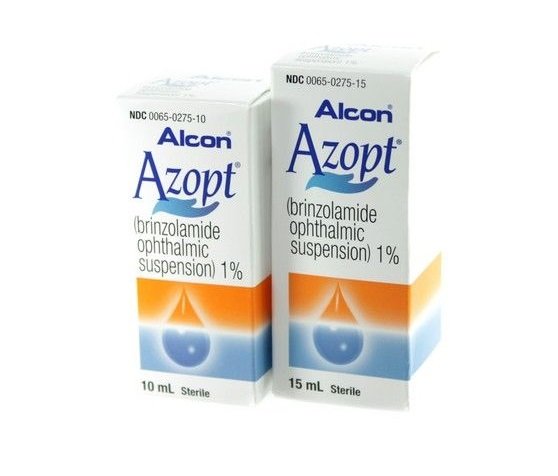
Brinzolamide decreases the formation of aqueous humor by inhibiting the enzyme carbonic anhydrase resulting in a reduction in the intraocular pressure. It is used for the treatment of elevated intraocular pressure in patients with ocular hypertension or open-angle glaucoma.
Brinzolamide Dose in Adults
Brinzolamide in the treatment of Elevated intraocular pressure:
- Instill one drop in the affected eyes three times a day.
Brinzolamide Dose in Childrens
Safety and efficacy of brinzolamide in children has not been established.
Pregnancy Risk Factor C
- You should use it with caution, as adverse fetal events were observed in animal reproduction studies.
Brinzolamide use during breastfeeding:
- Because of possible adverse reactions in neonates, the manufacturer suggests that you continue to breastfeed or continue with the drug.
Brinzolamide Dose in Renal Disease:
- CrCl of 30 mL/minute or more:
- The manufacturer has not recommended any dose adjustment.
- CrCl of less than 30 mL/minute:
- Avoid its use as it has not been studied and the drug is primarily excreted by the kidneys.
Brinzolamide Dose in Liver Disease:
- The manufacturer has not recommended any dose adjustment in patients with liver disease.
Common Side Effects of Brinzolamide Include:
- Cardiovascular:
- Hyperemia
- Central Nervous System:
- Foreign Body Sensation of Eye
- Headache
- Dermatologic:
- Dermatitis
- Gastrointestinal:
- Dysgeusia
- Ophthalmic:
- Blurred Vision
- Blepharitis
- Eye Discharge
- Eye Discomfort
- Eye Pain
- Eye Pruritus
- Keratitis
- Xerophthalmia
- Respiratory:
- Rhinitis
Contraindication to Brinzolamide include:
- Allergy or intolerance to brinzolamide, any component of the formulation
- Allergies to sulfonamides
- Severe renal impairment, with a CrCl less than 30 mg/min
- Hyperchloremic acidosis
Warnings and Precautions
- Ophthalmic effects
- It is possible for the vision to temporarily blurr.
- This could lead to impairments in mental or physical abilities.
- Patients who perform tasks that require mental alertness or those who drive heavy machinery or are prone to falls should be aware of the dangers.
- Sulfonamide"sulfa"Allergy:
- Sulfa drugs, which contain a sulfonamide chemical compound group, can cause severe allergic reactions in patients who are allergic to them.
- You should be cautious as cross-reactivity could occur.
- Avoid it if you have had severe allergic reactions, such as Steven Johnson syndrome or TEN.
- Acute angle-closure glaucoma:
- It has not been studied in acute angle-closure glaucoma.
- Corneal edema
- Patients with low endothelial cells counts may experience corneal edema. This should be avoided.
- Renal impairment
- Patients with severe renal impairment should not be given the drug.
Brinzolamide: Drug Interaction
Note: Drug Interaction Categories:
- Risk Factor C: Monitor When Using Combination
- Risk Factor D: Consider Treatment Modification
- Risk Factor X: Avoid Concomitant Use
Risk Factor C (Monitor therapy). |
|
| Indirect-Acting Alpha-/Beta Agonists | Inhibitors of carbonic anhydrase may increase the serum concentrations of Alpha-/Beta Agonists (Indirect Acting). |
| Amantadine | Carbonic Anhydrase Inhibitors could increase serum Amantadine concentrations. |
| Strong CYP3A4 inhibitors | May increase serum Brinzolamide concentrations |
Risk Factor X (Avoid Combination) |
|
| Carbonic Anhydrase inhibitors | This may increase the toxic/adverse effects of other Carbonic Anhydrase Inhibitors. It has been reported that acid-base disorders can be caused by concurrent use of oral and ophthalmic carbonic anhydrase inhibiters. Management: If possible, avoid concurrent use of different carbonic acidase inhibitors. Patients should be closely monitored for kidney stones and metabolic acidosis. |
Monitoring parameters:
- Monitor the intraocular pressure and regularly examine the eye.
How to administer Brinzolamide?
- Shake the ophthalmic solution well before use.
- Remove contact lenses before administering it and wait for 15 minutes before reinserting.
- If two or more drugs are to be used, they should be administered at least 10 minutes apart.
- The tip of the dispensing container should not touch the eye or the surrounding structures.
Mechanism of action of Brinzolamide:
- It decreases the formation of aqueous humor by inhibiting the enzyme carbonic anhydrase.
- Reduction in aqueous humor production results in a reduction of intraocular pressure.
- It builds up in red blood cells, where it binds with the enzyme carbonic acidase.
60% of the drug's content is protein-bound. It is converted to N-desethyl buzolamide, and excreted in the urine.
Interantional Brands of Brinzolamide:
- Azopt
- Azoptic
- Benozol
- Brinz
- Brinzo-Vision
- Brinzopt
- BrinzoQuin
- Ocubrin
Brinzolamide Brands in Pakistan:
|
Brinzolamide [Drops 10 mg] |
|
| Brizopt Drops | Bosch Pharmaceuticals (Pvt) Ltd. |
|
Brinzolamide [Eye Drops 1 %w/v] |
|
| Azopt | Novartis Pharma (Pak) Ltd |
.png)


