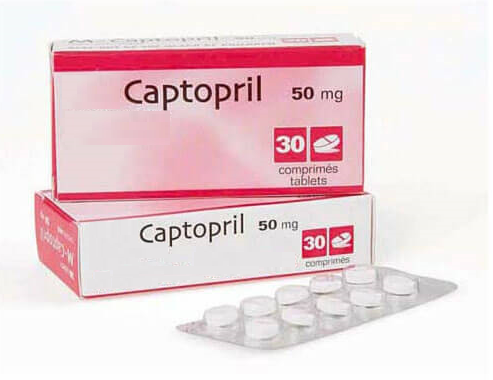
The angiotensin-converting enzyme that changes angiotensin I into angiotensin II is competitively inhibited by captopril. Since, angiotensin II has potent vasoconstrictor properties, inhibiting it results in vasodilation. Thus, it is used primarily in the following conditions:
-
Treatment of Diabetic nephropathy in both Type 1 and Type 2 Diabetes Mellitus.
-
Treatment and of Heart failure with a reduced ejection fraction in asymptomatic patients
-
Treatment of symptomatic patients with heart failure and a reduced ejection fraction to reduce morbidity and mortality
-
Management of hypertension
-
Reduce the likelihood of heart failure and subsequent hospitalisation after a myocardial infarction in clinically stable individuals with an ejection fraction of less than 40%. All patients with anterior wall MI, heart failure, or an ejection fraction less than 40% should start taking captopril within the first 24 hours.
-
Off Label Use of Captopril in Adults include:
- For the diagnosis of Hyperaldosteronism
- Hypertension in scleroderma renal crisis
- Hypertensive crisis
- Non–ST-elevation acute coronary syndrome
- Raynaud phenomenon
- Stable coronary artery disease
- For the diagnosis of Anatomic renal artery stenosis
- Bartter syndrome
- Hypertension secondary to Takayasu Disease
Captopril Dose in Adults
Treatment of Diabetic nephropathy:
- Three oral doses of 25 mg each day, with or without other antihypertensive medications.
Treatment of Heart failure
- To a goal dose of 50 mg orally three times per day, 6.25 mg are taken orally three times daily.
Treatment of Hypertension:
- 12.5 to 25 mg taken orally twice or three times per day, up to the typical dose of 50 mg taken orally three times per day, with a daily maximum of 450 mg.
- One- to two-week intervals should be used to increase the dose.
Treatment of LV dysfunction following MI:
- 6.25 mg taken orally Over the following few days, gradually increase the dosage to 12.5 mg three times per day, then to 25 mg three times each day.
- Depending on the patients' tolerance, the dose may be increased to 50 mg three times each day.
Off label use in the treatment of Hypertensive Urgency or emergency:
- 25 mg orally or sublingually.
- An alternative therapy should be considered if the patients' blood pressure remains high after half an hour.
Off label use in the treatment of Raynaud phenomenon:
- 12.5 milligrammes taken orally twice day.
- The dosage can be raised gradually to three times daily.
Captopril Dose in Childrens
Heart failure Treatment:
- Infants:
- 0.1–0.3 mg/kg/dose administered orally, one–four times day.
- A maximum daily dose of 6 mg/kg/day should be used, and the dose should be titrated to the standard dosage range of 0.3 - 3.5 mg/kg/day in 2 - 4 split doses.
- Children and Adolescents:
- two or three oral doses of 0.3 to 0.5 mg/kg each day.
- To achieve a daily dose maximum of 6 mg/kg/day, titrate the dose to the typical dosage range of 0.9 - 3.9 mg/kg/day in split doses.
Treatment of High Blood Pressure:
- Weight-directed dosing:
- Infants:
- 0.05 mg/kg/dose orally 4 times a day.
- Adjust the dosage as necessary, up to a daily maximum of 6 mg/kg.
- Children and Adolescents:
- up to a maximum daily dose of 6 mg/kg/day in divided doses, orally three times a day between 0.3 and 0.5 mg/kg/dose.
- Infants:
- Fixed dosing:
- Adolescents:
- 2 to 3 oral doses of 12.5 to 25 mg per dose per day.
- To a maximum daily dose of 450 mg/day, the dose may be increased by 25 mg/dose at intervals of one to two weeks.
- Adolescents:
Pregnancy Risk Factor D
[US Boxed Warning]
- Like other medications that affect the RAAS system, captopril can harm or kill a growing foetus.
- Once pregnancy is confirmed, it should be stopped immediately.
- Captopril passes the placental barrier
- Fetal lung hypoplasia and skeletal abnormalities can result from taking captopril and other RAAS-interfering medications.
- Furthermore, oligohydramnios might not show up until severe foetal harm has been done.
- It can also lead to hypotension, anuria and skull hypoplasia in infants/neonates.
- Hypertensive patients who are pregnant should avoid ACE-Inhibitors.
- Alternative therapies should be considered if necessary.
Captopril use during breastfeeding:
- Breastmilk contains captopril.
- The WHO states that captopril can still be used while breastfeeding.
- However, the manufacturer advises that caution be taken when using this drug.
Captopril dose adjustment in Renal disease:
- Manufacturers recommendations:
- Initiate therapy with the smallest possible dose and titrate the dose slowly at intervals of 1 - 2 weeks till the desired therapeutic response is achieved.
- Alternative recommendations:
- CrCl 10 - 50 mL/minute:
- Every 12 to 18 hours, reduce the dose by 25% of the usual dose.
- CrCl of less than 10 mL/minute:
- Administer at half the normal dose once a day.
- Intermittent hemodialysis:
- After hemodialysis, give the medication (on dialysis days)
- Peritoneal dialysis:
- It is not necessary to take the extra dose.
- CrCl 10 - 50 mL/minute:
Captopril Dose in Liver Disease:
- Not been studied for liver disease.
- The manufacturer does not recommend any dose adjustment in patients with liver disease.
Common Side Effects Of Captopril Include:
- Cardiovascular:
- Angina pectoris
- Cardiac arrest
- Cardiac arrhythmia
- Cardiac failure
- Flushing
- Myocardial infarction
- Orthostatic hypotension
- Raynaud's phenomenon
- Syncope
- Central nervous system:
- Ataxia
- Cerebrovascular insufficiency
- Confusion
- Depression
- Drowsiness
- Myasthenia
- Nervousness
- Dermatologic:
- Bullous pemphigoid
- Erythema multiforme
- Exfoliative dermatitis
- Pallor
- Stevens-Johnson syndrome
- Endocrine & metabolic:
- Gynecomastia
- Hyponatremia
- Gastrointestinal:
- Cholestasis
- Dyspepsia
- Glossitis
- Pancreatitis
- Genitourinary:
- Impotence
- Nephrotic syndrome
- Oliguria
- Urinary frequency
- Hematologic & oncologic:
- Agranulocytosis
- Anemia
- Pancytopenia
- Thrombocytopenia
- Hepatic:
- Hepatic necrosis
- Hepatitis
- Increased serum alkaline phosphatase
- Increased serum bilirubin
- Increased serum transaminases
- Jaundice
- Hypersensitivity:
- Anaphylactoid reaction
- Angioedema
- Neuromuscular & skeletal:
- Myalgia
- Weakness
- Ophthalmic:
- Blurred vision
- Renal:
- Polyuria
- Renal failure
- Renal insufficiency
- Respiratory:
- Bronchospasm
- Eosinophilic pneumonitis
- Rhinitis
Less Common Side Effects Of Captopril Include:
- Cardiovascular:
- Hypotension
- Chest pain
- Palpitations
- Tachycardia
- Dermatologic:
- Skin rash
- Pruritus
- Endocrine & metabolic:
- Hyperkalemia
- Gastrointestinal:
- Dysgeusia
- Genitourinary:
- Proteinuria
- Hematologic & oncologic:
- Neutropenia
- Hypersensitivity:
- Hypersensitivity reaction
- Renal:
- Increased serum creatinine
- Renal insufficiency
- Respiratory:
- Cough
- Miscellaneous:
- Hypersensitivity reactions
- Dysgeusia
Contraindication to Captopril include:
- Intolerance to captopril, additional ACE-inhibitors, or any ingredient in the formulation
- Angioedema brought on by ACE inhibitor use in the past
- A direct renin inhibitor called aliskiren should also be used by people with diabetes mellitus.
- Use sacubitril with sacubitril or within 36 hours of using or stopping a Neprilysin Inhibitor like sacubitril.
Warnings and Precautions
- Angioedema
- It is possible to get angioedema in the neck and head that could compromise the airway.
- Patients having a history of angioedema, those with black skin who are of African heritage, and those who are concurrently taking mTOR inhibitors like everolimus are those who are most at risk for ACE-I linked angioedema.
- Long-term monitoring may be necessary for patients with angioedema. Aggressive management is important.
- Cholestatic jaundice
- Rarely, it may cause cholestatic jaundice that progresses to fulminant liver failure.
- If liver enzymes show marked increases, ACE inhibitors should be immediately stopped
- Cough:
- It is possible for patients to develop a dry, hacking and nonproductive cough after the first few months of the drug's use.
- This usually disappears once the drug has been stopped, but it can sometimes take several months.
- Consideration should also be given to other causes of cough, such as pulmonary congestion brought on by heart failure.
- Hematologic effects
- Rarely, it can cause severe cytopenias, including neutropenia, angranulocytosis and aplasia.
- The Onset of Neutropia typically occurs within three months after captopril initiation.
- After withdrawal, the typical neutrophil count returns to the pre-treatment level in two weeks.
- Therapy should be stopped if the neutrophil count drops below 1,000/mm3.
- Hyperkalemia:
- Hyperkalemia is a risk for patients who are taking potassium-sparing diuretics, potassium supplement, or direct renin inhibitors.
- Patients with diabetes mellitus or underlying renal dysfunction are also at risk for hyperkalemia.
- Hypersensitivity reactions
- ACE-Inhibitors have been linked to severe allergic reactions, including anaphylaxis.
- Patients who receive hemodialysis with high flow dialysis membranes (example: AN69) and occasionally with dextran-sulfate-cellulose use during low density lipoprotein apheresis are often subject to allergic reactions.
- Syncope and hypotension:
- Patients who have lost a lot of volume should avoid rapid titration.
- Renal function deterioration:
- Patients with renal artery narrowing and heart failure are at greater risk for deteriorating renal function. Oliguria, progressive and severe azotemia, as well as acute renal failure, may occur.
- Aortic stenosis
- Patients with severe aortic stenosis must use ACE inhibitors with caution due to the possibility of reduced coronary perfusion.
- Ascites:
- Ascites patients should be warned to avoid the drug.
- Cardiovascular disease
- Rapid drops in blood pressure are not recommended as they can lead to poor cerebral and heart perfusion, which could result in strokes or myocardial damage.
- Collagen vascular disease:
- Patients with collagen vascular disease, particularly those who also have concurrent renal impairment, may experience higher hematologic toxicity.
- Hypertrophic cardiomyopathy and outflow tract obstruction
- The signs and symptoms of HOCM can get worse if afterload is reduced.
- Renal artery stenosis
- Avoid narrowing of the bilateral renal arteries.
- Renal impairment
- Preexisting renal impairments should be avoided. Avoid rapid dose increases. Adjusting the dose may be necessary.
Captopril: Drug Interaction
Note: Drug Interaction Categories:
- Risk Factor C: Monitor When Using Combination
- Risk Factor D: Consider Treatment Modification
- Risk Factor X: Avoid Concomitant Use
Risk Factor C (Monitor therapy). |
|
| Ajmaline | High risk of Inhibitors increasing serum concentrations of CYP2D6 Substrates |
| Alfuzosin | Might increase the hypotensive effects of Blood Pressure Lowering Agents. |
| Amphetamines | May lessen the effects of antihypertensive medications in treating hypertension. |
| Angiotensin II | The therapeutic efficacy of angiotensin II may be enhanced by angiotensin-converting enzyme inhibitors. |
| Antacids | The serum levels of captopril could drop. |
| Antipsychotic Agents, Second Generation (Atypical) | Antipsychotic drugs can have a greater hypotensive effect when blood pressure-lowering medications are used (Second Gen [Atypical]). |
| Aprotinin | Angiotensin-Converting Enzyme Inhibitors may intensify their hyperkalemic effects. |
| AzaTHIOprine | AzaTHIOprine's myelosuppressive effects may be enhanced by angiotensin-converting enzyme inhibitors. |
| Barbiturates | May intensify blood pressure lowering medications' hypotensive effects. |
| Benperidol | May intensify blood pressure lowering medications' hypotensive effects. |
| Brigatinib | May lessen the effects of antihypertensive medications in treating hypertension. The bradycardic effects of antihypertensive medications may be exacerbated by brutinib. |
| Brimonidine (Topical) | May intensify blood pressure lowering medications' hypotensive effects. |
| CloBAZam | High likelihood that inhibitors will raise serum levels of CYP2D6 substrates |
| Cobicistat | High likelihood that inhibitors will raise serum levels of CYP2D6 substrates |
| Moderate CYP2D6 inhibitors | May reduce CYP2D6 substrate metabolism (High Risk with Inhibitors). |
| Dapoxetine | May increase the angiotensin-converting enzyme inhibitors' orthostatic hypotensive effects. |
| Darunavir | Danger of inhibitors is high raising CYP2D6 Substrates serum concentrations |
| Dexmethylphenidate | May worsen angiotensin-converting enzyme inhibitors' toxic or severe effects. The risk of angioedema in particular could rise. |
| Diazoxide | Antihypertensive agents may have a less therapeutic effect. |
| Dipeptidyl Peptidase-IV Inhibitors | May intensify blood pressure lowering medications' hypotensive effects. |
| Drospirenone | Drospirenone's hyperkalemic impact may be enhanced by angiotensin-converting enzyme inhibitors. |
| DULoxetine | By reducing blood pressure, DULoxetine may intensify the hypotensive effects. |
| Eplerenone | The effects of angiotensin-converting enzyme inhibitors on hyperkalemia may be enhanced. |
| Everolimus | May intensify angiotensin-converting enzyme inhibitors' harmful or hazardous effects. The risk of angioedema in particular could rise. |
| Ferric Gluconate | Angiotensin-Converting Enzyme Inhibitors might make ferric gluconate more harmful or poisonous. |
| Complex of Ferric Hydroxide Polymaltose | Ferric Hydroxide Polymaltose Complex may have a more negative or toxic effect when taken with angiotensin-converting enzyme inhibitors. Angioedema and allergic responses in particular may become more likely. |
| Gelatin (Succinylated). | Gelatin's harmful or toxic effects may be increased by angiotensin-converting enzyme inhibitors (Succinylated). Particularly, a higher risk of paradoxical hypotensive reactions to gelatin may exist (Succinylated). |
| Gold Sodium Thiomalate | Gold Sodium Thiomalate may have a more negative or toxic effect when used with angiotensin-converting enzyme inhibitors. Nitritoid responses have been linked to a higher risk, it has been highlighted. |
| Heparin | Angiotensin-Converting Enzyme Inhibitors may intensify their hyperkalemic effects. |
| Heparins (Low Molecular Weight) | Angiotensin-Converting Enzyme Inhibitors may intensify their hyperkalemic effects. |
| Herbs (Hypertensive Properties) | May lessen the effects of antihypertensive medications in treating hypertension. |
| Herbs (Hypotensive properties) | May intensify blood pressure lowering medications' hypotensive effects. |
| Hypotension-Associated Agents | The hypotensive action of hypotension-associated agents may be strengthened by blood pressure lowering medications. |
| Icatibant | Angiotensin-Converting Enzyme Inhibitors may intensify their hyperkalemic effects. |
| Imatinib | High likelihood that inhibitors will raise serum levels of CYP2D6 substrates |
| Levodopa-Containing Products | Levodopa-Containing Products' hypotensive effects may be amplified by blood pressure-lowering medications. |
| Loop Diuretics | May strengthen angiotensin-converting enzyme inhibitors' hypotensive effects. Angiotensin-Converting Enzyme Inhibitors' nephrotoxic effects may be increased by loop diuretics. |
| Lormetazepam | May intensify blood pressure lowering medications' hypotensive effects. |
| Lumefantrine | High likelihood that inhibitors will raise serum levels of CYP2D6 substrates |
| Methylphenidate | May lessen the effects of antihypertensive medications in treating hypertension. |
| Molsidomine | May intensify blood pressure lowering medications' hypotensive effects. |
| Naftopidil | May intensify blood pressure lowering medications' hypotensive effects. |
| Nicergoline | May intensify blood pressure lowering medications' hypotensive effects. |
| Nicorandil | Angiotensin-Converting Enzyme Inhibitors may intensify their hyperkalemic effects. |
| Nicorandil | May intensify blood pressure lowering medications' hypotensive effects. |
| Nitrogen | Blood pressure lowering medications may intensify Nitroprusside's hypotensive effects. |
| Nonsteroidal Anti-Inflammatory Drugs | Nonsteroidal Anti-Inflammatory Agents' negative/toxic effects may be increased by angiotensin-converting enzyme inhibitors. The combination can cause renal function to significantly decline. Angiotensin-Converting Enzyme Inhibitors' antihypertensive effects may be lessened by nonsteroidal anti-inflammatory drugs. |
| Panobinostat | High likelihood that inhibitors will raise serum levels of CYP2D6 substrates |
| Peginterferon Alfa-2b | Inhibitors carry a high danger. may reduce the level of CYP2D6 substrates in serum. Serum levels of CYP2D6 Substrates may rise after administration of peginterferon Alf-2b. |
| Pentoxifylline | May intensify blood pressure lowering medications' hypotensive effects. |
| Perhexiline | CYP2D6 Substrates may lead to an increase in perhexiline. The serum concentrations of CYP2D6 substrates can rise in response to perhexiline (High Risk with Inhibitors). |
| Pholcodine | By reducing blood pressure, pholocdine may exacerbate hypotension. |
| Phosphodiesterase 5 Inhibitors | May intensify blood pressure lowering medications' hypotensive effects. |
| Potassium Salts | Angiotensin-Converting Enzyme Inhibitors may intensify their hyperkalemic effects. |
| Potassium-Sparing Diuretics | Angiotensin-Converting Enzyme Inhibitors may intensify their hyperkalemic effects. |
| Pregabalin | Angiotensin-Converting Enzyme Inhibitors may intensify Pregabalin's negative/toxic effects. Risk of gioedema could rise. |
| Prostacyclin Analogues | May intensify blood pressure lowering medications' hypotensive effects. |
| Quinagolide | May intensify blood pressure lowering medications' hypotensive effects. |
| QuiNINE | Danger of inhibitors is high raising CYP2D6 Substrates serum concentrations |
| Racecadotril | May intensify angiotensin-converting enzyme inhibitors' harmful or hazardous effects. Angioedema may be more likely as a result of this combination. |
| Ranolazine | Angiotensin-Converting Enzyme Inhibitors may intensify their hyperkalemic effects. |
| Salicylates | May intensify angiotensin-converting enzyme inhibitors' nephrotoxic effects. The therapeutic benefit of angiotensin-converting enzyme inhibitors may be reduced by salicylates. |
| Sirolimus | Angiotensin-Converting Enzyme Inhibitors may intensify their hyperkalemic effects. |
| Tacrolimus (Systemic) | Angiotensin-Converting Enzyme Inhibitors may enhance the hyperkalemic effect of Tacrolimus (Systemic). |
| Temsirolimus | Angiotensin-Converting Enzyme Inhibitors may intensify their hyperkalemic effects. |
| Thiazide and Thiazide -Like Diuretics | May increase the angiotensin-converting enzyme inhibitors' hypotensive effects. Angiotensin-Converting Enzyme Inhibitors' nephrotoxic effects may be increased by thiazide and thiazide-like diuretics. |
| TiZANidine | Angiotensin-Converting Enzyme Inhibitors may intensify their hyperkalemic effects. |
| Tolvaptan | Angiotensin-Converting Enzyme Inhibitors may intensify their hyperkalemic effects. |
| Trimethoprim | Angiotensin-Converting Enzyme Inhibitors may intensify their hyperkalemic effects. |
| Yohimbine | May lessen the effects of antihypertensive medications in treating hypertension. |
Risk Factor D (Consider therapy modifications) |
|
| Abiraterone Acetate | High chance that inhibitors will raise serum levels of CYP2D6 substrates. Avoid using abiraterone and CYP2D6 Substrates with a restricted therapeutic index together whenever possible. If concurrent usage cannot be avoided, constantly watch patients for symptoms/signs and administer therapy as necessary. |
| Aliskiren | Angiotensin-Converting Enzyme Inhibitors may intensify their hyperkalemic effects. Angiotensin-Converting Enzyme Inhibitors' hypotensive effects may be strengthened by aliskiren. Angiotensin-Converting Enzyme Inhibitors' nephrotoxic effects may be made worse by aliskiren. Aliskiren shouldn't be taken with ACEIs or ARBs if the patient has diabetes. In diabetic patients, it is best to avoid combining Aliskiren with ACEIs or ARBs, especially if CrCl is less than 60 mL/min. If present together, carefully watch blood pressure, potassium, and creatinine levels. |
| Allopurinol | Angiotensin-Converting Enzyme Inhibitors might make Allopurinol more likely to cause allergic or hypersensitive reactions. |
| Amifostine | The hypotensive effects of amifostine may be strengthened by blood pressure reducing medications. Treatment: Stop taking blood pressure medications at least 24 hours before taking amifostine. If taking blood pressure medicine cannot be stopped, amifostine should be avoided. |
| Angiotensin II Receptor Blockers | May worsen angiotensin-converting enzyme inhibitors' toxic or severe effects. Angiotensin-Converting Enzyme Inhibitors' serum levels may rise in response to angiotensin II receptor blockers. Management: Ramipril and telmisartan are not advised for US labelling. It is unknown whether another ACE inhibitor and ARB combo would be less dangerous. If at all possible, think about combining different elements. |
| Asunaprevir | High likelihood that inhibitors will raise serum levels of CYP2D6 substrates |
| Strong CYP2D6 inhibitors | May reduce CYP2D6 substrate metabolism (High Risk with Inhibitors). |
| Dacomitinib | High chance that inhibitors will raise serum levels of CYP2D6 substrates. Management: Dacomitinib should not be used in combination with CYP2D6 substrates that have a limited therapeutic index. |
| Grass Pollen Allergen Extract (5 Grass Extract) | Grass pollen allergen extract may have a more negative or toxic effect if angiotensin-converting enzyme inhibitors are used (5 Grass Extract). In particular, ACE inhibitors may raise the possibility of life-threatening allergic reactions to grass pollen allergen extract (5 Grass). |
| Iron Dextran Complex | Angiotensin-Converting Enzyme Inhibitors might make Iron Dextran Complex more harmful or poisonous. Patients who take ACE inhibitors may be more prone to responses of this nature. Management: Carefully follow the iron dextran instructions for setting up resuscitation equipment, educating staff before administering iron dextran, and using a test dosage before to the first therapeutic dose. |
| Lanthanum | May lower angiotensin-converting enzyme inhibitors' serum concentration. Angiotensin-converting enzyme inhibitors should be given at least two hours before or after lanthanum. |
| Lithium | The serum concentration of lithium may rise in response to angiotensin-converting enzyme inhibitors. It is likely that you will need to lower your lithium dosage after adding an ACE inhibitor. Observe how patients respond to lithium following the addition or discontinuation of concomitant ACE inhibitor medication. |
| Obinutuzumab | The effects of blood pressure lowering medications may become more hypotensive as a result. Treatment: Starting 12 hours before the obinutuzumab injection and continuing for 1 hour after the infusion, you may temporarily stop taking blood pressure-lowering medications. |
| Sodium Phosphates | The nephrotoxic impact of sodium phosphates may be enhanced by angiotensin-converting enzyme inhibitors. Particularly, there may be an elevated risk of acute phosphate nephropathy. Treatment: You can temporarily stop taking ACEIs or explore for alternatives to the oral sodium phosphate bowel preparation to prevent this combo. In the event that the combination is not possible, be sure to drink enough water and keep a close eye on your renal function. |
| Urapidil | Angiotensin-Converting Enzyme Inhibitors may interact with them through an unidentified method. Avoid taking urapidil and ACE inhibitors simultaneously as a management strategy. |
Risk Factor X (Avoid Combination) |
|
| Bromperidol | The hypotensive effects of bromperidol may be strengthened by blood pressure-lowering medications. The hypotensive effects of blood pressure-lowering medications may be lessened by bromperidol. |
| Sacubitril | The negative or hazardous effects of sacubitril may be increased by angiotensin-converting enzyme inhibitors. Angioedema may be more likely as a result of this combination. |
Monitor the following parameters while taking Captopril:
- BUN
- Electrolytes
- Serum creatinine
- Blood pressure
- CBC
- Renal functions
How to take Captopril?
It ought to be consumed at least an hour before a meal. Since it is unstable in aqueous solutions, it should be taken within 10 minutes of mixing it in an aqueous solution.
Mechanism of action:
- Angiotensin-converting enzyme (ACE) is inhibited by captopril, which prevents angiotensin I from being converted to angiotensin II.
- Angiotensin II, a powerful vasoconstrictor is inhibited by captopril. This results in vasodilation and increased plasma renin activity.
Captopril begins to work within 15 minutes of administration, and its blood pressure-lowering effects peak 1 to 1.5 hours later.
The Maximum antihypertensive effect is seen in about 60 - 90 minutes but may require several weeks of therapy before the full hypotensive effect is seen. 60 - 75% of the drug is Absorbed rapidly Bioavailability is about 60% - 75% that is reduced to 30% - 40% when taken with food 25% - 30% of the drug is bound to Protein and 50% is metabolized. The Half-life elimination according to the age groups is as follows:
- Infants with congestive heart failure: 3.3 hours (ranging from 1.2 - 12.4 hours)
- Children: 1.5 hours (ranging from 0.98 - 2.3 hours)
- Adults: About 1.7 hours.
- Severe renal impairment: 21 hours
- Hemodialysis: 32 hours
More than 95% of the drug is excreted via urine (half is excreted as unchanged)
Captopril international brand names:
- APO-Capto
- BCI Captopril
- CO Captopril
- DOM-Captopril
- MYLAN-Captopril
- PMS-Captopril
- TEVA-Captopril
- TRIA-Captopril
- Ace-Bloc
- Aceomel
- Acepress
- Acepril
- Aceril
- Acetab
- Aceten
- Adocor
- Amipril
- Angiopril
- Angiopril-25
- Antasten
- Apuzin
- Asisten
- Atrisol
- Bloc-Med
- Brucap
- Caipolex
- Capace
- Capocard
- Capomed
- Caporex
- Capoten
- Capotena
- Capotril
- Capril
- Captace
- Captarsan
- Captensin
- Captodoc
- Captoflux
- Captohexal
- Captolane
- Captolar
- Captopren
- Captor
- Captotec
- Captral
- Catopil
- Catoplin
- Debax
- Dexacap
- Ecaten
- Epsitron
- Farcopril
- Farmoten
- Gemzil
- Hiperil
- Huma-Captopril
- Hypopress
- Hypotensor
- Kaptopril
- Ketanine
- Kimapan
- Lopirin
- Lopril
- Metopril
- Midopril
- Midrat
- Minitent
- Nolectin
- Noyada
- Orbace
- Pertacilon
- Prelat
- Prilocapt
- Primace
- Properil
- Retensin
- Rilcapton
- Ropril
- Smarten
- Tensicap
- Tensiomen
- Tensiomin
- Tensobon
- Topril
- Vasosta
- Zapto
- Zedace
Captopril Brands in Pakistan:
|
Captopril [Tabs 25 Mg] |
|
| Abdopril | Innvotek Pharmaceuticals |
| Acetopril | Zafa Pharmaceutical Laboratories (Pvt) Ltd. |
| Apolex | Mediceena Pharma (Pvt) Ltd. |
| Aptil | Pearl Pharmaceuticals |
| Bantoril | Benson Pharamceuticals. |
| Biopril | Bio Labs (Pvt) Ltd. |
| Capace | Atco Laboratories Limited |
| Capoten | Glaxosmithkline |
| Capril | Efroze Chemical Industries (Pvt) Ltd. |
| Captil | Werrick Pharmaceuticals |
| Capto | Drugs Inn Pakistan |
| Captomak | Makson Pharmaceuticals |
| Cardiocap | Alfalah Pharma (Pvt) Ltd. |
| Cardiotil | Davis Pharmaceutical Laboratories |
| Cardopril | Bex Pharma (Pvt) Ltd. |
| Catoper | Pharmix Laboratories (Private) Limited. |
| Eptril | Fynk Pharmaceuticals |
| Garan | Siza International (Pvt) Ltd. |
| Katopil | Akhai Pharmaceuticals. |
| Mtopril | Macquins International |
| Nobeten | Bryon Pharmaceuticals (Pvt) Ltd. |
| Plumax | Evron (Pvt) Ltd. |
| Plumax | Evron (Pvt) Ltd. |
| Qutril | Novartis Pharma (Pak) Ltd |
| Spenpril | Spencer Pharma |
| Tensiomin | Medimpex Scientific Office |
| Valopril | Valor Pharmaceuticals |
| Vasokap | Helicon Pharmaceutek Pakistan (Pvt) Ltd. |
| Vasotone | Pharmacare Laboratories (Pvt) Ltd. |
|
Captopril [Tabs 50 Mg] |
|
| Abdopril | Innvotek Pharmaceuticals |
| Bantoril | Benson Pharamceuticals. |
| Capoten | Glaxosmithkline |
| Capril | Efroze Chemical Industries (Pvt) Ltd. |
| Captil | Werrick Pharmaceuticals |
| Captomak | Makson Pharmaceuticals |
| Cardiotil | Davis Pharmaceutical Laboratories |
| Cardopril | Bex Pharma (Pvt) Ltd. |
| Garan | Siza International (Pvt) Ltd. |
| Katopil | Akhai Pharmaceuticals. |
| Plumax | Evron (Pvt) Ltd. |
| Qutril | Novartis Pharma (Pak) Ltd |
| Spenpril | Spencer Pharma |
| Valopril | Valor Pharmaceuticals |
|
Captopril [Tabs 12.5 Mg] |
|
| Capace | Atco Laboratories Limited |
| Capril | Efroze Chemical Industries (Pvt) Ltd. |
| Nobeten | Bryon Pharmaceuticals (Pvt) Ltd. |
.png)


