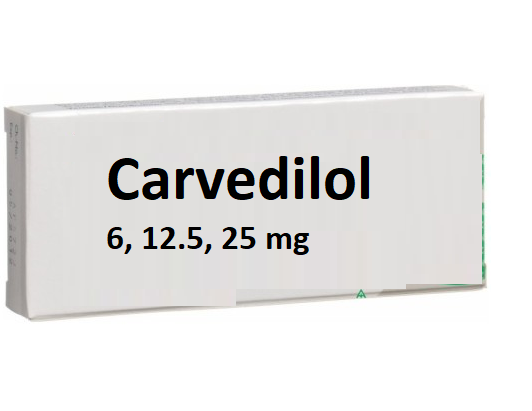
Carvedilol is a non-selective beta blocker without a sympathomimetic activity. It is one of the three beta-blockers that have been proven to reduce cardiovascular mortality in patients with heart failure.
The only beta-blockers that have been proven to reduce mortality include bisoprolol, carvedilol, or extended-release metoprolol succinate
It is recommended for the treatment of the following conditions:
- Mild to severe chronic Heart failure with a reduced ejection fraction because of an ischemic or cardiomyopathic cause.
- Treatment of Hypertension (although not a first-line of therapy)
- Left ventricular dysfunction following myocardial infarction in clinically stable patients
Off Label Uses of Carvedilol in Adults include:
- Acute myocardial infarction
- Atrial fibrillation
- Chronic stable angina
- For the prophylaxis of Gastroesophageal variceal hemorrhage in patients with cirrhosis
- Ventricular arrhythmias
Carvedilol Dose in Adults
Reduce dosage if the heart rate drops to less than 55 beats/minute.
Use as an alternative agent in the treatment of Hypertension:
- Immediate-release tablets:
- 6.25 mg two times a day. Titrate the dose every 1 to 2 weeks as needed up to a maximum of 25 mg two times a day.
- Extended-release tablets:
- 20 mg once a day. The dose should be titrated at one or two weeks intervals based on the patients' response to a maximum dose of 80 mg once a day.
- 20 mg once a day. The dose should be titrated at one or two weeks intervals based on the patients' response to a maximum dose of 80 mg once a day.
Use in the treatment of Heart failure with reduced ejection fraction:
It should be used with caution in patients with NYHA class IV heart failure. Before initiating therapy, patients should be off inotropic support, intravenous diuretics and vasodilators.
- Immediate- release formulations:
- 3.125 mg two times a day for 2 weeks. increase the dose to 6.25 mg two times a day after 2 weeks if the patient is tolerating it.
- The dose may further be increased every 2 weekly to the maximum tolerated dose.
- The Maximum recommended dose is:
- Patients weighing less than 85 kgs: 25 mg two times a day
- Patients weighing more than 85 kgs: 50 mg two times a day
- Extended-release formulation:
- 10 mg once a day for 2 weeks. Titrate the dose upwards at 2 weekly intervals to 20 mg, 40 mg, and 80 mg to the maximum tolerated dose.
- The maximum dose is 80 mg/day.
Use in treatment of Left ventricular dysfunction after a Myocardial infarction:
It should be initiated in patients who are hemodynamically stable
- Immediate- release:
- 3.125 - 6.25 mg two times a day. Increase the dose incrementally to 12.5 mg two times a day at 3 - 10 days interval based on the patients' tolerance, to a target dose of 25 mg two times a day.
- The AHA recommends a maximum dose of 50 mg two times a day
- Extended-release:
- 10 - 20 mg once a day. Increase the dose incrementally at 3 to 10 days intervals based on tolerance to a target dose of 80 mg once a day.
- 10 - 20 mg once a day. Increase the dose incrementally at 3 to 10 days intervals based on tolerance to a target dose of 80 mg once a day.
Off-label use in the treatment of Angina pectoris:
- Immediate-release:
- 25 to 50 mg two times a day
- 25 to 50 mg two times a day
Off-label use in the treatment of rate control Atrial fibrillation:
- Usual maintenance dose:
- 3.125 to 25 mg two times a day. The dose may be increased to a target dose of 25 mg twice daily at two weeks interval (or 50 mg twice daily in patients weighing more than 85 Kgs) in patients with heart failure.
- 3.125 to 25 mg two times a day. The dose may be increased to a target dose of 25 mg twice daily at two weeks interval (or 50 mg twice daily in patients weighing more than 85 Kgs) in patients with heart failure.
Off-label use as an alternative agent in the prophylactic treatment of Gastroesophageal variceal hemorrhage in patients with cirrhosis :
-
- 3.125 mg two times a day or 6.25 mg once a day to achieve a resting heart rate of 55 to 60 bpm (if heart rate used for titration).
- The dose may be increased after 3 to 7 days to a maximum dose of 6.25 mg two times a day or 12.5 mg once a day.
- Patients with recurrent variceal hemorrhage and those with refractory ascites should not exceed doses greater than 12.5 mg/day.
Off label use in the treatment of Ventricular arrhythmias:
- Immediate release:
- 3.125 to 25 mg two times a day
- 3.125 to 25 mg two times a day
- Conversion from immediate-release to extended-release (Coreg CR) tablets:
- 3.125 mg immediate-release tablets two times a day: Convert to 10 mg extended-release capsules once a day
- 6.25 mg immediate-release tablets two times a day: Convert to 20 mg extended-release capsules once a day.
- 12.5 mg immediate-release tablets two times a day: Convert to 40 mg extended-release capsules once a day.
- 25 mg immediate-release tablets two times a day: Convert to 80 mg extended-release capsules once a day.
Carvedilol Dose in children:
Note: Immediate-release and extended-release products are not interchangeable on an mg:mg basis
Use in the treatment of Heart failure:
- Infants, Children, and Adolescents less than 17 years of age:
- Immediate-release tablets:
- 0.075-0.08 mg/kg/dose twice a day. Titrate the dose at two weeks intervals by 50% to the usual target dose of 0.3-0.75 mg/kg/dose twice a day
- The maximum daily dose is 50 mg/day.
- Immediate-release tablets:
- Adolescents 18 years of age or older:
- Immediate-release tablets:
- 3.125 mg twice a day for 2 weeks. Titrate the dose at 2 weeks intervals to the highest recommended dose
- The Maximum recommended dose:
- Mild to moderate heart failure:
- Less than 85 kg: 25 mg twice a day
- More than 85 kg: 50 mg twice a day
- Severe heart failure:
- 25 mg twice a day
- Mild to moderate heart failure:
- Extended-release capsules:
- 10 mg once a day for 2 weeks. Double the dose at two weeks intervals (eg, 20 mg, 40 mg) to a maximum dose of 80 mg once a day.
- 10 mg once a day for 2 weeks. Double the dose at two weeks intervals (eg, 20 mg, 40 mg) to a maximum dose of 80 mg once a day.
- Immediate-release tablets:
Carvedilol dose in Hypertension:
- Adolescents 18 years of age or older:
- Immediate-release tablets:
- 6.25 mg twice a day to a maximum daily dose of 50 mg/day. (Titrate the dose at two weeks intervals by 50%)
- Extended-release capsules:
- 20 mg once a day to a maximum daily dose of 80 mg/day. Titrate the dose to 40 mg once a day at 2 weeks intervals.
- 20 mg once a day to a maximum daily dose of 80 mg/day. Titrate the dose to 40 mg once a day at 2 weeks intervals.
- Immediate-release tablets:
Use in treatment of Left ventricular dysfunction following Myocardial Infarction:
- Adolescents older than18 years:
Note: Initiate therapy only after the patient is hemodynamically stable and fluid retention has been minimized.
-
- Immediate-release tablets:
- 3.125-6.25 mg twice a day to a target dose of 25 mg twice a day ( The dose should be increased at 3 - 10 days intervals if tolerated.
- Extended-release capsules:
- 10-20 mg once a day. Increase the dose incrementally at 3 - 10 days intervals to a target dose of 80 mg once a day.
- 10-20 mg once a day. Increase the dose incrementally at 3 - 10 days intervals to a target dose of 80 mg once a day.
- Immediate-release tablets:
Conversion from immediate-release to extended-release (Coreg CR) tablets:
- Adolescents older than18 years:
- Immediate-release tablets 3.125 mg twice a day: Convert to extended-release capsules 10 mg once a day
- Immediate-release tablets 6.25 mg twice a day: Convert to extended-release capsules 20 mg once a day
- Immediate-release tablets 12.5 mg twice a day: Convert to extended-release capsules 40 mg once a day
- Immediate-release tablets 25 mg twice a day: Convert to extended-release capsules 80 mg once a day
Pregnancy Risk Factor C
- Although beta-blockers can be used to treat hypertension or heart failure during pregnancy, it is better to use drugs that are not beta-blockers.
- There have been adverse effects observed in animal studies. These include hypoglycemia and fetal/neonatal bradycardia.
Carvedilol use during breastfeeding:
- It is unknown whether carvedilol can be found in breastmilk. The benefits of breastfeeding should be balanced against the risk of adverse neonatal outcomes such as bradycardia.
- Patients with heart disease should not breastfeed because of the demands.
Carvedilol Dose in Renal:
Dose adjustment has not been recommended by the manufacturer. It is not cleared via hemodialysis.
Carvedilol Dose in liver disease:
Carvedilol is not recommended in patients with advanced decompensated liver disease. It is, however, frequently used in patients with mild to moderate hepatic impairment and portal hypertension.
Common Side Effects Of Carvedilol Include:
- Cardiovascular:
- Hypotension
- Orthostatic hypotension
- Central nervous system:
- Dizziness
- Fatigue
- Endocrine & metabolic:
- Weight gain
- Hyperglycemia
- Gastrointestinal:
- Diarrhea
- Neuromuscular & skeletal:
- Asthenia
Less Common Side Effects Of Carvedilol Include:
- Cardiovascular:
- Bradycardia
- Syncope
- Peripheral edema
- Angina pectoris
- Edema
- Atrioventricular block
- Cerebrovascular accident
- Exacerbation of angina pectoris
- Hypertension
- Lower extremity edema
- Palpitations
- Peripheral vascular disease
- Peripheral ischemia
- Tachycardia
- Central nervous system:
- Headache
- Depression
- Drowsiness
- Hypoesthesia
- Hypotonia
- Malaise
- Vertigo
- Paresthesia
- Insomnia
- Abnormality in thinking
- Emotional lability
- Exacerbation of depression
- Lack of concentration
- Nervousness
- Nightmares
- Sleep disorder
- Dermatologic:
- Diaphoresis
- Erythematous rash
- Maculopapular rash
- Pruritus
- Psoriasiform eruption
- Skin photosensitivity
- Endocrine & metabolic:
- Increased nonprotein nitrogen
- Dependent edema
- Hypercholesterolemia
- Albuminuria
- Diabetes mellitus
- Glycosuria
- Gout
- Hyperkalemia
- Hyperuricemia
- Hypervolemia
- Hypoglycemia
- Hyponatremia
- Hypovolemia
- Impotence
- Increased gamma-glutamyltransferase
- Weight loss
- Decreased libido
- Hypertriglyceridemia
- Hypokalemia
- Gastrointestinal:
- Nausea
- Vomiting
- Melena
- Periodontitis
- Gastrointestinal pain
- Xerostomia
- Genitourinary:
- Hematuria
- Urinary frequency
- Hematologic & oncologic:
- Hypoprothrombinemia
- Nonthrombocytopenic purpura
- Thrombocytopenia
- Leukopenia
- Hepatic:
- Increased serum alanine aminotransferase
- Increased serum alkaline phosphatase
- Increased serum aspartate aminotransferase
- Hyperbilirubinemia
- Increased liver enzyme
- Hypersensitivity:
- Hypersensitivity reaction
- Neuromuscular & skeletal:
- Arthralgia
- Arthritis
- Muscle cramps
- Hypokinesia
- Ophthalmic:
- Visual disturbance
- Blurred vision
- Otic:
- Tinnitus
- Renal:
- Increased blood urea nitrogen
- Increased serum creatinine
- Renal insufficiency
- Respiratory:
- Increased cough
- Nasopharyngitis
- Rales
- Dyspnea
- Flu-like symptoms
- Nasal congestion
- Paranasal sinus congestion
- Asthma
- Miscellaneous:
- Fever
Contraindication to Carvedilol include:
- Severe allergic reactions to carvedilol and any component of the formulations
- Inotropic support and intravenous vasopressors are required for decompensated cardiac failure
- Allergy bronchial asthma
- Second- or third-degree block of AV,
- Sinusitis, and
- Bradycardia severe
- Cardiogenic shock
- Advanced liver impairment
- Hypotension severe
- Primary obstructive valve heart disease
- Patients suffering from severe Alzheimer disease, addiction, or drug abuse should be closely monitored.
Warnings and Precautions
- Anaphylactic reactions
- Patients with a known allergy to beta-blockers should not use it.
- Patients with a hypersensitivity reaction to medicine should be told to discontinue use and be treated accordingly.
- Furthermore, epinephrine may not be effective in patients with an allergic reaction to a beta-blocker.
- Bradycardia
- If the heart rate falls below 55 beats per hour, you should reduce the dose.
- Floppy iris syndrome:
- Patients who have had cataract surgery may be affected by intraoperative floppy-iris syndrome.
- Hypotension and syncope:
- Symptomatic hypotension can occur after carvedilol is administered for the first 30 days.
- To avoid side effects such as syncopal attacks or symptomatic hypotension, increase the dose slowly.
- Angina
- Prinzmetal variant of angina patients should be avoided.
- Asthma, and other bronchospastic conditions:
- Beta-blockers should not be prescribed to patients with asthma or any other disorder that affects the reactive airways.
- Diabetes:
- It can increase hypoglycemia, mask its clinical symptoms like anxiety, sweating, and tachycardia.
- Hypoglycemia can be a major problem for diabetic patients who have been on beta-blockers or carvedilol since their heart failure.
- Heart failure:
- Patients with heart disease who take beta-blockers are at greater risk of developing kidney dysfunction, especially if they have diffuse atherosclerotic diseases and a systolic pressure of less 100 mmHg.
- You should start it at a lower dose, and gradually increase the dosage over 2 to 3 weeks.
- Beta-blockers can temporarily be stopped if there is renal dysfunction
- Hepatic impairment
- It should not be used in cases of severe liver disease.
- Myasthenia gravis:
- Patients with myasthenia Gravis should use it with caution.
- Peripheral Vascular Disease (PVD).
- Patients with peripheral arterial disease should use caution.
- Pheochromocytoma:
- Beta-blockers should be prescribed to patients with pheochromocytoma after taking alpha-blockers.
- Psoriasis:
- It can worsen the symptoms of psoriasis.
- Thyroid disease:
- It can mask hyperthyroidism symptoms. Patients with hyperthyroidism may experience a thyroid storm or crisis if they stop taking beta-blockers abruptly.
Carvedilol: Drug Interaction
Note: Drug Interaction Categories:
- Risk Factor C: Monitor When Using Combination
- Risk Factor D: Consider Treatment Modification
- Risk Factor X: Avoid Concomitant Use
Risk Factor C (Monitor therapy). |
|
| Acetylcholinesterase inhibitors | Beta-Blockers may increase the bradycardic effects. |
| Ajmaline | High risk of Inhibitors increasing serum concentrations of CYP2D6 Substrates |
| Alfuzosin | Might increase the hypotensive effects of Blood Pressure Lowering Agents. |
| Alpha1-Blockers | Beta-Blockers can increase the orthostatic hypotensive effects of Alpha1Blockers. Ophthalmic products are less likely to be a risk than systemic ones. |
| Aminoquinolines (Antimalarial) | May reduce the metabolism of Beta-Blockers. |
| Amiodarone | Beta-Blockers may increase bradycardic effects. Possible to cause cardiac arrest. Amiodarone could increase serum Beta-Blockers. |
| Amphetamines | May decrease the antihypertensive effects of Antihypertensive Drugs. |
| Antipsychotic Agents (Phenothiazines) | Beta-Blockers may increase hypotensive effects. Beta-Blockers can decrease the metabolism Antipsychotic Agents (Phenothiazines). The metabolism of Beta-Blockers may be affected by Antipsychotic Agents (Phenothiazines). |
| Antipsychotic Agents, Second Generation (Atypical) | Blood Pressure Lowering Agents can increase the hypotensive effects of Antipsychotic Agents (Second Gen [Atypical]). |
| Barbiturates | May lower the serum level of Beta-Blockers. |
| Barbiturates | Might increase the hypotensive effects of Blood Pressure Lowering Agents. |
| Benperidol | Might increase the hypotensive effects of Blood Pressure Lowering Agents. |
| Bradycardia-Causing Agents | May increase the bradycardic effects of Bradycardia-Causing agents. |
| Brentuximab Vedotin | Brentuximab Vedotin may be increased by P-glycoprotein/ABCB1 inhibitors. Concentrations of the monomethyl auristatin E component (MMAE) may increase. |
| Bretylium | May increase the bradycardic effects of Bradycardia Causing Agents. Patients receiving AV blocking drugs may experience a reduction in AV blockade due to Bretylium. |
| Brigatinib | May decrease the antihypertensive effects of Antihypertensive Drugs. Brigatinib could increase the bradycardic effects of Antihypertensive Drugs. |
| Brimonidine (Topical) | Might increase the hypotensive effects of Blood Pressure Lowering Agents. |
| Bupivacaine | Beta-Blockers can increase serum Bupivacaine concentrations. |
| Calcium Channel Blockers (Nondihydropyridine) | BetaBlockers may increase the hypotensive effects. Also, signs of heart disease and Bradycardia have been reported. Calcium Channel Blockers (Nondihydropyridine), may increase serum Beta-Blockers. Exceptions: Bepridil. |
| Cardiac Glycosides | Beta-Blockers can increase the bradycardic effects of Cardiac Glycosides. |
| Celiprolol | The serum concentration of Celiprolol may be increased by P-glycoprotein/ABCB1 inhibitors |
| Cholinergic Agonists | Beta-Blockers could increase the toxic/adverse effects of Cholinergic Agonists. Particular concerns are the possibility of cardiac conduction abnormalities or bronchoconstriction. Administration: Use these agents with caution and monitor for conduction problems. Due to the possibility of additive bronchoconstriction, avoid methacholine and any beta-blocker. |
| Cimetidine | May increase serum Carvedilol concentration. |
| CloBAZam | High risk of Inhibitors increasing serum concentrations of CYP2D6 Substrates |
| Cobicistat | High risk of Inhibitors increasing serum concentrations of CYP2D6 Substrates |
| Moderate CYP2C9 Inhibitors | Increased serum Carvedilol concentrations may occur. Particularly, the concentrations of S-carvedilol may increase. |
| Moderate CYP2D6 inhibitors | Might decrease metabolism of CYP2D6 substrates (High Risk with Inhibitors). |
| Darunavir | High risk of Inhibitors increasing serum concentrations of CYP2D6 Substrates |
| Dexmethylphenidate | Antihypertensive agents may have a less therapeutic effect. |
| Diazoxide | Might increase the hypotensive effects of Blood Pressure Lowering Agents. |
| Digoxin | Carvedilol may increase the bradycardic effects. Digoxin serum concentration may be increased by Carvedilol |
| Dipyridamole | Beta-Blockers may increase the bradycardic effects. |
| Disopyramide | Beta-Blockers may increase the bradycardic effects. Disopyramide may have a negative inotropic effect that Beta-Blockers can enhance. |
| DULoxetine | DULoxetine may increase hypotensive effects by lowering blood pressure. |
| EPINEPHrine (Nasal) | Beta-Blockers (with Alpha Blocking Properties) can decrease the therapeutic effects of EPINEPHrine. |
| EPINEPHrine (Oral Inhalation) | Beta-Blockers with Alpha-Blocking Properties may reduce the therapeutic effects of EPINEPHrine, Oral Inhalation. |
| Epinephrine (Racemic) | Beta-Blockers (with Alpha Blocking Properties) can reduce the therapeutic effects of Epinephrine. |
| EPINEPHrine Systemic | Beta-Blockers (with Alpha Blocking Properties) can reduce the therapeutic effects of EPINEPHrine Systemic. |
| Erdafitinib | Increased serum concentrations of P-glycoprotein/ABCB1 Substrates may be possible. |
| Everolimus | Everolimus serum concentration may be increased by P-glycoprotein/ABCB1 inhibitors |
| Herbs (Hypertensive Properties) | May decrease the antihypertensive effects of Antihypertensive Drugs. |
| Herbs (Hypotensive properties) | Might increase the hypotensive effects of Blood Pressure Lowering Agents. |
| Hypotension-Associated Agents | Blood Pressure Lowering Agents may enhance the hypotensive effect of Hypotension-Associated Agents. |
| Imatinib | High risk of Inhibitors increasing serum concentrations of CYP2D6 Substrates |
| Insulins | Beta-Blockers can increase the hypoglycemic effects of Insulins. |
| Ivabradine | Bradycardia-Causing agents may increase the bradycardic effects of Ivabradine. |
| Lacosamide | Bradycardia-Causing Agents can increase the AV-blocking effects of Lacosamide. |
| Larotrectinib | The serum concentration of Larotrectinib may be increased by P-glycoprotein/ABCB1 inhibitors |
| Levodopa-Containing Products | Blood Pressure Lowering Agents can increase the hypotensive effects of Levodopa -Containing Products. |
| Lidocaine (Systemic) | Beta-Blockers can increase serum levels of Lidocaine (Systemic). |
| Lidocaine (Topical) | Beta-Blockers can increase serum Lidocaine (Topical) concentrations |
| Lormetazepam | Might increase the hypotensive effects of Blood Pressure Lowering Agents. |
| Lumacaftor | May lower the serum concentrations of P-glycoprotein/ABCB1 Substrates. Lumacaftor could increase serum levels of P-glycoprotein/ABCB1 Substrates. |
| Lumefantrine | High risk of Inhibitors increasing serum concentrations of CYP2D6 Substrates |
| Mepivacaine | Beta-Blockers can increase serum levels of Mepivacaine. |
| Methoxyflurane | May increase the hypotensive effects of Beta-Blockers. |
| Methylphenidate | May decrease the antihypertensive effects of Antihypertensive Drugs. |
| Midodrine | May increase the bradycardic effects of Bradycardia Causing Agents. |
| Molsidomine | Might increase the hypotensive effects of Blood Pressure Lowering Agents. |
| Naftopidil | Might increase the hypotensive effects of Blood Pressure Lowering Agents. |
| Naldemedine | The serum concentrations of Naldemedine may be increased by P-glycoprotein/ABCB1 inhibitors. |
| Naloxegol | The serum concentrations of Naloxegol may be increased by P-glycoprotein/ABCB1 inhibitors. |
| NiCARdipine | Carvedilol may increase the hypotensive effects. NiCARdipine can cause heart failure in patients who are taking Carvedilol NiCARdipine could increase serum Carvedilol concentrations. |
| Nicergoline | Might increase the hypotensive effects of Blood Pressure Lowering Agents. |
| Nicorandil | Might increase the hypotensive effects of Blood Pressure Lowering Agents. |
| NIFEdipine | May increase the hypotensive effects of Beta-Blockers. NIFEdipine could increase the negative inotropic effects of Beta-Blockers. |
| Nitroprusside | The hypotensive effects of Nitroprusside may be enhanced by blood pressure lowering agents. |
| Nonsteroidal Anti-Inflammatory Drugs | BetaBlockers may have a lower antihypertensive impact. |
| Opioids (Anilidopiperidine) | Beta-Blockers may increase the bradycardic effects. Anilidopiperidine and other opioids may increase the hypotensive effects of Beta-Blockers. |
| Panobinostat | High risk of Inhibitors increasing serum concentrations of CYP2D6 Substrates |
| Peginterferon Alfa-2b | High risk with inhibitors. May lower serum concentration of CYP2D6 substrates. Peginterferon Alf-2b could increase serum concentrations of CYP2D6 Substrates. |
| Pentoxifylline | Might increase the hypotensive effects of Blood Pressure Lowering Agents. |
| Perhexiline | Perhexiline may be increased by CYP2D6 Substrates. Perhexiline can increase serum concentrations of CYP2D6 substrates (High Risk with Inhibitors). |
| P-glycoprotein/ABCB1 Inducers | The serum concentrations of Pglycoprotein/ABCB1 Substrates may be decreased. Inducers of pglycoprotein may limit the distribution to certain cells/tissues/organs in which p-glycoprotein exists in high amounts (e.g. brain, T-lymphocytes and testes). . |
| P-glycoprotein/ABCB1 Inhibitors | Increases serum concentration of Pglycoprotein/ABCB1 substrates. P-glycoprotein inhibitors can also increase the distribution of pglycoprotein substrates to certain cells/tissues/organs in which p-glycoprotein exists in high amounts (e.g. brain, T-lymphocytes and testes). . |
| P-glycoprotein/ABCB1 Substrates | P-glycoprotein/ABCB1 inhibitors may increase serum levels of P-glycoprotein/ABCB1 Substrates. P-glycoprotein inhibitors can also increase the distribution of pglycoprotein substrates in specific cells/tissues/organs that have high levels (e.g. brain, T-lymphocytes and testes). Exceptions: Loperamide. |
| Pholcodine | Pholcodine may increase hypotension by lowering blood pressure. |
| Phosphodiesterase 5 Inhibitors | Might increase the hypotensive effects of Blood Pressure Lowering Agents. |
| Propafenone | May increase serum Beta-Blockers. Propafenone has some beta-blocking activity on its own. |
| Prostacyclin Analogues | Might increase the hypotensive effects of Blood Pressure Lowering Agents. |
| Prucalopride | The serum concentrations of Prucalopride may be increased by P-glycoprotein/ABCB1 inhibitors. |
| Quinagolide | Might increase the hypotensive effects of Blood Pressure Lowering Agents. |
| QuiNINE | High risk of Inhibitors increasing serum concentrations of CYP2D6 Substrates |
| Ranolazine | Ranolazine may be increased by P-glycoprotein/ABCB1 inhibitors. |
| Ranolazine | Increased serum concentrations of P-glycoprotein/ABCB1 Substrates may be possible. |
| Regorafenib | Beta-Blockers may increase the bradycardic effects. |
| Reserpine | May increase the hypotensive effects of Beta-Blockers. |
| Rifamycin Derivatives | Could lower the serum level of Beta-Blockers. Rifabutin is an exception. |
| RifAXIMin | The serum concentrations of RifAXIMin may be increased by P-glycoprotein/ABCB1 inhibitors |
| Ruxolitinib | May increase the bradycardic effects of Bradycardia-Causing Agents. Management: Ruxolitinib Canadian product labels recommend that bradycardia-causing agent be avoided to the greatest extent possible. |
| Selective Serotonin Reuptake inhibitors | May increase serum Beta-Blockers concentrations. Exceptions: Citalopram; Escitalopram; FluvoxaMINE. |
| Silodosin | The serum concentrations of Silodosin may be increased by P-glycoprotein/ABCB1 inhibitors. |
| Sulfonylureas | Beta-Blockers can increase the hypoglycemic effects of sulfonylureas. Nonselective beta blockers may be more dangerous than cardioselective betablockers. As an initial sign of hypoglycemia, all beta-blockers seem to be able to mask tachycardia. Ophthalmic beta blockers are likely to be associated with a lower risk than systemic drugs. |
| Terlipressin | May increase the bradycardic effects of Bradycardia Causing Agents. |
| Tofacitinib | May increase the bradycardic effects of Bradycardia Causing Agents. |
| Yohimbine | May decrease the antihypertensive effects of Antihypertensive Drugs. |
Risk Factor D (Consider therapy modifications) |
|
| Abiraterone Acetate | High risk of Inhibitors causing an increase in serum concentrations of CYP2D6 substrates. When possible, avoid concurrent use of abiraterone and CYP2D6 Substrates with a narrow therapeutic index. If concurrent use cannot be avoided, closely monitor patients for signs/symptoms and treatment. |
| Afatinib | The serum concentrations of Afatinib may be increased by P-glycoprotein/ABCB1 inhibitors. If afatinib is not tolerated, reduce the dose by 10 mg. Canadian labeling states that it is best to avoid any combination of drugs. If you must use the P-gp inhibitor, do so simultaneously with or after afatinib. |
| Alpha2-Agonists | Beta-Blockers may have an AV-blocking effect that is greater. It is possible to increase the risk of sinus node dysfunction. Beta-Blockers can increase the rebound hypertensive effect Alpha2Agonists. This can happen if the Alpha2-Agonist abruptly withdraws. Treatment: Monitor your heart rate closely while you are taking clonidine and beta blockers. When possible, stop taking beta blockers a few days before you begin clonidine withdrawal. Also, monitor your blood pressure carefully. Other alpha2-agonists will not be recommended. Exceptions: Apraclonidine. |
| Amifostine | Amifostine's hypotensive effects may be enhanced by blood pressure lowering agents. Treatment: Blood pressure lowering drugs should be stopped 24 hours before amifostine administration. Amifostine should be avoided if blood pressure lowering medication cannot be withheld. |
| Asunaprevir | High risk of Inhibitors increasing serum concentrations of CYP2D6 Substrates |
| Betrixaban | The serum concentration of Betrixaban may be increased by P-glycoprotein/ABCB1 inhibitors. Management: Reduce the initial dose of betrixaban to 80 mg, followed by 40 mg daily if taken with a Pglycoprotein inhibitor. |
| Bilastine | Bilastine may be increased by P-glycoprotein/ABCB1 inhibitors. Patients with severe or moderate renal impairment who are on p-glycoprotein inhibitors should consider other options. |
| Ceritinib | Bradycardia-Causing agents may increase Ceritinib's bradycardic effects. Management: If the combination is not possible, monitor patients for signs of bradycardia and closely track blood pressure and heart beat during therapy. Separate monographs will discuss exceptions. |
| Colchicine | The serum Colchicine concentration may be increased by P-glycoprotein/ABCB1 inhibitors. The distribution of Colchicine into specific tissues, such as the brain, may be increased. Patients with impaired renal and hepatic function, who are also taking a p–glycoprotein inhibitor, should not be given colchicine. Reduce the dose of colchicine for those with normal renal or hepatic function. See full monograph for details. |
| CycloSPORINE Systemic | Carvedilol could increase the serum level of CycloSPORINE Systemic |
| Strong CYP2D6 inhibitors | Might decrease metabolism of CYP2D6 substrates (High Risk with Inhibitors). |
| Dabigatran Etexilate | The serum concentrations may be increased by P-glycoprotein/ABCB1 inhibitors. Treatment: Dabigatran dosage reductions may be necessary. Particular recommendations can vary depending on the labeling of the US and Canada, specific Pgp inhibitors, renal function, indications for dabigatran therapy, and other factors. Refer to the full monograph and dabigatran labeling. |
| Dacomitinib | High risk of Inhibitors causing an increase in serum concentrations of CYP2D6 substrates. Management: Do not use dacomitinib concurrently with CYP2D6 Substrates that have a narrow therapeutic Index. |
| DOXOrubicin (Conventional) | P-glycoprotein/ABCB1 inhibitors may increase serum levels of DOXOrubicin (Conventional). Treatment: If you are treated with doxorubicin, consider alternative P-glycoprotein inhibitors. These combinations should be avoided according to one U.S. manufacturer, Pfizer Inc. |
| Dronedarone | Beta-Blockers may increase bradycardic effects. Dronedarone could increase Beta-Blockers' serum levels. This is likely to be true only for agents that are metabolized via CYP2D6. Management: Lower initial beta-blocker doses are recommended. ECG findings should confirm that the patient is able to tolerate the combination. |
| Edoxaban | The serum concentrations of Edoxaban may be increased by P-glycoprotein/ABCB1 inhibitors. Management: See full monograph for details. Patients receiving edoxaban to treat venous embolism are advised to take lower doses when taking it with P-gp inhibitors. For patients with atrial fibrillation, edoxaban should not be adjusted in the same way. |
| Ergot Derivatives | Beta-Blockers can increase the vasoconstricting effects of Ergot Derivatives. Nicergoline is an exception. |
| Fingolimod | Fingolimod may increase the bradycardic effects of beta-blockers. If possible, avoid the use of beta-blockers and fingolimod together. Patients who require coadministration should be monitored for ECG changes overnight. Patients should be monitored for bradycardia. |
| Grass Pollen Allergen Extract (5 Grass Extract) | Beta-Blockers could increase the toxic/adverse effect of Grass Pollen Extract (5 Grass) Beta-Blockers can also inhibit the effectiveness of epinephrine to treat severe allergic reactions to Grass Pollen Allergen Extract (5 Grass Extract). Other effects of epinephrine might not be affected or even increased by Beta-Blockers. |
| Obinutuzumab | This may increase the hypotensive effects of Blood Pressure Lowering Agents. Management: You may temporarily withhold blood pressure lowering medication beginning 12 hours before obinutuzumab injection and continuing for 1 hour after infusion. |
| Siponimod | Bradycardia-Causing Drugs can increase Siponimod's bradycardic effects. Management: Siponimod should not be taken with bradycardia-causing drugs. |
| Talazoparib | Carvedilol can increase serum Talazoparib concentrations. Management: Reduce the daily dose of talazoparib to 0.75 mg if concurrent use is impossible. Increase the talazoparib dosage to the same level as before you started carvedilol. |
| Theophylline Derivatives | Beta-Blockers (Nonselective), may decrease the bronchodilatory effects of Theophylline Derivates. |
| Venetoclax | Venetoclax may be increased by P-glycoprotein/ABCB1 inhibitors. Treatment: Patients who are concomitantly treated with P-glycoprotein inhibitors (P-gp), should consider a venetoclax dose decrease of at least 50%. |
Risk Factor X (Avoid Combination) |
|
| Beta2-Agonists | Beta-Blockers (Nonselective), may decrease the bronchodilatory effects of Beta2Agonists. |
| Bromperidol | Bromperidol's hypotensive effects may be enhanced by Blood Pressure Lowering agents. Bromperidol could decrease the hypotensive effects of Blood Pressure Lowering agents. |
| Floctafenine | Beta-Blockers may have an adverse/toxic effect that can be increased. |
| Methacholine | Beta-Blockers can increase the toxic/adverse effects of Methacholine. |
| PAZOPanib | P-glycoprotein/ABCB1 inhibitors may increase serum levels of PAZOPanib. |
| Rivastigmine | Beta-Blockers may increase the bradycardic effects. |
| Topotecan | Topotecan serum concentrations may be increased by P-glycoprotein/ABCB1 inhibitors |
| VinCRIStine (Liposomal) | The serum VinCRIStine (Liposomal) concentration may be increased by P-glycoprotein/ABCB1 inhibitors |
Monitoring parameters:
Monitor the following parameters while on carvedilol treatment:
- Heart rate
- Blood pressure (Target blood pressure should be less than 130/80)
- Renal functions
- Liver functions
- Plasma glucose in diabetics.
How to take Carvedilol?
- It may be administered with food to minimize the risks of syncope and orthostatic hypotension.
- Extended-release capsules should not be crushed, chewed, or divided.
- They may be opened and the contents sprinkled on applesauce for immediate use.
Mechanism of action of Carvedilol:
- Carvedilol, a non-selective Beta & Alpha receptor blocking drug, is also known as Carvedilol.
- It has no sympathomimetic activity. It decreases cardiac output, exercise-induced,
- Beta-agonist-induced tachycardia, as well as reflex orthostatic. It causes vasodilation and decreases peripheral blood vascular resistance.
- It also lowers the pulmonary capillary pressure and pulmonary arterial pressure in patients with congestive heart failure.
Carvedilol's antihypertensive effects can be seenWithin 30 minutes, the maximum is reached in one to two hoursBeta-blockade is given within one hour of being administered. It isRapidly absorbedIt is then subject to the first pass metabolism. The blood levels of patients with advanced liver disease or the elderly are 50% higher and 4-7 times higher, respectively. When taken with meals, absorption can be delayed.
It is easily available and 98% are in stock. protein-bound.It isMetabolizedIt is converted (98%) into three active metabolites by the liver. It is abioavailabilityThe range is between 25% and 35%. Patients with heart disease and patients who have consumed fatty meals increase bioavailability. The half-life elimination ranges from 2 to 5 hours. The Time to reach peak plasma concentration of the extended-release tablets is about 5 hours. It is excreted primarily via the feces.
International brands of Carvedilol:
- APO-Carvedilol
- Auro-Carvedilol
- DOM-Carvedilol
- JAMP-Carvedilol
- MYLAN-Carvedilol
- NOVO-Carvedilol
- NU-Carvedilol
- PMS-Carvedilol
- RAN-Carvedilol
- TEVA-Carvedilol
- Alvelol
- Arlec
- Artist
- Avernol
- Avidol
- Betacard
- Betaplex
- Bloquedil
- Blorec
- Cadil
- Caraca-12.5
- Caraten
- Carbloxal
- Carca-3
- Carca-6
- Cardilol
- Cardine
- Cardiol
- Cardipres
- Cardivas
- Cardoz
- Cargen
- Carloc
- Carlov
- Carsantin
- Carved
- Carvedexxon
- Carvedil
- Carvediteg
- Carvelmed
- Carvelol
- Carvena
- Carvepen
- Carveta
- Carvid
- Carvidex
- Carvidil
- Carviditeg
- Carvidol
- Carvil
- Carvilar
- Carvo
- Cavel
- Coreg
- Coronis
- Coropres
- Corubin
- Coryol
- Dicarz
- Dilabloc
- Dilapress
- Dilatrend
- Dilatrend SR
- Dilbloc
- Dilgard
- Dimitone
- Duobloc
- Epicarve
- Gladycor
- Glovedol
- Ictus
- Karter
- Karvedil
- Karvex
- Kredex
- Longcardio
- Normotride
- Querto
- Scodilol
- Syntrend
- Talliton
- Udilol
- V-Bloc
- Vasodilren
- Vedilol
- Volirop
- Xetin
- Ziclar
Cavedilol Brands in Pakistan:
|
Carvedilol [Tabs 12 mg] |
|
| ARVEDA | PHARMAFIVE (PVT) LTD |
|
Carvedilol [Tabs 25 mg] |
|
| CADILOL | ALLIANCE PHARMACEUTICALS (PVT) LTD. |
| CARLOV | HILTON PHARMA (PVT) LIMITED |
| CARPRO | NABIQASIM INDUSTRIES (PVT) LTD. |
| CARVEDA | FEROZSONS LABORATOIES LTD. |
| CARVILOL | STANDPHARM PAKISTAN (PVT) LTD. |
| CAVIDOL | INDUS PHARMA (PVT) LTD. |
| CEZAR | AMBROSIA PHARMACEUTICALS |
| CUORE | WEBROS PHARMACEUTICALS |
| CURALOV | Curatech Pharma (Pvt) Ltd |
| DELAWARE | EFROZE CHEMICAL INDUSTRIES (PVT) LTD. |
| DILATREND | ROCHE PAKISTAN LTD. |
| DIMITONE | ROCHE PAKISTAN LTD. |
| HART | MACTER INTERNATIONAL (PVT) LTD. |
| HIDILOL | HELIX PHARMA (PRIVATE) LIMITED |
| NORMIDILOL | NABIQASIM INDUSTRIES (PVT) LTD. |
| TACAR | BRYON PHARMACEUTICALS (PVT) LTD. |
| VADIL | TABROS PHARMA |
| VASOCARE | HEAL PHARMACEUTICALS PVT LTD |
| VEDICAR | BARRETT HODGSON PAKISTAN (PVT) LTD. |
|
Carvedilol [Tabs 12.5 mg] |
|
| ARVEDA | PHARMAFIVE (PVT) LTD |
| CARLOV | HILTON PHARMA (PVT) LIMITED |
| CARPRO | NABIQASIM INDUSTRIES (PVT) LTD. |
| CARVEDA | FEROZSONS LABORATOIES LTD. |
| CARVOLOC | CARAWAY PHARMACEUTICALS |
| CAVIDOL | INDUS PHARMA (PVT) LTD. |
| CAVIDOL | INDUS PHARMA (PVT) LTD. |
| CUORE | WEBROS PHARMACEUTICALS |
| CUORE | WEBROS PHARMACEUTICALS |
| CUORE | WEBROS PHARMACEUTICALS |
| DELAWARE | EFROZE CHEMICAL INDUSTRIES (PVT) LTD. |
| DELAWARE | EFROZE CHEMICAL INDUSTRIES (PVT) LTD. |
| DILATREND | ROCHE PAKISTAN LTD. |
| DIMITONE | ROCHE PAKISTAN LTD. |
| HART | MACTER INTERNATIONAL (PVT) LTD. |
| HIDILOL | HELIX PHARMA (PRIVATE) LIMITED |
| NORMIDILOL | NABIQASIM INDUSTRIES (PVT) LTD. |
| OTELLO | WILSHIRE LABORATORIES (PVT) LTD. |
| TACAR | BRYON PHARMACEUTICALS (PVT) LTD. |
| VADIL | TABROS PHARMA |
| VEDICAR | BARRETT HODGSON PAKISTAN (PVT) LTD. |
| VEDICAR | BARRETT HODGSON PAKISTAN (PVT) LTD. |
|
Carvedilol [Tabs 6.25 mg] |
|
| ARVEDA | PHARMAFIVE (PVT) LTD |
| CADILOL | ALLIANCE PHARMACEUTICALS (PVT) LTD. |
| CARLOV | HILTON PHARMA (PVT) LIMITED |
| CARPRO | NABIQASIM INDUSTRIES (PVT) LTD. |
| CARVEDA | FEROZSONS LABORATOIES LTD. |
| CARVEL | CANDID PHARMACEUTICALS |
| CARVOLOC | CARAWAY PHARMACEUTICALS |
| CUORE | WEBROS PHARMACEUTICALS |
| CURALOV | Curatech Pharma (Pvt) Ltd |
| DELAWARE | EFROZE CHEMICAL INDUSTRIES (PVT) LTD. |
| DILATREND | ROCHE PAKISTAN LTD. |
| DIMITONE | ROCHE PAKISTAN LTD. |
| HART | MACTER INTERNATIONAL (PVT) LTD. |
| HIDILOL | HELIX PHARMA (PRIVATE) LIMITED |
| NORMIDILOL | NABIQASIM INDUSTRIES (PVT) LTD. |
| TACAR | BRYON PHARMACEUTICALS (PVT) LTD. |
| VADIL | TABROS PHARMA |
| VASOCARE | HEAL PHARMACEUTICALS PVT LTD |
| VEDICAR | BARRETT HODGSON PAKISTAN (PVT) LTD. |
|
Carvedilol [Tabs 62.5 mg] |
|
| CARVILOL | STANDPHARM PAKISTAN (PVT) LTD. |
|
Carvedilol [Tabs 3.125 mg] |
|
| DELAWARE | EFROZE CHEMICAL INDUSTRIES (PVT) LTD. |
| VADIL | TABROS PHARMA |
| XICARD | GETZ PHARMA PAKISTAN (PVT) LTD. |
.png)