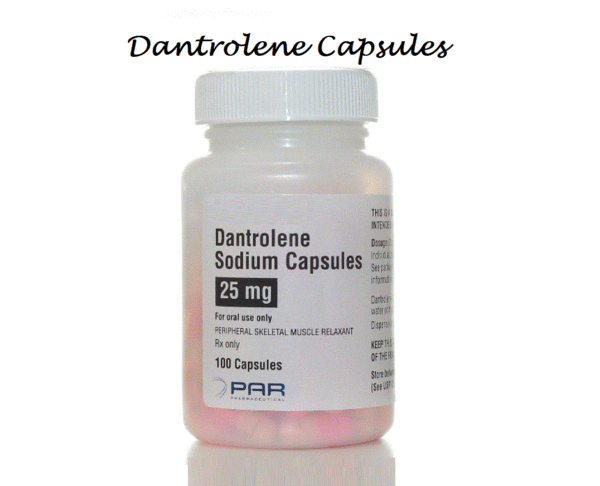
Dantrolene (Dantrolen) is a post-synaptic muscle relaxant. It is available as an oral and intravenous formulation.
Dantrolene Uses:
-
Chronic spasticity:
- Oral dantrolene is used in the treatment of spasticity associated with upper motor neuron disorders (eg, spinal cord injury, stroke, cerebral palsy, or multiple sclerosis).
-
Malignant hyperthermia:
- Intravenous administration of dantrolene is recommended in the management of malignant hyperthermia crisis followed by oral or intravenous dose to prevent a recurrence.
Note: Dantrolene is not recommended as a pre-prophylaxis drug in patients who are susceptible to malignant hyperthermia crisis during a surgery, provided non-triggering anesthetic agents are used.
-
Off Label Use of Dantrolene in Adults:
- Neuroleptic malignant syndrome
Dantrolene Dose in Adults
Dantrolen Dosage for the Chronic Treatment of spasticity:
Note:
- Dantrolene should be started in the lowest possible dose and then titrated according to the individual response.
- Each dosage level should be continued for a week and if there is no adequate response, the dose should be increased.
- If the desired response is not achieved despite increasing the dose, it should be reduced to the previous amount. the treatment should be stopped if there is no positive result in 45 days as it can lead to fatal liver toxicity.
- The initial dose is 25 mg per oral once daily for one week.
- Increase the dose to 25 mg 3 times daily for 7 days, increase to 50 mg 3 times daily for 7 days, and then increase to 100 mg 3 times daily.
- Some patients may require 100 mg 4 times daily
- The maximum dose is 400 mg/day
Dantrolen dose for the treatment of Malignant hyperthermia (MH):
Note: Avoid exposure to malignant hyperthermia (MH)-triggering agents such as volatile anesthetic gases, succinylcholine) once hyperthermia crisis is noted and immediately offer supportive care.
-
Crisis:
- 2.5 mg/kg intravenous initially with continuous monitoring and repeat doses of 1 mg/kg until symptoms subside or a cumulative dose of 10 mg/kg is reached.
-
Post-crisis follow-up and to prevent recurrence:
-
MHAUS protocol recommendation:
- 1 mg/kg every 4 to 6 hours (route not specified).
-
Manufacturer's labeling:
- Dosing in the prescribing information may not reflect current clinical practice.
- 4 to 8 mg/kg/day orally in 4 divided doses for 1 to 3 days.
- Intravenous dantrolene is administered when oral therapy is not possible.
- Individualize the dosage beginning with 1 mg/kg or more as the clinical situation dictates
-
Dantrolen Dose in the treatment of Neuroleptic malignant syndrome as off-label use:
- 1 to 2.5 mg/kg intravenous initially.
- If a rapid resolution of hyperthermia and rigidity is observed, it may be followed with 1 mg/kg every 6 hours up to a maximum cumulative dose of 10 mg/kg/day, then switch to oral dosage.
- Note: Based on an analysis of 271 case reports, combination therapy of dantrolene with bromocriptine may be preferred over dantrolene alone due to decreased mortality and longer-term remission state.
Dantrolene Dose in Childrens
Dantrolen Dose in the treatment of Spasticity:
Note: The dosage is titrated according to the response. If a higher dose is not providing the desired results, the drug should be reduced to the lower dosage level
-
Dantrolen Dosage recommendations as per the Manufacturer's labeling in Children and adolescents 5 years or older:
-
Patient weight <50 kg:
- 0.5 mg/kg/dose initially once daily for 7 days, increase to 0.5 mg/kg/dose 3 times daily for 7 days, increase to 1 mg/kg/dose 3 times daily for 7 days, and then increase to 2 mg/kg/dose 3 times daily.
- Some patients may require 2 mg/kg/dose 4 times daily.
- The maximum daily dose is 400 mg/day
-
Patient weight ≥50 kg:
- 25 mg once daily initially for a week, then increase to 25 mg 3 times daily for 7 days, then increase to 50 mg 3 times daily for 7 days, and then increase to 100 mg 3 times daily.
- Some patients may require 100 mg 4 times daily.
- The maximum daily dose is 400 mg/day
-
-
Alternate dosage recommendations in children and adolescents:
- 0.5 mg/kg/dose initially every 12 hours (maximum dose is 25 mg/dose).
- Titrate the frequency and then the dose to the desired effect by increasing frequency every 4 to 7 days up to 3 to 4 times daily.
- Then increase the dose by 0.5 mg/kg increments at weekly intervals to the desired effect.
- The maximum daily dose is 12 mg/kg/day or 400 mg/day, whichever is lower.
Dantrolen Dose in the treatment of Malignant hyperthermia in infants, children, and adolescents:
-
Preoperative prophylaxis:
- Note:
- Dantrolene is not indicated as a regular therapy because the intravenous preparation is readily available and it provides the maximum benefit in case of perioperative crisis (eg, avoiding known trigger agents in susceptible patients):
- 4 to 8 mg/kg/day orally in 3 to 4 divided doses for 1 to 2 days prior to surgery with the last dose administered approximately 3 to 4 hours before surgery
- 2.5 mg/kg/ intravenous dose administered approximately 1.25 hours prior to surgery.
- Infuse over at least 1 minute (Ryanodex) or 1 hour (Dantrium, Revonto) with additional doses as needed and individualized
-
Crisis:
-
MHAUS protocol recommendation (available at www.mhaus.org):
- 5 mg/kg intravenously.
- The dose is to be repeated until symptoms resolve or a cumulative dose of 10 mg/kg is reached (rarely, some patients may require up to 30 mg/kg for initial treatment).
-
Manufacturer's labeling:
- The initial minimum dose is 1 mg/kg.
- Repeat dosing with a minimum of 1 mg/kg until symptoms resolve or a cumulative dose of 10 mg/kg is reached
-
-
Postcrisis follow-up:
-
MHAUS protocol recommendation:
- 1 mg/kg every 4 to 6 hours (route not specified) or a continuous intravenous infusion of 0.25 mg/kg/hour for at least 24 hours.
- Further doses may be indicated
-
Manufacturer's labeling:
- 4 to 8 mg/kg/day orally in 4 divided doses for 1 to 3 days.
- Dantrolene may be used via the intravenous route to avoid the recurrence of malignant hyperthermia signs when oral therapy cannot be prescribed.
- Individualize dosage beginning with 1 mg/kg or more depending on the clinical condition
-
Pregnancy Risk Factor C
- Studies on animal reproduction have shown adverse effects from the drug.
- Dantrolene crosses over the human placenta.
- The cord blood levels of dantrolene equal those in maternal plasma at term, and can also be measured in newborn serum at birth.
- The newborn did not experience any adverse effects from 100 mg of maternal oral doses before delivery.
- After delivery, intravenous dantrolene was reported to cause uterine atony. This may be due to mannitol in the intravenous preparation.
- For pregnant women who are sensitive to MH before undergoing obstetric surgery, dantrolene should not be prescribed.
- If it is necessary, preoperative monitoring is recommended for all cases.
Dantrolen use during breastfeeding:
- Breast milk contains a small amount of dantrolene.
- It can have adverse side effects. Therefore, breastfeeding or drug therapy should be continued.
- The benefits for the mother and the side effects of the drug are important.
- According to a case report, Dantrolene has an 8-hour half-life. The highest milk concentration after a maternal Intravenous injection was 1.2 mg/mL.
- However, no maternal serum concentrations were reported (Fricker 1998).
Dantrolen dose in Renal impairment:
There are no dosage adjustments provided in the manufacturer's labeling.
Dantrolen Dose in liver disease:
- There are no dosage adjustments provided in the manufacturer's labeling.
- Dantrolene is contraindicated in liver diseases such as hepatitis and cirrhosis.
Side effects of Dantrolen:
-
Cardiovascular:
- Flushing
- Atrioventricular Block
- Tachycardia
- Cardiac Failure
- Phlebitis
- Variable Blood Pressure
-
Central Nervous System:
- Drowsiness
- Voice Disorder
- Feeling Abnormal
- Dizziness
- Headache
- Myasthenia
- Chills
- Choking Sensation
- Confusion
- Depression
- Fatigue
- Insomnia
- Malaise
- Nervousness
- Seizure
- Speech Disturbance
-
Dermatologic:
- Acneiform Eruption
- Diaphoresis
- Eczematous Rash
- Erythema
- Hair Disease
- Pruritus
- Urticaria
-
Gastrointestinal:
- Dysphagia
- Nausea
- Vomiting
- Abdominal Cramps
- Anorexia
- Constipation
- Diarrhea
- Dysgeusia
- Gastric Irritation
- Gastrointestinal Hemorrhage
- Sialorrhea
-
Genitourinary:
- Crystalluria
- Difficulty In Micturition
- Erectile Dysfunction
- Hematuria
- Nocturia
- Urinary Frequency
- Urinary Incontinence
- Urinary Retention
-
Hematologic & Oncologic:
- Anemia
- Aplastic Anemia
- Leukopenia
- Lymphocytic Lymphoma
- Thrombocytopenia
-
Hepatic:
- Hepatitis
-
Hypersensitivity:
- Anaphylaxis
-
Local:
- Injection Site Reaction
- Local Tissue Necrosis
-
Neuromuscular & Skeletal:
- Limb Pain
- Back Pain
- Myalgia
-
Ophthalmic:
- Blurred Vision
- Diplopia
- Epiphora
- Visual Disturbance
-
Respiratory:
- Dyspnea
- Pleural Effusion
- Pulmonary Edema
- Respiratory Depression
-
Miscellaneous:
- Fever
Contraindications Of Dantrolene:
- The manufacturer's labeling does not list any contraindications for intravenous preparations.
- In liver disease, such as cirrhosis or hepatitis, the oral drug is not recommended.
- It is not recommended when spasticity is necessary to maintain upright posture/balanced locomotion, or to attain/maintain an increased function.
Dantrolen Warnings & Precautions
-
Central Nervous System depression:
- Dantrolene can cause depression in the central nervous system, which can result in mental disabilities.
- Patients should be aware of tasks that require mental alertness, such as operating machinery or driving.
-
Hepatotoxicity: [US Boxed Warning]
- There is a risk of liver toxicities from oral medication.
- High doses (i.e. >=800 mg/day), can increase the risk for severe hepatic injuries, although they may only occur at doses of 400 mg/day.
- Overt hepatitis can be caused by the third and twelveth months of therapy.
- The risk of liver injury is greater in females than in patients over 35 years old and those who take concurrent medications.
- Due to the use of hepatotoxic medications, it has been shown that elderly people are more likely to develop fatal liver toxicities.
- There have been cases of hypersensitivity and idiosyncratic reactions to the liver (sometimes fatal).
- At baseline and throughout treatment, liver function tests should always be performed.
- The drug should be discontinued if there are any abnormalities in liver function, jaundice, hepatitis, or benefits that are not observed within 45-days.
- Once the drug has been stopped, liver function is restored to normal. If the drug must be restarted, it should first be administered in a hospital. Close monitoring is necessary.
- There is a risk of liver toxicities from oral medication.
-
Muscle weakness
- Intravenous dantrolene has caused a loss of grip strength, leg weakness, shortness, breathing difficulties, respiratory muscle weakness and difficulty swallowing.
- Mobility without assistance should be avoided until normal strength, balance and mobility are restored.
- Monitor patients for proper ventilation and difficulty swallowing/choking.
-
Photosensitivity
- Photosensitivity reactions may occur when oral therapy is administered. Use caution in sunlight exposure.
-
Pleural effusion:
- It can lead to pleural effusion in combination with eosinophilia
-
Cardiovascular disease
- If you have severely impaired cardiac function as a result of myocardial disease, the drug should not be used.
-
Hepatic disease
- Patients with liver dysfunction should be aware of the potential side effects. Patients with active liver disease, such as cirrhosis or hepatitis, should not take the drug.
-
Respiratory disease
- Patients with impaired lung function should be closely monitored(particularly in obstructive pulmonary disease).
Dantrolene: Drug Interaction
Note: Drug Interaction Categories:
- Risk Factor C: Monitor When Using Combination
- Risk Factor D: Consider Treatment Modification
- Risk Factor X: Avoid Concomitant Use
| Risk Factor C (Monitor therapy). | |
| Alcohol (Ethyl) | CNS Depressants can increase the CNS depressant effects of Alcohol (Ethyl). |
| Alizapride | CNS Depressants may increase the CNS depressant effects. |
| Bosentan | Could lower serum concentrations of CYP3A4 substrates (High Risk with Inducers). |
| Brexanolone | CNS Depressants can increase the CNS depressant effects of Brexanolone. |
| Brimonidine (Topical) | CNS Depressants may increase the CNS depressant effects. |
| Bromopride | CNS Depressants may increase the CNS depressant effects. |
| Cannabidiol | CNS Depressants may increase the CNS depressant effects. |
| Cannabis | CNS Depressants may increase the CNS depressant effects. |
| Chlorphenesin Carbamate | CNS Depressants may have an adverse/toxic effect that can be exacerbated by them. |
| CNS Depressants | Can increase the toxic/adverse effects of CNS Depressants. |
| Moderate CYP3A4 Inducers | Could lower serum concentrations of CYP3A4 substrates (High Risk with Inducers). |
| Deferasirox | Could lower serum concentrations of CYP3A4 substrates (High Risk with Inducers). |
| Dexketoprofen | Dantrolene may have an adverse/toxic effect. |
| Dimethindene (Topical). | CNS Depressants may increase the CNS depressant effects. |
| Doxylamine | CNS Depressants may have a greater CNS depressant effect if taken with other CNS Depressants. Management: The manufacturer of Diclegis (doxylamine/pyridoxine), intended for use in pregnancy, specifically states that use with other CNS depressants is not recommended. |
| Dronabinol | CNS Depressants may increase the CNS depressant effects. |
| Erdafitinib | Could lower serum concentrations of CYP3A4 substrates (High Risk with Inducers). |
| Esketamine | CNS Depressants may increase the CNS depressant effects. |
| Estrogen Derivatives | Might increase the hepatotoxic effects of Dantrolene. |
| HydrOXYzine | CNS Depressants may increase the CNS depressant effects. |
| Ivosidenib | Could lower serum concentrations of CYP3A4 substrates (High Risk with Inducers). |
| Kava Kava | CNS Depressants may have an adverse/toxic effect that can be exacerbated by them. |
| Lacidipine | Dantrolene may have an adverse/toxic effect. |
| Lofexidine | CNS Depressants may have a greater depressant effect on the brain. Management: Separate drug interaction monographs are available for drugs listed as an exception to this monograph. |
| Magnesium Sulfate | CNS Depressants may increase the CNS depressant effects. |
| MetyroSINE | MetyroSINE may have a sedative effect that can be enhanced by CNS depressants. |
| Minocycline | CNS Depressants may increase the CNS depressant effects. |
| Mirtazapine | CNS Depressants can increase the CNS depressant effects of Mirtazapine. |
| Nabilone | CNS Depressants may increase the CNS depressant effects. |
| Piribedil | CNS Depressants could increase the CNS depressant effects of Piribedil. |
| Pramipexole | Pramipexole may have a greater sedative effect if it is combined with CNS depressants. |
| ROPINIRole | CNS Depressants can increase the sedative effects of ROPINIRole. |
| Rotigotine | CNS Depressants can increase the sedative effects of Rotigotine. |
| Rufinamide | CNS Depressants may have an adverse/toxic effect that can be exacerbated by this. Particularly, dizziness and sleepiness may be increased. |
| Sarilumab | Could lower serum concentrations of CYP3A4 substrates (High Risk with Inducers). |
| Selective Serotonin Reuptake inhibitors | CNS Depressants can increase the toxic/adverse effects of Selective Serotonin Resuptake Inhibitors. Particularly, psychomotor impairment could be increased. |
| Siltuximab | Could lower serum concentrations of CYP3A4 substrates (High Risk with Inducers). |
| Tetrahydrocannabinol | CNS Depressants may increase the CNS depressant effects. |
| Tetrahydrocannabinol, and Cannabidiol | CNS Depressants may increase the CNS depressant effects. |
| Tocilizumab | Could lower serum concentrations of CYP3A4 substrates (High Risk with Inducers). |
| Trimeprazine | CNS Depressants may increase the CNS depressant effects. |
| Vecuronium | Dantrolene may enhance the neuromuscular-blocking effect of Vecuronium. |
| Risk Factor D (Regard therapy modification) | |
| Blonanserin | CNS Depressants can increase the CNS depressant effects of Blonanserin. |
| Buprenorphine | CNS Depressants can increase the CNS depressant effects of buprenorphine. Management: Consider reduced doses of other CNS depressants, and avoiding such drugs in patients at high risk of buprenorphine overuse/self-injection. Buprenorphine patches (Butrans) should be initiated at 5 mg/hr for adults when taken with other CNS depression drugs. |
| Chlormethiazole | CNS Depressants may increase the CNS depressant effects. Monitoring: Look out for signs of CNS depression. If a combination of chlormethiazole and other drugs is required, a reduced dose should be used. |
| Strong CYP3A4 Inducers | May increase metabolism of CYP3A4 substrates (High Risk with Inducers). Management: You may consider a different drug to replace one of the interacting drugs. Some combinations might be contraindicated. Consult appropriate manufacturer labeling. |
| Dabrafenib | High risk of Inducers causing a decrease in serum CYP3A4 substrates. Management: If possible, seek alternatives to the CYP3A4 substrate. Concomitant therapy should be avoided if possible. Monitor the clinical effects of the substrate carefully (especially therapeutic effects). |
| Droperidol | CNS Depressants may increase the CNS depressant effects. Management: Droperidol and other CNS agents, such as opioids, may be reduced or used in combination with droperidol. Separate drug interaction monographs provide more detail on exceptions to this monograph. |
| Enzalutamide | High risk of Inducers causing a decrease in serum concentrations of CYP3A4 substrates. Management: Avoid concurrent use of enzalutamide and CYP3A4 substrates with a narrow therapeutic index. You should exercise caution when using enzalutamide or any other CYP3A4 sub-substance. |
| Flunitrazepam | CNS Depressants can increase the CNS depressant effects of Flunitrazepam. |
| HYDROcodone | CNS Depressants can increase the CNS depressant effects of HYDROcodone. When possible, avoid concomitant use with hydrocodone and other CNS depressants. Combining these agents is not recommended unless there are other options. Limit the amount and duration of each drug when combined. |
| Lorlatinib | High risk of Inducers causing a decrease in serum concentrations of CYP3A4 substrates. Management: Do not use lorlatinib concurrently with any CYP3A4 Substrates. Even a slight decrease in serum concentrations could cause therapeutic failure or serious clinical consequences. |
| Methotrimeprazine | Methotrimeprazine may have a higher CNS depressant activity than CNS Depressants. Methotrimeprazine can increase the CNS depressant effects of CNS Depressants. Management: Lower the adult dose of CNS Depressants by 50% and start concomitant methotrimeprazine treatment. After clinically proven efficacy of methotrimeprazine, further CNS depressant dose adjustments should only be made. |
| Mitotane | High risk of Inducers causing a decrease in serum concentrations of CYP3A4 substrates. Treatment: Patients receiving mitotane may require significant adjustments in the dosage of CYP3A4 Substrates. |
| Opioid Agonists | CNS Depressants can increase the CNS depressant effects of Opioid Aggonists. Management: When possible, avoid concomitant use opioid agonists and other CNS depressants. Combining these agents is not recommended unless there are other options. Limit the amount and duration of each drug when combined. |
| OxyCODONE | CNS Depressants can increase OxyCODONE's CNS depressant effects. When possible, avoid the simultaneous use of oxycodone and other CNS depressants. Combining these agents is not recommended unless there are other options. Limit the amount and duration of each drug when combined. |
| Perampanel | CNS Depressants may have a greater CNS depressant effect. Perampanel and any other CNS depressant drug should be used in combination. Patients who take perampanel together with any other drug should not engage in complex or high-risk activities until they have had experience using the combination. |
| Pitolisant | High risk of Inducers causing a decrease in serum concentrations of CYP3A4 substrates Management: Avoid combining pitolisant and a CYP3A4 substrat with a low therapeutic index. Pitolisant should not be combined with other CYP3A4 sub-substances. |
| Sodium Oxybate | CNS Depressants may have a greater depressant effect if taken in combination. Management: Look for alternatives to the combination use. If you must combine use, reduce the doses of any one or more drugs. It is not recommended to combine sodium oxybate and alcohol, or any sedative hypnotics. |
| St John's Wort | High risk of Inducers causing a decrease in serum CYP3A4 Substrates. Management: You may consider a different drug to replace one of the interacting drugs. Some combinations might be contraindicated. Consult appropriate manufacturer labeling. |
| Suvorexant | CNS Depressants can increase the CNS depressant effects of Suvorexant. Management: Suvorexant or any other CNS depressionant can be reduced in doses. Suvorexant should not be taken with alcohol. It is also not recommended to take suvorexant along with any other drugs for insomnia. |
| Tapentadol | CNS Depressants may increase the CNS depressant effects. Tapentadol, benzodiazepines and other CNS depressants should be avoided when possible. Combining these agents is not recommended unless there are other options. Limit the amount and duration of each drug when combined. |
| Zolpidem | CNS Depressants can increase the CNS depressant effects of Zolpidem. Management: For men who also take CNS depressants, reduce the adult Intermezzo brand sublingual Zolpidem dose to 1.75mg. For women, no dose adjustment is advised. Avoid using CNS depressants at night; do not use alcohol. |
| Risk Factor X (Avoid Combination) | |
| Azelastine (Nasal) | CNS Depressants could increase the CNS depressant effects of Azelastine. |
| Bromperidol | CNS Depressants may increase the CNS depressant effects. |
| Calcium Channel Blockers (Nondihydropyridine) | Dantrolene may enhance the hyperkalemic effect of Calcium Channel Blockers (Nondihydropyridine). Dantrolene may enhance the negative inotropic effect of Calcium Channel Blockers (Nondihydropyridine). Management: This interaction was only described in intravenous dantrolene administration. |
| Orphenadrine | Orphenadrine may be more effective against CNS depression than other drugs. |
| Oxomemazine | CNS Depressants may increase the CNS depressant effects. |
| Paraldehyde | Paraldehyde may be enhanced by CNS depressants. |
| Thalidomide | CNS Depressants can increase Thalidomide's CNS depressant effects. |
Monitor:
- Motor performance should be monitored for therapeutic outcomes.
- Nausea, vomiting, and liver function tests (baseline and at appropriate intervals thereafter) should be monitored for potential transaminitis.
- Cardiac, blood pressure, and respiratory monitoring should be done during intravenous administration
Malignant hyperthermia:
- During and post-acute phase:
- Per the MHAUS protocol, the patient should be observed in an HDU (high dependency unit) for at least one day since recrudescence may occur.
- Monitor for arrhythmias
- Monitor vital signs (including core temperature), electrolytes, arterial blood gases, creatinine kinase, end-tidal CO (EtCO )/capnography, urine output, and myoglobinuria.
Administration of Dantrolen:
- Therapeutic or emergency dose can be administered with rapid continuous Intravenous push.
- Follow-up doses should be administered over at least sixty seconds (Ryanodex) or 60 minutes (Dantrium, Revonto).
- It is a vesicant. To avoid extravasation, ensure proper needle or catheter placement before & during the infusion
Extravasation management:
- If extravasation occurs, elevate the extremity, stop the infusion immediately and disconnect (leave cannula/needle in place).
- Gently aspirate extravasated solution (do NOT flush the line) and then remove the needle/cannula.
Mechanism of action of Dantrolene (Dantrolen):
It directly affects skeletal muscle by interfering in calcium ion release from the sarcoplasmic retina. It prevents or decreases the myoplasmic calcium-ion concentration, which activates the acute catabolic reactions associated with malignant heat. About 70% of the drug's total value isabsorbedWhen taken orally. Metabolism is primarilyHepatic. Major metabolites include 5-hydroxy dantrolene, and an acetylamino-metabolite of Antrolene.
Half-life elimination is as follows:
- Neonates (at birth): about 20 hours.
- Children 2 to 7 years: 10 hours (ranging from 8.1 to 14.8 hours)
- Adults: 4 to 11 hours
The time to reach the peak serum concentration after intravenous administration is one-minute post-dose (dantrolene) and 24 hours post-dose (5-hydroxy dantrolene)
Excretion:
- It is mainly excreted via feces (45% to 50%) and urine (25% as unchanged drug and metabolites)
International Brands of Dantrolene:
- Dantrium
- Revonto
- Ryanodex
- Anorex
- Dantamacrin
- Dantrelax
- Dantrium
- Dantrolen
- Dantromove
- Degison
- Mobicont
- Relaxo
- Ryanorelax
Dantrolene Brands in Pakistan:
No Brands Available in Pakistan.
.png)


