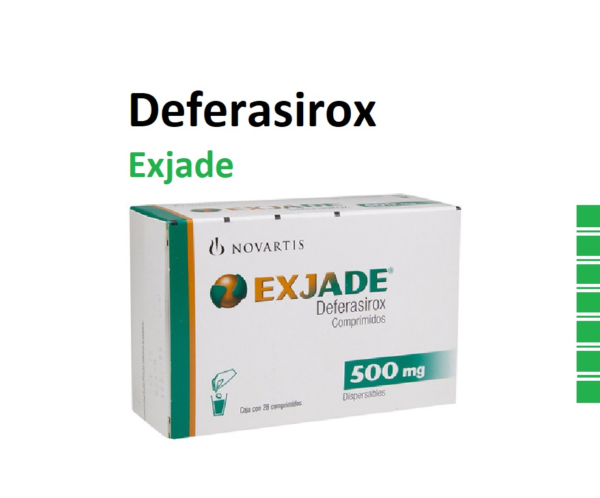
Deferasirox (Exjade) is an oral iron-chelating agent that binds to the iron in the blood and removes it from the body via the kidneys. It is used in the treatment of patients with iron-overload states such as thalassemia and other hemolytic anemias.
Deferasirox (Exjade) Uses:
-
Chronic iron overload due to blood transfusions:
- Deferasirox is used in the treatment of chronic iron overload due to recurrent transfusions (e.g in Thalassemia/Aplastic Anemia etc) in patient older than 2 years.
-
Chronic iron overload in non-transfusion-dependent thalassemia syndromes:
- It is also used to treat chronic iron overload in patients with non-transfusion-dependent thalassemia syndromes (NTDT) in patients 10 years and older and with a liver iron concentration (LIC) of 5 mg or more iron per gram of liver dry weight (mg Fe/g dry weight) and a serum ferritin level > 300 mcg/L.
-
Limitations of use:
- It has not been established whether deferasirox is safe and efficacious when given in combination with other iron chelation therapies.
- No controlled studies of deferasirox have been conducted in patients with myelodysplastic syndromes and chronic iron overload due to blood transfusions.
Deferasirox (Exjade) Dose in Adults
Note:
- In order to achieve a maximum result i.e a decreasing ferritin trend and to keep the iron levels in normal target range use the minimum effective dose.
- The dose must be calculated to the nearest whole tablet size/granules packet.
Deferasirox (Exjade) Dose in the treatment of chronic iron overload due to blood transfusions: Oral:
Note:
- Start treatment only if there is evidence of chronic iron overload (i.e transfusion of ≥100 mL/kg of packed red blood cells [eg, ≥20 units for a 40 kg individual] and serum ferritin consistently >1,000 mcg/L).
- Reassess the need for ongoing therapy if patients are no longer on regular transfusions.
-
Exjade:
- Initial:
- 20 mg/kg once daily
- Maintenance:
- Monitor the serum ferritin levels and adjust the dose accordingly after 3-6 months and titrate to individual response and treatment goals; adjust by 5 or 10 mg/kg/day.
- Doses up to 40 mg/kg/day may be considered for serum ferritin levels persistently >2,500 mcg/L and not decreasing over time (if not controlled with 30mg/kg/day).
- Doses >40 mg/kg/day are not recommended.
- Start dose reduction if serum ferritin falls to <1,000 mcg/L at 2 consecutive visits (especially if dose is >25 mg/kg/day).
- Discontinue therapy and monthly monitoring if serum ferritin falls to <500 mcg/L.
- Initial:
-
Jadenu:
- Initial:
- 14 mg/kg once daily
- Maintenance:
- Monitor the serum ferritin levels and adjust the dose accordingly after 3-6 months and titrate to individual response and treatment goals.
- Adjust by 3.5 or 7 mg/kg/day.
- Doses upto 28mg/kg/day may be considered for serum ferritin levels persistantly >2500mcg/L (if not controlled with 21mg/kg/day).
- Doses >28 mg/kg/day are not recommended.
- Start dose reduction if serum ferritin falls to <1,000 mcg/L at 2 consecutive visits (especially if dose is 17.5 mg/kg/day).
- Discontinue therapy and monthly monitoring if serum ferritin falls to <500 mcg/L.
- Initial:
Deferasirox (Exjade) Dose in treatment of chronic iron overload in non-transfusion-dependent thalassemia syndromes: Oral:
Note: Initiate treatment only with the evidence of chronic iron overload (hepatic iron concentration ≥5 mg Fe/g dry weight and serum ferritin >300 mcg/L).
-
Exjade:
- Initial:
- 10 mg/kg OD.
- Increase dose up to 20 mg/kg OD after 4 weeks if baseline hepatic iron concentration >15 mg Fe/g dry weight.
- Maintenance:
- Monthly serum ferritin and 6 monthly hepatic iron concentration are needed for maintenance dose:
- If serum ferritin <300 mcg/L:
- Discontinue therapy and obtain hepatic iron concentration.
-
If hepatic iron concentration:
- <3 mg Fe/g dry weight:
- Discontinue treatment; if the hepatic iron concentration is >5 mg Fe/g dry weight, then restart the therapy.
- 3 to 7 mg Fe/g dry weight:
- Continue treatment at a dose of 10 mg/kg/day max.
- >7 mg Fe/g dry weight:
- Increase dose up to 20 mg/kg/day; Maximum dose: 20 mg/kg/day
- <3 mg Fe/g dry weight:
- Initial:
-
Jadenu:
- Initial: 7 mg/kg OD.
- Increase the dose to 14 mg/kg OD after 4 weeks if baseline hepatic iron concentration >15 mg Fe/g dry weight.
- Maintenance:
- Monthly serum ferritin and six-monthly hepatic iron concentration are needed for maintenance dose:
- If serum ferritin is <300 mcg/L: Discontinue treatment and obtain the hepatic iron concentration
-
If hepatic iron concentration:
- <3 mg Fe/g dry weight:
- Discontinue treatment;
- restart treatment when hepatic iron concentration is >5 mg Fe/g dry weight
- 3 to 7 mg Fe/g dry weight:
- Continue treatment at a dose of 7 mg/kg OD max.
- >7 mg Fe/g dry weight:
- Increase the dose up to 14 mg/kg OD;
- Maximum dose: 14 mg/kg OD.
- <3 mg Fe/g dry weight:
-
Deferasirox Dosage adjustment with concomitant medications:
- Dose adjustment is necessary when given with the bile acid sequestrants (eg, colesevelam, colestipol, cholestyramine) or potent UGT inducers (eg, rifampin, phenytoin, phenobarbital, ritonavir).
- Concomitant use should be avoided; however, if co-administration is necessary, increase the dose of deferasirox by 50%; Clinical response and serum ferritin level should be monitored.
- Conversion from Exjade to Jadenu:
- The dose of Jadenu should be approximately 30% lower than Exjade.
Deferasirox (Exjade) Dose in Childrens
Note:
- In order to achieve a maximum result i.e a decreasing ferritin trend and to keep the iron levels in normal target range use the minimum effective dose.
- The dose must be calculated to the nearest whole tablet size/granules packet.
- Deferasirox is available as TWO distinct products (Exjade= Tablets for oral suspension. Jadenu= Tablets and sprinkle sachets).
- Due to bioavailability differences, these are not bioequivalent.
Deferasirox (Exjade) Dose in the treatment of chronic iron overload due to blood transfusion:
Note:
- Start treatment only if there is evidence of chronic iron overload (i.e transfusion of ≥100 mL/kg of packed red blood cells [eg, ≥20 units for a 40 kg individual] and serum ferritin consistently >1,000 mcg/L).
- Reassess the need for ongoing therapy if patients are no longer on regular transfusions.
-
Exjade (oral tablet for suspension):
- Initial: 20 mg/kg OD
-
Titration, maintenance, and dose adjustment:
- Children ≥2 years and Adolescents:
- Oral: Monitor the serum ferritin levels and adjust the dose accordingly after 3-6 months and titrate to individual response and treatment goals; adjust by 5 or 10 mg/kg/day.
- Doses up to 40 mg/kg/day may be considered for serum ferritin levels persistently >2,500 mcg/L and not decreasing over time (if not controlled with 30mg/kg/day).
- Doses >40 mg/kg/day are not recommended.
- Start dose reduction if serum ferritin falls to <1,000 mcg/L at 2 consecutive visits (especially if dose is >25 mg/kg/day).
- Discontinue therapy and monthly monitoring if serum ferritin falls to <500 mcg/L.
- Children ≥2 years and Adolescents:
-
Jadenu (oral tablet; sprinkle granules):
- Initial: 14 mg/kg once daily, calculate dose to the nearest whole tablet or sprinkle sachet
-
Titration, maintenance, and dose adjustment:
- Children ≥2 years and Adolescents:
- Oral. Monitor the serum ferritin levels and adjust the dose accordingly after 3-6 months and titrate to individual response and treatment goals.
- Adjust by 3.5 or 7 mg/kg/day.
- Doses upto 28mg/kg/day may be considered for serum ferritin levels persistantly >2500mcg/L (if not controlled with 21mg/kg/day).
- Doses >28 mg/kg/day are not recommended.
- Start dose reduction if serum ferritin falls to <1,000 mcg/L at 2 consecutive visits (especially if dose >17.5 mg/kg OD).
- Discontinue therapy and monthly monitoring if serum ferritin falls to <500 mcg/L.
- Children ≥2 years and Adolescents:
Deferasirox (Exjade) Dose in the treatment of Non-transfusion-dependent chronic iron overload; thalassemia syndromes (NTDT):
Note: Initiate treatment only with the evidence of chronic iron overload (hepatic iron concentration ≥5 mg Fe/g dry weight and serum ferritin >300 mcg/L).
-
Exjade (oral tablet for suspension):
- Initial: 10 mg/kg OD.
- Increase dose up to 20 mg/kg OD after 4 weeks if baseline hepatic iron concentration >15 mg Fe/g dry weight.
- Children ≥10 years and Adolescents:
- Oral: Maintenance: Monthly serum ferritin and 6 monthly hepatic iron concentration are needed for maintenance dose:
- If serum ferritin <300 mcg/L:
- Discontinue therapy and obtain hepatic iron concentration.
-
If hepatic iron concentration:
- <3 mg Fe/g dry weight:
- Discontinue treatment;
- if the hepatic iron concentration is >5 mg Fe/g dry weight, then restart the therapy.
- 3 to 7 mg Fe/g dry weight:
- Continue treatment at a dose of 10 mg/kg OD max.
- >7 mg Fe/g dry weight:
- Increase the dose up to 20 mg/kg OD;
- Maximum dose: 20 mg/kg OD
- <3 mg Fe/g dry weight:
- If serum ferritin <300 mcg/L:
-
Jadenu (oral tablet, sprinkle granules):
- Initial: 7 mg/kg OD.
- Increase the dose to 14 mg/kg OD after 4 weeks if baseline hepatic iron concentration >15 mg Fe/g dry weight.
-
Children ≥10 years and Adolescents:
- Oral: Maintenance: Monthly serum ferritin and six-monthly hepatic iron concentration are needed for maintenance dose:
- If serum ferritin is <300 mcg/L:
- Discontinue treatment and obtain the hepatic iron concentration
- If serum ferritin is <300 mcg/L:
-
If hepatic iron concentration:
- <3 mg Fe/g dry weight:
- Discontinue treatment; restart treatment when hepatic iron concentration is >5 mg Fe/g dry weight
- 3 to 7 mg Fe/g dry weight:
- Continue treatment at a dose of 7 mg/kg OD max.
- >7 mg Fe/g dry weight:
- Increase dose up to 14 mg/kg OD;
- Maximum dose: 14 mg/kg OD
- <3 mg Fe/g dry weight:
- Oral: Maintenance: Monthly serum ferritin and six-monthly hepatic iron concentration are needed for maintenance dose:
Dosing conversion from Exjade to Jadenu:
- Conversion from Exjade to Jadenu:
- The dose of Jadenu should be approximately 30% lower than Exjade.
-
Children ≥2 years and Adolescents:
- Dose adjustment is necessary when given with the bile acid sequestrants (eg, colesevelam, colestipol, cholestyramine) or potent UGT inducers (eg, rifampin, phenytoin, phenobarbital, ritonavir).
- Concomitant use should be avoided; however, if coadministration is necessary, increase the dose of deferasirox by 50%; Clinical response and serum ferritin level should be monitored.
Deferasirox Dosing adjustment for toxicity:
-
Children ≥2 years and Adolescents:
- Auditory disturbances:
- Reduce dose or discontinue therapy depending upon the severity.
- Bone marrow suppression:
- Contraindicated if thrombocytopenia (PLT < 50,000/MCL).
- Discontinue if there is any evidence of bone marrow suppression. Restart treatment if the cause of cytopenia has been determined.
- Dermatologic toxicity:
- Rash (severe):
- Discontinue treatment. Restart at a lower dose then titrate to a higher dose and administer a short course of oral corticosteroids.
- Severe skin reaction (Stevens-Johnson syndrome, erythema multiforme):
- Stop therapy and do not restart.
- Rash (severe):
- Gastrointestinal:
- Stop therapy for suspected GI Bleed or ulceration.
- Hearing loss or visual disturbance:
- Reduce dose or discontinue therapy depending upon the severity.
- Auditory disturbances:
Deferasirox (Exjade) Pregnancy Risk Category: C
- Studies on animal reproduction revealed negative outcomes and events.
- Due to limited data, the safety of deferrasirox in pregnancy has not been proven.
Use of deferasirox while breastfeeding
- It is unknown if deferasirox can be found in breast milk.
- Due to the possibility of serious adverse reactions in breastfed infants, either drug or breastfeeding must be stopped according to manufacturer recommendations.
Deferasirox (Exjade) Dose in Kidney Disease:
Estimated glomerular filtration rate (eGFR) should be calculated using an appropriate prediction equation (eg, CKD-EPI, MDRD method).
-
Renal impairment at treatment initiation:
- eGFR >60 mL/minute/1.73 m²:
- No adjustment in dose necessary.
- eGFR 40 to 60 mL/minute/1.73 m²:
- Reduce dose by 50%.
- eGFR <40 mL/minute/1.73 m²:
- Contraindicated.
- eGFR >60 mL/minute/1.73 m²:
-
Renal toxicity during treatment:
-
Transfusional iron overload:
- If serum creatinine rises ≥33% above the average baseline, repeat serum creatinine within 1 week; if still elevated by ≥33%, reduce daily dose by 10 mg/kg for Exjade or 7 mg/kg for Jadenu.
- eGFR <40 mL/minute/1.73 m²:
- Stop therapy.
-
Non-transfusion-dependent thalassemia syndromes:
- If serum creatinine rises by ≥33% above the average baseline, repeat serum creatinine within 1 week; if still elevated by ≥33%:
- Exjade:
- Discontinue treatment if already taking 5 mg/kg;
- Reduce dose by 50% if the dose is 10 or 20 mg/kg
- Jadenu:
- Discontinue treatment if already taking 3.5 mg/kg;
- Reduce dose by 50% if the dose is 7 or 14 mg/kg
- Exjade:
- All patients:
- eGFR <40 mL/minute/1.73 m²:
- Stop therapy.
- eGFR <40 mL/minute/1.73 m²:
- If serum creatinine rises by ≥33% above the average baseline, repeat serum creatinine within 1 week; if still elevated by ≥33%:
-
Deferasirox (Exjade) Dose in Liver Disease:
-
Hepatic impairment at treatment initiation:
- Mild impairment (Child-Pugh class A):
- No need to adjust dose; monitor closely for adverse reactions requiring dosage reduction.
- Moderate impairment (Child-Pugh class B):
- Reduce the dose by 50%; monitor for adverse reactions requiring dosage reduction and efficacy.
- Severe impairment (Child-Pugh class C):
- Avoid the use of deferasirox.
- Mild impairment (Child-Pugh class A):
-
Hepatic toxicity during treatment:
- Severe or persistent increases in transaminases/bilirubin: Decrease its dose or withhold temporarily.
Common Side Effects of Deferasirox (Exjade):
-
Dermatologic:
- Skin rash
-
Gastrointestinal:
- Abdominal pain
- Nausea
- Vomiting
- Diarrhea
-
Genitourinary:
- Proteinuria
-
Renal:
- Increased serum creatinine
Less Common Side Effects of Deferasirox (Exjade):
-
Cardiovascular:
- Edema
-
Central nervous system:
- Anxiety
- Dizziness
- Fatigue
- Sleep disorder
-
Dermatologic:
- Dyschromia
-
Gastrointestinal:
- Acute pancreatitis
- Cholelithiasis
- Duodenal ulcer
- Gastric ulcer
- Gastritis
- Gastrointestinal hemorrhage
-
Hepatic:
- Increased serum alanine aminotransferase
-
Ophthalmic:
- Cataract
- Maculopathy
-
Otic:
- Hearing loss (including high frequency)
-
Renal:
- Renal tubular disease
-
Respiratory:
- Pharyngolaryngeal pain
-
Miscellaneous:
- Fever
Frequency of Side effects not defined:
-
Central nervous system:
- Headache
-
Gastrointestinal:
- Constipation
-
Hepatic:
- Increased serum bilirubin
-
Infection:
- Viral infection
-
Neuromuscular & skeletal:
- Arthralgia
- Back pain
-
Respiratory:
- Cough
- Nasopharyngitis
- Pharyngitis
- Respiratory tract infection
Contraindications to Deferasirox (Exjade):
Patients with known hypersensitivity to deferasirox or any of its components are advised not to use it. It is also not recommended for patients with advanced malignancies, thrombocytopenia (PLT50,000/MCL), thrombocytopenia (eGFR 40mL/minute/1.73m2, or high-risk myelodysplastic disorderss and patients who have advanced malignancies.
Canadian labeling: Other contraindications are not part of American guidelines
- Patients with myelodysplastic disease have a 1-year life expectancy.
- CrCl 60mL/minute
- Patients with rapidly progressive diseases, such as patients with malignancies (hematological or nonhematological), are unlikely to receive any benefits.
Warnings and precautions
-
Auditory disturbances
- Deferasirox can cause hearing impairment and high frequency hearing loss.
- It is important to test your ears before you start treatment. If abnormalities are found, adjust the dose or discontinue treatment.
- Pediatric patients who receive doses of >25 mg/kg Exjade or >17.5mg/kg Jadenu are at greater risk for hearing problems.
-
Suppression of bone marrow
- Deferasirox can cause cytopenias, including agranulocytosis and neutropenia.
- This can lead to death. Preexisting hematologic conditions are a strong risk factor. Therefore, it is important to keep track of blood counts.
- If patients develop cytopenias, discontinue treatment. It is contraindicated to stop treatment if platelets count 50,000/mm3.
- Once the cause of cytopenia is determined, treatment may be reintroduced.
-
Dermatologic toxicities:
- Skin rash can occur depending on the dose. If mild to moderate rashes are present, there is no need to stop treatment.
- They will resolve themselves spontaneously. If severe rash occurs, you should discontinue treatment and restart treatment at a low dose and with gradual titration with oral steroids.
- Deferasirox can cause severe and potentially fatal skin reactions including Stevens-Johnson Syndrome (SJS), toxic epidermal necrolysis, erythema multife and drug reaction with eosinophilia or systemic symptoms (DRESS).
- If you experience severe or life-threatening skin reactions, stop treatment immediately and discontinue any further treatment.
-
Gastrointestinal events [US Boxed Warning]
- It can lead to severe gastrointestinal problems, such as GI hemorhages, which can prove fatal.
- Patients with advanced hematological malignancies, low platelets count, and elderly patients should be closely monitored. Low platelet counts or advanced hematological malignancies;
- If there is suspicion of GI bleeding or ulceration, the treatment should be stopped immediately.
- It can cause non-fatal upper GI irritation, hemorhage, or ulceration.
- You should not use it in conjunction with other medications that can cause GI bleeding (eg, NSAIDs and corticosteroids, anticoagulants or oral bisphosphonates).
- You should monitor your patients closely for any signs or symptoms of GI bleeding.
-
Hepatic failure: [US Boxed Warning]:
- It can cause liver injury or failure. Monitor transaminases, bilirubin, and baseline every 2 weeks for 1 Month. Then, monitor them at least monthly.
- Patients with severe (ChildPugh C) hepatic impairment should avoid it. Patients with moderate (ChildPugh B) hepatic impairment need to reduce their initial dose.
- Patients with mild hepatic impairment (i.e. Child-Pugh Class A) or moderate hepatic impairment (i.e. Child-Pugh Class B) may be at greater risk of toxicities than patients with normal hepatic status.
- Hepatotoxicity is more common among the elderly, i.e. those over 55 years old.
- Patients taking deferasirox may have significant comorbidities, such as multiorgan failure, that could worsen their hepatic condition.
- Deferasirox can cause acute liver injury and liver failure in children, according to reports.
- Pediatric patients have experienced hepatic dysfunction due to acute kidney injury. This has been seen in those who are at high risk of over chelation in states of volume depletion.
- If acute liver injury or severe kidney injury is suspected, discontinue therapy. Also discontinue therapy during volume depletion.
- Pediatric patients who receive 20 to 40 mg/kg of OD Exjade, or 14 to 28mg/kg of OD Jadenu should have their liver and kidney functions checked more often if serum iron levels are lower than normal.
- To maintain low serum iron levels, it is important to use the lowest effective dose.
- Before initiating therapy, liver function tests (ALT and AST) should be performed. Then, every two weeks for the first month and then monthly thereafter.
- If LFTs are still causing problems, the dose should be reduced and treatment should be stopped.
-
Hypersensitivity
- Usually, severe hypersensitivity reactions such as anaphylaxis or angioedema are reported within the first month of starting therapy.
- Stop treating patients who have had hypersensitivity reactions in the past. It can lead to anaphylactic shock.
-
Ocular disturbances:
- Deferasirox can cause lens opacities and intraocular pressure elevations as well as retinal disorders.
- Therefore, ophthalmic testing should be performed before treatment begins and again on a regular basis throughout the year.
- According to the severity of the condition, the dose should be decreased or discontinued.
-
Renal Failure: [US-Boxed Warning]
- It can lead to acute kidney injury or death in patients with advanced hematologic conditions and those with comorbidities.
- All patients must have renal function tests done at baseline and before increasing their dose.
- Patients (all ages) who have an eGFR of 40 mg/min/1.73m2 are not advised to use it.
- For the first month, monitor renal function weekly. Patients with baseline renal impairment or an increased risk of developing acute renal failure should be monitored at least monthly.
- Patients with preexisting kidney disease should take a lower starting dose.
- Patients at higher risk of kidney impairment should be monitored more often and dosage adjustments should be made for those who are using concomitant drugs or pediatric patients who have volume depletion, over chelation, or other forms of renal impairment.
- If creatinine levels are rising, serum creatinine should always be checked.
- To achieve and maintain low serum Iron levels, the minimum effective dose should always be used. RFTs should also be monitored frequently.
- Dose titration should always be adjusted based on renal injury.
- Acute kidney injury may result in dialysis.
- Studies showed that patients treated with deferasirox in the absence of any preexisting renal disease had dose-dependent, mild, nonprogressive rises in serum creatinine, and proteinuria.
- Acute kidney injury may be more likely if there is a preexisting condition or concomitant use with other nephrotoxic medications.
- Over chelation and volume depletion may increase the risk for acute renal failure in children.
- Small decreases in the eGFR in pediatric patients may lead to increased exposure.
- Treatment interruption or dose reduction may not be possible. This could lead to worsening of renal function and further increases deferasirox exposure.
- It has been shown to cause renal tubular toxicities, including acquired Fanconi Syndrome in children with beta-thalassemia or serum ferritin levels below 1,500 mcg/L.
- Before treatment initiation or dose increases, evaluate renal glomerular function and tubular function.
- To evaluate the renal tubular function, it is important to perform urinalysis and serum electrolytes.
- To monitor for over chelation, it is important to monitor serum ferritin every month.
- Patients with preexisting renal disease should have their renal function monitored more often.
- Stop treating pediatric patients with acute illnesses that cause volume depletion, such as vomiting or prolonged lower oral intake. Monitor RFTs more often and discontinue treatment.
- To avoid nephrotoxicity, rectify fluid deficiencies immediately
- When oral intake and volume are normal, reinitiate therapy is based on renal functions.
Deferasirox: Drug Interaction
Note: Drug Interaction Categories:
- Risk Factor C: Monitor When Using Combination
- Risk Factor D: Consider Treatment Modification
- Risk Factor X: Avoid Concomitant Use
Risk Factor C (Monitor therapy). |
|
| Agomelatine | Moderate CYP1A2 inhibitors may raise the serum Agomelatine concentration. |
| Anticoagulants | May increase the toxic/adverse effects of Deferasirox. Specifically, the risk for GI ulceration/irritation or GI bleeding may be increased. |
| Bisphosphonate Derivatives | May increase the toxic/adverse effects of Deferasirox. Specifically, the risk for GI ulceration/irritation or GI bleeding may be increased. |
| CloZAPine | CloZAPine serum concentrations may be increased by CYP1A2 inhibitors (Moderate). |
| Corticosteroids | May increase the toxic/adverse effects of Deferasirox. Specifically, the risk for GI ulceration/irritation or GI bleeding may be increased. Beclomethasone; Budesonide, Ciclesonide and Nasal; Desonide; Dexamethasone; Hydrocortisone; Hydrocortisone; Fluocinolone; Flunisolide; Fluocinolone; Fluticasone; Fluticasone; Fluocinolone; Fluticasone; Hydrocortisone; Loteprednol. |
| Corticosteroids (Systemic) | May increase the toxic/adverse effects of Deferasirox. Specifically, the risk for GI ulceration/irritation or GI bleeding may be increased. |
| CYP1A2 Substrates (High Risk with Inhibitors). | Deferasirox can increase serum concentrations of CYP1A2 Substrates (High Risk with Inhibitors). |
| CYP2C8 Substrates (High Risk with Inhibitors). | Deferasirox can increase serum concentrations of CYP2C8 Substrates (High Risk with Inhibitors). |
| CYP3A4 Substrates - High risk with Inducers | Deferasirox can decrease serum concentrations of CYP3A4 Substrates (High Risk with Inducers). |
| Desloratadine | Moderate CYP2C8 inhibitors may raise the serum level of Desloratadine. |
| Nonsteroidal Anti-Inflammatory Drugs | May increase the toxic/adverse effects of Deferasirox. Specifically, the risk for GI ulceration/irritation or GI bleeding may be increased. |
| Repaglinide | Repaglinide serum concentrations may be increased by Deferasirox |
Risk Factor D (Insist on therapy modification) |
|
| Bile Acid Sequestrants | May cause a decrease in serum concentrations of Deferasirox. Management: Do not combine deferasirox with other medications. If you must use the combination, increase your initial dose by 50%. Monitor serum ferritin levels and respond to clinical signs for guidance. |
| Busulfan | The serum Busulfan concentration may be increased by deferasirox. Before starting busulfan, discontinue deferasirox for 2 to 3 days (approximately five half-lives). Monitor for elevated busulfan effects and concentrations if combined. Concomitant use may require reduced busulfan doses. |
| Fosphenytoin | May cause a decrease in serum concentrations of Deferasirox. Management: Do not combine deferasirox with other medications. If you must use the combination, increase your initial dose by 50%. Monitor serum ferritin levels and respond to clinical signs for guidance. |
| PHENobarbital | May cause a decrease in serum concentrations of Deferasirox. Management: Do not combine deferasirox with other medications. If you must use the combination, increase your initial dose by 50%. Monitor serum ferritin levels and respond to clinical signs for guidance. |
| Phenytoin | May cause a decrease in serum concentrations of Deferasirox. Management: Do not combine deferasirox with other medications. If you must use the combination, increase your initial dose by 50%. Monitor serum ferritin levels and respond to clinical signs for guidance. |
| Pirfenidone | Moderate CYP1A2 inhibitors may cause an increase in the serum level of Pirfenidone. Management: Be cautious and closely monitor for pirfenidone toxicities in any combination. If CYP2C9 or 2C19, 2C6, 2C6, 2C6 or 2E1 are also inhibited (either by a CYP1A2 antagonist or a third drug), avoid pirfenidone and moderate CYP1A2 inhibitions. |
| Rasagiline | Moderate CYP1A2 inhibitors may cause a higher serum level of Rasagiline. Patients taking moderate CYP1A2 inhibitors should be limited to rasagiline at 0.5 mg per day. |
| RifAMPin | May cause a decrease in serum concentrations of Deferasirox. Management: Do not combine deferasirox with other medications. If you must use the combination, increase your initial dose by 50%. Monitor serum ferritin levels and respond to clinical signs for guidance. |
| Ritonavir | May cause a decrease in serum concentrations of Deferasirox. Management: Do not combine deferasirox with other medications. If you must use the combination, increase your initial dose by 50%. Monitor serum ferritin levels and respond to clinical signs for guidance. |
| Selexipag | CYP2C8 Moderate Inhibitors may raise serum levels of active metabolites of Selexipag. CYP2C8 Moderate Inhibitors may increase Selexipag's serum concentration. Management: Consider a lower dose (e.g., one per day) when initiating selexipag for a patient who is taking a moderate CYP2C8 inhibitor. Consider reducing the dose of selexipag if you are initiating a moderate CYP2C8 inhibition in a patient taking selexipag. |
| TiZANidine | Moderate CYP1A2 inhibitors may cause an increase in serum TiZANidine. Management: Start tizanidine in adults at 2mg and increase by 2 to 4mg depending on the patient's response. Monitor for adverse reactions and increased effects of tizanidine. |
Risk Factor X (Avoid Combination) |
|
| Alosetron | Moderate CYP1A2 inhibitors may cause a rise in serum Alosetron concentrations. |
| Aluminum Hydroxide | May decrease the therapeutic effects of Deferasirox. |
| Amodiaquine | Moderate CYP2C8 inhibitors may raise serum levels of Amodiaquine. |
| Theophylline | The serum concentration of Theophylline may be increased by Deferasirox. |
Monitoring parameters:
Transfusional iron overload:
Following parameters have to be monitored when deferasirox is used in transfusional iron overload.
- Serum ferritin at baseline, monthly thereafter, and with an increase in the dose,
- CBC with differential counts monthly,
- serum electrolytes at baseline and with each increase in the dose,
- renal function including serum creatinine, and eGFR at baseline;
- monitor weekly during the first month after initiation or modification of therapy and then monthly thereafter and with dose increases;
- liver function including serum transaminases (ALT/AST) and bilirubin at baseline, every 2 weeks for the first month, then at least monthly, and with each increase in the dose;
- urinalysis at baseline and with each increase in the dose, including monthly urinary protein;
- monitor the cumulative number of RBC units received.
Non-transfusion-dependent thalassemia syndromes:
Following parameters have to be monitored when deferasirox is used in non-transfusional iron overload.
- Liver iron concentration (either by biopsy or other approved method at baseline and then every 6 months and as clinically indicated);
- Serum ferritin (at least 2 measurements 1 month apart prior to treatment and then monthly),
- CBC with differential counts monthly,
- serum electrolytes at baseline and with dose increases;
- renal function including serum creatinine and eGFR at baseline and then weekly during the first month after initiation or modification of therapy and then monthly thereafter and with dose increases;
- serum transaminases (ALT/AST) and bilirubin (at baseline, every 2 weeks for the first month, and then at least monthly and with dose increases);
- urinalysis at baseline and with each increase in the dose.
All patients:
- In patients with diabetes monitor blood glucose more frequently.
- Auditory examination (baseline, annually, and prior to dose increases);
- ophthalmic examination (including slit-lamp examinations and dilated fundoscopy; baseline, annually, and prior to dose increases).
- Monitor for changes in eGFR and for signs of renal tubular toxicity weekly during the first month;
- Monitor liver function and renal function more frequently in pediatric patients receiving doses of 20 to 40 mg/kg OD Exjade or 14 to 28 mg/kg OD Jadenu and when the iron burden is approaching normal.
- Monitor for toxicities more frequently in elderly patients, in pediatric patients experiencing volume depletion or over chelation, and in patients receiving concomitant nephrotoxic drugs.
- Monitor for the signs and symptoms of dermatologic toxicity, GI ulcers, hemorrhage, and /or hypersensitivity.
How to administer Deferasirox (Exjade)?
Oral:
- It should not be taken simultaneously with aluminum-containing antacids.
Granules (Jadenu):
- It should be administered on an empty stomach or with a light meal, at the same time each day. Sprinkle granules on soft food (eg, yogurt or applesauce) immediately prior to administration.
Tablets (Jadenu):
- It should be swallowed with water or other liquids at the same time each day on an empty stomach or with a light meal that contains <7% fat content and ~250 calories.
- For patients who have difficulty swallowing whole tablets, may crush tablets and mix with soft foods (eg, yogurt, applesauce);
- Consume the entire mixture immediately after preparation (do not store for future use).
- Commercial crushers with serrated surfaces should be avoided for crushing a single 90 mg tablet.
Tablets for suspension (Exjade):
- It should be administered by making an oral suspension; should not be chewed or swallowed.
- Completely disperse tablets in water, orange juice, or apple juice (use 105 mL for total doses <1 g; 210 mL for doses ≥1 g);
- Stir to form a fine suspension and drink entire contents.
- Rinse remaining residue with more fluid and drink.
- Avoid dispersion of tablets in milk (due to slowed dissolution) or carbonated drinks (due to foaming).
- Administer at the same time each day on an empty stomach, at least 30 minutes before food.
Mechanism of action of Deferasirox (Exjade):
- It is an iron-chelating agents that selectively binds iron.
- The complex is excreted primarily via the feces.
Protein binding:
- Around 99% of serum albumin
Metabolism:
- Hepatic via glucuronidation using UGT1A1 (primarily), and UGT1A3
- Minor oxidation caused by CYP450
- It is subject to enterohepatic circulation.
Bioavailability:
- Tablets for oral suspension= 70%;
- Tablets =36% greater than tablets for oral suspension;
- Granules= 52% greater than tablets for oral suspension
Half-life elimination:
- 8-16 hours
Time to peak, plasma:
- Tablets and tablets for oral suspension: ~1.5 to 4 hours
Excretion:
- Feces (84%);
- urine (8%)
International Brand Names of Deferasirox:
- Exjade
- Jadenu
- Jadenu Sprinkle
- APO-Deferasirox
- PMS-Deferasirox
- SANDOZ Deferasirox
- TARO-Deferasirox
- TEVA-Deferasirox
- Androrasirox
- Asunra
- Clearon
- Difirax
- Egychelaton
- Exjade
- Feresirrox
- Jadenu
Deferasirox Brand Names in Pakistan:
Deferasirox tablets 100 mg in Pakistan |
|
| Asunra | Novartis Pharma (Pak) Ltd |
Deferasirox Tablets 400 mg in Pakistan |
|
| Asunra | Novartis Pharma (Pak) Ltd |
Deferasirox Tablets efr 100 mg in Pakistan |
|
| Dasirox | Consolidated Chemical Laboratories (Pvt) Ltd. |
Deferasirox Tablets efr 250 mg in Pakistan |
|
| Oderox | A. J. Mirza Pharma (Pvt) Ltd |
Deferasirox Tablets efr 400 mg in Pakistan |
|
| Dasirox | Consolidated Chemical Laboratories (Pvt) Ltd. |
Deferasirox Tablets efr 500 mg in Pakistan |
|
| Oderox | A. J. Mirza Pharma (Pvt) Ltd |
.png)