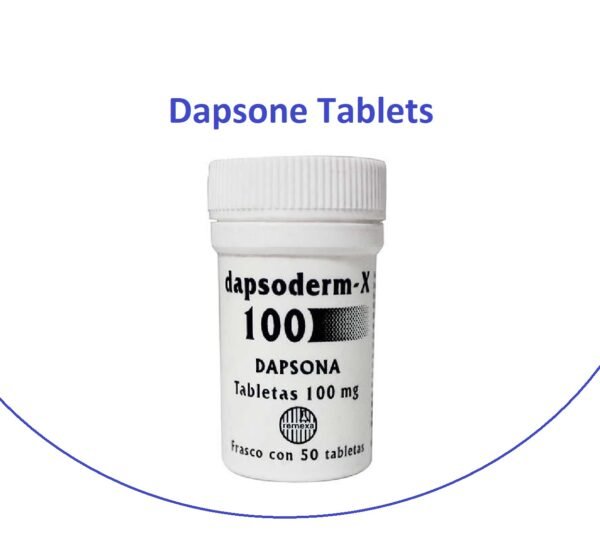
Dapsone is an orally (Tablets formulation) available antibiotic drug that is primarily used to treat patients with leprosy (in combination with clofazimine and rifampicin).
Dapsone Uses:
- Used in the treatment of leprosy (due to susceptible strains of Mycobacterium leprae) and dermatitis herpetiformis
-
Off Label Uses of Dapsone in Adults:
- Used in severe aphthous ulcers
- Used in bullous systemic lupus erythematosus
- Used in immune thrombocytopenia
- Used in pemphigus vulgaris (oral)
- Used in pneumocystis pneumonia (PCP) prophylaxis in HIV-infected patients
- Used in pneumocystis pneumonia (PCP) treatment in HIV-infected patients
- Used in relapsing polychondritis
- Used in Toxoplasma gondii encephalitis prophylaxis in HIV-infected patients
Dapsone Dose in Adults
Dapsone Dose in the treatment of Dermatitis herpetiformis:
- Oral: Start at 50 mg once in a day, increase to 300 mg once in a day, or higher to achieve full control, reduce to minimum maintenance dosage as soon as possible
Dapsone Dose in the treatment of Leprosy: Oral:
-
Tuberculoid (paucibacillary):
- National Hansen's Disease Program:
- 100 mg each day in combination with rifampin for 12 months.
- World Health Organization:
- 100 mg each day in combination with rifampin for 6 months.
- National Hansen's Disease Program:
-
Lepromatous (multibacillary):
- National Hansen's Disease Program:
- 100 mg each day in combination with rifampin and clofazimine for 24 months.
- World Health Organization:
- 100 mg each day in combination with clofazimine and rifampin for 12 months.
- National Hansen's Disease Program:
Dapsone Dose in the treatment of severe Aphthous ulcers (off-label): Oral:
- Initial:
- 25 mg each day for 3 days;
- Increase dose in increments of 25 mg per day every 3 days up to 100 mg per day for 3 days, then increase by 25 mg per day every 7 days up to 150 mg every day.
- Administer in 2 divided doses (75 mg dose is administered in 3 divided doses).
- Maintenance:
- 100 to 150 mg per day in 2 divided doses with or without concomitant colchicine.
Dapsone Dose in the treatment of Bullous systemic lupus erythematosus (off-label):
- Oral: 100 mg once in a day with or without prednisone.
Dapsone Dose in the treatment of Immune thrombocytopenia (ITP) (off-label):
- Oral: 75 to 100 mg per day or 1 to 2 mg per kg per day;
- duration of therapy is 21 days or more than 21 days.
Dapsone Dose in the treatment of Pemphigus Vulgaris (off-label):
- Oral: 25 mg each day for 7 days, then increase the dose in increments of 25 mg in a day every 7 days up to 100 mg per day for 7 days (4 weeks total therapy) with concomitant prednisone.
- Administer in 2 divided doses (a 75 mg dose is administered in 3 divided doses).
Note:
- If the patient becomes lesion free, taper, and discontinue gradually by decreasing the dose to 25 mg per day over 7 days.
- If no new lesions are seen, a gradual taper is continued.
- If lesions recur, the dose is increased by 25 mg daily at 7-day intervals until the patient develops no new lesions.
- The taper is usually ~4 weeks total.
Dapsone Dose in the treatment of Pneumocystis pneumonia (PCP) in HIV-infected patients: Oral:
-
Prophylaxis (primary or secondary; alternative to preferred therapy):
- 100 mg daily once in a day or in 2 divided doses as monotherapy or 50 mg in a day in combination with weekly pyrimethamine and leucovorin or
- 200 mg weekly in combination with weekly pyrimethamine and leucovorin
-
Treatment (mild to moderate disease; an alternative to preferred therapy):
- 100 mg once in a day in combination with trimethoprim for 21 days
Dapsone Dose in the treatment of Toxoplasma gondii encephalitis in HIV-infected patients (alternative to preferred therapy) (off-label):
-
Primary prophylaxis:
- Oral: 50 mg every day, in combination with weekly pyrimethamine and leucovorin or
- 200 mg in a weak in combination with weekly pyrimethamine and leucovorin.
Dapsone Dose in Childrens
Dapsone Dose in the treatment of Dermatitis herpetiformis:
-
Infants, Children, and Adolescents:
- Oral: Initial: 0.5 to 2 mg per kg per day in 1 to 2 divided doses.
- The maximum initial daily dose in adults: 50 mg per day;
- increase dose as needed to achieve control;
- The usual adult dose: 300 mg per dose; once lesions controlled, some have reported that dose may be decreased as tolerated for chronic therapy to a reported range: 0.125 to 0.5 mg per kg per day.
Dapsone Dose in the treatment of refractory Idiopathic thrombocytopenic purpura (ITP): Limited data available:
-
Children ≥3 years and Adolescents:
- Oral: 1 to 2 mg per kg per day for at least 2 months.
- Dosing based on two retrospective reviews.
- The first was a retrospective cohort analysis of adult and pediatric (age range: 3 to 61 years, including 35 patients less than 16 years) with chronic ITP ( more than 6 months with diagnosis) who failed steroid therapy and observed an overall similar response rate for children (65.7 percent ) and adults.
- Adverse effects occurred in three patients (one with acute hemolysis and two with an erythematous rash).
- The second was a small retrospective report of seven pediatric patients with acute or chronic refractory, symptomatic ITP (age range: 6 to 15 years) which also showed a similar response rate (60 percent ); however, a higher incidence (two of seven patients [29 percent ]) of methemoglobinemia was observed.
Dapsone Dose in the treatment of Leprosy (Hansen's disease):
Note:
- Treatment should be managed in consultation with a leprosy expert;
- The use of multidrug therapy is important to prevent drug resistance.
The recommended duration varies:
-
Paucibacillary (Tuberculoid) leprosy (1 to 5 patches):
-
National Hansen's Disease Program Recommendations:
- Infants, Children, and Adolescents:
- Oral: 1 mg per kg per dose once in a day for 12 months;
- The maximum dose: 100 mg per dose;
- Use in combination with rifampin.
- Infants, Children, and Adolescents:
-
WHO Recommendations (WHO 2016):
- Infants and Children <10 years and weighing <20 kg:
- Oral: 2 mg per kg per dose once in a day for 6 months;
- use in combination with rifampin
- Children ≥10 years and Adolescents ≤14 years:
- 20 to 40 kg: Oral:
- 25 mg once in a day for 6 months;
- use in combination with rifampin
- >40 kg: Oral:
- 50 mg once in a day for 6 months;
- use in combination with rifampin
- 20 to 40 kg: Oral:
- Adolescents >14 years:
- Oral: 100 mg once in a day for 6 months;
- use in combination with rifampin
- Infants and Children <10 years and weighing <20 kg:
-
-
Multibacillary (Lepromatous) leprosy (≥6 patches):
-
National Hansen's Disease Program Recommendations:
- Infants, Children, and Adolescents: Oral:
- 1 mg per kg per dose once in a day for 24 months;
- The maximum dose: 100 mg per dose;
- Use in combination with rifampin and clofazimine.
- Infants, Children, and Adolescents: Oral:
-
WHO Recommendations (WHO 2016):
- Infants and Children <10 years and weighing <20 kg: Oral:
- 2 mg per kg per dose once in a day for 12 months;
- use in combination with rifampin and clofazimine
- Children ≥10 years and Adolescents ≤14 years:
- 20 to 40 kg: Oral:
- 25 mg once in a day for 12 months; use in combination with rifampin and clofazimine
- >40 kg: Oral:
- 50 mg once in a day for 12 months; use in combination with rifampin and clofazimine
- 20 to 40 kg: Oral:
- Adolescents >14 years: Oral:
- 100 mg once in a day for 12 months;
- use in combination with rifampin and clofazimine
- Infants and Children <10 years and weighing <20 kg: Oral:
-
Dapsone Dose in the treatment of Linear IgA bullous dermatosis (LABD):
-
Infants, Children, and Adolescents:
- Oral: 0.5 to 2 mg per kg per day in 1 to 2 divided doses with or without prednisone
- may increase if needed at weekly intervals until symptoms controlled;
- The maximum reported daily dose: 4 mg per kg per day;
- The usual adult dose: 25 to 150 mg per day.
Dapsone Dose in the treatment of Pneumocystis jirovecii pneumonia (PCP) as an alternative agent (patients unable to take trimethoprim/ sulfamethoxazole):
-
Prophylaxis (primary or secondary):
- Multiple regimens (daily or weekly dosing) and combinations presented
-
HIV-exposed/-positive: Oral:
-
- Infants and Children:
- 2 mg per kg per dose once in a day (maximum daily dose: 100 mg per day) or 4 mg per kg per dose once in a weak (maximum weekly dose: 200 mg per week).
- Adolescents:
- 100 mg per day in 1 or 2 divided doses as monotherapy or 50 mg once in a day in combination with weekly pyrimethamine and leucovorin or
- 200 mg once in a week in combination with weekly pyrimethamine and leucovorin;
- monotherapy should not be used in patients who are seropositive for Toxoplasma gondii.
- Infants and Children:
-
-
Hematopoietic stem cell transplant recipient: Oral:
-
- Infants and Children:
- 2 mg per kg per dose once in a day;
- maximum dose: 100 mg per dose
- Adolescents:
- 100 mg per day in 1 or 2 divided doses
- Infants and Children:
-
Treatment of mild to moderate disease:
- Infants, Children, and Adolescents (HIV-positive/-exposed):
- Oral: 2 mg per kg per dose once in a day in combination with trimethoprim for 21 days;
- The maximum dose: 100 mg per dose.
- Infants, Children, and Adolescents (HIV-positive/-exposed):
-
Dapsone dose as an alternative agent for the primary prophylaxis of Toxoplasma gondii infection in HIV-exposed/-positive patients); (patients unable to tolerate trimethoprim/sulfamethoxazole):
Note: Multiple regimens (daily or weekly dosing), combinations, and dosing units (mg per kg, mg per m² ) presented; use caution.
-
Infants and Children:
- Oral: 2 mg per kg per dose or 15 mg per m² per dose once in a day in combination with pyrimethamine and leucovorin;
- maximum dose: 25 mg per dose.
-
Adolescents:
- Oral:
- 50 mg once in a day in combination with weekly pyrimethamine and leucovorin or
- 200 mg once in a weak in combination with weekly pyrimethamine and leucovorin.
- Oral:
Dapsone Pregnancy Risk Factor C
- Dapsone crosses over the placenta.
- You may also consider Dapsone as an alternative treatment for Pneumocystis Jirovecii pneumonia (PCP), or Toxoplasma gondii Encephalitis in HIV-infected pregnant women.
- According to the manufacturer, dapsone does not increase the risk of congenital anomalies if it is given in all three trimesters.
- Numerous reports have reported adverse effects on newborns after in utero dapsone exposure, including neonatal hemolytic disorder, methemoglobinemia and hyperbilirubinemia.
- Pregnant women who have leprosy or dermatitis mypetiformis may use dapsone.
- Neonatal care providers should be aware that maternal dapsone may increase the risk of hyperbilirubinemia or kernicterus.
Dapsone use during breastfeeding:
- Dapsone can be found in breast milk, and in the serum of nursing babies.
- The manufacturer suggests that the mother decide whether to stop nursing her infant or discontinue using the drug.
- This is in consideration of the possibility of serious adverse reactions.
- A breast-fed infant has been diagnosed with hemolytic anemia.
Dapsone Dose in Kidney Disease:
No dosage adjustment required.
Dapsone Dose in Liver disease:
Manufacturer’s labeling doesn't provide any dosage adjustments; use with caution
Side effects of Dapsone:
-
Hematologic:
- Reticulocyte increase
- Leukopenia
- Hemolysis
- Hemoglobin decrease
- Methemoglobinemia
- Red cell life span shortened
- Agranulocytosis
- Anemia
- Pure red cell aplasia (case report)
-
Cardiovascular:
- Tachycardia
-
Central nervous system:
- Headache
- Insomnia
- Psychosis
- Fever
- Vertigo
-
Dermatologic:
- Bullous and exfoliative dermatitis
- Morbilliform and scarlatiniform reactions
- Phototoxicity
- Stevens-Johnson syndrome
- Toxic epidermal necrolysis
- Erythema nodosum
- Exfoliative dermatitis
- Urticaria
-
Endocrine & metabolic:
- Hypoalbuminemia (without proteinuria)
- Male infertility
-
Gastrointestinal:
- Nausea
- Pancreatitis
- Abdominal pain
- Vomiting
-
Hepatic:
- Cholestatic jaundice
- Hepatitis
-
Neuromuscular & skeletal:
- Lower motor neuron toxicity (prolonged therapy)
- Lupus-like syndrome
- Peripheral neuropathy (rare, nonleprosy patients)
-
Ophthalmic:
- Blurred vision
-
Otic:
- Tinnitus
-
Renal:
- Albuminuria
- Nephrotic syndrome
- Renal papillary necrosis
-
Respiratory:
- Interstitial pneumonitis
- Pulmonary eosinophilia
-
Miscellaneous:
- Infectious mononucleosis-like syndrome (rash, fever, lymphadenopathy, hepatic dysfunction)
Contraindications to Dapsone:
- Hypersensitivity to any component of the formulation or dapsone
Warnings and precautions
-
Blood dyscrasias:
- Aplastic anemia, agranulocytosis and other severe blood disorders (some fatal) were reported. Monitor for signs/symptoms (eg pallor, purpura jaundice fever sore throat).
- If hemopoiesis, leukocytes, or platelets are reduced, discontinue therapy.
-
Dermatologic reactions
- Rarely have serious dermatologic reactions been reported, including toxic epidermal necrolysis, scarlatiniform reactions and scarlatiniform reactions.
- If severe or new dermatologic reactions occur, discontinue therapy. Leprosy reactional states (eg erythema nososum leprosum), however, do not need to be stopped.
-
Hepatic effects
- There have been reports of toxic hepatitis, cholestatic jaundice and toxic liver disease. Patients with G6PD may experience hyperbilirubinemia more often.
- If liver function is abnormal, discontinue use.
-
Peripheral neuropathy:
- Reports of motor loss and weakness have been made; stop using if you develop peripheral neuropathy symptoms.
- Most patients recover after stopping treatment. Some patients can tolerate retreatment at lower doses.
-
Allergy to sulfonamide
- Patients with hypersensitivity to other Sulfonamides should be cautious.
- Sulfone reactions can also cause potentially fatal hypersensitivity reactions and require drug discontinuation.
-
Superinfection
- Extended use can lead to fungal or bacterial overinfections, such as pseudomembranous and C. difficile-associated diarrhea. CDAD has been documented >2 months after antibiotic treatment.
-
Anemia:
- Patients with severe anemia should be treated before you start therapy.
Dapsone (systemic): Drug Interaction
Note: Drug Interaction Categories:
- Risk Factor C: Monitor When Using Combination
- Risk Factor D: Consider Treatment Modification
- Risk Factor X: Avoid Concomitant Use
Risk Factor C (Monitor therapy). |
|
| Atazanavir | Atazanavir's toxic/adverse effects may be increased by Dapsone (Systemic). Hyperbilirubinemia could be an increased risk. |
| BCG Vaccine (Immunization) | Antibiotics can decrease the therapeutic effects of BCG Vaccine (Immunization). |
| Bosentan | Could lower serum concentrations of CYP3A4 substrates (High Risk with Inducers). |
| Moderate CYP3A4 Inducers | Could lower serum concentrations of CYP3A4 substrates (High Risk with Inducers). |
| Dapsone (Topical) | May increase the toxic/adverse effects of Methemoglobinemia Associated Agents. |
| Deferasirox | Could lower serum concentrations of CYP3A4 substrates (High Risk with Inducers). |
| Erdafitinib | Could lower serum concentrations of CYP3A4 substrates (High Risk with Inducers). |
| Ivosidenib | Could lower serum concentrations of CYP3A4 substrates (High Risk with Inducers). |
| Lactobacillus & Estriol | Antibiotics can reduce the therapeutic effects of Lactobacillus or Estriol. |
| Local Anesthesia | Methemoglobinemia Associated agents may increase the harmful/toxic effects of Local Anesthestics. Methemoglobinemia risk may increase. |
| Nitric Oxide | May increase the toxic/adverse effect of Methemoglobinemia Associated Agents. Combinations of these agents can increase the risk of methemoglobinemia. When nitric dioxide is combined with other agents that can cause methemoglobinemia, it is important to monitor patients for signs such as hypoxia and cyanosis. Avoid lidocaine/prilocaine. |
| Prilocaine | Methemoglobinemia Associated Agents can increase the toxic/adverse effects of Prilocaine. Combinations with these agents can increase the risk of methemoglobinemia. When prilocaine is combined with other agents that can cause methemoglobinemia, monitor patients for signs such as hypoxia and cyanosis. Lidocaine/prilocaine should not be given to infants who are receiving these agents. |
| Probenecid | May increase serum Dapsone (Systemic) concentrations |
| Rifabutin | May lower the serum level of Dapsone. |
| Rifamycin Derivatives | May lower the serum level of Dapsone. |
| Rifapentine | Could lower the serum concentration of CYP2C9 substrates (High Risk with Inducers). |
| Sarilumab | Could lower serum concentrations of CYP3A4 substrates (High Risk with Inducers). |
| Siltuximab | Could lower serum concentrations of CYP3A4 substrates (High Risk with Inducers). |
| Sodium Nitrite | Methemoglobinemia Associated Agents can increase the toxic/adverse effect of Sodium Nitrite. Combinations of these agents could increase the chance of significant methemoglobinemia. |
| Tocilizumab | Could lower serum concentrations of CYP3A4 substrates (High Risk with Inducers). |
| Trimethoprim | May increase serum Dapsone (Systemic) concentrations. The serum concentration of Trimethoprim may be increased by Dapsone (Systemic). |
Risk Factor D (Consider therapy modifications) |
|
| Antimalarial Agents | Systemic may increase the toxic/adverse effects of Dapsone. Concomitant use with antimalarial drugs and dapsone could increase hemolytic reactions. Systemic may increase the toxic/adverse effects of Antimalarial Agents. Concomitant use dapsone and antimalarial drugs may increase hemolytic reactions. Monitoring: Pay close attention to patients who are deficient in methemoglobin reductase (G6PD), glucose-6-phosphate hydrogenase(G6PD), or hemoglobin M. |
| Strong CYP3A4 Inducers | May increase metabolism of CYP3A4 substrates (High Risk with Inducers). Management: You may consider a different drug to replace one of the interacting drugs. Some combinations might be contraindicated. Consult appropriate manufacturer labeling. |
| Dabrafenib | High risk of Inducers causing a decrease in serum CYP3A4 substrates. Management: If possible, seek alternatives to the CYP3A4 substrate. Concomitant therapy should be avoided if possible. Monitor the clinical effects of the substrate carefully (especially therapeutic effects). |
| Dabrafenib | High risk of Inducers causing a decrease in serum CYP2C9 substrates. Management: If possible, seek alternatives to the CYP2C9 substrat. Concomitant therapy should be avoided if possible. Monitor the clinical effects of the substrate carefully (especially therapeutic effects). |
| Enzalutamide | High risk of Inducers causing a decrease in serum concentrations of CYP3A4 substrates. Management: Avoid concurrent use of enzalutamide and CYP3A4 substrates with a narrow therapeutic index. You should exercise caution when using enzalutamide or any other CYP3A4 sub-substance. |
| Enzalutamide | High risk of Inducers causing a decrease in serum concentrations of CYP2C9 substrates. Management: Avoid concurrent use of enzalutamide and CYP2C9 substrates with a narrow therapeutic index. You should exercise caution when using enzalutamide or any other CYP2C9 substrat. |
| Lorlatinib | High risk of Inducers causing a decrease in serum concentrations of CYP3A4 substrates. Management: Do not use lorlatinib concurrently with any CYP3A4 Substrates. Even a slight decrease in serum concentrations could cause therapeutic failure or serious clinical consequences. |
| Mitotane | High risk of Inducers causing a decrease in serum concentrations of CYP3A4 substrates. Treatment: Patients receiving mitotane may require significant adjustments in the dosage of CYP3A4 Substrates. |
| Pitolisant | High risk of Inducers causing a decrease in serum concentrations of CYP3A4 substrates Management: Avoid combining pitolisant and a CYP3A4 substrat with a low therapeutic index. Pitolisant should not be combined with other CYP3A4 sub-substances. |
| Sodium Picosulfate | Antibiotics can reduce the therapeutic effects of Sodium Picosulfate. Patients who are currently using or have just finished using antibiotics should consider using an alternative product to cleanse the bowel before undergoing a colonoscopy. |
| St John's Wort | High risk of Inducers causing a decrease in serum CYP3A4 Substrates. Management: You may consider a different drug to replace one of the interacting drugs. Some combinations might be contraindicated. Consult appropriate manufacturer labeling. |
| Typhoid Vaccine | The therapeutic effects of Typhoid vaccine may be diminished by antibiotics. The only affected strain is the live attenuated Ty21a. Patients being treated with systemic antibiotics should avoid vaccination with live attenuated Typhoid vaccine (Ty21a). This vaccine should not be used until at least three days after the cessation or discontinuation of antibacterial agent treatment. |
Risk Factor X (Avoid Combination) |
|
| BCG (Intravesical). | The therapeutic effects of BCG (Intravesical) may be diminished by antibiotics |
| Cholera Vaccine | Cholera Vaccine may be less effective if taken with antibiotics. Treatment: Cholera vaccine should be avoided in patients who have received systemic antibiotics. |
Monitoring parameters:
- Check G6PD levels (prior to initiation);
- CBC (weekly for the first month, monthly for 6 months and semiannually thereafter);
- reticulocyte counts;
- liver function tests (baseline and periodic).
- Monitor patients for signs of hemolysis, jaundice, and blood dyscrasias.
How to administer Dapsone Tablets?
It is administered orally with meals if GI upset occurs.
Mechanism of action of Dapsone:
It is a competitive antagonist to para-aminobenzoic (PABA) which prevents normal bacterial use of PABA for synthesis of Folic Acid.
Absorption:
- Rapid and almost complete
Protein binding:
- Dapsone: 70 percent to 90 percent ;
- Metabolite: ~99 percent
Metabolism:
- Hepatic (acetylation and hydroxylation);
- forms multiple metabolites
Half-life elimination:
- Children: 15.1 hours
- Adults: 28 hours (range: 10 to 50 hours)
Time to peak:
- 4 to 8 hours
Excretion:
- Urine (~85 percent as metabolites)
International Brand Names of Dapsone:
- MAR-Dapsone
- Daps
- Dapsomed
- Pyrisone
- Dapson
- Dapson-Fatol
- Dapsona
- Dapsone
- Disulone
- Dopsan
- Lennon-Dapsone
- Lepsone
Dapsone Brand Names in Pakistan:
Dapsone Tablets 25 mg |
|
| Dapsin | Biogen Pharma |
Dapsone Tablets 100 mg |
|
| Dapsin | Biogen Pharma |
.png)