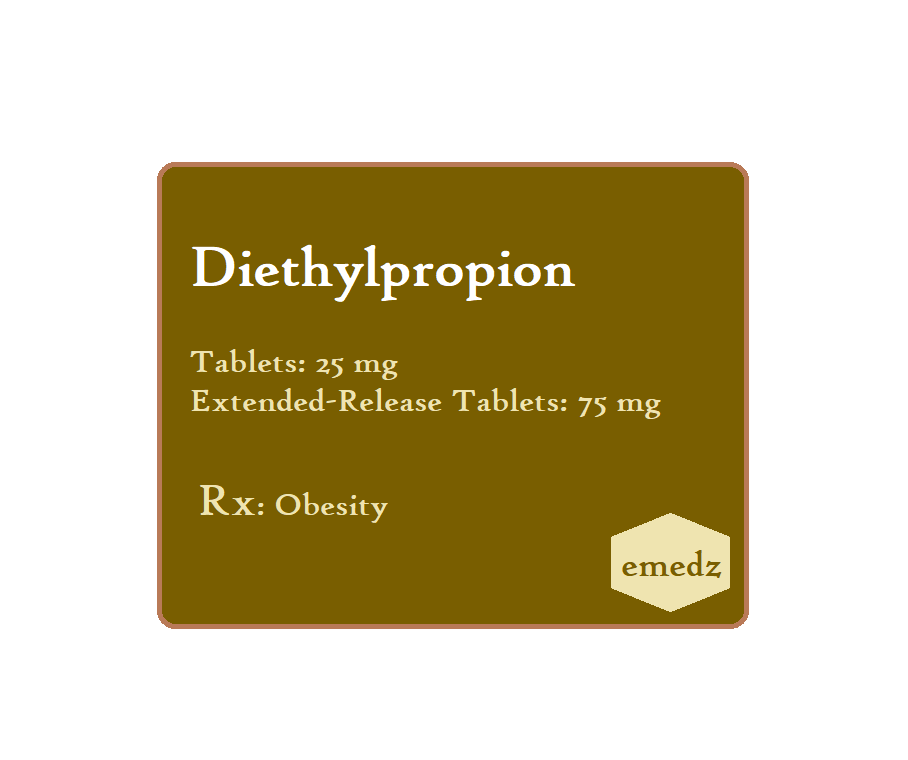
Diethylpropion (Anorex) is a stimulant drug that causes decreases appetite via central mechanisms. It is used for the short-term treatment of exogenous obesity.
Diethylpropion Uses:
- Obesity:
- It is indicated for the short-term treatment of obesity as an adjunct to diet and exercise.
- Weight loss treatment is indicated in patients who have a body mass index of 30 kg/m² or more or 27 kg/m² or more in the presence of other metabolic risk factors like hypertension, diabetes, and/or dyslipidemia or a high waist circumference.
- Weight loss treatment must be used in conjunction with a comprehensive weight management program.
Diethylpropion (Anorex) Dose in Adults:
Diethylpropion (Anorex) Dose in the treatment of Obesity: Oral:
- Immediate release:
- 25 mg thrice daily or four times a day.
- Controlled release:
- 75 mg once a day.
Use in Children:
Refer to adults dosing.
Pregnancy Risk Factor B
- It can also cross the placental boundary. Animal reproduction studies have not shown any adverse events.
- After the mother has given the drug, withdrawal symptoms may occur in neonates.
Diethylpropion use during breastfeeding:
- It can be excreted from breast milk. It is recommended that it be used with caution by lactating mothers.
Dose in Kidney Disease:
There are no dosage adjustments provided in the manufacturer's labeling. It should be used with caution.
Dose in Liver disease:
There are no dosage adjustments provided in the manufacturer's labeling.
Side effects of Diethylpropion (Anorex):
- Cardiovascular:
- Cardiac Arrhythmia
- Cerebrovascular Accident
- ECG Changes
- Heart Valve Disease
- Hypertension
- Palpitations
- Tachycardia
- Central Nervous System:
- Anxiety
- Depression
- Dizziness
- Drowsiness
- Dysphoria
- Euphoria
- Headache
- Insomnia
- Jitteriness
- Malaise
- Nervousness
- Overstimulation
- Precordial Pain
- Psychosis
- Restlessness
- Seizure
- Dermatologic:
- Alopecia
- Diaphoresis
- Ecchymoses
- Erythema
- Skin Rash
- Urticaria
- Endocrine & Metabolic:
- Changes In Libido
- Gynecomastia
- Menstrual Disease
- Gastrointestinal:
- Abdominal Distress
- Constipation
- Diarrhea
- Dysgeusia
- Nausea
- Vomiting
- Xerostomia
- Genitourinary:
- Dysuria
- Impotence
- Hematologic & Oncologic:
- Agranulocytosis
- Bone Marrow Depression
- Leukopenia
- Neuromuscular & Skeletal:
- Dyskinesia
- Myalgia
- Tremor
- Ophthalmic:
- Blurred Vision
- Mydriasis
- Renal:
- Polyuria
- Respiratory:
- Dyspnea
- Pulmonary Hypertension
- Miscellaneous:
- Tachyphylaxis
Contraindications to Diethylpropion (Anorex):
- Allergies or idiosyncrasies to diethylpropion and other sympathomimetic antiamines
- Advanced arteriosclerosis
- Hypertension severe
- Hypertension in the lungs
- Hyperthyroidism
- Glaucoma
- History of drug abuse and agitated states
- Within 14 days of MAO inhibitor therapy.
- Use with other anorectic drugs concurrently
Warnings and precautions
- CNS effects
- Stimulant drugs and amphetamines can affect thought and decision making.
- The drug should be used with caution by patients who use heavy machinery or are driving.
- Heart failure:
- Patients with heart disease should avoid the drug as it has been shown to cause myocardial toxicity.
- Primary pulmonary hypertension (PPH).
- Patients who are taking anorexigenic drugs have a high risk of developing primary hypertension.
- This condition can lead to death. The risk of developing pulmonary hypertension may be 23 times higher if these medicines are used for more than three months.
- If the patient experiences pulmonary hypertension, such as angina, exertional dyspnea or syncope, the treatment should be stopped immediately.
- Heart disease of the valvular kind:
- Patients on anorexigenic medications are at high risk for developing valvular diseases.
- Patients who take high doses of anorexigenic drugs for prolonged periods of time or with concomitant use other anorexigenic medications are at greater risk.
- Patients with severe structural heart conditions such as rhythm abnormalities or cardiomyopathy should avoid stimulant drugs.
- Diabetes:
- Patients with diabetes should be cautious when taking the drug.
- Diabetes patients may experience an increase in blood sugar levels if they take drugs that alter their appetite. Hypoglycemia episodes should be closely monitored.
- Hypertension:
- Hypertension patients and those with heart disease should not use it. It can cause elevation of blood pressure and heart rate, and worsen angina.
- Psychiatric disorders
- Patients suffering from mania, bipolar disorder, and preexisting psychosis are advised to avoid stimulant drugs. They may experience manic episodes.
- Patients without a history of schizophrenia or mania may experience a new-onset. Be on the lookout for signs of aggression or behavioral changes in patients.
- Psychotic patients can experience a worsening psychosis or develop thought and behavioral disorders.
- Seizure disorders:
- Patients with seizures should use it with caution.
- Tourette's syndrome
- Stimulant drugs may unmask tics. Tourette's patients should be cautious about taking stimulant drugs.
Diethylpropion: Drug Interaction
Note: Drug Interaction Categories:
- Risk Factor C: Monitor When Using Combination
- Risk Factor D: Consider Treatment Modification
- Risk Factor X: Avoid Concomitant Use
Risk Factor C (Monitor therapy). |
|
|
Alcohol (Ethyl) |
May increase the toxic/adverse effects of Diethylpropion |
|
Amifampridine |
Agents with Seizure Threshold Lower Potential can enhance the neuroexcitatory or seizure-potentiating effects of Amifampridine. |
|
Might increase the hypertensive effects of Sympathomimetics. AtoMOXetine could increase the tachycardic effects of Sympathomimetics. |
|
|
BuPROPion |
Agents with Seizure Threshold Lowering Potential may increase the neuroexcitatory or seizure-potentiating effects. |
|
Cannabinoid-Containing Products |
Sympathomimetics may increase the tachycardic effects of Sympathomimetics. Cannabidiol is an exception. |
|
Doxofylline |
Doxofylline may be more toxic or harmful if taken with Sympathomimetics. |
|
CNS stimulants may increase hypertension. |
|
|
Guanethidine |
May increase the arrhythmogenic effects of Sympathomimetics. The hypertensive effects of Sympathomimetics may be enhanced by Guanethidine. |
|
Solriamfetol |
Sympathomimetics could increase the hypertensive effects of Solriamfetol. |
|
Solriamfetol |
The hypertensive effects of Solriamfetol may be augmented by CNS stimulants. |
|
Sympathomimetics |
May increase the toxic/adverse effects of other Sympathomimetics. |
Risk Factor D (Consider therapy modifications) |
|
|
Topical Cocaine |
Sympathomimetics may increase hypertensive effects. Management: If possible, consider other options to this combination. Concurrent use of this combination can cause significant elevations in blood pressure and heart rate. You should also be aware of any signs of myocardial injury. |
|
Agents with Seizure Threshold Lowering Potential can increase the toxic/adverse effects of Iohexol. The risk of seizures could be elevated. Management: Stop using agents that lower the seizure threshold 48 hrs before you start intrathecal iohexol. To resume these agents, wait at least 24 hours following the procedure. Consider using prophylactic anticonvulsants in non-elective procedures. |
|
|
Iomeprol |
Agents with Seizure Threshold Lowering Potential can increase the toxic/adverse effects of Iomeprol. The risk of seizures could be elevated. Management: Stop using agents that lower the seizure threshold 48 hrs before you start intrathecal iomeprol. To resume these agents, wait at least 24 hours following the procedure. Consider using prophylactic anticonvulsants in non-elective procedures. |
|
Iopamidol |
Agents with Seizure Threshold Lowering Potential can increase the toxic/adverse effects of Iopamidol. The risk of seizures could be elevated. Management: Stop using agents that lower the seizure threshold 48 hrs before you start intrathecal iopamidol. To resume these agents, wait at least 24 hours following the procedure. Consider using prophylactic anticonvulsants in non-elective procedures. |
Risk Factor X (Avoid Combination) |
|
|
Acebrophylline |
CNS stimulants may have a stronger stimulatory effect. |
|
Iobenguane Radiopharmaceutical Products |
CNS stimulants can decrease the therapeutic effects of Iobenguane Radiopharmaceutical Products. Management: Stop using any drugs that could inhibit or interfere catecholamine transport and uptake for at most 5 biological half-lives prior to iobenguane Administration. These drugs should not be administered until 7 days following each iobenguane dosage. |
|
Monoamine Oxidase Inhibitors |
May increase the hypertensive effects of Diethylpropion |
Monitoring parameters:
- Cardiac evaluation is required before treatment initiation for preexisting valvular heart disease and pulmonary hypertension.
- An echocardiogram should be performed at regular intervals during the treatment.
- Monitor weight, BMI, waist circumference, and blood pressure.
- Monitor renal functions in elderly patients.
How to administer Diethylpropion (Anorex)?
Immediate release:
- It should be administered before meals (at least one hour before meals). One tablet may be administered in the midevening in patients who develop night hunger.
Controlled release:
- The tablets should be swallowed whole without chewing or crushing. Administer at midmorning.
Mechanism of action of Diethylpropion (Anorex):
- It is a sympathomimetic drug with properties similar to amphetamines and has a structural similarity to bupropion.
- It is unknown what the exact mechanism of action works.
- It may act through the centra pathways, stimulating the hypothalamus to release norepinephrine.
- This causes a loss of appetite.
Metabolism:
- It is metabolized by N-dealkylation, and reduced to its active metabolites.
Half-life elimination:
- Aminoketone metabolites: About 4-6 hours
Excretion:
- Urine
International Brand Names of Diethylpropion:
- Anorex
- Apisate
- Atractil
- Bonumin
- Delgamer
- Dietil Retard
- Dietil-retard
- Dipion
- Dobesin
- Linea
- Lipomin
- Moderatan
- Nulobes
- Prefamone
- Prefamone Chronule
- Prothin
- Regenon
- Regenon Retard
- Tenuate
- Tenuate Dospan
Diethylpropion Brand Names in Pakistan:
No Brands Available in Pakistan.
.png)


