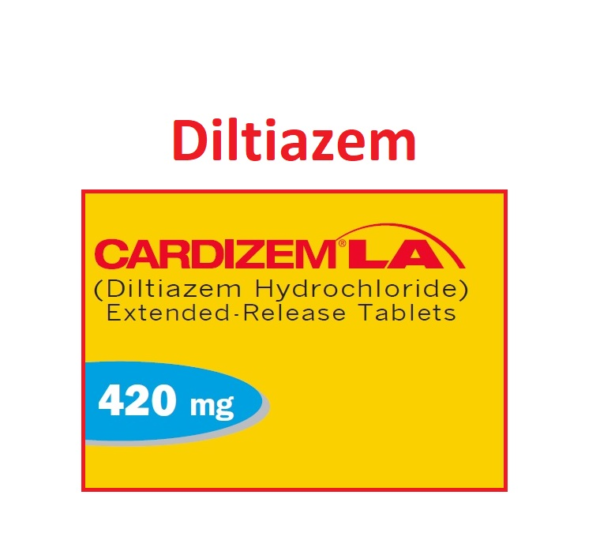
Diltiazem (Cardizem) is a rate-limiting calcium-channel blocker, like verapamil, that is used in the treatment of patients with angina, hypertension, and cardiac arrhythmias.
Diltiazem (Cardizem) Uses:
- Oral:
- It can be used in the management of hypertension, chronic stable angina, vasospastic angina.
- Injection:
- In parenteral form, it is used in the management of atrial fibrillation or atrial flutter for acute ventricular rate control, and conversion of supraventricular tachycardia.
-
Off Label Use of Diltiazem in Adults:
- For topical use in anal fissures.
- Atrial fibrillation or atrial flutter, chronic ventricular rate control.
- Chest pain associated which is associated with cocaine ingestion, with or without evidence of acute coronary syndrome.
- Hypertrophic cardiomyopathy.
- Idiopathic ventricular tachycardia.
- Non-sustained ventricular tachycardia or symptomatic ventricular premature beat.
- Pulmonary arterial hypertension (group 1).
- Raynaud phenomenon.
- In the management of supraventricular tachycardia including atrioventricular nodal reentrant tachycardia, atrioventricular reentrant tachycardia, focal atrial tachycardia, and multifocal atrial tachycardia
Diltiazem Dose in Adults:
Notes: Safety:
- Due to its negative inotropic and chronotropic effects, its use is generally not recommended in patients taking a beta-blocker or who have heart failure with reduced ejection fraction.
- Unless a functioning pacemaker has been placed, its use in patients with sinus node dysfunction, or second- or third-degree atrioventricular block is contraindicated.
Dosage forms:
- Available preparations include:
- Oral immediate-release which is usually dosed 4 times a day,
- 12-hour extended-release (ER) (dosed twice daily), and
- a 24-hour extended-release which is dosed once a day,
- These are present in various formulations and an IV injection.
- For conversion between oral immediate-release, 12- and 24-hour extended-release, and parenteral formulations, refer to the conversion section below.
Diltiazem (Cardizem) Dose in the treatment of Angina pectoris:
-
Chronic stable angina (alternative agent):
It should be noted that a beta-blocker is the preferred initial therapy. But if there are ongoing symptoms on beta-blocker therapy, a calcium channel blocker (typically a dihydropyridine [eg, amlodipine]) can be added with close monitoring of heart rate. Diltiazem can be used as an alternative therapy if there are contraindications or unacceptable adverse effects with beta-blockers.
-
Oral:
- Immediate-release:
- Initially, it is given as 30 mg 4 times a day.
- It can be increased as needed at 1- to 2-day intervals, to effective antianginal dose The usual effective dose is 240 to 360 mg per day in 3 to 4 divided doses.
- 12-hour (twice a day) formulations:
- For off-label use, it is initially can be given as 60 mg twice a day.
- It can be titrated up as needed at 7- to 14-day intervals to effective antianginal dose.
- The usual recommended dose is 240 to 360 mg/day in 2 divided doses.
- 24-hour (once-daily) formulations:
- Initially, it can be given as 120 to 180 mg once a day.
- It can be titrated up as needed at 7- to 14-day intervals to effective antianginal dose.
- The usual effective dose is 240 to 360 mg per day.
- Immediate-release:
-
Vasospastic angina:
It can be used alone or in combination with nitrates. Some experts suggest initiating therapy with a 24-hour once a day formulation.
-
-
Oral:
- Immediate-release:
- Initially, this formulation can be given as 30 mg 4 times a day.
- It can be increased as needed at 1- to 2-day intervals to effective antianginal dose.
- The usual effective dose is 240 to 360 mg/day in 3 to 4 divided doses.
- 12-hour (twice-daily) formulations:
- For off-label use, it is initially can be given as 60 mg twice a day.
- It can be increased as needed at 7- to 14-day intervals to effective antianginal dose. The usual effective dose is 240 to 360 mg/day in 2 divided doses.
- 24-hour (once a day) formulations:
- Initially, it can be given as 120 to 180 mg once a day.
- It can be increased as needed at 7- to 14-day intervals to effective antianginal dose. The usual effective dose is 240 to 360 mg/day.
- Immediate-release:
-
Diltiazem (Cardizem) Dose in the treatment of Chest pain associated with cocaine ingestion, with or without evidence of acute coronary syndrome (off-label):
Note: Adjunct or alternative to nitroglycerin.
-
-
IV:
- Intravenously it can be given in bolus as 0.25 mg/kg (actual body weight) over 2 minutes (average dose: 20 mg).
- It might be repeated after 15 minutes if indicated.
- Patients who respond after 1 or 2 bolus doses, can be started on a continuous infusion for ongoing symptoms despite optimal therapy with nitroglycerin.
-
Diltiazem (Cardizem) Dose in the treatment of Atrial fibrillation or atrial flutter, rate control:
It is noteworthy that for rate control in hemodynamically stable patients, its use is avoided in patients with preexcitation associated with an accessory pathway, as this can lead to ventricular arrhythmias.
-
Acute ventricular rate control:
-
IV:
- The usual bolus dose is 0.25 mg/kg (actual body weight) over 2 minutes (average dose: 20 mg).
- If rate control is insufficient after 15 minutes, a repeat bolus dose of 0.35 mg/kg over 2 minutes can be given with an average dose of 25 mg.
- Patients who respond after 1 or 2 bolus doses can be started on a continuous infusion.
- Continuous infusion following bolus:
- Initially, it is given as 5 to 10 mg/hour.
- The infusion rate may be increased in 5 mg/hour increments according to ventricular response, up to a maximum of 15 mg/hour.
- When increasing the infusion rate, an additional bolus dose can be used to provide more rapid onset.
- In totality, the use of a continuous infusion for more than 24 hours or more than 15 mg/hour is not indicated due to the potential for drug accumulation.
-
Chronic ventricular rate control (off-label):
-
Oral:
- Immediate-release:
- Initially, Diltiazem can be given as 30 mg 4 times a day.
- It can be titrated up as needed to achieve ventricular rate control. The usual dose is 120 to 480 mg/day in 3 or 4 divided doses.
- Extended-release:
- It can be used as 120 mg once a day or in 2 divided doses depending on the formulation.
- It can be increased as needed to achieve ventricular rate control. The usual dose is 120 to 480 mg/day.
- Immediate-release:
-
-
Diltiazem (Cardizem) Dose as an alternative agent in the treatment of Hypertension:
It can be used for initial treatment in patients with a blood pressure of more than 20/10 mm Hg above goal. It can be used in combination with another appropriate agent (eg, ACE inhibitor, ARB, thiazide diuretic). For patients less than 20/10 mm Hg above goal, some clinicians recommend an initial trial of monotherapy. However, over time, many patients will require combination therapy. Some physicians reserve non-dihydropyridine calcium channel blockers for patients with relevant comorbidity (eg, rate control in atrial fibrillation or flutter).
-
Oral:
- 12-hour (twice a day) formulations:
- It can be used as 60 to 120 mg twice a day. It can be increased as needed after approximately 7 to 14 days.
- The usual dose is 240 to 360 mg per day in 2 divided doses.
- 24-hour (once a day) formulations.
- Initially, it can be given as 120 to 240 mg once a day.
- The dose can be increased as needed in 7 to 14 days. The usual dose is 120 to 360 mg once a day.
- 12-hour (twice a day) formulations:
Diltiazem (Cardizem) Dose as an alternative agent in the treatment of Non-sustained ventricular tachycardia or ventricular premature beats, symptomatic (off-label):
Beta-blocker is always preferred as initial therapy. However, if there are ongoing symptoms on beta-blocker therapy, diltiazem may be added with close monitoring of heart rate. It can also be used as an alternative therapy if beta-blockade cannot be tolerated.
- Orally it can be given as 120 to 180 mg once a day or in divided doses in initial stages. Depending on the drug formulation its usual effective dose is 240 to 360 mg/day.
Diltiazem (Cardizem Dose as an alternative agent in the treatment of Pulmonary arterial hypertension (group-1) (off-label):
It can only be used for rigorously selected group 1 pulmonary arterial hypertension patients with a positive vasoreactivity test and under the care of a pulmonary hypertension specialist.
- 24-hour (once-daily) formulations:
- It can be given per oral as 120 mg once a day.
- Increase the dose slowly and with close hemodynamic monitoring. The reported daily dose range is 240 to 720 mg per day.
Diltiazem (Cardizem) Dose as an alternative agent in the treatment of Supraventricular tachycardia:
(eg, atrioventricular nodal reentrant tachycardia, atrioventricular reentrant tachycardia, focal atrial tachycardia, and multifocal atrial tachycardia): It is notable that for hemodynamically stable patients if vagal maneuvers or adenosine are unsuccessful, then do not use it in patients with preexcitation associated with an accessory pathway, as this can lead to ventricular arrhythmias.
-
Acute treatment:
- In IV form it can be given in bolus as 0.25 mg/kg of actual body weight over 2 minutes with an average dose of 20 mg.
- But if the response is insufficient after more than 15 minutes have elapsed then a repeat bolus dose of 0.35 mg/kg over 2 minutes may be given with an average dose of 25 mg.
- If boluses do not terminate the arrhythmia, consider alternative therapy.
-
Chronic maintenance (off-label use):
- Oral:
- Immediate-release:
- Initially, it can be given as 30 mg 4 times a day. It can be increased as needed for heart rate control. The usual effective dose is 360 mg per day in divided doses.
- Extended-release:
- It is given as 120 mg once a day or in 2 divided doses depending on the formulation. It can be increased as needed for heart rate control. The usual effective dose is 360 mg per day.
- Immediate-release:
- Oral:
Conversion between dosage forms:
-
Conversion from immediate-release to extended-release formulations:
- Patients stabilized on a maintenance regimen between 120 and 360 mg of immediate-release tablets may be transitioned to an extended-release formulation at the same daily dose administered in 1 or 2 divided doses depending on the formulation.
- In some patients, the dosage of the extended-release formulation may require adjustment following conversion.
-
Conversion from IV infusion to oral:
- The immediate-release can be started approximately 1 hour before stopping the infusion.
- The oral daily dose may be estimated from the IV infusion rate by using the equation below. Round oral doses to the nearest appropriate strength and formulation.
- Oral dose (mg per day) = [infusion rate (mg/hour) × 3 + 3] × 10
- 5 mg/hour = 180 mg/day
- 10 mg/hour = 300 to 360 mg/day
- 15 mg/hour = 480 mg/day
Diltiazem (Cardizem) Dose in Childrens
Diltiazem (Cardizem) Dose in the treatment of Atrial tachyarrhythmias, rate control (bridge to therapy):
-
Infants ≥6 months, Children, and Adolescents:
- IV: The initial bolus can be given as 0.25 mg/kg over 5 minutes with a maximum dose of 20 mg/dose [average adult dose]) followed by a continuous IV infusion.
- The recommended rate range in one study was 0.05 to 0.15 mg/kg/hour.
- It is important to note that the usual adult infusion rate for arrhythmia is 5 to 15 mg/hour.
- The dose should be individualized based on patient response.
- It should be noted that in adult patients, infusions for more than 24 hours are not recommended.
- When the administration of diltiazem infusion gets prolonged for more than 24 hours, the possibility of decreased diltiazem clearance, prolonged elimination half-life, and increased diltiazem and diltiazem metabolite plasma concentrations should be considered.
Diltiazem (Cardizem) Dose in the treatment of Hypertension:
-
Infants and Children: Oral:
- Immediate-release formulations:
- Initially, its given as 1.5 to 2 mg/kg/day in 3 to 4 divided doses. This can be gradually increased at 1- to 2-day intervals until optimum response is obtained.
- The usual maximum daily dose is 3.5 mg/kg/day.
- Some physicians recommend a higher maximum daily dose of 6 mg/kg/day up to 360 mg/day, whichever is less.
- It is noteworthy that once the patient is established on a total daily dose, it can be converted to an extended-release dosage form at the appropriate interval (once or twice daily), in children who are able to swallow capsules whole and receiving adequate mg amount.
- Immediate-release formulations:
-
Adolescents: Oral:
- Immediate-release formulations:
- The recommended dose is 30 to 120 mg/dose administered 3 to 4 times a day. The usual daily dosage range is 180 to 360 mg per day.
- Extended-release formulations:
- In capsule form, the extended-release (once-daily dosing; eg, Cardizem CD, Tiazac):
- 120 to 30 mg once daily is recommended.
- Capsule, extended-release (twice-daily dosing; eg, Cardizem SR):
- 120 to 300 mg/day in 2 divided doses is recommended.
- In capsule form, the extended-release (once-daily dosing; eg, Cardizem CD, Tiazac):
- Immediate-release formulations:
Pregnancy Risk Factor C
- Negative events have been documented in animal reproduction studies.
- Chronic maternal hypertension, if left untreated, can cause adverse effects in the infant, mother, and fetus.
- For the treatment of hypertension during pregnancy, it is better to use other agents.
- Women with hypertrophic cardiomyopathy may continue treatment with diltiazem before becoming pregnant. However, it is advised to increase fetal monitoring.
Diltiazem use during breastfeeding:
- Diltiazem is found in breastmilk at a similar level to that in maternal plasma.
- Literature does not recommend breastfeeding mothers who are taking diltiazem.
Diltiazem (Cardizem) Dose in Kidney Disease:
Caution is advised in patients with renal diseases however no particular dose adjustments are studied.
- Dialysis: It is not hemodialyzable and the supplemental dose is not necessary.
Dose in Liver disease:
As it is extensively metabolized in the liver hence in cirrhosis the metabolites are increased in plasma and caution should be practiced.
Side effects:
Note:
- Frequencies represent ranges for various dosage forms.
- Patients with impaired ventricular function or conduction abnormalities may have a higher incidence of adverse reactions.
Common Side Effects of Diltiazem (Cardizem):
-
Cardiovascular:
- Edema
-
Central nervous system:
- Headache
Less Common Side Effects of Diltiazem (Cardizem):
-
Cardiovascular:
- Atrioventricular Block
- Edema
- Bradycardia
- Hypotension
- Vasodilatation
- Extrasystoles
- Flushing
- Palpitations
-
Central Nervous System:
- Dizziness
- Pain
- Nervousness
-
Dermatologic:
- Skin Rash
-
Endocrine & Metabolic:
- Gout
-
Gastrointestinal:
- Dyspepsia
- Constipation
- Vomiting
- Diarrhea
-
Local:
- Injection Site Reaction
-
Neuromuscular & Skeletal:
- Weakness
- Myalgia
-
Respiratory:
- Rhinitis
- Pharyngitis
- Dyspnea
- Bronchitis
- Cough
- Sinus Congest
Contraindications to Diltiazem (Cardizem):
- Oral form:
- Hypersensitivity to diltiazem and any component of the formula is a serious contraindication.
- Only patients who have a functioning artificial pacemaker can suffer from sick sinus syndrome.
- A second- or third-degree block of AV is not possible in patients with an artificial pacemaker.
- Low blood pressures (systolic >90 mm Hg).
- Acute MI and pulmonary congestion.
- In intravenous IV (IV) form
- Hypersensitivity to diltiazem and any component of the formula is a serious contraindication.
- Only patients who have a functioning artificial pacemaker can suffer from sick sinus syndrome.
- Patients with an artificial pacemaker that is functioning properly can have second- or third-degree block.
- Hypotension severe
- Cardiogenic shock.
- Administration concurrently with IV beta-blockers or within a few hours.
- Atrial fibrillation and flutter are associated with an accessory pathway (eg Wolff-Parkinson White Syndrome, short PR Syndrome).
- Ventricular Tachycardia (with complex tachycardia [QRS>=0.12 seconds]). It has to determine if the origin is supraventricular, ventricular.
Canadian labeling: Additional contraindications not in US labeling
- Pregnancy.
- Use in women with childbearing potential.
- Use intravenous dantrolene concurrently or ivabradine concomitantly
Warnings and precautions
-
Conductivity abnormalities
- It can cause AV block of any degree, including first-, second-, and third-degrees. It is more common when agents are used to slow down cardiac conduction.
-
Dermatologic reactions
- It has been reported that there have been some temporary dermatologic reactions.
- Refrain from using the product if it persists. Stevens-Johnson syndrome and toxic epidermal Necrolysis have all been reported. Exfoliative dermatitis has also been observed.
-
Hepatic effects
- It can cause mild transaminitis, with or without an elevation in alkalinephosphatase.
- A rise in bilirubin has also been observed. These symptoms often resolve on their own.
- Significant increases in hepatic transaminases (eg alkaline phosphatase LDH, AST and ALT) have been observed from 1-8 weeks after treatment initiation.
- These signs can be reversed once the drug is stopped.
-
Syncope and hypotension:
- Syncope and hypotension can happen, but it is rare. The patient's clinical condition dictates that blood pressure should be reduced at an appropriate rate.
-
Accessory bypass tract (eg, Wolff-Parkinson-White [WPW] syndrome):
- It has been linked to fatal ventricular fibrillation in patients suffering from atrial fibrillation, flutter or accessory bypass syndrome. This is why it is not recommended for patients with such conditions.
-
Hepatic impairment
- Patients with hepatic impairment should exercise caution.
-
Left ventricular dysfunction:
- It can worsen the symptoms of heart failure by concomitantly using it with a lower LVEF.
- Patients with heart disease should not use it as it can cause complications.
-
Renal impairment
- Patients with impaired renal function should exercise caution when using the product.
Diltiazem: Drug Interaction
Note: Drug Interaction Categories:
- Risk Factor C: Monitor When Using Combination
- Risk Factor D: Consider Treatment Modification
- Risk Factor X: Avoid Concomitant Use
Risk Factor C (Monitor therapy) |
|
| Abemaciclib | CYP3A4 Inhibitors (Moderate) may increase the serum concentration of Abemaciclib. |
| Alfentanil | DilTIAZem may increase the serum concentration of Alfentanil. |
| Alfuzosin | May enhance the hypotensive effect of Blood Pressure Lowering Agents. |
| Alpha1-Blockers | May enhance the hypotensive effect of Calcium Channel Blockers. |
| Amiodarone | Calcium Channel Blockers (Nondihydropyridine) may enhance the bradycardic effect of Amiodarone. Sinus arrest has been reported. |
| AmLODIPine | CYP3A4 Inhibitors (Moderate) may increase the serum concentration of AmLODIPine. |
| Amphetamines | May diminish the antihypertensive effect of Antihypertensive Agents. |
| Antipsychotic Agents (Second Generation [Atypical]) | Blood Pressure Lowering Agents may enhance the hypotensive effect of Antipsychotic Agents (Second Generation [Atypical]). |
| Apixaban | CYP3A4 Inhibitors (Moderate) may increase the serum concentration of Apixaban. |
| ARIPiprazole | CYP3A4 Inhibitors (Moderate) may increase the serum concentration of ARIPiprazole. Management: Monitor for increased aripiprazole pharmacologic effects. Aripiprazole dose adjustments may or may not be required based on concomitant therapy and/or indication. Consult full interaction monograph for specific recommendations. |
| ARIPiprazole | CYP2D6 Inhibitors (Weak) may increase the serum concentration of ARIPiprazole. Management: Monitor for increased aripiprazole pharmacologic effects. Aripiprazole dose adjustments may or may not be required based on concomitant therapy and/or indication. Consult full interaction monograph for specific recommendations. |
| Aspirin | Calcium Channel Blockers (Nondihydropyridine) may enhance the antiplatelet effect of Aspirin. |
| Atosiban | Calcium Channel Blockers may enhance the adverse/toxic effect of Atosiban. Specifically, there may be an increased risk for pulmonary edema and/or dyspnea. |
| Barbiturates | May increase the metabolism of Calcium Channel Blockers. Management: Monitor for decreased therapeutic effects of calcium channel blockers with concomitant barbiturate therapy. Calcium channel blocker dose adjustments may be necessary. Nimodipine Canadian labeling contraindicates concomitant use with phenobarbital. |
| Barbiturates | May enhance the hypotensive effect of Blood Pressure Lowering Agents. |
| Benperidol | May enhance the hypotensive effect of Blood Pressure Lowering Agents. |
| Benzhydrocodone | CYP3A4 Inhibitors (Moderate) may increase the serum concentration of Benzhydrocodone. Specifically, the concentration of hydrocodone may be increased. |
| Beta-Blockers | Calcium Channel Blockers (Nondihydropyridine) may enhance the hypotensive effect of Beta-Blockers. Bradycardia and signs of heart failure have also been reported. Calcium Channel Blockers (Nondihydropyridine) may increase the serum concentration of Beta-Blockers. Exceptions: Levobunolol; Metipranolol. |
| Blonanserin | CYP3A4 Inhibitors (Moderate) may increase the serum concentration of Blonanserin. |
| Bosentan | May decrease the serum concentration of CYP3A4 Substrates (High risk with Inducers). |
| Bosentan | CYP3A4 Inhibitors (Moderate) may increase the serum concentration of Bosentan. Management: Concomitant use of both a CYP2C9 inhibitor and a CYP3A inhibitor or a single agent that inhibits both enzymes with bosentan is likely to cause a large increase in serum concentrations of bosentan and is not recommended. See monograph for details. |
| Bradycardia-Causing Agents | May enhance the bradycardic effect of other Bradycardia-Causing Agents. |
| Bretylium | May enhance the bradycardic effect of Bradycardia-Causing Agents. Bretylium may also enhance atrioventricular (AV) blockade in patients receiving AV blocking agents. |
| Brexpiprazole | CYP3A4 Inhibitors (Moderate) may increase the serum concentration of Brexpiprazole. Management: The brexpiprazole dose should be reduced to 25% of usual if used together with both a moderate CYP3A4 inhibitor and a strong or moderate CYP2D6 inhibitor, or if a moderate CYP3A4 inhibitor is used in a CYP2D6 poor metabolizer. |
| Brimonidine (Topical) | May enhance the hypotensive effect of Blood Pressure Lowering Agents. |
| BusPIRone | Calcium Channel Blockers (Nondihydropyridine) may increase the serum concentration of BusPIRone. |
| Calcium Channel Blockers (Dihydropyridine) | May enhance the hypotensive effect of Calcium Channel Blockers (Nondihydropyridine). Calcium Channel Blockers (Nondihydropyridine) may increase the serum concentration of Calcium Channel Blockers (Dihydropyridine). |
| Calcium Salts | May diminish the therapeutic effect of Calcium Channel Blockers. |
| Cannabidiol | CYP3A4 Inhibitors (Moderate) may increase the serum concentration of Cannabidiol. |
| Cannabis | CYP3A4 Inhibitors (Moderate) may increase the serum concentration of Cannabis. More specifically, tetrahydrocannabinol and cannabidiol serum concentrations may be increased. |
| Cardiac Glycosides | Calcium Channel Blockers (Nondihydropyridine) may enhance the AVblocking effect of Cardiac Glycosides. Calcium Channel Blockers (Nondihydropyridine) may increase the serum concentration of Cardiac Glycosides. |
| Clofazimine | May increase the serum concentration of CYP3A4 Substrates (High risk with Inhibitors). |
| CloNIDine | May enhance the AV-blocking effect of Calcium Channel Blockers (Nondihydropyridine). Sinus node dysfunction may also be enhanced. |
| Clopidogrel | Calcium Channel Blockers may diminish the therapeutic effect of Clopidogrel. |
| Codeine | CYP3A4 Inhibitors (Moderate) may decrease serum concentrations of the active metabolite(s) of Codeine. |
| Colestipol | May decrease the absorption of DilTIAZem. |
| Copanlisib | DilTIAZem may increase the serum concentration of Copanlisib. |
| Corticosteroids (Systemic) | DilTIAZem may increase the serum concentration of Corticosteroids (Systemic). |
| CYP3A4 Inducers (Moderate) | May decrease the serum concentration of CYP3A4 Substrates (High risk with Inducers). |
| CYP3A4 Inhibitors (Moderate) | May decrease the metabolism of CYP3A4 Substrates (High risk with Inhibitors). |
| CYP3A4 Substrates (High risk with Inhibitors) | CYP3A4 Inhibitors (Moderate) may decrease the metabolism of CYP3A4 Substrates (High risk with Inhibitors). Exceptions: Alitretinoin (Systemic); Praziquantel; Trabectedin; Vinorelbine. |
| Deferasirox | May decrease the serum concentration of CYP3A4 Substrates (High risk with Inducers). |
| Dexmethylphenidate | May diminish the therapeutic effect of Antihypertensive Agents. |
| Diazoxide | May enhance the hypotensive effect of Blood Pressure Lowering Agents. |
| Dofetilide | CYP3A4 Inhibitors (Moderate) may increase the serum concentration of Dofetilide. |
| Dronabinol | CYP3A4 Inhibitors (Moderate) may increase the serum concentration of Dronabinol. |
| DULoxetine | Blood Pressure Lowering Agents may enhance the hypotensive effect of DULoxetine. |
| Duvelisib | May increase the serum concentration of CYP3A4 Substrates (High risk with Inhibitors). |
| Efavirenz | May decrease the serum concentration of DilTIAZem. |
| Erdafitinib | May decrease the serum concentration of CYP3A4 Substrates (High risk with Inducers). |
| Erdafitinib | May increase the serum concentration of CYP3A4 Substrates (High risk with Inhibitors). |
| Erdafitinib | May increase the serum concentration of P-glycoprotein/ABCB1 Substrates. |
| Estrogen Derivatives | CYP3A4 Inhibitors (Moderate) may increase the serum concentration of Estrogen Derivatives. |
| Fingolimod | DilTIAZem may enhance the bradycardic effect of Fingolimod. |
| Fluconazole | May increase the serum concentration of Calcium Channel Blockers. |
| Fosnetupitant | May increase the serum concentration of CYP3A4 Substrates (High risk with Inhibitors). |
| Grapefruit Juice | May increase the serum concentration of DilTIAZem. |
| Halofantrine | CYP3A4 Inhibitors (Moderate) may increase the serum concentration of Halofantrine. Management: Extreme caution, with possibly increased monitoring of ECGs, should be used if halofantrine is combined with moderate CYP3A4 inhibitors. Drugs listed as exceptions to this monograph are discussed in separate drug interaction monographs. |
| Herbs (Hypertensive Properties) | May diminish the antihypertensive effect of Antihypertensive Agents. |
| Herbs (Hypotensive Properties) | May enhance the hypotensive effect of Blood Pressure Lowering Agents. |
| HYDROcodone | CYP3A4 Inhibitors (Moderate) may increase the serum concentration of HYDROcodone. |
| Hypotension-Associated Agents | Blood Pressure Lowering Agents may enhance the hypotensive effect of Hypotension-Associated Agents. |
| Ifosfamide | CYP3A4 Inhibitors (Moderate) may decrease serum concentrations of the active metabolite(s) of Ifosfamide. |
| Imatinib | CYP3A4 Inhibitors (Moderate) may increase the serum concentration of Imatinib. |
| Lacosamide | Bradycardia-Causing Agents may enhance the AV-blocking effect of Lacosamide. |
| Larotrectinib | May increase the serum concentration of CYP3A4 Substrates (High risk with Inhibitors). |
| Levodopa-Containing Products | Blood Pressure Lowering Agents may enhance the hypotensive effect of Levodopa-Containing Products. |
| Lithium | Calcium Channel Blockers (Nondihydropyridine) may enhance the neurotoxic effect of Lithium. Calcium Channel Blockers (Nondihydropyridine) may increase the serum concentration of Lithium. Decreased or unaltered lithium concentrations have also been reported with this combination. |
| Lormetazepam | May enhance the hypotensive effect of Blood Pressure Lowering Agents. |
| Magnesium Salts | Calcium Channel Blockers may enhance the adverse/toxic effect of Magnesium Salts. Magnesium Salts may enhance the hypotensive effect of Calcium Channel Blockers. |
| Manidipine | CYP3A4 Inhibitors (Moderate) may increase the serum concentration of Manidipine. |
| Methylphenidate | May diminish the antihypertensive effect of Antihypertensive Agents. |
| Midodrine | May enhance the bradycardic effect of Bradycardia-Causing Agents. |
| Mirodenafil | CYP3A4 Inhibitors (Moderate) may increase the serum concentration of Mirodenafil. |
| Molsidomine | May enhance the hypotensive effect of Blood Pressure Lowering Agents. |
| Naftopidil | May enhance the hypotensive effect of Blood Pressure Lowering Agents. |
| Naldemedine | CYP3A4 Inhibitors (Moderate) may increase the serum concentration of Naldemedine. |
| Nalfurafine | CYP3A4 Inhibitors (Moderate) may increase the serum concentration of Nalfurafine. |
| Netupitant | May increase the serum concentration of CYP3A4 Substrates (High risk with Inhibitors). |
| Neuromuscular-Blocking Agents (Nondepolarizing) | Calcium Channel Blockers may enhance the neuromuscular-blocking effect of Neuromuscular-Blocking Agents (Nondepolarizing). |
| Nicergoline | May enhance the hypotensive effect of Blood Pressure Lowering Agents. |
| Nicorandil | May enhance the hypotensive effect of Blood Pressure Lowering Agents. |
| NiMODipine | CYP3A4 Inhibitors (Moderate) may increase the serum concentration of NiMODipine. |
| Nitroprusside | Blood Pressure Lowering Agents may enhance the hypotensive effect of Nitroprusside. |
| Opioids (Anilidopiperidine) | May enhance the bradycardic effect of Calcium Channel Blockers (Nondihydropyridine). Opioids (Anilidopiperidine) may enhance the hypotensive effect of Calcium Channel Blockers (Nondihydropyridine). |
| OxyCODONE | CYP3A4 Inhibitors (Moderate) may enhance the adverse/toxic effect of OxyCODONE. CYP3A4 Inhibitors (Moderate) may increase the serum concentration of OxyCODONE. Serum concentrations of the active metabolite Oxymorphone may also be increased. |
| Palbociclib | May increase the serum concentration of CYP3A4 Substrates (High risk with Inhibitors). |
| Pentoxifylline | May enhance the hypotensive effect of Blood Pressure Lowering Agents. |
| Perhexiline | CYP2D6 Inhibitors (Weak) may increase the serum concentration of Perhexiline. |
| P-glycoprotein/ABCB1 Inhibitors | May increase the serum concentration of Pglycoprotein/ABCB1 Substrates. P-glycoprotein inhibitors may also enhance the distribution of pglycoprotein substrates to specific cells/tissues/organs where p-glycoprotein is present in large amounts (e.g., brain, T-lymphocytes, testes, etc.). |
| Pholcodine | Blood Pressure Lowering Agents may enhance the hypotensive effect of Pholcodine. |
| Phosphodiesterase | Inhibitors: May enhance the hypotensive effect of Blood Pressure Lowering Agents. |
| Pimecrolimus | CYP3A4 Inhibitors (Moderate) may decrease the metabolism of Pimecrolimus. |
| Propafenone | CYP3A4 Inhibitors (Moderate) may increase the serum concentration of Propafenone. Management: Drugs listed as exceptions to this monograph are discussed in further detail in separate drug interaction monographs. |
| Prostacyclin Analogues | May enhance the hypotensive effect of Blood Pressure Lowering Agents. |
| Quinagolide | May enhance the hypotensive effect of Blood Pressure Lowering Agents. |
| QuiNIDine | DilTIAZem may increase the serum concentration of QuiNIDine. |
| Red Yeast Rice | Calcium Channel Blockers (Nondihydropyridine) may increase the serum concentration of Red Yeast Rice. Specifically, concentrations of lovastatin (and possibly other related compounds) may be increased. |
| Regorafenib | May enhance the bradycardic effect of Calcium Channel Blockers (Nondihydropyridine). |
| Rupatadine | CYP3A4 Inhibitors (Moderate) may increase the serum concentration of Rupatadine. |
| Ruxolitinib | May enhance the bradycardic effect of Bradycardia-Causing Agents. Management: Ruxolitinib Canadian product labeling recommends avoiding use with bradycardia-causing agents to the extent possible. |
| Ruxolitinib | CYP3A4 Inhibitors (Moderate) may increase the serum concentration of Ruxolitinib. |
| Salmeterol | CYP3A4 Inhibitors (Moderate) may increase the serum concentration of Salmeterol. |
| Sarilumab | May decrease the serum concentration of CYP3A4 Substrates (High risk with Inducers). |
| SAXagliptin | CYP3A4 Inhibitors (Moderate) may increase the serum concentration of SAXagliptin. |
| Sildenafil | CYP3A4 Inhibitors (Moderate) may increase the serum concentration of Sildenafil. |
| Silodosin | CYP3A4 Inhibitors (Moderate) may increase the serum concentration of Silodosin. |
| Siltuximab | May decrease the serum concentration of CYP3A4 Substrates (High risk with Inducers). |
| Tacrolimus (Systemic) | Calcium Channel Blockers (Nondihydropyridine) may decrease the metabolism of Tacrolimus (Systemic). |
| Tacrolimus (Topical) | Calcium Channel Blockers (Nondihydropyridine) may decrease the metabolism of Tacrolimus (Topical). |
| Tamsulosin | CYP3A4 Inhibitors (Moderate) may increase the serum concentration of Tamsulosin. |
| Terlipressin | May enhance the bradycardic effect of Bradycardia-Causing Agents. |
| Tetrahydrocannabinol | CYP3A4 Inhibitors (Moderate) may increase the serum concentration of Tetrahydrocannabinol. |
| Ticagrelor | CYP3A4 Inhibitors (Moderate) may increase the serum concentration of Ticagrelor. |
| Tocilizumab | May decrease the serum concentration of CYP3A4 Substrates (High risk with Inducers). |
| Tofacitinib | May enhance the bradycardic effect of Bradycardia-Causing Agents. |
| Trabectedin | CYP3A4 Inhibitors (Moderate) may increase the serum concentration of Trabectedin. |
| Udenafil | CYP3A4 Inhibitors (Moderate) may increase the serum concentration of Udenafil. |
| Vilazodone | CYP3A4 Inhibitors (Moderate) may increase the serum concentration of Vilazodone. |
| Vindesine | CYP3A4 Inhibitors (Moderate) may increase the serum concentration of Vindesine. |
| Yohimbine | May diminish the antihypertensive effect of Antihypertensive Agents. |
| Zuclopenthixol | CYP3A4 Inhibitors (Moderate) may increase the serum concentration of Zuclopenthixol. |
Risk Factor D (Consider therapy modification) |
|
| Acalabrutinib | CYP3A4 Inhibitors (Moderate) may increase the serum concentration of Acalabrutinib. Management: Reduce acalabrutinib dose to 100 mg once daily with concurrent use of a moderate CYP3A4 inhibitor. Monitor patient closely for both acalabrutinib response and evidence of adverse effects with any concurrent use. |
| Amifostine | Blood Pressure Lowering Agents may enhance the hypotensive effect of Amifostine. Management: When amifostine is used at chemotherapy doses, blood pressure lowering medications should be withheld for 24 hours prior to amifostine administration. If blood pressure lowering therapy cannot be withheld, amifostine should not be administered. |
| Antifungal Agents (Azole Derivatives, Systemic) | May enhance the adverse/toxic effect of Calcium Channel Blockers. Specifically, itraconazole may enhance the negative inotropic effects of verapamil or diltiazem. Antifungal Agents (Azole Derivatives, Systemic) may decrease the metabolism of Calcium Channel Blockers. Fluconazole and isavuconazonium likely exert weaker effects than other azoles and are addressed in separate monographs. Management: Concurrent use of felodipine or nisoldipine with itraconazole is specifically contraindicated. Frequent monitoring is warranted with any such combination; calcium channel blocker dose reductions may be required. Exceptions: Fluconazole; Isavuconazonium Sulfate. |
| AtorvaSTATin | May increase the serum concentration of DilTIAZem. DilTIAZem may increase the serum concentration of AtorvaSTATin. Management: Consider using lower atorvastatin doses when used together with diltiazem. |
| Avanafil | CYP3A4 Inhibitors (Moderate) may increase the serum concentration of Avanafil. Management: The maximum avanafil adult dose is 50 mg per 24-hour period when used together with a moderate CYP3A4 inhibitor. Patients receiving such a combination should also be monitored more closely for evidence of adverse effects. |
| Brigatinib | CYP3A4 Inhibitors (Moderate) may increase the serum concentration of Brigatinib. Management: Avoid concurrent use of brigatinib with moderate CYP3A4 inhibitors when possible. If such a combination cannot be avoided, reduce the dose of brigatinib by approximately 40% (ie, from 180 mg to 120 mg, from 120 mg to 90 mg, or from 90 mg to 60 mg). |
| Bromocriptine | CYP3A4 Inhibitors (Moderate) may increase the serum concentration of Bromocriptine. Management: The bromocriptine dose should not exceed 1.6 mg daily with use of a moderate CYP3A4 inhibitor. The Cycloset brand specifically recommends this dose limitation, but other bromocriptine products do not make such specific recommendations. |
| Budesonide (Topical) | CYP3A4 Inhibitors (Moderate) may increase the serum concentration of Budesonide (Topical). Management: Per US prescribing information, avoid this combination. Canadian product labeling does not recommend strict avoidance. If combined, monitor for excessive glucocorticoid effects as budesonide exposure may be increased. |
| CarBAMazepine | Calcium Channel Blockers (Nondihydropyridine) may increase the serum concentration of CarBAMazepine. CarBAMazepine may decrease the serum concentration of Calcium Channel Blockers (Nondihydropyridine). Management: Consider empiric reductions in carbamazepine dose with initiation of nondihydropyridine calcium channel blockers. Monitor for increased toxic effects of carbamazepine and reduced therapeutic effects of the calcium channel blocker. |
| Ceritinib | Bradycardia-Causing Agents may enhance the bradycardic effect of Ceritinib. Management: If this combination cannot be avoided, monitor patients for evidence of symptomatic bradycardia, and closely monitor blood pressure and heart rate during therapy. Exceptions are discussed in separate monographs. |
| Cilostazol | CYP3A4 Inhibitors (Moderate) may increase the serum concentration of Cilostazol. Management: Consider reducing the cilostazol dose to 50 mg twice daily in adult patients who are also receiving moderate inhibitors of CYP3A4. |
| Cimetidine | May increase the serum concentration of Calcium Channel Blockers. Management: Consider alternatives to cimetidine. If no suitable alternative exists, monitor for increased effects of calcium channel blockers following cimetidine initiation/dose increase, and decreased effects following cimetidine discontinuation/dose decrease. |
| CycloSPORINE (Systemic) | Calcium Channel Blockers (Nondihydropyridine) may decrease the metabolism of CycloSPORINE (Systemic). CycloSPORINE (Systemic) may decrease the metabolism of Calcium Channel Blockers (Nondihydropyridine). |
| CYP3A4 Inducers (Strong) | May increase the metabolism of CYP3A4 Substrates (High risk with Inducers). Management: Consider an alternative for one of the interacting drugs. Some combinations may be specifically contraindicated. Consult appropriate manufacturer labeling. |
| CYP3A4 Inhibitors (Strong) | May decrease the metabolism of CYP3A4 Substrates (High risk with Inhibitors). |
| Dabrafenib | May decrease the serum concentration of CYP3A4 Substrates (High risk with Inducers). Management: Seek alternatives to the CYP3A4 substrate when possible. If concomitant therapy cannot be avoided, monitor clinical effects of the substrate closely (particularly therapeutic effects). |
| Dapoxetine | CYP3A4 Inhibitors (Moderate) may increase the serum concentration of Dapoxetine. Management: The dose of dapoxetine should be limited to 30 mg per day when used together with a moderate inhibitor of CYP3A4. |
| Deflazacort | CYP3A4 Inhibitors (Moderate) may increase serum concentrations of the active metabolite(s) of Deflazacort. Management: Administer one third of the recommended deflazacort dose when used together with a strong or moderate CYP3A4 inhibitor. |
| DOXOrubicin (Conventional) | CYP3A4 Inhibitors (Moderate) may increase the serum concentration of DOXOrubicin (Conventional). Management: Seek alternatives to moderate CYP3A4 inhibitors in patients treated with doxorubicin whenever possible. One U.S. manufacturer (Pfizer Inc.) recommends that these combinations be avoided. |
| Dronedarone | Calcium Channel Blockers (Nondihydropyridine) may enhance the AV-blocking effect of Dronedarone. Other electrophysiologic effects of Dronedarone may also be increased. Calcium Channel Blockers (Nondihydropyridine) may increase the serum concentration of Dronedarone. Dronedarone may increase the serum concentration of Calcium Channel Blockers (Nondihydropyridine). Management: Use lower starting doses of the nondihydropyridine calcium channel blockers (i.e., verapamil, diltiazem), and only consider increasing calcium channel blocker dose after obtaining ECG-based evidence that the combination is being well-tolerated. |
| Eletriptan | CYP3A4 Inhibitors (Moderate) may increase the serum concentration of Eletriptan. Management: The use of eletriptan within 72 hours of a moderate CYP3A4 inhibitor should be avoided. |
| Eliglustat | CYP3A4 Inhibitors (Moderate) may increase the serum concentration of Eliglustat. Management: Use should be avoided under some circumstances. See full drug interaction monograph for details. |
| Encorafenib | CYP3A4 Inhibitors (Moderate) may increase the serum concentration of Encorafenib. Management: Avoid concomitant use of encorafenib and moderate CYP3A4 inhibitors whenever possible. If concomitant administration is unavoidable, decrease the encorafenib dose to one-half of the encorafenib dose used prior to initiation of the CYP3A4 inhibitor. |
| Enzalutamide | May decrease the serum concentration of CYP3A4 Substrates (High risk with Inducers). Management: Concurrent use of enzalutamide with CYP3A4 substrates that have a narrow therapeutic index should be avoided. Use of enzalutamide and any other CYP3A4 substrate should be performed with caution and close monitoring. |
| Eplerenone | CYP3A4 Inhibitors (Moderate) may increase the serum concentration of Eplerenone. Management: When used concomitantly with moderate inhibitors of CYP3A4, eplerenone dosing recommendations vary by indication and international labeling. See full drug interaction monograph for details. |
| Esmolol | Calcium Channel Blockers (Nondihydropyridine) may enhance the bradycardic effect of Esmolol. Management: Administration of IV verapamil or diltiazem together with esmolol is contraindicated if one agent is given while the effects of the other are still present. Canadian esmolol labeling specifies that use within 24 hours is contraindicated. |
| Everolimus | CYP3A4 Inhibitors (Moderate) may increase the serum concentration of Everolimus. Management: Everolimus dose reductions are required for most indications. See full monograph or prescribing information for specific dose adjustment and monitoring recommendations. |
| FentaNYL | CYP3A4 Inhibitors (Moderate) may increase the serum concentration of FentaNYL. Management: Monitor patients closely for several days following initiation of this combination, and adjust fentanyl dose as necessary. |
| Fosphenytoin | Calcium Channel Blockers may increase the serum concentration of Fosphenytoin. Management: Monitor for phenytoin toxicity with concomitant use of a calcium channel blocker (CCB) or decreased phenytoin effects with CCB discontinuation. Monitor for decreased CCB therapeutic effects. Nimodipine Canadian labeling contraindicates use with phenytoin. |
| GuanFACINE | CYP3A4 Inhibitors (Moderate) may increase the serum concentration of GuanFACINE. Management: Reduce the guanfacine dose by 50% when initiating this combination. |
| Ibrutinib | CYP3A4 Inhibitors (Moderate) may increase the serum concentration of Ibrutinib. Management: When treating B-cell malignancies, decrease ibrutinib to 280 mg daily when combined with moderate CYP3A4 inhibitors. When treating graft versus host disease, monitor patients closely and reduce the ibrutinib dose as needed based on adverse reactions. |
| Colchicine | CYP3A4 Inhibitors (Moderate) may increase the serum concentration of Colchicine. Management: Reduce colchicine dose as directed when using with a moderate CYP3A4 inhibitor, and increase monitoring for colchicine-related toxicity. See full monograph for details. Use extra caution in patients with impaired renal and/or hepatic function. |
| Ivacaftor | CYP3A4 Inhibitors (Moderate) may increase the serum concentration of Ivacaftor. Management: Ivacaftor dose reductions are required; consult full monograph content for specific age- and weight-based recommendations. No dose adjustment is needed when using ivacaftor/lumacaftor with a moderate CYP3A4 inhibitor. |
| Ivosidenib | CYP3A4 Inhibitors (Moderate) may increase the serum concentration of Ivosidenib. Management: Avoid use of moderate CYP3A4 inhibitors with ivosidenib whenever possible. If combined, monitor for increased ivosidenib toxicities. Drugs listed as exceptions are discussed in further detail in separate drug interaction monographs. |
| Lorlatinib | May decrease the serum concentration of CYP3A4 Substrates (High risk with Inducers). Management: Avoid concurrent use of lorlatinib with any CYP3A4 substrates for which a minimal decrease in serum concentrations of the CYP3A4 substrate could lead to therapeutic failure and serious clinical consequences. |
| Lovastatin | May increase the serum concentration of DilTIAZem. DilTIAZem may increase the serum concentration of Lovastatin. Management: Initiate lovastatin at a maximum adult dose of 10 mg/day, and do not exceed 20 mg/day, in patients receiving diltiazem. Monitor closely for signs of HMG-CoA reductase inhibitor toxicity (e.g., myositis, rhabdomyolysis). |
| Lurasidone | CYP3A4 Inhibitors (Moderate) may increase the serum concentration of Lurasidone. Management: Lurasidone US labeling recommends reducing lurasidone dose by half with a moderate CYP3A4 inhibitor. Some non-US labeling recommends initiating lurasidone at 20 mg/day and limiting dose to 40 mg/day; avoid concurrent use of grapefruit products. |
| Macrolide Antibiotics | May decrease the metabolism of Calcium Channel Blockers. Management: Consider using a noninteracting macrolide. Felodipine Canadian labeling specifically recommends avoiding its use in combination with clarithromycin. Exceptions: Azithromycin (Systemic); Fidaxomicin; Roxithromycin; Spiramycin. |
| Midostaurin | DilTIAZem may increase the serum concentration of Midostaurin. Management: Seek alternatives to the concomitant use of midostaurin and diltiazem if possible. If concomitant use cannot be avoided, monitor patients for increased risk of adverse reactions. |
| MiFEPRIStone | May increase the serum concentration of CYP3A4 Substrates (High risk with Inhibitors). Management: Minimize doses of CYP3A4 substrates, and monitor for increased concentrations/toxicity, during and 2 weeks following treatment with mifepristone. Avoid cyclosporine, dihydroergotamine, ergotamine, fentanyl, pimozide, quinidine, sirolimus, and tacrolimus. |
| Mitotane | May decrease the serum concentration of CYP3A4 Substrates (High risk with Inducers). Management: Doses of CYP3A4 substrates may need to be adjusted substantially when used in patients being treated with mitotane. |
| Obinutuzumab | May enhance the hypotensive effect of Blood Pressure Lowering Agents. Management: Consider temporarily withholding blood pressure lowering medications beginning 12 hours prior to obinutuzumab infusion and continuing until 1 hour after the end of the infusion. |
| Olaparib | CYP3A4 Inhibitors (Moderate) may increase the serum concentration of Olaparib. Management: Avoid use of moderate CYP3A4 inhibitors in patients being treated with olaparib, if possible. If such concurrent use cannot be avoided, the dose of olaparib should be reduced to 150 mg twice daily. |
| Phenytoin | Calcium Channel Blockers may increase the serum concentration of Phenytoin. Phenytoin may decrease the serum concentration of Calcium Channel Blockers. Management: Avoid use of nimodipine or nifedipine with phenytoin. Monitor for phenytoin toxicity and/or decreased calcium channel blocker effects with any concurrent use. |
| Pitolisant | May decrease the serum concentration of CYP3A4 Substrates (High risk with Inducers). Management: Combined use of pitolisant with a CYP3A4 substrate that has a narrow therapeutic index should be avoided. Other CYP3A4 substrates should be monitored more closely when used with pitolisant. |
| Protease Inhibitors | May decrease the metabolism of Calcium Channel Blockers (Nondihydropyridine). Increased serum concentrations of the calcium channel blocker may increase risk of AV nodal blockade. Management: Avoid concurrent use when possible. If used, monitor for CCB toxicity. The manufacturer of atazanavir recommends a 50% dose reduction for diltiazem be considered. Saquinavir, tipranavir, and darunavir/cobicistat use with bepridil is contraindicated. |
| Ranolazine | Calcium Channel Blockers (Nondihydropyridine) may increase the serum concentration of Ranolazine. Management: Limit ranolazine dose to a maximum of 500 mg twice daily when used with diltiazem or verapamil. |
| Ranolazine | CYP3A4 Inhibitors (Moderate) may increase the serum concentration of Ranolazine. Management: Limit the ranolazine adult dose to a maximum of 500 mg twice daily in patients concurrently receiving moderate CYP3A4 inhibitors (e.g., diltiazem, verapamil, erythromycin, etc.). |
| Rifamycin Derivatives | May decrease the serum concentration of Calcium Channel Blockers. This primarily affects oral forms of calcium channel blockers. Management: The labeling for some US and Canadian calcium channel blockers contraindicate use with rifampin, however recommendations vary. Consult appropriate labeling. |
| Simvastatin | May increase the serum concentration of DilTIAZem. DilTIAZem may increase the serum concentration of Simvastatin. Management: Avoid concurrent use of diltiazem with simvastatin when possible. If used together, limit adult doses to simvastatin 10 mg/day and diltiazem 240 mg/day; avoid Simcor (simvastatin/niacin) because fixed simvastatin doses exceed the maximum. |
| Sincalide | Drugs that Affect Gallbladder Function may diminish the therapeutic effect of Sincalide. Management: Consider discontinuing drugs that may affect gallbladder motility prior to the use of sincalide to stimulate gallbladder contraction. |
| Siponimod | Bradycardia-Causing Agents may enhance the bradycardic effect of Siponimod. Management: Avoid coadministration of siponimod with drugs that may cause bradycardia. |
| Sirolimus | CYP3A4 Inhibitors (Moderate) may increase the serum concentration of Sirolimus. Management: Monitor for increased serum concentrations of sirolimus if combined with a moderate CYP3A4 inhibitor. Lower initial sirolimus doses or sirolimus dose reductions will likely be required. |
| Sonidegib | CYP3A4 Inhibitors (Moderate) may increase the serum concentration of Sonidegib. Management: Avoid concomitant use of sonidegib and moderate CYP3A4 inhibitors when possible. When concomitant use cannot be avoided, limit CYP3A4 inhibitor use to less than 14 days and monitor for sonidegib toxicity (particularly musculoskeletal adverse reactions). |
| St John's Wort | May decrease the serum concentration of CYP3A4 Substrates (High risk with Inducers). Management: Consider an alternative for one of the interacting drugs. Some combinations may be specifically contraindicated. Consult appropriate manufacturer labeling. |
| Stiripentol | May increase the serum concentration of CYP3A4 Substrates (High risk with Inhibitors). Management: Use of stiripentol with CYP3A4 substrates that are considered to have a narrow therapeutic index should be avoided due to the increased risk for adverse effects and toxicity. Any CYP3A4 substrate used with stiripentol requires closer monitoring. |
| Suvorexant | CYP3A4 Inhibitors (Moderate) may increase the serum concentration of Suvorexant. Management: The recommended dose of suvorexant is 5 mg daily in patients receiving a moderate CYP3A4 inhibitor. The dose can be increased to 10 mg daily (maximum dose) if necessary for efficacy. |
| Tezacaftor | CYP3A4 Inhibitors (Moderate) may increase the serum concentration of Tezacaftor. Management: When combined with moderate CYP3A4 inhibitors, tezacaftor/ivacaftor (100 mg/150 mg) should be given in the morning, every other day. Ivacaftor (150 mg) alone should be given in the morning, every other day on alternate days from tezacaftor/ivacaftor. |
| Tolvaptan | CYP3A4 Inhibitors (Moderate) may increase the serum concentration of Tolvaptan. Management: Jynarque dose requires adjustment when used with a moderate CYP3A4 inhibitor. See labeling or full interaction monograph for specific recommendations. Use of Samsca with moderate CYP3A4 ihibitors should generally be avoided. |
| Venetoclax | CYP3A4 Inhibitors (Moderate) may increase the serum concentration of Venetoclax. Management: Reduce the venetoclax dose by at least 50% in patients requiring these combinations. |
| Zopiclone | CYP3A4 Inhibitors (Moderate) may increase the serum concentration of Zopiclone. Management: The starting adult dose of zopiclone should not exceed 3.75 mg if combined with a moderate CYP3A4 inhibitor. Monitor patients for signs and symptoms of zopiclone toxicity if these agents are combined. |
Risk Factor X (Avoid combination) |
|
| Aprepitant | CYP3A4 Inhibitors (Moderate) may increase the serum concentration of Aprepitant. |
| Asunaprevir | CYP3A4 Inhibitors (Moderate) may increase the serum concentration of Asunaprevir. |
| Bosutinib | CYP3A4 Inhibitors (Moderate) may increase the serum concentration of Bosutinib. |
| Bromperidol | Blood Pressure Lowering Agents may enhance the hypotensive effect of Bromperidol. Bromperidol may diminish the hypotensive effect of Blood Pressure Lowering Agents. |
| Budesonide (Systemic) | CYP3A4 Inhibitors (Moderate) may increase the serum concentration of Budesonide (Systemic). |
| Cobimetinib | CYP3A4 Inhibitors (Moderate) may increase the serum concentration of Cobimetinib. Management: Avoid the concomitant use of cobimetinib and moderate CYP3A4 inhibitors. If concurrent short term (14 days or less) use cannot be avoided, reduce the cobimetinib dose to 20 mg daily. |
| Conivaptan | May increase the serum concentration of CYP3A4 Substrates (High risk with Inhibitors). |
| Dantrolene | May enhance the hyperkalemic effect of Calcium Channel Blockers (Nondihydropyridine). Dantrolene may enhance the negative inotropic effect of Calcium Channel Blockers (Nondihydropyridine). Management: This interaction has only been described with intravenous dantrolene administration. |
| Domperidone | CYP3A4 Inhibitors (Moderate) may increase the serum concentration of Domperidone. Management: Drugs listed as exceptions to this monograph are discussed in further detail in separate drug interaction monographs. |
| Flibanserin | CYP3A4 Inhibitors (Moderate) may increase the serum concentration of Flibanserin. |
| Fosaprepitant | CYP3A4 Inhibitors (Moderate) may increase the serum concentration of Fosaprepitant. |
| Fusidic Acid (Systemic) | May increase the serum concentration of CYP3A4 Substrates (High risk with Inhibitors). |
| Idelalisib | May increase the serum concentration of CYP3A4 Substrates (High risk with Inhibitors). |
| Ivabradine | CYP3A4 Inhibitors (Moderate) may increase the serum concentration of Ivabradine. |
| Ivabradine | Calcium Channel Blockers (Nondihydropyridine) may enhance the bradycardic effect of Ivabradine. Ivabradine may enhance the QTc-prolonging effect of Calcium Channel Blockers (Nondihydropyridine). Specifically, the QTc prolonging effects of bepridil may be enhanced. Calcium Channel Blockers (Nondihydropyridine) may increase the serum concentration of Ivabradine. Specifically, verapamil or diltiazem may increase serum ivabradine concentrations. |
| Lomitapide | CYP3A4 Inhibitors (Moderate) may increase the serum concentration of Lomitapide. |
| Naloxegol | CYP3A4 Inhibitors (Moderate) may increase the serum concentration of Naloxegol. |
| Neratinib | CYP3A4 Inhibitors (Moderate) may increase the serum concentration of Neratinib. |
| Pimozide | CYP3A4 Inhibitors (Moderate) may increase the serum concentration of Pimozide. |
| RifAMPin | May decrease the serum concentration of DilTIAZem. |
| Simeprevir | CYP3A4 Inhibitors (Moderate) may increase the serum concentration of Simeprevir. |
| Ulipristal | CYP3A4 Inhibitors (Moderate) may increase the serum concentration of Ulipristal. Management: This is specific for when ulipristal is being used for signs/symptoms of uterine fibroids (Canadian indication). When ulipristal is used as an emergency contraceptive, patients receiving this combination should be monitored for ulipristal toxicity. |
Monitoring parameters:
- Liver function tests
- kidney functions.
- Blood pressure, ECG, and heart rate.
- consult individual local policies and procedures.
Ventricular rate control in patients with atrial fibrillation or flutter:
- Patients who respond, usually have at least a 20% decrease in ventricular response rate or a rate <100 beats per minute.
Hypertension: The 2017 Guideline for the Prevention, Detection, Evaluation, and Management of High Blood Pressure in Adults:
- Confirmed hypertension and known CVD or 10-year ASCVD risk ≥10%:
- Target blood pressure <130/80 mm Hg is recommended
- Confirmed hypertension without markers of increased ASCVD risk:
- Target blood pressure <130/80 mm Hg might be reasonable.
Diabetes and hypertension: The American Diabetes Association (ADA) guidelines:
- Patients ≥18 to ≤65 years:
- The goal of therapy is SBP <140 mm Hg and DBP <90 mm Hg.
- Patients ≥18 to ≤65 years and at high risk of cardiovascular disease:
- The Goal of therapy is SBP <130 mm Hg and DBP <80 mm Hg.
- Patients ≥65 years (healthy or complex/intermediate health):
- The Goal of therapy is SBP <140 mm Hg and DBP <90 mm Hg.
- Patients ≥65 years (very complex/poor health):
- The Goal of therapy is SBP <150 mm Hg and DBP <90 mm Hg.
How to administer Diltiazem (Cardizem)?
Oral:
- Cardizem is an immediate-release tablet
- It can be taken before or after meals.
- Manufacturers of film-coated tablets suggest that you swallow the tablet whole.
- Do not cut, crack, or chew.
- According to literature, crushing immediate-release tablets could alter pharmacokinetics.
- It is acceptable to crush tablets prepared by direct compression.
- A suspension of immediate release tablets made with a direct compression method has been prepared.
- Cardizem tablets manufactured by Brand Name are prepared with a direct compression method and can be crushed.
Long-acting dosage forms:
- Do not open, chew, or crush. Swallow it as a whole.
- Administer at same time of day either morning or evening.
Cardizem CD, Cardizem LA, Cartia XT, Matzim LA:
- Administer without regard to meals.
Dilt XR:
- Administer on an empty stomach in the morning.
Taztia XT, Tiazac:
- Capsules may be opened and sprinkled on a spoonful of applesauce.
- Applesauce should not be hot and should be swallowed without chewing, followed by drinking a glass of water.
Tiazac XC [Canadian product]:
- Administer at bedtime
IV:
- Bolus doses given over 2 minutes with continuous ECG and blood pressure monitoring. Continuous infusion should be via infusion pump.
- May increase infusion rate in 5 mg/hour increments as needed (maximum: 15 mg/hour). Response to bolus may require several minutes to reach maximum.
- Response may persist for several hours after infusion is discontinued.
Mechanism of action of Diltiazem (Cardizem):
- It acts by preventing calcium ion's entry into the "slow channel" or selected voltage-sensitive areas in vascular smooth muscle and myocardium, during depolarization.
- It increases coronary vascular smooth muscles relaxation and coronary vasodilation.
Onset of action:
- Oral: Immediate release tablet: 30 to 60 minutes.
- IV: Bolus: 3 minutes
Duration:
- IV:
- Bolus: 1 to 3 hours;
- Continuous infusion (after discontinuation): 0.5 to 10 hours
Absorption:
- Immediate-release tablet: ~98%.
- Extended-release capsule: ~93% to >95%
Protein binding:
- 70% to 80%
Metabolism:
- It has Hepatic (extensive first-pass effect) metabolism via CYP-450 and conjugation.
- It forms metabolites N-monodesmethyldiltiazem, desacetyldiltiazem, desacetyl-Nmonodesmethyldiltiazem, desacetylO-desmethyldiltiazem, and desacetyl-N, O-desmethyldiltiazem.
- After single IV injection, plasma concentrations of N-monodesmethyldiltiazem and desacetyldiltiazem are typically undetectable.
- However, these metabolites accumulate to detectable concentrations following 24 hour constant rate infusion.
Bioavailability:
- Oral: ~40% (undergoes extensive first-pass metabolism)
Half-life elimination:
- Immediate-release tablet: 3 to 4.5 hours;
- Extended-release tablet: 6 to 9 hours;
- Extended-release capsules: 4 to 9.5 hours;
- IV:
- single dose: ~3.4 hours;
- continuous infusion: 4 to 5 hours
Time to peak, serum:
- Immediate-release tablet: 2 to 4 hours.
- Extended-release tablet: 11 to 18 hours.
- Extended-release capsule: 10 to 14 hours
Excretion:
- Urine (2% to 4% as unchanged drug);
- feces
International Brand Names of Diltiazem:
- Cardizem
- Cardizem CD
- Cardizem LA
- Cartia XT
- Dilt-XR
- dilTIAZem CD
- Matzim LA
- Taztia XT
- Tiazac
- ACT Diltiazem CD
- ACT Diltiazem T
- APO-Diltiaz
- APO-Diltiaz CD
- APO-Diltiaz SR
- APO-Diltiaz TZ
- Cardizem CD
- Diltiazem CD
- Diltiazem TZ
- Diltiazem-CD
- MAR-Diltiazem T
- NU-Diltiaz-SR
- Pharma-Diltiaz
- PMS-Diltiazem CD
- SANDOZ Diltiazem CD
- SANDOZ Diltiazem T
- TEVA-Diltazem
- TEVA-Diltiazem CD
- TEVA-Diltiazem HCl ER
- Tiazac
- Tiazac XC
- TRIA-Diltiazem
- Acalix
- Adizem
- Adizem XL
- Adizem-CD
- Adizem-XL
- Aldizem
- Altiazem
- Altiazem Retard
- Altiazem RR
- Andico
- Angiodrox
- Angiotrofen
- Angiotrofin
- Angiotrofin Retard
- Angiozem
- Angitect
- Angizem
- Apo-diltiazem CD
- Balcor
- Beatizem
- Bi-Tildiem
- Blocalcin
- Calcicard
- Calnurs
- Cardiazem
- Cardil
- Cardil Retard
- Cardium
- Cardizem
- Cardizem CD
- Cardizem Retard
- Cardizem SR
- Cardizem Unotard
- Cordila SR
- Cordizem
- Corzem
- Dasav
- Dazil
- Deltazen
- Denazox
- Diacor LP
- Diacordin
- Diladel
- Dilatam
- Dilatam 120 SR
- Dilatam 240 CD
- Dilatame
- Dilbres
- Dilcardia
- Dilconton XL-120
- Dilcor
- Dilem SR
- Dilfar
- Dilrene
- Dilta-Hexal
- Diltahexal
- Diltam
- Diltan
- Diltan SR
- Diltelan
- Diltelan Depot
- Dilteran SR
- Diltiazem-B
- DiltiazemEthypharm
- Diltiazem-Xl
- Diltiazyn
- Diltime
- Dilzanton
- Dilzem
- Dilzem LA
- Dilzem Retard
- Dilzem RR
- Dilzem SR
- Dilzene
- Dilzereal 90 Retard
- Dilzicardin
- Dinisor Retard
- DTM
- Entrydil
- Ergolan
- Gadoserin
- Hagen
- Hart
- Helsibon
- Herben
- Herbesser
- Herbesser 180 SR
- Herbesser 60
- Herbesser 90 SR
- Herbesser R100
- Herbesser R200
- Herbessor
- Herbessor 30
- Heresser 90SR
- Hesor
- Incoril
- Iski
- Kaizem CD
- Lytelsen
- Masdil
- Metazem
- MonoTildiem
- Mono-Tildiem SR
- Monotildiem
- Myonil
- Myonil Retard
- Neocard
- Pazeadin
- Progor
- Riazem
- Surazem
- Telzim
- Tiadil
- Tilazem
- Tilazem 90
- Tildiem
- Tildiem CR
- Tildiem LA
- Tildiem Retard
- Tizem
- Vasocardol CD
- Zaldem
- Zandil
- Zemtrial
- Ziruvate
Diltiazem Brand Names in Pakistan:
Diltiazem (Hcl) Tablets 30 Mg in Pakistan |
|
| Anglozem | Euro Pharma International |
| Calzem | Efroze Chemical Industries (Pvt) Ltd. |
| Carezem | Tg Pharma |
| Deltazem | Delta Pharma (Pvt) Ltd. |
| Desbon | Evron (Pvt) Ltd. |
| Di-Zone | Wns Field Pharmaceuticals |
| Dilcare | Valor Pharmaceuticals |
| Dilit | Geofman Pharmaceuticals |
| Diltiazaf | Zafa Pharmaceutical Laboratories (Pvt) Ltd. |
| Dilzem | Pfizer Laboratories Ltd. |
| Dtz | Ferozsons Laboratoies Ltd. |
| Etizem | Ici Pakistan Ltd. |
| Eurozem | Euro Pharma International |
| Herbesser | Highnoon Laboratories Ltd. |
| Locard | Akbar Brothers. |
| Metazem | Mass Pharma (Private) Limited |
| Tiazem | Hilton Pharma (Pvt) Limited |
| Vascozem | Zinta Pharmaceuticals Industries |
| Zem | Saydon Pharmaceutical Industries (Pvt) Ltd. |
Diltiazem (Hcl) Tablets 60 Mg in Pakistan |
|
| Anglozem | Euro Pharma International |
| Calcard | Abbott Laboratories (Pakistan) Limited. |
| Calcicor | Pliva Pakistan (Pvt) Limited |
| Carezem | Tg Pharma |
| Desbon | Evron (Pvt) Ltd. |
| Di-Zone | Wns Field Pharmaceuticals |
| Dilcare | Valor Pharmaceuticals |
| Dilit | Geofman Pharmaceuticals |
| Diltiazaf | Zafa Pharmaceutical Laboratories (Pvt) Ltd. |
| Dilzem | Pfizer Laboratories Ltd. |
| Dtz | Ferozsons Laboratoies Ltd. |
| Etizem | Ici Pakistan Ltd. |
| Eurozem | Euro Pharma International |
| Herbesser | Highnoon Laboratories Ltd. |
| Locard | Akbar Brothers. |
| Metazem A | Mass Pharma (Private) Limited |
| Myozem | Fynk Pharmaceuticals |
| Quzem | Novartis Pharma (Pak) Ltd |
| Tiazem | Hilton Pharma (Pvt) Limited |
| Vascozem | Zinta Pharmaceuticals Industries |
| Zem | Saydon Pharmaceutical Industries (Pvt) Ltd. |
Diltiazem (Hcl) Tablets 90 Mg in Pakistan |
|
| Calzem Forte | Maple Pharmaceuticals (Pvt) Ltd |
| Dilcare | Valor Pharmaceuticals |
| Dilzem Retard | Pfizer Laboratories Ltd. |
Diltiazem (Hcl) Tablets 120 Mg in Pakistan |
|
| Lacerol | Atco Laboratories Limited |
Diltiazem (Hcl) Tablets SR 60 Mg in Pakistan |
|
| Calzem | Efroze Chemical Industries (Pvt) Ltd. |
Diltiazem (Hcl) Tablets SR 90 Mg in Pakistan |
|
| Diltiazaf | Zafa Pharmaceutical Laboratories (Pvt) Ltd. |
| Locard | Akbar Brothers. |
| Perlita | Wilshire Laboratories (Pvt) Ltd. |
Diltiazem (Hcl) Tablets SR 120 Mg in Pakistan |
|
| Calzem Forte | Maple Pharmaceuticals (Pvt) Ltd |
Diltiazem (Hcl) Tablets SR 180 Mg in Pakistan |
|
| Dilzem | Pfizer Laboratories Ltd. |
Diltiazem (Hcl) Capsules SR 90 Mg in Pakistan |
|
| Etizem | Ici Pakistan Ltd. |
| Herbesser | Highnoon Laboratories Ltd. |
Diltiazem (Hcl) Capsules SR 180 Mg in Pakistan |
|
| Herbesser | Highnoon Laboratories Ltd. |
| Perlita | Wilshire Laboratories (Pvt) Ltd. |
.png)


