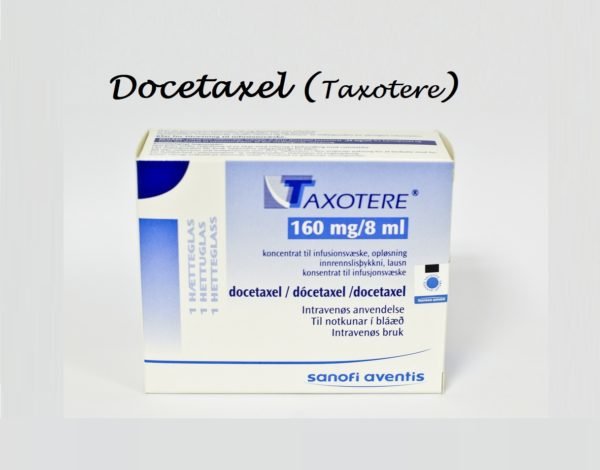
Docetaxel (Taxotere) is a chemotherapeutic drug that is used to treat a variety of cancers including breast, lung, ovarian, prostate, and cancers of the head & neck.
Indications of Docetaxel (Taxotere):
-
Breast cancer:
- It is indicated for the treatment of breast cancer (locally advanced/metastatic) as second-line therapy.
-
Non-small cell lung cancer:
- Treatment of locally advanced or metastatic non-small cell lung cancer (NSCLC) after the failure of platinum-based chemotherapy.
- The treatment of newly diagnosed unresectable locally advanced or metastatic non-small cell lung cancer (concurrently with cisplatin)
-
Prostate cancer:
- Docetaxel is effective for treating a hormone-refractory metastatic prostate tumor in addition to prednisone
-
Taxotere (and various generic brands):
-
Breast cancer:
- Treatment of breast cancer (locally advanced/metastatic) as a second-line drug.
- It is also indicated for adjuvant treatment including with doxorubicin and cyclophosphamide of operable node-positive breast cancer
-
Gastric cancer:
- Treatment of advanced gastric adenocarcinoma, including gastroesophageal junction adenocarcinoma concurrently with cisplatin and fluorouracil as first-line therapy for advanced disease
-
Head and neck cancer:
- It is recommended as induction treatment of locally advanced squamous cell head and neck carcinoma concurrently with cisplatin and fluorouracil.
-
Non-small cell lung carcinoma:
- Treatment of locally advanced or metastatic non-small cell lung carcinoma after failure of 1st line platinum-based chemotherapy.
- The treatment of Newly diagnosed unresectable locally advanced or metastatic NSCLC concurrently with cisplatin.
-
Prostate cancer:
- Treatment of metastatic castration-resistant prostate tumor (in addition to prednisone).
-
-
Off Label Use of Docetaxel (Taxotere) in Adults:
- Metastatic Bladder tumor, as single-agent
- Esophageal cancer - for locally-advanced or metastatic disease
- Ovarian malignancy
- Metastatic hormone-sensitive Prostate cancer
- Relapsed Small cell lung cancer
- Soft tissue sarcoma
- Adenocarcinoma of Unknown-primary
Docetaxel dosage in adults:
Note: Premedicate with corticosteroids for 3 days, starting one day before to docetaxel administration, to decrease the severity of hypersensitivity reactions and fluid retention. Patients being treated for prostate cancer with concurrent prednisone should be premedicated with oral dexamethasone at 12 hours, 3 hours, and 1 hour before docetaxel therapy.
Docetaxel treatment dosage of Breast cancer:
-
Locally advanced or metastatic:
- 60 to 100 mg/m intravenous as a single agent every 3 weeks
-
Adjuvant treatment of Operable node-positive patients:
-
TAC regimen:
- An intravenous dose of 75 mg/m² every 3 weeks for 6 courses concurrently with doxorubicin and cyclophosphamide).
-
-
Adjuvant treatment (off-label dosing):
- 75 mg/m² intravenously every 3 weeks (in combination with cyclophosphamide) for 4 cycles or 75 mg/m² every 3 weeks (in combination with carboplatin and trastuzumab) for 6 cycles.
-
Neoadjuvant treatment (off-label dosing):
- 75 mg/m² I/V (cycle 1; if tolerated, the dose may be increased to 100 mg/m² in subsequent cycles) every 3 weeks for a total of 4 cycles (in combination with trastuzumab and pertuzumab).
-
Metastatic treatment (off-label dosing):
-
3-weekly administration:
- 75 mg/m² intravenous (cycle 1; may increase to 100 mg/m² in subsequent cycles) every 21 days for at least 6 cycles (in combination with trastuzumab and pertuzumab) or
- 100 mg/m² every 21 days intravenous in combination with trastuzumab for at least 6 cycles or
- 75 mg/m² every 3 weeks intravenous in combination with capecitabine until disease progression or unacceptable toxicity or
- 60 mg/m², 75 mg/m², or 100 mg/m² every 3 weeks for at least 6 cycles until disease progression, unacceptable toxicity, or discontinuation.
-
Weekly administration:
- 40 mg/m² /dose once every 7 days as a single agent for 6 weeks followed by a 2-week off medicine period, therapy continues until disease progression or unacceptable toxicity or
- 35 mg/m² /dose once every 7 days for 21 days, followed by a 1-week off medicine period, may increase to 40 mg/m² once weekly for 3 weeks followed by a 1-week rest with cycle 2 or
- 35 mg/m² /dose once every 24 hours in combination with trastuzumab for 21 days followed by a 1-week off medicine period, therapy should be continues until disease progression or unacceptable toxicity.
-
Docetaxel treatment dose of Gastric adenocarcinoma:
-
- 75 mg/m² intravenous every 21 days in combination with cisplatin and fluorouracil
-
Sequential chemotherapy and chemoradiation (off-label dosing):
-
Locally advanced or metastatic disease (off-label dosing):
- An intravenous dose of 50 mg/m² on day 1 every 2 weeks in combination with fluorouracil, leucovorin, and oxaliplatin until progression of disease/ unacceptable toxicity up to a maximum of 8 cycles.
Docetaxel treatment dose of Head and neck cancer:
- Intravenous 75 mg/m² every 21 days in combination with cisplatin and fluorouracil for 3 or 4 cycles, followed by radiotherapy.
Docetaxel treatment dose of Non-small cell lung cancer:
- An intravenous 75 mg/m² every 21 days (as a single agent or in combination with cisplatin)
Docetaxel treatment dose of castration-resistant metastatic Prostate cancer:
- Intravenous 75 mg/m² every 21 days in combination with prednisone.
Docetaxel treatment dose of metastatic Bladder cancer:
- Intravenous 100 mg/m² every 21 days as a single agent or
- 35 mg/m² intravenous on days 1 and 8 of a 21-day cycle in combination with gemcitabine and cisplatin for at least 6 cycles or until disease progression or unacceptable toxicity.
Docetaxel treatment dose of Esophageal cancer:
-
Sequential chemotherapy and chemoradiation:
-
Definitive chemoradiation:
- 60 mg/m² on days 1 and 22 in combination with cisplatin and radiation for 1 cycle.
-
Locally advanced or metastatic disease:
- 75 mg/m² intravenous on day 1 every 21 days in combination with cisplatin and fluorouracil or
- 50 mg/m² intravenous on day 1 every 14 days in combination with fluorouracil, leucovorin, and oxaliplatin until disease progression or unacceptable toxicity up to a maximum of 8 cycles or
- 35 mg/m² intravenous on days 1, 8, 15, 29, 36, 43, 50, and 57 in combination with cisplatin, fluorouracil, and radiotherapy; neoadjuvant setting.
Docetaxel treatment dose of recurrent or progressive Ewing sarcoma or osteosarcoma:
- 100 mg/m² intravenous on day 8 of a 3 weekly cycle in combination with gemcitabine.
Docetaxel treatment dose of Ovarian cancer:
- 60 mg/m² intravenous every 21 days in combination with carboplatin for up to 6 cycles or
- 75 mg/m² every 21 days intravenous in combination with carboplatin for 6 cycles or
- 35 mg/m² intravenous (maximum dose/ 70 mg) weekly for 21 days followed by 7 days off medicine period (in combination with carboplatin).
Docetaxel treatment dose of hormone-sensitive metastatic Prostate cancer:
- 75 mg/m² intravenous on day 1 every 21 days in combination with androgen deprivation therapy and prednisolone for 6 cycles or
- 75 mg/m² intravenous on day 1 every 21 days in combination with androgen deprivation therapy (daily prednisone not needed) for 6 cycles.
Docetaxel treatment dose of relapsed Small cell lung cancer:
- 100 mg/m² intravenous every 21 days.
Docetaxel treatment dose of Soft tissue sarcoma:
- 100 mg/m intravenous on day 8 of a 21 days treatment cycle in combination with gemcitabine and filgrastim/ pegfilgrastim.
Docetaxel treatment dose of Unknown-primary adenocarcinoma:
- Intravenous 65 mg/m² every 21 days in combination with carboplatin or
- 75 mg/m² I/V on day 8 of a 21 days treatment cycle in combination with gemcitabine for up to 6 cycles or
- Intravenous 60 mg/m² on day 1 of a 21 days cycle in combination with cisplatin.
Dosing adjustment for concomitant CYP3A4 inhibitors:
- concurrent strong CYP3A4 inhibitors should not be used with docetaxel.
- If concomitant use of a strong CYP3A4 inhibitor cannot be avoided, the docetaxel dose should be decreased by 50% (based on limited pharmacokinetic data).
Docetaxel dose in children
Note:
- The dose, frequency, number of doses, and initiation may vary by protocol and treatment phase.
- Refer to individual protocols.
- Pre-medicate with corticosteroids the day before docetaxel therapy (administer corticosteroids for 1 to 3 days), to decrease the severity of hypersensitivity reactions and pulmonary/peripheral edema.
- Docetaxel is associated with an emetic potential, therefore antiemetics are prescribed to prevent nausea/vomiting.
Docetaxel treatment dose of Sarcomas, Ewing Sarcoma, and recurrent or progressive osteosarcoma:
-
Mora 2009: G + D regimen:
- Children and Adolescents:
- 100 mg/m² intravenous over 2 to 4 hours on Day 8 of a 3 weekly cycle in combination with gemcitabine
- Children and Adolescents:
-
Rapkin 2012: GEMDOX regimen:
- Infants:
- 2.5 mg/kg intravenous over 60 minutes on Day 8 of a 3 weekly cycle in combination with gemcitabine
- Children and Adolescents:
- An intravenous dose of 75 mg/m² over 60 minutes on Day 8 of a 3 weekly cycle in combination with gemcitabine
- Infants:
Docetaxel treatment dose in refractory or relapsed Hepatoblastoma:
-
Infants and Children:
-
Patient weight <10 kg:
- Intravenous 3.3 mg/kg as a 1-hour infusion every 3 weeks
-
Patient weight >10 kg:
- Intravenous 100 mg/m² given as a 1-hour infusion 3 weeks
-
-
Dosing adjustment for concomitant CYP3A4 inhibitors:
- Specific pediatric recommendations are lacking.
- Based on experience in adult patients: Avoidance using strong CYP3A4 inhibitors with docetaxel is recommended.
- If concomitant use of a strong CYP3A4 inhibitor cannot be avoided, a reduced dose of docetaxel should be given
Dosing adjustment for toxicity:
The presented dosing adjustments are based on experience in adult patients; limited specific recommendations for pediatric patients are available. Refer to specific protocol for management in pediatric patients if available. Note:
-
- Febrile neutropenia, neutrophil count ≤500/mm³ for >7 days, severe or cumulative cutaneous reactions in non-small cell lung cancer, platelets <25,000/mm³ and other grades 3/4 nonhematologic toxicity should be considered.
-
Breast cancer (single agent):
- The initial dose at 100 mg/m² reduced to 75 mg/m².
Note:
- In case of adverse reactions, reduction of dose to 55 mg/m² or therapy discontinuation of therapy should be done
- If there is peripheral neuropathy ≥ grade 3,dose should be reduced. Patients tolerating an initial dose at 60 mg/m² may tolerate higher doses.
-
Breast cancer, adjuvant treatment (combination chemotherapy):
- TAC regimen should be given when the neutrophil count is ≥ 1,500/mm³.
- Patients with febrile neutropenia should receive granulocyte colony-stimulating factor(GCSF) in all subsequent cycles.
- In patients with persistent febrile neutropenia Despite G-CSF, patients exhibiting cutaneous reactions, moderate neurosensory signs/symptoms or grade 3/4 stomatitis, a reduced dose (60 mg/m² in adults) of docetaxel is recommended.
- Discontinuation of therapy with persistent toxicities despite dosage reduction should be done.
-
Non-small cell lung cancer:
-
Monotherapy:
- Patients having toxicity with initial dose at 75 mg/m², Therapy should be withheld until toxicity is resolved, then resume at 55 mg/m², discontinuation is recommended for peripheral neuropathy ≥ grade 3
-
Combination therapy (with cisplatin):
- Patients with initial dose at 75 mg/m² should have a reduction to 65 mg/m² in subsequent cycles or to 50 mg/m² if still not tolerating
-
-
-
Prostate cancer:
- The dose should be reduced to 60 mg/m², discontinue therapy if toxicities despite administering lower dose.
-
Gastric cancer, head and neck cancer:
- Note:
- Cisplatin may require dose reduction or delay in the case of peripheral neuropathy, ototoxicity/ nephrotoxicity.
- Patients having febrile neutropenia/infection or neutropenia >7 days should get granulocyte-colony stimulation factor in all subsequent cycles.
- If neutropenia persists despite G-CSF use, dose reduction to 60 mg/m² should be done.
- The dose should be further reduced to 45mg/m² with neutropenic complications in subsequent cycles.
- Patients having grade 4 thrombocytopenia should have a dose reduction from 75 mg/m² to 60 mg/m².
- Persistent toxicities should be tackled by stopping therapy.
- Gastrointestinal toxicity for docetaxel in combination with cisplatin and fluorouracil for treatment of gastric cancer or head and neck cancer:
-
Diarrhea, grade 3:
- First episode: Reduce fluorouracil dose by 20%
- Second episode: Reduce docetaxel dose by 20%
-
Diarrhea, grade 4:
- First episode: Reduce fluorouracil and docetaxel doses by 20%
- Second episode: Discontinue treatment
-
Stomatitis, grade 3:
- First episode: Reduce fluorouracil dose by 20%
- Second episode: Discontinue fluorouracil for all subsequent cycles
- Third episode: Reduce docetaxel dose by 20%
-
Stomatitis, grade 4:
- First episode: Discontinue fluorouracil for all subsequent cycles
- Second episode: Reduce docetaxel dose by 20%
-
- Note:
Pregnancy Risk Factor D
- Studies on animal reproduction showed that there were adverse events.
- Ex vivo human studies have shown that docetaxel crosses the placenta in term.
- Placental transfer is very small. This is because higher levels of albumin result in lower placental docetaxel transfer (Berveiller 2012).
- Pregnant women may experience alterations in the pharmacokinetic properties docetaxel (van Hasselt 2014).
- Avoid pregnancy during therapy.
Docetaxel should be used during breastfeeding
- It is not known if docetaxel is secreted into breast milk.
- The manufacturer suggests that breastfeeding infants be stopped immediately.
Docetaxel (Taxotere) dose adjustment in renal disease:
Renal excretion is minimal (6%), therefore, dose adjustments in renal dysfunction is not necessary. It cannot be removed by hemodialysis, therefore it should be given before or after hemodialysis.
Docetaxel dose adjustment in liver disease:
- The drug therapy is not recommended if the total bilirubin is higher than the upper limit or AST/or ALT is >1.5 times the upper normal limit concomitantly with alkalinephosphatase>2.5 times the upper normal limit.
-
Dosing adjustment for hepatic impairment specific to gastric or head and/or neck cancer
- AST/ALT >2.5 to 5 times the upper normal limit. Alkaline phosphatase >2.5 times the upper normal limit. 80% should be given
- AST/ALT >1.5 to 5 times the upper normal limit and alkalinephosphatase >2.5 or =5 twice the upper normal limit should be taken. 80% of the dose should be given
- Docetaxel should not be used if AST/ALT is >5 times the upper normal limit or alkalinephosphatase is >5 times the upper normal limit.
-
These adjustments were also made:
-
Transaminases: 1.6 to 6 Times the upper normal limit
- Take 75% of the recommended dose.
-
Transaminases >6x the normal limit
- Use your clinical judgement.
-
Common Side Effects of Docetaxel (Taxotere):
-
Central Nervous System:
- Neurotoxicity
-
Dermatologic:
- Alopecia
- Dermatological Reaction
- Nail Disease
-
Endocrine & Metabolic:
- Fluid Retention
-
Gastrointestinal:
- Stomatitis
- Diarrhea
- Nausea
- Vomiting
-
Hematologic & Oncologic:
- Neutropenia
- Leukopenia
- Anemia
- Thrombocytopenia
- Febrile Neutropenia
-
Hepatic:
- Increased Serum Transaminases
-
Hypersensitivity:
- Hypersensitivity Reaction
-
Infection:
- Infection
-
Neuromuscular & Skeletal:
- Asthenia
- Myalgia
- Neuromuscular Reaction
-
Respiratory:
- Pulmonary Disorder
-
Miscellaneous:
- Fever
Less Common Side Effects Of Docetaxel (Taxotere):
-
Cardiovascular:
- Hypotension
-
Central Nervous System:
- Peripheral Motor Neuropathy
-
Gastrointestinal:
- Dysgeusia
-
Hepatic:
- Increased Serum Bilirubin
- Increased Serum Alkaline Phosphatase
-
Infection:
- Severe Infection
-
Local:
- Infusion Site Reaction
-
Neuromuscular And Skeletal:
- Arthralgia
Uncommon Side effects of Docetaxel (Taxotere):
-
Cardiovascular:
- Cardiac Tamponade
- Decreased Left Ventricular Ejection Fraction
- Localized Phlebitis
- Peripheral Edema
-
Central Nervous System:
- Fatigue
-
Dermatologic:
- Exfoliation Of Skin
- Local Dryness
- Localized Erythema Of The Extremities
- Nail Depigmentation
- Nail Hyperpigmentation
- Skin Discoloration At Injection Site
-
Hepatic:
- Ascites
-
Local:
- Erythema At Injection Site
- Inflammation At Injection Site
-
Respiratory:
- Pleural Effusion
Contraindications to Docetaxel (Taxotere):
- Hypersensitivity severe to docetaxel and any component of the formulation
- Hypersensitivity severe to polysorbate 80 and other medications
- A neutrophil count of 1,500/mm3
- Severe liver dysfunction
- Pregnancy
- Breastfeeding
Warnings and precautions
-
Suppression of bone marrow: [US Boxed Warning]
- Patients with an absolute neutrophil count of 1,500/mm should avoid Docetaxel.
- To monitor for neutropenia, it is important to regularly check your blood counts
- Neutropenia is the dose-limiting toxicology
- Before treatment, the platelet count should be greater than 100,000.
- Transaminitis patients have more episodes. Patients should also be tested for liver function.
- Treatment for hemotoxicosis may need to be stopped or dose reduced.
-
Cutaneous reactions
- Dosage reduction may be necessary for cutaneous reactions like desquamation and erythema (with or without edema).
-
Extravasation
- Docetaxel is an irritant that has vesicant-like characteristics. Proper needle and catheter placement are required before and during infusions to avoid extravasation.
-
Fluid retention: [US Boxed Warning]
- Premedication with 3 days dexamethasone can lead to severe fluid retention (requiring immediate drainage), ascites, gross abdominal distention, peripheral and generalized edema, dyspnea, dyspnea in rest, cardiac tamponade and generalized edema.
- Fluid retention can appear as peripheral edema in the lower extremities and then become widespread with a median weight gain (2.5 kg)
- In breast cancer, the median cumulative dose for severe/moderate fluid retention was 819 mg/m.
- Fluid retention usually disappears within 16 weeks after stopping taking the drug.
- To reduce fluid retention, patients should be premedicated by a corticosteroid at least 1 day prior to therapy.
- Patients with existing effusions should be closely monitored.
-
Toxicity to the GI:
- Docetaxel has been linked to fatal enterocolitis and neutropenic bowel disease (typhlitis), despite the fact that it contains GCSF.
- Patients with neutropenia should be cautious, as they are at greater risk of gastrointestinal toxicity.
- Report any new or worsening symptoms related to GI toxicities immediately.
-
Hypersensitivity [US Boxed Warning]
- Even if you have been prescribed a corticosteroid, it is possible to experience severe hypersensitivity reactions, such as hypotension, generalized rash/erythema or bronchospasms.
- Hypersensitivity reactions to docetaxel should be treated immediately.
- Patients with severe hypersensitivity to polysorbate 80 or docetaxel are not advised.
- Patients who have had a history of hypersensitivity reactions to paclitaxel could develop severe or fatal hypersensitivity to docetaxel.
- You might experience minor reactions like skin irritations or flushing.
- In severe reactions, discontinuation is advised. The drug should not be re-assisted if the reaction is severe.
-
Neurosensory symptoms
- If you have severe neurosensory symptoms like paresthesia, dysesthesia or pain, it is a good idea to adjust your dosage.
- You may need to discontinue treatment if persistent symptoms persist.
-
Ocular adverse reactions:
- CME (cystoid macular eye swelling) is a condition that has been reported. In cases of vision impairment, an urgent ophthalmic exam should be performed.
- Docetaxel was used as an adjuvant treatment for breast cancer. Patients who received it showed lacrimal duct obstruction and tearing.
- Most patients recover within four months of therapy completion.
-
Secondary malignancies
- Patients receiving docetaxel concurrently with anthracyclines or cyclophosphamide have been diagnosed with treatment-related acute myeloidleukemia/myelodysplasia.
-
Treatment-related Mortality: [US Boxed Warning]
- Patients with transaminitis and higher doses of non-small-cell lung cancer who have received monotherapy docetaxel at 100 mg/m or more are at greater risk for death due to treatment-related complications.
-
Weakness
- A decrease in performance may result from fatigue and weakness that can last for a few days to several weeks.
-
Heart Failure:
- According to the American Heart Association, docetaxel may cause myocardial injury or worsen existing myocardial dysfunction (magnitude moderate).
-
Hepatic impairment: [US-Boxed Warning]
- Patients with high levels of bilirubin, AST or ALT should not take the drug.
- These patients are at greater risk for:
- Grade 4 neutropenia
- Neutropenia
- Infections
- Strenuous thrombocytopenia
- Tomatitis severe
- Severe skin toxicity and
- Toxic death
- Patients who had isolated transaminase elevations greater than 1.5 times the normal limit experienced an increase in grade 4 neutropenic fever. However, there was no increased risk of death.
- Before each docetaxel cycle, monitor bilirubin and AST/ALT.
- In the event of hepatic impairment, it is important to note the alcohol content in the docetaxel formulation.
Docetaxel: Drug Interaction
|
Risk Factor C (Monitor therapy) |
|
|
Bosentan |
May decrease the serum concentration of CYP3A4 Substrates (High risk with Inducers). |
|
Chloramphenicol (Ophthalmic) |
May enhance the adverse/toxic effect of Myelosuppressive Agents. |
|
Clofazimine |
May increase the serum concentration of CYP3A4 Substrates (High risk with Inhibitors). |
|
CloZAPine |
Myelosuppressive Agents may enhance the adverse/toxic effect of CloZAPine. Specifically, the risk for neutropenia may be increased. |
|
Coccidioides immitis Skin Test |
Immunosuppressants may diminish the diagnostic effect of Coccidioides immitis Skin Test. |
|
CYP3A4 Inducers (Moderate) |
May decrease the serum concentration of CYP3A4 Substrates (High risk with Inducers). |
|
CYP3A4 Inhibitors (Moderate) |
May decrease the metabolism of CYP3A4 Substrates (High risk with Inhibitors). |
|
Deferasirox |
May decrease the serum concentration of CYP3A4 Substrates (High risk with Inducers). |
|
Denosumab |
May enhance the adverse/toxic effect of Immunosuppressants. Specifically, the risk for serious infections may be increased. |
|
Duvelisib |
May increase the serum concentration of CYP3A4 Substrates (High risk with Inhibitors). |
|
Erdafitinib |
May decrease the serum concentration of CYP3A4 Substrates (High risk with Inducers). |
|
Erdafitinib |
May increase the serum concentration of CYP3A4 Substrates (High risk with Inhibitors). |
|
Erdafitinib |
May increase the serum concentration of P-glycoprotein/ABCB1 Substrates. |
|
Fosnetupitant |
May increase the serum concentration of CYP3A4 Substrates (High risk with Inhibitors). |
|
Ivosidenib |
May decrease the serum concentration of CYP3A4 Substrates (High risk with Inducers). |
|
Larotrectinib |
May increase the serum concentration of CYP3A4 Substrates (High risk with Inhibitors). |
|
Netupitant |
May increase the serum concentration of CYP3A4 Substrates (High risk with Inhibitors). |
|
Ocrelizumab |
May enhance the immunosuppressive effect of Immunosuppressants. |
|
Palbociclib |
May increase the serum concentration of CYP3A4 Substrates (High risk with Inhibitors). |
|
P-glycoprotein/ABCB1 Inhibitors |
May increase the serum concentration of Pglycoprotein/ABCB1 Substrates. P-glycoprotein inhibitors may also enhance the distribution of pglycoprotein substrates to specific cells/tissues/organs where p-glycoprotein is present in large amounts (e.g., brain, T-lymphocytes, testes, etc.). |
|
Pidotimod |
Immunosuppressants may diminish the therapeutic effect of Pidotimod. |
|
Promazine |
May enhance the myelosuppressive effect of Myelosuppressive Agents. |
|
Ranolazine |
May increase the serum concentration of P-glycoprotein/ABCB1 Substrates. |
|
Sarilumab |
May decrease the serum concentration of CYP3A4 Substrates (High risk with Inducers). |
|
Siltuximab |
May decrease the serum concentration of CYP3A4 Substrates (High risk with Inducers). |
|
Simeprevir |
May increase the serum concentration of CYP3A4 Substrates (High risk with Inhibitors). |
|
Siponimod |
Immunosuppressants may enhance the immunosuppressive effect of Siponimod. |
|
Sipuleucel-T |
Immunosuppressants may diminish the therapeutic effect of Sipuleucel-T. |
|
SORAfenib |
May increase the serum concentration of DOCEtaxel. |
|
Tocilizumab |
May decrease the serum concentration of CYP3A4 Substrates (High risk with Inducers). |
|
Trastuzumab |
May enhance the neutropenic effect of Immunosuppressants. |
|
Risk Factor D (Consider therapy modification) |
|
|
Anthracyclines |
Taxane Derivatives may enhance the adverse/toxic effect of Anthracyclines. Taxane Derivatives may increase the serum concentration of Anthracyclines. Taxane Derivatives may also increase the formation of toxic anthracycline metabolites in heart tissue. |
|
Baricitinib |
Immunosuppressants may enhance the immunosuppressive effect of Baricitinib. Management: Use of baricitinib in combination with potent immunosuppressants such as azathioprine or cyclosporine is not recommended. Concurrent use with antirheumatic doses of methotrexate or nonbiologic disease modifying antirheumatic drugs (DMARDs) is permitted. |
|
CYP3A4 Inducers (Strong) |
May increase the metabolism of CYP3A4 Substrates (High risk with Inducers). Management: Consider an alternative for one of the interacting drugs. Some combinations may be specifically contraindicated. Consult appropriate manufacturer labeling. |
|
CYP3A4 Inhibitors (Strong) |
May increase the serum concentration of DOCEtaxel. Management: Avoid the concomitant use of docetaxel and strong CYP3A4 inhibitors when possible. If combined use is unavoidable, consider a 50% docetaxel dose reduction and monitor for increased docetaxel toxicities. |
|
Dabrafenib |
May decrease the serum concentration of CYP3A4 Substrates (High risk with Inducers). Management: Seek alternatives to the CYP3A4 substrate when possible. If concomitant therapy cannot be avoided, monitor clinical effects of the substrate closely (particularly therapeutic effects). |
|
Dronedarone |
May increase the serum concentration of DOCEtaxel. Management: Avoid this combination whenever possible. If this combination must be used, consider using a reduced docetaxel dose, and/or increase monitoring for evidence of serious docetaxel toxicity (e.g., neutropenia, mucositis, etc.). |
|
Echinacea |
May diminish the therapeutic effect of Immunosuppressants. |
|
Enzalutamide |
May decrease the serum concentration of CYP3A4 Substrates (High risk with Inducers). Management: Concurrent use of enzalutamide with CYP3A4 substrates that have a narrow therapeutic index should be avoided. Use of enzalutamide and any other CYP3A4 substrate should be performed with caution and close monitoring. |
|
Fingolimod |
Immunosuppressants may enhance the immunosuppressive effect of Fingolimod. Management: Avoid the concomitant use of fingolimod and other immunosuppressants when possible. If combined, monitor patients closely for additive immunosuppressant effects (eg, infections). |
|
Leflunomide |
Immunosuppressants may enhance the adverse/toxic effect of Leflunomide. Specifically, the risk for hematologic toxicity such as pancytopenia, agranulocytosis, and/or thrombocytopenia may be increased. Management: Consider not using a leflunomide loading dose in patients receiving other immunosuppressants. Patients receiving both leflunomide and another immunosuppressant should be monitored for bone marrow suppression at least monthly. |
|
Lenograstim |
Antineoplastic Agents may diminish the therapeutic effect of Lenograstim. Management: Avoid the use of lenograstim 24 hours before until 24 hours after the completion of myelosuppressive cytotoxic chemotherapy. |
|
Lipegfilgrastim |
Antineoplastic Agents may diminish the therapeutic effect of Lipegfilgrastim. Management: Avoid concomitant use of lipegfilgrastim and myelosuppressive cytotoxic chemotherapy. Lipegfilgrastim should be administered at least 24 hours after the completion of myelosuppressive cytotoxic chemotherapy. |
|
Lorlatinib |
May decrease the serum concentration of CYP3A4 Substrates (High risk with Inducers). Management: Avoid concurrent use of lorlatinib with any CYP3A4 substrates for which a minimal decrease in serum concentrations of the CYP3A4 substrate could lead to therapeutic failure and serious clinical consequences. |
|
MiFEPRIStone |
May increase the serum concentration of CYP3A4 Substrates (High risk with Inhibitors). Management: Minimize doses of CYP3A4 substrates, and monitor for increased concentrations/toxicity, during and 2 weeks following treatment with mifepristone. Avoid cyclosporine, dihydroergotamine, ergotamine, fentanyl, pimozide, quinidine, sirolimus, and tacrolimus. |
|
Mitotane |
May decrease the serum concentration of CYP3A4 Substrates (High risk with Inducers). Management: Doses of CYP3A4 substrates may need to be adjusted substantially when used in patients being treated with mitotane. |
|
Nivolumab |
Immunosuppressants may diminish the therapeutic effect of Nivolumab. |
|
Palifermin |
May enhance the adverse/toxic effect of Antineoplastic Agents. Specifically, the duration and severity of oral mucositis may be increased. Management: Do not administer palifermin within 24 hours before, during infusion of, or within 24 hours after administration of myelotoxic chemotherapy. |
|
Pitolisant |
May decrease the serum concentration of CYP3A4 Substrates (High risk with Inducers). Management: Combined use of pitolisant with a CYP3A4 substrate that has a narrow therapeutic index should be avoided. Other CYP3A4 substrates should be monitored more closely when used with pitolisant. |
|
Platinum Derivatives |
May enhance the myelosuppressive effect of Taxane Derivatives. Administer Taxane derivative before Platinum derivative when given as sequential infusions to limit toxicity. |
|
Roflumilast |
May enhance the immunosuppressive effect of Immunosuppressants. |
|
St John's Wort |
May decrease the serum concentration of CYP3A4 Substrates (High risk with Inducers). Management: Consider an alternative for one of the interacting drugs. Some combinations may be specifically contraindicated. Consult appropriate manufacturer labeling. |
|
Stiripentol |
May increase the serum concentration of CYP3A4 Substrates (High risk with Inhibitors). Management: Use of stiripentol with CYP3A4 substrates that are considered to have a narrow therapeutic index should be avoided due to the increased risk for adverse effects and toxicity. Any CYP3A4 substrate used with stiripentol requires closer monitoring. |
|
Tofacitinib |
Immunosuppressants may enhance the immunosuppressive effect of Tofacitinib. Management: Concurrent use with antirheumatic doses of methotrexate or nonbiologic disease modifying antirheumatic drugs (DMARDs) is permitted, and this warning seems particularly focused on more potent immunosuppressants. |
|
Vaccines (Inactivated) |
Immunosuppressants may diminish the therapeutic effect of Vaccines (Inactivated). Management: Vaccine efficacy may be reduced. Complete all age-appropriate vaccinations at least 2 weeks prior to starting an immunosuppressant. If vaccinated during immunosuppressant therapy, revaccinate at least 3 months after immunosuppressant discontinuation. |
|
Risk Factor X (Avoid combination) |
|
|
BCG (Intravesical) |
Immunosuppressants may diminish the therapeutic effect of BCG (Intravesical). |
|
BCG (Intravesical) |
Myelosuppressive Agents may diminish the therapeutic effect of BCG (Intravesical). |
|
Cladribine |
May enhance the immunosuppressive effect of Immunosuppressants. |
|
Cladribine |
May enhance the myelosuppressive effect of Myelosuppressive Agents. |
|
Conivaptan |
May increase the serum concentration of CYP3A4 Substrates (High risk with Inhibitors). |
|
Deferiprone |
Myelosuppressive Agents may enhance the neutropenic effect of Deferiprone. |
|
Dipyrone |
May enhance the adverse/toxic effect of Myelosuppressive Agents. Specifically, the risk for agranulocytosis and pancytopenia may be increased |
|
Fusidic Acid (Systemic) |
May increase the serum concentration of CYP3A4 Substrates (High risk with Inhibitors). |
|
Idelalisib |
May increase the serum concentration of CYP3A4 Substrates (High risk with Inhibitors). |
|
Natalizumab |
Immunosuppressants may enhance the adverse/toxic effect of Natalizumab. Specifically, the risk of concurrent infection may be increased. |
|
Pimecrolimus |
May enhance the adverse/toxic effect of Immunosuppressants. |
|
Tacrolimus (Topical) |
May enhance the adverse/toxic effect of Immunosuppressants. |
|
Vaccines (Live) |
Immunosuppressants may enhance the adverse/toxic effect of Vaccines (Live). Immunosuppressants may diminish the therapeutic effect of Vaccines (Live). Management: Avoid use of live organism vaccines with immunosuppressants; live-attenuated vaccines should not be given for at least 3 months after immunosuppressants. |
Monitoring parameters:
- Complete blood count
- hepatic function tests (bilirubin/ALT/AST/alkaline phosphatase) prior to each cycle in addition to renal function.
- Monitor for
- hypersensitivity reactions,
- neurosensory symptoms,
- gastrointestinal complications (such as diarrhea, stomatitis, enterocolitis, neutropenic colitis),
- cutaneous reactions,
- visual impairment,
- fluid retention,
- epiphora, and
- canalicular stenosis
How to administer Docetaxel (Taxotere)?
- Intravenous infusion is administered over 60 minutes through non-sorbing polyethylene lined (non-DEHP) tubing.
Note: Premedication with corticosteroids for 3 days, beginning the day before docetaxel therapy in order to reduce the severity of hypersensitivity reactions and fluid retention. Some docetaxel formulations containing alcohol should be used with caution in patients for whom alcohol intake is not recommended (a non-alcohol generic formulation of 20 mg/mL is also available).
An in-line filter is not usually required during Taxotere administration. According to the manufacturer, no studies have been done to determine the compatibility of intravenous filters for administration and filters are not recommended for use with docetaxel (data on file [Sanofi Aventis 2016]).
The use of an inline filter is also not advised for the administration of the non-alcohol docetaxel preparation.
Extravasation management:
- Infusion should be immediately stopped in case of extravasation and disconnect cannula/ needle in place)
- The extravasated solution should be gently aspirated (do NOT flush the line), needle/ cannula should be removed; and extremity should be elevated.
- Information conflicts regarding the use of warm or cold compresses.
Mechanism of action of Docetaxel (Taxotere):
- Docetaxel promotes the microtubule assembly from tubulin dimers and inhibits the depolymerization of tubulin which leads to the stabilization of microtubules in the cell.
- This leads to inhibition of DNA, RNA, and protein synthesis. Most activity occurs during the M phase of the cell cycle.
- It exhibits linear pharmacokinetics at the recommended dosage range
Protein binding:
- About 94% to 97% of the drug is protein-bound, primarily to alpha -acid glycoprotein, albumin, and lipoproteins.
Metabolism
- is primarily Hepatic (oxidation via CYP3A4 to metabolites)
Half-life elimination:
- Terminal: ~11 hours
Excretion:
- Feces (~75%, <8% as unchanged drug); urine (~6%)
Docetaxel Brand Names (International):
- Docefrez
- Taxotere
- Adenex SV
- Asodoc
- Belotaxel
- Brexel
- Camitotic
- Daxotel
- Decexan
- Dexotel
- Docegrix
- Docetax
- Docetex
- Docexan
- Dolectran
- Doletran
- Donataxel
- Dotaxel
- Doxecal
- Doxestad
- Doxetal
- Doxetasan
- Eutaxer
- Hentaxel
- Isotera
- Monotaxel
- Newtaxel-A
- Newtaxell
- Novotaxel
- Oncodocel
- Oncotaxel
- Pacancer
- Qvidadotax
- Taceedo
- Taxanit
- Taxanit RTU
- Taxelo
- Taxespira
- Taxomed
- Taxotere
- Taxozen
- Tedocad
- Texot
- Tyxan
- Vexdo
- Zytax
Docetaxel Brand Names in Pakistan:
Docetaxel Injection 20 mg |
|
| Daxotel | Atco Laboratories Limited |
| Docetax | A. J. Mirza Pharma (Pvt) Ltd |
| Docetaxel Varifarma | Medinet Pharmaceuticals |
| Donataxel | Ferozsons Laboratoies Ltd. |
| Dozep | Pharmedic (Pvt) Ltd. |
| Mebrexel | Consolidated Chemical Laboratories (Pvt) Ltd. |
| Taxotere | Sanofi Aventis (Pakistan) Ltd. |
| Texot | Atco Laboratories Limited |
Docetaxel Injection 80 mg |
|
| Daxotel | Atco Laboratories Limited |
| Docetax | A. J. Mirza Pharma (Pvt) Ltd |
| Mebrexel | Consolidated Chemical Laboratories (Pvt) Ltd. |
Docetaxel Injection 20 mg/0.5ml |
|
| Docekabir | Oncogene Pharmaceuticals Karachi |
| Docetaxel | Al-Habib Pharmaceuticals. |
| Ebedoce | Novartis Pharma (Pak) Ltd |
Docetaxel Injection 80 mg/0.5ml |
|
| Docekabir | Oncogene Pharmaceuticals Karachi |
| Docetaxel | Al-Habib Pharmaceuticals. |
| Ebedoce | Novartis Pharma (Pak) Ltd |
Docetaxel Infusion 20 Mg |
|
| Taxotere Concentrate | Sanofi Aventis (Pakistan) Ltd. |
Docetaxel Infusion 80 mg |
|
| Taxotere Concentrate | Sanofi Aventis (Pakistan) Ltd. |
.png)


