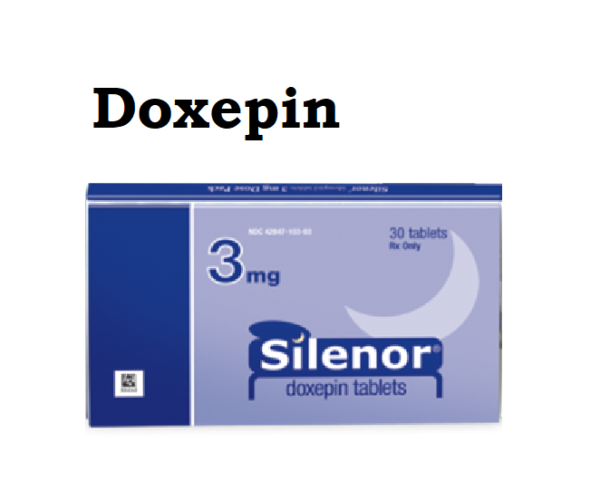
Doxepin (Silenor) is a tricyclic antidepressant medicine used to treat anxiety, depression, chronic urticaria, and sleep-related problems.
Doxepin Antidepressant Uses:
-
Depression and/or anxiety:
- Treatment of psychoneurotic patients with depression and/or anxiety;
- depression and/or anxiety associated with alcoholism;
- depression and/or anxiety associated with the organic disease;
- psychotic depressive disorders with associated anxiety, including involutional depression and manic-depressive disorders.
-
Insomnia (Silenor only):
- Insomnia treatment characterized by difficulty with sleep maintenance.
-
Off Label Use of Doxepin in Adults:
- Chronic urticaria
Adult dose:
Doxepin Dose in the treatment of depression and/or anxiety:
- Initial: 25 to 50 mg as a single oral dose at bedtime or in divided doses; gradually increase the dose based on response and tolerability to a usual dose of 100 to 300 mg per day
Doxepin Dose in the treatment of Insomnia (Silenor):
- Oral: 3 to 6 mg once a day within 30 minutes of bedtime; maximum dose: 6 mg/day
Doxepin Dose in the treatment of Chronic urticaria (off-label):
- Oral: Adults: 10 mg 3 times a day (Greene 1985) or 10 mg to 30 mg once a day at bedtime.
-
Discontinuation of therapy:
- Antidepressant therapy can be discontinued by gradually tapering the dose to minimize the incidence of withdrawal symptoms and allowing for the detection of re-emerging symptoms.
- Evidence supporting ideal taper rates is limited.
- APA and NICE guidelines recommend tapering therapy over at least several weeks of times with consideration to the half-life of the drug; antidepressants with a shorter half-life may need to be tapered more conservatively.
- In addition to long-term treated patients, WFSBP guidelines recommend tapering over a duration of 4 to 6 months.
- If intolerable withdrawal symptoms occur after dose reduction, consider resuming the previously prescribed dose and/or decrease dose at a more gradual rate.
MAO inhibitor recommendations:
-
Switching to or from an MAO inhibitor intended to treat psychiatric disorders:
- 14 days of time should be allowed to elapse between discontinuing an MAO inhibitor intended to treat psychiatric disorders and initiation of doxepin.
- 14 days of time should be allowed to elapse between discontinuing doxepin and initiation of an MAO inhibitor intended to treat psychiatric disorders.
Dose in children:
Doxepin Antidepressant Dose:
Note:
- Controlled clinical trials have not shown tricyclic antidepressants to be superior to placebo for the treatment of depression in children and adolescents;
- not recommended as first-line medication;
- it may be beneficial for patients with comorbid conditions.
-
Children 7 to 11 years:
- 1 to 3 mg/kg per day in single or divided doses
-
Children ≥12 years and Adolescents:
- Initial: 25 to 75 mg/day oral at bedtime or in 2 to 3 divided doses; begin at the low end of the range and gradually titrate; select patients may respond to 25 to 50 mg per day; maximum single dose: 150 mg; maximum daily dose: 300 mg per day
-
Discontinuation of therapy:
- Antidepressant therapy can be discontinued by gradually tapering the dose to minimize the incidence of withdrawal symptoms and allow for the detection of re-emerging symptoms.
- Evidence supporting ideal taper rates is limited.
- APA and NICE guidelines suggest tapering therapy over at least several weeks of time with consideration to the half-life of the antidepressant; antidepressants with a shorter half-life may need to be tapered more conservatively.
- In addition to long-term treated patients, WFSBP guidelines recommend tapering over a duration of 4 to 6 months. If intolerable withdrawal symptoms occur after a dose reduction, consider resuming the previously prescribed dose and/or decrease dose at a more gradual rate
MAO inhibitor recommendations:
-
Switching to or from an MAO inhibitor intended to treat psychiatric disorders:
- 14 days should be allowed to elapse between discontinuing an MAO inhibitor intended to treat psychiatric disorders and initiation of doxepin.
- 14 days should be allowed to elapse between discontinuing doxepin and initiation of an MAO inhibitor intended to treat psychiatric disorders.
-
Use with other MAO inhibitors (such as linezolid or IV methylene blue):
- Do not prescribe doxepin to patients receiving linezolid or IV methylene blue; consider other interventions for a psychiatric condition.
- If treatment with linezolid or IV methylene blue is urgently desired in a patient who is on doxepin already and potential benefits outweigh potential risks, promptly discontinue doxepin and administer linezolid or IV methylene blue.
- Monitor for serotonin syndrome for 14 days or until 24 hours after the last dose of linezolid or IV methylene blue, whichever comes first.
- May resume doxepin 1 day after the last dose of linezolid or IV methylene blue.
Pregnancy Risk Factor C
- In animal reproduction studies, adverse events were noted.
- Tricyclic antidepressants can cause irritability, jitteriness and convulsions in neonates.
- ACOG recommends that treatment for depression during pregnancy should be individualized; it should include the clinical expertise of the mental healthcare provider, primary care provider, and pediatrician.
- According to the American Psychiatric Association, medication treatment risks must be weighed against untreated depression and other options.
- Women who have stopped taking antidepressant medication during pregnancy or who are at high risk of postpartum depression can resume their medications after delivery.
- The ACOG and APA have developed treatment algorithms for women with depression before and during pregnancy.
Doxepin can be used during breastfeeding
- Breast milk contains Doxepin (Frey 1999; Kemp 1985).
- A nursing infant who had taken doxepin from its mother experienced symptoms such as vomiting, drowsiness, poor feeding, and muscle hypotonia.
- After discontinuing breast milk, symptoms began to improve within 24 hours.
- A nursing infant who was given doxepin by its mother for depression has also been noted to have experienced drowsiness or apnea.
- If the product is being administered to a nursing mother, it is recommended that caution be taken.
Renal dose:
Doxepin Antidepressant Dose in Kidney disease:
- There are no dosage adjustments provided in the drug manufacturer’s labeling.
DoxepinDose in Liver disease:
- Silenor: Initial: 3 mg once a day
Side effects of Doxepin antidepressant:
-
Cardiovascular:
- Hypertension
- Edema
- Flushing
- Hypotension
- Tachycardia
-
Central Nervous System:
- Sedation
- Dizziness
- Ataxia
- Chills
- Confusion
- Disorientation
- Drowsiness
- Extrapyramidal Reaction
- Fatigue
- Hallucination
- Headache
- Numbness
- Paresthesia
- Seizure
- Tardive Dyskinesia
-
Dermatologic:
- Alopecia
- Diaphoresis (Excessive)
- Pruritus
- Skin Photosensitivity
- Skin Rash
-
Endocrine & Metabolic:
- Altered Serum Glucose
- Change In Libido
- Galactorrhea
- Gynecomastia
- SIADH
- Weight Gain
-
Gastrointestinal:
- Nausea
- Gastroenteritis
- Anorexia
- Aphthous Stomatitis
- Constipation
- Diarrhea
- Dysgeusia
- Dyspepsia
- Vomiting
- Xerostomia
-
Genitourinary:
- Breast Hypertrophy
- Testicular Swelling
- Urinary Retention
-
Hematologic & Oncologic:
- Agranulocytosis
- Eosinophilia
- Leukopenia
- Purpura
- Thrombocytopenia
-
Hepatic:
- Jaundice
-
Neuromuscular & Skeletal:
- Tremor
- Weakness
-
Ophthalmic:
- Blurred Vision
-
Otic:
- Tinnitus
-
Respiratory:
- Upper Respiratory Tract Infection
- Exacerbation Of Asthma
Contraindications to Doxepin antidepressant:
- Hypersensitivity/Allergy To Doxepin, Dibenzoxepins, Or Any Component of the Formulation
- Glaucoma
- Urinary retention
- Use MAO inhibitors within 14 Days
- There is not much evidence of cross-reactivity between tricyclic antidepressants and allergenic tricyclic antidepressants.
- Cross-sensitivity is possible due to the same chemical structure as the pharmacologic actions.
Canadian labeling: Additional contraindications not in the US labeling
- Following myocardial injury, the acute recovery phase;
- Acute congestive heart failure
- History of blood dyscrasias
- Grave hepatic disease
- Use in children
Warnings and precautions
-
Anticholinergic effects
- Anticholinergic effects can cause constipation, xerostomia and blurred vision.
- Patients with reduced GI motility, paralytic ileus or urine retention, BPHs, xerostomia or visual problems should be cautious.
- This agent produces a high anticholinergic blockade relative to other antidepressants.
-
Depression in the CNS:
- It can lead to depression in the central nervous system. This can then impair mental and physical abilities.
- Patients must be counselled about tasks that require mental alertness, such as operating machinery or driving.
-
CNS effects
- Unpredictability may be a factor in anxiety, psychosis, or other neuropsychiatric symptoms.
-
Fractures
- Antidepressant treatment has been shown to be associated with bone fractures.
- A patient taking antidepressants may experience a fragility fracture when they have undiagnosed bone pain, tenderness, swelling or bruising.
-
Ocular effects
- Mild pupillary dilation may occur. This can cause narrow-angle glaucoma in those who are susceptible.
- Patients who have not undergone an iridectomy to reduce narrow-angle glaucoma risks should be evaluated.
-
Orthostatic hypotension
- Orthostatic hypotension may occur (risk is moderate relative other antidepressants); caution should be exercised in patients at high risk or those who cannot tolerate transient hypotensive episodes.
-
Extension of QT
- Could cause prolongation of the QT.
-
SIADH and Hyponatremia
- Hyponatremia and SIADH have been linked to antidepressant use, especially in older patients.
- Other risk factors include volume loss, concurrent diuretics use, female gender and low body weight.
- TCAs are less likely to cause hyponatremia than SSRIs.
-
Activities that are sleep-related:
- There is a higher risk of hazardous sleep-related activities like driving, cooking, eating, calling, or having sex while you sleep. Amnesia can also be a possibility.
- Patients who have reported any sleep-related episode should stop receiving treatment.
-
Cardiovascular disease
- Patients with a history or cardiovascular disease should be cautious (MI, stroke, or conduction abnormalities)
- The American Heart Association has determined that doxepin may be an agent that can potentiate myocardial dysfunction.
-
Diabetes:
- Patients with diabetes mellitus should exercise caution as it may affect glucose regulation.
-
Hepatic impairment
- Patients with hepatic impairment should exercise caution as higher doxepin concentrations can occur.
-
Hypomania or mania:
- Patients with bipolar disorder may experience a shift from mania to hypomania.
- Patients with bipolar disorder must not be treated in monotherapy.
- Patients with depressive symptoms need to be tested for bipolar disorder. This includes details about family history, suicide attempts, and depression.
- Doxepin has not been approved by the FDA for treatment of bipolar disorder.
-
Respiratory disease
- Patients with sleep apnea or respiratory compromise should exercise caution.
- Patients suffering from severe sleep apnea should not use Silenor.
-
Seizure disorder
- Patients at high risk of seizures should be cautious, especially those who have had seizures in the past, brain damage or head trauma.
Doxepin (systemic): Drug Interaction
Note: Drug Interaction Categories:
- Risk Factor C: Monitor When Using Combination
- Risk Factor D: Consider Treatment Modification
- Risk Factor X: Avoid Concomitant Use
Risk Factor C (Monitor therapy) |
|
| Acetylcholinesterase Inhibitors | May diminish the therapeutic effect of Anticholinergic Agents. Anticholinergic Agents may diminish the therapeutic effect of Acetylcholinesterase Inhibitors. |
| Alcohol (Ethyl) | CNS Depressants may enhance the CNS depressant effect of Alcohol (Ethyl). |
| Alizapride | May enhance the CNS depressant effect of CNS Depressants. |
| Alpha1-Agonists | Tricyclic Antidepressants may diminish the therapeutic effect of Alpha1Agonists. Specifically, Tricyclic Antidepressants may diminish the vasopressor effect of Alpha1Agonists. Tricyclic Antidepressants may enhance the therapeutic effect of Alpha1-Agonists. Specifically, Tricyclic Antidepressants may enhance the vasopressor effect of Alpha1-Agonists. |
| Alpha2-Agonists (Ophthalmic) | Tricyclic Antidepressants may diminish the therapeutic effect of Alpha2-Agonists (Ophthalmic). |
| Altretamine | May enhance the orthostatic hypotensive effect of Tricyclic Antidepressants. |
| Amantadine | May enhance the anticholinergic effect of Anticholinergic Agents. |
| Amezinium | May enhance the adverse/toxic effect of Tricyclic Antidepressants. |
| Amifampridine | Agents With Seizure Threshold Lowering Potential may enhance the neuroexcitatory and/or seizure-potentiating effect of Amifampridine. |
| Amphetamines | Tricyclic Antidepressants may enhance the stimulatory effect of Amphetamines. Tricyclic Antidepressants may also potentiate the cardiovascular effects of Amphetamines. |
| Anticholinergic Agents | May enhance the adverse/toxic effect of other Anticholinergic Agents. |
| Antiemetics (5HT3 Antagonists) | May enhance the serotonergic effect of Serotonin Modulators. This could result in serotonin syndrome. |
| Antipsychotic Agents | Serotonin Modulators may enhance the adverse/toxic effect of Antipsychotic Agents. Specifically, serotonin modulators may enhance dopamine blockade, possibly increasing the risk for neuroleptic malignant syndrome. Antipsychotic Agents may enhance the serotonergic effect of Serotonin Modulators. This could result in serotonin syndrome. |
| Aspirin | Tricyclic Antidepressants (Tertiary Amine) may enhance the antiplatelet effect of Aspirin. |
| Beta2-Agonists | Tricyclic Antidepressants may enhance the adverse/toxic effect of Beta2Agonists. |
| Botulinum Toxin-Containing Products | May enhance the anticholinergic effect of Anticholinergic Agents. |
| Brexanolone | CNS Depressants may enhance the CNS depressant effect of Brexanolone. |
| Brimonidine (Topical) | May enhance the CNS depressant effect of CNS Depressants. |
| Cannabidiol | May enhance the CNS depressant effect of CNS Depressants. |
| Cannabis | May enhance the CNS depressant effect of CNS Depressants. |
| CarBAMazepine | May decrease the serum concentration of Tricyclic Antidepressants. |
| Chloral Betaine | May enhance the adverse/toxic effect of Anticholinergic Agents. |
| Chlorphenesin Carbamate | May enhance the adverse/toxic effect of CNS Depressants. |
| Cimetidine | May decrease the metabolism of Tricyclic Antidepressants. |
| Citalopram | May enhance the QTc-prolonging effect of Doxepin-Containing Products. Citalopram may enhance the serotonergic effect of Doxepin-Containing Products. This could result in serotonin syndrome. Management: Monitor for QTc interval prolongation, ventricular arrhythmias, and serotonin syndrome when these agents are combined. Patients with additional risk factors for QTc prolongation may be at even higher risk. |
| CloBAZam | May increase the serum concentration of CYP2D6 Substrates (High risk with Inhibitors). |
| CNS Depressants | May enhance the adverse/toxic effect of other CNS Depressants. |
| Cobicistat | May increase the serum concentration of CYP2D6 Substrates (High risk with Inhibitors). |
| CYP2D6 Inhibitors (Moderate) | May decrease the metabolism of CYP2D6 Substrates (High risk with Inhibitors). |
| Darunavir | May increase the serum concentration of CYP2D6 Substrates (High risk with Inhibitors). |
| Desmopressin | Tricyclic Antidepressants may enhance the adverse/toxic effect of Desmopressin. |
| Dexmethylphenidate | May enhance the adverse/toxic effect of Tricyclic Antidepressants. Dexmethylphenidate may increase the serum concentration of Tricyclic Antidepressants. |
| Dimethindene (Topical) | May enhance the CNS depressant effect of CNS Depressants. |
| Doxylamine | May enhance the CNS depressant effect of CNS Depressants. Management: The manufacturer of Diclegis (doxylamine/pyridoxine), intended for use in pregnancy, specifically states that use with other CNS depressants is not recommended. |
| Dronabinol | May enhance the CNS depressant effect of CNS Depressants. |
| DULoxetine | May enhance the serotonergic effect of Tricyclic Antidepressants. This could result in serotonin syndrome. DULoxetine may decrease the metabolism of Tricyclic Antidepressants. |
| Escitalopram | May enhance the QTc-prolonging effect of Doxepin-Containing Products. Escitalopram may enhance the serotonergic effect of Doxepin-Containing Products. This could result in serotonin syndrome. Management: Monitor for QTc interval prolongation, ventricular arrhythmias, and serotonin syndrome when these agents are combined. Patients with additional risk factors for QTc prolongation may be at even higher risk. |
| Esketamine | May enhance the CNS depressant effect of CNS Depressants. |
| Gastrointestinal Agents (Prokinetic) | Anticholinergic Agents may diminish the therapeutic effect of Gastrointestinal Agents (Prokinetic). |
| Gilteritinib | Doxepin-Containing Products may enhance the QTc-prolonging effect of Gilteritinib. Management: Patients with other risk factors (eg, older age, female sex, bradycardia, hypokalemia, hypomagnesemia, heart disease, and higher drug concentrations) are likely at greater risk for these potentially life-threatening toxicities. |
| Glucagon | Anticholinergic Agents may enhance the adverse/toxic effect of Glucagon. Specifically, the risk of gastrointestinal adverse effects may be increased. |
| Guanethidine | Tricyclic Antidepressants may diminish the therapeutic effect of Guanethidine. |
| Haloperidol | QT-prolonging Antidepressants (Moderate Risk) may enhance the QTc-prolonging effect of Haloperidol. Management: Monitor for QTc interval prolongation and ventricular arrhythmias when these agents are combined. Patients with additional risk factors for QTc prolongation may be at even higher risk. |
| HydrOXYzine | May enhance the CNS depressant effect of CNS Depressants. |
| Imatinib | May increase the serum concentration of CYP2D6 Substrates (High risk with Inhibitors). |
| Itopride | Anticholinergic Agents may diminish the therapeutic effect of Itopride. |
| Kava Kava | May enhance the adverse/toxic effect of CNS Depressants. |
| Lumefantrine | May increase the serum concentration of CYP2D6 Substrates (High risk with Inhibitors). |
| Magnesium Sulfate | May enhance the CNS depressant effect of CNS Depressants. |
| Metaxalone | May enhance the serotonergic effect of Serotonin Modulators. This could result in serotonin syndrome. |
| Methylphenidate | May enhance the adverse/toxic effect of Tricyclic Antidepressants. Methylphenidate may increase the serum concentration of Tricyclic Antidepressants. |
| Methylphenidate | May enhance the adverse/toxic effect of Serotonin Modulators. Specifically, the risk of serotonin syndrome or serotonin toxicity may be increased. |
| MetyroSINE | CNS Depressants may enhance the sedative effect of MetyroSINE. |
| MetyroSINE | May enhance the adverse/toxic effect of Tricyclic Antidepressants. |
| Mianserin | May enhance the anticholinergic effect of Anticholinergic Agents. |
| Minocycline | May enhance the CNS depressant effect of CNS Depressants. |
| Mirabegron | Anticholinergic Agents may enhance the adverse/toxic effect of Mirabegron. |
| Mirtazapine | CNS Depressants may enhance the CNS depressant effect of Mirtazapine. |
| Nabilone | May enhance the CNS depressant effect of CNS Depressants. |
| Nicorandil | Tricyclic Antidepressants may enhance the hypotensive effect of Nicorandil. |
| Nitroglycerin | Anticholinergic Agents may decrease the absorption of Nitroglycerin. Specifically, anticholinergic agents may decrease the dissolution of sublingual nitroglycerin tablets, possibly impairing or slowing nitroglycerin absorption. |
| Nonsteroidal Anti-Inflammatory Agents (COX-2 Selective) | Tricyclic Antidepressants (Tertiary Amine) may enhance the antiplatelet effect of Nonsteroidal Anti-Inflammatory Agents (COX-2 Selective). |
| Nonsteroidal Anti-Inflammatory Agents (Nonselective) | Tricyclic Antidepressants (Tertiary Amine) may enhance the antiplatelet effect of Nonsteroidal Anti-Inflammatory Agents (Nonselective). |
| Ondansetron | May enhance the QTc-prolonging effect of QT-prolonging Antidepressants (Moderate Risk). Management: Monitor for QTc interval prolongation and ventricular arrhythmias when these agents are combined. Patients with additional risk factors for QTc prolongation may be at even higher risk. |
| Panobinostat | May increase the serum concentration of CYP2D6 Substrates (High risk with Inhibitors). |
| Peginterferon Alfa-2b | May decrease the serum concentration of CYP2D6 Substrates (High risk with Inhibitors). Peginterferon Alfa-2b may increase the serum concentration of CYP2D6 Substrates (High risk with Inhibitors). |
| Pentamidine (Systemic) | May enhance the QTc-prolonging effect of QT-prolonging Antidepressants (Moderate Risk). Management: Monitor for QTc interval prolongation and ventricular arrhythmias when these agents are combined. Patients with additional risk factors for QTc prolongation may be at even higher risk. |
| Perhexiline | CYP2D6 Substrates (High risk with Inhibitors) may increase the serum concentration of Perhexiline. Perhexiline may increase the serum concentration of CYP2D6 Substrates (High risk with Inhibitors). |
| Piribedil | CNS Depressants may enhance the CNS depressant effect of Piribedil. |
| Pitolisant | Tricyclic Antidepressants may diminish the therapeutic effect of Pitolisant. |
| Pramipexole | CNS Depressants may enhance the sedative effect of Pramipexole. |
| Protease Inhibitors | May increase the serum concentration of Tricyclic Antidepressants. |
| QT-prolonging Antipsychotics (Moderate Risk) | May enhance the QTc-prolonging effect of QTprolonging Antidepressants (Moderate Risk). Management: Monitor for QTc interval prolongation and ventricular arrhythmias when these agents are combined. Patients with additional risk factors for QTc prolongation may be at even higher risk. Exceptions: Pimozide. |
| QT-prolonging Class IC Antiarrhythmics (Moderate Risk) | May enhance the QTc-prolonging effect of QT-prolonging Antidepressants (Moderate Risk). Management: Monitor for QTc interval prolongation and ventricular arrhythmias when these agents are combined. Patients with additional risk factors for QTc prolongation may be at even higher risk. |
| QT-prolonging Kinase Inhibitors (Moderate Risk) | QT-prolonging Antidepressants (Moderate Risk) may enhance the QTc-prolonging effect of QT-prolonging Kinase Inhibitors (Moderate Risk). Management: Monitor for QTc interval prolongation and ventricular arrhythmias when these agents are combined. Patients with additional risk factors for QTc prolongation may be at even higher risk. Exceptions: Gilteritinib. |
| QT-prolonging Miscellaneous Agents (Moderate Risk) | QT-prolonging Antidepressants (Moderate Risk) may enhance the QTc-prolonging effect of QT-prolonging Miscellaneous Agents (Moderate Risk). Management: Monitor for QTc interval prolongation and ventricular arrhythmias when these agents are combined. Patients with additional risk factors for QTc prolongation may be at even higher risk. Exceptions: Domperidone; Lofexidine. |
| QT-prolonging Moderate CYP3A4 Inhibitors (Moderate Risk) | QT-prolonging Antidepressants (Moderate Risk) may enhance the QTc-prolonging effect of QT-prolonging Moderate CYP3A4 Inhibitors (Moderate Risk). |
| QT-prolonging Quinolone Antibiotics (Moderate Risk) | May enhance the QTc-prolonging effect of QT-prolonging Antidepressants (Moderate Risk). Management: Monitor for QTc interval prolongation and ventricular arrhythmias when these agents are combined. Patients with additional risk factors for QTc prolongation may be at even higher risk. |
| QT-prolonging Strong CYP3A4 Inhibitors (Moderate Risk) | May enhance the QTc-prolonging effect of QT-prolonging Antidepressants (Moderate Risk). |
| Ramosetron | Anticholinergic Agents may enhance the constipating effect of Ramosetron. |
| ROPINIRole | CNS Depressants may enhance the sedative effect of ROPINIRole. |
| Rotigotine | CNS Depressants may enhance the sedative effect of Rotigotine. |
| Rufinamide | May enhance the adverse/toxic effect of CNS Depressants. Specifically, sleepiness and dizziness may be enhanced. |
| Selective Serotonin Reuptake Inhibitors | CNS Depressants may enhance the adverse/toxic effect of Selective Serotonin Reuptake Inhibitors. Specifically, the risk of psychomotor impairment may be enhanced. |
| Serotonin Modulators | May enhance the adverse/toxic effect of other Serotonin Modulators. The development of serotonin syndrome may occur. Exceptions: Nicergoline; Tedizolid. |
| Sodium Phosphates | Tricyclic Antidepressants may enhance the adverse/toxic effect of Sodium Phosphates. Specifically, the risk of seizure and/or loss of consciousness may be increased in patients with significant sodium phosphate induced fluid/electrolyte abnormalities. |
| Sulfonylureas | Cyclic Antidepressants may enhance the hypoglycemic effect of Sulfonylureas. |
| Tedizolid | May enhance the serotonergic effect of Serotonin Modulators. This could result in serotonin syndrome. |
| Tetrahydrocannabinol | May enhance the CNS depressant effect of CNS Depressants. |
| Tetrahydrocannabinol and Cannabidiol | May enhance the CNS depressant effect of CNS Depressants. |
| Thiazide and Thiazide-Like Diuretics | Anticholinergic Agents may increase the serum concentration of Thiazide and Thiazide-Like Diuretics. |
| Thyroid Products | May enhance the arrhythmogenic effect of Tricyclic Antidepressants. Thyroid Products may enhance the stimulatory effect of Tricyclic Antidepressants. |
| Topiramate | Anticholinergic Agents may enhance the adverse/toxic effect of Topiramate. |
| Trimeprazine | May enhance the CNS depressant effect of CNS Depressants. |
| Valproate Products | May increase the serum concentration of Tricyclic Antidepressants. |
| Vitamin K Antagonists (eg, warfarin) | Tricyclic Antidepressants may enhance the anticoagulant effect of Vitamin K Antagonists. |
| Yohimbine | Tricyclic Antidepressants may increase the serum concentration of Yohimbine. |
Risk Factor D (Consider therapy modification) |
|
| Abiraterone Acetate | May increase the serum concentration of CYP2D6 Substrates (High risk with Inhibitors). Management: Avoid concurrent use of abiraterone with CYP2D6 substrates that have a narrow therapeutic index whenever possible. When concurrent use is not avoidable, monitor patients closely for signs/symptoms of toxicity. |
| Alpha-/Beta-Agonists (Direct-Acting) | Tricyclic Antidepressants may enhance the vasopressor effect of Alpha-/Beta-Agonists (Direct-Acting). Management: Avoid, if possible, the use of directacting alpha-/beta-agonists in patients receiving tricyclic antidepressants. If combined, monitor for evidence of increased pressor effects and consider reductions in initial dosages of the alpha-/beta-agonist. |
| Alpha2-Agonists | Tricyclic Antidepressants may diminish the antihypertensive effect of Alpha2Agonists. Management: Consider avoiding this combination. If used, monitor for decreased effects of the alpha2-agonist. Exercise great caution if discontinuing an alpha2-agonist in a patient receiving a TCA. Exceptions: Apraclonidine; Brimonidine (Ophthalmic); Lofexidine. |
| Asunaprevir | May increase the serum concentration of CYP2D6 Substrates (High risk with Inhibitors). |
| Barbiturates | May increase the metabolism of Tricyclic Antidepressants. |
| Blonanserin | CNS Depressants may enhance the CNS depressant effect of Blonanserin. |
| Buprenorphine | CNS Depressants may enhance the CNS depressant effect of Buprenorphine. Management: Consider reduced doses of other CNS depressants, and avoiding such drugs in patients at high risk of buprenorphine overuse/self-injection. Initiate buprenorphine patches (Butrans brand) at 5 mcg/hr in adults when used with other CNS depressants. |
| Chlormethiazole | May enhance the CNS depressant effect of CNS Depressants. Management: Monitor closely for evidence of excessive CNS depression. The chlormethiazole labeling states that an appropriately reduced dose should be used if such a combination must be used. |
| Cinacalcet | May increase the serum concentration of Tricyclic Antidepressants. Management: Seek alternatives when possible. If these combinations are used, monitor closely for increased effects/toxicity and/or elevated serum concentrations (when testing is available) of the tricyclic antidepressant. |
| CYP2D6 Inhibitors (Strong) | May decrease the metabolism of CYP2D6 Substrates (High risk with Inhibitors). |
| Dacomitinib | May increase the serum concentration of CYP2D6 Substrates (High risk with Inhibitors). Management: Avoid concurrent use of dacomitinib with CYP2D6 subtrates that have a narrow therapeutic index. |
| Domperidone | QT-prolonging Agents (Moderate Risk) may enhance the QTc-prolonging effect of Domperidone. Management: Consider alternatives to this drug combination. If combined, monitor for QTc interval prolongation and ventricular arrhythmias. Patients with additional risk factors for QTc prolongation may be at even higher risk. |
| Droperidol | May enhance the CNS depressant effect of CNS Depressants. Management: Consider dose reductions of droperidol or of other CNS agents (eg, opioids, barbiturates) with concomitant use. Exceptions to this monograph are discussed in further detail in separate drug interaction monographs. |
| Flunitrazepam | CNS Depressants may enhance the CNS depressant effect of Flunitrazepam. |
| FLUoxetine | May enhance the adverse/toxic effect of Tricyclic Antidepressants. FLUoxetine may increase the serum concentration of Tricyclic Antidepressants. Management: Consider alternatives to this combination when possible. Monitor for adverse effects of tricyclic antidepressants (TCAs), including serotonin syndrome and QT-interval prolongation, when a TCA is being used in combination with fluoxetine. |
| FluvoxaMINE | May enhance the adverse/toxic effect of Tricyclic Antidepressants. FluvoxaMINE may increase the serum concentration of Tricyclic Antidepressants. Management: Consider alternatives to this combination when possible. Monitor for adverse effects of tricyclic antidepressants (TCAs), including serotonin syndrome and QT-interval prolongation, when a TCA is being used in combination with fluvoxamine. |
| HYDROcodone | CNS Depressants may enhance the CNS depressant effect of HYDROcodone. Management: Avoid concomitant use of hydrocodone and benzodiazepines or other CNS depressants when possible. These agents should only be combined if alternative treatment options are inadequate. If combined, limit the dosages and duration of each drug. |
| Iohexol | Agents With Seizure Threshold Lowering Potential may enhance the adverse/toxic effect of Iohexol. Specifically, the risk for seizures may be increased. Management: Discontinue agents that may lower the seizure threshold 48 hours prior to intrathecal use of iohexol. Wait at least 24 hours after the procedure to resume such agents. In nonelective procedures, consider use of prophylactic anticonvulsants. |
| Iomeprol | Agents With Seizure Threshold Lowering Potential may enhance the adverse/toxic effect of Iomeprol. Specifically, the risk for seizures may be increased. Management: Discontinue agents that may lower the seizure threshold 48 hours prior to intrathecal use of iomeprol. Wait at least 24 hours after the procedure to resume such agents. In nonelective procedures, consider use of prophylactic anticonvulsants. |
| Iopamidol | Agents With Seizure Threshold Lowering Potential may enhance the adverse/toxic effect of Iopamidol. Specifically, the risk for seizures may be increased. Management: Discontinue agents that may lower the seizure threshold 48 hours prior to intrathecal use of iopamidol. Wait at least 24 hours after the procedure to resume such agents. In nonelective procedures, consider use of prophylactic anticonvulsants. |
| Linezolid | May enhance the serotonergic effect of Tricyclic Antidepressants. This could result in serotonin syndrome. Management: Consider alternatives to this combination whenever possible. If clinically acceptable, wait at least 2 weeks after tricyclic antidepressants (TCA) discontinuation to initiate linezolid. |
| Linezolid | May enhance the serotonergic effect of Serotonin Modulators. This could result in serotonin syndrome. Management: Due to a risk of serotonin syndrome/serotonin toxicity, discontinue serotonin modulators 2 weeks prior to the administration of linezolid. If urgent initiation of linezolid is needed, discontinue serotonin modulators immediately and monitor closely. |
| Lithium | May enhance the neurotoxic effect of Tricyclic Antidepressants. Management: This combination should be undertaken with great caution. When combined treatment is clinically indicated, monitor closely for signs of serotonin toxicity/serotonin syndrome. |
| Lofexidine | Doxepin-Containing Products may enhance the QTc-prolonging effect of Lofexidine. Lofexidine may enhance the QTc-prolonging effect of Doxepin-Containing Products. DoxepinContaining Products may diminish the therapeutic effect of Lofexidine. Management: Consider avoiding this combination when possiblke. Monitor for QTc interval prolongation and ventricular arrhythmias when these agents are combined. Patients with additional risk factors for QTc prolongation may be at even higher risk. |
| Methadone | Doxepin-Containing Products may enhance the QTc-prolonging effect of Methadone. Management: Consider alternatives to this drug combination. If combined, monitor for QTc interval prolongation and ventricular arrhythmias. Patients with additional risk factors for QTc prolongation may be at even higher risk. |
| Methotrimeprazine | CNS Depressants may enhance the CNS depressant effect of Methotrimeprazine. Methotrimeprazine may enhance the CNS depressant effect of CNS Depressants. Management: Reduce adult dose of CNS depressant agents by 50% with initiation of concomitant methotrimeprazine therapy. Further CNS depressant dosage adjustments should be initiated only after clinically effective methotrimeprazine dose is established. |
| Metoclopramide | May enhance the adverse/toxic effect of Tricyclic Antidepressants. Management: Seek alternatives to this combination when possible. Monitor patients receiving metoclopramide with tricyclic antidepressants for signs of extrapyramidal symptoms, neuroleptic malignant syndrome, and serotonin syndrome. |
| Opioid Agonists | CNS Depressants may enhance the CNS depressant effect of Opioid Agonists. Management: Avoid concomitant use of opioid agonists and benzodiazepines or other CNS depressants when possible. These agents should only be combined if alternative treatment options are inadequate. If combined, limit the dosages and duration of each drug. |
| OxyCODONE | CNS Depressants may enhance the CNS depressant effect of OxyCODONE. Management: Avoid concomitant use of oxycodone and benzodiazepines or other CNS depressants when possible. These agents should only be combined if alternative treatment options are inadequate. If combined, limit the dosages and duration of each drug. |
| PARoxetine | May enhance the adverse/toxic effect of Tricyclic Antidepressants. PARoxetine may increase the serum concentration of Tricyclic Antidepressants. Management: Consider alternatives to this combination when possible. Monitor for adverse effects of tricyclic antidepressants (TCAs), including serotonin syndrome and QT-interval prolongation, when a TCA is being used in combination with paroxetine. |
| Perampanel | May enhance the CNS depressant effect of CNS Depressants. Management: Patients taking perampanel with any other drug that has CNS depressant activities should avoid complex and high-risk activities, particularly those such as driving that require alertness and coordination, until they have experience using the combination. |
| Pramlintide | May enhance the anticholinergic effect of Anticholinergic Agents. These effects are specific to the GI tract. |
| QT-prolonging Agents (Highest Risk) | May enhance the QTc-prolonging effect of DoxepinContaining Products. Management: Consider alternatives to this combination. Patients with other risk factors (eg, older age, female sex, bradycardia, hypokalemia, hypomagnesemia, heart disease, and higher drug concentrations) are likely at greater risk for these toxicities. Exceptions: Dronedarone; Methadone. |
| Secretin | Anticholinergic Agents may diminish the therapeutic effect of Secretin. Management: Avoid concomitant use of anticholinergic agents and secretin. Discontinue anticholinergic agents at least 5 half-lives prior to administration of secretin. |
| Sertraline | May enhance the adverse/toxic effect of Tricyclic Antidepressants. Sertraline may increase the serum concentration of Tricyclic Antidepressants. Management: Consider alternatives to this combination when possible. Monitor for adverse effects of tricyclic antidepressants (TCAs), including serotonin syndrome and QT-interval prolongation, when a TCA is being used in combination with sertraline. |
| Sodium Oxybate | May enhance the CNS depressant effect of CNS Depressants. Management: Consider alternatives to combined use. When combined use is needed, consider minimizing doses of one or more drugs. Use of sodium oxybate with alcohol or sedative hypnotics is contraindicated. |
| St John's Wort | May increase the metabolism of Tricyclic Antidepressants. The risk of serotonin syndrome may theoretically be increased. |
| Suvorexant | CNS Depressants may enhance the CNS depressant effect of Suvorexant. Management: Dose reduction of suvorexant and/or any other CNS depressant may be necessary. Use of suvorexant with alcohol is not recommended, and the use of suvorexant with any other drug to treat insomnia is not recommended. |
| Tapentadol | May enhance the CNS depressant effect of CNS Depressants. Management: Avoid concomitant use of tapentadol and benzodiazepines or other CNS depressants when possible. These agents should only be combined if alternative treatment options are inadequate. If combined, limit the dosages and duration of each drug. |
| Zolpidem | CNS Depressants may enhance the CNS depressant effect of Zolpidem. Management: Reduce the Intermezzo brand sublingual zolpidem adult dose to 1.75 mg for men who are also receiving other CNS depressants. No such dose change is recommended for women. Avoid use with other CNS depressants at bedtime; avoid use with alcohol. |
Risk Factor X (Avoid combination) |
|
| Aclidinium | May enhance the anticholinergic effect of Anticholinergic Agents. |
| Azelastine (Nasal) | CNS Depressants may enhance the CNS depressant effect of Azelastine (Nasal). |
| Bromopride | May enhance the adverse/toxic effect of Tricyclic Antidepressants. |
| Bromperidol | May enhance the CNS depressant effect of CNS Depressants. |
| Cimetropium | Anticholinergic Agents may enhance the anticholinergic effect of Cimetropium. |
| Dapoxetine | May enhance the adverse/toxic effect of Serotonin Modulators. |
| Dronedarone | Doxepin-Containing Products may enhance the QTc-prolonging effect of Dronedarone. |
| Eluxadoline | Anticholinergic Agents may enhance the constipating effect of Eluxadoline. |
| Glycopyrrolate (Oral Inhalation) | Anticholinergic Agents may enhance the anticholinergic effect of Glycopyrrolate (Oral Inhalation). |
| Glycopyrronium (Topical) | May enhance the anticholinergic effect of Anticholinergic Agents. |
| Iobenguane Radiopharmaceutical Products | Tricyclic Antidepressants may diminish the therapeutic effect of Iobenguane Radiopharmaceutical Products. Management: Discontinue all drugs that may inhibit or interfere with catecholamine transport or uptake for at least 5 biological half-lives before iobenguane administration. Do not administer these drugs until at least 7 days after each iobenguane dose. |
| Ipratropium (Oral Inhalation) | May enhance the anticholinergic effect of Anticholinergic Agents. |
| Levosulpiride | Anticholinergic Agents may diminish the therapeutic effect of Levosulpiride. |
| Methylene Blue | Tricyclic Antidepressants may enhance the serotonergic effect of Methylene Blue. This could result in serotonin syndrome. |
| Methylene Blue | May enhance the serotonergic effect of Serotonin Modulators. This could result in serotonin syndrome. |
| Monoamine Oxidase Inhibitors | May enhance the serotonergic effect of Tricyclic Antidepressants. This may cause serotonin syndrome. While methylene blue and linezolid are expected to interact via this mechanism, management recommendations differ from other monoamine oxidase inhibitors. Refer to monographs specific to those agents for details. Exceptions: Linezolid; Methylene Blue; Tedizolid. |
| Orphenadrine | CNS Depressants may enhance the CNS depressant effect of Orphenadrine. |
| Oxatomide | May enhance the anticholinergic effect of Anticholinergic Agents. |
| Oxomemazine | May enhance the CNS depressant effect of CNS Depressants. |
| Paraldehyde | CNS Depressants may enhance the CNS depressant effect of Paraldehyde. |
| Pimozide | May enhance the QTc-prolonging effect of QT-prolonging Agents (Moderate Risk). |
| Potassium Chloride | Anticholinergic Agents may enhance the ulcerogenic effect of Potassium Chloride. Management: Patients on drugs with substantial anticholinergic effects should avoid using any solid oral dosage form of potassium chloride. |
| Potassium Citrate | Anticholinergic Agents may enhance the ulcerogenic effect of Potassium Citrate. |
| Revefenacin | Anticholinergic Agents may enhance the anticholinergic effect of Revefenacin. |
| Thalidomide | CNS Depressants may enhance the CNS depressant effect of Thalidomide. |
| Tiotropium | Anticholinergic Agents may enhance the anticholinergic effect of Tiotropium. |
| Umeclidinium | May enhance the anticholinergic effect of Anticholinergic Agents. |
Monitoring parameters:
- Clinically indicated serum sodium for at-risk populations
- Assess your mental state
- Suicide ideation, especially at the beginning of therapy and when dosages are increased/ decreased
- Anxiety, social dysfunction, mania, panic attacks, or other unusual behavior changes;
- Heart rate, blood pressure, ECG, and heart rate in patients with preexisting or existing cardiac disease.
- Blood glucose
- Weight and BMI
- For therapeutic monitoring, blood levels can be used.
- If insomnia persists, you should reexamine your diagnosis.
How to administer Doxepin Antidepressant?
Depression and/or Anxiety:
- The total daily oral dosage should be administered in divided doses or on a once-a-day basis.
- The maximum recommended daily intake for those following the once-a-day schedule is 150 mg at bedtime.
- The 150 mg capsule is only for maintenance and not for treatment.
Insomnia:
- Oral: Take 30 minutes before you go to bed; don't take it within three hours.
Mechanism of action of Doxepin Antidepressant:
- It increases the synaptic concentrations of serotonin, norepinephrine in the CNS by inhibiting reuptake by presynaptic neural membranes; it also antagonizes sleep maintenance histamine receptors.
- Doxepin's efficacy in treating chronic urticaria off-label is thought to be due to its potent H/H receptor antagonist activity.
The beginning of action:
- Individual responses can vary. It may take 4-8 weeks to determine if someone with depression is responsive or not.
- Anxiolytic effects can take up to six weeks to manifest.
Absorption:
- High-fat meals can increase the bioavailability and delay peak plasma concentration by up to 3 hours.
Protein binding:
- ~80%
Metabolism:
- Hepatic via CYP2C19 and 2D6; primary metabolite is N-desmethyldoxepin (active)
Bioavailability:
- 27% (Hiemke 2018)
Half-life elimination:
- Adults: Doxepin: about ~15 hours; N-desmethyldoxepin: 31 to 51 hours
Time to peak, serum:
- Fasting: Silenor: 3.5 hours
Excretion:
- Urine (<3% as unchanged drug or N-desmethyldoxepin)
International Brands of Doxepin:
- Silenor
- NOVO-Doxepin
- SINEquan
- Adnor
- Anten
- Antidoxe
- Deptran
- Docsomniea
- Dofu
- Doneurin
- Doxal
- Doxe
- Doxecan
- Doxepia
- Doxetar
- Doxin
- Espadox
- Expan
- Flake
- Gilex
- Insomniax
- Li Ke Ning
- Lotroska
- Qualiquan
- Quitaxon
- Sagalon
- Silenor
- Sinequan
- Sinquan
- Slipaid
- Spectra
Doxepin Brand Names in Pakistan:
No Brands Available in Pakistan.
.png)


